















![Computational Fluid Dynamics: Lecture 8, part 1 [by Dr Bart Hallmark, University of Cambridge]](https://i.ytimg.com/vi_webp/Q7dk-z6CfNc/maxresdefault.webp)










Computational fluid dynamics (CFD) simulations and laboratory experiments confirm that regular waves significantly reduce the dilution of negatively buoyant jets (such as brine discharge from desalination plants) compared to stagnant water conditions, with dilution decreasing by 20-60% under wave action; larger wave amplitudes result in lower dilution, and the relationship between jet-to-wave velocity ratio and dilution shows opposite trends compared to positively buoyant jets, challenging standard design assumptions that neglect wave effects on brine outfall performance.
Wave Effects on Negatively Buoyant Jets: CFD Analysis
Added:Fundamentals of fluid mechanics, specifically buoyancy-driven flows and the behavior of positively vs. negatively buoyant jets in receiving environments.
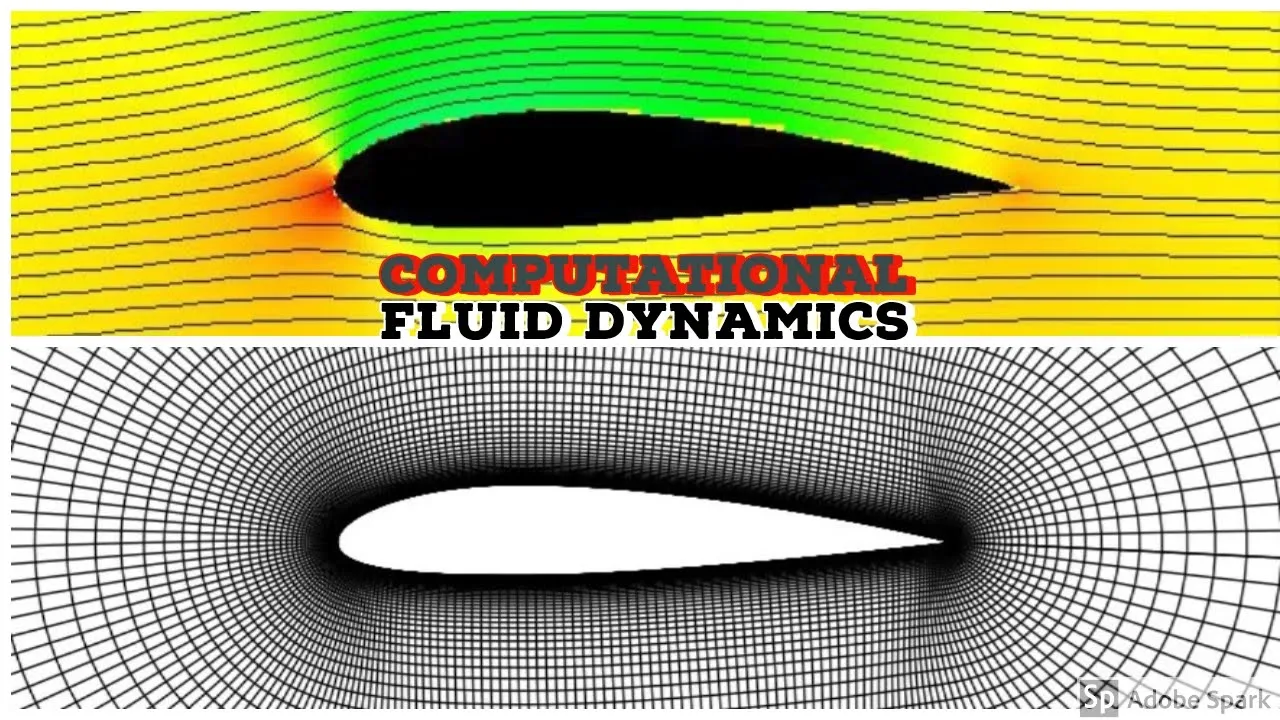
Basic principles of Computational Fluid Dynamics (CFD), including the Navier-Stokes equations, mesh generation, and turbulence modeling (e.g., RANS).
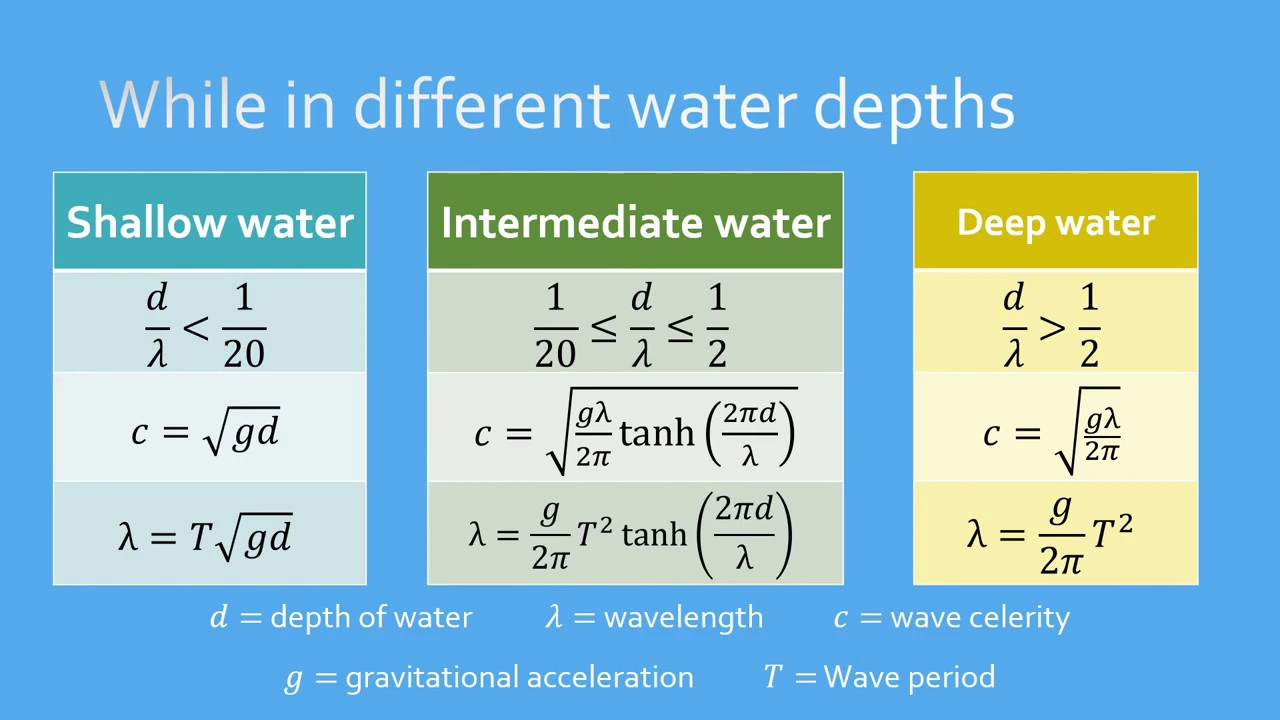
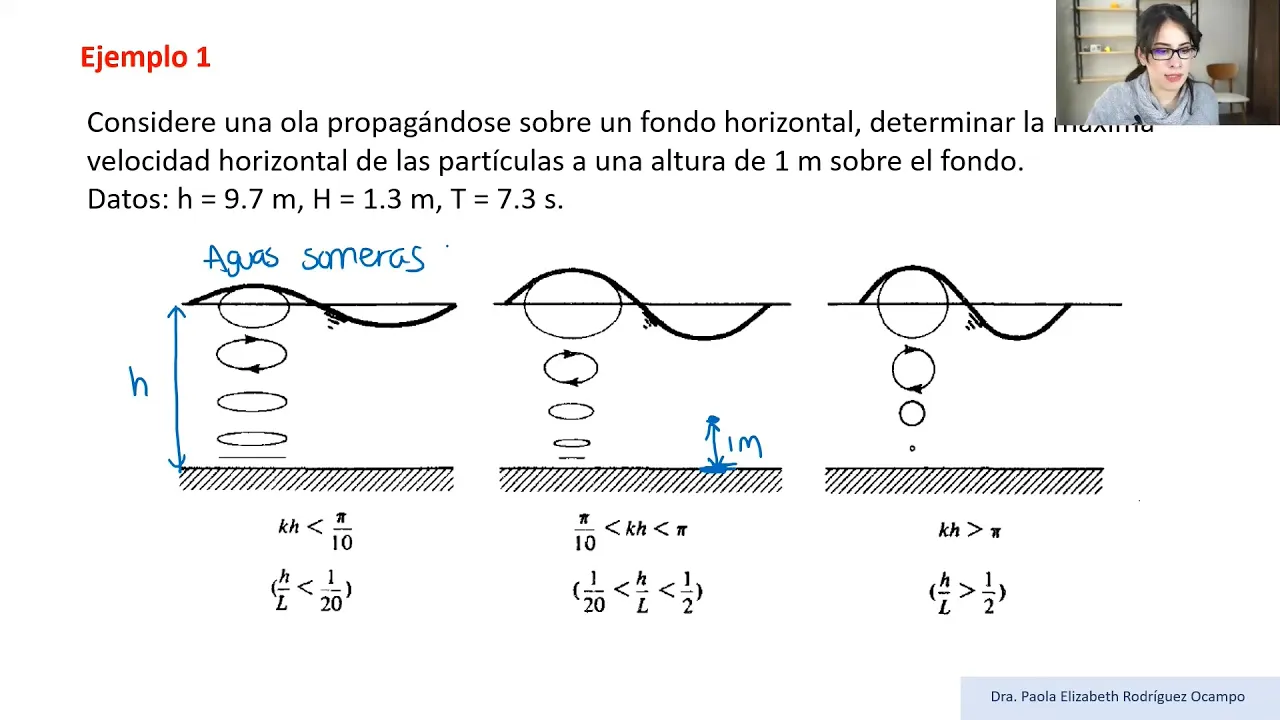
Linear wave theory and coastal hydrodynamics, to understand how wave-induced orbital velocities interact with ambient currents.
The environmental context of seawater desalination outfalls, including the physical properties of brine and the purpose of discharge diffusers.
Advanced turbulence modeling techniques, such as Large Eddy Simulation (LES), to capture fine-scale mixing and vortex dynamics in wave-jet interactions.
Engineering optimization of outfall diffuser designs, including adjusting discharge angles and nozzle configurations to mitigate the negative impacts of waves on dilution.
Integrating near-field CFD dilution models with far-field coastal circulation models to predict long-term salinity distribution.
Environmental impact assessment (EIA) and regulatory framework compliance for brine disposal in sensitive marine ecosystems.
115 views5likes12:50Original Release: 2020-11-25
uh hello everyone i'm ali walizadeh from dhi water environment in australia i'm going to talk about the regular wave effects on negatively buoyant jets my co-authors are jason antonekshi from dhi and grant griffith from water corporation for the rest of the presentation i will switch off the camera this work is a part of a bigger project on the evaluation and supporting the design of desalination plants for water corporation in western australia considering the soil role in the dilution and mixing of the brine emanating from the salination plants with the focus on designing a new desalination plant in alchemist a coastal suburb in perth and the project is done by dhi and the hpc resources for our high computational demand studies have been provided by posey and is greatly acknowledged why does study of wave impact on negatively buoyant jets is important well our experience from over 10 years of measurements at the perth seawater desalination plant in quinone and building up has indicated that wave effects on the mixing and dilution of brain discharge from desalination plants may be more complex and significant than originally so in this picture the significant wave height time series at altimos model with dhi tools and verified by field measurements show that proposed alchemist facilities are in the soil active zones a similar condition applies to the southern seawater desalination plant in pinning up however the wave induced mixing is an unquantified mechanism for the permitting and operation of these facilities and so far we don't know if it is beneficial or deleterious technically discharging under gravity into shallow waters results in lower cost due to a smaller length of pipeline but this exposes the outfall to more variable back pressure due to the increased importance of wave action in shallow waters if the diffuser is placed in shallower waters this variation in pressure increases by approximately 10 to 17 percent on the other hand tunneling costs are in the range of 30 thousand dollars per meter so optimizing the location with respect to the soil condition has significant cost implications significant amounts of work have been reported on the dynamics of negatively buoyant jets in stagnant water and the wave interaction with plumes is more focused on the positively buoyant jets and only few experiments are found on negatively buoyant jets interaction with waves wave effects on horizontally discharged negatively when plumes were investigated by bass at all and demonstrated that discharge opposite to the wave direction increases dilution as we found for the positively buoyant case the only paper that discusses wave effects on negatively buoyant discharges at an angle other than horizontal is by ferry at all they find importantly that dilution on their waves for negatively when jets at 67 degrees to the horizontal decreases relative to stagnant conditions with this reduction being worse for larger waves possible wave effects on a plume are as internal diffuser hydraulics near-field jet plume behavior and far-field behavior the first one is not the concept of this talk and we consider a constant power discharge the near-field mixing which is typically within the first 50 meters of the diffuser and is primarily controlled by the diffuser design is the main part of this study this stage includes the rise of a jet and fall of the plume the far-field mixing which is typically dominated by the environmental mixing process is also bay on the aim of this presentation for the near field the primary control on the dilution achieved from a negatively buoyant jet is the then symmetric fruit number uh where you see here that the u is the jet velocity d is the port diameter g is the gravitational acceleration and g prime is reduced gravity s i is the dilution at the impact point and x i is the impact point distance from the port here two videos of ferrari's experiments are showing the comparison of an angled plume in silent water on the left and in the presence of a wave on the right for desalination brine outfalls jets are normally placed in 10 to 15 meters of water depths with the design such that the plumes almost touch the free surface before falling back to the bed under gravity the time taken for a water particle to travel from the diffuser back to the bed is approximately 35 to 40 seconds while wave periods can be between 5 to 15 seconds so during the travel time the plume will experience multiple wave periods the dilution ratio due to the wave action with respect to the stagnant condition is shown here as mentioned before wave effects are not a part of the standard design of old falls this is because for positively buoyant jets waves are typically found to be beneficial to mixing and the same belief has been extended to the negatively buoyant jets despite that ferrari's team found that the dilution on their waves for angles negatively buoyant jets decreases relative to stagnant conditions and the reduction is larger for larger waves cases with realistic wave conditions were seen to achieve dilutions which were just 40 percent of the equivalent stagnant case we plot dilution data from ferry at all against the ratio of jet discharge velocity to wave orbital velocity this shows the trend of the graph is opposite of the positively buoyant jets the velocity ratio for conditions likely to be experienced at burning up an alchemist is in the range of 7 to 20.
this is within the range of those values presented by ferrari in which dilution decreases by the wave strength to test the accuracy of ferrari findings we set a numerical test campaign where a full non-linear solver developed in the open form cfd package is used the solver results in navier-stokes equations of three phases of flows in which brine and seawater are miscible while air is immiscible and is used to consider the free surface oscillations caused by the ocean waves the numerical model was verified by recovering the theoretical results of stocks first order waves for all short long small and large waves on the left frame the horizontal and vertical velocity profiles during one-way period are shown for the largest wave used in this study and on the right figure the surface elevation time series of different waves are presented this results show that the accuracy of surface elevations is more than 97 percent the numerical model was verified by recovering experimental results of negatively buoyant jets in stagnant conditions on the left frame the time averaged brine concentration is shown on top of the robert's results on the right plot the variation of lower boundary dilution with distance from the pipe outlet are compared with the experimental data good agreement is also found between the cfd model and the laboratory results giving us confidence in the implementation of the cfd model the test table selected is based on the design implemented at the southern seawater desalination plant the numerical the numerical waveform is same as the experimental tank used by ferrari at all but enlarged by a scaling factor of 25 which results in water depths of 10 meters when fruit number is 30.
snapshots of a subset of our simulations are shown in this picture this snapshots indicate significant bifurcation of the discharging jet for the wave height of 1 meter for the larger wave case h of 3 meters the terminal rise height of the jet is severely reduced by the presence of the wave this results indicate that dilution and impact point are likely to be strongly affected by the wave conditions the results of different wave height and periods and the effect on the location of impact point and dilution are shown here gamma is the angle between wave direction and jet orientation these results are presented for the return location of the plume to the discharge orifice as well as just above the bed the dimensionless dilution and impact point in a stagnant condition are 1.68 and 2.46 as you can see here the majority of tests focus on wave of 12 second period with varying wave heights tested across the range targeted experiments with longer and shorter wave pairs were also selected waves were propagated in the opposite direction to the jet discharge to mimic the most likely case in the field with one test set perpendicular to the jet direction as the wave height increases the impact point moves closer to the jet such that for the largest waves the impact point is on the downstream side of the jet origin dilution decreases with wave height as already indicated some preliminary tests of the effect of wave period have been conducted for a condition when wave height is set to a constant of 1 meter these results show that why the position of impact point changes by wave rate the dilution is less affected by the increasing wave period under the experimental conditions tested here if we plot the dilution ratio as a function of the jet to wave velocity ratio we can see that both the laboratory and safety results show that large waves equivalent to a small velocity ratios significantly decrease the dilution at impact point however for a small waves with velocity ratios larger than 20 the results from ferrari at all show that dilution is greater than the segment condition while cfd results show the presence of wave results in dilution less than a stagnant case these conflicting results require further investigation it should be noted uh that all these wave effects studies are based on a constant discharge from the source it is quite possible that the waves also induce a time-varying discharge rate of significant magnitude due to hydraulic effects within the diffuser to summarize the study a cfd model has been constructed consisting of three phases allowing for the simulation of wave effects on negatively buoyant jets this represents a significant achievement and can be used for further improved desalination plant outfall designs despite some uncertainties about the results of weaker waves cfd and experimental results confirmed that the presence of waves reduces dilution quiet substantially typically between 20 and 60 percent lower than the stagnant water case and finally larger wave amplitudes tend to result in lower dilution though these trends are not as strong in the cfd results as they were in the laboratory results thank you very much for your attention
Up Next

3:59
Zero Liquid Discharge (ZLD) Wastewater Treatment Process Explained
@GEWPT
44.7K views•2023-01-17

30:32
Ultrasonic Transducers: Resonant Frequency Measurement and Horn Design
@imajeenyus42
229.9K views•2017-02-22

54:16
Polymer Environmental Degradation: Mechanisms & Stabilization
@iit
1.8K views•2012-07-10

33:39
How a Student's Question Saved a NYC Skyscraper from Collapse
@veritasium
22.8M views•2025-04-26
Related Study Plans & Knowledge Roadmaps
Structured learning paths in Engineering
engineering
Building Acoustic Levitators: Physics & Arduino
01The Physics of Sound and Standing Waves
02Piezoelectric Transducers and H-Bridge Drivers
03Arduino Programming: Generating 40 kHz Signals
+ 2 more learning modules
14h5 modules
Explore Roadmap
engineering
Building Peltier Cloud Chambers: Particle Tracks
01Cosmic Rays & Cloud Chamber Physics
02Thermoelectric Cooling (TEC) Fundamentals
03Custom Liquid-Cooling Loop Design
+ 2 more learning modules
18h5 modules
Explore Roadmap
engineering
Yagi-Uda Antennas: Modeling, Build & VNA Test
01Introduction to RF and Antenna Fundamentals
02Yagi-Uda Antenna Design Principles
03Antenna Modeling and Simulation in 4NEC2
+ 2 more learning modules
18h5 modules
Explore Roadmap
engineering
ECG Monitor Design: Op-Amps, Filters & Noise
01Electronics & Breadboard Basics
02Op-Amps and Instrumentation Amplifiers
03Bioelectricity and ECG Fundamentals
+ 2 more learning modules
18h5 modules
Explore Roadmap