






![[Psyc220] 15 Audition: ASA](https://i.ytimg.com/vi/te9f2q94Qb0/maxresdefault.jpg)








A jump cut is a film editing technique where a segment from the middle of a shot is removed and the remaining ends are spliced back together, creating a jarring temporal disruption that filmmakers intentionally use for stylistic, energetic, emotional, or narrative purposes; this technique originated accidentally when Georges Méliès discovered that his camera jamming made a bus appear to transform into a hearse, and was later embraced by Russian filmmakers and the French New Wave, with modern applications including creating kinetic style (as in Guy Ritchie's Snatch), accelerating action sequences (as in Run Lola Run), conveying frantic mental states (as in The Departed), compressing time in montages (as in Schindler's List), and emphasizing emotional beats through axial cuts (as in The Birds).
Jump Cut Editing: 5 Essential Film Techniques Explained
Added:In this video, we're going to look at the history of the jump cut.
What it is and how it can be used?
"- I'm seeing things that don't make any sense."
- So, how did the jump cut become a useful tool for filmmakers?
And why?
This is "What is" The Jump Cut?
We're going to highlight five different ways, directors and editors intentionally use jump cuts.
From the purely stylistic, the visually comedic.
"- Do I carry my high school diploma around with me?
What do you do with your hair in the morning?
What happens if there's inclement weather?
Where do you... what do you wear?"
- To the inherently dramatic.
And at the end of the video, we'll give a couple of tips on how to avoid unwanted jump cuts.
But first things first, what is a jump cut exactly?
A traditional jump cut is when a segment in the middle of a shot is removed.
And the two ends are spliced back together.
This makes the shot feel like it jumps in time.
"- Bastard rats."
- Now to be clear, there is another way to create the appearance of a jump cut.
This involves cutting together two separate shots, with similar shot size and composition to create a jump cut effect.
As we see here, in "Eternal Sunshine of the Spotless Mind".
"- I'm listening. - I don't know.
You erased me. That's why I'm here.
That's why I'm doing this in the first place.
- I'm sorry. - You... - You know me, I'm impulsive.
- That's what I love about you."
- Our examples in this video will include both methods.
But where did this technique come from?
Legend has it that the jump cut was discovered by accident as french film pioneer Georges Méliès was filming on the street.
His camera jammed as a bus drove by.
But when he started recording again a hearse was in the same position.
When he played the footage back, the bus appeared to instantly change into a horse.
Méliès then used this newfound trick to create his cinematic illusions.
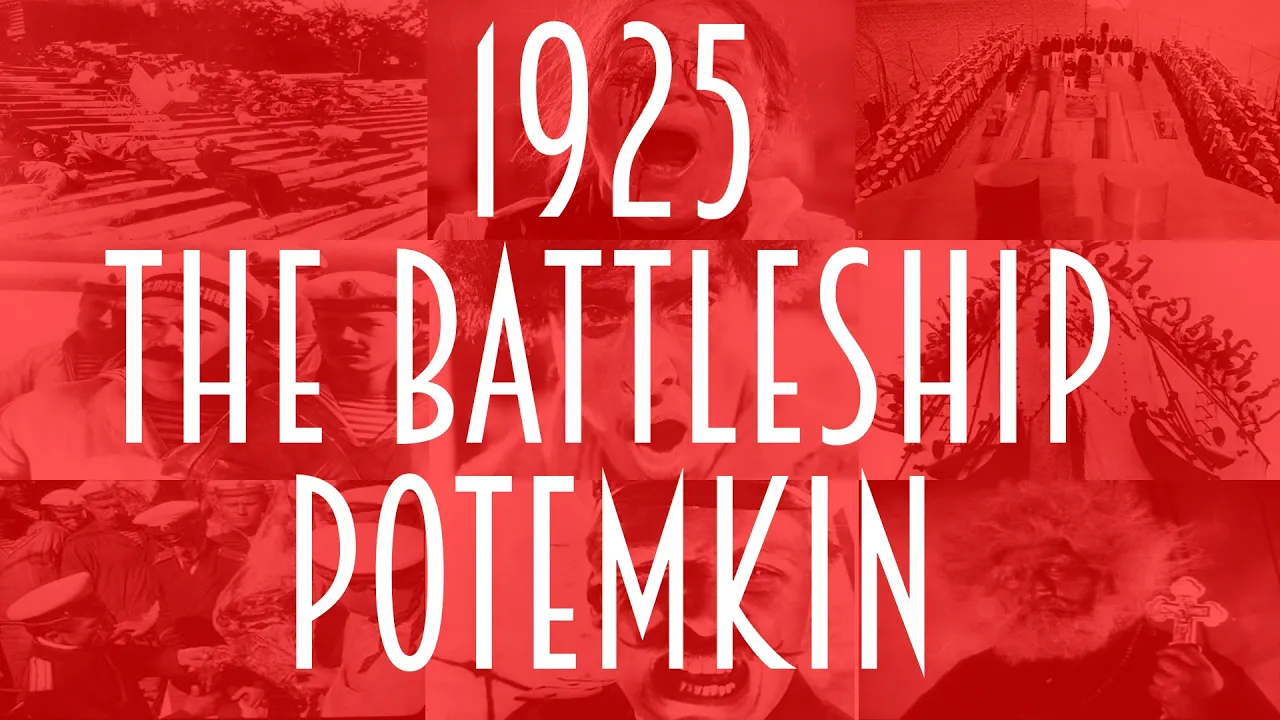
The jump cut was also one of many radical editing techniques used by Russian filmmakers in the twenties.
Like Sergey Eisenstein.
And Dziga Vertov.
Then filmmakers like Jean-Luc Godard in the French New Wave embraced the stylistic and disruptive effects of jump cuts.
These filmmakers perfected the disjointed and expressionistic qualities of discontinuity editing.
Now, let's discuss how filmmakers today can use jump cuts effectively.
One of the most common uses of the jump cut is to achieve a heightened style.
Watch how jump cuts help create a kinetic and stylish opening in Guy Richie's "Snatch".
But beyond pure aesthetics, there are ways to use jump cuts to bring this element of style into storytelling.
Especially those films that embrace a more poetic and not quite realistic presentation.
Let's take a look at Terrence Malick's "The Tree of Life".
A film told through memories of the past which are fragmented and impressionistic.
Malick uses jump cuts to enhance this poetic treatment of memory with a dreamlike experience rather than a logic-driven plot.
But a jump cut isn't only for stylish aesthetics.
Let's see what else they can do.
Energy.
By jumping through time, a jump cut can accelerate an already energetic moment.
Or they can turn a simple moment into something intriguing.
Consider this scene from "The Usual Suspects".
The crew travels to New York to pull off a smash and grab heist and as the plane lands the jump cuts are timed to a booming rhythm in the score.
A shot like this is usually just a throwaway transition but with some dramatic music and bold jump cuts, it builds anticipation and momentum leading into the robbery.
We can also see this use in "Run Lola Run".
With her boyfriend's life on the line, Lola races against time to save him.
And so the montages use jump cuts to visualize Lola's adrenalized energy.
They also clue us into Lola's emotional state which brings us to our next application.
Emotion.
"- Look, I'm seeing things that don't make any sense.
And I'm many people that are supposed to be dead."
- Jump cuts can also get us into the mind of a character to convey emotions and mental states.
Usually, this emotion is frantic, panicked, stressed and so on.
"- You're not making any sense. - No! Nothing makes any sense!
- You're scaring me. - Nothing makes any sense."
- In "Dune" when Paul snaps out of his vision, the jump cut combined with a sudden jolt in the sound act as a visual break back to reality.
"- I recognize your footsteps, old men.
- Get up!"
In "L.A. Confidential", Bud White's anger gets the better of him and he breaks the back of a chair.
"- Tell her where she is! - Move!"
- If we slow it way down, you can see there are only a couple of frames missing.
But this simple edit gives his anger an extra push.
"- Put the weapon down! - Where's the girl!"
- Director Martin Scorsese and his editor Thelma Schoonmaker use this trick all the time.
In "The Departed", after a suspicious phone call, Billy frantically packs in case he needs to run.
Watch this sequence and see if you can spot the jump cuts.
These jumps are only fractions of a second.
They might even go unnoticed to the untrained eye.
And yet they add a layer of frantic energy to this moment that is achieved by simply removing a few frames.
In a previous video, Schoonmaker explains the jump cut in this moment from "The Irishman".
"- Marty said just leave it as a jump cut. So we did.
- Hello.
- Joe? Joe?"
- The video is linked in the description.
Moving on.
Montage.
The primary function of the montage sequence is to compress time.
Which makes the jump cut a natural fit.
Even a training montage can utilize the jump cut.
"- Go web!
Go!
- Go! Go! Web go!"
In "Bottle Rocket", jump cuts help us share Dignan's childlike exuberance.
"- And another one for me!
Bobby, one for you! Anthony, fire away!
Somebody hand me one! Throw it out the window! Cherry bomb!
Did you hear that?"
- Director Steven Spielberg is a master of blocking and staging.
Knowing where to place the characters in the camera to tell a complete story with images alone.
Let's take a look at this sequence from "Schindler's List".
In which Oscar interviews candidates to be his new secretary.
Pay attention to how Spielberg keeps the camera in a single angle.
But lets the jump cuts and Oscar's body language tell the story.
But what if we use a jump cut with a very deliberate shift in perspective?
Let's find out in our final example.
A subtype of the jump cut is called an axial cut.
This is a cut that punches in.
Or away from a subject along the same axis.
The axial cut functions similarly to a zoom by emphasizing something important.
Axial cuts can be used to visualize a jarring realization.
Like in "Catch Me if You Can".
"- Would you happen to have a picture of your son?
- Oh, yes. I have his own yearbook.
- Okay. Okay."
- Or a moment of panic, in E.T.
"- I went to Craigy. Craig Newton.
I just put down Royal Edinburgh College to help get the job."
- Here's a moment from "Trainspotting", that uses back and forth axial cuts to accentuate Spud's frenzied energy when he interviews for a job on drugs.
"- Which school did I go to? How many grades did I get?
It could be six. Could be none.
It's not important.
What is important is that I am, yes?"
- This type of cut can be used in horror movies like "The Ring", to heighten Samara's supernatural powers.
Alfred Hitchcock in particular was a fan of the axial cut.
In "The Birds", Lydia discovers her father's body after an attack.
Two axial cuts are used to amplify her shock and horror giving the audience a similarly aggressive and unsettling experience.
As we mentioned jump cuts or the appearance of jump cuts, are often an intentional technique.
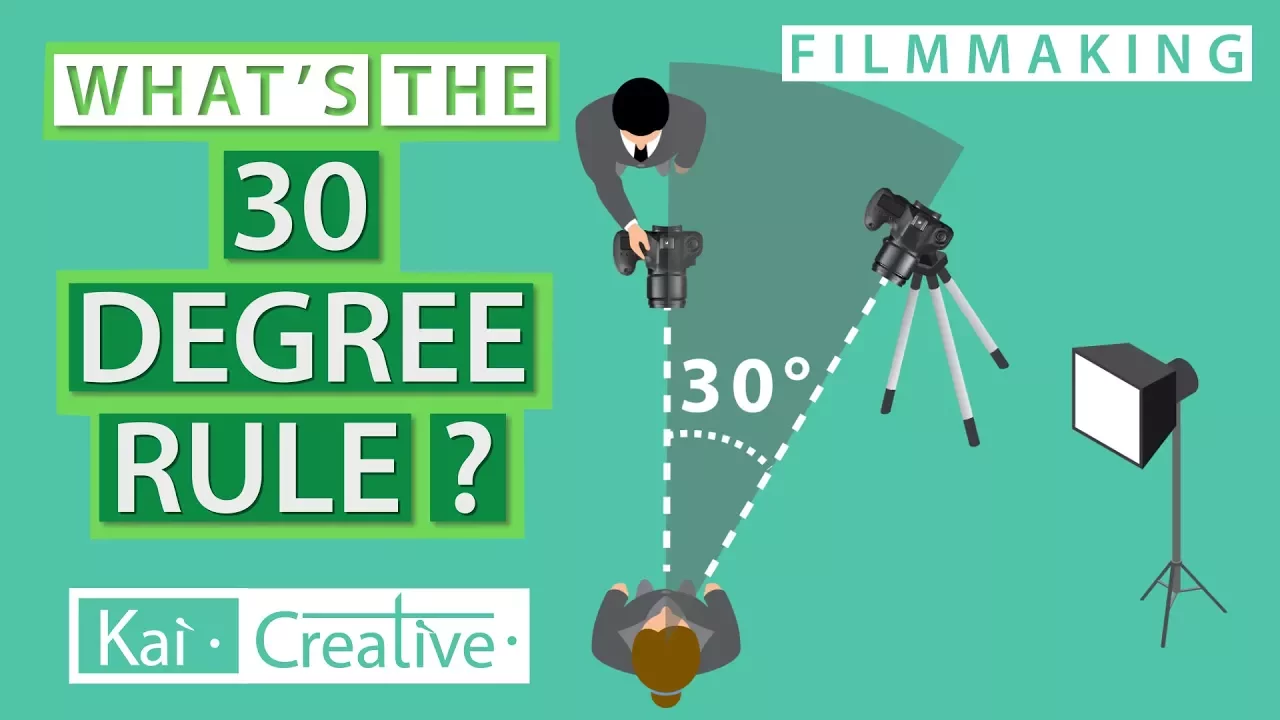
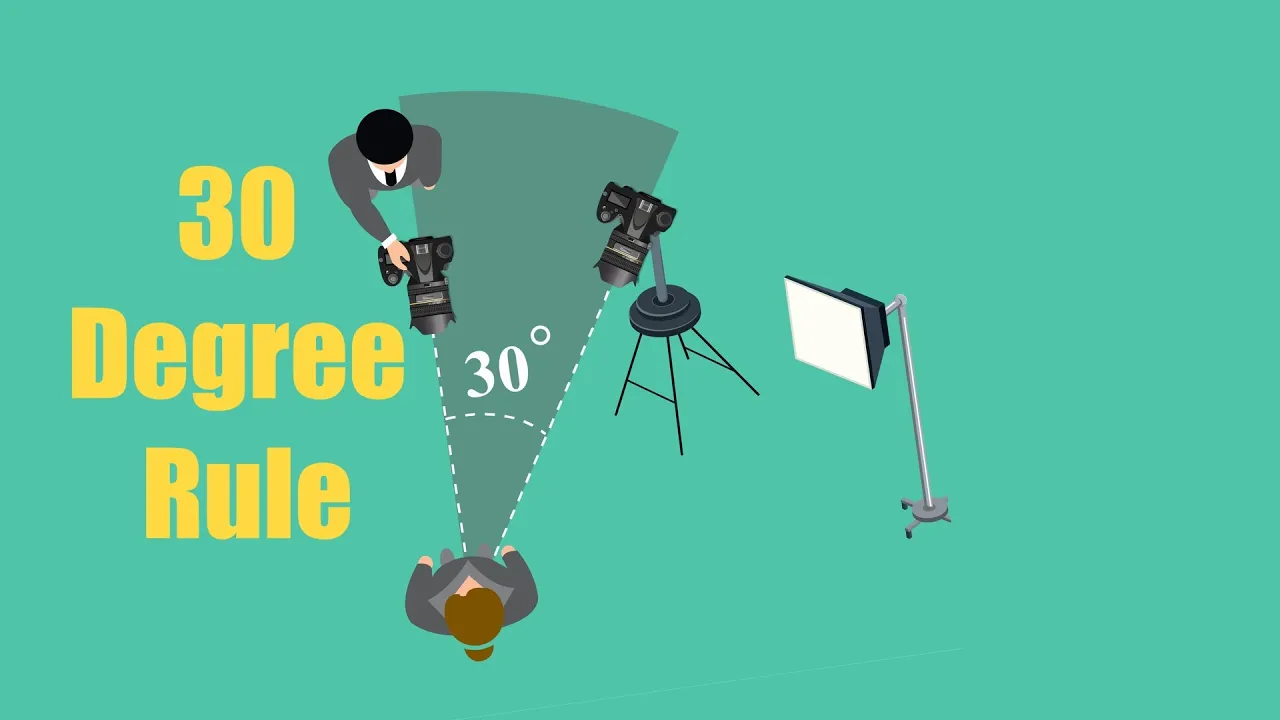
But if that is not the effect you are looking for remember the 30-degree rule.
The 30-degree rule states that the difference in angle between shot A and shot B should be at least 30-degrees.
Assuming you're keeping the same shot size.
This will give enough of a visual difference when cutting between shots.
If the angle is less than this, it can create the appearance of a jump cut.
Another option to avoid this would be to keep the same angle but change the shot's eye significantly.
For example, cutting from a wide shot to a close-up.
Feels much more natural than cutting between two slightly different wide shots.
Before you go, be sure to subscribe and enable notifications to stay in the know for more filmmaking techniques.
That's all for now.
Jump on your next project.
"- Do you have any special skills? - Oh, yes.
I do. I do voices.
Yes! We've come to this planet looking for intelligent life.
Oops, we made a mistake. We're happy to be in America.
Don't ask for a green card.
I want you in the worst way.
Well, this is certainly a rough meeting and it's not going very well for me I'll tell you that.
I do a great impression of a hot dog.
Nancy and I are still looking for the other half of my head."
Up Next

Graphic Match Editing Analysis in Lawrence of Arabia & 2001
@sisfilmmaker
8K views•2013-09-26

Visual Analysis Essay: How to Analyze Graphic Novels in College Writing
@nataliepleimann5941
1K views•2020-10-14
Andrei Tarkovsky's Filmmaking Style Explained
@StudioBinder
206K views•2025-02-03

Evolution of Darth Vader: Anakin Skywalker's Animated Journey Across Star Wars Films
@TellItAnimated
13.4M views•2019-03-30
Related Study Plans & Knowledge Roadmaps
Structured learning paths in Film Analysis