The International Brigades, composed of volunteers from around the world including Communists, Socialists, Anarchists, and Republicans of various religions, fought for the Spanish Republic during the Spanish Civil War (1936-1939), representing a historic example of international solidarity where people from different nations sacrificed their lives, families, and homes to defend Spain's freedom and independence, embodying the principles of democracy, solidarity, and universality.
Dolores Ibarruri's Farewell to the International Brigades | Spanish Civil War Speech
Added:Deep Dive
Origins and key ideological divisions of the Spanish Civil War (1936–1939), specifically the conflict between the Second Spanish Republic and Francisco Franco's Nationalist forces.

EL QUE DOMINA LA MEMORIA, ESCRIBE LA HISTORIA | Saldremos Mejores 1x05
58.1K
The Spanish Civil War (1936-1939) was a conflict between the legitimate government of the Second Republic under Manuel Azaña and the insurgent army led by Francisco Franco. The war was characterized by ideological divisions between conservatives and liberals, traditionalists and democrats, and Catholicism and atheism. According to historian Enrique Mora, approximately 651,735 people died during the war, with an additional 150,000 killed during the Francoist repression. The war was supported internationally by Germany and Italy for Franco's forces, while France provided support for the Republican exiles.
Click to watch →
Spanish Civil War | 3 Minute History
475K
The Spanish Civil War (1936-1939) was a pivotal conflict that emerged from Spain's long history of political instability, economic depression, and deep ideological divisions between left-wing Republicans and right-wing Nationalists led by Francisco Franco; despite international involvement from fascist powers like Germany and Italy supporting Franco, and democratic nations like Britain and France practicing appeasement, the war ended with Franco's Nationalists achieving victory on April 1, 1939, establishing a brutal dictatorship that lasted until his death in 1975.
Click to watch →
FRANCISCO FRANCO e a Guerra Civil Espanhola
70.1K
The Spanish Civil War (1936-1939) was a brutal conflict between right-wing Nationalists led by General Francisco Franco and left-wing Republicans, which began when Franco launched a coup against the Second Spanish Republic on July 18, 1936; the war attracted international intervention with Germany and Italy supporting Franco while the Soviet Union backed the Republicans, culminating in Franco's victory and the establishment of a fascist dictatorship that lasted until his death in 1975.
Click to watch →
The Spanish Civil War and Franco: A Ten Minute History
3.1M
This section examines the Spanish Civil War as a proxy conflict between Nationalists and Republicans. The July 17, 1936 coup by Franco and Sanjurjo triggered civil war, with Nationalists controlling military forces and Republicans controlling industry and navy. Foreign intervention intensified the conflict, with Germany and Italy supporting Nationalists while the Soviet Union aided Republicans. The bombing of Guernica symbolized modern warfare's brutality. Republican internal divisions among communists, socialists, and anarchists prevented effective unity. Nationalist victory came in 1939, establishing Franco's authoritarian regime that lasted nearly four decades.
Click to watch →
Why Franco & Spain stayed out of WW2?
231.7K
The Spanish Civil War (1936-1939) was not a simple conflict between fascist Nationalists and communist Republicans. Both sides contained complex ideological mixtures: the Republican side included socialists, communists, anarcho-syndicalists, and Soviet supporters, while the Nationalist side included fascists, capitalists, and even some socialists. Fascism itself emerged from anarcho-syndicalist roots, with figures like Mussolini and Franco having prior anarchist backgrounds. Franco's victory came after the Popular Front's democratic election in 1936, when revolutionary attempts failed. Franco emerged indebted to Germany and Italy, which had supported his cause, setting the stage for future tensions.
Click to watch →
Deep Dive
The composition, recruitment, and motivations of the International Brigades, who were foreign volunteers fighting to defend the Spanish Republic against fascism.

Trade Union and Working Class History - British Volunteers in the Spanish Civil War
187
Globally, over 35,000 volunteers from 53 countries fought for the Spanish Republic in the International Brigades, including stateless Jews and Communists from Germany, Austria, Italy, and Poland who were among the most fearless fighters. Contrary to the notion of idealistic adventurers, approximately 80% were Communist Party or Young Communist League members, with the vast majority being manual workers aged 21-35 (over a quarter over 30). They came primarily from London, Manchester, and Liverpool, with occupations including laborer, minor, motor driver, and seaman. Research based on surveys of surviving brigaders conducted in 1984 reveals motivations were not primarily idealism or unemployment but recognition of fascism as an immediate danger. Many had participated in anti-fascist demonstrations like Cable Street and felt compelled to act, understanding the connection between Spanish events and broader threats to democracy.
Click to watch →
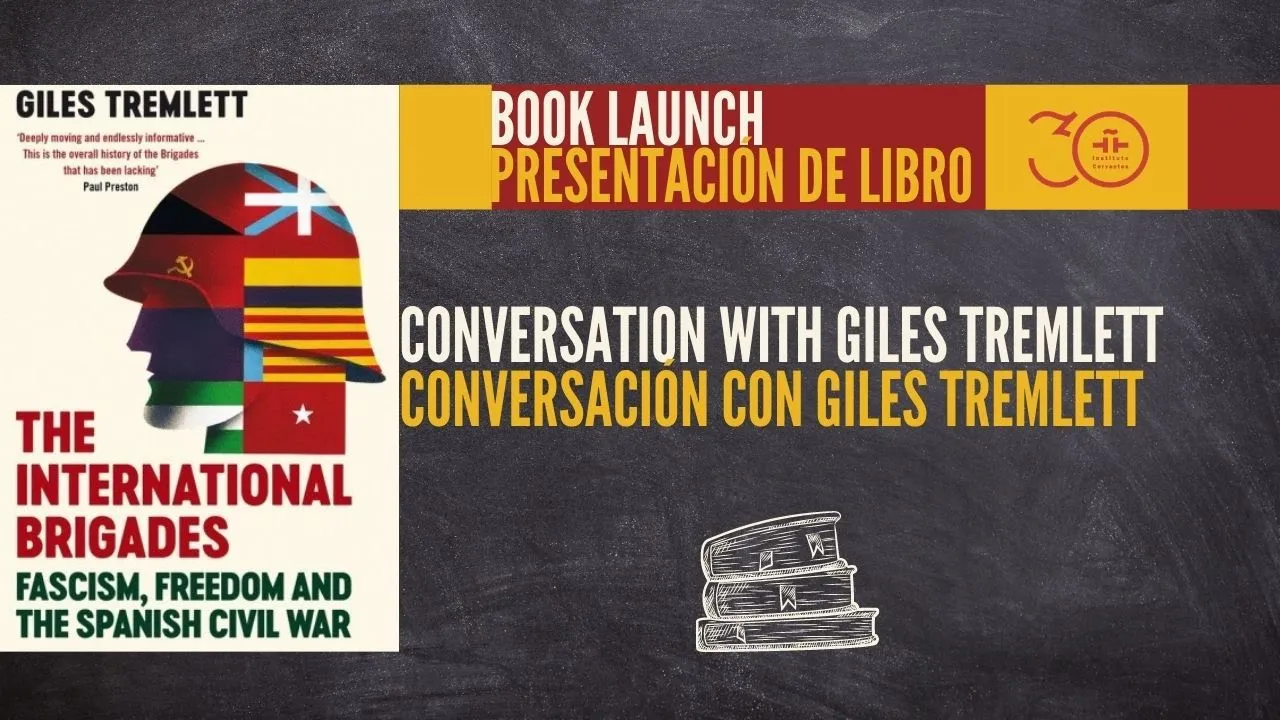
"The International Brigades: Fascism, Freedom and the Spanish Civil War", by Giles Tremlett #history
721
The International Brigades emerged from the spontaneous influx of foreign volunteers following the July 1936 Spanish coup attempt. Approximately 35,000 volunteers from over 60 nationalities joined, united by anti-fascist commitment despite diverse political backgrounds. Volunteers came from two overlapping groups: 'the devout' (communists, anarchists, republicans) and 'the displaced' (political exiles fleeing fascism plus economic migrants). The war was seen as a critical test case for democracy versus fascism, with volunteers believing they were fighting to prevent authoritarianism's spread across Europe. This represented the 'Vietnam of its day,' dominating global attention in the 1930s.
Click to watch →

Brigadistas: la vida después, de España al mundo.
179
The International Brigades were a volunteer army of approximately 35,000 men and women from about 70 countries who fought in the Spanish Civil War. Historians estimate that between 10% and 20% of brigadistas were Jewish, meaning up to 7,000 Jewish volunteers came to Spain. These volunteers came from diverse countries including France, Germany, the United States, the United Kingdom, Egypt, Iraq, and the British Mandate of Palestine. The brigades emerged from a dual impulse: existing foreign volunteers in Spain and the Comintern's decision to organize recruitment. The first 3,000 volunteers arrived in Albacete in October 1936, where they had to build their own camp within three weeks. With minimal training, they arrived in Madrid in November 1936 to help defend the city, which was on the verge of falling to Franco's forces. Brigadistas were crucial in the defense of Madrid, particularly at the Manzanares River and the University City, and later participated in battles at Jarama and Guadalajara. Brigadistas can be categorized into 'devotos' (politically motivated communists) and 'desplazados' (political exiles and economic emigrants). A third category, the Jewish brigadistas, had a unique common experience of personal and group discrimination and growing antisemitic violence in Europe. For the majority of brigadistas, Spain was only one part of their war against fascism. Many participated in World War II, extending their armed struggle from 3 years to 8 years. The International Brigades became a crucial source for the European left after the war, particularly in Eastern Europe. They formed an elite within the Soviet bloc countries, with many going on to hold positions of power in communist governments, armies, and police forces across the Eastern Bloc.
Click to watch →

22. History's Most Unlikely Warriors (ft. Richard Baxell)
188
Approximately 32,000 to 35,000 foreigners volunteered for the Republican side in the Spanish Civil War, representing roughly 25% of all Republican volunteers. Volunteers joined for diverse reasons: fighting fascism in their home countries, participating in what they saw as a 'black tide of fascism sweeping across Europe,' and responding to defeats of leftist movements. The Comintern organized recruitment with Stalin's approval, initially reluctant but changed mind when Germany and Italy began supplying Franco. Recruitment required interviews assessing military and political credentials. Most volunteers lacked passports or wealth, so they traveled to Spain via Paris on day-trip tickets. Early volunteers were middle-class students and writers; after late 1936, the composition shifted to working-class dockers, miners, and laborers from traditional urban occupations. When International Brigade volunteers arrived in Spain (October-November 1936), the situation was chaotic—the Republic had been rebuilt from scratch after a military coup. An agreement established a main base at Albacete, where volunteers were divided into national units primarily due to language barriers. Military training was poor: the Republican government was desperately rebuilding while fighting defensively with overwhelming odds. There were insufficient weapons and ammunition for practice. Claims that International Brigade volunteers were used as 'cannon fodder' are historically inaccurate. Like any army, Republican forces deployed their best troops—including International Brigade units—when holding critical positions. These units suffered huge casualties, reflecting standard military necessity rather than deliberate sacrifice. The myth that the Soviet Union was trying to install a puppet state in Spain is unfounded—Spain was geographically distant, and documentary evidence shows Spanish authorities frequently ignored Russian military advisors' recommendations.
Click to watch →

Documental "Las Brigadas Internacionales" (2/2) del Canal Historia
725
Between 1936-1939, over 2,000 British and Irish volunteers crossed the English Channel clandestinely to fight in the Spanish Civil War. Approximately 60,000 combatants from around the world joined the Republican army to prevent General Franco's fascist coup. These volunteers, few of whom were military or spoke Spanish, saw themselves as fighting for the last great cause worth dying for. The International Brigades represented unprecedented international solidarity against fascism, with volunteers from Britain, Ireland, Cuba, Russia, Austria, and other nations traveling to Spain to fight for the Republic.
Click to watch →
Deep Dive
The identity of Dolores Ibárruri ('La Pasionaria'), her role in the Communist Party of Spain (PCE), and her reputation as an influential propagandist and orator.

¡No pasarán! Biografía de Dolores Ibárruri, Pasionaria
6.8K
This comprehensive segment traces Pasionaria's transformation from a Basque miner's daughter into a revolutionary leader. Born in Galdámez in 1895, she worked as a seamstress and servant before entering the labor movement. In Holy Week 1918, she published her first article 'La Hipocresía Religiosa' in 'El Minero Vizcaíno', choosing the pseudonym 'Pasionaria' to avoid family conflict. After the 1931 Republic proclamation, she participated in Communist rallies and was a Constituent Cortes candidate. In September 1931, the Communist Party asked her to move to Madrid, where she worked in 'Mundo Obrero' editorial. Upon arrival, she was detained by the Civil Guard for protecting comrades, spending almost 15 months in prison, released in January 1933, precisely when Hitler took power in Germany. The Communist Party grew from 1,000 militants in 1931 to almost 400,000 in the Republican zone by November 1937, uniting with antifascist fighters. Pasionaria's National Committee of Women Against War and Fascism, created in July 1934, became the great organization of Republican women. On June 16, 1936, she rebuked José María Gil-Robles in the Cortes, a brilliant speech applauded by all Popular Front deputies. During the Civil War, she went weekly to Sierra de Madrid to rally militiamen. The most impressive moment was the defense of Madrid in October-November 1936, where her propaganda campaign with the 'No Pasarán' slogan, calling to create fortifications, succeeded in saving the city alongside Soviet aid and international brigades. Pasionaria left Spain on March 6, 1939, arriving in France in April 1945 with hope that Hitler's defeat would bring Franco's fall. However, the Cold War broke out in 1947, and the dictatorship lasted 30 more years. She fell gravely ill in 1949, returned to the Soviet Union for treatment, and her life was on the verge of death. The war had the great tragedy of her adult life: the death of her son Rubén, 22 years old, a lieutenant in the Red Army, in the first combats of Stalingrad. In 1956, the Khrushchev report at the 20th Congress of the CPSU was an earthquake for communists worldwide. Pasionaria was the first PCE leader to see the document taken to her department in Moscow, describing reading it as 'falling from the gallows.' In 1956, within the Cold War context, the PCE launched the policy of national reconciliation, allowing workers' commissions and the birth of the student movement. In the 1960s, she was president of the PCE, her voice reaching Spain through Radio Pirenaica. A very important moment was the Czechoslovakian invasion: she opposed it from the first moment, even anticipating it to Soviets in summer 1968. The PCE was the first to reject a Soviet action, announcing condemnation on August 22, 1968. Soviet leaders like Brezhnev appealed to Pasionaria's memory of her son Rubén, but she remained firm. In 1971, at 76, she gave an impressive Geneva speech. In 1974, the Swiss Party of Labor invited the PCE to hold a rally for immigration. When authorities prohibited them from speaking, she recorded the intervention and, before 15,000 people, said 'They have prohibited us from speaking, but they have prohibited us from singing,' and began singing a proletarian song she learned as a child in Galdámez. She died in Moscow in 1975. A month after the PCE's May 13, 1977 legalization, she finally returned to Spain, the only deputy from the Republic re-elected in 1977.
Click to watch →

Dolores Ibárruri | Wikipedia audio article
2.3K
Dolores Ibárruri (1895-1989), known as 'La Pasionaria' (the Passionflower), was a Spanish Republican heroine and communist politician of Basque origin who became famous for her powerful slogan '¡No Pasarán!' (They shall not pass) during the Battle for Madrid in November 1936. A founding member of the Spanish Communist Party (PCE) in 1921, she served as General Secretary from 1942 to 1960 and later as honorary president until her death. Her famous radio broadcasts and speeches galvanized Republican resistance during the Spanish Civil War, making her one of the most recognizable symbols of anti-fascist struggle worldwide.
Click to watch →

El antifranquismo ante la muerte de Franco y la crisis final del régimen - Archivo PCE, memoria viva
352
Dolores Ibárruri (La Pasionaria) served as a crucial symbolic figure for the Partido Comunista de España during the final years of Francoism. Though she had left the General Secretary position in 1960, she maintained enormous symbolic capital that transcended the party's own militancy. Her role connected the party to the broader memory of the Spanish Republic and to international antifranquism. The party strategically used her image to legitimize its new democratic and eurocommunist line, countering skepticism from international media and domestic political sectors. Her support for the new direction helped neutralize potential defections to orthodox communist factions. Her political activity served three key functions: preservation of communist memory, mobilization of the antifranquist population, and mobilization of international solidarity.
Click to watch →
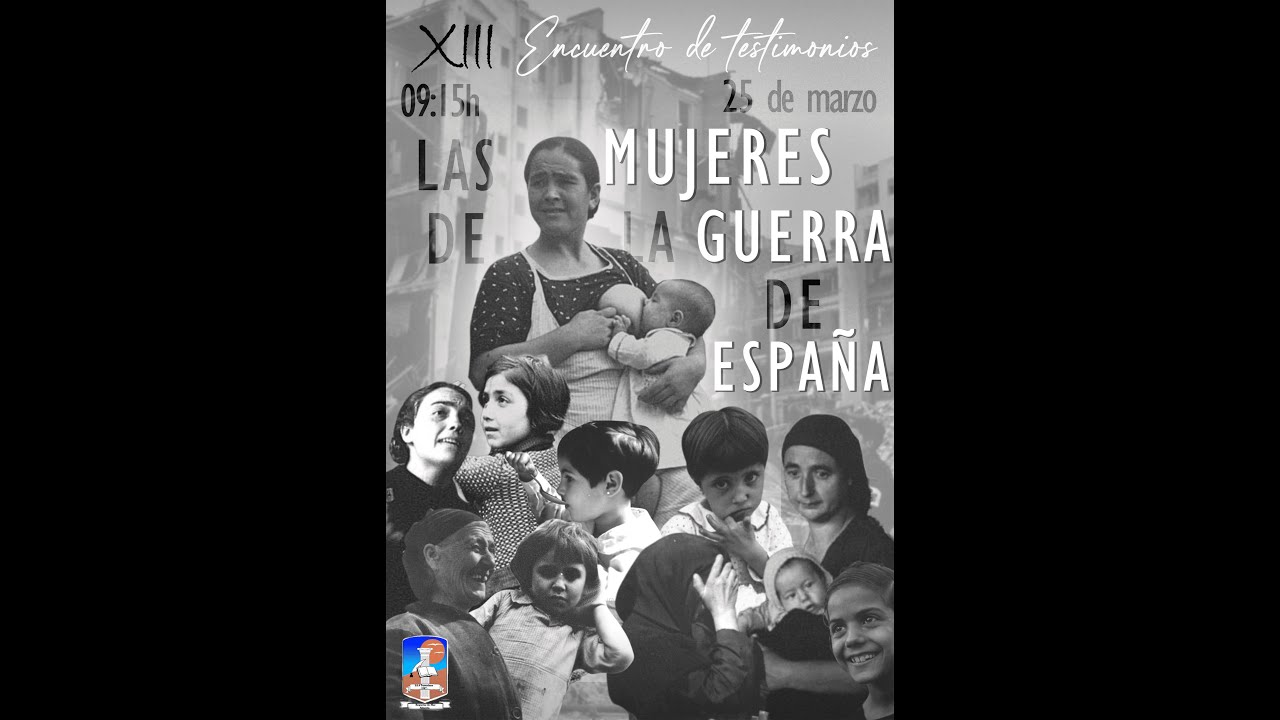
XIII Encuentro de Testimonios: Las mujeres de la Guerra de España
209
Dolores Ibárruri (1895-1970s), known as the Pasionaria, was a communist activist born in a mining family who married a syndicalist, which deepened her political involvement. She wrote her first article with the pseudonym 'La Pasionaria' in 1918. She joined the Communist Party of Spain in 1921 and became a key figure fighting for workers' rights and equality. During the Civil War, she was a deputy to the Congress in 1936 and her leadership in radio and speeches made her a key symbol. Her famous phrase 'No pasarán' (They shall not pass) became a cry against fascism. Other famous phrases include 'Mejor morir de pie que vivir de rodilla' (Better to die standing than to live on your knees) and 'La lucha es el único camino' (Struggle is the only path). After the war, she was exiled to the Soviet Union and continued leading the Communist Party and denouncing Francoism.
Click to watch →
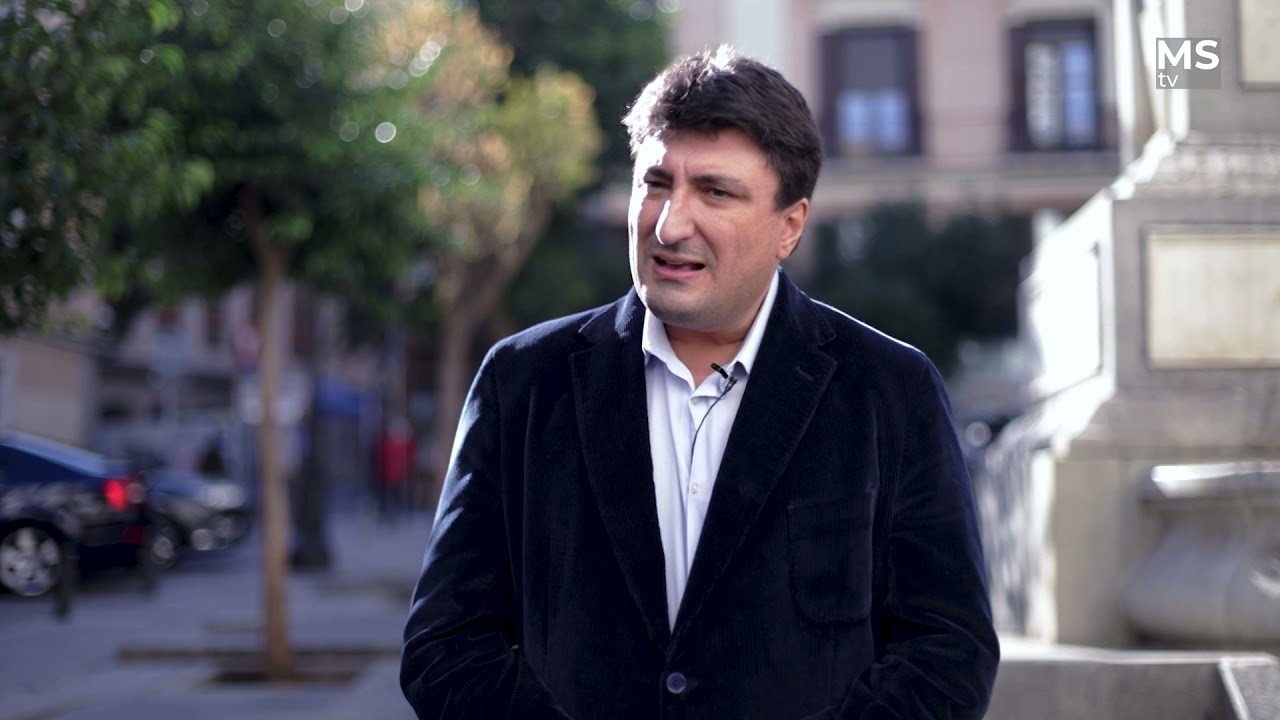
Entrevista a Mario Amorós, autor de "No pasarán. Biografía de Dolores Ibárruri, Pasionaria"
3.5K
Dolores Ibárruri, known as 'Pasionaria', was a Spanish communist leader who rose from a domestic worker to become one of the most influential political orators of 20th century Spain, delivering the iconic 'no pasarán' speech at Radio Union in 1936 that galvanized Republican resistance during the Spanish Civil War, and later returning from exile in 1977 to become the only Second Republic deputy elected in the 1977 elections.
Click to watch →
Deep Dive
The geopolitical landscape of late 1938, including the decision by the Spanish Republican government to withdraw foreign fighters in a failed bid to force fascist powers to withdraw their troops.

Jews Against Franco (1936-1939)
7.4K
By summer 1938, the Republican government under Prime Minister Juan Negrín concluded that the prominence of the International Brigades gave the impression that the Republic was a lost cause, helpless without them. Perhaps removing the Internationals would reassure western powers enough to secure other assistance and pressure Germany and Italy to withdraw. In reality, the International Brigades were a shadow of their former selves—recruitment had evaporated, nearly half of all foreign volunteers were dead, captured, severely wounded, discharged, or missing, replaced by native Spanish conscripts with inadequate training and little will to continue. Absent a serious change of heart from the League of Nations or western powers, fascists were going to win. The Communist International finally killed the Brigades, compelling Negrín to announce their withdrawal on September 21, 1938. Very strange that the Comintern would be first to abandon the fight against fascism!
Click to watch →

GANEMOS POLÁN... Informa y Presenta !!!: * LAS BRIGADAS INTERNACIONALES - Adaptada a 16:9 y en HD. *
107
In September 1938, the Republican government announced repatriation of all foreign volunteers. On September 29, 1938, a farewell parade was held in Barcelona where thousands of Spaniards wept and cheered as ragged survivors marched. Franco entered Barcelona on December 23, 1938, beginning 37 years of fascist dictatorship. Nearly 60,000 international volunteers had come to Spain, with almost 10,000 losing their lives. Of approximately 2,500 British and Irish volunteers, about 500 died. The war ended with complete fascist victory, demonstrating the devastating consequences of non-intervention policies and the importance of international solidarity against authoritarian movements.
Click to watch →
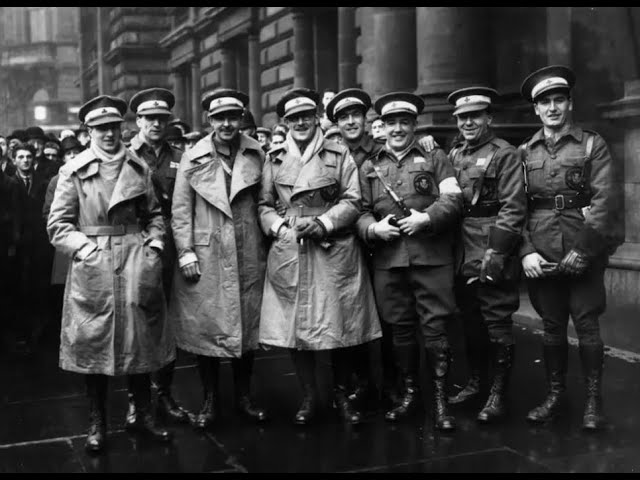
The Scots Who Fought Franco | Spanish Civil War (1936–39)
377
In late September 1938, the Republican government announced the withdrawal of the International Brigades, believing this would force Hitler and Mussolini to remove their troops from Spain. It was a forlorn hope. Surviving Scottish volunteers marched through Barcelona streets for an emotional farewell parade, with hundreds of thousands of Catalans lining the streets to salute the heroes of the International Brigades. Republican leader Largo Caballero paid tribute, telling them they could go with pride—they were history, they were legend. The great cause they had pledged themselves to had been defeated, but their sacrifice was recognized as meaningful. Many thousands of volunteers remained buried in Spanish soil.
Click to watch →
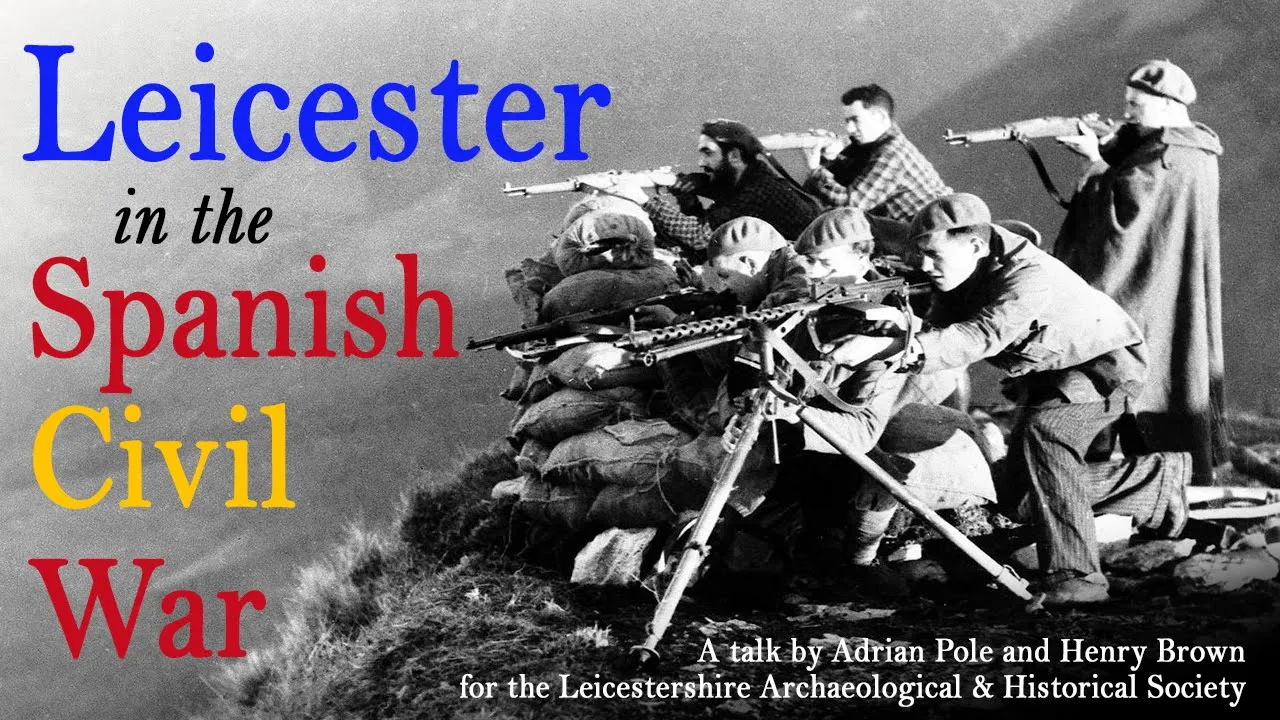
Leicester and the Spanish Civil
116
By 1938, the Spanish Republic faced almost total collapse after losing major battles and suffering widespread famine. Roy Watts arrived in February 1938, believing 'the fight of the Spanish workers is also our fight' despite knowing the Republic had little chance of winning. Frank Farr was badly wounded in an Italian ambush during the chaotic retreat, writing from his hospital bed that 'the wheels of the war machine grind exceedingly small and they have ground my spirit and my power to hope right away.' He admitted knowing the war was lost. Republican leader Juan Negrín launched a final desperate offensive across the Ebro River in July 1938, moving 80,000 men in secrecy, but Franco's superior resources—including hundreds of German aircraft and hundreds of thousands of conscripts—proved decisive. The rocky soil prevented effective trench digging, leaving Republicans exposed. Roy Watts, serving in the transmissions unit of the 15th International Brigade, was inside a farmhouse far back from the front when it suffered a direct hit from an aerial bomb. All inside, including Watts, were killed just days before the announcement that International Brigaders would be withdrawn from Spain. The withdrawal culminated in a final parade through Barcelona where Dolores Ibárruri declared them 'history, legend, the heroic example of democracy's solidarity and universality.' Leicester honored Sykes, Watson, and Watts with a shrine at the war memorial, quoting Watts' letter: 'The best have already fallen. Their deaths call not for grief but for action against fascism.'
Click to watch →
La GUERRA CIVIL ESPAÑOLA (1936–1939).Claves para entenderla
3.8K
While the Battle of the Ebro was fought, the international context became increasingly hostile to the Republic. In September 1938, the Munich Agreement confirmed the policy of appeasement toward Hitler, allowing Germany to annex German-speaking zones of Czechoslovakia. This made Negrín see the Munich Agreement as definitive proof that Western democracies would not intervene in Spain. In a final political gesture, the Republic withdrew International Brigades, hoping to force withdrawal of foreign troops supporting Franco. However, this did not occur. Germany and Italy maintained support until the end. Spain remained completely isolated.
Click to watch →
Prerequisite Knowledge
- Concept 01Origins and key ideological divisions of the Spanish Civil War (1936–1939), specifically the conflict between the Second Spanish Republic and Francisco Franco's Nationalist forces.
- Concept 02The composition, recruitment, and motivations of the International Brigades, who were foreign volunteers fighting to defend the Spanish Republic against fascism.
- Concept 03The identity of Dolores Ibárruri ('La Pasionaria'), her role in the Communist Party of Spain (PCE), and her reputation as an influential propagandist and orator.
- Concept 04The geopolitical landscape of late 1938, including the decision by the Spanish Republican government to withdraw foreign fighters in a failed bid to force fascist powers to withdraw their troops.
Subsequent Learning
- Step 01The ultimate defeat of the Spanish Republic in 1939, the rise of the Francoist dictatorship, and the subsequent exile or persecution of Republican sympathizers.
- Step 02Rhetorical analysis of wartime speeches, focusing on how 'La Pasionaria' used collective memory, emotional appeal, and martyrdom to construct a heroic narrative.
- Step 03The link between the Spanish Civil War and World War II, examining how the conflict in Spain served as an ideological and military dress rehearsal for the larger global conflict.
- Step 04The historical memory and cultural legacy of the International Brigades in literature, film, and monuments (e.g., works by George Orwell and Ernest Hemingway).
Farewell to Heroes
Their Legacy
Eternal Honor
Farewell to Heroes
0:08Playing Section
- 1
Expresses deep sorrow over the departure of international brigade volunteers.
- 2
Highlights their supreme sacrifices in defending Spain's capital and freedom.
- 3
Praises their unprecedented unity, courage, and commitment to universal liberty.
Soviet Control, Purges, and the Nationalist Critique of the International Brigades
While Dolores Ibárruri’s speech romanticizes the International Brigades as selfless defenders of democracy, critical historical perspectives offer a much darker counter-narrative. Opponents and revisionist historians emphasize that the Brigades were tightly controlled by the Soviet Union's Comintern and the NKVD (Soviet secret police). Rather than serving purely democratic ideals, the leadership enforced rigid Stalinist orthodoxy, leading to the brutal repression, imprisonment, and execution of dissident leftists, anarchists, and anti-Stalinist Marxists within the Republican zone. Furthermore, from the perspective of the Nationalist forces led by Francisco Franco, the Brigades were viewed not as heroes, but as foreign communist mercenaries and agents of Soviet expansionism attempting to establish a Bolshevik state in Western Europe. This counterpoint argues that the idealized legacy of the Brigades—championed by figures like 'La Pasionaria'—masks the totalitarian influence of the Soviet Union in the Spanish Civil War and the internal terror that fractured the Republican war effort.
Deep Dive
The ultimate defeat of the Spanish Republic in 1939, the rise of the Francoist dictatorship, and the subsequent exile or persecution of Republican sympathizers.

Julián Casanova_La dictadura de Franco (1939-1975)
9.7K
The Franco dictatorship lasted nearly 40 years (April 1, 1939 - November 20, 1975), making it difficult to classify with a single label. Until 1945, it was a fascist dictatorship aligned with European fascism and supported by Hitler and Mussolini. After 1945, Franco sought new identities including National Catholicism and National Syndicalism. Unlike Hitler's Germany or Mussolini's Italy, Spain is called 'the dictatorship of Franco,' showing how inseparable the leader was from the regime. Following the Civil War victory on April 1, 1939, the regime systematically destroyed everything associated with the Republican regime, including nearly 50,000 executions from 1939 to August 1946, concentration camps, repeal of all Republican laws, and persecution under the Law of Political Responsibilities affecting tens of thousands of families.
Click to watch →

1939 El exilio republicano español
19K
The Spanish Republican exile began with Barcelona's fall on January 26, 1939, culminating in Franco's victory declaration on April 1, 1939. Approximately half a million Republicans fled across the French border seeking survival. This mass displacement resulted from political repression targeting those sharing ideological sympathies with the defeated Republic. Most refugees clustered near the Pyrenean frontier due to travel difficulties, with Antonio Machado and his mother exemplifying this pattern, dying in Collioure before the war ended. Meanwhile, those unable to escape faced imprisonment, execution, or worse, as demonstrated by Miguel Hernández's fate in Alicante prison. Spanish Republicans who had gained organizational experience during the Civil War proved crucial for the French Resistance when Nazi Germany occupied France, viewing their continued fight against Nazism as part of a larger liberation effort.
Click to watch →
Franco - The Last Fascist Documentary
876.7K
The Spanish Civil War ended in spring 1939. On December 23, 1938, Nationalists invaded Catalonia, cutting off Republican strongholds. Tarragona fell January 15, 1939, and Barcelona was taken February 26, making clear the war was effectively over. Britain and France recognized Franco and the Falangists as Spain's official government. On March 28, 1939, Franco's troops entered Madrid, followed by Valencia's capitulation. On April 1, Franco declared victory via radio broadcast, with Alicante surrendering the same day. The war had lasted nearly three years. Franco's first weeks as head of state were bloody. Historians estimate at least 30,000 Republicans were executed in the weeks and months following hostilities, with tens of thousands imprisoned, hundreds of thousands fleeing to South America, and approximately half a million streaming over the Pyrenees to France. This persecution continued for years afterward, representing one of the greatest crimes of Franco's regime.
Click to watch →

Sesion 03-Comisiones de la verdad y memorias en Iberoamérica
264
The Spanish Civil War (1936-1939) pitted Republican defenders against Franco's insurrectionists. Franco's victory on April 1, 1939, established a 36-year dictatorship characterized by terror, summary executions of political opponents, and widespread social repression. The war's end triggered a wave of exile, particularly toward France, where exiles encountered French camps and some fought against Nazis during World War II. After Franco's death in 1975, Spain transitioned to democracy through a 1977 amnesty law that prevented prosecution of Francoist crimes. It was not until the late 1990s and 2000s that memories of the defeated returned to public prominence, driven by the generation of grandchildren of victims.
Click to watch →

General History | Fascism | The Republicans & Nationalists | International Brigades | Lecture 39
135
The Spanish Civil War ended with a Nationalist victory, sending thousands of Spaniards who had backed the Republic into exile in France. Those associated with the losing Republican side were highly persecuted during the dictatorship of General Francisco Franco, which lasted until 1975 when he died. During his dictatorship, persecutions and purges of Republicans and their families were common, with many death sentences issued to eliminate opposition. The war demonstrated that it was possible to be right and still suffer defeat, as noted by Juan Negrin, one of the presidents of the Second Republic.
Click to watch →
Deep Dive
Rhetorical analysis of wartime speeches, focusing on how 'La Pasionaria' used collective memory, emotional appeal, and martyrdom to construct a heroic narrative.
The Battle for Madrid, 1936 (filmed/animated on location)
146.6K
On the night of July 19-20, 1936, Dolores Ibarruri (La Pasionaria) made her first of many violent radio speeches calling on workers, peasants, anti-fascists, and patriotic Spaniards not to permit the victory of the 'hangmen of Asturias.' During this period, fifty churches in Madrid were set on fire. Working-class parties, led by paramilitary units including the communist militia, gained effective control of the streets. The lance of Don Quixote, whose statue stands in the Plaza de España, was interpreted as pointing toward the Montaña Barracks. Five hours of bombardment followed, with loudspeakers encouraging counter-rebellion among the soldiers inside.
Click to watch →
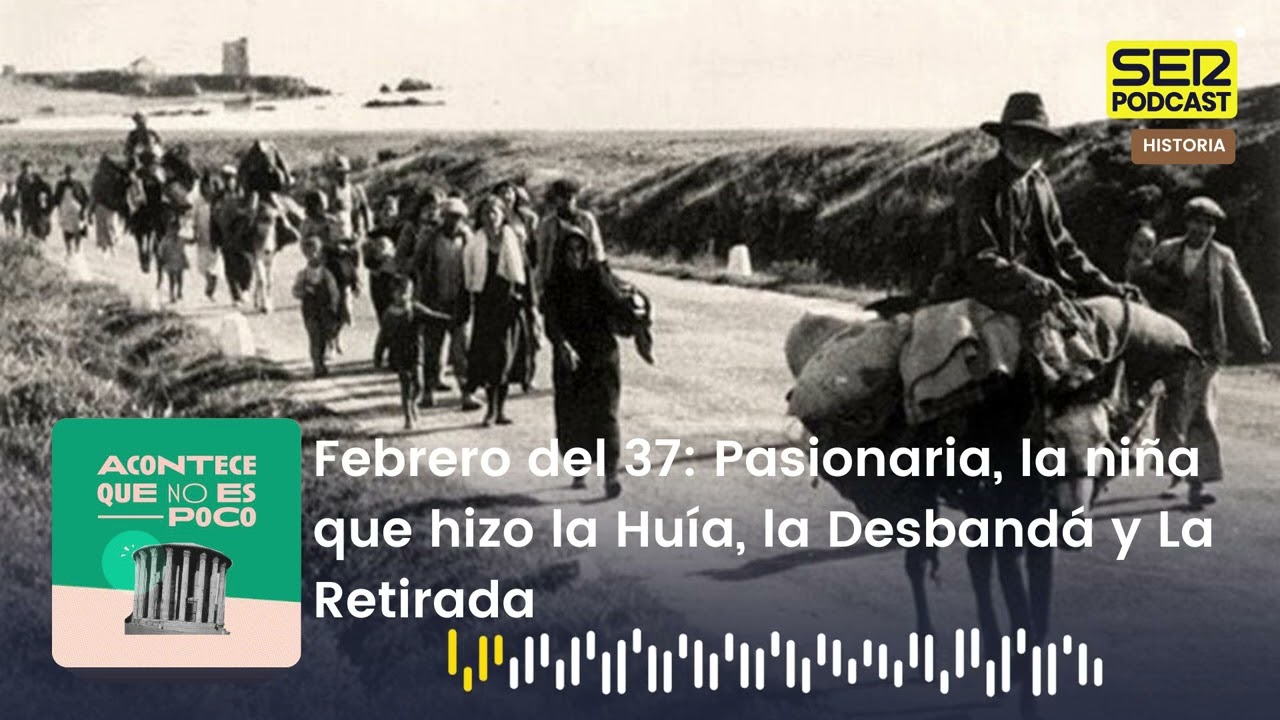
Acontece | Febrero del 37: Pasionaria, la niña que hizo la Huía, la Desbandá y La Retirada
61.9K
Pasionaria (Dolores Ibárruri), born in Jimena de la Frontera in 1928, was a 7-year-old girl who witnessed the Desbandada massacre in February 1937, where Francoist military forces killed civilians fleeing from Málaga to Almería; she survived the brutal retreat across the Pyrenees into France in 1939, where her father was imprisoned in a concentration camp, and she spent her 96-year life remembering the victims and refusing to forgive the descendants of those who committed the atrocities, embodying the struggle for historical memory and democratic remembrance.
Click to watch →
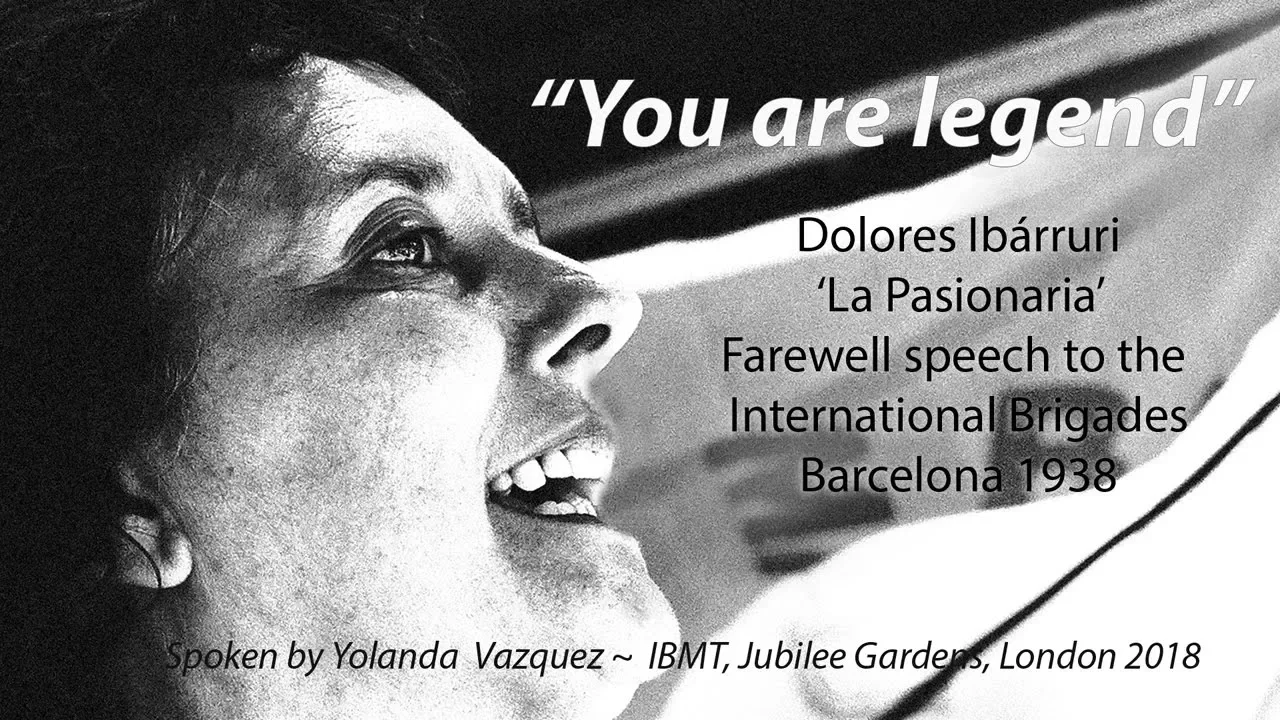
La Pasionaria's speech to the International Brigades read by Yolanda Vazquez
8.4K
On October 28, 1938, Dolores Ibárruri (La Pasionaria) delivered an iconic farewell speech to the International Brigades in Barcelona, immortalizing their sacrifice with the famous words 'You are history, You are legend' and the rallying cry '¡No pasarán!' (They shall not pass). The speech commemorated the volunteers from around the world who had fought for Spanish freedom and independence against fascism, representing a historic moment of international solidarity across different ideologies, races, and religions.
Click to watch →
Dolores Ibárruri | Wikipedia audio article
2.3K
Dolores Ibárruri (1895-1989), known as 'La Pasionaria' (the Passionflower), was a Spanish Republican heroine and communist politician of Basque origin who became famous for her powerful slogan '¡No Pasarán!' (They shall not pass) during the Battle for Madrid in November 1936. A founding member of the Spanish Communist Party (PCE) in 1921, she served as General Secretary from 1942 to 1960 and later as honorary president until her death. Her famous radio broadcasts and speeches galvanized Republican resistance during the Spanish Civil War, making her one of the most recognizable symbols of anti-fascist struggle worldwide.
Click to watch →

1921 e dintorni: 'Fascist martyrs'
247
After WWII, the Fosse Ardeatine monument in Rome (symbol of new Italy breaking with fascism) still used martyrdom vocabulary but represented martyrs as victims rather than heroes. The rhetoric returned to pre-fascist language of 'martyrs for liberty' and 'for the nation,' skipping back to Risorgimento terminology. This shows martyrdom rhetoric's flexibility—it was used by both fascist and anti-fascist movements while maintaining core elements of sacrifice and renewal. Many fascist monuments were destroyed, but the idea of martyrdom remained deeply ingrained in Italian collective memory, demonstrating how totalitarian ideologies leave lasting cultural imprints.
Click to watch →
Deep Dive
The link between the Spanish Civil War and World War II, examining how the conflict in Spain served as an ideological and military dress rehearsal for the larger global conflict.

The Spanish Civil War | 20th Century Wars | IB History HL
12.1K
The Spanish Civil War can be seen as a dress rehearsal for World War II because it featured many of the same major powers: Germany, Italy, the Soviet Union, the United States, Britain, and France. Spain was obviously involved. The war featured similar tactics and outcomes to World War II, including the involvement of major powers, the use of modern military technology, and the ideological conflicts that would define the larger conflict. The Spanish Civil War demonstrated the types of warfare and international intervention that would characterize World War II.
Click to watch →
The Spanish Civil War
585
The Spanish Civil War serves as a dress rehearsal for World War II from both ideological and military perspectives. It tested the weapons, tactics, and ideologies that would define the larger global conflict. Understanding this period provides valuable context for comprehending the broader trajectory of 20th-century European history and military development.
Click to watch →
Spain's Civil War is INSANELY interesting. Here's why.
4.5K
The Spanish Civil War (1936-1939) is often called the 'dress rehearsal' for World War II because it served as a testing ground for military tactics, weapons, and strategies that would later be used in the larger global conflict. Foreign powers intervened in Spain hoping to bring their preferred side to power and to give their armed forces practice for future global conflict. This makes the Spanish Civil War relevant for understanding the development of modern warfare and international relations.
Click to watch →

Franco and the Fascist March to Victory: Donald P. Wright - March 27, 2014
9.7K
The Spanish Civil War (1936-1939) served as a 'dress rehearsal' for World War II, where both sides committed atrocities, the Republicans received Soviet aid while Franco was supported by Nazi Germany and fascist Italy, and the ideologies in conflict were essentially those that would clash after 1939. The war demonstrated how the failure of democratic nations to intervene effectively, combined with aggressive foreign intervention by totalitarian powers, created conditions that would lead to the outbreak of World War II.
Click to watch →
The slide to war: 1930s (History of modern Europe c. AD 1780-1945)
424
The Spanish Civil War ended with Franco's victory and the defeat of the Republicans. It has been called the dress rehearsal of the Second World War because it provided Germany and Italy with practice in military operations and demonstrated the effectiveness of fascist military doctrine. The new Spanish government was soon recognized first by the USA and then by other countries. The war demonstrated that aggressive powers with military support could defeat democratic forces, and it showed the failure of international intervention policies. The Spanish Civil War thus served as a preview of the conflicts that would engulf Europe in World War II.
Click to watch →
Deep Dive
The historical memory and cultural legacy of the International Brigades in literature, film, and monuments (e.g., works by George Orwell and Ernest Hemingway).
La guerra civile spagnola e l'ascesa di Francisco Franco
100.3K
The Soviet Union, committed to fighting fascism, organized the International Brigades - international volunteer armies of approximately 40,000 men including communists, socialists, republicans, and anarchists. Famous writers like Ernest Hemingway and George Orwell joined. Italian antifascists formed the Garibaldi Battalion, believing in the motto 'Today in Spain, tomorrow in Italy.' This created direct confrontations between Italian fascists and Italian antifascists in Spain, making the war a continental-level struggle between fascism and antifascism.
Click to watch →
1937, январь
849
The International Brigades left a lasting cultural legacy, with numerous films and cultural works romanticizing their role in the Spanish Civil War. Films such as 'Night and Fog' and 'The Spanish Earth' portrayed the brigades as heroic defenders of freedom against fascism. The brigades were also the subject of numerous Spanish films, including 'Grenada' and 'The Dragon's Head.' Many former brigadistas went on to hold prominent positions in communist parties worldwide after World War II, including Polish, Hungarian, and other communist leaders.
Click to watch →

스페인 내전 실사 다큐 - 국제여단 The International Brigades: Conscience of the 20th Century
139
The International Brigades fought against professional armies including Germany's Condor Legion and Italy's Blackshirts, suffering thousands of deaths with no names on their graves. Many veterans faced severe discrimination upon returning home, labeled as communists and placed on unemployment rolls. Despite this treatment, many maintained they had no regrets, finding solace in having chosen the right side. The Brigades embodied both literary romanticism and romanticism of action—people who walked into reality to test their beliefs. Writers like Hemingway and Neruda documented their experiences, creating works that portrayed war as a human problem rather than merely ideological conflict. Their sacrifice became foundational to 20th-century literature and established the concept of engaged intellectuals who combine literary pursuits with political commitment.
Click to watch →

Diana Uribe - Historia de España - Cap. 14 Guerra Civil Espanola (II)
56.3K
The International Brigades brought volunteers from around the world to fight for the Republic, including Hemingway, Orwell, and Robert Capa. They represented global solidarity but could not match the professional military capabilities of the Condor Legion. The German Condor Legion transformed the war into a modern conflict, introducing tanks, aircraft, and modern firepower. The bombing of Guernica on April 26, 1937, killed 6,000 inhabitants and destroyed a library containing Basque history, demonstrating the new horrors of modern warfare.
Click to watch →

Мы живем прямо как в книге 1984? | разбор Джорджа Оруэлла
43.6K
Orwell served in the International Brigades, specifically in the POUM (Workers' Party of Marxist Unification), which opposed Soviet-backed communists. He was deeply affected by the conflict between different revolutionary factions, particularly the suppression of the Spanish revolution by Soviet communists. Orwell witnessed how Soviet-backed forces crushed anarchist movements and suppressed revolutionary initiatives. His experiences in Spain led him to write 'Animal Farm' and '1984' as critiques of totalitarianism.
Click to watch →
Farewell to Heroes
Their Legacy
Eternal Honor
Farewell to Heroes
0:08- 1
Expresses deep sorrow over the departure of international brigade volunteers.
- 2
Highlights their supreme sacrifices in defending Spain's capital and freedom.
- 3
Praises their unprecedented unity, courage, and commitment to universal liberty.
Soviet Control, Purges, and the Nationalist Critique of the International Brigades
While Dolores Ibárruri’s speech romanticizes the International Brigades as selfless defenders of democracy, critical historical perspectives offer a much darker counter-narrative. Opponents and revisionist historians emphasize that the Brigades were tightly controlled by the Soviet Union's Comintern and the NKVD (Soviet secret police). Rather than serving purely democratic ideals, the leadership enforced rigid Stalinist orthodoxy, leading to the brutal repression, imprisonment, and execution of dissident leftists, anarchists, and anti-Stalinist Marxists within the Republican zone. Furthermore, from the perspective of the Nationalist forces led by Francisco Franco, the Brigades were viewed not as heroes, but as foreign communist mercenaries and agents of Soviet expansionism attempting to establish a Bolshevik state in Western Europe. This counterpoint argues that the idealized legacy of the Brigades—championed by figures like 'La Pasionaria'—masks the totalitarian influence of the Soviet Union in the Spanish Civil War and the internal terror that fractured the Republican war effort.
Origins and key ideological divisions of the Spanish Civil War (1936–1939), specifically the conflict between the Second Spanish Republic and Francisco Franco's Nationalist forces.
The composition, recruitment, and motivations of the International Brigades, who were foreign volunteers fighting to defend the Spanish Republic against fascism.
The identity of Dolores Ibárruri ('La Pasionaria'), her role in the Communist Party of Spain (PCE), and her reputation as an influential propagandist and orator.
The geopolitical landscape of late 1938, including the decision by the Spanish Republican government to withdraw foreign fighters in a failed bid to force fascist powers to withdraw their troops.
The ultimate defeat of the Spanish Republic in 1939, the rise of the Francoist dictatorship, and the subsequent exile or persecution of Republican sympathizers.
Rhetorical analysis of wartime speeches, focusing on how 'La Pasionaria' used collective memory, emotional appeal, and martyrdom to construct a heroic narrative.
The link between the Spanish Civil War and World War II, examining how the conflict in Spain served as an ideological and military dress rehearsal for the larger global conflict.
The historical memory and cultural legacy of the International Brigades in literature, film, and monuments (e.g., works by George Orwell and Ernest Hemingway).
82.1K views625likes5:12@simonpetergreenOriginal Release: 2008-03-18
[Music] it is very hard to say a few words in farewell to the heroes of the international brigades both because of what they are and what they represent a feeling of Sorrow an infinite grief catches our throat sorrow for those who are going away grief for those who will stay here forever mingled with the Spanish soil you came to us from All Peoples from all places from all Races you came to us like brothers like sons of undying Spain and in the hardest days of War when the capital of the Spanish Republic was threatened it was you Gallant comrades of the international brigades who helped to save the city with your fighting enthusiasm your heroism and your spirit of sacrifice for the first time in the history of the people struggles there has been the spectacle breathtaking in its Grandeur of the formation of the international brigades to help to save a threatened country's freedom and Independence the freedom and Independence of our Spanish land Communists socialists anarchists Republicans men of different religions yet all of them fired with a deep love of Liberty and Justice and they came and they offered themselves to us unconditionally they gave us everything their youth or their maturity their science or their experience their blood and their lives their hopes and aspirations and they asked of us for nothing at all mothers when women when the years pass and the wounds of War are staunched when the memory of the sorrowful and bloody days disappears into a present of freedom of peace and well-being when the feelings of ranor have died and when pride in a free country is felt by all Spaniards then speak to your children tell them of these men of the international brigades tell them how coming over seas and mountains Crossing Frontiers these men reached out country to fight and die for Spain's Liberty and Independence they gave up everything their loves their countries home and Fortune fathers mothers wives brothers sisters and children and they came and told us we are here your cause Spain's cause is ours it is the cause of all mankind today they are going away many of them thousands of them remain shrouded in the Spanish Earth and all Spaniards will remember them with the deepest feeling comrades of the international brigades political reasons and reasons of state are sending you back some to your own countries others to forced Exile comrades of the international brigades you can go proudly you are history you you are Legend you are the heroic example of democracy solidarity and universality we shall not forget you and when the Olive Tree of Peace puts forth its leaves again entwined with the victory Laurels of the Republic of Spain's Victory come back come back to us with us those of you who have no country will find one those of you deprived of friendship will find find friends and all of you will find the love affection and gratitude of the whole of the Spanish people who today and in the future will cry out with all their hearts long live the heroes of the international brigades [Music]
Up Next

15:20
Spanish Anarcho-Communist Revolution 1936: A Realized Utopia
@Nedovolnite
6.5K views•2015-01-07

33:02
The Great Schism of 1054: Causes and Consequences
@SacredCathedrals
113.5K views•2026-02-19
91:57
The Geopolitics of the Ukraine War and the Rise of Global Autocracy
@JordanHarbingerShow
468K views•2025-04-19
17:05
Understanding the Cold War: Superpower Conflicts and the Road to Détente
@OverSimplified
46.1M views•2019-01-24
Related Study Plans & Knowledge Roadmaps
Structured learning paths in History
history
Byzantine Iconoclasm: Theology, Art & Politics
01Foundations of Byzantium and Early Christian Images
02The First Iconoclasm: Leo III and the Crisis of Images
03Empress Irene, Nicaea II, and the Second Iconoclasm
+ 2 more learning modules
9h5 modules
Explore Roadmap
history
Iranian Revolution (Causes, Events & Legacy)
01The Pahlavi Dynasty and the Roots of Discontent
02The Spark of Rebellion and the Rise of Khomeini
031979: The Fall of the Shah and the Climax of the Revolution
+ 2 more learning modules
8h5 modules
Explore Roadmap
history
Mali Empire: Mansa Musa, Trade & Timbuktu
01Foundations of the Mali Empire
02The Trans-Saharan Gold and Salt Trade
03The Reign and Pilgrimage of Mansa Musa
+ 1 more learning modules
6h4 modules
Explore Roadmap
history
1947 Partition: Politics, Borders & Legacies
01Foundations of British India and the Divide
02The Political Negotiations and the Mountbatten Plan
03Drawing the Boundary: The Radcliffe Line
+ 2 more learning modules
8h5 modules
Explore Roadmap