

![Spanish Civil war [Every day]](https://i.ytimg.com/vi_webp/L_sqgrz5IaM/maxresdefault.webp)





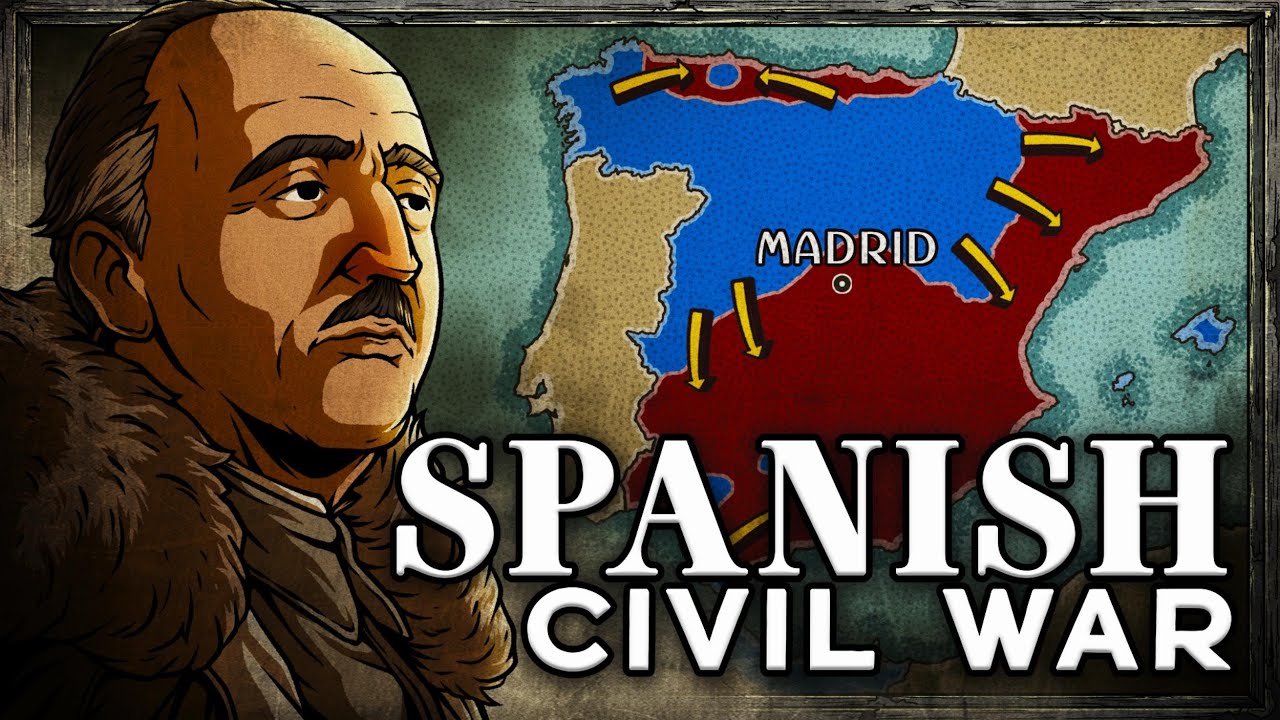








During the Spanish Civil War (1936-1939), anarchist workers in Catalonia implemented a revolutionary economic system where they directly controlled production, distribution, and social services through worker committees, using a voucher system based on hours of labor rather than money, and established free healthcare and pensions; this experiment in workers' self-management, which was the largest of its kind in Western Europe, was systematically crushed by international powers including liberal democracies, fascists, and communists who opposed the threat to their hierarchical control.
Spanish Anarcho-Communist Revolution 1936: A Realized Utopia
Added:The fundamental principles of Anarchism, Communism, and Libertarian Socialism, specifically the core differences between state-oriented Marxism and stateless anarcho-syndicalism.
The historical context of the Spanish Civil War (1936–1939), including the conflict between the Second Spanish Republic and Francisco Franco's Nationalist forces.
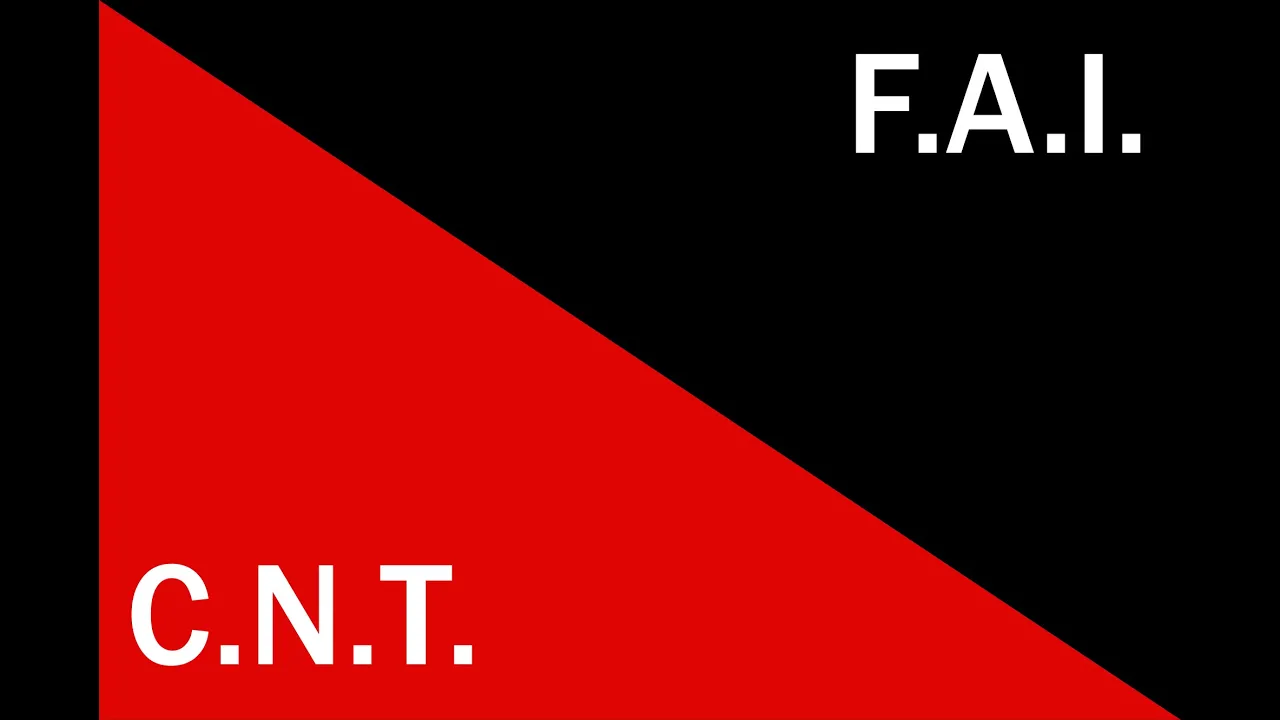
The concept of workers' self-management, industrial collectivization, and the role of revolutionary syndicalist trade unions like the CNT (Confederación Nacional del Trabajo).
The geopolitical landscape of 1930s Europe, including the rise of fascism in Germany and Italy and the non-intervention policies of Western democracies.
The internal ideological conflicts within the Republican faction, particularly the Barcelona May Days of 1937 and the clashes between anarchists and Soviet-backed communists.
Modern applications of libertarian socialist or communalist principles, such as the Zapatista movement (EZLN) in Chiapas, Mexico, or Rojava in Northern Syria.
Critical economic and sociological evaluations concerning the scalability, efficiency, and long-term viability of decentralized, non-market economies.
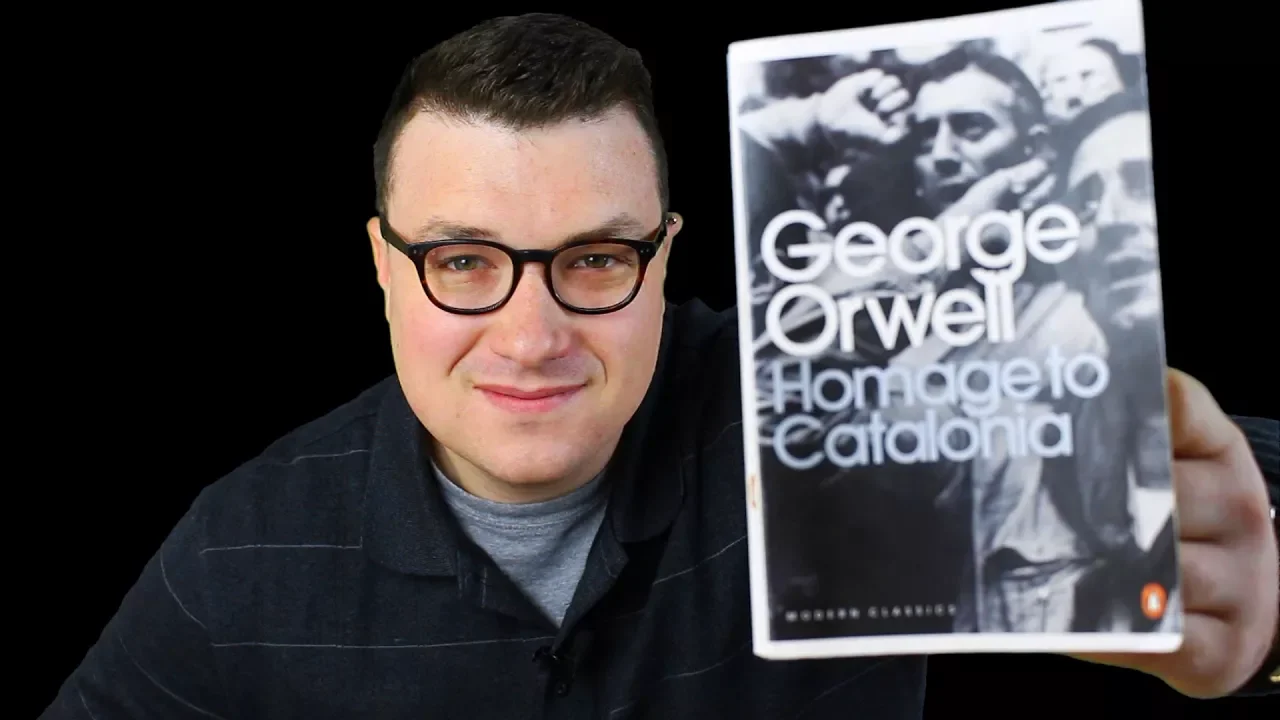
Literary and historical testimonies of the period, notably George Orwell's 'Homage to Catalonia' and the historical analyses of Burnett Bolloten.
6.5K views71likes15:20Original Release: 2015-01-07
The anarchists had no doubt about their main objective to defeat fascism.
But for them, the campaign was not just against the army rebels, but against capitalism itself.
While the columns surged out to defeat the enemy, committees of workers in the town struggled to construct a new order out of the confusion.
[Applause] At that time, it seemed impossible to solve those initial difficulties. But looking back, people really showed a lot of common sense.
Everything was improvised. You could call it a miracle. Despite the religious meaning of the word, it was a miracle achieved by the ordinary people.
As the chaos subsided, this new revolutionary society began to function.
Much of the Catalan economy was now being run by the workers themselves.
In Barcelona, trams and cinemas, factories, department stores, and even greyhound tracks were run by their own employees.
The trade unions sought to food supplies.
Union lis drove out to the villages with goods to exchange for food.
Barta, not purchasing, kept Barcelona fed for the first weeks of the civil war.
In some places, money itself, seen by anarchists as inherently evil, was abolished.
Shopping was done with vouchers issued by local committees.
What do these vouchers represent?
Well, they had to represent hours of production. the hours spent by a carpenter building a piece of furniture or the hours spent by a peasant harvesting working on the fields.
Everything was calculated in hours of production. The peasants liked it because it meant making them equal to the industrial workers, making all work equal.
Vouchers bought bread of the bakers, but they now also bought lunch to the Barcelona Rits. The big hotels have been turned into hospitals.
or into cantens serving cheap meals to militia men and workingclass families.
As his anarchist news reel proclaimed, [Music] [Music] [Music] International.
[Music] Now that the factories and workplaces were in the hands of the workers, anarchist union leaders like Joseph Costa fought to start production Again, we tell the workers to get back to the factory and wait for our instructions.
Immediately, we called all the factory owners and executives to a meeting at the town hall.
We tell them, "Oh, gentlemen, something big has happened here. We don't know what's going to happen, but the factories have to continue functioning.
We ask you to be at work again tomorrow at whatever hour you're supposed to start, 5:00 or 8:00. Agreed. Agreed. But we have to warn you. Labor relations will be very different from now on.
The CNT, the anarchist trade union, have been taken by surprise when the revolution began.
It was anarchist militants who rallied the workers to take over their industries.
Where the old bosses remained, they had to take orders from these workers committees. Nearly 2,000 enterprises were collectivized in Catalonia. The greatest experiment in workers self-management Western Europe has ever seen. The workers now set about improving their working conditions. Free medical care and adequate pensions were introduced.
I went to the reution just so I could clear the bank from this place of execution.
I'm fighting the institution will never be high and dry. I'm fighting the ultimate lie. Tonight I will get arrested.
But in my heart I invested to make an officer crying.
[Music] Oh Mr. [Music] I can't stand your black smoke a crime the I've got 22 death till I move away with joy but until I dare but you could destroy it all day.
[Music] [Music] When peasants and workers took control of production, consumption, and social life across Ross much of the country.
World leaders united in opposition against them.
Their system of self-government threatened not only the fascists and Stalinists but liberal democracies in America and the rest of the world.
Heat. Heat.
The rebels called themselves anarchists.
In the uh media and general commentary, the term anarchy is used to indicate chaos, bomb throwing, disruption, criminality.
The actual meaning of the term is quite different. It involves mutual aid, cooperation as close as you can get to pure democracy, real popular control over all institutions. sometimes resistance, usually leaderless resistance. That's partly ignorance and partly a way to undermine efforts to try to achieve cooperative society with popular control, which of course is obviously very much opposed by elite interests.
forc Frisco thatch.
[Music] Foreign [Music] speech. Foreign speech. Foreign speech.
[Music] How do the liberal democracies respond?
Well, exactly as you'd expect them to.
They despise democracy for very good reasons. The masters do not want the ignorant and metalsome outsiders to run their own affairs because they'll do it at their own interest and you lose hierarchy and domination and uh centralized control and all the values that the masters naturally want. So the liberal democracies essentially joined forces with the fascists and the communists to destroy the revolution. After they destroyed the anarchist social revolution, then they started fighting among themselves. But the first task for the first year was to make sure that the popular revolution was crushed. And of course the comm the communists were in fact in the lead.
[Music] And the fascists of course had their own interests. The United States was a little bit marginal at that time. It wasn't the major world power. It was mostly England and France. But Roosevelt also played a role. So there was an embargo passed uh which prevented arms from going to the republic. However, Roosevelt tolerated breaking of the embargo illegally to provide oil to the fascists. The State Department pretended it didn't know. Of course they did know. I remember this as a child. The left-wing press was reporting it. The government said they never heard about it. And of course the media went along with the government.
Years later the documents came out and they conceded been happening all along.
So yes, Rosa was basically supporting the fascists but primarily destroying the uh the anarchist revolution which was a real threat.
[Music] Caramel. Caramel.
[Music] Caramel. Caramel.
[Music] [Music] I got a mill. I got a [Music] Caramel. Caramel.
[Music] Caramel. Caramel.
[Music] [Music] Caramel. Caramel.
[Music] Caramel. Caramel.
[Music]
Up Next

21:07
Understanding the Spanish Civil War: Key Campaigns and Political Intrigue
@CallMeEzekiel
287K views•2023-05-26

33:02
The Great Schism of 1054: Causes and Consequences
@SacredCathedrals
113.5K views•2026-02-19
91:57
The Geopolitics of the Ukraine War and the Rise of Global Autocracy
@JordanHarbingerShow
468K views•2025-04-19
17:05
Understanding the Cold War: Superpower Conflicts and the Road to Détente
@OverSimplified
46.1M views•2019-01-24
Related Study Plans & Knowledge Roadmaps
Structured learning paths in History
history
Byzantine Iconoclasm: Theology, Art & Politics
01Foundations of Byzantium and Early Christian Images
02The First Iconoclasm: Leo III and the Crisis of Images
03Empress Irene, Nicaea II, and the Second Iconoclasm
+ 2 more learning modules
9h5 modules
Explore Roadmap
history
Iranian Revolution (Causes, Events & Legacy)
01The Pahlavi Dynasty and the Roots of Discontent
02The Spark of Rebellion and the Rise of Khomeini
031979: The Fall of the Shah and the Climax of the Revolution
+ 2 more learning modules
8h5 modules
Explore Roadmap
history
Mali Empire: Mansa Musa, Trade & Timbuktu
01Foundations of the Mali Empire
02The Trans-Saharan Gold and Salt Trade
03The Reign and Pilgrimage of Mansa Musa
+ 1 more learning modules
6h4 modules
Explore Roadmap
history
1947 Partition: Politics, Borders & Legacies
01Foundations of British India and the Divide
02The Political Negotiations and the Mountbatten Plan
03Drawing the Boundary: The Radcliffe Line
+ 2 more learning modules
8h5 modules
Explore Roadmap