Marianne Brandt was a German artist and the only woman to receive her degree from the Bauhaus metal workshop, becoming its director as early as her first semester in Fall 1924; she designed a tiny silver tea infuser that holds the record for the most expensive Bauhaus object at auction, and her timeless designs in metalwork, lighting fixtures, and photography represent significant contributions to modern industrial design.
Marianne Brandt: Bauhaus Metal Workshop Pioneer
Added:Deep Dive
The founding principles, history, and philosophy of the Bauhaus School, specifically the integration of fine art and functional craft.

Tại sao cả thế giới đều "mê mẩn" Bauhaus? | ORAI ART SOLUTIONS
2.8K
The Bauhaus was founded on April 1, 1919, in Weimar, Germany, by architect Walter Gropius. Emerging from the devastation of World War I, the school sought to create a new design language that was concise, clear, useful, and connected to daily life. The core philosophy was 'Gesamtkunstwerk' (total work of art), eliminating the boundary between pure art and applied art. A chair was a tool for sitting, not a sculpture; a house was a living space, not a temple. The curriculum was structured like a concentric wheel: fundamental sciences (material properties, color psychology), practical workshops (carpentry, weaving, metalworking), and direct construction experience. This integrated approach transformed art from solitary craftsmanship to industrial production for millions.
Click to watch →

My 2023 Bullet Journal Setup
477.7K
The Bauhaus art movement (1919-1933) was a German design school that revolutionized modern aesthetics by unifying fine art and craftsmanship. It emerged after World War I as a reaction to manufacturing's soullessness, focusing on functional everyday design. The movement placed industrial design, architecture, and typography on equal footing with traditional fine art. Its core philosophy eliminated elitist barriers between artists and designers, making creativity accessible to everyone. This movement directly influenced mid-century modern design in America, with recognizable furniture and objects still visible today. The color palette typically includes primary colors plus green and black, with geometric shapes and clean lines as defining characteristics.
Click to watch →

Historia de la BAUHAUS en español 🛑 (100 años de Bauhaus)
29.3K
The Bauhaus was founded in 1919 in Weimar, Germany, and existed until 1933. The term 'Bauhaus' combines 'Bau' (construction) and 'Haus' (house), meaning 'house of construction.' The founder conceived art as construction, aiming to return to artisanal origins by creating workshops where workers would be both artisans and artists. The school's ideal was achieving 'total art' through combining art with craftsmanship, believing artistic creation required both conceptual understanding and technical manual skills. The school created diverse workshops including painting, sculpture, ceramics, music, theater, photography, textile arts, metalwork, and carpentry, with the ideology that community work was essential to its artistic and social mission.
Click to watch →

La Bauhaus 🔺🔵🟨 LA PRIMERA ESCUELA DE DISEÑO
17.8K
The Bauhaus was founded in Germany in 1919 by Walter Gropius, merging fine arts with applied arts to make functional objects accessible to everyone. The school emerged from post-WWI Germany's economic devastation, proposing that art and craft should be unified. Gropius believed craft should be elevated to Fine Arts level, creating affordable consumer objects through industrial production. The school was anti-academic, teaching students to work directly with materials in disciplines like design, ceramics, weaving, and metalwork. A key teaching method involved giving students newspaper sheets to create self-supporting objects, exemplifying the Bauhaus ideal of simple, effective, functional design with aesthetic treatment.
Click to watch →

La Bauhaus está en todo lo que tocas
23.3K
The Bauhaus was founded in 1919 by Walter Gropius in Weimar, Germany, combining 'Bau' (construction) and 'Haus' (house). Despite its name, it lacked a formal architecture department initially. Gropius's manifesto proposed eliminating the separation between artist and craftsman, uniting fine arts and applied arts, and treating buildings as 'total works of art.' The Vorkurs (preliminary course) taught students to work with materials—paper, cardboard, metal, color—before creating finished works. This foundational approach emphasized understanding materials rather than merely adorning the world.
Click to watch →
Deep Dive
The social and historical context of the Weimar Republic, particularly the evolving status and limitations of women in higher education and professional fields in 1920s Germany.
Sandra Kegel »Prosaische Passionen: Die weibliche Moderne in 101 Short Stories«
1.7K
In the German-speaking world, women's access to education was delayed compared to America (1830) and England (1860s). Germany and Austria were among the last to open universities to women, due to the authoritarian nature of the German Empire and Austrian Monarchy with its 'oppressive hierarchical thinking.' Women's education and emancipation only advanced significantly after World War I, when the Weimar Republic opened new possibilities. This historical context shaped the literary production of women writers in the classical modern period, as they navigated limited educational and professional opportunities.
Click to watch →

»Gegen die Norm: Frauen in der Weimarer Republik«
714
The Weimar Republic (1919-1933) represented a revolutionary period in German history that fundamentally transformed women's social and legal status. Women gained the right to vote in 1918 and could exercise this right for the first time in 1919. This period saw women breaking traditional gender barriers, with women becoming pilots, entrepreneurs, and business leaders. Melli Beese became Germany's first female pilot, facing significant obstacles including discrimination from male aviation professionals. Hildegard Magis founded a publishing house and became one of Germany's most successful women businesswomen. The emergence of the 'New Woman' with bobbed hairstyles and looser clothing reflected broader social changes. Women's education expanded significantly, with women gaining access to universities and professional fields previously dominated by men. Scientific discoveries in the late 19th century challenged traditional patriarchal assumptions about gender roles, contributing to the rapid transformation of women's rights and social status within approximately five to six decades.
Click to watch →

Karen Hagemann: Gebrochener Fortschritt: Frauen(-forschung) an ost- und westdeutschen Universitäten
151
This segment examines the transformation of German universities after World War II and the persistence of gender exclusion. It covers the destruction of infrastructure, purging of Nazi-aligned faculty, and the Allied demand for democratization. Surveys revealed widespread professorial resistance to women's integration, with many believing women had no place in scientific work. Women's access to higher education evolved gradually: women could only enroll in universities in the last German states in 1909, with their average share remaining low (19%) until the Weimar Republic. Nazi policies reduced this to 16%, but wartime needs temporarily increased it to 49% by 1941-42. Post-war policies deliberately reduced women's presence in Western universities, while East Germany implemented systematic policies promoting women's education, with women's student share rising from 35% in 1970 to 49% by 1989. In East German historiography, only 14% of historians were women, with the first female history professor appointed in 1956 at the University of Wittenberg—11 years before West Germany. Women held very few leadership positions, with no woman serving as President of the GDR between 1958 and 1990. Research on women's history began in 1960 but remained limited by strict Marxist-Leninist ideology.
Click to watch →
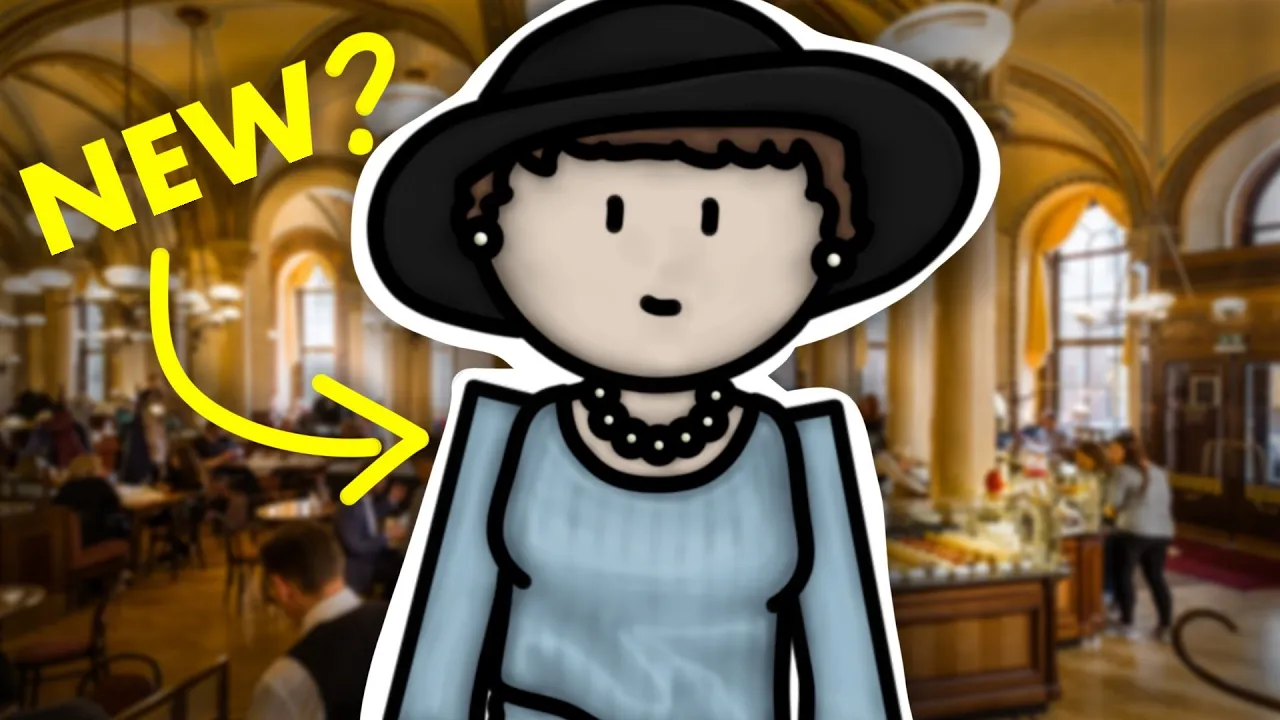
The German 'New Woman', 1918-1933 | GCSE History | Weimar Germany
29.1K
The German 'New Woman' (Die Neue Frau) emerged in 1920s Weimar Germany as a symbol of modernity, characterized by young, unmarried women working in white-collar office jobs, consuming more goods, adopting masculine traits like short hair and smoking, and embracing liberal sexual attitudes; however, historians debate whether this represented a genuine social movement or merely an advertising construct, given that female employment barely increased from 34.9% in 1907 to 35.6% in 1925, and white-collar workers couldn't afford independent lifestyles due to low wages.
Click to watch →

Historiker Götz Aly - Jung & Naiv: Folge 553
537K
During the Weimar Republic, the number of university graduates tripled, and women's enrollment increased from zero to 20%. However, when the Great Depression struck, these newly mobile students faced unemployment while Jewish students continued achieving academic success, fueling resentment that contributed to Nazi support.
Click to watch →
Deep Dive
Basic concepts of modern industrial design, including the shift from ornamental handcrafts to minimalist, mass-produced objects.

History of ID Week 1: Intro. What is Industrial Design?
62.4K
Industrial design as a profession emerged around 1927 when materials, manufacturing, and user-centered thinking converged. However, all components existed earlier: people made things for others, used various materials, and applied human-centered principles. Mass production involves repeat manufacturing, with the moving assembly line (1914-1920) rationalizing work so workers simply repeated tasks. Ancient Chinese bronze vessels demonstrate early mass production thinking through standardized molds. Human-centered design principles, traditionally seen as modern developments from WWII, actually have ancient roots in objects like presentation saddles designed to fit both horses and human riders.
Click to watch →
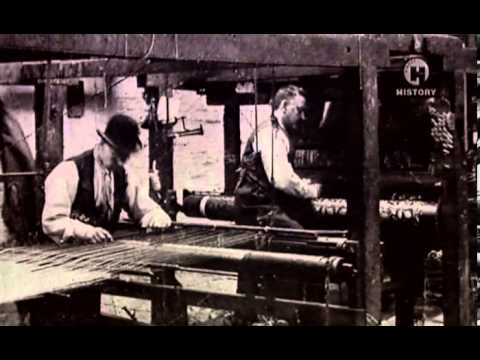
Дизайн 1. Индустриализация и зарождение дизайна 18-нач. 20 вв.)
21.9K
Before industrialization separated design from production, all items were made by craftsmen in small workshops in small quantities. All items had similar designs but each had slight differences resulting from the collective work of all masters. Even when making dozens of similar items, each one is individual. Items should not be identical if they contain life and spark. The difference between handmade pottery and factory-made pottery lies in the relationship with the material. Clay is a living form of life and must be respected. Industrial design is based on the assumption that a craftsman's work can be copied by a conveyor system where machines replace humans and humans become part of machines. To improve work quality, the process of organizing, preparing, and operating workers needed to be changed. The main idea was the division of labor. One specialist creates figures by filling molds with clay, feeling excess clay to leave only the contour. Another specialist then decorates the figure.
Click to watch →

Bauhaus: The Face of the 20th Century
65.1K
By the early 1920s, Bauhaus workshops began moving away from individually crafted pieces toward products made as prototypes with later industrial manufacture and mass market in mind. Elegant, simple pieces became forerunners of modern home design. Products were designed in terms of function and need for mass production—tea infusers, chess sets with pieces signaling their movement, cradles consisting only of triangles, circles, and rectangles in primary colors, and wooden toys made of separate brightly colored elements. Some products were already being manufactured in series by Bauhaus workshops. The design of many products was closely linked to foundation course teaching emphasizing color and geometry, with Kandinsky's teaching that primary forms represent qualities identical to primary colors. This transition from craft to industrial design established principles still visible in contemporary product design.
Click to watch →

Макс Розенфельд Лекции о дизайне "Петер Первый" 6 часть
1.3K
The video outlines the core principles that defined the new approach to industrial design: simple geometric forms, clarity, simplicity, logic, common sense, and practical convenience. These principles stood in contrast to the ornamental and decorative approaches of traditional craftsmanship. The new design philosophy emphasized that industrial products should be designed for their intended function, with consideration for how they would be manufactured, used, and maintained. This represented a fundamental shift from viewing products as artistic objects to viewing them as functional tools that served practical purposes.
Click to watch →
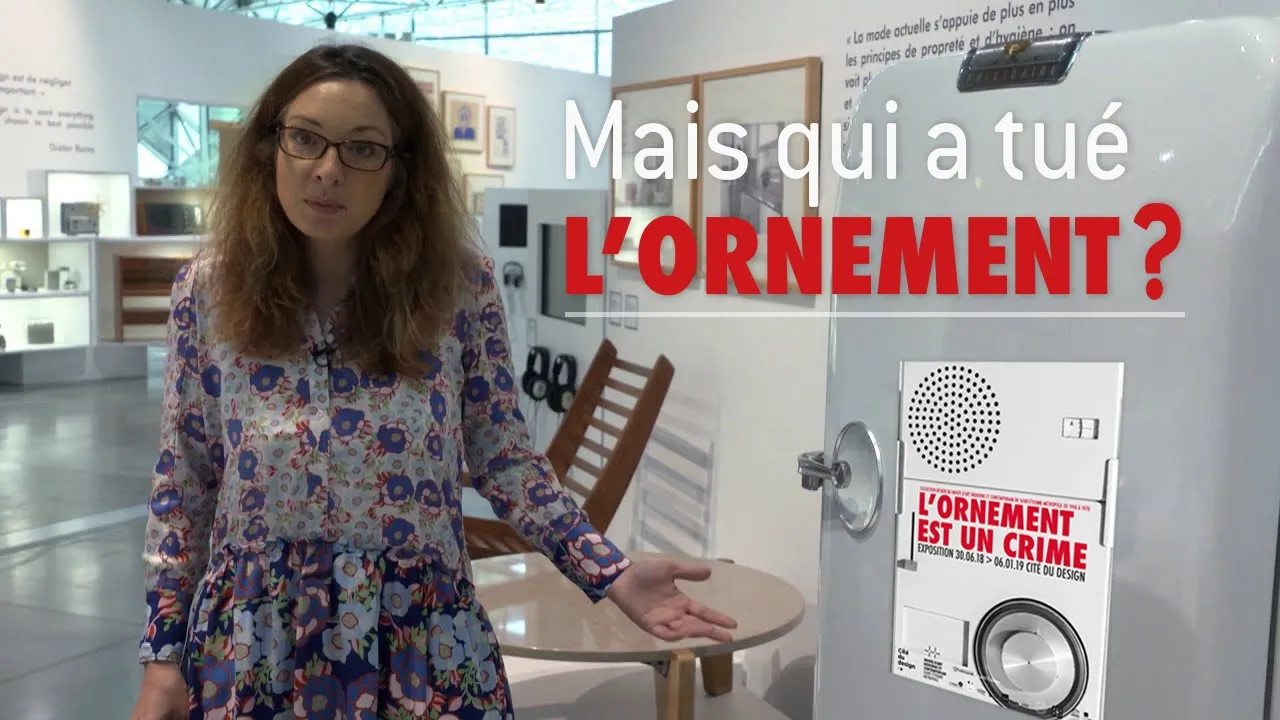
Mais qui a tué l'ornement ? Exposition l'ornement est un crime
7K
At the beginning of the 20th century, ornamentation was radically rejected as a sign of civilizational degeneration. Adolf Loos condemned ornament in 'Ornament and Crime' (1908), establishing the absence of ornament as modernity's new dogma. This rejection targeted the 19th century's adoration of ornament, which masked objects' primary functions. The Thonet chair 1859 exemplified this philosophy with only six pieces, ten screws, and two nuts, representing kit furniture's ancestor. Michael Thonet initiated the modern furniture revolution by stripping away ornamentation to create economical, easily assembled chairs for mass distribution. Marcel Breuer further revolutionized design by studying bicycle construction, realizing furniture could be made by curving tubes to form functional objects. Josef Hoffmann's Sitzmaschine eliminated all decorative elements, with remaining features serving functional purposes. Modernists initially rejected color entirely, opposing the 19th century's color obsession, before encountering neoplasticism's use of primary colors. Le Corbusier adopted this simplified color approach in architecture and furniture. After World War II, designers participated in reconstruction efforts, applying 1930s solutions. The Eames worked for the American Navy, producing aircraft fuselages and splints, which refined their techniques for creating simple, modest furniture designed to fit the human body. Le Corbusier's Unité d'Habitation in Marseille used only 15 measurements, demonstrating rational design principles. In the 1940s-1950s, American influence transformed kitchens through 'domestic sciences' that assimilated kitchen work to factory work. Raymond Loewy's 1950s refrigerator exemplified aerodynamic, fluid, purified design for hygienic domestic environments. The Eames developed the first visible plastic chairs through three years of research, partnering with Zenith Plastics to perfect fiberglass-reinforced polyester originally developed for military radar domes and aircraft. In the 1950s, designers shifted from industrial to natural inspiration, drawing from animals, the human body, and found objects. Arne Jacobsen's chairs exemplified this return to organic curves while maintaining industrial qualities like washability, stackability, and lightweight construction for mass production.
Click to watch →
Deep Dive
The structure of the Bauhaus curriculum, including the Vorkurs (preliminary course) and the organization of its specialized material workshops.

Bauhaus, la escuela que revoluciono el mundo. (arte, diseño y cultura)
89.5K
The Bauhaus school, founded in Germany under three architect-directors (Walter Gropius, Johannes Itten, and Mies van der Rohe), rejected traditional classical art education in favor of modernist principles. The school believed every human possesses innate creative potential, as humans are naturally sensitive to sensory experiences. The curriculum combined mandatory artistic disciplines (analytical drawing, geometric drawing, natural drawing, typography, modeling, photography) with scientific subjects (mathematics, philosophy, psychology, physics, chemistry, biology). Students progressed through a two-semester preliminary course emphasizing material experimentation before advancing to specialized workshops.
Click to watch →

HDI1#06 Escuelas pioneras del diseño
2.2K
The Bauhaus teaching method included a preliminary course (Vorkurs) with experimental work in form and color, divided into glass, wood, and textiles workshops. Teaching was mixed, with a 'master of form' (artist) and 'master of technique' (artisan), whose fusion created the apprentice who would become a designer. The preliminary course evolved through directors: Johannes Itten (mystical, rejected industrialization), László Moholy-Nagy (scientific principles, volumes), and Joseph Albers (who progressed from student to director).
Click to watch →

Bauhaus vs. Brutalism: What's The Difference? Architecture + Art History 101
566.1K
The Bauhaus was a German art school from 1919-1933, named from 'Hausbau' (house building). Founded by Walter Gropius in Weimar, it emerged from post-WWI social experimentation. The school had a unique three-tier structure: apprentices, young masters, and masters, with three study tiers including a preliminary course, workshops, and an invitation-only building course. Gropius's manifesto called for uniting architecture, sculpture, and painting into a new guild of craftsmen. The Bauhaus responded to Germany's economic crisis (hyperinflation in 1923) by emphasizing functional, material-efficient design without decorative excess.
Click to watch →
1919-2019. Cento anni di Bauhaus
17.3K
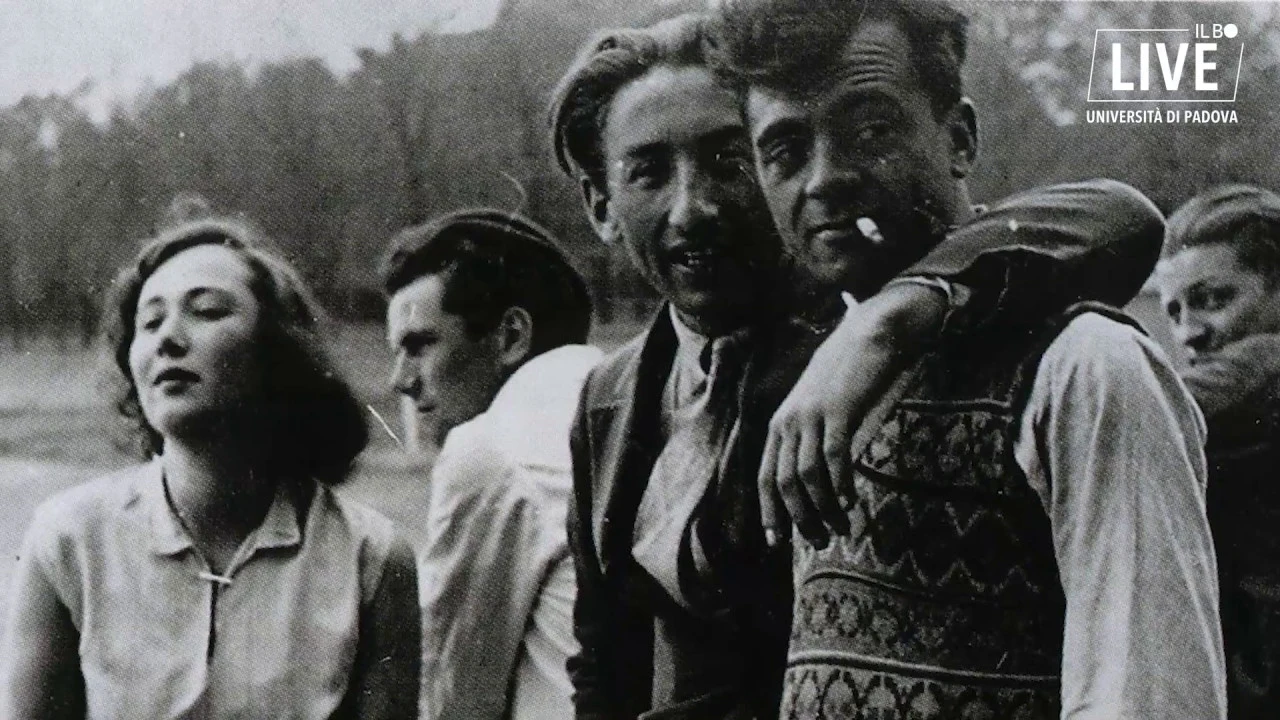
The Bauhaus was founded in April 1919 by Walter Gropius in Weimar, merging the School of Applied Arts and Academy of Fine Arts. The school's name ('Bau' for building, 'Haus' for house) reflected its focus on architecture. The manifesto aimed to train architects, painters, and sculptors to understand architecture's complex form, restoring the architectural spirit lost in salon art. Gropius believed art must be integrated with craftsmanship. The educational structure included a preparatory course (Vorkurs) to eliminate traditional academic influences, followed by specialized workshops organized by material types. Johannes Itten taught the Vorkurs, creating a 'tabula rasa' for students. Around 1923, Theo van Doesburg introduced De Stijl influences, shifting the school toward embracing the machine as modern design. The Bauhaus building in Dessau featured interconnected blocks serving different functions. The school fostered community through theater, music, and celebrations. The manifesto stated enrollment was open to all without class or gender distinction, with women comprising one-third of students. Following the Nazi takeover in 1933, the Bauhaus was definitively closed.
Click to watch →

La escuela de la BAUHAUS. El diseño artesanal, la llegada de la máquina y de la mujer a los talleres
76.5K
The Bauhaus was founded in Weimar, Germany in 1919, combining 'Bau' (construction) and 'Haus' (house). It emerged from the Industrial Revolution's impact on production and the Arts and Crafts movement led by William Morris, who advocated for returning to artisanal craftsmanship. World War I created a context of disillusionment, as artists doubted the war's positive value. Walter Gropius, the first director, wrote manifestos calling for intellectual change. The school's core philosophy was that artisans and artists must work together to build the future, eliminating the traditional distinction between art and craft. The curriculum began with a preliminary course (Vorkurs) taught by Johannes Itten, designed to liberate students from conventions. The dual faculty system, with one theoretical and one practical teacher per workshop, was designed to create professionals combining artistic vision with technical knowledge. The 1923 exhibition featured the Model House (Haus am Horn), which embodied the school's principles of integral design. The arrival of Theo van Doesburg and Piet Mondrian in 1920 marked a decisive shift from Expressionism to Constructivism, advocating for a unified style using standardized colors and basic geometric forms. The school underwent a radical transformation, moving from the union of art and craft to the union of art and technique, creating a limited company to sell objects created by students and faculty. In 1933, the Nazis closed the Bauhaus, forcing artists to emigrate to the United States, which actually accelerated the spread of Bauhaus ideas globally.
Click to watch →
Prerequisite Knowledge
- Concept 01The founding principles, history, and philosophy of the Bauhaus School, specifically the integration of fine art and functional craft.
- Concept 02The social and historical context of the Weimar Republic, particularly the evolving status and limitations of women in higher education and professional fields in 1920s Germany.
- Concept 03Basic concepts of modern industrial design, including the shift from ornamental handcrafts to minimalist, mass-produced objects.
- Concept 04The structure of the Bauhaus curriculum, including the Vorkurs (preliminary course) and the organization of its specialized material workshops.
Subsequent Learning
- Step 01An in-depth design analysis of Marianne Brandt's most famous works, such as the Model No. MT 49 tea infuser and her influential Kandem lighting designs.
- Step 02The legacy and contributions of other pioneering women of the Bauhaus, such as Anni Albers in weaving and Lilly Reich in interior design.
- Step 03The diaspora of Bauhaus designers after the school's closure in 1933 and how they imported modernist design philosophies to the United States and beyond.
- Step 04The evolution of 20th-century lighting and product design, tracing the lineage of Brandt's functionalism in contemporary consumer electronics and homeware.
Brandt's Role
Iconic Design
Lighting Works
Artistic Range
Legacy Value
Brandt's Role
0:00Playing Section
- 1
Marian Brandt was a German artist.
- 2
She was the only woman in the Bauhaus metal workshop.
- 3
She later became the workshop's director.
The Limits of Individual Triumph: Systemic Gender Barriers at the Bauhaus
While celebrating Marianne Brandt’s achievements highlights her individual genius, some design historians argue that focusing solely on her success can obscure the pervasive systemic gender inequalities of the Bauhaus. Walter Gropius and other leaders actively funneled women into the weaving workshop, viewing metalwork and architecture as male domains. Brandt’s rise to head the metal workshop was a rare exception rather than a sign of systemic gender equality. Furthermore, this 'exceptional woman' narrative overlooks how the institution ultimately failed its female pioneers. Despite her breakthrough designs, Brandt faced severe professional isolation and struggled to secure long-term, influential positions in the male-dominated industrial design sector after leaving the Bauhaus. A critical perspective suggests that celebrating her individual triumphs risks minimizing the rigid, patriarchal structures of the Bauhaus that restricted her career and successfully marginalized many other talented female contemporaries whose contributions remain unacknowledged.
Deep Dive
An in-depth design analysis of Marianne Brandt's most famous works, such as the Model No. MT 49 tea infuser and her influential Kandem lighting designs.

Bauhaus Tubular Steel Furniture: Design History Lecture
83.1K
Marianne Brandt broke barriers as a woman in the Bauhaus metal workshop, becoming its director in 1928. She negotiated contracts between the Bauhaus and outside industry, gaining experience that prepared her for industrial careers. Her Model MT49 tea infuser demonstrates sophisticated geometric assembly using brass and silverplate with minimal materials. Many of her lamps and ashtrays show successful combinations of basic geometry with simple materials. The same fundamental construction principles allowed later Alessi versions in stainless steel to achieve identical aesthetics, proving that material choice doesn't necessarily determine form language. Her work demonstrates how institutional barriers can be overcome through talent and determination.
Click to watch →

Bauhaus Movement Explained: History and Impact
592.7K
Marianne Brandt created a legendary teapot that exemplified Bauhaus principles of functional design. The teapot was designed to be practical, with a spout that prevents drops from rolling down and a wooden handle that is heat-resistant. Despite its functionality, Brandt also ensured aesthetic appeal, creating multiple versions from different materials including tombak alloy, silver, and nickel-plated silver. This demonstrates the Bauhaus principle that good design must serve both function and beauty.
Click to watch →

The Design Movement that Altered History | Bauhaus | How One Design School Changed the World Forever
4.1K
The Bauhaus advanced gender equality in design education. Anni Albers (1899-1994) studied weaving, crediting Paul Klee's emphasis on process over form. She pioneered direct composition on the loom rather than following cartoons, incorporating artificial silk, synthetic and organic materials, and both hand and machine weaving. Marianne Brandt (1893-1969) became the first woman in Georg Muche's metal workshop. In 1924, she created the iconic Model No. MT49 teapot—only 3 inches tall, designed for concentrated tea extraction. Its half-spherical body with crossbars, flat lid, and onyx handle exemplifies Bauhaus constructivist aesthetics, with curator Claus Weber calling it 'Bauhaus in a nutshell.'
Click to watch →
La Bauhaus está en todo lo que tocas
23.3K
The Bauhaus functioned as a hybrid between modern school and medieval guild, with workshops in metal, furniture, textiles, typography, ceramics, murals, and theater. Each workshop had a 'master of form' (vanguard artist) and 'master of craft' (experienced artisan). Marcel Breuer's bicycle handlebar observation led to the Wassily Chair—steel tubular structures with minimal material. Marianne Brandt's Kandem lamp transitioned from prototype to mass production. Gunta Stölzl and Anni Albers transformed textiles into architectural elements, investigating how fabrics could isolate, filter sound, and function as lightweight walls.
Click to watch →

Stéphane DUPONT à propos de « Marianne Brandt, un alphabet, un livre, une exposition »
1.4K
Marianne Brandt, a Bauhaus designer from the 1920s, created iconic geometric objects characterized by recurring forms such as spheres, semi-spheres, lines, and rectangles; this video demonstrates how her design vocabulary can be translated into a custom alphabet through a systematic process of extracting geometric modules from her work, particularly her 1924 teapot, and applying them to create typographic characters that honor her modernist legacy.
Click to watch →
Deep Dive
The legacy and contributions of other pioneering women of the Bauhaus, such as Anni Albers in weaving and Lilly Reich in interior design.

Especial 100 anos Bauhaus | Design, Arquitetura e Artes
55.2K
The contributions of women like Ise Frank and Lilly Reich have been historically overlooked in design historiography. These women were only recently rediscovered because contemporary discourse about women's roles in society has returned to prominence. Ise Frank was responsible for business management, organizing project promotion, and coordinating planning for the directors' house. She maintained contacts, invited visitors, and performed at least a dozen different roles within the school. Lilly Reich worked alongside architect Mies van der Rohe on the Tugendhat House project, yet her contributions were largely forgotten. She served as the artistic director of the German pavilion at the 1929 Barcelona International Exposition. After the Nazis came to power in 1933, they closed the Bauhaus school, yet a contradictory relationship developed between the regime and some school members. While official Nazi propaganda rejected the Bauhaus, associating it with Bolshevism, Jews, and Marxism, Nazi leaders privately recognized the school's functionality. Some Bauhaus artists and students accepted work within the Nazi system, creating propaganda materials. Anni Albers, who began studying at the Bauhaus in 1922, was the first woman to receive a diploma from the Bauhaus in 1930. She became head of the weaving workshop in 1931 and developed the tapestry for the school's auditorium, which today stands as a monument to the Bauhaus and is a UNESCO World Heritage Site. The ideas of the Bauhaus remain more alive than ever, as demonstrated by contemporary designers working thousands of kilometers from where the school was founded.
Click to watch →

Las Mujeres de la Bauhaus - Artisteando
1.4K
Despite systemic discrimination, numerous women made significant contributions to the Bauhaus. Friedl Dicker, one of the first female students, formed 'The Viennese' group and later developed a successful career in architecture and furniture design. Anni Albers pioneered modern textile art, becoming the first designer with a MoMA solo exhibition. Alma Siedhoff-Buscher specialized in children's furniture, creating iconic pieces like the 'Klein Schiff.' Lotte Bise and Fera Mayer-Waldeck became architects, contributing to urban planning and post-war reconstruction. Marianne Brandt created iconic products like lamps and tea sets that remain commercially sold today. Gunta Stölzl, appointed professor in 1926, revolutionized textile design with geometric compositions. Other notable women include Lily Reich, Gret Stern, Otti Berger, and Eileen Gray, who were internationally recognized for their industrial design contributions.
Click to watch →

History of Industrial Design Week 7 Part 1: You Like Hearing About the Bauhaus
31.3K
Vogel Feld designed the iconic Bauhaus lamp with Carl Jakob Jucker, becoming the school's most successful product. Mary Ann Brandt broke barriers as the first woman in metalwork, becoming workshop director in 1928 and negotiating major contracts. Her geometric teapot set was conceived for mass production but remained handmade and expensive. Lily Reich partnered with Mies van der Rohe for 12 years, developing woven seating and curating influential German design exhibitions that shaped American design education.
Click to watch →

Le centenaire du Bauhaus (1919-2019)
14.8K
The women of the Bauhaus were largely combatants who shared multiple talents. Gunta Stölzl became the only female master at the institution and directed the weaving workshop from 1927. Anni Albers emigrated to the United States in 1933 and became a professor at Black Mountain College, with her textile art still considered visionary. The women of the Bauhaus represent a theme that has received little attention historically, yet they were pioneers who challenged gender stereotypes in the art world and created extraordinary works that continue to influence contemporary design.
Click to watch →
The Design Movement that Altered History | Bauhaus | How One Design School Changed the World Forever
4.1K
Despite political pressures leading to the Bauhaus's 1933 closure under Nazi regime, its ideals spread globally. Women pioneered groundbreaking work: Anni Albers (1899-1994) studied weaving, crediting Paul Klee's emphasis on process over form; she pioneered direct composition on the loom rather than following cartoons, incorporating artificial silk and both hand and machine weaving. Marianne Brandt (1893-1969) became the first woman in Georg Muche's metal workshop, creating the iconic Model No. MT49 teapot (1924)—only 3 inches tall, designed for concentrated tea extraction. When Nazis came to power, followers spread Bauhaus ideals globally, notably through Ludwig Mies van der Rohe's New School of Architecture at Illinois Institute of Technology in Chicago, ensuring the movement's worldwide influence despite its short existence.
Click to watch →
Deep Dive
The diaspora of Bauhaus designers after the school's closure in 1933 and how they imported modernist design philosophies to the United States and beyond.

El tiempo de la Bauhaus | Luis Fernández-Galiano
516.8K
After the Bauhaus closed in 1933, many masters emigrated to the United States, carrying the Bauhaus gospel to American institutions. Moholy-Nagy founded the New Bauhaus in Chicago; Gropius became director of Harvard Graduate School of Design and brought Breuer with him; Albers taught at Black Mountain College and later Yale; and others joined major American universities. This diaspora colonized elite American institutions along the East Coast, creating lasting legacies that shaped American modernism. The Bauhaus published fourteen books between 1923 and 1928, covering architecture, painting, photography, film, and design theory. These publications served as testaments to the school's intellectual achievements and helped disseminate its principles globally, ensuring its enduring influence on 20th-century design education worldwide.
Click to watch →
La escuela de la BAUHAUS. El diseño artesanal, la llegada de la máquina y de la mujer a los talleres
76.5K
In 1933, the Bauhaus was closed by the Nazis, forcing many artists to emigrate to the United States and other parts of the world. This actually accelerated the spread of Bauhaus ideas beyond what they would have achieved on their own. Gropius taught at Harvard University, and Mies van der Rohe (the last director) went to Chicago, where some Bauhaus professors established the New Bauhaus school. While the Nazi closure killed the institution, it did not kill its ideas, which continued to influence design education and practice worldwide.
Click to watch →

Лекция «Баухауз» | Артем Дежурко
29.1K
This extensive section traces the global influence of Bauhaus design from its peak in Dessau through its diaspora after the Gestapo closed the school in 1933. The modernist furniture revolution of the 1920s-1930s was characterized by the use of industrial materials like bent metal tubing and plywood, representing a deliberate departure from traditional wooden furniture. The 1927 Stuttgart exhibition demonstrated how Bauhaus furniture could be applied to large-scale architectural projects, with Le Corbusier, Charlotte Perriand, and Pierre Jeanneret developing their own modernist furniture designs. In 1927, Russian architectural delegations visited the Dessau Bauhaus campus, and in 1929, Henning Schipper came to Moscow and designed the color scheme for the Narkomfin building. When the Bauhaus faced increasing political pressure in the late 1920s, Gropius was forced to dismiss many students who called themselves the 'Red Brigade.' These students emigrated to the Soviet Union and brought Bauhaus principles to Soviet architecture. After the school's closure, Gropius and Breuer emigrated to London, where Gropius became chief designer for the Isokon Furniture Company. In 1937, they moved to Harvard, where they trained new generations of designers at the Graduate School of Design.
Click to watch →

1/2 Referentes del Diseño Gráfico a lo largo de la historia / Marco Creativo
51.7K
The Bauhaus school was forced to close when Adolf Hitler came to power in 1933. As a dictator who favored classical art and viewed modernist movements as 'degenerate,' Hitler opposed the experimental and abstract approaches taught at Bauhaus. Many professors and artists had no choice but to flee Germany. Many of these exiled designers eventually found refuge in the United States, bringing their revolutionary ideas about design and typography with them. This diaspora significantly influenced the development of American graphic design and advertising industries.
Click to watch →
Modernist Design at Black Mountain College
1.8K
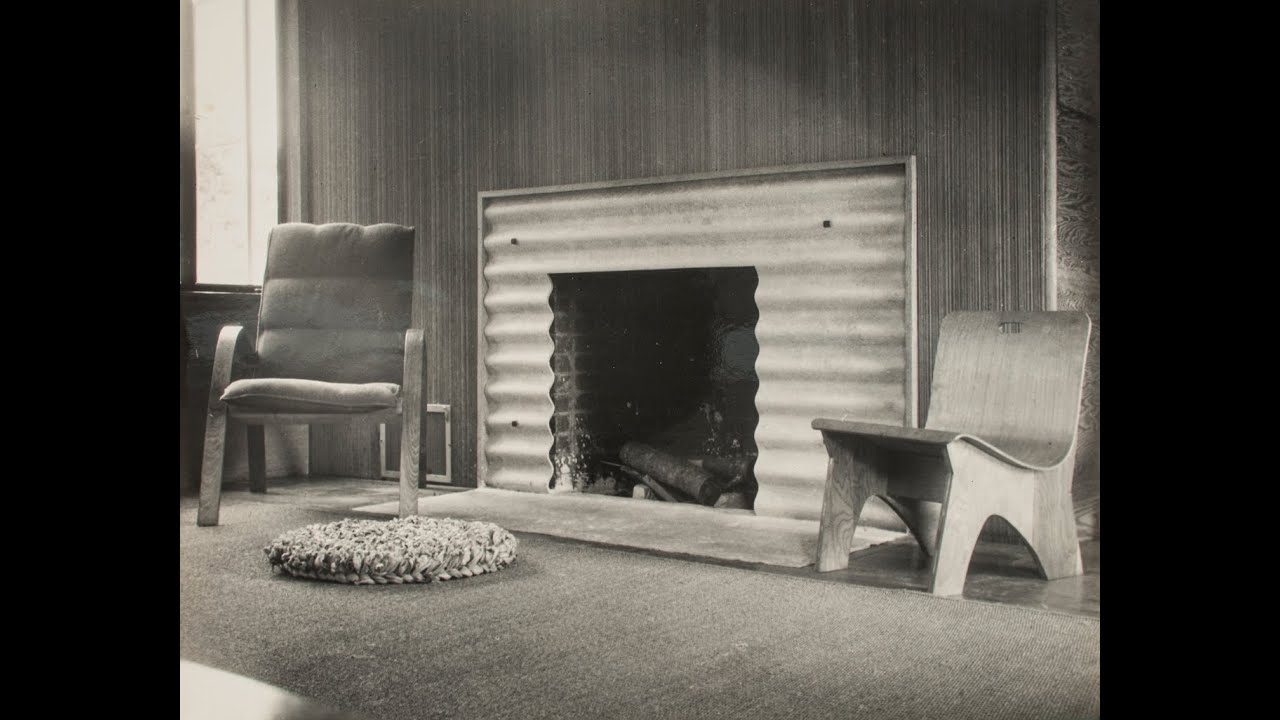
In 1933, the Nazi party forced the state-funded Bauhaus art school to close due to its embrace of modernist principles. Many faculty and students immigrated to the United States, bringing their modern design philosophy. Black Mountain College, founded that same year in North Carolina, became one of several American institutions influenced by the Bauhaus. Founders John Rice and Theodore Dreyer hired Joseph Albers, a Bauhaus professor, to head the art department. Albers invited other former Bauhaus professors who brought avant-garde furnishings and encouraged creativity across all disciplines. The Mullenhoffs, who immigrated in 1935, brought tangible Bauhaus furniture designed by Albers in 1926. Mary Gregory, who studied at Bennington College, joined as an apprentice teacher in 1941 and by 1943 was designing furniture for the entire campus, including the Dreyer family's personal furniture.
Click to watch →
Deep Dive
The evolution of 20th-century lighting and product design, tracing the lineage of Brandt's functionalism in contemporary consumer electronics and homeware.

La Fin de l'Usine Brandt : L'Histoire Secrète de l'Électroménager Français
323
Brandt's production diversified before dominating kitchens, establishing itself in small mechanics, light armaments, and thermal equipment. The brand built its reputation on durability—a Brandt product did not break down but functioned day after day, year after year. French households began hearing the name more in hardware stores than art galleries. The first basic household appliances appeared: heavy objects often made of cast iron or thick steel designed to last a lifetime. Brandt also understood the importance of industrial design, recognizing that visual appearance mattered even for utilitarian tools. He designed sleek casings with clean lines, hiding complex mechanisms under elegant exteriors, making technology acceptable and desirable for the general public.
Click to watch →

Bbc Art Of Scandinavia 3 of 3 Democratic By Design
10.3K
Functionalism aimed to make life easy for the common man. The simplicity of the sofa sits in you, not the other way around. The designers were almost asking to create things so simple they would create the consumer in a new model—a new sort of man. The Stockholm Exhibition of 1930 marked the first page of functionalism, which was seen as a form of decadence to be avoided—too rich, too splendid, too magnificent, promoting status and things that were disapproved of. The great challenge was to close this cabinet and open a new chapter in Swedish design. The movement believed that by designing things purely to reflect their function and cutting out any ornament, they might arrive at a different notion of beauty and indeed a whole new value system on which a new world might be built.
Click to watch →

Bauhaus El rostro del siglo XX subtitulo en español.
673
By the time Marianne Brandt was producing her refined and functional household utensils in copper and other materials, the Bauhaus workshops had begun moving away from individually crafted pieces toward products made as prototypes with later industrial manufacture and a mass market in mind. These elegant, simple pieces were the forerunners of what today passes as thoroughly modern design.
Click to watch →

Bauhaus Typography at 100: A Curator's Tour with Ellen Lupton
2K
Marianne Brandt's work evolved from craft and sculpture to function within the home. Her hanging glass lamps were designed so that someone could easily adjust the height of the lamp as it hung over a dining room table or work area, and these lamps are still in production today. She also created photo montages during a leave from the Bauhaus, which were an outlet for personal expression and were cheap to make by cutting out magazines. These images showed different interpretations of life in the 1920s, from liberated Bauhaus bodies to more controlled bourgeois realities.
Click to watch →

Bauhaus Typography at 100: A Virtual Exhibition Tour
2.5K
Marianne Brandt entered Maholy-Nagy's metal workshop and was the only woman in that workshop. She abandoned her career as an expressionist painter, burning all her paintings to start over. Her work evolved from fascination with perfect geometries to more functional designs focused on home use. Her hanging glass lamps were designed so users could easily adjust height over dining tables or work areas. These lamps remain in production today, demonstrating how Bauhaus principles of functionality and aesthetics continue to serve practical needs.
Click to watch →
Brandt's Role
Iconic Design
Lighting Works
Artistic Range
Legacy Value
Brandt's Role
0:00- 1
Marian Brandt was a German artist.
- 2
She was the only woman in the Bauhaus metal workshop.
- 3
She later became the workshop's director.
The Limits of Individual Triumph: Systemic Gender Barriers at the Bauhaus
While celebrating Marianne Brandt’s achievements highlights her individual genius, some design historians argue that focusing solely on her success can obscure the pervasive systemic gender inequalities of the Bauhaus. Walter Gropius and other leaders actively funneled women into the weaving workshop, viewing metalwork and architecture as male domains. Brandt’s rise to head the metal workshop was a rare exception rather than a sign of systemic gender equality. Furthermore, this 'exceptional woman' narrative overlooks how the institution ultimately failed its female pioneers. Despite her breakthrough designs, Brandt faced severe professional isolation and struggled to secure long-term, influential positions in the male-dominated industrial design sector after leaving the Bauhaus. A critical perspective suggests that celebrating her individual triumphs risks minimizing the rigid, patriarchal structures of the Bauhaus that restricted her career and successfully marginalized many other talented female contemporaries whose contributions remain unacknowledged.
The founding principles, history, and philosophy of the Bauhaus School, specifically the integration of fine art and functional craft.
The social and historical context of the Weimar Republic, particularly the evolving status and limitations of women in higher education and professional fields in 1920s Germany.
Basic concepts of modern industrial design, including the shift from ornamental handcrafts to minimalist, mass-produced objects.
The structure of the Bauhaus curriculum, including the Vorkurs (preliminary course) and the organization of its specialized material workshops.
An in-depth design analysis of Marianne Brandt's most famous works, such as the Model No. MT 49 tea infuser and her influential Kandem lighting designs.
The legacy and contributions of other pioneering women of the Bauhaus, such as Anni Albers in weaving and Lilly Reich in interior design.
The diaspora of Bauhaus designers after the school's closure in 1933 and how they imported modernist design philosophies to the United States and beyond.
The evolution of 20th-century lighting and product design, tracing the lineage of Brandt's functionalism in contemporary consumer electronics and homeware.
2K views111likes0:49@googleartscultureOriginal Release: 2025-01-17
who is Marian Brandt she was a German artist and the only woman to receive her degree from the bow house metal Workshop she was a bow house Trailblazer eventually becoming the workshop's director succeeding Lazlo Mahal as early as her first semester in the workshop in Fall 1924 she designed a tiny silver te infuser which today holds the record for the most expensive B house object at auction together with her Workshop colleague she also designed lighting fixtures used throughout the Desa B house completed 1926 Marian brand worked in multiple media she was a trained painter and sculptor before attending the PowerHouse and made significant strides in developing modern photography including work in photo monage today her designs are considered Timeless examples of modern industrial design discover more about her by searching Marian Brandt on Google arts and culture
Up Next
85:03
Bauhaus Tubular Steel Furniture: Design History Lecture
@HistoryofID
83.1K views•2012-10-30

12:54
Triumph of Orthodoxy Icon: Byzantine Art & History Explained
@BenCallan
2.1K views•2024-08-06

9:49
FastAPI vs Flask vs Django: Choosing the Right Python Web Framework
@TechWithTim
302.5K views•2024-05-26

1:42
Game of Thrones Opening Credits: A Cinematic Analysis
@gameofthrones
46.3M views•2011-04-18
Related Study Plans & Knowledge Roadmaps
Structured learning paths in General & Interdisciplinary Studies
general-studies
Elevator Engineering: History, Physics & Cities
01From Hoists to Safety Brakes: The Dawn of Vertical Lift
02Hydraulic vs. Traction: The Engineering Physics of Elevators
03Modern Speed, Safety, and Algorithms
+ 2 more learning modules
12h5 modules
Explore Roadmap
general-studies
Rubber: Material Science, History & Geopolitics
01Origins of Natural Rubber & Mesoamerican History
02The Chemistry of Natural Rubber & Vulcanization
03The Geopolitics of the Rubber Boom & Colonization
+ 2 more learning modules
12h5 modules
Explore Roadmap
general-studies
Containerization: Evolution, Logistics & Trade
01Ancient Trade & Bulk Cargo: Amphorae to Barrels
02The Industrial Revolution & Cardboard Packaging
03The Containerization Revolution: Malcom McLean
+ 2 more learning modules
12h5 modules
Explore Roadmap
general-studies
Textile Tech: Evolution, Labor & Global Impact
01Pre-Industrial Textiles: Handloom & Cottage Industry
02Mechanization: The Spinning Jenny to the Power Loom
03The Factory System & Global Labor Transformation
+ 2 more learning modules
10h5 modules
Explore Roadmap