





































The Bauhaus (1919-1933), founded by architect Walter Gropius in Germany, was a pioneering art school that revolutionized modern design by merging art, craft, and industrial production; despite its short lifespan and controversial reputation—including eccentric practices like Johannes Itten's body-cleansing rituals and wild parties—the school produced iconic designs like Marcel Breuer's Wassily Chair and Marianne Brandt's functional teapot, fundamentally shaping 20th-century architecture, furniture, and industrial design.
Bauhaus Movement Explained: History and Impact
Added:The basic tenets of the Industrial Revolution and its shift from artisanal handcrafting to standardized mass production.
The historical and socioeconomic context of early 20th-century Europe, specifically the aftermath of World War I and the establishment of the Weimar Republic.
The foundational principles of the Arts and Crafts Movement and Art Nouveau, which served as immediate artistic precursors and philosophical counterpoints to Bauhaus.
An introductory understanding of Modernism as a cultural movement that sought to align art, design, and architecture with the realities of the industrial age.
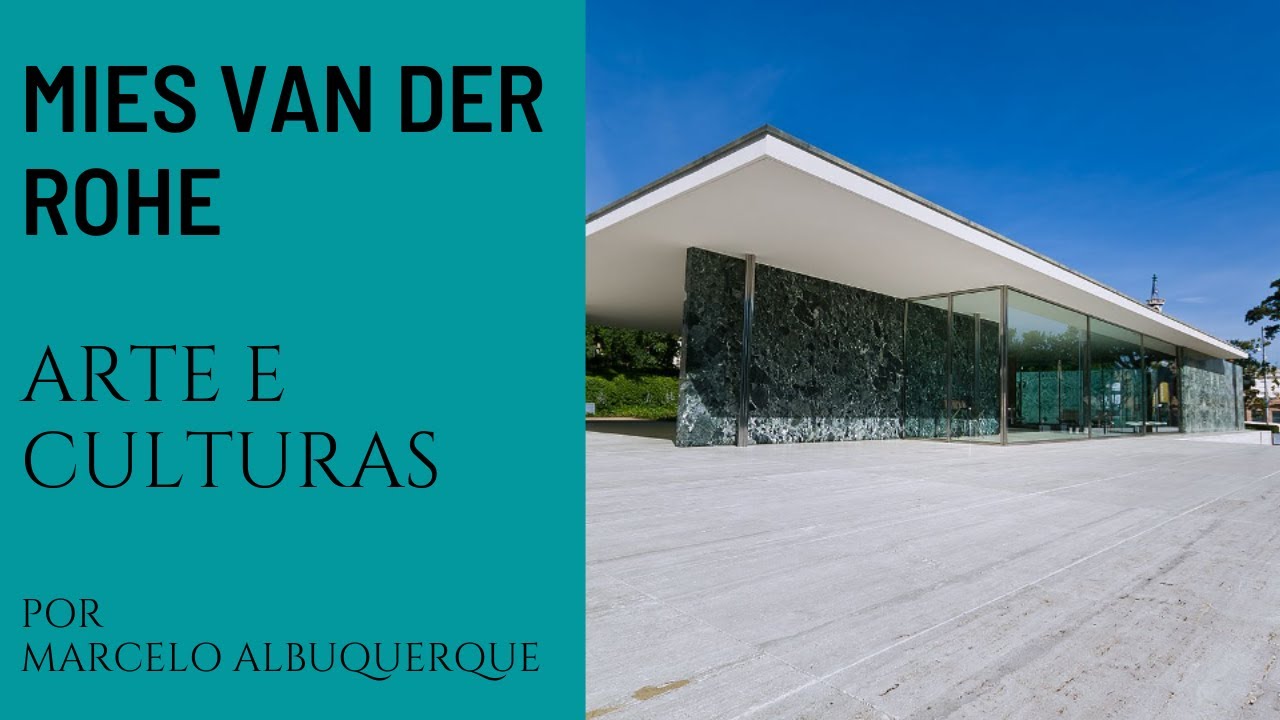
The rise of the 'International Style' in global architecture, examining the work of figures like Ludwig Mies van der Rohe, Walter Gropius, and Le Corbusier in the mid-20th century.
The transition of Bauhaus principles to the United States, studying the impact of the 'New Bauhaus' in Chicago and the Black Mountain College in North Carolina.
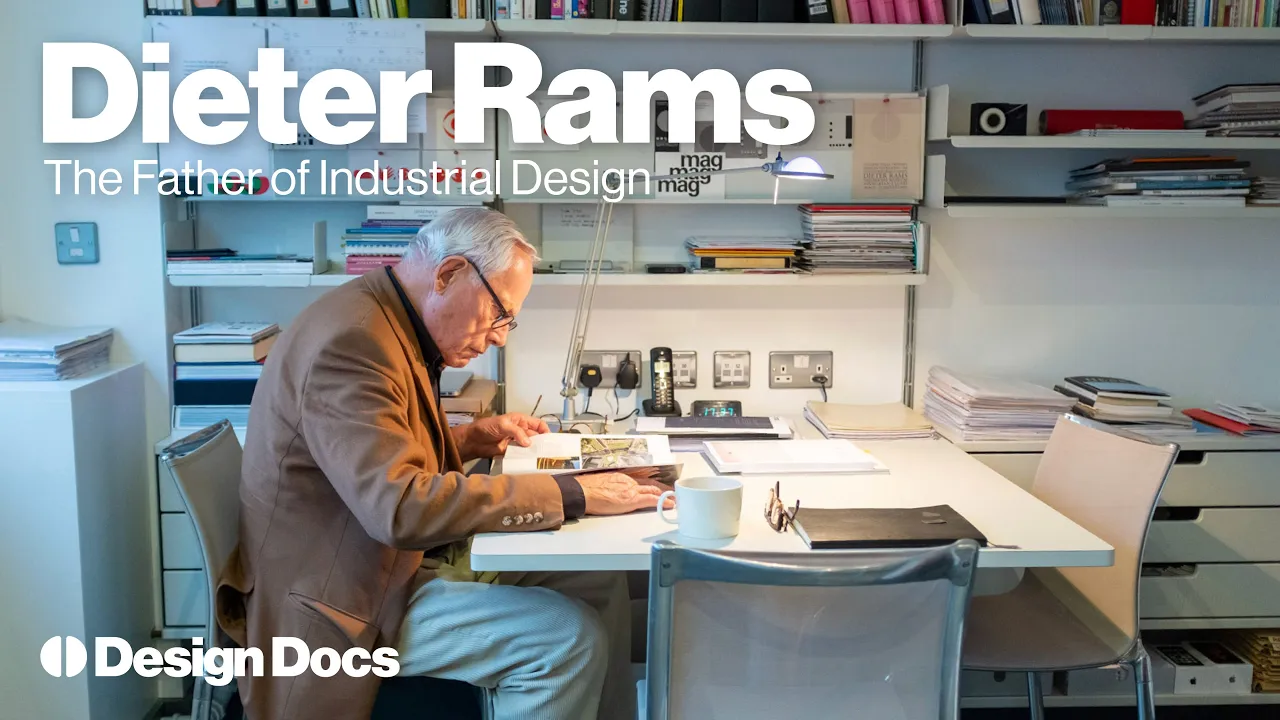
The influence of Bauhaus functionalism ('form follows function') on modern industrial design, particularly the minimalist product design philosophy of Dieter Rams and modern tech companies like Apple.
The development of the Swiss Style (International Typographic Style) and its structural, grid-based approach to graphic design and typography.
The evolution of Mid-Century Modern design and its application in postwar residential architecture, interior design, and mass-market furniture.
592.7K views18Klikes7:30Original Release: 2021-03-12
For many artists, architects, and historians, the Bauhaus is a symbol of modernism and artistic ingenuity. However, to the vast majority of people, the Bauhaus seems like a rather peculiar and short-lived German art school. Honestly, both views are correct. Let’s take a closer look at the Bauhaus in this video!
If you'd like to see more Design videos, be sure to give us a like and tell us which topics you want to learn about next!
During its heyday (1919-1933), the Bauhaus was the cradle of modern design. The founder of the school was the modernist architect, Walter Gropius. On the one hand, he had created an entirely new type of school with the Bauhaus, where students could be turned into masters. On the other, he helped to turn the Bauhaus into a kind of free-for-all, experimental laboratory.
The school always had a unique atmosphere. As Gropius's dream of a community of designers, apprentices, and craftsmen became a reality, the school grew into a kind of commune. People from different backgrounds all lived in close proximity to one another. They worked together, partied together, and shared ideas with one another. As a result, many people viewed the school as a kind of secular cult or even sect.
For example, one of the main masters of the school, Johannes Itten, had a magnetic effect on the students. His supporters were primarily concerned with "physical and spiritual cleansing." They saw their path to self-knowledge in meditation. Itten believed that, in order to remove the veil of the false world and see the truth, it was necessary to prepare the body with the help of vegetarianism, exercise, fasting, and enemas. At one point, the students of Ittenn carried out their ritualistic body cleansing in the city fountain of Weimar, which led to conflicts with the city administration. As a result, Walter Gropius relieved Itten from his post in 1923, forcing him to leave the school for good.
Itten was not the only master who acted as both an artist and a “prophet.” Many of the school’s teachers held complex philosophical views and sometimes unwittingly bewitched their students.
In addition to its philosophical and political effects, the Bauhaus was notorious for its outrageous parties. Gropius supported the idea that theater shows, lectures, poetry, music, and costume parties should all be part of the training program. In his opinion, rest and relaxation were no less important for creative thinking than work.
Oskar Schlemmer, who had held the position of head of the theater workshop since 1923, offered an answer for the peculiar holidays. He believed that “play” was the power that made creativity possible. Schlemmer used parties as an experimental stage for his workshop. The most famous product of the workshop was the Triadic ballet, where the structure of the human body was destroyed with the help of complex volumetric geometric costumes, turning a human into a puppet. The Bauhaus parties never lost their moments of madness, but when the school moved to Dessau, the parties took on an increasingly professional tone.
Despite its bizarre and challenging reputation, the Bauhaus fundamentally changed the world of design — especially when it came to furniture. In the 14 years of its existence, the school's students created many legendary designs.
One of the most famous products created at the school was the “Basil” chair by Marcel Lajos Breuer. This chair was very much liked by Wassily Kandinsky. Decades later, when Breuer relaunched the mass production of these chairs in Italy in the 1960s, he paid tribute to the artist and renamed the chair “Vasily.” The most famous example of female creativity at the Bauhaus came from Marianne Brandt and her legendary teapot. At its core, the teapot was made to be functional; the spout prevents the drops from rolling down, while the wooden handle was heat-resistant. That said, Brandt didn’t forget to make it aesthetically pleasing. In fact, Brandt liked her original design so much that she made several versions of the product from different materials: tombak alloy, silver, and nickel-plated silver.
Walter Gropius's dream that, as in the Middle Ages, architecture would be the final product of the synthesis of arts. At the first major Bauhaus exhibition in Weimar in 1923, a group of students: Georg Muche, Gunta Stelzl, Alma Sidhoff-Buscher, and Marcel Breuer, built the Haus am Horn as a reflection of a new way of life. To show the versatility of his project, Gropius even shot a promotional movie about what a modernist lifestyle should look like.
The main architectural project of the Bauhaus was the school building itself in Dessau, designed by Walter Gropius. It was an ode to the functionalism and machine aesthetics of the 20th century. The building also served as an advertisement for goods produced under the Bauhaus patent.
Sadly, all good things must come to an end. The Bauhaus went through three different stages: Weimar (1919-1925), Dessau (1925-1932), and Berlin (1932-33). During this time, the school had three directors: Walter Gropius, Hannes Mayer, and Ludwig Mies van der Rohe. None of these phases were easy, but Rohe's years were the most difficult by far.
In 1930, the school had to be temporarily closed, and the dissenters disbanded. Students protested the closure and the censure of the Nazi party.
But this only delayed the inevitable. Hitler became chancellor of Germany and, in the early morning of April 11, 1933, the school was closed by the police. Those who did not have proper documentation were taken away in trucks. Despite permission from the authorities to reopen the school with some changes in August of that year, Ludwig Mies van der Rohe notified everyone that the school was permanently closing due to the "difficult economic situation."
Modern art and design might be completely different if not for the Bauhaus school. Even though it had a short and tumultuous history, the Bauhaus had a tremendous impact on both art and mass production in the 20th century. To this day, reflections of the Bauhaus’s products and vision can be seen in products and art pieces around the world.
What do you find most interesting about the story of the Bauhaus? Can you think of any other art schools that can compare to it? If so, feel free to comment below! Also, don’t forget to give us a like and subscribe to our channel so we can continue making even more great content for you!
Up Next

41:13
Gunta Stölzl: The Only Female Master of Bauhaus | Women Designers You Should Know
@nice.people
544 views•2024-04-16

114:18
Christian Iconography: History, Theology, and Meaning | Fr. Panayiotis Papageorgiou
@Trisagionfilms
58.8K views•2020-02-21

8:13
Dadaism Explained: The Birth of Anti-Art and Its Enduring Influence
@CuriousMuse
473.3K views•2021-05-07

16:34
Earliest Depictions of Jesus in Art: 10 Ancient Images Explained
@UsefulCharts
5.9M views•2022-06-03
Related Study Plans & Knowledge Roadmaps
Structured learning paths in Art History
art-history
Gothic Cathedrals: Engineering, Light & Society
01The Birth of the Gothic: Romanesque to Suger's Vision
02The Structural Triad: Pointed Arches, Ribbed Vaults, and Flying Buttresses
03Theology of Light: Lux Nova and Sacred Geometry
+ 2 more learning modules
14h5 modules
Explore Roadmap
art-history
Pre-Raphaelites: Realism, Symbolism & Critique
01The Victorian Art Establishment and Academic Formula
02The Founding of the PRB and Radical Realism
03Medieval Revivalism and Literary Symbolism
+ 1 more learning modules
8h4 modules
Explore Roadmap
art-history
Street Art: From Subways to Art Market
01Subcultural Origins in Philadelphia and New York (1970s)
02The Subway Era and Style Wars (Late 1970s - 1980s)
03The East Village Scene and Early Gallery Crossover
+ 2 more learning modules
10h5 modules
Explore Roadmap
art-history
Classic Maya Art: Iconography, Glyphs & Ritual
01Foundations of Classic Maya Visual Culture
02Deciphering Maya Hieroglyphs & Text-Image Integration
03Sacred Geography and Cosmological Architecture
+ 2 more learning modules
14h5 modules
Explore Roadmap