Sir Joshua Reynolds (1723-1792) was an English portrait painter who promoted the 'Grand Style' in painting, emphasizing idealization of the imperfect; he was a founder and first president of the Royal Academy of Arts, knighted by George III in 1769, and known for his portraits of children that emphasized innocence and natural grace, including his famous 1788 work 'Age of Innocence'.
Sir Joshua Reynolds: Founder of the Royal Academy of Arts
Added:Deep Dive
An understanding of 18th-century British social hierarchy and the role of art patronage in elite society.
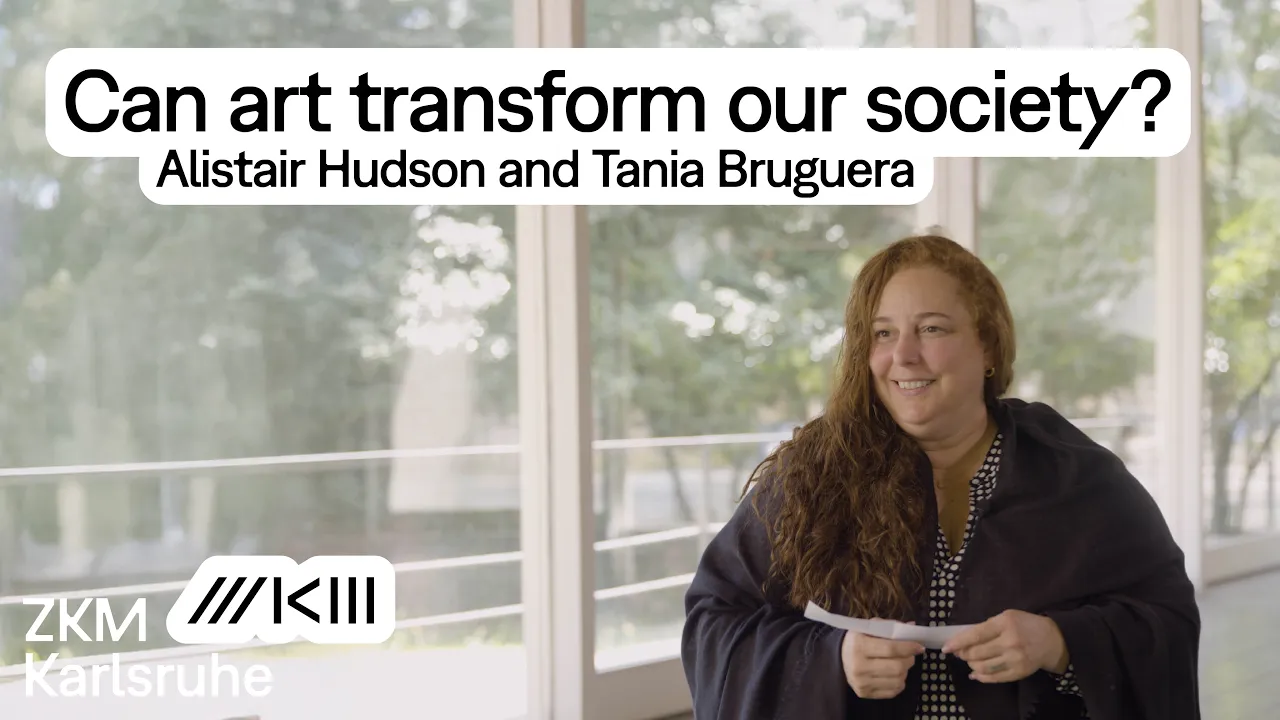
The Function of Art – With Alistair Hudson and Tania Bruguera | Fellow Travellers
699
This section analyzes how art patronage reinforces social hierarchies and the hypocrisy of art's perceived usefulness. Throughout history, wealthy individuals used art patronage to reinforce their changed social status, funding museums and building collections as markers of elevated position. This created museum cultures heavily invested in maintaining hierarchy. The hypocrisy lies in patrons claiming art is not useful while buying art for investment purposes. Postwar museum culture developed education programs to convert people to particular art ideologies and make them complicit in reinforcing status. Arte Útil challenges this by placing education at the center, starting from what people need rather than explaining abstract concepts.
Click to watch →
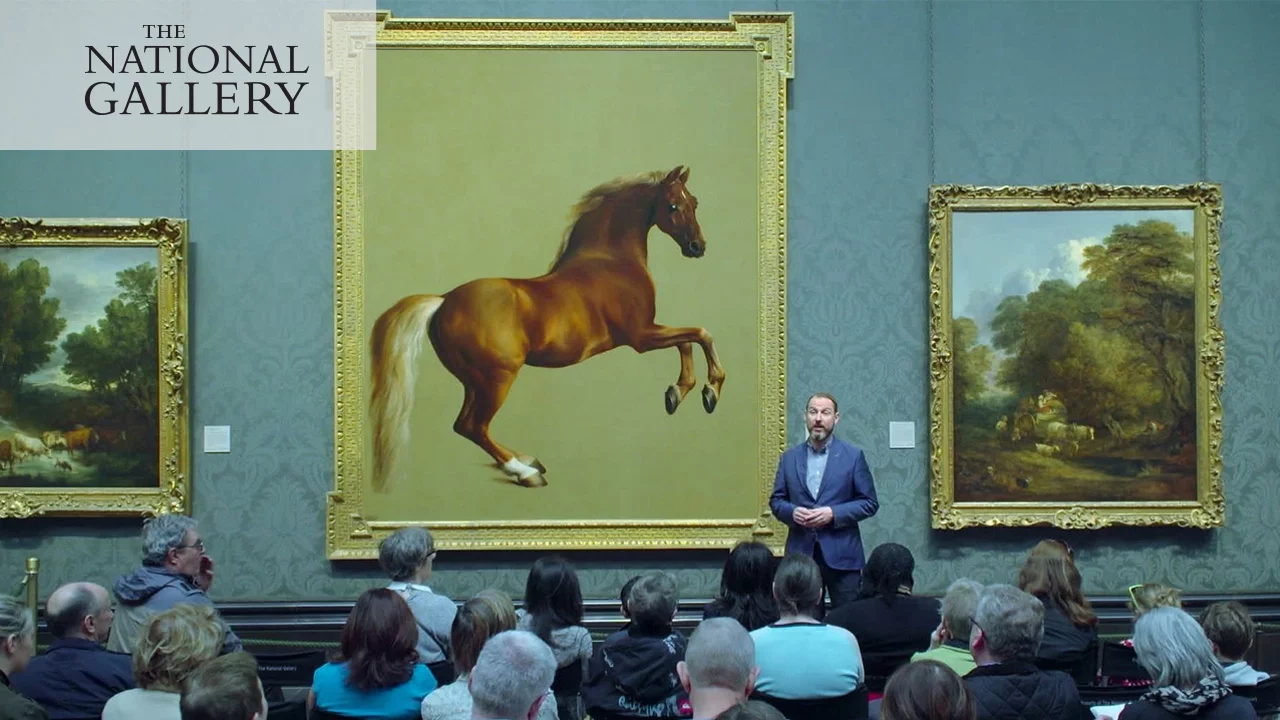
George Stubbs: portrait of the horse Whistlejacket | National Gallery
89.1K
After arriving in London, Stubbs began receiving commissions from some of Britain's wealthiest men, enabling him to purchase a house where he lived for the rest of his life. These patrons, known as the Rockingham circle, clustered around Charles, Marquess of Rockingham, one of Britain's richest men who earned £40,000 annually compared to servants who might earn only £4 per year. This dramatic wealth disparity illustrates the social structure of 18th century Britain and how patronage enabled artists to pursue their craft.
Click to watch →
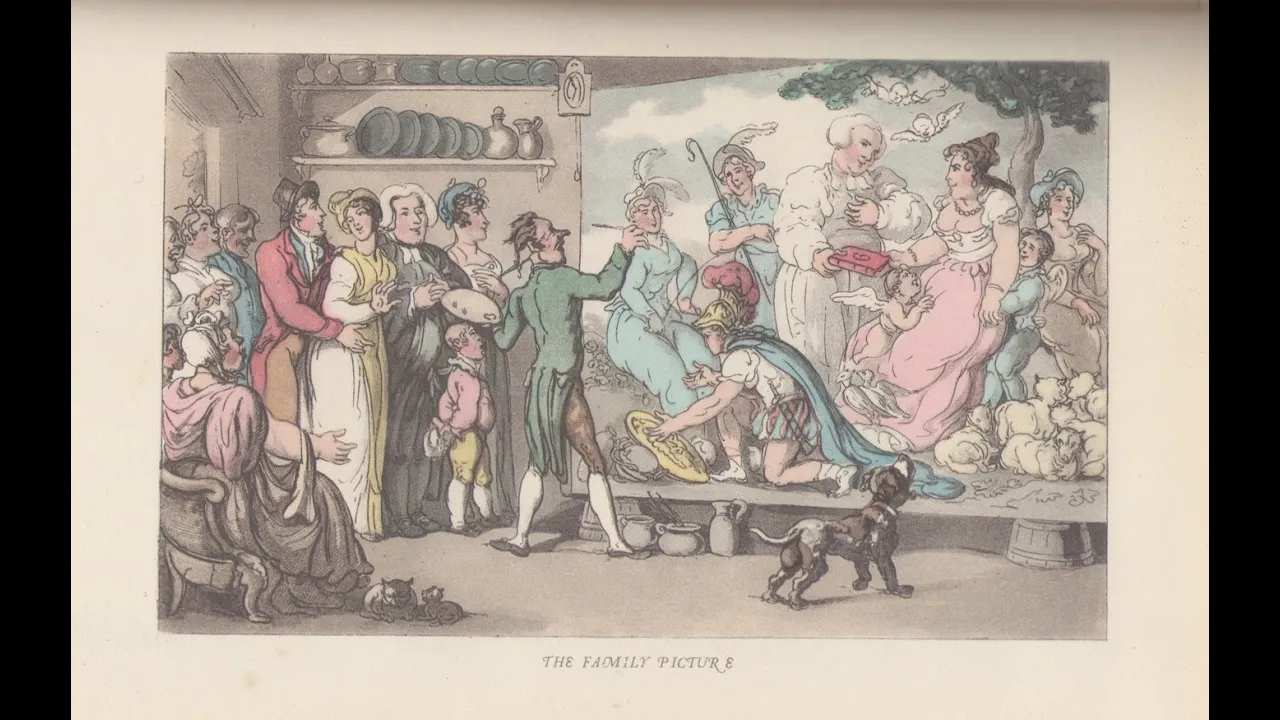
Oliver Goldsmith -The Vicar of Wakefield,1766
876
In Oliver Goldsmith's The Vicar of Wakefield (1766), the commissioning of a family portrait by an itinerant painter reveals how art functioned as a social status symbol in mid-18th century England, where the wealthy and middle classes used artistic patronage to display prosperity and cultural aspirations; the novel illustrates that while art was emerging from religious suppression and supported by imperial wealth through institutions like Sotheby's (1744) and Christie's (1766), there was often little confidence in art dealer connoisseurship, and the Grand Tour served more as a rite of passage for the nouveau riche than genuine cultural education.
Click to watch →
2022 Paul Mellon Lecture at VMFA
464
A new type of patronage emerged in 18th century Britain that was not dependent on the court or church (traditional providers of support for artists and architects in societies of the ancient regime). Instead, this patronage depended on the taste and decision-making vision of single families or individuals who believed that supporting art was quintessential to the culture of the British Enlightenment, which held that society had to be improved in all its different sectors, especially the visual arts.
Click to watch →

Becoming Lady Hamilton
1.8K
The video illustrates how artistic patronage served as a mechanism for social advancement in 18th century London. Charles Greville's arrangement for Emma Hart to sit for George Romney over 100 times during four years created visual documentation that would later enhance her status. The artist George Romney was 'totally entranced by her beauty' and paid almost anything to have her sit for him. Charles Greville described Emma as 'the living version of the Greek sculptures of goddesses,' connecting her to classical antiquity. This artistic patronage served dual purposes: it provided Emma with legitimate social connections and created visual documentation that would establish her reputation when she married Sir William Hamilton. The video shows how artistic achievement could serve as a credential for social mobility.
Click to watch →
Deep Dive
Familiarity with the Renaissance and Classical art movements, which served as the aesthetic foundation for the 'Grand Style'.
제여2-보들레르, 개화기 지식인, 최고최저가격제
117
Academic art was founded on the Renaissance tradition of seeking beauty in ancient Greece and Rome. This classical foundation required artists to study mythology, history, and philosophy to create meaningful works. The 'grand style' (grandeur) emphasized large-scale paintings that created a sense of awe and grandeur, typically depicting heroic figures from mythology and history. This approach was considered essential for artists to be recognized as true artists.
Click to watch →

Πρωτοχρονιάτικη παρέα από τη λέσχη μας για όσους τυχόν είναι μόνοι τους.
175
During the Renaissance, artists imitated the classical works of the Hellenistic period. Historians described this as classicism - an explicit and practical acceptance that the object of art is the universal and eternal perception of beauty, and therefore its expression is naturally realistic, faithful to natural proportions and real light. Within the limits of their abilities, Europeans imitated the Greeks in the first phase of the Renaissance. This established a tradition of artistic excellence that would influence Western art for centuries.
Click to watch →
THE ONLY FLORENCE TRAVEL GUIDE YOU NEED!! (Italy)
197K
The foundation of the Renaissance was classical art, so sculptors, painters, and artists turned to Ancient Greek and Roman statues for inspiration. Many wealthy families had these classical statues in their gardens as the epitome of beauty. This revival of the beauty of the human body became a strong basis for Renaissance art, seeing God's glory in the beauty, order, and harmony of the human form.
Click to watch →
The Digital Turn: a Cultural History ( Part 4 )
173
The Renaissance (c. 1492) aimed to revive classical culture through creative imitation, making it the core paradigm of Renaissance civilization. Humanists imitated classical Latin writing of dead authors, while architects like Alberti designed Christian churches using classical forms without their original religious content—a new mode of transferring form across different functions. By the 19th century, the concept of 'style' emerged to describe what different works of art share—a look, aura, or undefinable quality. This became the backbone of academic art training, with imitation and style forming the foundation of modern art history, as established by theorists like Humboldt, Viollet-le-Duc, and Riegl.
Click to watch →

6to. Semestre / Historia del Arte II / Bloque II / Clase I
504
In terms of Renaissance aesthetics, the classical canon was restored, giving proportionality to idealize moral and civic virtues through harmony and equilibrium. The Renaissance architecture was related and linked through two great pillars: classicism (referring to ancient Greek and Roman antiquity) and humanism (a new philosophical current of man by man, man as the measure of all things). In the specific case of architecture, it sought to break effectively and decisively with any relationship with the Gothic architectural style that preceded the Renaissance during the Middle Ages.
Click to watch →
Deep Dive
Basic knowledge of the academic system of art education in Europe, particularly the French Academy model.

คุยประวัติศาสตร์ศิลป์กับอาจารย์ศิลปากร | พูดมาก Podcast EP.07
193.7K
The French Academy system, established under Louis XIV in the 17th century, represented a formalized approach to art education that became the model for art schools throughout Europe. The Academy, based on the Italian academies, established a rigorous curriculum that emphasized the study of classical art, anatomy, and perspective. Students were required to spend years in the studio of a master artist, learning through direct observation and imitation. The Academy also established a system of exhibitions and competitions that allowed artists to demonstrate their skills and gain recognition. This formalized approach to art education created a standardized system that produced artists with consistent technical skills but also limited artistic innovation by emphasizing conformity to established standards.
Click to watch →

らでんやでん同士の美術界への貢献が新聞記事になってる事を知り感動【儒鳥風亭らでん/ホロライブ】
122.3K
The French Academy (Académie) represented the traditional art education system that dominated art instruction. The Academy taught that the highest goal of painting was to create idealized representations rather than mere copies of reality. Students were trained to avoid leaving visible brushstrokes and to create polished, refined works. This approach emphasized technical perfection and adherence to established artistic conventions. The Academy's influence was so strong that it became the standard for art education, creating a conservative environment that resisted new artistic approaches.
Click to watch →

DES COURS DE DESSIN CLASSIQUES AUX MANGAS : la meilleure méthode pour apprendre
10.9K
The French Academy model, particularly the Académie Royale de Peinture et de Sculpture founded in 1648, became the standard for art education across Europe. This institution aimed to train the best artists in the kingdom, with the most talented receiving the prestigious title of 'académicien,' which guaranteed protection, participation in the famous Salon des Beaux-Arts, and state commissions. The academy's motto was 'libertas artium' (freedom of the arts), representing a departure from the previous guild system. The founders rejected being subject to masters who were both artisans and entrepreneurs, often successors to their fathers. They preferred the liberal arts model, which grouped painting, sculpture, dance, architecture, and engraving together as 'beaux-arts' (fine arts), representing a more institutional but still elitist approach.
Click to watch →

Ciclo de Conferencias: El Arte Mexicano. La Academia de San Carlos en el siglo XVIII. Óscar Flores
4K
Between 1648 and 1805, the French Academy model spread throughout Europe. By the mid-18th century, Germany alone had 60 art academies. The model was adopted in France, Holland, Denmark, England, Italy, Spain, and especially Germany. This diffusion was accompanied by the spread of Neoclassicism, an aesthetic system based on Greco-Roman cultural values, both formally and ethically. This model was transmitted to European princes and governors who followed Louis XIV's example, patronizing the creation of these institutions. The academies were housed in impressive buildings, such as the Academy of San Fernando in Madrid, the Academy of St. Petersburg in Russia, and the Academy of Dresden in Germany, which were true palaces designed to accommodate daily academic activities. The Spanish Academy model was directly influenced by the French Academy. The Real Academia de Bellas Artes de San Fernando in Madrid (1752) was the first in the Iberian Peninsula, followed by Valencia in 1768, and then the Real Academia de las Tres Nobles Artes de San Carlos in Mexico in 1780. This Spanish model was conceived as one of the most important initiatives of Spanish Neoclassicism.
Click to watch →

Arte acadêmica
425
The French Academy of Fine Arts was founded in 1648 by Charles Le Brun, establishing the first formal art academy in France at the Palace of Versailles. This institution created the model for art education that would influence institutions worldwide. André Félibien categorized artistic themes hierarchically: historical and religious themes were highest, followed by portraits, genre scenes, landscapes, and still lifes. Academic art required formal training at academies, making it an intellectualized discipline rather than merely a craft. The academy system emphasized idealization—representing subjects in their most perfect form according to the aesthetic standards of the time period. This institutional approach ensured that artists understood the theoretical foundations behind their work, establishing art as a disciplined intellectual pursuit requiring systematic education.
Click to watch →
Deep Dive
A general awareness of portraiture as an artistic genre and its cultural significance before the late 18th century.
Илья Доронченков. Портретная живопись Англии XVIII века. Лекция
3.6K
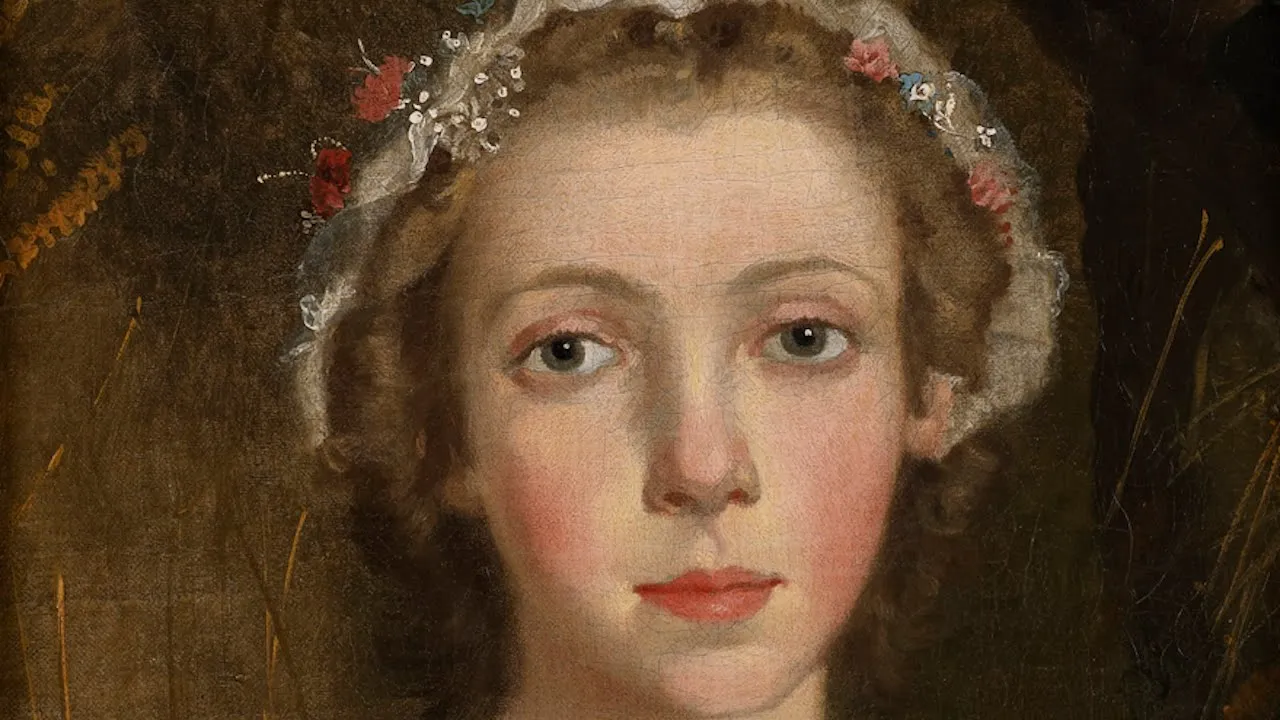
Portraiture in 18th century England served as a powerful tool for demonstrating social status, family heritage, and cultural sophistication. The lecture explains that there was a demographic crisis in England at the end of the 17th and beginning of the 18th century, which made genealogy and proof of family lineage increasingly important. Portraits of mothers with children became particularly significant as they demonstrated the viability and continuity of the family line. The Grand Tour tradition was documented through portraiture, which served to demonstrate cultural sophistication and connection to the highest levels of art. The lecture uses the example of Pompeo Batoni, an Italian artist who specialized in portraits of English travelers, to illustrate how portraiture was used to capture the experience of the Grand Tour. The lecture also discusses how portraiture was used to demonstrate cultural sophistication, with subjects often depicted reading Rousseau in natural settings as signs of cultural refinement. The lecture explains that 18th century English portraiture was influenced by the concept of melancholy as a sign of genius, with Platonists reinterpreting this ancient concept as a sign of exceptional ability.
Click to watch →
The Finest Stately Home in the Cotswolds? | Stanway House | Cotswold Stately Homes
148.7K
Portraiture of children became common in the 1780s, though earlier in the 18th century children died frequently and were not typically painted as reminders of loss. Early child portraits were sentimental and somewhat silly-looking, with saccharine expressions. By the late 18th century, artists improved their technique, though the tradition of painting children remained relatively new compared to portraiture of adults.
Click to watch →

La belleza en el arte: contexto, creación y cánones de belleza, con Leticia Pérez-Lafuente
6.3K
Portraiture is a capital genre in art history, serving to preserve the image of individuals. Before photography was invented around 1839, portraiture relied entirely on painting, sculpture, and drawing. Those who could afford to be portrayed were primarily from powerful classes, though some artists like Velázquez also portrayed less important figures. The subject of portraiture depends on both the era and the artist's personal vision. The Flemish, Belgian, and German schools of painting, particularly in the 15th century, often produced more faithful portraits with a wisdom that sought to reach truth. This tradition of seeking truth through portraiture represents an important approach in art history.
Click to watch →
Лекция Ильи Доронченкова «Портретная живопись Англии XVIII века»
15.7K
In 18th century England, portraiture dominated the art scene not because it captured individual personality, but because it served as a social convention that communicated status, lineage, and social position rather than personal identity; the genre's prevalence was shaped by historical factors including the absence of art academies, the dominance of Protestantism which excluded religious imagery, and the economic reality that portraiture was more profitable than historical painting, with artists like Reynolds and Gainsborough building successful portrait businesses that reflected and reinforced the social hierarchies of British society.
Click to watch →
Libros recomendados: ojo con el arte. (1050) David Le Breton "Los rostros".
675
Jewish and Islamic traditions prohibit the representation of reality, particularly concerning human beings. In the Middle Ages, only high dignitaries left their portraits, protected by religious scenes. In the 14th century, portraits began appearing on altarpieces and painted panels. The 'Portrait of John the Good' by Jean Fouquet (c. 1380) represents one of the first cabinet paintings featuring only a profile. Giorgio Vasari's 'Lives of the Artists' (1568) inaugurated each biography with a portrait or self-portrait, reflecting a contemporary awareness of individual uniqueness. The emergence of the portrait is seen as an index of a new way of looking at the world, with the face becoming a primary site for expressing personal identity and the individualization of portraiture reflecting broader cultural changes in how individuals were perceived and valued.
Click to watch →
Prerequisite Knowledge
- Concept 01An understanding of 18th-century British social hierarchy and the role of art patronage in elite society.
- Concept 02Familiarity with the Renaissance and Classical art movements, which served as the aesthetic foundation for the 'Grand Style'.
- Concept 03Basic knowledge of the academic system of art education in Europe, particularly the French Academy model.
- Concept 04A general awareness of portraiture as an artistic genre and its cultural significance before the late 18th century.
Subsequent Learning
- Step 01A deep dive into Reynolds' 'Discourses on Art', his influential series of lectures delivered to students at the Royal Academy.
- Step 02A comparative study of Reynolds and his chief rival, Thomas Gainsborough, contrasting their techniques and artistic philosophies.
- Step 03An exploration of the subsequent rebellion against academic art constraints by movements like Romanticism and the Pre-Raphaelite Brotherhood.
- Step 04Researching the history and evolution of the Royal Academy of Arts from its founding to its role in contemporary British art.
Reynolds' Legacy
Reynolds' Legacy
0:00Playing Section
- 1
Covers Reynolds' life, career, and artistic philosophy.
- 2
Highlights his portraiture and role as Royal Academy founder.
- 3
Mentions his influence on European painting in the 18th century.
The Romantic and Pre-Raphaelite Critique of 'Sir Sloshua'
While Reynolds is celebrated for elevating British art through the Grand Style, his academic dominance faced severe criticism from artists who viewed his methods as formulaic and stifling. The visionary artist William Blake was a fierce critic of Reynolds’ 'Discourses on Art', arguing that his emphasis on generalization and imitation of the Old Masters suppressed individual genius and spiritual imagination. Later, the Pre-Raphaelite Brotherhood actively rebelled against the academic orthodoxy established by Reynolds. They mockingly dubbed him 'Sir Sloshua,' criticizing his loose, generalized brushwork and reliance on dark, artificial chiaroscuro as lazy and formulaic. Instead of Reynolds' idealized, grand portraits, they advocated for a return to the meticulous detail, vibrant colors, and sincerity of early Italian art. This counter-movement highlights how Reynolds' Royal Academy was perceived by later artists not as a nurturing institution, but as a rigid monopoly that restricted artistic freedom and truth to nature.
Deep Dive
A deep dive into Reynolds' 'Discourses on Art', his influential series of lectures delivered to students at the Royal Academy.

#1 Seven Discourses on Art by Joshua Reynolds (1769)
190
Joshua Reynolds, in his 1769 First Discourse on Art, establishes that the grand style of painting improves partial representation by general and invariable ideas of nature, and argues that students must first learn from established rules and masterworks before developing their own genius, emphasizing that labor and discipline are essential for achieving excellence in art.
Click to watch →
Seven Discourses on Art by Joshua Reynolds: Discourse 2 of 7 Audio Recording
147
Sir Joshua Reynolds outlines a three-stage progression for artistic mastery: the first period focuses on mastering fundamental skills in drawing, color, and composition; the second period involves comprehensive study of all great masters to unite their scattered perfections into a single general idea; and the third period achieves true independence where the artist judges by reason and examines art by nature's standard, having developed sufficient judgment and stored enough materials to create original works.
Click to watch →
Joshua Reynolds: Discourses on Art - Intro & Discourse 1
782
In his inaugural address as president of the Royal Academy in 1769, Joshua Reynolds established that art education requires rigorous adherence to established rules and careful study of authentic masterworks, emphasizing that students must first master exact observation and fundamental techniques before attempting creative expression, as mechanical facility without solid foundation leads to superficial artistry.
Click to watch →

ROYAL ACADEMY - An Emmy Award winning art documentary of British artist Mary Cane-Honeysett
105.3K
Joshua Reynolds was the first president of the Royal Academy and his appointment gave prominence to the institution. He was a very successful portrait painter who believed strongly in elevating the status of artists in Britain. He wrote and published his famous discourses on art, which set the Royal Academy on the art map of the world. These discourses were read by prominent artists not only in England but also abroad. Famous members included Thomas Gainsborough, Turner, and Lord Leighton.
Click to watch →
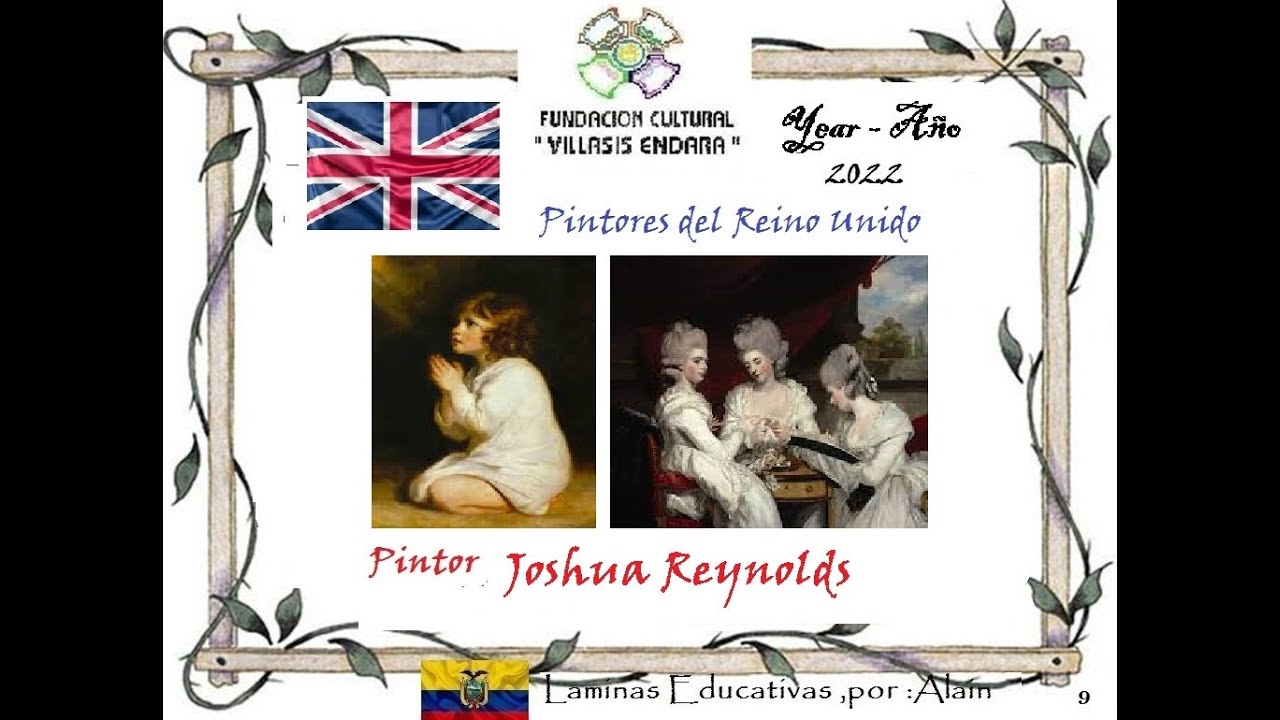
Joshua Reynolds,español
105
Sir Joshua Reynolds (1723-1792) was a pioneering English portrait painter and the first President of the Royal Academy, who promoted the 'Grand Style' of idealized art and delivered influential Discourses on art between 1769-1790, arguing that artistic invention is essentially a new combination of images previously stored in memory.
Click to watch →
Deep Dive
A comparative study of Reynolds and his chief rival, Thomas Gainsborough, contrasting their techniques and artistic philosophies.
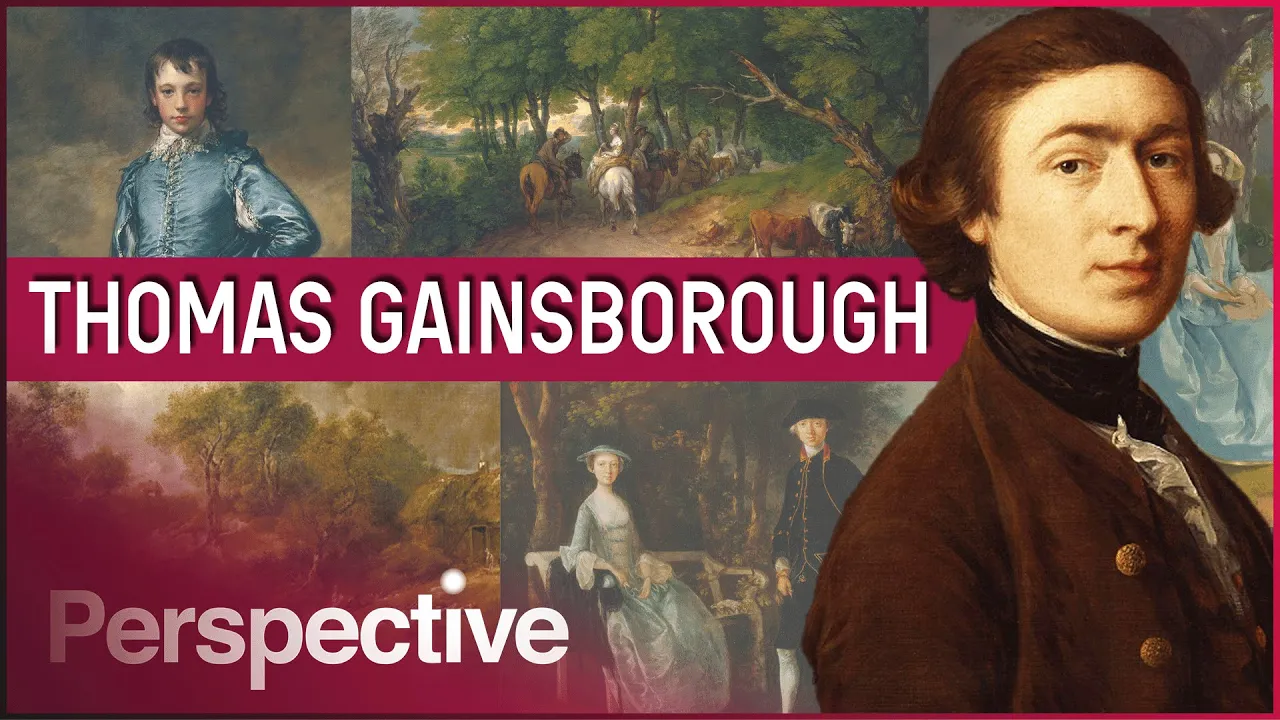
The True English Master Of Portraiture and Landscapes | Great Artists: Gainsborough
51.2K
Gainsborough's portraits are characterized by a sense of unity across the canvas, achieved by painting the entire work at once. His distinctive feature was his application of paint using highly thinned oils, developing what became known as the 'feathery style' of brushwork. Using long brush strokes, he overlaid paint almost like fine veils one on top of another, bringing out material textures in soft elegance. This broader way of painting was deliberate and served as his signature. By the late 1760s, he charged 100 guineas for full-length portraits. He became a founding member of London's Royal Academy alongside his rival Sir Joshua Reynolds, who served as president. They were complete opposites: Reynolds believed in painstaking study of Old Masters, while Gainsborough's art was far more instinctive. Gainsborough's studio technique was unusual—he stood the same distance from the canvas as from his sitter, using brushes attached to sticks six feet long. He preferred working with very low levels of candlelight, believing the flickering gave portraits animation. He argued that the most difficult thing for a portrait painter was to freeze a face and give it no animation at all. This approach distinguished his work and contributed to lifelike quality. His insistence on painting faces with sitters present caused delays for busy patrons, including completing Queen Charlotte's portrait in one night with his nephew. His revolutionary methods paid off in exceptional ability to capture personality and likeness, with critics raving over his landscapes while his portraits commanded high prices.
Click to watch →
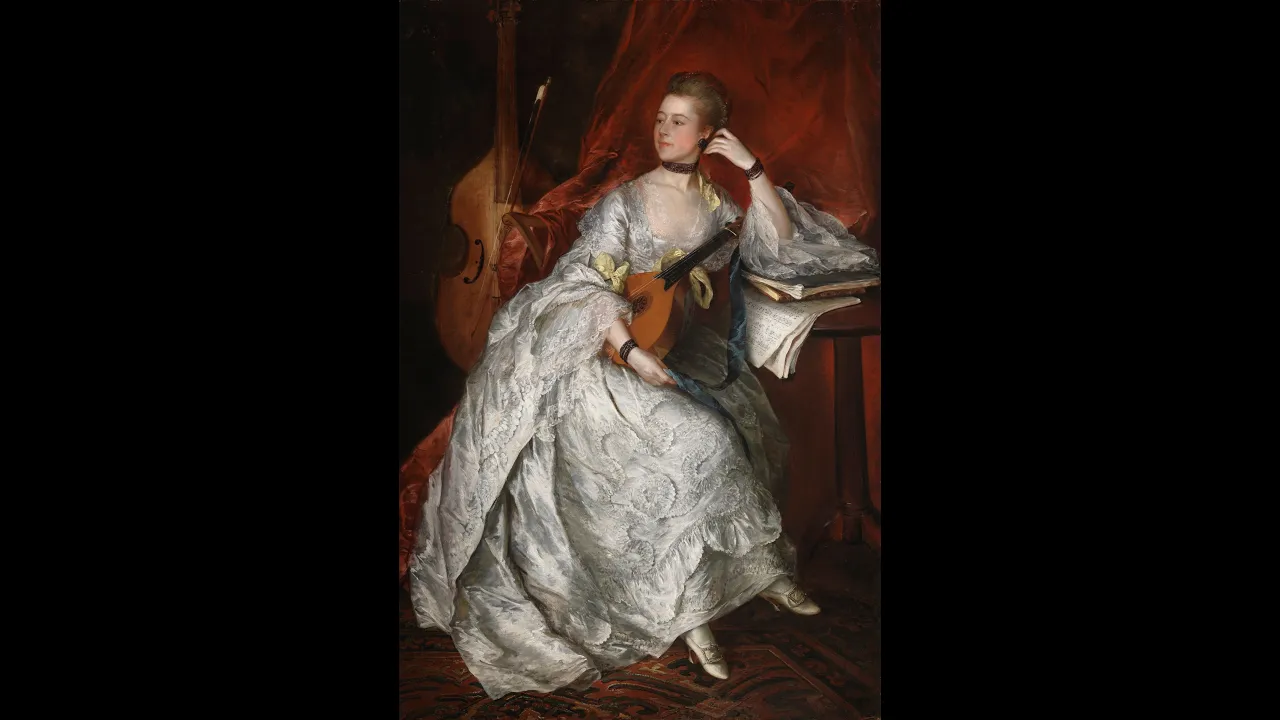
CAM Look | Tale of Rivalry: Joshua Reynolds & Thomas Gainsborough | 10/15/21
630
The intense rivalry between British portrait painters Joshua Reynolds and Thomas Gainsborough in 18th-century England drove both artists to develop distinctive styles—Reynolds emphasizing classical ideals, formal compositions, and warm colors, while Gainsborough favored naturalistic, relaxed portraits with bold color usage—that ultimately enriched the artistic record of their era.
Click to watch →
Gainsborough's Morning Walk | Talks for All | National Gallery
117.8K
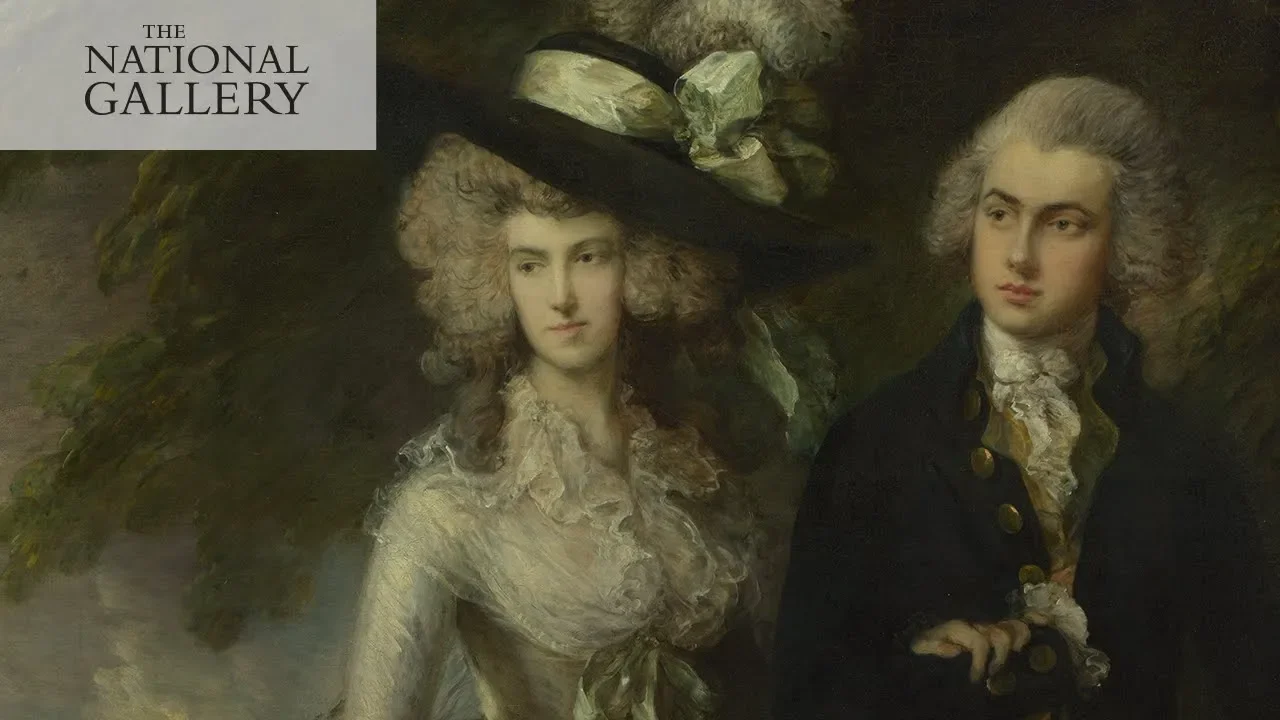
Thomas Gainsborough (1727-1788) emerged from humble artisan roots—a milliner and clothier father who became a postmaster. Sent to London at age 14, he studied under French artist Hubert Gravelot and engaged with the St Martin's Lane Academy, learning to translate Old Master landscape traditions into distinctly English scenes. Moving to Bath (1759) strategically avoided London's intense competition, enabling development from small conversation pieces to ambitious full-length portraits. His subtle, feathery technique contrasted with the dramatic effects favored by Academy exhibitions, causing conflict with Joshua Reynolds. Withdrawing from Academy exhibitions in the 1770s, he exhibited in his Schomburg House, transforming private residences into venues for contemporary art. His financial reality required portrait commissions (120 guineas for doubles) while landscapes remained speculative. His philosophy elevated portraiture toward history painting by positioning people in their own time using Old Master techniques rather than mere mimicry.
Click to watch →

Art in the 18th Century with Pottsgrove Manor
166
The rivalry between Sir Joshua Reynolds and Thomas Gainsborough exemplified contrasting artistic philosophies. Reynolds, from a distinguished clerical background, championed the grand manner idealizing sitters as classical muses, employing numerous assistants. Gainsborough, son of weavers, took a personal, experimental approach portraying subjects authentically. Reynolds used symbolism—gardens for purity, squirrels for duty, mythological references for chastity. Charles Willson Peale celebrated American art education, naming sons after famous artists and depicting confident progress. His work honored the first American art school, reflecting national pride in developing domestic artistic traditions.
Click to watch →

Thomas Gainsborough: The Substance of Style
7.5K
Thomas Gainsborough and Sir Joshua Reynolds represented opposing approaches to portraiture in 18th century England. Reynolds, president of the Royal Academy, emphasized timeless, classical drapery and posed figures like Greek gods, taking cues from sculpture. Gainsborough preferred painting sitters in contemporary fashionable clothing with intimate, immediate compositions. Despite being dismissed by some critics as merely a society portraitist, Gainsborough was actually credited by contemporaries with being the most accurate portrait painter in England—superior to Reynolds in capturing likeness. This reputation challenges dismissive views of his work as superficial. Gainsborough was deeply indebted to Anthony van Dyck as his greatest predecessor, studying van Dyck's paintings extensively and even making full-scale copies to learn silvery costume effects and aristocratic elegance. His brushwork itself became his signature—loose, slashing application distinguished him from tighter artists.
Click to watch →
Deep Dive
An exploration of the subsequent rebellion against academic art constraints by movements like Romanticism and the Pre-Raphaelite Brotherhood.
From Reynolds to Rossetti: The Rise of the Pre-Raphaelite Brotherhood.
887
The Pre-Raphaelite Brotherhood (1848-1860) was a group of seven English artists including Dante Gabriel Rossetti, William Holman Hunt, and John Everett Millais who rebelled against the Royal Academy of Arts' formulaic, idealized approach to art. They rejected the Victorian era's compromise between industrial progress and rigid morality, instead advocating for raw truth, simplicity, and direct observation of nature. Their artistic philosophy emphasized depicting real life, including poverty and labor, rather than presenting noble, polished imagery. This movement influenced Victorian literature through writers like Christina Rossetti and William Morris, who adopted their medieval-inspired symbolism and rejection of academic conventions.
Click to watch →
Прекрасная история английских прерафаэлитов
11.9K
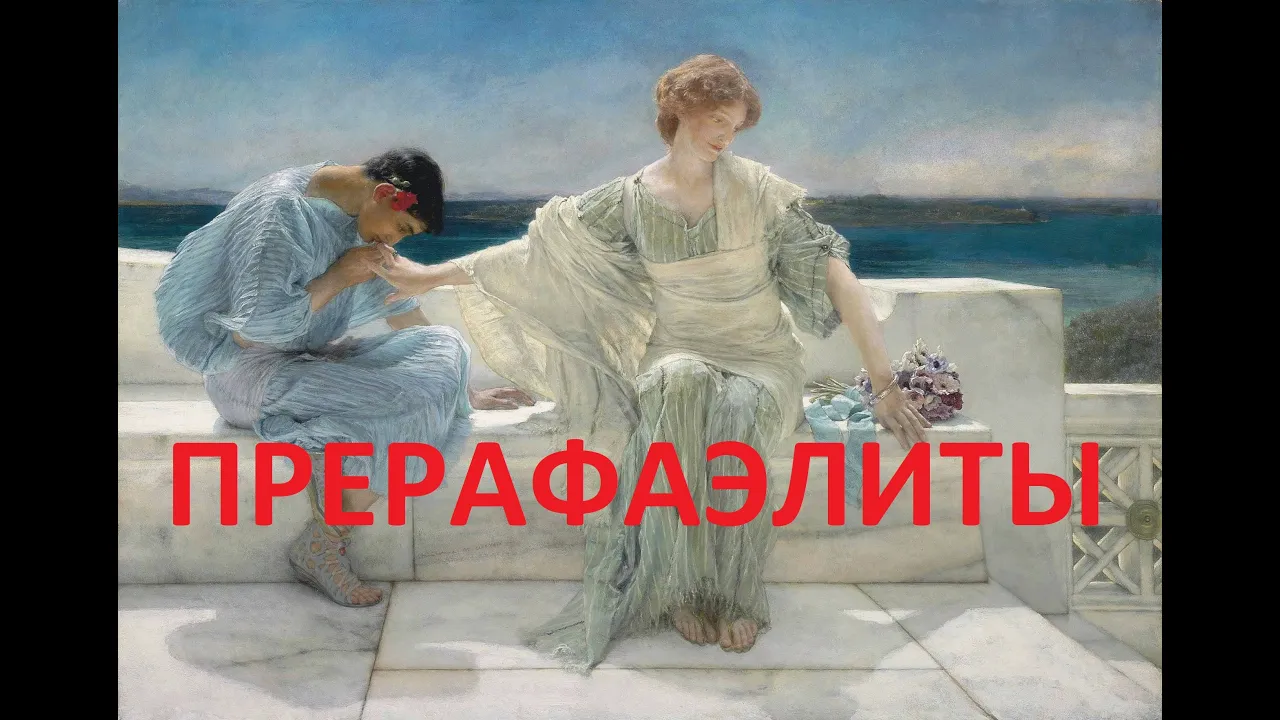
The Pre-Raphaelite Brotherhood emerged in 1848, following the European revolutions that shook many thrones. They were revolutionary in spirit, opposing the academic art establishment that had established a rigid canon based on Raphael's style. The French Impressionists later succeeded in dismantling this academic tradition. The invention of photography in 1848 created a crisis for traditional artists, as photography could capture reality more accurately than painting. This led to the revolutionary insight that art should not merely copy nature but should transform it according to natural laws.
Click to watch →
Os Horrores que Aconteceram na Noite de Núpcias da Era Vitoriana
119.8K
Names like Dante Gabriel Rossetti and Elizabeth Siddal come to mind. The latter, a milliner's assistant, became not merely a muse but an artist in her own right. Their romance subverted norms—Siddal came from a working-class background while Rossetti was part of the cultural elite, challenging social expectations in both their personal and professional lives. Siddal was often portrayed as Ophelia or Proserpina in Rossetti's works—not a Victorian maidenly figure but a complex individual who challenged gender roles through her own poetry and art. The bohemians were not alone in their romantic rebellions. The molly houses, subterranean taverns where homosexual men could meet in relative secrecy, provided a clandestine stage for romances that dared not speak their own names.
Click to watch →

Literary Movements MCQs II Grade 2 English Revision Series of MCQs II by Dr. Garhwal Sir English...
130
Literary movements are organized into periods with specific characteristics requiring systematic coverage. Romanticism emphasizes emotion, imagination, and individual subjectivity over reason and classical conventions. Key characteristics include emphasis on emotion, celebration of imagination, focus on individual experience, and rejection of rational constraints. The movement emerged as a reaction against the Industrial Revolution, materialism, and Enlightenment rationalism. Major Romantic poets include Wordsworth, Coleridge, Byron, Shelley, and Keats. Gothic literature emphasizes horror, mystery, and supernatural elements with dark settings, supernatural occurrences, and psychological tension. The Pre-Raphaelite Brotherhood emerged as a reaction against Victorian industrial realism and academic art conventions, opposing industrialization, materialism, and rationalism. The movement's ideological slogan was 'Art for Art's Sake,' emphasizing artistic integrity, sincerity, and natural representation over academic conventions.
Click to watch →
00-01 200 Views of Western Art
2.8K
Romanticism (late 18th-mid 19th century) prioritized emotions, imagination, and individual experience over reason, emphasizing nature's power and beauty with dramatic contrasts and swirling forms. The Pre-Raphaelite Brotherhood (mid-19th century) rejected academic tradition, with John Everett Millais spending 5 months painting 'Ophelia' in harsh conditions. Early photography emerged when Nicéphore Niépce created the first permanent photograph in 1826, and William Henry Fox Talbot invented the calotype process allowing multiple prints. Julia Margaret Cameron revolutionized portrait photography by avoiding classical conventions, capturing subjects emerging from darkness like prophets.
Click to watch →
Deep Dive
Researching the history and evolution of the Royal Academy of Arts from its founding to its role in contemporary British art.

99-09 The Royal Academy Summer Exhibition (Part 1)
564
The Royal Academy was founded in 1768 when artists petitioned King George III for a royal charter, becoming self-financing through Summer Exhibition fees. Joshua Reynolds became first president. The Academy moved multiple times: Somerset House (57 years), National Gallery East Wing (31 years), finally settling at Burlington House in 1837. It controlled British fine art as the premier institution, defining leading art annually until its conservative reputation diminished. The Summer Exhibition grew from small rooms at Somerset House to crowded venues generating £3,000 in fees by 1780, eliminating need for royal financial support. Paintings were hung by committees, with prestigious works placed 'on the line' 2-3 feet above floor level. Life drawing was considered the most difficult skill, requiring students to master casts before human models, with most drawing men for history painting purposes.
Click to watch →

MARY'S LAST MASTERPIECE - The Unbreakable Spirit of Mary Cane-Honeysett
135.5K
The Royal Academy of Arts was founded in 1769 with its first summer exhibition featuring only 136 works. It gained prominence when Benjamin West persuaded King George III to grant royal patronage in the late 18th century. The academy evolved from an open public exhibition system where anyone could submit work, gradually becoming one of Britain's most influential art institutions.
Click to watch →

Como é um loja de rico em Londres + passeio pelo centro da cidade 🇬🇧
7.9K
The Royal Academy of Arts, founded in 1768 by 34 artists including Joshua Reynolds (first President), represents one of Britain's most prestigious art institutions. Located in its current Piccadilly building since 1868, it operates independently from government and royal funding, sustained through independent funds, events, and artist contributions. The Academy holds the world's oldest continuous art exhibition, the Summer Exhibition, held annually since 1768 without interruption. It maintains a collection of full-scale copies of famous artworks, including Michelangelo's unfinished Madonna sculpture (one of the few outside Italy), allowing art students to study masterpieces. The institution offers postgraduate art courses and maintains a school of art for advanced training, serving as both an educational and cultural institution.
Click to watch →
Zobacz najdroższą dzielnicę Londynu: arystokratyczne układy i skandale elit.
56.3K
The Royal Academy of Arts, founded by King George II in 1768, is the oldest institution of fine arts in the UK and one of the oldest in the world. It promotes art through exhibitions, education, and artist support. The building features beautiful sculptures and exhibitions, particularly on the side facing Piccadilly.
Click to watch →

Brush up on art history at London’s Royal Academy of Arts with Rebecca Lyons
968
The Royal Academy was founded in 1768 by artists seeking to establish an institution celebrating art practice in Britain. Before its founding, art education was limited to wealthy students traveling to Italy to study masterworks. The academy addressed this gap by establishing schools where students could learn from plaster casts of famous sculptures and from each other. The collection was built around three strands: objects for student learning (like Michelangelo's Tondo), diploma works from elected members, and institutional history pieces. Key Renaissance works include Michelangelo's Tondo (1504-05) demonstrating naturalism, Raphael's cartoons copied by Thornhill for student study, and Leonardo's Last Supper copy preserving details lost from the original. The library developed three main collections: historic books (1768-1920) on anatomy, perspective, and color theory; modern books; and illustrated books. Andreas Vesalius's Fabrica (1555) revolutionized anatomy study by having Vesalius dissect bodies himself rather than relying on barber surgeons.
Click to watch →
Reynolds' Legacy
Reynolds' Legacy
0:00- 1
Covers Reynolds' life, career, and artistic philosophy.
- 2
Highlights his portraiture and role as Royal Academy founder.
- 3
Mentions his influence on European painting in the 18th century.
The Romantic and Pre-Raphaelite Critique of 'Sir Sloshua'
While Reynolds is celebrated for elevating British art through the Grand Style, his academic dominance faced severe criticism from artists who viewed his methods as formulaic and stifling. The visionary artist William Blake was a fierce critic of Reynolds’ 'Discourses on Art', arguing that his emphasis on generalization and imitation of the Old Masters suppressed individual genius and spiritual imagination. Later, the Pre-Raphaelite Brotherhood actively rebelled against the academic orthodoxy established by Reynolds. They mockingly dubbed him 'Sir Sloshua,' criticizing his loose, generalized brushwork and reliance on dark, artificial chiaroscuro as lazy and formulaic. Instead of Reynolds' idealized, grand portraits, they advocated for a return to the meticulous detail, vibrant colors, and sincerity of early Italian art. This counter-movement highlights how Reynolds' Royal Academy was perceived by later artists not as a nurturing institution, but as a rigid monopoly that restricted artistic freedom and truth to nature.
An understanding of 18th-century British social hierarchy and the role of art patronage in elite society.
Familiarity with the Renaissance and Classical art movements, which served as the aesthetic foundation for the 'Grand Style'.
Basic knowledge of the academic system of art education in Europe, particularly the French Academy model.
A general awareness of portraiture as an artistic genre and its cultural significance before the late 18th century.
A deep dive into Reynolds' 'Discourses on Art', his influential series of lectures delivered to students at the Royal Academy.
A comparative study of Reynolds and his chief rival, Thomas Gainsborough, contrasting their techniques and artistic philosophies.
An exploration of the subsequent rebellion against academic art constraints by movements like Romanticism and the Pre-Raphaelite Brotherhood.
Researching the history and evolution of the Royal Academy of Arts from its founding to its role in contemporary British art.
130 views2likes9:36@WorldArtsandArtistsOriginal Release: 2024-03-29
[Music] sir Joshua Reynolds was born July 16 1723 died February 23rd 1792 he was an English painter who specialized in portraits John Russell said he was one of the major European painters of the 18th century he promoted the grand style in painting which depended on idealization of the imperfect he was a founder and first president of the Royal Academy of Arts and was kned by George III in 1769 having shown an early interest in art Reynolds was apprenticed in 1740 to the fashionable London Portrait Painter Thomas Hudson who like Reynolds had been born in Devon Hudson had a collection of old Master drawings including some BW Chino of which Reynolds made copies from Minorca he traveled to lorno in Italy and then to Rome where he spent 2 years studying the Old Masters and acquiring a taste for the grand style Reynolds traveled Homeward over land of Florence baloney Venice and Paris he was accompanied by jepi Mary then aged about 17 apart from a brief interlude in 1770 Mary remained in Reynolds employment as a studio assistant for the rest of the artist's career Reynolds also was recognized for his portraits of children he emphasized the innocence and natural Grace of children when depicting them his 1788 portrait Age of Innocence is his best- known character study of a child the subject of the painting [Music]
Up Next
13:12
Christ in the House of His Parents: Millais' Controversial Masterpiece Explained
@christianart
117.8K views•2025-05-23

114:18
Christian Iconography: History, Theology, and Meaning | Fr. Panayiotis Papageorgiou
@Trisagionfilms
58.8K views•2020-02-21
7:48
Ukiyo-e Art: History, Woodblock Printing & Influence
@japanathand
6.3K views•2023-06-08

16:34
Earliest Depictions of Jesus in Art: 10 Ancient Images Explained
@UsefulCharts
5.9M views•2022-06-03
Related Study Plans & Knowledge Roadmaps
Structured learning paths in Art History
art-history
Gothic Cathedrals: Engineering, Light & Society
01The Birth of the Gothic: Romanesque to Suger's Vision
02The Structural Triad: Pointed Arches, Ribbed Vaults, and Flying Buttresses
03Theology of Light: Lux Nova and Sacred Geometry
+ 2 more learning modules
14h5 modules
Explore Roadmap
art-history
Pre-Raphaelites: Realism, Symbolism & Critique
01The Victorian Art Establishment and Academic Formula
02The Founding of the PRB and Radical Realism
03Medieval Revivalism and Literary Symbolism
+ 1 more learning modules
8h4 modules
Explore Roadmap
art-history
Street Art: From Subways to Art Market
01Subcultural Origins in Philadelphia and New York (1970s)
02The Subway Era and Style Wars (Late 1970s - 1980s)
03The East Village Scene and Early Gallery Crossover
+ 2 more learning modules
10h5 modules
Explore Roadmap
art-history
Classic Maya Art: Iconography, Glyphs & Ritual
01Foundations of Classic Maya Visual Culture
02Deciphering Maya Hieroglyphs & Text-Image Integration
03Sacred Geography and Cosmological Architecture
+ 2 more learning modules
14h5 modules
Explore Roadmap