











![에게 문명 [통합본] ─ 미노아 │ 미케네 │ 트로이](https://i.ytimg.com/vi_webp/mCpoPIvNYJY/maxresdefault.webp)


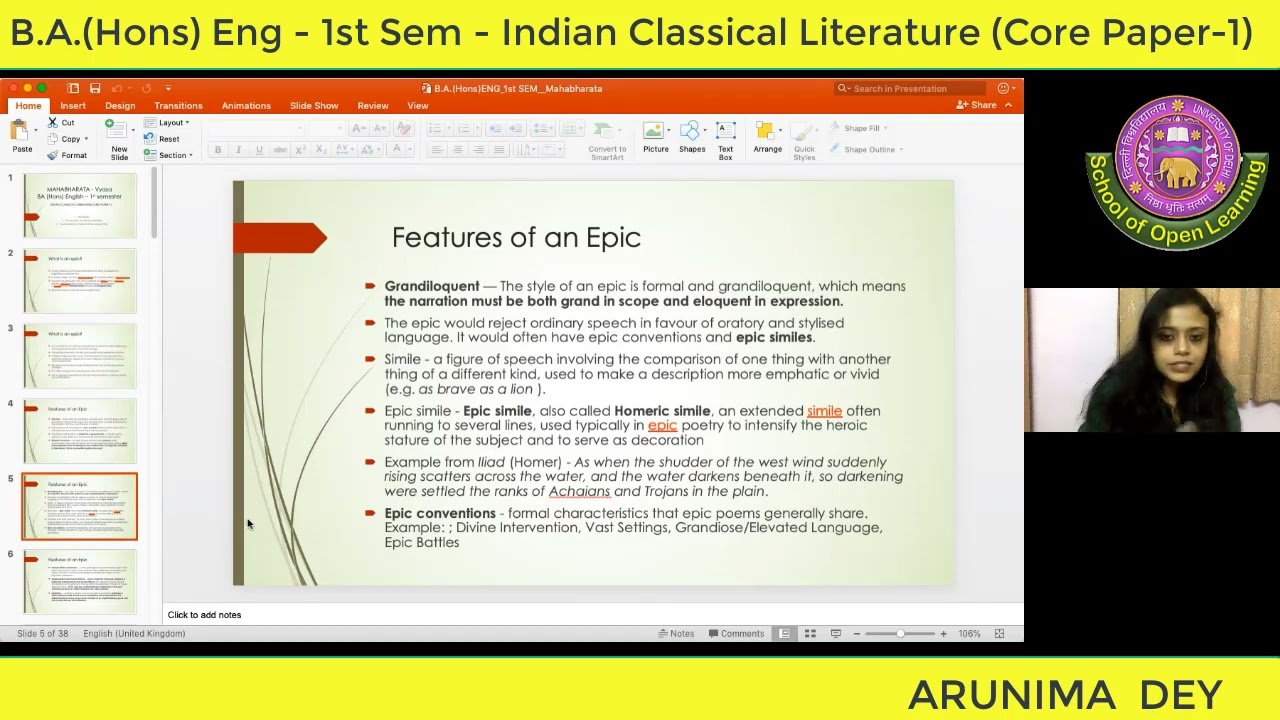





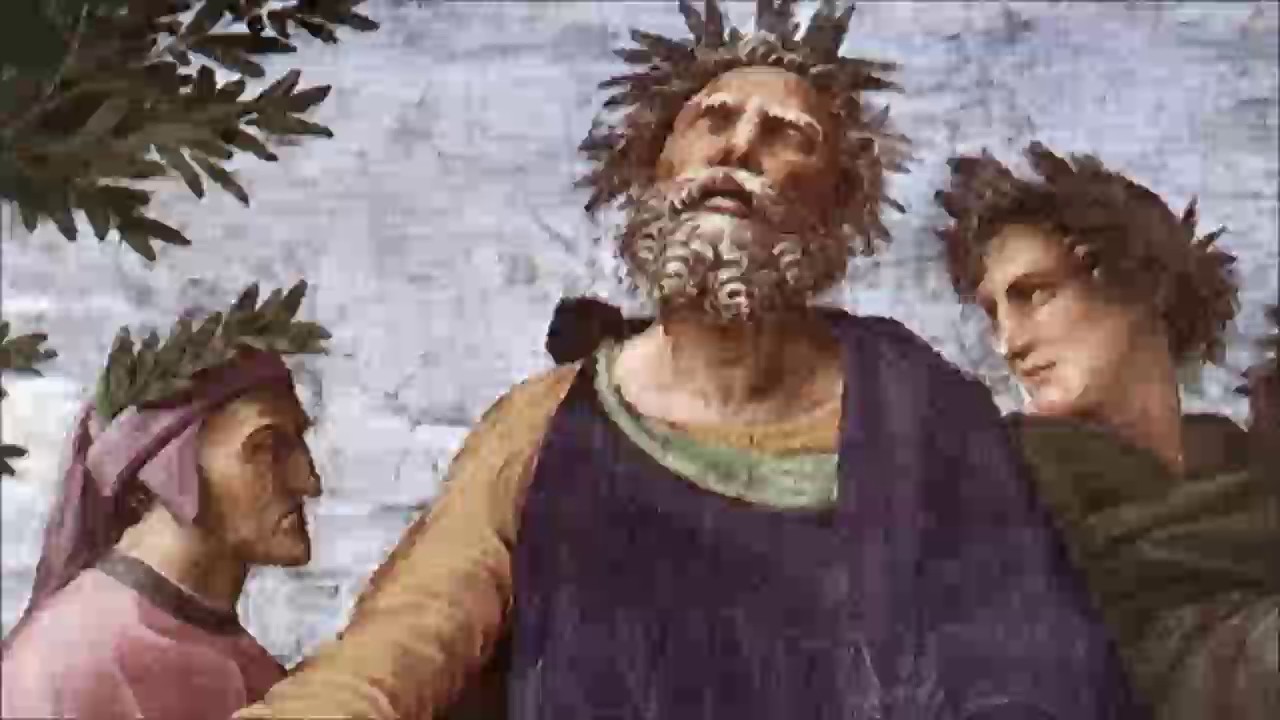


Homer did not personally compose the Iliad and Odyssey from scratch; instead, he was likely one of many bards in an oral tradition who inherited and stitched together older Bronze Age stories about the Trojan War, which had been passed down through generations of performers before being transcribed into written form around the 7th century BCE.
Homer and the Origins of the Iliad and Odyssey: A Historical Analysis
Added:Familiarity with the basic narratives, key characters, and mythological elements of the 'Iliad' and the 'Odyssey'.
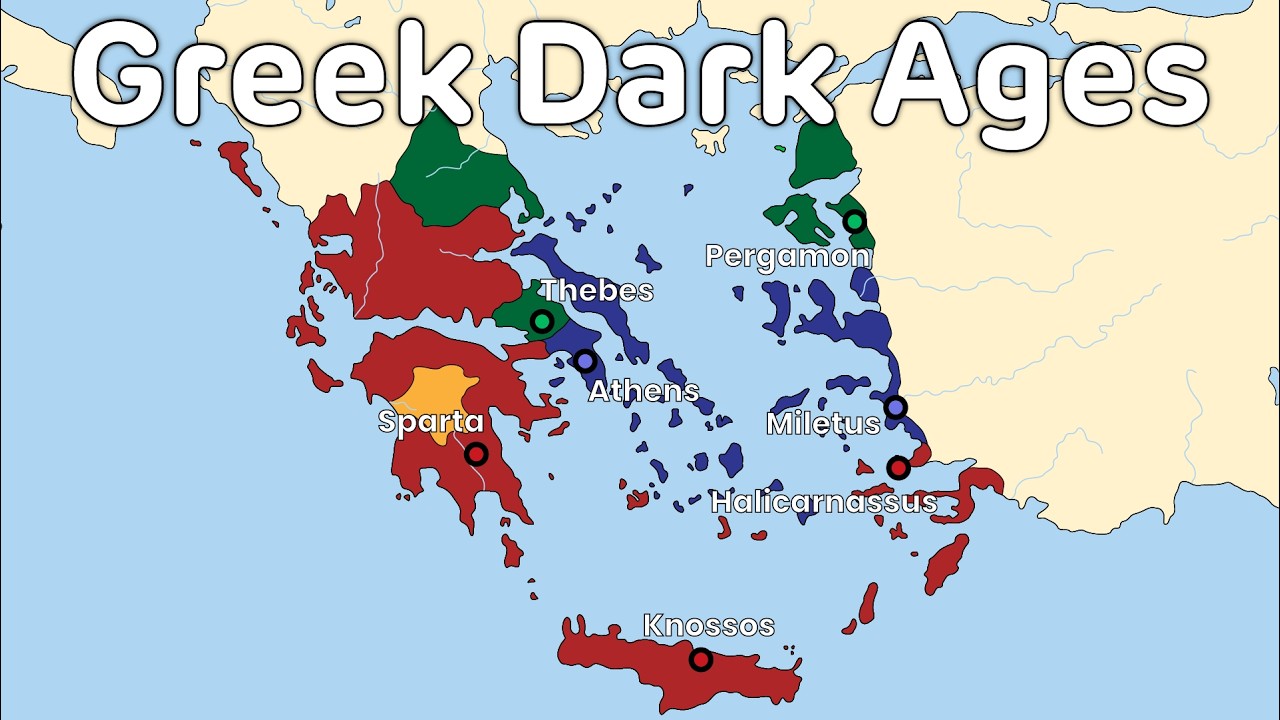
An understanding of the historical distinction between the Late Bronze Age (Mycenaean Greece) and the subsequent Greek Dark Ages.
The fundamental concept of oral tradition and how cultural narratives are transmitted and altered without written records.
Basic knowledge of 8th-century BCE Archaic Greece, the pivotal period when the Greek alphabet emerged and the epics were likely first transcribed.
Analysis of the 'Homeric Question'—the ongoing academic debate surrounding the identity, existence, and singularity of Homer.
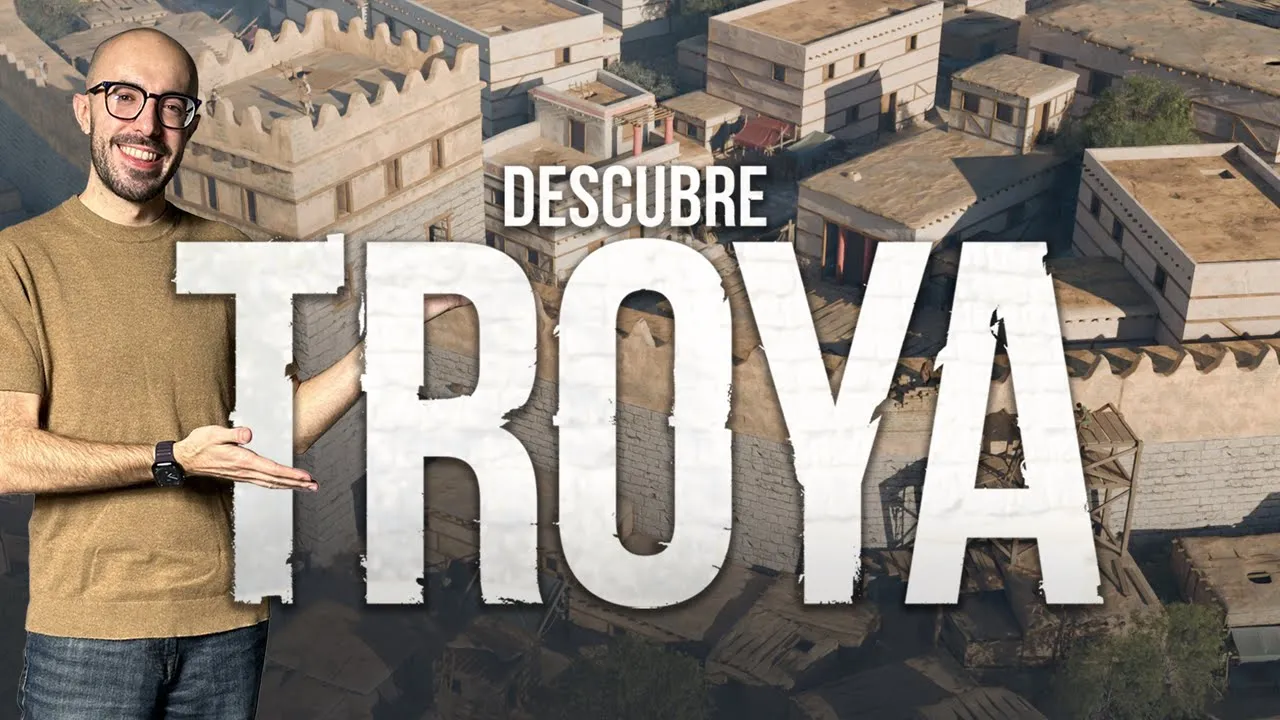
An exploration of the archaeology of Troy, including the historic excavations of Heinrich Schliemann and modern geological and historical assessments of the site.
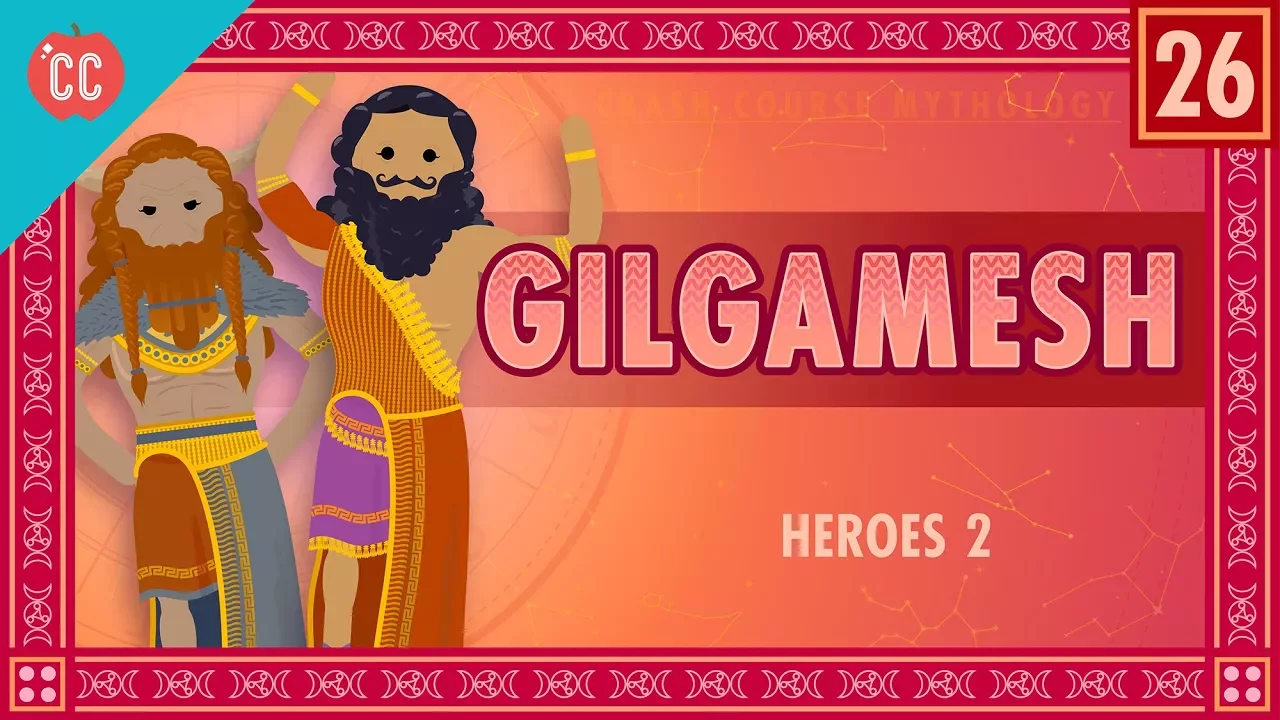
Comparative study of other ancient oral epics, such as the Mesopotamian 'Epic of Gilgamesh' or the Anglo-Saxon 'Beowulf', to understand universal epic conventions.
Investigation of how the Homeric epics shaped Panhellenic identity, morality, and education in Classical Greece and later Roman literature, such as Virgil's 'Aeneid'.
823.6K views27.2Klikes10:34Original Release: 2019-05-10
If you can't get enough OSP click the link to check out MY BOOK.
'Cos I wrote a book, guys! Man... If there's anything I've learned- -from watching Red's dissections of ancient Greek deities, it's that Hellenic mythology can be absurdly nebulous.
And you might imagine, or at least hope that things would be- -significantly easier when dealing with a codified literary text- -after we got out of the dark ages but as it happens though, the history surrounding the poet Homer- -and his famous stories the Iliad and the Odyssey- -is also extremely weird, and there's a lot more to the issue than even- -I myself mentioned the last time I talked about homer a year ago.
So to find out who homer is, how he got the story of the Trojan war, and how we in turn got it from him, Let's do some history!
To start, let's look at the typical portrayal of homer- -and then string it out to see where we run into trouble.
According to legend: he was the poet that composed the Iliad and the Odyssey.
He was probably blind.
And he lived on the island of Chios, some time in the 700s BC.
His location on the eastern island of Chios makes a good amount of sense- -because the geography of the Iliad, set nearby on the coast of Anatolia- -is all impressively, and even surprisingly accurate.
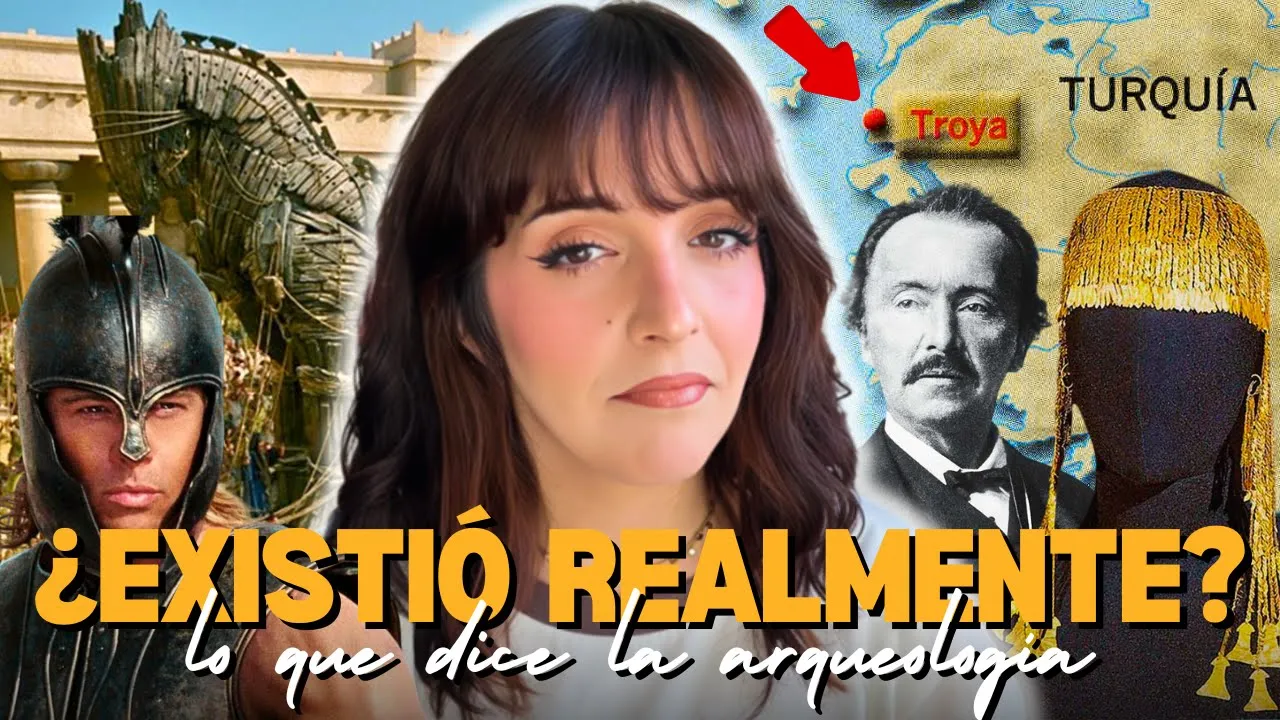
Around 1870 the archaeologist Heinrich Schliemann straight up- -found the ruins of Troy, just by going where Homer literally said it was.
In the Odyssey however, which takes place away from Troy in the eastern Aegean- -and elsewhere, the geography is much fuzzier, and at times it sounds like even Homer isn't 100% sure where Ithaca actually is.
At face value, Homer's home on Chios makes decent sense, beyond that- -the island of Chios also has on it a famous rock that Homer supposedly- wrote and taught from.
And for your enjoyment, here's a picture of little baby Blue on that very rock- -many moons ago.
The thing is, even when I was 10 years old and very stupid, I took one look- -at the thing and thought: "Wait, but there's no place to write on."
"You can only sit on it and face out" So even young, dumb me still knew that something was amiss with the idea- -of Homer writing these stories.
I also feel like this might kinda go without saying; But if you're a famously blind bard, that's gotta put at least a bit of a- -damper on your writing capabilities, right?
As it turns out, Homer couldn't have personally composed the Iliad and- the Odyssey, unless he was about 500 years old.
Let me explain, for a poem codified in the 6/7 or 800s BC, There's a lot of weird stuff that someone living all those centuries later- -would never have known about.
For one, the battlefield scenes depict heroes driving chariots right next to- -massed infantry formations.
The hoplite phalanx was a new development in archaic period Greece, whereas- -chariot warfare was unique to the Bronze Age.
There are also loads of oddly precise references to older Greek political geography, as well as the locations of specific Mycenaean burial grounds- -that would have been long gone by Homer's day.
Also, all of the weapons and armor are described as bronze, despite Homer living in Greece's Iron Age.
Odysseus is specifically wearing a type of boar's tusk helmet that someone- -living in archaic Greece wouldn't even fathom wearing into battle.
That admittedly might not seem like a very big deal, but even Virgil messes that up.
By accidentally inserting anachronistic iron weapons into- -the Bronze Age setting of his Aeneid.
And there are still more details, like the Bronze Age practice of- -cremating heroes, despite Homer's contemporary tendency towards burial.
Bottom line here is that there is a lot of stuff in the Iliad alone that is- -way too old for some random bard from post-dark-ages Chios to- -casually integrate into his story.
So clearly Homer was building off of an older literary framework that he- -inherited, but if he had access to it, why don't we?
The answer there has to do with the writing itself.
See, the Mycenaean civilization as we understand it- -collapsed soon after the Trojan War, and their linear B form of writing- -disappeared around 1100(BC), not to be replaced with the Greco-Phoenician alphabet that- -we know until around 800BC, a full three centuries later.
In the absence of writing, storytellers are thought to have performed songs instead.
This was confirmed in the early 1900s by the scholar Milman Parry, who studied Yugoslavian bards and found evidence to suggest that the stories- -we now know as the Iliad and the Odyssey were originally orally recited poems- -going back centuries before Homer.
What most likely happened is that bards started telling stories about- -the Trojan War very soon after it ended.
Which explains why so many weird Bronze- Age specific details stayed as part- -of the story on their way to Homer.
It's because of this oral tradition that the tales of the Bronze Age survived- -even when the language was lost very soon after.
But beyond the content of these stories, there's a lot we can learn from their format.
Parry discovered certain aspects of the poetry that really only make sense- -in a spoken context.
For instance: If you listen to the language long enough, even in English, you'll start to hear a formula for how the chapters, scenes, sentences- -and even words are constructed.
Remembering an entire sixteen-thousand line poem is hard enough, let alone two of them.
But consider how you probably have a couple book's worth of song lyrics- -kicking around your brain.
With a rhyming structure, set line composition, and alternating verses into chorus, it's far easier to keep track of a song than flat prose.
So a Greek bard, being one of many to sing a story about the Trojan war, recalled as much as he could from performance to performance, and then effectively improvised to fill the gaps with stock scenes- -of battles and discussions, while keeping with the meter of the poetry.
I'll spare you too many of the gory details, but meter is basically the "beat" of the poem.
Shakespeare used Iambic Pentameter, but had to scramble the word order- -to make it work.
Greek, however, is much freer with which words go where.
To perform unscripted and stay in meter, is extremely tricky, but over the centuries, bards developed a formula to make any given line- -in the poem fit to the meter.
And it involved epithets... no no no, not the derogatory kind we're not going there.
For instance: take "Swift-footed Achilles" "Dawn With Fingertips of Rose", "Athena Who Bears the Aegis".
It might not sound like much in English, but in Greek these compositions- -fit snugly into the meter of the poem at various points in the line.
And each character had several, so you could plug epithets in and out like- -Lego bricks depending on where in the line you're trying to fit a character's name.
This might be a little bit apocryphal, but I've heard that Parry even asked- -the bards he was studying to sing an epic about him, and they had enough formulas, stock scenes, and epithets in their- -back pockets, that several of them free- styled a small epic with no trouble at all.
It really goes to show how versatile the epic structure is.
So, to recap: Homer himself couldn't have possibly written his epics from scratch.
It's more likely that he was one of many bards to participate in the- -oral tradition of poetry, as this would explain the anachronisms, and the formulaic nature of the story.
But this doesn't explain how Homer in particular fits into this, and how this oral tradition got written down.
Why is it Homer's name that we attribute the story to?
There are a handful of prominent theories in circulation- -that are trying to explain this.
One simply claims that Homer happened to be one of the best bards around.
So when writing got re-adopted by the Greeks via the Phoenician alphabet, scribes just copied his version of the story.
The problem with this theory is that the Iliad and the Odyssey- -are really long, longer than any other story in the Epic Cycle by a factor of 4.
And would have taken multiple straight days to perform.
So some scholars think that the Epic Cycle was originally a bank of short stories, and then Hotshot Homer™ had the bright idea of combining several of them- -into one, well, technically two bigger stories focused around a character arc.
That's what makes Homer a genius, the Iliad and the Odyssey are special- -because they're character stories at their core.
Not just a who-did-what of the Trojan War, maybe Homer saw the development- -of writing as an opportunity for larger compositions, or maybe he was just compulsive.
But this additive approach has some creds.
The strongest linguistic evidence is the title of Rhapsode, whose roots literally mean: "Someone who stitches together songs like a tapestry" So let's see how this might work in practice; Our Rhapsode starts with the stories of Achilles and Agamemnon arguing, Patroclus going out to fight for the Greeks and dying, And Achilles hulking out and killing hector.
Add a couple handfuls of famous fight scenes to the mix, and flesh out the character backstory, add some downtime... And blammo! We've got ourselves an Iliad.
And the Odyssey is even more episodic so it fits the mold there too, and- -the final product is two huge stories with deeply compelling protagonists.
It checks off all the bases, it's a story born out of the ancient oral tradition, performed by a bard for a particular talent for storytelling, who took what- -he had and remixed it into something far greater than it's parts- -with the express purpose of getting it transcribed.
Is this the explanation of the Homeric epics?
No, it still has a few holes in it, but! it solves a lot of the earlier problems, so I really don't think it's far off.
Before we wrap up, there are a few more interesting things to note: Even among those who agree with me up until now, Some believe that the Odyssey wasn't done by the same person who did the Iliad, citing large differences in plots, tone, and even style.
Maybe I'm being too reductionist, but, I'd venture it's more likely- -Homer assembled the Odyssey later in his life, rather than not at all.
But on the subject of time-frames; Some evidence of art depicting scenes from the Homeric epics- -places the Iliad in the early 600s, and the Odyssey in the mid-to-later 600s.
That's an entire century after most scholars put Homer.
Still, that's a fair gap between our guesses as to when Homer first- -performed these stories, and when they got codified into the versions we know today.
As far as we can tell, the Athenian tyrant Peisistratos collected the two- -manuscripts for his library in the mid-500s, a hundred years before the Athenian golden age.
That gives us about a century-ish between Homer's works and their codification, during which time some... odd extra bits found their way into the canon; Specifically, the night raid in book ten of the Iliad seems wildly out of place- -and unrelated to the goings on of Achilles, and linguistically it's composed in a slightly different manner.
Likewise, the last book of the Odyssey sees our hero chillaxing at home- -in a sequence that feels unnecessary to the plot that just got resolved- -in the scene prior.
These two, and some other odd inclusions, may well have been stories- -in the epic tradition that other Rhapsodes simply stitched into the Homeric epics later.
So, where does this all leave us?
Well I personally have a much greater appreciation for the- -genius of Homer himself; Taking from a deep well of stories and assembling them together into something- -much more meaningful and special than it was before.
Even though we don't have all that much on our bard's personal details, We're still able to enjoy the stories he, and all the other- -Greek storytellers, left us.
Plus! Every day I get that much closer to proving my hot theory that- -the Marvel Cinematic Universe is just the Epic Cycle for a modern audience.
I mean look, small stories from generations of previous creators, all joined together to create a sprawling, interconnected character-driven epic?
I dunno, seems a little suspish?
Thank you so much for watching!
This topic was a bit of a departure, but I'm hoping to do more videos- -about the lives and works of the great History Makers, so if you enjoyed this video, please, let me know in the comments- -and I'll get cracking on the next one!
Up Next

58:43
The Evolution of Hell: Myth, Theology, and Artificial Damnation
@SolarSands
1.1M views•2023-10-28

33:02
The Great Schism of 1054: Causes and Consequences
@SacredCathedrals
113.5K views•2026-02-19
12:17
Virgil: The Poet Who Forged Roman Identity in the Aeneid
@OverlySarcasticProductions
429.1K views•2022-10-14
17:05
Understanding the Cold War: Superpower Conflicts and the Road to Détente
@OverSimplified
46.1M views•2019-01-24
Related Study Plans & Knowledge Roadmaps
Structured learning paths in History
history
Byzantine Iconoclasm: Theology, Art & Politics
01Foundations of Byzantium and Early Christian Images
02The First Iconoclasm: Leo III and the Crisis of Images
03Empress Irene, Nicaea II, and the Second Iconoclasm
+ 2 more learning modules
9h5 modules
Explore Roadmap
history
Iranian Revolution (Causes, Events & Legacy)
01The Pahlavi Dynasty and the Roots of Discontent
02The Spark of Rebellion and the Rise of Khomeini
031979: The Fall of the Shah and the Climax of the Revolution
+ 2 more learning modules
8h5 modules
Explore Roadmap
history
Mali Empire: Mansa Musa, Trade & Timbuktu
01Foundations of the Mali Empire
02The Trans-Saharan Gold and Salt Trade
03The Reign and Pilgrimage of Mansa Musa
+ 1 more learning modules
6h4 modules
Explore Roadmap
history
1947 Partition: Politics, Borders & Legacies
01Foundations of British India and the Divide
02The Political Negotiations and the Mountbatten Plan
03Drawing the Boundary: The Radcliffe Line
+ 2 more learning modules
8h5 modules
Explore Roadmap