The Odessa Steps Scene from Sergei Eisenstein's 1925 silent film 'Battleship Potemkin' is a landmark sequence in cinema history that masterfully combines rapid montage editing with powerful visual storytelling to depict a brutal massacre of civilians by soldiers, creating an emotionally charged narrative that exemplifies Eisenstein's theory of montage as a tool for ideological communication.
Battleship Potemkin: Odessa Steps Scene Analysis
Added:Deep Dive
Sergei Eisenstein's Soviet Montage Theory: The fundamental editing technique where shots are juxtaposed to generate intellectual and emotional responses rather than just chronological narrative flow.

Soviet Montage Theory: Eisenstein, Kuleshov & Constructivism
29.9K
Soviet Montage Theory, developed by filmmakers Lev Kuleshov and Sergei Eisenstein at the Moscow Film School after the 1917 Russian Revolution, proposes that meaning in cinema is created not through individual shots but through the strategic juxtaposition and organization of film elements; Kuleshov demonstrated this through his famous 'Kuleshov Effect' experiments showing how the same actor's face could convey different emotions depending on what followed it in the edit, while Eisenstein extended this idea by arguing that montage allows filmmakers to break down and reconstruct material to create entirely new conceptual meanings, treating cinema as a language where two concrete images combined produce a third, higher-order meaning.
Click to watch →

A Brief History of Film
380.6K
During the 1920s, Russian filmmaker Sergei Eisenstein developed Soviet montage theory, arguing that film editing techniques could convey more than just narrative content. He outlined five methods of montage: metric (based on time), rhythmic (based on tempo), tonal (based on emotional resonance), overtonal (based on theme), and intellectual (based on abstract ideas). The Kuleshov effect demonstrated this principle: audiences interpreted the same expressionless face differently depending on what followed it (a bowl of soup suggested hunger, a coffin suggested sadness, an attractive woman suggested desire). This proved that audiences fill in emotional gaps through editing, revolutionizing filmmaking grammar.
Click to watch →
The History of Cutting - The Soviet Theory of Montage
367.5K
The Soviet Theory of Montage, pioneered by filmmakers Lev Kuleshov and Sergei Eisenstein in the aftermath of the Russian Revolution, revolutionized cinema by establishing that meaning in film is created not just through spatial composition but through the deliberate sequencing and juxtaposition of shots; Kuleshov demonstrated through experiments that audiences derive meaning from the relationship between adjacent images (the Kuleshov Effect), while Eisenstein developed a sophisticated five-method system of montage—metric, rhythmic, tonal, overtonal, and intellectual/ideological—that treats editing as a dialectical process where conflicting visual elements collide to produce new ideas, fundamentally transforming film from a theatrical extension into a mature artistic medium capable of conveying abstract political and ideological concepts.
Click to watch →
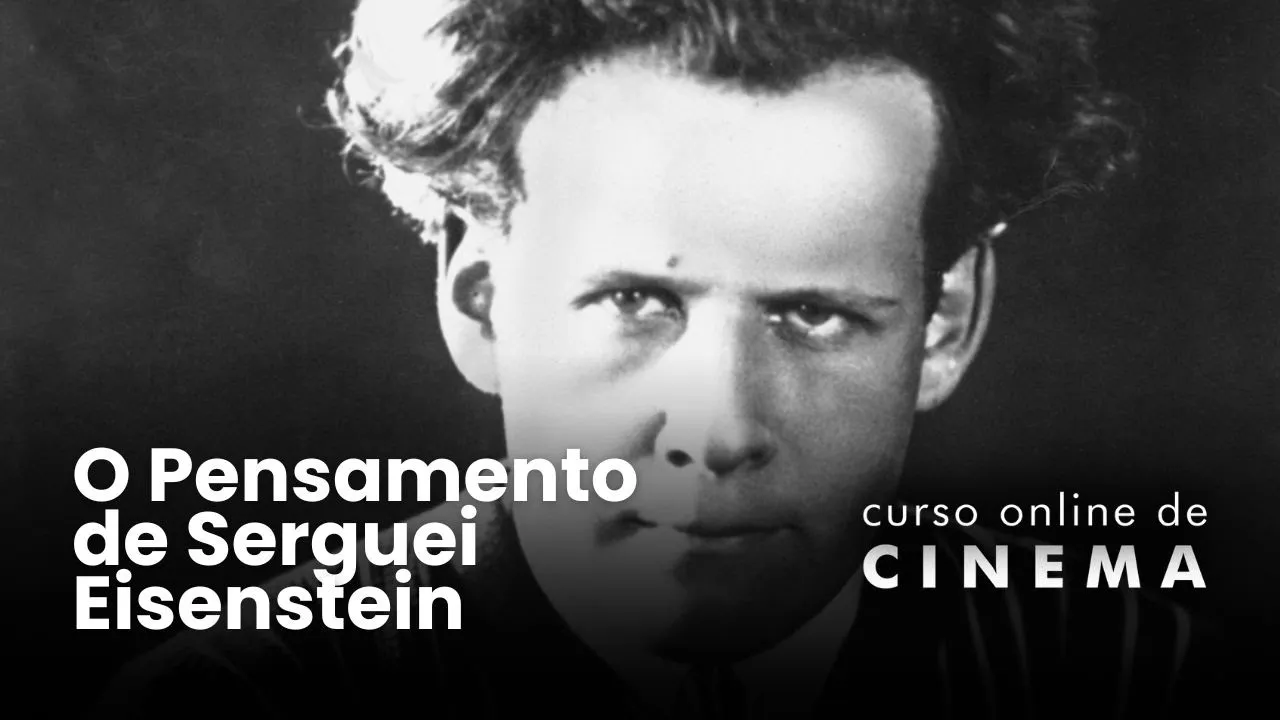
O Pensamento de Serguei Eisenstein
2K
Sergei Eisenstein, a pioneering Soviet filmmaker and theorist, developed a revolutionary cinema theory based on the dialectical collision of images, where individual shots are neutral but generate meaning through their collision, creating what he called a 'cinema of attractions' that uses five types of montage (metric, rhythmic, tonal, overtonal, and intellectual) to produce psychological effects and intellectual discourse in the viewer.
Click to watch →
The Ultimate Film Studies Watchlist
1.2M
Sergei Eisenstein's 'Battleship Potemkin' (1925) popularized Soviet montage theory, which holds that editing is more than just constructing a film—it's taking individual pieces and placing them alongside one another. The construction of any film is an intellectual process where individual pieces mean something within themselves, but when placed next to other pieces, new meanings emerge based on context. This is also known as the Kuleshov effect.
Click to watch →
Deep Dive
Historical Context of the 1905 Russian Revolution: A basic understanding of the socio-political climate in Tsarist Russia and the specific mutiny of the crew of the battleship Potemkin.

Revolución Rusa de 1905 - Historia - Educatina
161.9K
The 1905 Russian Revolution emerged from Russia's unique historical context. Before the 20th century, Russia was a Tsarist autocracy ruled by Tsars who held absolute power. Alexander III (1881-1894) and Nicholas II (1894-1917) governed with authoritarian regimes favoring the upper classes. Despite some modernization from foreign capital, Russia remained economically backward compared to European powers experiencing industrial revolutions. In 1895, Lenin founded a workers' party that would become crucial for revolutionary movements. Between 1904-1905, Russia's defeat in the Russo-Japanese War over Manchuria and Korea severely damaged the Tsar's authority, creating conditions for revolutionary unrest.
Click to watch →

Просто ужас, или ужас как просто!
27.3K
The 1905 Russian Revolution began with Bloody Sunday on January 9, 1905, when peaceful protesters were shot by the Tsar's troops. The revolution was caused by the Tsar's refusal to accept workers' petitions, his deliberate ignorance of their plight, and the use of propaganda to create confusion. The petition's text, published six months before the event, closely mirrors contemporary worker demands, suggesting that the fundamental grievances of Russian workers have remained consistent across generations. The speaker argues that the same dynamics of state control and worker exploitation continue today.
Click to watch →
Skąd Lenin Stalin Mieli Pieniądze - Kto i DLACZEGO Stworzył Komunizm - Historia Jak Spiskowe Teorie
76.7K
The 1905 Russian Revolution was the first major revolution in modern Russian history. It was driven by multiple factors: workers wanted to eliminate capitalists, ethnic minorities (particularly Poles) sought independence from the Russian Empire (which had been under Russian rule for 40 years since the January Uprising), and people in Russian territories wanted better living conditions. The revolution occurred during a period of rapid industrialization and economic development, where workers faced exploitation and had few opportunities for advancement.
Click to watch →

Революция 1905 года
17.9K
By the early 20th century, Russia faced severe social contradictions suppressed by tsarist despotism. The educated classes demanded civil liberties, while the industrial proletariat emerged as a revolutionary class. The peasantry suffered from archaic strip farming systems and incomplete 1861 reforms, leading to famines in 1891-1893. The 'raznochintsy' (intelligentsia) were educated but alienated from both peasantry and capitalism, creating natural revolutionary leaders. The Russian revolutionary movement faced a crisis in Western Marxism, which was increasingly influenced by revisionism. In 1900, the newspaper 'Iskra' was published in Leipzig, becoming the center for revolutionary Marxists who opposed gradual reformism. In 1903, these Marxists formed the Russian Social Democratic Workers' Party. Simultaneously, the Narodnik movement revived with the newspaper 'Revolutionary Russia,' leading to the formation of the Socialist Revolutionary Party. Revolutionary terrorism became prominent, with assassinations like that of Interior Minister Sipyagin in 1902 demonstrating the regime's vulnerability. The ideology of revolutionary sacrifice, where dying for the cause would make it 'strong,' attracted many young people unwilling to wait for gradual change. In 1903, Pleve dismissed Witte and replaced Zubatov's experiments with the Russian Assembly, an intellectual headquarters for the Black Hundreds. The Black Hundreds, led by Pleve and Grand Duke Sergei, promoted antisemitic sentiment, leading to mass pogroms like the Kishinev pogrom of April 1903. Under the influence of pogroms, Jewish youth flocked to the revolutionary movement to avenge their killed relatives, bringing Jewish fanaticism, business acumen, and willingness to engage in terrorism. The political leadership of the Russian revolutionary movement was dominated by Jewish emigres: Gershon, Zhitlovsky, Axelrod, Trotsky, Bronstein, Martov, Zinoviev, and Kamenev. This reflected the intersection of ethnic processes and revolutionary ideology. The Russo-Japanese War (1904-1905) was seen by the tsarist government as a 'small victorious war' necessary to distract from revolutionary unrest. The war went poorly, with the Russian army suffering defeat after defeat. The fall of Port Arthur on December 20, 1904, was interpreted as treason, giving revolutionaries moral justification to portray the tsar as a traitor. On January 9, 1905, Father Gapon led 100,000 workers to the Winter Palace, where they were met with gunfire and killed. This event marked the beginning of the Russian Revolution. After Bloody Sunday, the wave of strikes and demonstrations spread across Russia. Multi-thousand strikes occurred in Moscow, with confrontations in Riga and Warsaw. The mutiny on the battleship Potemkin in June 1905 was prepared by the Mensheviks and lasted 11 days. On May 14, 1905, in the Battle of Tsushima, the Russian fleet was destroyed - 38 battleships lost, with only three reaching Vladivostok. This catastrophe woke up the sleeping minds in Russia, demonstrating the regime's fundamental weakness. On October 7, 1905, the revolution began with railway workers - the best-organized group controlling transportation across the empire. This strike involved 2 million people and paralyzed the empire. If this had succeeded, the history of the 20th century would have gone differently, as Bolshevism would have been zero without the stick. Sergei Witte convinced the tsar to sign the October Manifesto on October 17, 1905, granting civil freedoms. However, by 2023, none of these freedoms existed in Russia.
Click to watch →
Russian Revolution | Part 1 | World History | UPSC CSE/IAS 2022/23 | Ankit C
37.9K
The Russian Revolution timeline includes: Russo-Japanese War (1904-1905), 1905 Revolution, 1917 February Revolution, 1917 October Revolution, Russian Civil War (1918-1921), and Lenin's death in 1924. The Russo-Japanese War was a significant conflict where Japan defeated Russia, which was humiliating for Russia and contributed to the revolutionary atmosphere. The 1905 Revolution was a precursor to the 1917 Revolution, sparked by the Russo-Japanese War defeat and led to constitutional reforms including the establishment of the Duma (parliament). However, these reforms were limited and did not satisfy the demands of the population. The February Revolution of 1917 led to the abdication of Tsar Nicholas II and the establishment of a provisional government. The October Revolution, led by the Bolsheviks, overthrew the provisional government and established a socialist state.
Click to watch →
Deep Dive
Silent Film Aesthetics and Technical Constraints: Familiarity with the visual grammar of early 1920s cinema, including the lack of synchronized sound and the reliance on visual expression and intertitles.

Shooting for Black and White with Allen Daviau & Denis Lenoir
2.1K
Recreating silent film aesthetics requires understanding both historical techniques and modern limitations. Silent era cinematographers used longer lenses for coverage, smaller Academy frame ratios (1.37:1), and hand-cranked cameras that limited simultaneous panning and tilting. They employed soft key lights combined with hard backlights, using sunlight through muslin for soft illumination before adopting hot backlight sources. Modern recreations face challenges including studio lighting realism limitations, video split inaccuracies, and stock processing variations. Techniques include using modified frame rates (slightly speeding up from 24 to 21-22 fps) to simulate period movement texture, positioning backlights behind the camera for distinctive separation, and using trace frames for soft lighting. The goal is achieving authentic visual texture while acknowledging modern production realities.
Click to watch →

Mario Roberto Morales ─ La estética cinematográfica a través del tiempo
268
Silent cinema developed a particular aesthetic responding to its historical period. Key characteristics include chiaroscuro (strong contrasts of light and shadow), extreme close-ups of facial expressions, and theatrical acting with exaggerated gestures. This theatricality originated from actors who needed to be seen and heard in theaters, transferring to cinema. Directors like Eisenstein, Griffith, Lang, and Chaplin were fundamental exponents. The introduction of sound transformed industry dynamics, enabling massification on scales silent cinema could not imagine.
Click to watch →

Top 10 Greatest Movies About Hollywood | RT Essentials
120.4K
The Artist (2011) was filmed in color and later converted to black and white, with all technical details like lenses, lighting, and camera settings calibrated to match silent film aesthetics. The film contains no zoom shots because zoom technology didn't exist during the silent film era. This demonstrates how filmmakers can use technical constraints as artistic choices to authentically recreate historical film styles.
Click to watch →

Vie et Passion du Christ (1903) | Criteria: The Catholic Film Podcast
411
Silent films from this era developed distinctive aesthetic characteristics including frenetic energy, abbreviated responses, and a collapsed sense of time. Scenes averaged one minute or less, making the entire 44-minute film accessible. The frenetic yet deliberately paced approach achieved a contemplative experience closer to a rosary. Early cinema featured sets with a distinctive charm evoking pop-up books and fairy tale illustrations. Moving cameras were rare (first used on boats), pans were laborious, and close-ups were extremely rare. Despite these constraints, filmmakers embraced artifice rather than striving for realism, creating a childlike quality that modern audiences may find quaint but which contributed to the films' unique artistic character.
Click to watch →

For The Term of His Natural Life: Friends of NFSA webinar with Graham Shirley, 19th March 2023
468
During silent film production, cameramen hand-cranked cameras, moving their left hands to pan and tilt while filming. The presenter discovered Norman Dawn's annotated copy of Marcus Clarke's novel, with underlined dialogue, emphasized sections, and crossed-out extraneous action. Editors reduced 100,000 feet of footage to a two-hour release version using color tinting conventions: amber for interiors, blue for night exteriors, red for fire scenes, and green for bushland scenes. This demonstrates how technical constraints and artistic choices shaped the final product.
Click to watch →
Deep Dive
The Function of Live Musical Accompaniment: Understanding how musical composition and live performance historically replaced spoken dialogue to guide audience emotion and narrative pacing in silent films.

Sala templo Dj Rasco 06 10 2001
1.9K
This segment demonstrates the role of continuous musical accompaniment in live performances. The content shows how musical elements serve as the foundation of live events, providing structure and atmosphere throughout the performance. The segment illustrates how musical accompaniment creates an immersive environment that supports the overall experience and maintains audience engagement throughout the event.
Click to watch →

iGameMix😀TEMPLE RUN 2 HD Fullscreen✅GuyDangerous Golden Guy NHS*GameplayKid#554
43.1K
Musical accompaniment serves as a fundamental element in live entertainment performances. Music provides the rhythmic and emotional foundation that supports the overall performance and enhances the audience's experience.
Click to watch →

Oggy and the Cockroaches - GIANT JOEY (S02E58) BEST CARTOON COLLECTION | New Episodes in HD
252.3K
Musical accompaniment serves as a foundational element in live entertainment performances. Music provides emotional context, sets the mood, and supports the performer's actions. The integration of music with other performance elements creates a cohesive entertainment experience that enhances the overall impact on the audience.
Click to watch →

Shadow Fight 3 FANGIRL ADVENTURE - Full Story & All Fights
50.2K
Musical accompaniment serves as a fundamental component of live entertainment performances, providing rhythmic and melodic structure that supports the main performance. The integration of music with other performance elements creates a cohesive entertainment experience.
Click to watch →
A U N Samval Gadh Ke Ladaee Part 20 Simardahi Party Ramchandra Mandal M 9807642069
3.3K
Musical accompaniment serves as a foundational element in live performances, providing rhythm, emotional context, and structural support. The continuous presence of music throughout different segments of a performance helps maintain audience attention and creates a cohesive entertainment experience.
Click to watch →
Prerequisite Knowledge
- Concept 01Sergei Eisenstein's Soviet Montage Theory: The fundamental editing technique where shots are juxtaposed to generate intellectual and emotional responses rather than just chronological narrative flow.
- Concept 02Historical Context of the 1905 Russian Revolution: A basic understanding of the socio-political climate in Tsarist Russia and the specific mutiny of the crew of the battleship Potemkin.
- Concept 03Silent Film Aesthetics and Technical Constraints: Familiarity with the visual grammar of early 1920s cinema, including the lack of synchronized sound and the reliance on visual expression and intertitles.
- Concept 04The Function of Live Musical Accompaniment: Understanding how musical composition and live performance historically replaced spoken dialogue to guide audience emotion and narrative pacing in silent films.
Subsequent Learning
- Step 01Comparative Analysis of Soviet Filmmakers: Exploring how Eisenstein's theories contrast with contemporaries like Lev Kuleshov (The Kuleshov Effect) and Dziga Vertov (Kino-Eye).
- Step 02The Legacy of the Odessa Steps Sequence: Investigating direct cinematic homages and parodies of this scene in modern films, such as Brian De Palma's 'The Untouchables' or Terry Gilliam's 'Brazil'.
- Step 03Evolution of Film Scoring: Studying the transition from improvised live silent film accompaniment to complex, synchronized non-diegetic sound designs in modern cinema.
- Step 04Cinema as Political Propaganda: Analyzing how editing, cinematography, and music are combined to construct powerful ideological narratives in state-sponsored film movements.
Music Interlude
Vocal Echoes
Rhythm Shift
Final Crescendo
Music Interlude
2:28Playing Section
- 1
Continuous musical performance segment.
- 2
Applause and ambient sounds fill the audio.
- 3
No spoken content detected in this section.
Bazin's Realist Critique of Soviet Montage
While Sergei Eisenstein's Odessa Steps sequence is celebrated as a triumph of Soviet montage, influential film theorist André Bazin offered a major counterpoint. Bazin championed cinematic realism, arguing that rapid, manipulative editing—like Eisenstein's collision montage—imposes a predetermined interpretation on the audience and disrupts the spatial and temporal continuity of reality. Instead of allowing the spectator to explore the frame and draw their own conclusions, montage dictates the viewer's emotional and intellectual response. Furthermore, film historians note that the dramatic massacre on the steps was a highly stylized fabrication designed for Soviet state propaganda rather than a historical event, raising ethical questions about the manipulation of historical truth through cinematic technique.
Deep Dive
Comparative Analysis of Soviet Filmmakers: Exploring how Eisenstein's theories contrast with contemporaries like Lev Kuleshov (The Kuleshov Effect) and Dziga Vertov (Kino-Eye).

A Canção de Pudovkin
131
This segment presents a comprehensive comparison between two major Soviet filmmakers. Eisenstein's 'The Strike' (1925) established foundational principles of montage and cinematic grammar, while Pudovkin's 'Mother' (1926) demonstrated a more intimate, spontaneous approach. The analysis highlights key differences: Eisenstein's schematic sequences of rapid shots versus Pudovkin's detailed close-ups creating audience intimacy. Both directors used objects symbolically—Eisenstein's staircase versus Pudovkin's broken clock and metal bridge. The segment explores how each director's approach reflected their distinct philosophical views on cinema's role in conveying revolutionary ideology.
Click to watch →

Андрей Смирнов: «Страна, где всегда побеждает зло» // «Скажи Гордеевой»
1.4M
Soviet filmmakers faced severe economic difficulties, with payment rates far below market value. A second-category film paid only 6,000 rubles, insufficient for living expenses. Directors lived for years on this income, unable to pay debts until films were released years later. The collapse of censorship under Gorbachev allowed previously banned films to generate revenue, enabling directors to finally clear their debts. This illustrates how political changes directly impacted artists' economic survival.
Click to watch →
Soviet Montage Theory in Film History | Educational Analysis
560.9K
Sergei Eisenstein and Dziga Vertov represented two major approaches within Soviet Montage. Eisenstein's 1925 Battleship Potemkin demonstrated intellectual montage through the Odessa Steps Sequence, using jarring cuts to jolt audiences out of complacency while serving as state-sponsored propaganda that portrayed revolutionaries as victims and oppressors as villains. Vertov, as a founding member of the Kinoki (Cinema-Eye) group, believed only documentaries could be truthful, creating The Man with the Movie Camera (1929) to document both urban life and the filmmaking process itself. However, as Stalin consolidated power, Western films returned and audiences demanded more accessible entertainment. Socialist Realism replaced abstract montage theory, favoring relatable narratives over experimental techniques. Despite this decline, Soviet Montage's fundamental insight—that editing creates meaning through shot relationships—remains central to cinema today, appearing in Psycho's shower scene, modern music videos, and virtually all movie trailers.
Click to watch →
![Разбор фильма "Иди и смотри" [часть 1] Элем Климов](https://i.ytimg.com/vi/1VuaEqTaOEk/maxresdefault.jpg)
Разбор фильма "Иди и смотри" [часть 1] Элем Климов
18.4K
The creators of 'Come and See' developed specific philosophical principles for the film. They believed that viewers should feel equal compassion for both partisans and Germans, as both suffered equally. Klimov explained that a small, concrete person sent to a slaughterhouse suffers regardless of what historical force forces them to represent. This principle reflects the film's philosophical approach to the Holocaust and war, emphasizing the universal human experience of suffering over ideological distinctions. The video presents a critical analysis of Soviet filmmakers' ideological limitations, describing them as 'not brains of the nation' with 'petty-bourgeois worldview,' 'narrow circle of vision,' and 'all the consequences of the division of labor and petty-bourgeois consciousness.' The video argues that Soviet filmmakers, despite their artistic achievements, were limited by their ideological framework and social background. The video presents a critical observation about Soviet filmmakers: 'We don't want to understand, but we can accept the fact that you refuse to acknowledge the obvious.' This observation suggests that some Soviet filmmakers were unwilling to accept the historical reality of the war and the atrocities committed, preferring instead to maintain an idealized version of the past that served ideological purposes rather than historical accuracy.
Click to watch →
Вся правда о советском кино! КиноХИТЫ СССР - ПЛАГИАТ: что СКРЫВАЕТ Москва | Было ваше, стало Раши
13.6K
Soviet filmmakers and composers traveled abroad on official tours where they would watch films, listen to music, and quietly record everything in notebooks. This systematic approach to 'learning' from Western culture led to widespread plagiarism. For example, the Soviet robot 'Verter' (1985) was created after 'The Terminator' (1984) and was itself a copy of two Italian films, including one with explicit content. This demonstrates how Soviet cultural production was fundamentally built on copying rather than original creation.
Click to watch →
Deep Dive
The Legacy of the Odessa Steps Sequence: Investigating direct cinematic homages and parodies of this scene in modern films, such as Brian De Palma's 'The Untouchables' or Terry Gilliam's 'Brazil'.
![[21L.011 | Лекция 5] Фильм как глобальная и культурная форма. Монтаж, мизансцена](https://i.ytimg.com/vi/bhtF6fRRElM/maxresdefault.jpg)
[21L.011 | Лекция 5] Фильм как глобальная и культурная форма. Монтаж, мизансцена
220
The Odessa Steps sequence from Battleship Potemkin (1925) is considered one of the most influential montage sequences in cinema history. Eisenstein used typage, a technique based on the idea that there are ethnic and social types that can be recognized visually, to create immediate audience understanding of social classes. He also created 'emotional time' through editing, where the experience takes longer than real time, extending moments of horror. Camera angles are crucial: looking up at characters makes them appear larger and more powerful, while looking down humiliates and minimizes them. This manipulation creates an immersive experience where audiences are not allowed to have alternative views or independent judgment about the events being shown.
Click to watch →

🍿 LOS INTOCABLES 😎😎 - 🎥 Noche de Cine y Series 🎙
118.9K
The Battleship Potemkin (1925) directed by Sergei Eisenstein contains the iconic Odessa Steps scene, which depicts the brutal suppression of a revolutionary uprising. The scene shows a mother pushing her stroller down the steps while soldiers fire upon civilians, creating one of cinema's most powerful images of state violence. This scene has been referenced and recreated in numerous films, including The Untouchables, demonstrating its lasting impact on cinematic history. The stroller scene has become a powerful symbol of innocence destroyed by violence, representing the ultimate violation of innocent life. This scene has been recreated in numerous films, demonstrating how powerful cinematic images can transcend their original context and become universal symbols of human suffering. The film concludes with the triumph of good over evil, as the Untouchables successfully bring Al Capone to justice, but the victory comes at a significant cost as the protagonist has lost friends and innocence along the way.
Click to watch →

BATTLESHIP POTEMKIN The Complete Odessa Steps Sequence for film analysis
7.4K
The video presents the complete Odessa Steps sequence from the 1925 silent film BATTLESHIP POTEMKIN, directed by Sergei Eisenstein, for the purpose of film analysis. This sequence is widely recognized as one of the most influential and studied moments in cinematic history, renowned for its innovative use of montage editing to convey emotional intensity and political messaging. The sequence depicts a brutal massacre of civilians by Tsarist soldiers on the Odessa Steps, juxtaposing the chaos of fleeing crowds with the mechanical advance of troops. Eisenstein employs rhythmic editing, contrasting shot lengths, and symbolic imagery—such as the rolling stroller—to heighten dramatic impact and evoke audience empathy. The sequence is frequently analyzed for its manipulation of time, space, and viewer perception through non-linear editing techniques. It exemplifies Soviet montage theory, where meaning is generated through the collision of independent shots rather than within individual frames. The video provides the full, uncut sequence without commentary, allowing viewers to observe the structural and compositional choices firsthand. It serves as a primary source for students and scholars examining early 20th-century cinema, political propaganda in film, and the evolution of narrative editing. No additional context, narration, or analysis is provided beyond the raw footage.
Click to watch →
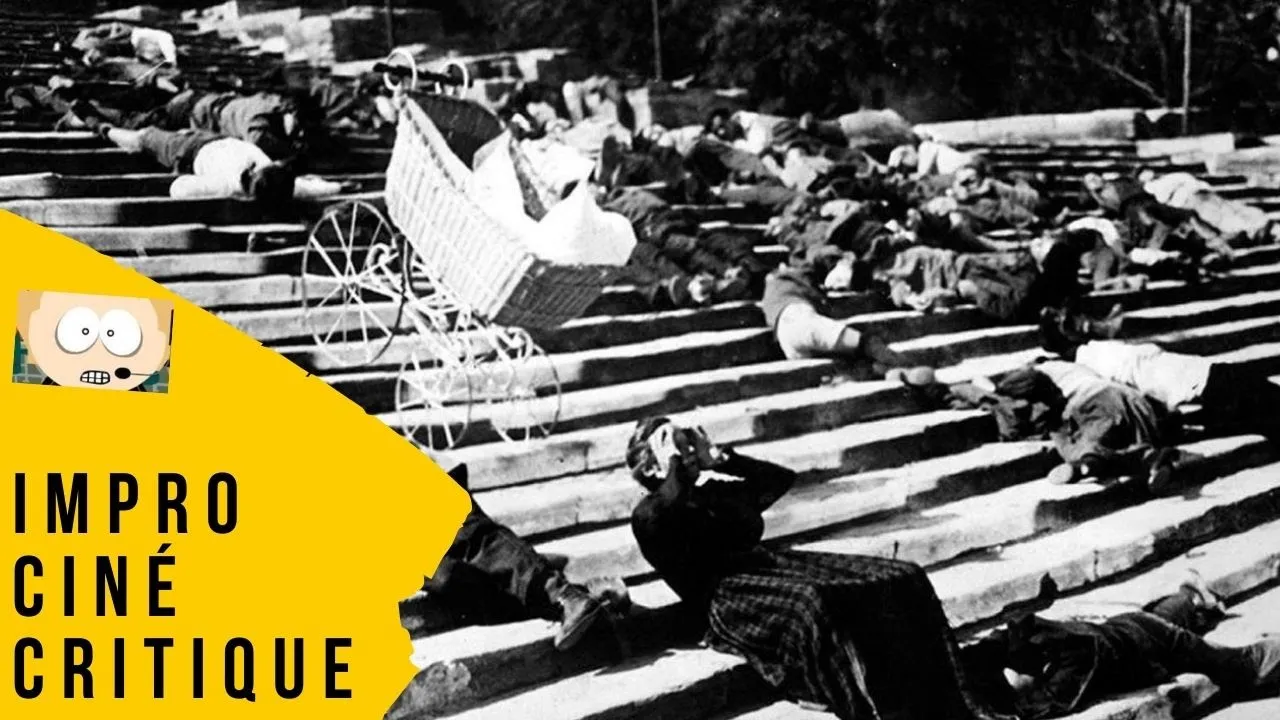
Impro Ciné Critique #663 : Le Cuirassé Potemkine (1925)
2.4K
The Odessa Steps scene is one of cinema's most influential moments, depicting brutal repression with a famous image of a landau tumbling down stairs, abandoned by a woman and child. This scene has been referenced in countless films including The Untouchables, The Godfather, and Braindead. Despite being propaganda, the film is deeply humanistic, portraying ordinary people treated as less than human by the privileged class. The film demonstrates how images can manipulate audiences through precise editing and montage, creating compelling narratives that transcend factual accuracy. This technical innovation, despite basic 1925 limitations, established foundational principles of cinematic language that influenced filmmakers worldwide.
Click to watch →

Dr. Thomas Tode zu "Panzerkreuzer Potemkin" (SU 1925) von Eisenstein | Kino gegen Austerität Hamburg
191
The Odessa Steps sequence exemplifies Eisenstein's revolutionary montage technique, where a 3-minute real-life descent is stretched to 11 minutes through deliberate time dilation. This manipulation of temporal perception intensifies emotional impact and creates a sense of prolonged suffering. Camera aesthetics were characterized by extraordinary plasticity achieved through innovative lighting techniques, specifically the use of reflectors and reflectors for the first time in Soviet cinema. The cameraman Eduard Tis was responsible for this technical achievement. The film employed frequent framing of images within the frame, extreme close-ups of faces, and tilted camera angles with strong upward and downward shots. These techniques served the film's purpose of emotional impact and propagandistic persuasion, with Eisenstein explicitly stating his goal was to 'fly over the soul of the viewer like a tractor.'
Click to watch →
Deep Dive
Evolution of Film Scoring: Studying the transition from improvised live silent film accompaniment to complex, synchronized non-diegetic sound designs in modern cinema.

Ennio Morricone -- BBC2 Documentary
114.9K
Morricone's Western film scoring evolved from traditional approaches to revolutionary innovation. He developed a systematic method: writing individual character themes, creating crossover themes, then sequential image sequences longer than traditional Hollywood films. For 'A Fistful of Dollars,' he created the iconic whistle theme by developing simple motifs into memorable material. For 'The Good, the Bad and the Ugly,' he invented four revolutionary notes that became the foundation of the entire score. This minimal germ expanded into complex thematic development. His goal was creating a very spare, very Italian sound different from American Western conventions, working rigorously to make the guitar sound dramatically large. This evolution demonstrates how effective film music emerges from simple, easily recognizable motifs that can be developed into powerful thematic material.
Click to watch →

What if...Hans Zimmer and John Williams Wrote The Avengers Theme?
142.5K
Modern film scoring tends to be more direct, bold, and catchy compared to older styles. Alan Silvestri's Avengers theme is described as 'square' and more modern, while his earlier work (like Back to the Future) had more 'feel-good 80s sounds.' This evolution makes reimagining themes in older styles more challenging.
Click to watch →
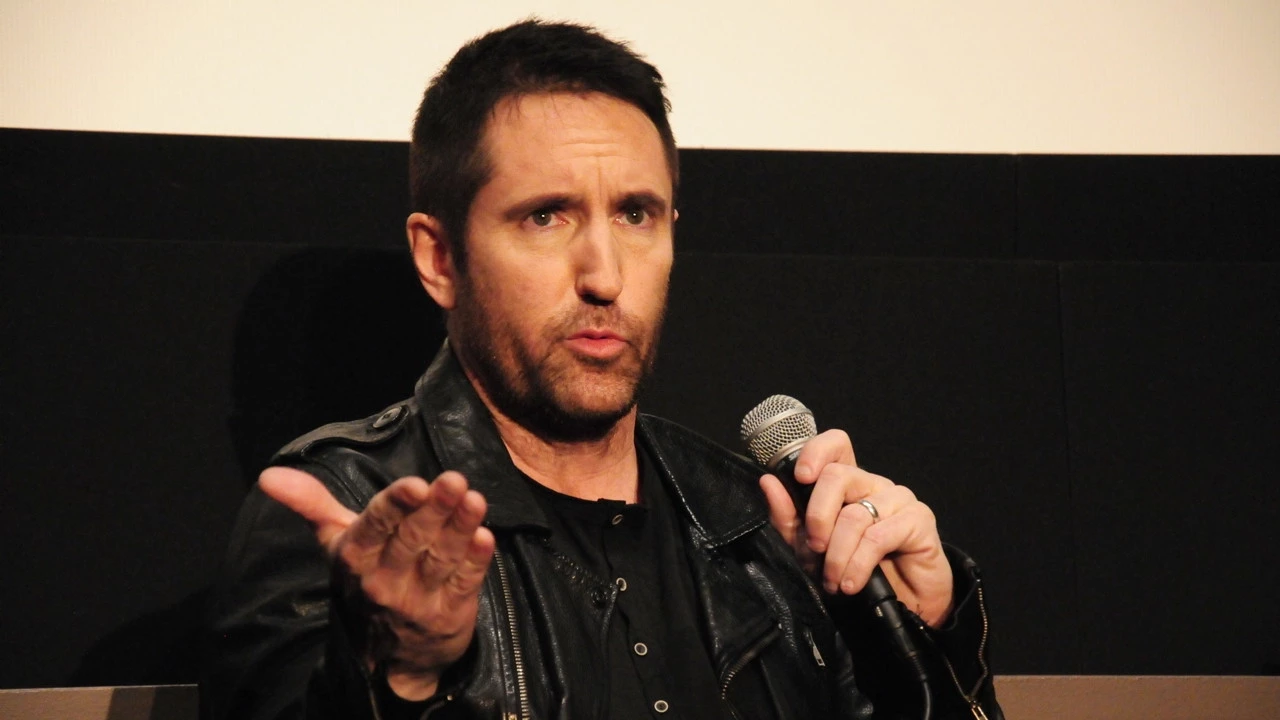
Gone Girl Q&A | Trent Reznor + Atticus Ross
104.8K
Composers evolve their musical style across projects, from piano-based scores like Social Network to more experimental sounds in Dragon Tattoo and Gone Girl. At the beginning of each project, composers spend time thinking about how this project is different and create new rules, strategies, and recording methods. The danger of familiarity leads composers to reach for familiar tools, so they actively seek new approaches. Instrument selection is based on gut feeling—composers decide what instruments they will NOT use, leaving only those that feel inspiring. All tools, whether computers, pianos, or musicians, are simply means to execute the feeling in the composer's head.
Click to watch →
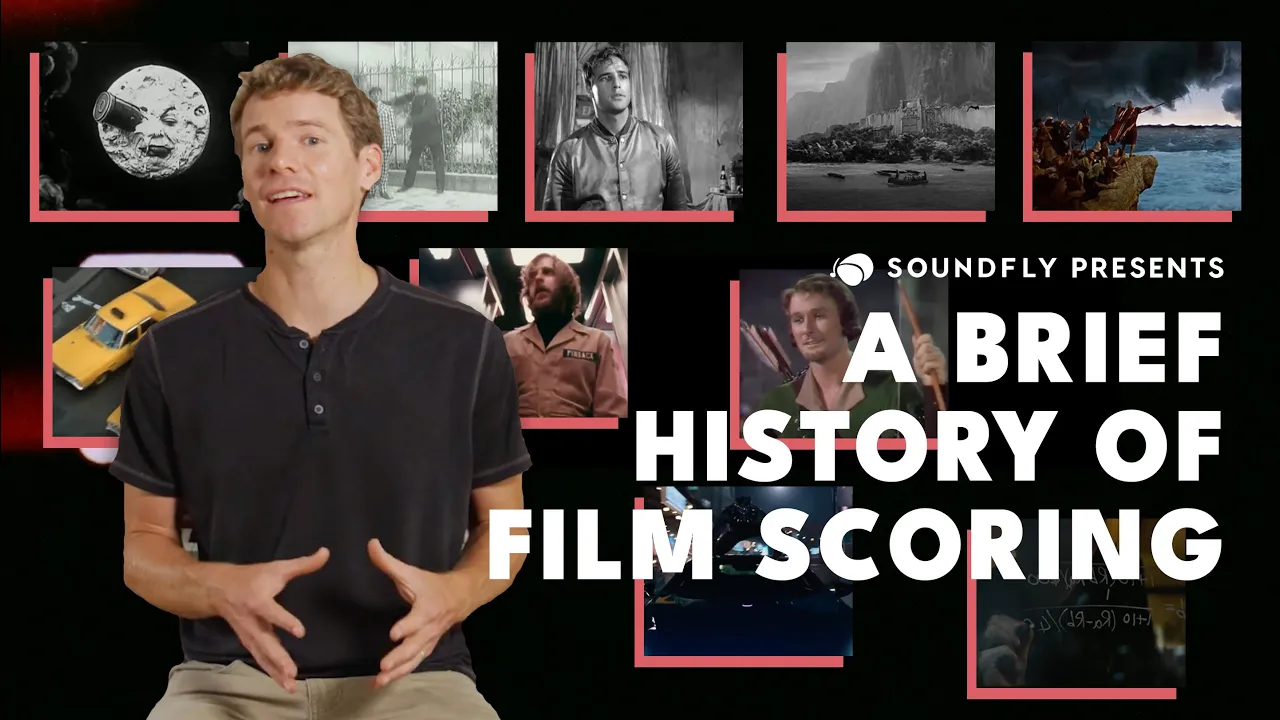
A Brief History of Film Scoring
25.6K
Film scoring has evolved from live pianists and organists accompanying silent films in 1895 to sophisticated electronic and orchestral compositions today, with key milestones including the first original film score by Camille Saint-Saëns in 1908, the Golden Age of orchestral scoring led by Max Steiner starting in the 1930s, the integration of jazz and popular music in the 1950s-1970s, and the rise of electronic and synth-driven scores from the 1970s onward, reflecting broader technological and cultural shifts in the film industry.
Click to watch →

Top 10 Movie Score Composers
474.1K
This segment traces the evolution of film scoring through several legendary composers. Ennio Morricone pioneered Western soundtracks with innovative use of sound effects when orchestras weren't available, creating instantly recognizable themes across genres. Jerry Goldsmith pursued emotional penetration in his scores, earning critical acclaim for works like 'Mulan' and 'The Omen.' James Newton Howard exemplifies versatility by adapting his style to different films without sacrificing quality, demonstrating that successful film composers must balance personal artistic identity with the demands of diverse cinematic projects.
Click to watch →
Deep Dive
Cinema as Political Propaganda: Analyzing how editing, cinematography, and music are combined to construct powerful ideological narratives in state-sponsored film movements.
VIVA o SUS!, o FILME: MAIS uma PEÇA de PROPAGANDA CHATA que o GOVERNO LULA COMPROU com SEU DINHEIRO
64.6K
Government-funded cinema often serves as political propaganda rather than genuine cultural expression, as it lacks the risk-taking and audience engagement that characterizes authentic art, and such films frequently fail to resonate with audiences who prefer entertainment over political messaging.
Click to watch →
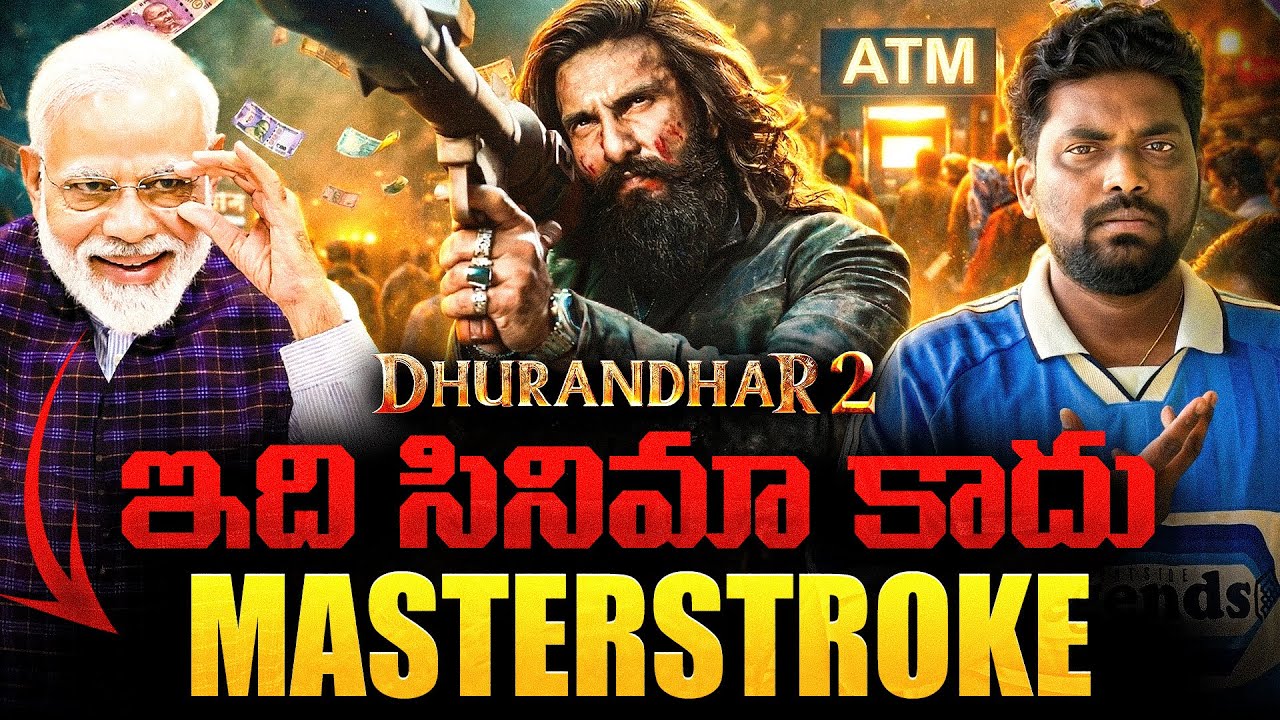
The Hidden Agenda Behind DHURANDHAR 2 Nobody Is Talking About | Kranthi Vlogger
36.3K
Indian cinema has evolved into a sophisticated political propaganda mechanism. A consistent pattern emerged: taking real political events, fictionalizing them, adding Hindu nationalist undertones, portraying Pakistan or communists as villains, and presenting the government as a genius savior. The government provides tax exemptions and free marketing for these films, creating a business model where propaganda survives financially. This transforms cinema from storytelling medium to election campaign tool, where emotional engagement translates into voter support. The complete cycle involves government release, free promotion, box office success, message spread, and electoral influence.
Click to watch →

धुरंधर फिल्म नहीं राजनीतिक प्रचार/SHAMBHU ON DHURANDHA 2 AND BAHUJAN
82.8K
Films like Dhurandhar 2 are political propaganda tools created by those with problematic historical backgrounds to target specific religious and caste groups, using cinema to rewrite history and incite communal tensions rather than promoting the constitutional values of equality, fraternity, and secularism that the nation was founded upon.
Click to watch →

FILMEI MÍSSEIS NO IRÃ E QUASE ME PRENDERAM
19.3K
Governments can use cinema as a tool for political messaging and propaganda, while international filmmakers often praise the authenticity of films from other countries. The video shows the speaker discussing how Iranian films are 'tudo baseados na proteção do islã, dos lã e dos governos' (all based on protecting Islam, the Shia, and the government), with films 'falam bem, bem bem, falando mal dos outros' (speak well, speaking badly of others), particularly about the United States. The speaker also presents quotes from international filmmakers: a Lebanese filmmaker stating 'O Irã é um lugar de pessoas reais com significados reais' (Iran is a place of real people with real meanings), a Malaysian filmmaker noting 'Os filmes iranianos são muito importantes para nós' (Iranian films are very important for us), and an Indian filmmaker expressing admiration for 'a autenticidade dos filmes iranianos' (the authenticity of Iranian films). This illustrates how cinema can serve both as a political tool and as a medium for cultural authenticity that transcends national boundaries.
Click to watch →

Quanto custa um filme?
31K
During political turbulence, cinema served as major mass communication and propaganda tool, explaining why budget increases coincided with the Great Depression, World Wars, and Cold War. 'The Wizard of Oz' (1939) cost $3-4 million but grossed $400 million, demonstrating investment returns. However, the film was removed from streaming in 2020 due to racial themes, showing cultural value alone doesn't guarantee lasting relevance. Major films function as foundational myths and monuments celebrating national cinema industries, representing more than entertainment—they embody cultural narratives and national identity.
Click to watch →
Music Interlude
Vocal Echoes
Rhythm Shift
Final Crescendo
Music Interlude
2:28- 1
Continuous musical performance segment.
- 2
Applause and ambient sounds fill the audio.
- 3
No spoken content detected in this section.
Bazin's Realist Critique of Soviet Montage
While Sergei Eisenstein's Odessa Steps sequence is celebrated as a triumph of Soviet montage, influential film theorist André Bazin offered a major counterpoint. Bazin championed cinematic realism, arguing that rapid, manipulative editing—like Eisenstein's collision montage—imposes a predetermined interpretation on the audience and disrupts the spatial and temporal continuity of reality. Instead of allowing the spectator to explore the frame and draw their own conclusions, montage dictates the viewer's emotional and intellectual response. Furthermore, film historians note that the dramatic massacre on the steps was a highly stylized fabrication designed for Soviet state propaganda rather than a historical event, raising ethical questions about the manipulation of historical truth through cinematic technique.
Sergei Eisenstein's Soviet Montage Theory: The fundamental editing technique where shots are juxtaposed to generate intellectual and emotional responses rather than just chronological narrative flow.
Historical Context of the 1905 Russian Revolution: A basic understanding of the socio-political climate in Tsarist Russia and the specific mutiny of the crew of the battleship Potemkin.
Silent Film Aesthetics and Technical Constraints: Familiarity with the visual grammar of early 1920s cinema, including the lack of synchronized sound and the reliance on visual expression and intertitles.
The Function of Live Musical Accompaniment: Understanding how musical composition and live performance historically replaced spoken dialogue to guide audience emotion and narrative pacing in silent films.
Comparative Analysis of Soviet Filmmakers: Exploring how Eisenstein's theories contrast with contemporaries like Lev Kuleshov (The Kuleshov Effect) and Dziga Vertov (Kino-Eye).
The Legacy of the Odessa Steps Sequence: Investigating direct cinematic homages and parodies of this scene in modern films, such as Brian De Palma's 'The Untouchables' or Terry Gilliam's 'Brazil'.
Evolution of Film Scoring: Studying the transition from improvised live silent film accompaniment to complex, synchronized non-diegetic sound designs in modern cinema.
Cinema as Political Propaganda: Analyzing how editing, cinematography, and music are combined to construct powerful ideological narratives in state-sponsored film movements.
204K views1Klikes10:32@anturismOriginal Release: 2012-09-16
[Music] [Applause] [Music] [Applause] [Music] [Applause] [Music] [Applause] [Music] [Applause] [Music] for [Music] [Music] [Music] [Applause] [Music] oh [Music] [Music] oh [Music] [Music] [Music] [Music] l [Music] d [Music] [Music] [Music] n [Music] [Music] [Music] a [Music] [Music] [Music] [Music] [Music] [Music] [Music] [Music] [Music] [Music] I [Music] B
Up Next
26:10
Non-Continuity Editing: A Comprehensive Guide to Stylistic Techniques
@TRCMEDIASTUDIES
777 views•2020-05-21

23:14
Visual Analysis Essay: How to Analyze Graphic Novels in College Writing
@nataliepleimann5941
1K views•2020-10-14

4:55
Film Blocking Techniques for Directors: Space, Shapes, Lines
@StudioBinder
1.9M views•2018-07-23

4:00
Evolution of Darth Vader: Anakin Skywalker's Animated Journey Across Star Wars Films
@TellItAnimated
13.4M views•2019-03-30
Related Study Plans & Knowledge Roadmaps
Structured learning paths in Film Analysis
film-analysis
Sensory Cinema: Foley, Haptic Sound & Texture
01Introduction to Film Sound and Foley Artistry
02Micro-Sounds, Textures, and Extreme Amplification
03Haptic Audition and Film Phenomenology
+ 1 more learning modules
12h4 modules
Explore Roadmap
film-analysis
Breaking the Fourth Wall: Mockumentary & Satire
01The Invisible Wall: Basics of Cinematic Illusion
02Looking at the Lens: Direct Address & Character Glances
03The Mockumentary: Satire, Realism, and Complicity
+ 2 more learning modules
12h5 modules
Explore Roadmap
film-analysis
Analyzing the Long Take: Cinema, Space & Ethics
01Foundations of Film Grammar: Montage vs. The Long Take
02Choreography and Mechanics of the Simulated One-Shot
03Phenomenology of Film: Real-Time Spatial Continuity
+ 1 more learning modules
14h4 modules
Explore Roadmap
film-analysis
Anachronistic Music: Period Drama & Subversion
01Foundations of Film Sound and the 'Needle Drop'
02Traditional Authenticity vs. Revisionist History
03The Rise of the Anachronistic Soundtrack
+ 2 more learning modules
12h5 modules
Explore Roadmap