









![المراجعة الأخيرة [ كل الدروس ] الدقيقة 120 🥅](https://i.ytimg.com/vi/Lg330592dto/maxresdefault.jpg)








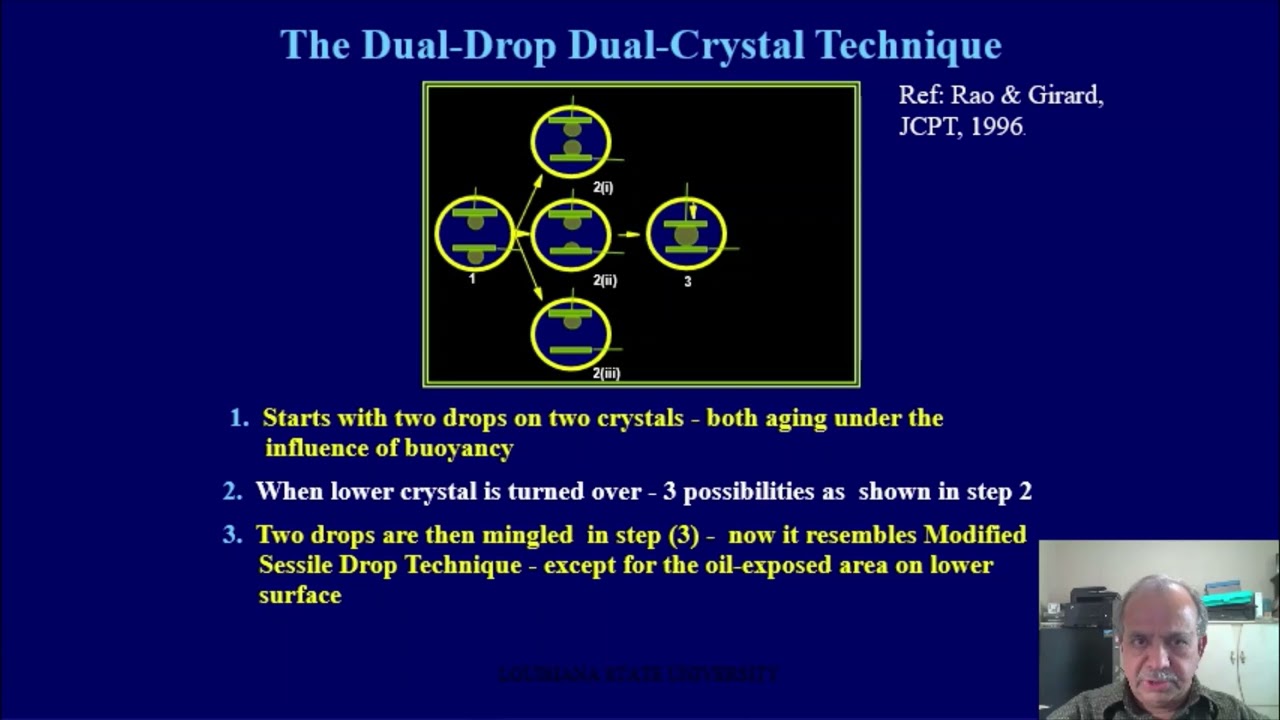


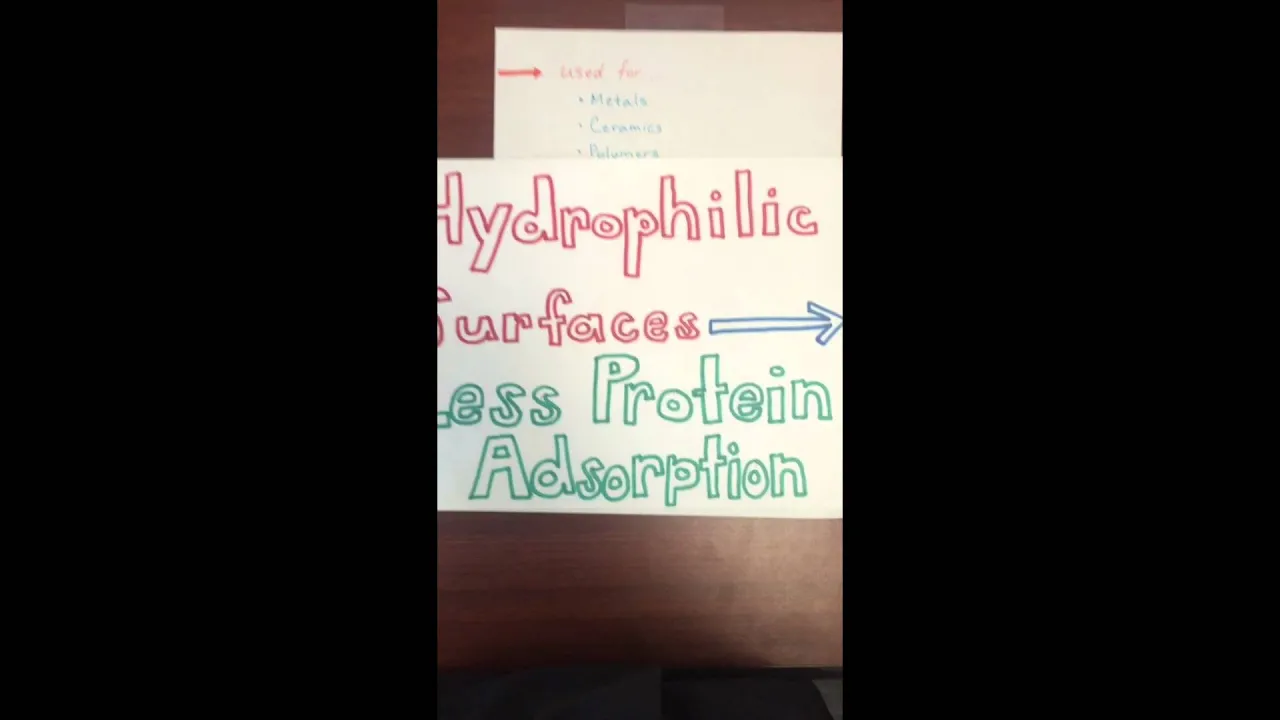




The contact angle is the angle measured through the liquid where a liquid-vapor interface meets a solid surface, quantifying the wettability of a solid by a liquid via Young's equation. A given system has a unique equilibrium contact angle, but in practice, contact angle hysteresis is observed, ranging from the advancing contact angle to the receding contact angle. The equilibrium contact angle reflects the relative strength of liquid-solid and liquid-vapor molecular interactions. Contact angles are highly sensitive to surface contamination and can range from 0° (completely wetting, hydrophilic surfaces) to over 150° (superhydrophobic surfaces with air pockets). Common measurement methods include the static sessile drop method, dynamic sessile drop method, Wilhelmy plate method, and capillary rise method.
Contact Angle: Wettability, Hysteresis & Measurement Methods
Added:the contact angle is the angle conventionally measured through the liquid where a liquid Vapor interface meets a solid surface it quantifies the wetability of a solid surface by a liquid via the young equation a given system of solid liquid and Vapor at a given temperature and pressure has a unique equilibrium contact angle however in practice contact angle hysteresis is observed ranging from the so-called advancing contact angle to the receding contact angle the equilibrium contact is within those values and can be calculated from them the equilibrium contact angle reflects the relative strength of the liquid solid and Vapor molecular interaction thermodynamics the shape of a liquid Vapor interface is determined by the young Euro laas equation with a contact angle playing the role of a boundary condition via Young's equation the theoretical description of contact ARIS is from the consideration of a thermodynamic equilibrium between the three phases the liquid phase the solid phase and the gas vapor phase the a euro Gaza Euro phase could also be another liquid phase if the solid a Euro Vapor interfacial energy is denoted by the solid Euro liquid interfacial energy by and the liquid Euro Vapor interfacial energy by then the equilibrium contact angle is determined from these quantities by Young's equation the contact angle can also be related to the work of adhesion via the young dpra copyright equation where is the solid liquid adhesion energy per unit area when in the medium V hysteresis if we add a small enough amount of liquid to a drop the contact line will still be pinned and the contact angle will increase similarly if we remove a small enough amount of liquid from a drop the contact line will still be pinned and the contact angle will decrease hence a drop placed on a Surface has a spectrum of contact angles ranging from the so-called advancing contact angle to the so-call receding contact angle the young equilibrium contact angle is somewhere between those values and the contact angle hysteresis is normally defined as the young equation assumes a perfectly flat surface even in such a smooth surface a drop will assume contact angle hysteresis the equilibrium contact angle can be calculated from and as was shown theoretically by Tidmore and confirmed experimentally by chibos where on a surface that is rough or contaminated there will also be contact angle hysteresis but now the local equilibrium contact angle may vary from place to place on the surface according to the young dpra copyright equation this means that the adhesion energy varies locally a Euro thus the liquid is to overcome local energy barriers in order to work the surface one consequence of these barriers is contact angle hysteresis the extent of wetting and therefore the observed contact angle depend on whether the liquid is advancing or receding on the surface since liquid advances over previously dry surface but recedes from previously wet surface contact angle hysteresis can also arise if the solid has been altered due to its previous contact with the liquid such alterations if slow can also produce measurably time dependent contact angles Dynamic contact angles for liquid moving quickly over a surface the contact angle can be altered from its value at rest the advancing contact angle will increase with speed and the receding contact angle will decrease typical contact angles contact angles are extremely sensitive to contamination values reproducible to better than a few degrees are generally only obtained under laboratory conditions with with purified liquids and very clean Solid Surfaces if the liquid molecules are strongly attracted to the solid molecules then the liquid drop will completely spread out on the solid surface corresponding to a contact angle of z a degree this is often the case for water on bare metallic or ceramic surfaces although the presence of an oxide layer or contaminants on this solid surface can significantly increase the contact angle generally if the Water contact angle is smaller than than 90 a dee the solid surface is considered hopic and if the Water contact angle is larger than 90 a dee the solid surface is considered hydrophobic many polymers exhibit hydrophobic surfaces highly hydrophobic surfaces made of low surface energy materials may have water contact angles as high as 120 a degree some materials with highly rough surfaces may have a water contact angle even greater than 150 a degree due to the presence of air pockets under the liquid drop these are called superhydrophobic surfaces if the contact angle is measured through the gas instead of through the liquid then it should be replaced by 180 a degree minus their given value contact angles are equally applicable to the interface of two liquids though they are more commonly measured in solid products such as non-stick pans and waterproof Fabrics measuring methods the static cile drop method the cesal drop method is measured by a contact angle gometer using an optical subsystem to capture the profile of a pure liquid on a solid substrate the angle formed between the liquid solid interface and the liquid Vapor interface is the contact angle older systems used a microscope Optical system with a back light current generation systems employ high resolution cameras and software to capture and analyze the contact angle angles measured in such a way are often quite close close to advancing contact angles equilibrium contact angles can be obtained through the application of well-defined vibrations the dynamic cile drop method the dynamic cile drop is similar to the static cile drop but requires the drop to be modified a common type of dynamic cile drop study determines the largest contact angle possible without increasing its solid liquid interfacial area by adding volume dynamically this maximum angle is the advancing angle volume is removed to produce the smallest possible angle the receding angle the difference between the advancing and receding angle is the contact angle hysteresis Dynamic will hel method a method for calculating average advancing and receding contact angles on solids of uniform geometry both sides of the solid must have the same properties wetting force on the solid is measured as the solid is immersed in or withdrawn from a liquid of known surface tension also in that case it is possible to measure the equilibrium compact angle by applying a very controlled vibration that methodology called via can be implemented in a quite simple way on every will helmy balance single fiber will hel method Dynamic willamy method applied to single fibers to measure advancing and receding contact angles wash BS equation capillary rise methoda enables measurement of average contact angle aborption speed for powders and other porous materials change of weight is a function of time is measured see also references further reading Pierre gist agains F section noise brought to out David Quay copyright ra copyright capillarity and wetting phenomena drops bubbles pearls waves Springer Jacob Israel intermolecular and surface forces Academic Press DW van crevin properties of polymers second revised Edition El s scientific Publishing Company Amsterdam Oxford New York
Up Next

Host-Guest Chemistry Explained: SL IB Chemistry Revision
@MSJChem
27.2K views•2015-06-15

Biocatalysis and Catalysis in Islatravir Synthesis | Merck Webinar
@SCIwheresciencemeetsbusiness
675 views•2020-10-08

Polydimethylsiloxane (PDMS): Properties, Structure & Applications
@audiopedia5493
9.3K views•2014-08-08

Edible Water Bottles: A DIY Guide to Sodium Alginate Spherification
@ryan
10.5M views•2019-06-21
Related Study Plans & Knowledge Roadmaps
Structured learning paths in Chemistry