
















Lentiviral vectors, derived from retroviruses, are powerful tools for gene therapy because they can integrate their genetic material into the host cell genome and transduce both dividing and non-dividing cells; these vectors are constructed by deleting pathogenic genes (such as env, vpr, vpu, nef, and tat) from the HIV genome while retaining essential structural genes (gag, pol, rev) and using co-transfection of multiple plasmids (transfer plasmid carrying the gene of interest, packaging plasmid providing structural proteins, and envelope plasmid providing VSV-G envelope) to produce replication-deficient viral particles that safely deliver therapeutic genes to target cells.
Lentiviral Gene Therapy: Retrovirus Vectors Explained
Added:The basic structure and life cycle of viruses, particularly how retroviruses replicate using reverse transcription to convert RNA into DNA.
The Central Dogma of Molecular Biology, specifically understanding DNA replication, transcription, translation, and how foreign genetic material integrates into a host genome.
Fundamental concepts of gene therapy, including the difference between treating symptoms and correcting genetic mutations at the DNA level.
Basic recombinant DNA technology, such as the use of plasmids, promoter sequences, and restriction enzymes to manipulate genetic material.
Safety mechanisms in vector design, such as self-inactivating (SIN) vectors and the prevention of replication-competent retroviruses (RCR).
Real-world clinical applications of lentiviral vectors, specifically ex vivo gene therapies like CAR-T cell therapy for cancer and treatments for severe combined immunodeficiency (SCID).
The risk of insertional mutagenesis, exploring how viral integration can accidentally activate oncogenes or disrupt essential host genes.
A comparative analysis of gene delivery vehicles, contrasting retroviruses and lentiviruses with Adeno-Associated Viruses (AAV) and non-viral delivery methods like lipid nanoparticles.
56.3K views480likes32:05Original Release: 2013-12-09
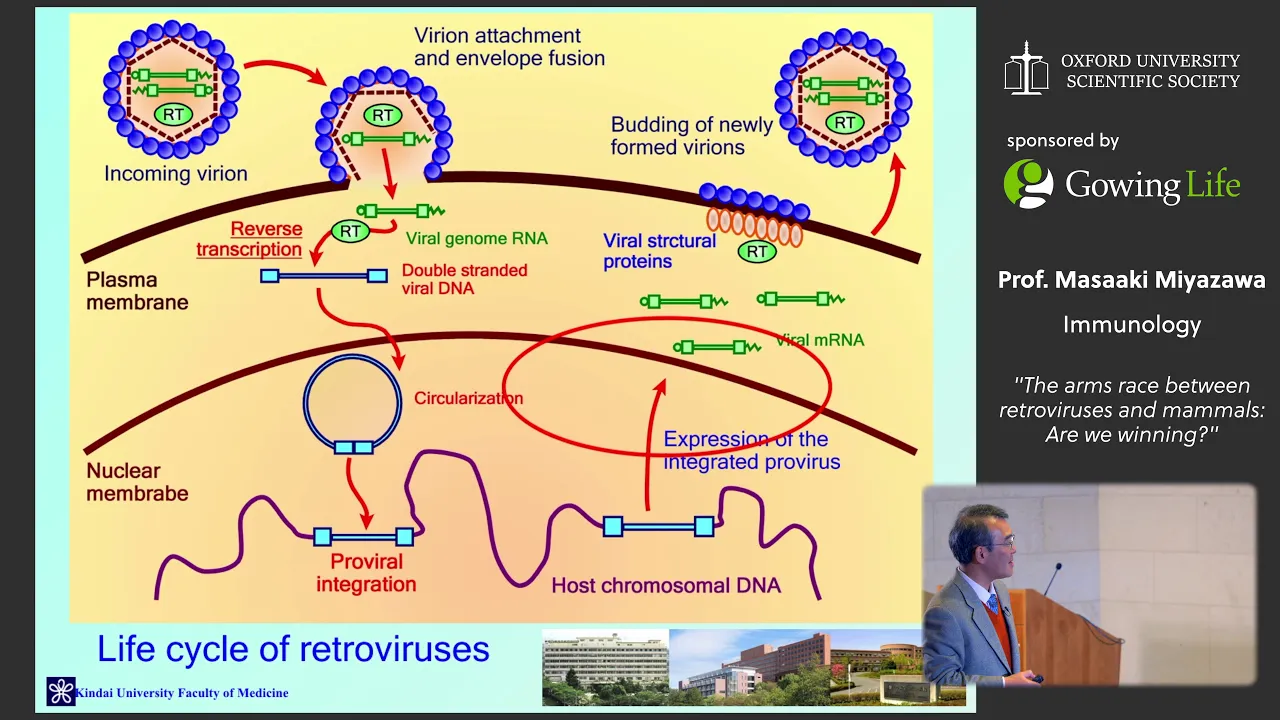
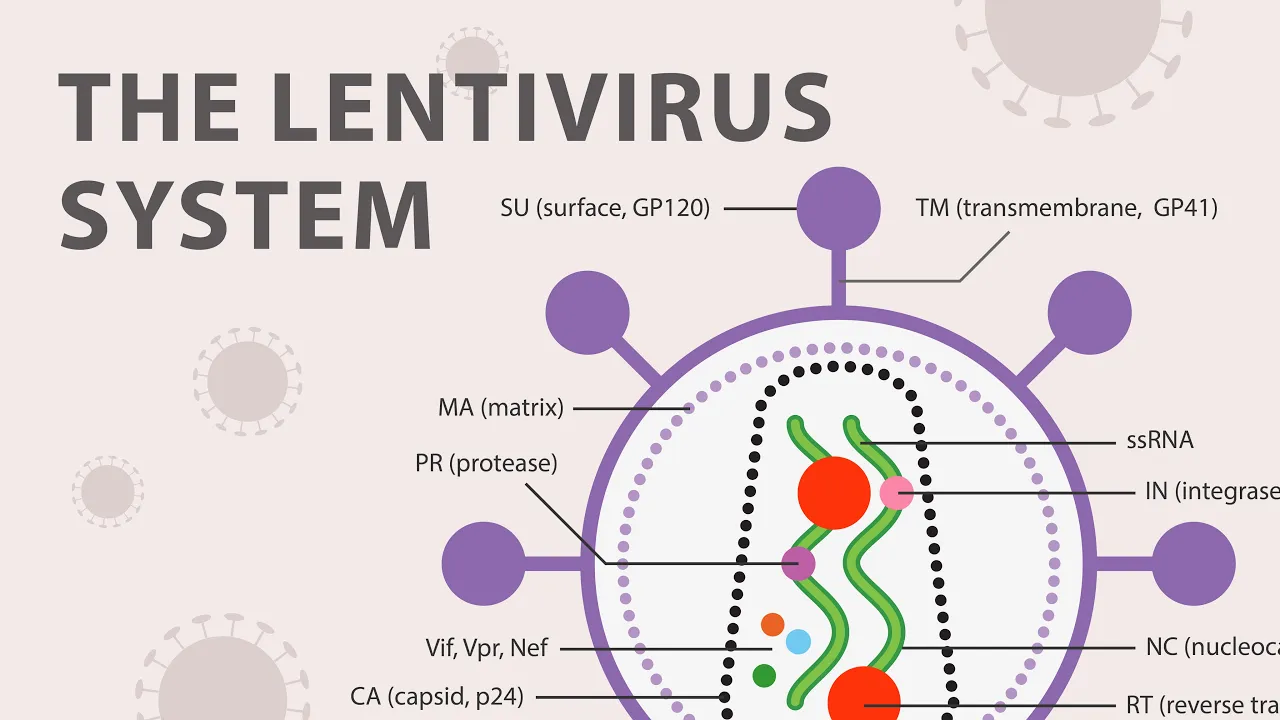
[Music] all right welcome back friends uh in this video tutorial we'll be talking about lentiviral gene therapy now we have seen what is gene therapy and what are the implications of gene therapy in future and we have also seen how we can utilize adenovirus uh for conducting gene therapy now let us see another type of virus it is called the lenty virus which is in the family of retrovirus uh so let's look at how we can utilize this retro retroviral uh member which is lentivirus for the Gen gene therapy purpose now before going into the further discussion I must tell you first basic thing uh assuming that you all know about what is retrovirus and what is a process of retroviral uh infection I simply want to tell you is that retrovirus is a very good advantageous virus for the gene therapy because the normal retroviral life cycle involves in the in the insertion of the retroviral genome inside the host cell DNA right because suppose it is a retrovirus now this retrovirus is is containing its own DNA and now let's say this is a host cell so let us conduct this is a host cell when the virus enters into this host cell what it does inside the host cell there is host cell genome for example say this this red color thing is a host cell genome uh say this is the host cell genome now inside somewhere there in the inside this host cell genome after the insertion it enters its own DNA or genetic material say this this blue colored region right so once after invading the host cell it inserts is its own genetic material inside the host cell here we can see it and this procedure is really really important and this is unique feature about the retrovirus right because the retrovirus means it they are simply utilizing reverse transcriptor enzyme to produce the DNA from the existing single standard DNA on single standard RNA and they will produce the DNA and then the C DNA they will incorporate that DNA onto the host cell genome and then uh this host cell genome will be replicated and multiplied so that they produce more and more copies of their own okay so for this attachment they want another protein which is called integr and also uh there are other proteins for the cleaving and uh cutting this segment out for the packaging purpose so the those this retr viral genes are having two three different types of genes actually one is their genomic DNA second one genomic DNA RNA whatever which is their genome then the envelop protein coding segments because the envelop segment that they are having are very very very very pathogenic for us right so please try to uh maintain this so there are actually they are having three different major genes one is gag which are coding for structural part or other structural part or structural regions except for the the envelop then Paul which is coding polymerase which is helping them to replicate their genome inside the host cell and thirdly it is EnV or envelope or EnV is called is a gene which is coding the protein to produce the envelope region right so these three are the major type of genes that are found inside a retroviral genome now inside rarus also we are going to see the expression of these three genes but except for this three genes there are also many genes like tat like uh rev and many more genes and we are going to see their functionality now again uh the gene therapy means it's all about modification of an existing host in such a way so that we can utilize it in the beneficial purpose in the gene therapy now the existing uh wild type virus is lentivirus we cannot use it we must modify this so we must take those part out we must cut those part out which are responsible for the pathogenicity for example this EnV part so we must cut this part out but if we cut uh so so if cut this part out so we need to supply this envelope via another procedure by any another Vector so we need to relay upon another helper vector and that is the procedure of the whole gene therapy when we modify our wild type which is providing us the gene of Interest or which is providing us the region for inserting our desired Gene we may uh what we can say we sacrifice uh several different Gene products and for the for that purpose for the establishment of uh the of for the establishment of the infection and the release of the virus particles we must have provided all of these segments inside the host cell by Co transfecting some complimentary cell line with some other helper vectors that's the actual goal of most of the gene therapy and we have also seen in case of adenoviral gene therapy too now in this procedure I'm also going to tell you the adenoviral gene therapy examples so I recommend you to go back and first look at the adenoviral gene therapy then come here so the lentiviral vector development purpose let's first talk the basics as this lentivirus is also a type of retrovirus but it is much more complex than some oogenic retrovirus like HIV usually what they are having as I've told you before they having Gap precursor Paul precursor envelop precursor mainly envelop precursor provides this envelop structural proteins which are extracellular that can be intracellular the PO uh precursor produce polymer is reverse transcriptus enzyme which is in this case acting as a polymerase integras which help them to integrate its own genome inside the host genome that I told before and protas which is which is required for further cleavage of its uh own DNA sequence and to package it okay and also the gak precursor producing the core structural protein which is helping them to produce the structural regions or structural part of this particular virus because the viral not only needs its DNA or genetic sequence but also it needs need uh it needs uh its uh structural sequences to be inserted to the genes to be inserted okay now here uh the significance of lentiviral vector development are viral components that enable HIV productivity to infect non-dividing and terminally indiff differentiated cells that is the advantage now the larus are capable of transducing quison cell this is another very important assumption not is assumption is actually proven fact now uh the process is facilitated by several different part so first is the integr protein then the Matrix protein then VP VPR and PPT so these are the proteins which help them to attack the squeez and cell and establish its own uh what you can say it own placement inside this host C right so we don't want to go to the basics and detail about how they integrate inside the cell on all these things because I've told you before because uh they utilize there this integr protein matrix protein to be attach with this host cell and evade inside the host cell once they are attached and evade inside the host cell they start releasing its D genetic material and it genetic material is inserted or Incorporated uh in between somewhere middle or somewhere inside the host genome and using the integr enzyme once the process uh is established on everything is established then they take up and clip their own genome segment out of that host genome part then uh utilizing this kind of uh proteas enzymes okay now let us look at the constituents of making the gene therapy Vector now for con for the making of this kind of vector utilizing lentivirus we again require three different type of uh elements in case of adenovirus we have seen three elements in case of here also we need three elements definitely one element we must provide as the gene of Interest so here it is a transfer plasmant which carries our Gene of Interest now this plasmid is again a modified lentiviral Vector we also need a packaging plasmid which will provide us the en EnV the en EnV segment because if we give the EnV segment in this transfer plasmid what it will do it will act or behave like a wild type virus because the EnV is pathogenic so it can infect the cell it can kill our host cell we don't want this so we must Supply en andv using another Vector here it is supplied using a packaging plasma M and transfer plasmid is Al only carrying a gene of our interest and also it is having some segment some few segment or few Gene segment of our host cell and third is uh of our not host cell of our lentivirus sorry third is an envelop encoding plasmid uh also the envelop sorry envelop encoding plasmid is really important and a packaging plasmid important which will provide us all the structural parts right so I I've made a mistake before so actually packaging plasmid is provided ing let me change the color packaging plasmid is providing us all the structural parts which will give us all the structural uh necessary inside which we package our DNA or genetic material transfer plasmid is providing as a gene of Interest so now Gene of interest is there structure is already made and third is the an envelope encoding plasmid which will provide us the envelope because the envelope is important in this case now remember in case of adenovirus envelope is not required because the protein coat is acting as the terminal barrier but in this case there is an envelope outside this protein coat so we must have this envelope because this envelope is important to establish the infection inside the host cell so that's why the envelope is important and we must have access to the envelope and the envelope is encoded and provided by an envelope encoding plasmid so you must have three plasmids one simply provide only envelope one provides only structural proteins and another provide the Gene of Interest okay so usually HIV D derives the virulence from nine genes so the virulence factors that are present in HIV are from nine genes EnV is one of them VI VPR vpu NF and tat now what we need to do we must have deleted or eliminated as more as of these nine genes right because these genes are pathogenic it can creat problem for our host cell it can kill our host cell so you must have released or must have cleed this particular Parts out so for that we must have taken this one out we take this all this most of them out now what we this out of this nine genes six can be removed without altering the hiv's gene transfer ability as we can see here so from this nine if we delete six uh known genes from here it won't affect the HSV Gene transfer ability so what we can do we can uh we can drag out uh at least or maximum six genes not more than six in this case okay okay so we can eliminate six1 and three genes will be present so the level of pathogenicity will be less so we'll do this we'll take out those six genes which can be uh just cved out if we Cliff those rest three out uh then we need to compromise some facts because those genes are required for the gene transferability so in those case we must provide some other factors from outside so that the gene transfer aity abilities not get hampered right so here it is the construction of the three types of plasmids as we can see this is a whole while type lentiviral genome now if we provide this whole while type lentiviral genome it can create problem it can creas infection so we won't provide this instead we provide this in three different fragments using a Cod transfection experiment one is only with envelop protein or envelop plasmid envelop protein coding plasmid which is this Third Kind another one is simple transfer plasmid which carry which will carry our Gene of interest and you will have our LT are at both the ends just like uh the structure of the adenoviral uh plasmid and the third one is the packaging plasmid because it will have the gak PA tat array of this sequences because the gak Paul sequences are required for the production of protein en coding segments or the structural components of the viral particle okay now the generation of gene therapy Vector using this Len virus or HIV virus now as we have seen there are several segments so we need to prepare three different type of vectors and we'll use this three Vector to co transfit the host cell so that they can work in complementarity with each other right but we cannot provide everything in a single genome right now here in the first generation it is composed of H minus the simply envelop protein uh at the very beginning and the first generation of plasms but the second generation of gene therapy five of the nine genes are deleted only gag and Paul or tat and Rave genes are are retained okay and it seems to be very active very good now in third generation it is further modified and it contains only gag fall and rev Gene instead of L lost of this nine genes so we have deleted six genes and we've kept only three gen which are gag Paul and rev now gag is providing us uh the structural components polymer Paul is again providing us the entic components like like the proteas like the integr which are required for the insertion deletion purpose and rev Gene uh is also there now the Rev Gene is again helping us in the establishment of our infection okay now here it utilizes a chimeric five Prime LTR to ensure the transcription in the absence of tag now here it suggest us that LTR is playing important role in the transcription purpose because this LTR is acting like uh the factors or transcription factors to initiate the transcription or to stop the transcription process okay now this is a simple modification in the very beginning simply deleting or uh deleting the genes that are previously present in the while type lentiviral genome or while type HIV Gene but in this case what we are seeing further modification must be done simply what we can do here uh so what we have seen in this previous case we have this ltrs which are previously there we have Geno for interest with promoter sequences but what we'll do here uh we will will give the element regulatory elements or WP which is called utak hepatitis virus posttranscriptional regulatory element or wpr will increase the level of transcripts so we'll provide this wpr elements Downstream of our desired Gene right we provided this this is something which we add from outside but rest of the part we have discussed in generation one generation two and Generation 3 simply deleting the wild type genes that are present there which can be pathogenic okay now this is one modification this is further modification that has been conducted and also the transfer Vector are designed as self inactivated now what we mean by self inactivating now this is achieved by removing the u3 region so you can see this is the LTR part is made up with u3 u5 and then the transcript start which is our region now what we do here we simply remove this u3 region of the three prime utr so you can see here in three prime LTR we don't have any u3 region so is there any u3 region the answer is no there is no u3 region so it deleted this u3 region from this C Prime LTR but not from five Prime LTR because five Prime we are having this U u3 Now by deleting this u3 at the five at the three prime LTR region it results in the virus being unable to reconstitute its promoter so it cannot reconstitute its promoter so what we are ensuring we ensure that whatever Gene we are providing it's under the control of promoter and it is maximum control under promoter now if this u3 region is there it was seen that this u3 can help this particular viral Vector to reconstitute its promoter and the expression of Gene can be altered so for preventing that we make this self inactivating so that it cannot be inactivated again or reactivated Again by itself right and also you have the size side for the packaging signal right so we are having all this important parts inside it okay now what are the difference between the second generation and third generation vectors that we' have talked about the second generation Vector uh is uh can be packaged only by a second generation packaging system but in third generation VCT can be packaged by both Second Generation and third generation Packaging Systems Packaging Systems means simply they are the different types of host cell the packaging plasmid that are present in second generation are gak Paul Rave and tat but in third generation we come down to only three which is gak Paul and R now the plasmid that are present in this case usually Cote for vsvg right but in third generation the envelop plasmid is again uh code for vsbg which is uh which is similar in both the case as we have seen okay and also the promoter that you have seen it is altered in the third generation Vector because you have seen the C Prime LTR is modified the u3 is deleted which was not in second generation and also safety measures uh second generation vector are safe because we must care about safety first the second generation vectors are safe it uses separate plasmids for the encoding of viral HIV genes but in case of third generation what you've done instead of separate one or two different vectors we in we are providing four different plasmids for our gene therapy purpose so we are getting safer and safer transfer of the genetic problems right so uh this third generation vectors are way way better than the the second generation Vector so let me change the color here it is way better in many aspects than the second generation Vector that's why it is third generation and New Generation Vector right now the third generation in uh lentiviral Vector if we look at it it's a packaging this packaging system offers maximal bios safety that's the very very advantageous fact about this third generation vectors but again they are constituted with four different plasmids remember in case of adenoviral vector we taught three different plasms we've utilized three plasmids for construction of this whole um whole uh disarmed or disarmed viral Vector but in this case we utilize four different plasmids instead of three okay majorly three plasmids one is the transfer plasmid having our Gene of Interest sorry sorry for the bad handwriting here Gene of interest in the packaging plasma is providing gak PA which is the protein structural part and envelop plasmids which are giving us vsvg or the envelope of this virus which is helping them to quot this whole protein content okay so we must provide these three using three different plasmids but not by same so we'll be looking each of these plasmids and it their details now here this first one is a packaging plasmid consists of the gag and po regions so you can see here gag Paul genes are placed here in this part okay which is providing us the proteins that are required for the production of structural constituents and also what we are having M resistant part and all of these vectors are designed in such a way that they are having the cloning regions or the Restriction enzyme sites as well as they must have some uh selectable marker regions here it is having the amp resistant marker so that we can get it or select it after the transformation onto the equalized cell okay now in this case expression of this gag and poin from plp1 it is called the plp1 or plasm P1 has been rendered a rep dependent process right because except for the Rev this particular plasmid cannot be replicated right and they are modified in such a way so that in the absence of Rave they cannot be trans uh they cannot be replicated right so to ensure that we must have add this R sequence somewhere there in this plasmid now this R sequence this rri sequence prevents the gag and Pa expression in the absence of Rev so if there is no rev expression then gag and fall expression will not be there because the Rev is important rev is providing the signal now it's the time for packaging so the viral will start to package but if there is no rev there is no meaning for packaging because the cell is not ready it to package the viral particles and to release the particles outside right so once there is R only R is getting activated so that the gag and Paul is getting expressed but there is no r no R expression no gag Paul expression so no structural poins are made so this is the basic process basic uh construction of the lp1 vector here now here are the different uh regions of this part and the different type of benefits are also provided like here betaglobin Inon is provided to enhance the expression of gagan Po so this betaglobin interon is provided for the enhancement of this expression and R is provided for the regulation of the expression of gag and ball okay and also we are having the origin of replication which is the Park origin right because it permits High copy replication and maintenance this particular plasma inside the eoli cell so it is perfectly designed for the maintenance of this plasmine inside the eoli cell and I've already told you about the ampicilin and okay so and also we are having the promoter for CMV the promoter for CMV CMV is cegal virus as we all know it permits the high level expression of hiv1 gag and polyes in mamalian cells so so that's why this promoter is chosen because whenever we try to express some of our desired products inside the Maman cell line it's the best option to choose the CMV promoter right and most of the case not only Maman but if we are want to express our desired genes or designed plasm expression inside the eukariotic cell lines you must choose this uh CMV promoter okay now this is the second one which is the transfer plasmid containing our Gene of Interest right so here it is uh cdna is provided in this case so transfer plasmid is having TD and T this plasmid is helping us for the transfer purpose right now nowadays in the fourth generation plasmid third generation PL plasmid what they're providing they provide these three segments and this transfer plasm no longer carries our Gene of Interest instead here we can see here you can see so here it is uh the LP2 it is designated as LP2 or lentiviral plasmine 2 here it is having 4180 base PIR this is not required but what is required in this case is having this RSV enhancer which permits the high level expression of this rev genes right similarly in this case of as we have seen this this this betaglobin Inon is there for the expression of gall similarly here we having RSV promoter for the expression of rev Gene and again HIV rev operon orp is also there it encodes the r protein that interacts with the r segment of the previous lp1 plasmid to induce the gagp expression now here we can see the molecular cross talking between these two plasmids simply using rev because remember uh as we have seen the trans the replication of this gag and Paul the translation of gag and Paul is simply R dependent right the process is also R dependent so only when the r protein is secreted and they interact with this R region gag and Paul will be expressed so here that is the important part so this is the cross talk between between plp1 and plp2 now here we are having also HIV promoter here it allows efficient transf transcription termination and the polyad anation of the MRNA because what we'll be doing we are trying to develop the RNA in such a way so that it can be inserted inside the host eukariotic cell because we need to incorporate into the host cell that's why this hivp which is unique here in this case can be present there okay and ENT resistant is there also to select this particular a plasmid from a group of plasmid using ellin screening or antibiotic screening and park origin is also there for high copy replication and maintenance of this particular plasmine inside uh the eoli host okay so this park origin is common for plp1 and plp2 and they all have this MP cind segment but what they are wearing in this case it is having rev and the previous one is having gak PA now the Rev will control the expression of gagp okay so this two plp1 and PLP two plasmas will help each other for the establishment of their infection okay our establishment of the infection we can say that okay now the third part is the envelop plasmid which carries only envelop encoding segment which is here vsbg this is the envelop encoding segment okay so it encodes for the envelop G glycoprotein from a vesicular stomatitis virus that's why it's called the vsvg vesicular stomat virus and G stands for the G glycoprotein okay envelope G G glyco protein okay and this is a broad range host actually okay it can ATT a broad broad range H now here also we are having betag globulin intron why we are having betaglobin intron because this betaglobin intron again uh allows the efficient transcription and termination of uh and also poly adulation of the MRNA so the task here fulfilled by HIV 1pa here it is conducted by betaglobin uh so betaglobin PA it is conducted by this one okay okay now there is Park orig Park origin is given remember the same purpose permit the high copy replication and maintenance of this particular plasmine inside the eoli host cell and also ell resistance marker for screening of this particular plasmid containing equalized cell from a bunch of cells using the antibiotic screening method and here it is the PCM promoter for cyega V right so this virus again permites the high level this particular genus again Peres the high level expression of vbg gene in Maman cells so everything is again provided here it is called PLP or vsvg vector is slightly larger Vector than plp2 and a very important part is again the constitutive promoter the constitutive promoter which is simply called the RSV promoter now the promoter they provide here is RSV promoter which is further modified somewhere here it should be RSV promoter so the gene is from the vsv or vesicular statid virus but here is the promoter is from RSV okay why because uh this promoter is pretty strong it is a constitutive promoter providing a constitutive promoter ensure us that so that they are providing us this envelop protein in a very very steady amount why because if there is no constitutive promoter if it is tightly control promoter and if the expression of uh this Gene vsbg is expressed at a particular time point in the host cell it will start increasing the product of envelop protein inside the cell now this EnV protein can be toxic it is Toxin for our cell as we all know that now if the concentration of ENB protein is getting higher and higher inside the host cell it can make problem for the host cell so for minimizing this we Supply the CV protein in a very minute amount over time using this RSV constitutive promoter okay now let us look at the process so once we uh know that all these four different type of three different type of plasmids and obviously we must have our plasmid carrying our desired gen so what we can we will take here the generate the Pirus expression construct so we take all of them and take the construct and we have the package mix and we'll transfit all of this Plastics Co transction is done in 293t cell cell line 293t cell line again which is a heck 293t is is also human embryonic kidney cell and we co transfit this cell with all this different types of plasmids then what we'll do harvest the cells and we take out this plasm and we again take this and put the mamalian cell line of Interest then what we can provide we can produce the expression and response depending upon our results okay so this is this is the procedure of how we can do simply we take the vectors we V the plasmid which are four different plasmid one is carrying out the are Gene and three of them one is carrying the envelop protein one is carrying the gag and pl wall which is the structural protein and another one is called the transfer genes and then we provide it provide this inside the vectors sometimes the transfer Gene can also have our own Gene of Interest it can happen if we transfer three or four plasmid vectors here inside this 293t cell which is a COR transction Machinery then we take out this plasmid from there because in after some times we get more and more plasmid inside more and more viral not actually plasmas more and more viral particles coming out in this 293 cell After The Infection is conducted we take out more and more through viral particle from there so viral particle is being formed now this type of viral particle we want so these are our desired particles because these are disarmed and designed in such a way so that we can utilize them in the gene therapy purpose so you purify it and can use it for the Maman cell Target okay so we'll give this viral particle to treat the different type of genetic disorders uh or different type of disorders that are happening inside the Maman cell line of interest that we get and the virals supplement to the Maman celline is provided so that we can get our proteins okay so that's how we can conduct this experiment now what are the advantages or key features the key feature is again the deletion of the u3 regions of C Mt to produce a self inactivating type of plasmid which is new for third generation and again the number of genes are reduced to only three gag PA and rev okay and the expression of gag PA is reg rev dependent we have seen it and the molecular cuse cross talking because between the plp1 and plp2 is also important and the vssb Gen is provided which is from the vesicular stomatitis virus but uh the promoter before this vsb Gene is provided from the RSV virus which is a constitutive promoter so that the less accumulation of EnV protein is done at a time inside the cell okay and none of this particular plasm is contained packaging signal or sigh that means none of the hiv1 structural genes are actually present in the packaged viral genome and thus are never expressed in the trans transduced target cells so no new replication commented virus are produced what is produced simply the desired virus which is having all of these three different type of plasmas okay so that is the role that is the importance of utilizing this viral vector and we can utilize in future but again this particular segment or this particular uh total total part of our medicine or total part of our research about this uh gene therapy is completely under review and we need to look for it several round of uh case study and several round of treatment or or treatments is required to finally conduct something or finally conclude something about it okay so that's it and I hope this video is helping you thank you
Up Next
20:56
Neurulation and Neural Tube Formation: Embryology Explained
@MedicoVisual
29.7K views•2024-05-22

48:47
Graphic Medicine: Comics for Collaborative Healthcare Communication
@nationalpatientadvocate
189 views•2023-12-04
8:49
Ex Vivo Gene Therapy Explained: Process, Vectors & Advantages
@shomusbiologyofficial
41.5K views•2013-09-28
3:05
Stages of Labor and Vaginal Birth | Childbirth Animation
@nucleusmedicalmedia
52.1M views•2017-08-18
Related Study Plans & Knowledge Roadmaps
Structured learning paths in Medicine
medicine
Abnormal LFTs: Diagnostic Workup & Pathology
01Liver Anatomy and Basic Physiology
02Introduction to Liver Function Tests (LFTs)
03Hepatocellular vs. Cholestatic Patterns
+ 3 more learning modules
12h6 modules
Explore Roadmap
medicine
Analyzing Blood Smears: RBC, WBC & Platelets
01Introduction to Blood Components & Smear Preparation
02Normal Morphology of Blood Cells
03Erythrocyte Pathologies & Morphological Variants
+ 2 more learning modules
12h5 modules
Explore Roadmap
medicine
Mechanical Ventilation: Waveforms & Alarms
01Anatomy and Physiology of Breathing
02Introduction to Mechanical Ventilation & Core Modes
03Ventilator Settings and Waveform Interpretation
+ 2 more learning modules
12h5 modules
Explore Roadmap
medicine
Neuro Exam: Localization & Stroke Syndromes
01Foundations of Neuroanatomy and Vascular Supply
02The Neurological Examination: Step-by-Step
03Principles of Neurological Localization
+ 3 more learning modules
18h6 modules
Explore Roadmap