







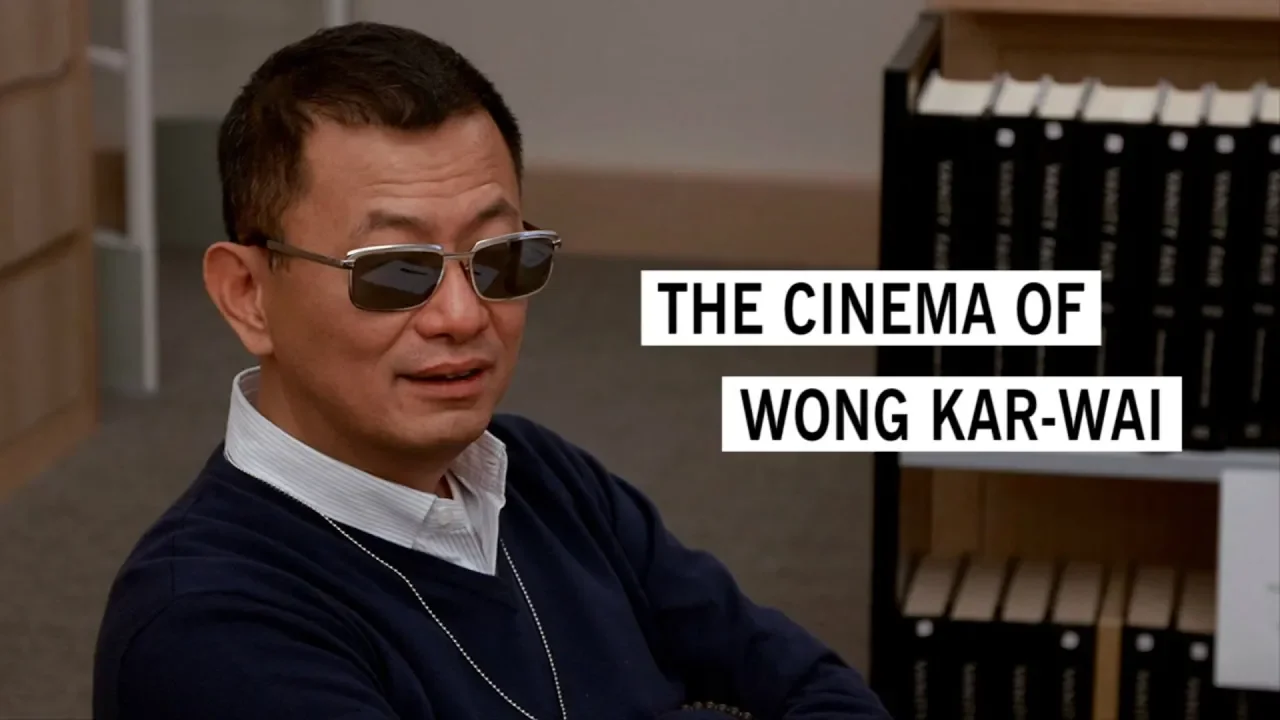

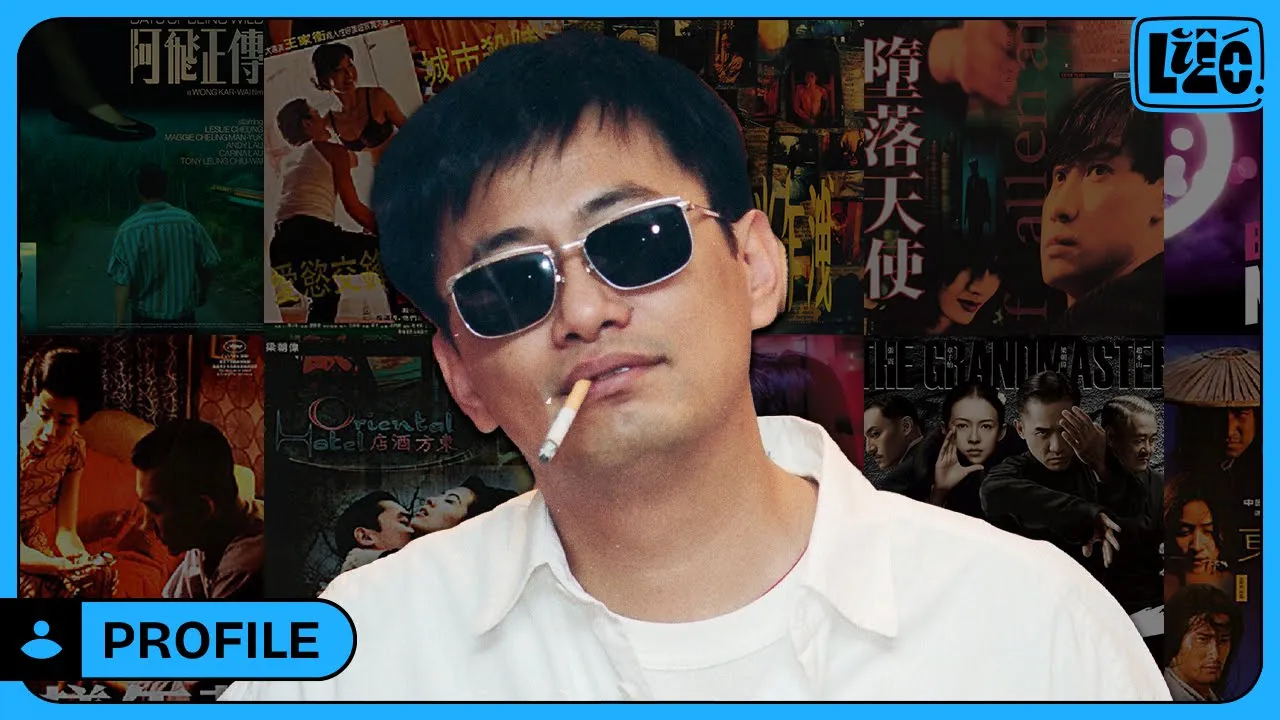

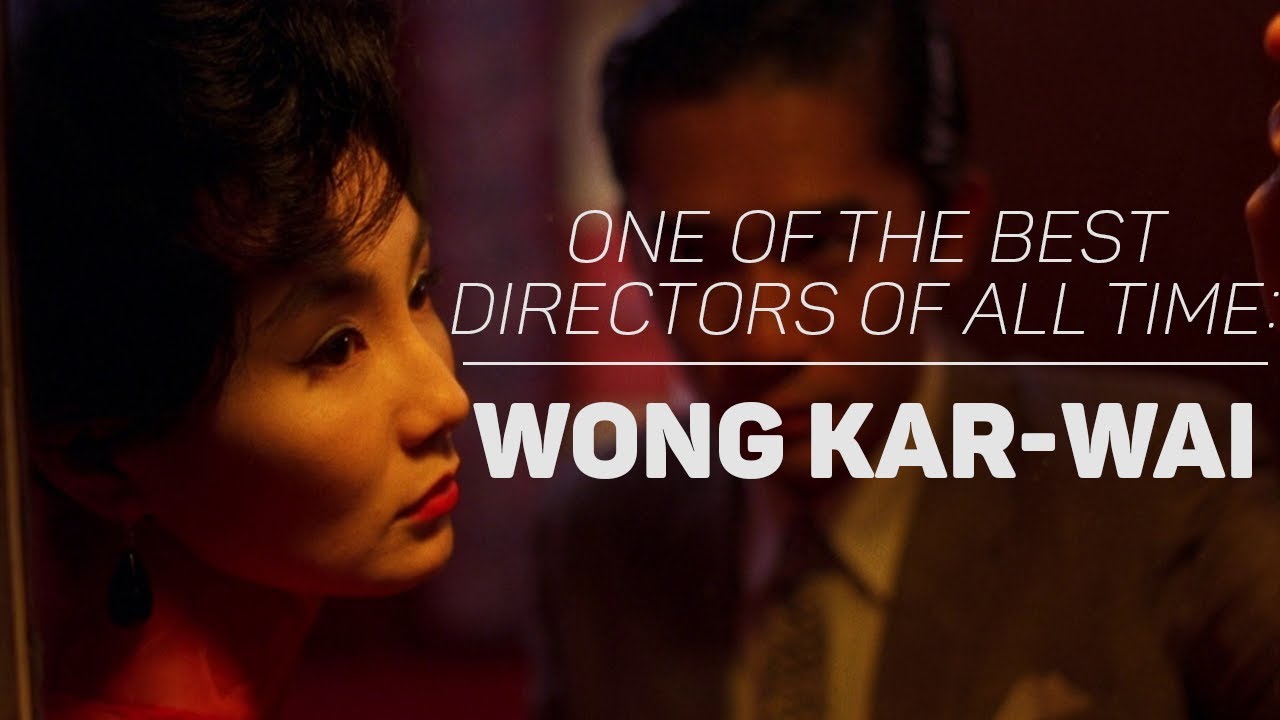









In the Mood for Love (2000), directed by Wong Kar-wai and starring Maggie Cheung and Tony Leung, is a Hong Kong film that explores the complex emotional dynamics of unrequited love and societal restraint through its deliberate narrative technique of keeping the adulterous spouses offscreen, creating a powerful sense of longing and yearning that has earned it a place as number five on the 2022 Sight & Sound Top 100 Greatest Films of All Time list.
Wong Kar-wai's In the Mood for Love (2000) Analysis
Added:Introduction to Mise-en-Scène: Understanding how visual elements like framing, lighting, and color convey narrative meaning without dialogue.
The Hong Kong New Wave: Historical context of Hong Kong cinema in the late 20th century and the cultural backdrop of 1960s Hong Kong.
Auteur Theory in Film: How a director's singular vision and signature stylistic choices define their body of work.
The Mechanics of Film Melodrama: Understanding traditional romantic narrative structures and the concept of emotional restraint in storytelling.
Deep Dive into Wong Kar-wai's Filmography: Analyzing thematic continuity and temporal dislocation in companion films like 'Days of Being Wild' and '2046'.
Semiotics of Costume Design: Examining how fashion (specifically the Qipao/Cheongsam) functions as a psychological and narrative tool in cinema.
Advanced Cinematography Techniques: Studying Christopher Doyle's use of step-printing, saturated color palettes, and claustrophobic framing to manipulate subjective time.
Comparative Film Analysis: Comparing Eastern and Western cinematic representations of unrequited love, longing, and urban alienation.
360 views9likes1:09:20Original Release: 2025-11-21
Hi, I'm Kyle Sweeney.
>> And I'm Raquel Stetcher and this is the Cine Historians podcast where [music] we explore the history of cinema from across the globe.
>> Hi everybody and welcome back to Cine Historians. As ever I am one of your co-hosts, Carl Sweeney. I'm joined by Raquel Steeper, uh the other co-host of the show. We are here for episode five of season two. And today, Raquel, quite excitingly in my opinion, we're talking about the 2000th film, In the Mood for Love. I think this is, you know, it's a I think it's a great film. I'm really looking forward to talking about it with you.
>> Yeah, I am definitely in the mood for this episode because [laughter] it'll be a really great discussion.
>> Absolutely. And just a reminder that this is part of our seasonl long topic on the 2022 Sight and Sound list of the greatest films of all time. We're dividing this up into four of my picks.
This is one of my picks, actually. This is the third of four picks from me and the other films are chosen by Raquel of course and I think we've had a lot of fun so far talking about some big hitters like Kitchok's Vertigo um of course a previous um winner as it were of the sight and sound list and some and other great films like Bicycle Thieves and another really strong one today I think. So what I'll do is I'll just very briefly sketch in some background here about firstly about the Hong Kong film industry and then about the director of this film uh WAY and then I'll hand over to to you Raquel. So just to say quickly that in Hong Kong the film industry sort of gained a bit of momentum in the late 40s that was driven by immigration. So uh refugees coming from China. This brought people who had worked in film in Shanghai. It also brought a new audience for films and then in the 1950s the industry kind of focuses in two main directions.
So lots of films released in Mandarin and these films tended to be a bit more up market and had better production values and then in another direction there were films made in Cantonese which tended to be somewhat less upmarket generally speaking. One thing that's worth noting is that uh although Hong Kong was a British colony during that period, films tended to avoid directly representing this at least until the 70s when you started to get more, you know, start to see some policemen characters who were British and diplomats and things like that. But the reason I mentioned that is in general the colonial heritage was not a big part of Hong Kong cinema. And that's also true really of this film we're going to discuss today which is set in the 1960s.
And going back to the immigration point, so Wong Kawwai himself is from Shanghai, but his family moved to Hong Kong in 1963 when he was five. His parents left his older brother and sister home initially with relatives, planning to bring them over to Hong Kong once they'd settled in. Before they could do that, the cultural revolution happened. Um, and so Wong was unable to see his siblings for about a decade. So quite a disorienting uh childhood experience.
thrown into a new culture at a you know a formative age. So he would have been a little too young to have really clear recollections of Hong Kong life in the early 60s when the film is set. But it's very nostalgic you know film for that environment because he does remember things like his mother having these all night games of mahong for example which we see um examples of in the film. So he studied graphic design. He graduated. He got his start in television. He found work as a script writer, which is perhaps ironic when you start to read about what his creative process was like later on because he develops into a very kind of spontaneous filmmaker where it's not really about a script. It's about letting the film reveal itself during the process of being made. We'll talk more about that later, I'm sure, in relation to this film in particular. Um, but I'll just say, you know, a number of films of his films have had these like quite protracted productions and then they end up being constructed to a great extent in the editing room. Um, as because they've evolved so much during the making. Um, so yeah, several of his films have had quite strained productions, budget issues, scheduling issues, you know, long shoots that have led to morale issues among the crew. and In the Mood for Love. You know, when you read about it, it's been described as a one minute to midnight rush to get the film finished in time to be premiered at the Can Film Festival. And Wankaw said that at the time, he said that filming In the Mood for Love had been the most difficult experience of his career. It went through a lot of um issues, problems with sensors, members of the crew leaving, quite challenging to tell a story about two people in this way as well. So he said it was a physically and financially exhausting uh process. But at that point, Raquel, why don't I throw it over to you to uh introduce us to the the story of the film.
>> Yes. So In the Mood for Love is set in a Shanghai enclave in Hong Kong in the 1960s. Obviously very nostalgic period for War. The story follows Sue played by Maggie Chung and Chiao plac play played by Tony Lung who are neighbors in a boarding house. Um, Sue is a secretary at a shipping firm. She's a beautiful employee and wife. She's always well-dressed, put together, polite, and responsible. And Ciao is basically her male counterpart. He's a journalist who dreams of becoming an author of a martial arts cereal. He's also well-dressed, put together, polite, and responsible. uh we soon find out that their respective spouses are cheating on them with each other and we never see the spouse's faces. We only see the back of them or we hear their voices. And as the mystery unfolds about the affair, uh Sue and Chiao start to form a bond. They go on dates with each other where they roleplay how their spouses would meet up and confrontations they might have about the affair. And Sue and Chia have chemistry with each other right from the start. And the romantic and sexual tension between them builds as the story progresses. And their lives begin to intertwine and they spend a lot of time with each other, especially when their spouses are away, which is a lot. But they're all always careful to conceal their relationship from their nosy neighbors and land lady. That's always a tension in the background. Morality and a sense of duty is part of their relationship. And when the opportunity arises for Sue to run away with Chiao, she actually decides to stay behind. And the story follows Chiao to Singapore, then back to Hong Kong when it's been a few years. And we learn that Sue now has moved on as she has a child. And the film ends during the Vietnam War where Chiao is in Cambodia and inspired by a an old Chinese tale. He whispers a secret into a carving in a pillar and seals it. We don't know what the secret is, but we can always surmise.
>> We can surmise. We can speculate. And I think this is the kind of film that encourages you to speculate about, >> you know, it's a very enigmatic film in terms of what's shown, what isn't shown.
Just a bit more background then on the genesis of this film. So a few years earlier, Wanka had made Chunking Express, which was a big success. He'd made Fallen Angels, which did fairly well, and then he has a plan to save a bit of money by making two films back to back. Um, and as I was saying, you know, he's somebody whose projects kind of evolve, and this this plan evolved, too.
So, one of these films would become the film Happy Together, and the second film was designed to be a somewhat light-hearted movie um that Tony Le Young and Maggie Chung were set to star in. And provisionally, it was titled Summer in Beijing. And Wong kind of drafted some ideas for the story. He went to the Communist government's film bureau in Beijing to discuss it. And they said that, "Look, we don't produce films without a script that we can preapprove." And he said, "Well, I don't work like that. I don't really work from a script." So the project was abandoned at that point. He returns to this summer in Beijing idea later. Um and there was some notion that it would be like an episodic film with three main stories. A story about a chef, a story about a writer, a story about a delicateesson.
And then as time went on, the focus shifted as Wong realized that the story about the writer was the one that really was interesting him the most. As Raquel said, the the male character in this film is uh trying to write this martial arts serial.
Um and Wong felt um he'd read a a 1972 story called Intersection by a writer called Leu Chang. And he felt kind of a kinship between that story and what he wanted to do with this movie. And the story is different in a lot of the specifics, but it had some similarities like a nostalgic sense of um old Hong Kong. And actually the debt is repaid in the film because we see several quotes from that writer used as intertitles.
Once at the very beginning and then two more near the very end of the movie. Um and they're sort of like very evocative quotes um that don't directly comment on the action but they kind of um suggestive of what's going on in the film. Um so by 1999 that two-hander idea of making two films in succession had kind of evolved. The idea now was to make In the Mood for Love very quickly and then move on to the film 2046.
um which which comes later. The first version of In the Mood for Love, it was indeed shot relatively quickly in Hong Kong. And when they started making the film, you know, Wawawaii filmed some quite frivolous scenes in the hotel that don't sound in keeping with the film we know now. It involved the characters bringing a live chicken up to the room, for example, despite the hotel management protesting and things like that. things that seem a bit too comedic cons considering the film we now know.
Um and then later on, so preliminary work on 2046 is going on and that was abandoned in favor of re-shooting uh this time in Bangkok, but re-shooting um parts of In the Mood for Love. So, uh, Maggie Chung said that she came to realize it was such a protracted production, but she realized that spending a long time on one film like this might actually be a much more meaningful experience than perhaps doing five or six films in the same stretch of time, more conventionally. By the sounds of it, it was during that re-shoot process that the film evolved into this film that we know now. That's when it became this film with this very strong sense of like longing um and yearning.
And Wawawaii said, "What kept me working on this film for such a long time was that I became addicted to it, specifically to the mood it conjured up." Um, and I think viewers of the film will kind of understand that because it does have a very strong sense of mood, um, which we'll come on to talk about, I'm sure, but um, yeah, Raquel, we're obviously talking about this film because it has a history on the site and sound list. You want to let us know what that history is?
>> Yes. So, In the Mood for Love is currently on the number five spot on the 2022 Sight and Sound list of greatest films of all time. It first appeared on the list before that in 2012, tied for the 24th spot, and it's one of two films that is on the 2022 list from Wonkar Y.
The other one is Chung King Express, which Jen mentioned earlier, and that is tied for the 88th place. Now, In the Mood for Love um was Hong Kong's submission for the best foreign language film Oscar, now best international feature film, but wasn't chosen. That year, the film Crouching Tiger Hidden Dragon directed by Angie won that award.
And in thinking about that, if you examine the Sight and Sound list and then that category, the Academy Award for best international feature film, there isn't actually a lot of overlap.
There are about 53 films on the list that could have qualified for that award. 51 if you remove the two anime movies. Um, but only five films actually made it to the category. You have Bicycle Thieves U from 1948, which we discussed a couple episodes ago. Japan's Rashimon from 1950. Um, they both received the honorary award uh for best uh international. Then when it became a competitive category, we see eight and a half from Italy win the award. A few years later, the battle of Alers received a nomination. And then you don't see anything until recently when the 2020 Oscars where the South Korean film Parasite famously won that award and also best picture. Now there are some other films on the list like Dolce L Dolce Vita which one which was nominated for other Oscars like that one had a slew of Oscar nominations best director best original screenplay best art direction black and white and then it won best costume design black and white but otherwise there isn't really much of an overlap and this shows us like two things it sometimes it takes years sometimes even decades for a film to be truly appreciated and second that the Oscars are very much guided by like the political social climate of the time, the artistic tastes of that year, and are not necessarily indicative of a film's longevity. So, it's just really interesting how, you know, uh, In the Mood for Love could have been considered but wasn't, but now is considered in the top five greatest films of all time.
>> Yeah. And I think that's really interesting and also that the influence of the film is apparent in lots of places, you know. Um, I think you can see the influence on Sophia Copala's film making. For example, I think the um the Oscar best picture winner from a couple of years ago, Everything Everywhere All at Once has kind of a in the mood for love kind of like comic riff on that film at one point in the in this kind of multiverse narrative where there's all these different kind of pocket universes.
>> Yeah. And it definitely informed Madmen.
There's a lot of stylistic and like the slow motion, the fashion, the framing that you can definitely see in that TV series.
>> Yeah. And one of the reasons I was tempted to pick this film for this little season that we're doing is a I wanted to pick a relatively recent film.
As much as it's very fun to sort of go back to older movies like Bicycle Thieves, I think it's always fascinating too to see which um newer films make these more recent lists. and the fact that In the Mood for Love got in in 2012 and you never quite know if a film is going to stick around or fade from view the next time around, but as you were saying, it's shot right up to very near the top of the list.
>> Yeah.
>> So now I think we can be very sure that it's not only, you know, it's a great film. It's a keeper basically. It's an influential film.
>> It's it it's a film that isn't just a flash in the pan. It it deserves to be on these lists for sure, I think. So anyway, well, what what do you make of the film, Raquel, in general terms then, you know, like how how do you take this film?
>> I just love the emotional intensity in this film with the characters is pretty much unlike a lot of other films. I mean, this is a love story about two mature adults. It's not a first love.
It's not a torrent affair. It's this love story that's very guided by the sense of like societal pressure, responsibility, morality, and um in that way it just stands out. There's this sense of restraint that you don't see in other romantic dramas, but there's also this intensity that's bubbling up.
Everything's so subtle between like a touch of the hand or an embrace uh look.
There's so many like uh very romantic um adorative like looks to each other, a smile, a maybe a little twist in the conversation. I think the strength in the film is the fact that it's about sexual desire but not about repression.
It's a film about passion and it conveys that loves sickness that those early parts of like a a relationship, but it's not it there's no fulfillment. There's no like consummation of that and there is no like actual adultery. The furthest they go is an emotional affair which I think stands out too. It's just so different. Can you imagine like an old Hollywood studio like Warner Brothers or MGM saying like yeah they don't have to get together at the end you know they [laughter] this is okay. No it just goes against a lot of conventions. And one thing too is I think this film is a great introduction to W car wise uh body of work because it has like all of his uh style methods and his tropes and his themes that you see throughout and when you watch his other films these become very apparent after you watch In the Mood for Love. It's just a great entry point. Like for example, there's this >> the yearning and the lovesickness.
There's the mismatched desire where the man desires the woman and the woman is a little more ambivalent. The slow motion shots. The dialogue is very limited.
It's more about expression, facial expressions of the characters and what they do versus what necessarily what they say. The focus is on the characters, not so much the plot.
There's that improvisational style like you had said. There's like a lot of stuff that's filmed that just doesn't make it in. So there's like this potential for other um formats, but you know that this this is very much a story that's revealed to us from the characters and because that there's that sparity too, there's room for the audience. It feels like we have the space to be in this world and that heightens the like the intimacy too. It just another thing too that I find interesting about one car y films is the the music element. There's the recurring theme. This movie and a lot of his other movies have like this cross-cultural music element. In this film, you have three songs performed by Nackin Cole, an American singer singing in Spanish and it's very clear that it's not a native Spanish speaker and it's a film in Cantonese. So, you have like this sort of crossculture and you see this in other films like in Chongqing Express like you have a Cantonese version of Dreams by the Cranberries. So I just think that adds like a really interesting element.
>> You're saying there about how it's unlike a lot of other films and that I think is very interesting about it. So a large part of that unconventional nature is the key decision to keep the adulterous couple mostly offscreen.
Right? So you can imagine a version of this film that is about the spouses and it's about that relationship between them. And Wonka said, "From the very beginning, I knew I didn't want to make a film about an affair. That would be too boring, too predictable, and it would have only one uh it would have only two possible endings. Either they go away together or they give each other up and go back to their own lives." And he said what was more interesting was about the way people behave and relate to each other in the circumstances shown in the story, you know, about sharing secrets and so on. So what happens is you sort of get the you sort of get this burgeoning relationship between uh Maggie Chung's character and Tony Young's character and then you also sort of see a version of the adulterous affair enacted through them which I think is fascinating you know because they have this thing which I'll talk more about later but where they're sort of embodying what they think their spouses might have been doing and saying so Wawawaii said there was a writer called Julio Cortazar who he kind of related this sort of technique, too.
>> But the film is very interesting, isn't it, in terms of what it keeps out of sight. So, like you've already alluded to, I think, you know, we don't really see the husband and the wife, except we kind of get glimpses, don't we? We might see them from behind. We might overhear a voice or something. So, there's a lot sort of being deliberately kept from us here, which is fascinating. So, the editor of the film, Walter Chang, said it leaves a lot of room, like you said, for the viewer to imagine things. it.
You may maybe it's about having a conversation scene where you don't cut to the opposite side in the way you might sort of expect to conventionally.
Um, and the editor was talking about this is a way to create a lot of tension between what we see and what we don't see. And I don't know, it just feels very bracingly like unusual, doesn't it?
Like it feels kind of weird in in a really strong way, you know? [snorts] Um, >> yeah. And the way the dialogue is delivered too, just the fact that there's sort of a pause before the other person speaks kind of gives you that room of an like to anticipate what's going to happen. And then sometimes there's no response at all. Something is said, but then the other person doesn't react. There's that phone call where Sue calls Cow and um he answers, but he she doesn't respond. And um you like we know she's on the other end and we suspect that he knows that she's on the other end too. There's so much subtlety, too.
I think my only small gripe with the film is how rushed the ending felt. I don't know what you felt about this, but the fact that we like there's this the longest period of time in the story happens in the shortest part of the film at the end. I mean, we go from like Hong Kong to Singapore, back to Hong Kong, then to to Cambodia, and um it just feels very different. But I I don't know. Some somehow it also kind of makes sense too in a weird way. It's a very slow lingering film and it just kind of feels that that's sort of like an epilogue maybe like a different part of the film. Yeah, it feels very jarring I think because you get the cut to the like stock footage of Charles the Gaul arriving right off the off the plane >> and it's like that feels not really in keeping with everything that's gone before and it's like the whole film leading up to the ending to me it sort of feels halfway between a dream and a memory like >> sometimes and it's sort of like it's kind of dancing around between those two points like sometimes it feels more dreamlike at other times it's more evocative of uh what memory is like. But that sequence at the end in Cambodia, it feels like you're kind of plucked out of that because it starts with that stock footage like I said. And I think Wong has actually said something to that effect that it's like waking up from a dream like the it's almost like the wider world is intruding at that point.
>> Um so I think it is weird and jarring. I think on some level that's the intention. Um but it's kind of strange.
But like I said, like the whole film up to that has this kind of fluid at times dreamlike style. And I think a lot of that's about the use of slow motion, which I think if people reme if people have seen this film and remember it, people will be thinking of the some of those slow motion shots and sort of the recurring quite haunting music that plays uh at various points throughout the film. what the editor said. Well, it's a very languid film and the editor said like in the summertime in Hong Kong, it's very humid, it's very hot, and somehow to him the sort of slow motion conjured up feelings of that for him. How did [clears throat] you take the slow motion? What did you think was going on with those shots?
>> And this is another thing that's in W car all of his body of work, there's always slow motion. There's actually less slow motion in this film than there are in some other films. some films there's it's quite pronounced but I think that adds to like that dream element like you were saying it's just um also that that it adds to the lovesickness element too where you you're interested in somebody and all these emotions are popping up and it's like you feel every second that you're with them and because of that languidness and that slowness we feel that intimacy and that tension growing even more so and We also kind of feel the desire too, like the slow motion shots of Maggie Chung in her dress kind of like uh walking up a stairs and like you see her hips sway. It's it's just really sexy. And and also Tony Lung's character smoking a cigarette very very slowly and the the billowing smoke coming out be um from him. There's something so sexy about that that you can't achieve rushing it. So I don't know. It's just very evocative of that kind of >> dreamy romantic fantasy element.
>> Yeah, I think so. And it fits the sort of sense that they're a bit hesitant about moving too quickly as as well. So, I think it fits with the characters. The point about one car style I think is very interesting because he almost became a directorial brand at around this point in time and things like you say how many of his films have the slow motion and therefore he became a bit of a target for parodies and was sometimes actually dismissed as kind of an MTV director that his style was somehow evocative of that sort of video music video kind of culture that came in with MTV. But I think it's an interesting point because he does have a sensibility that seems to blend different influences. And if you think about it in terms of quote unquote, you know, high art and low art or whatever, it's sort of like he's kind of mixing lots of different things in together. So there's a glamour like and you're saying just how the film is so sexy and the main characters are so sexy and so on.
There's a glamour to this film that's been compared to sort of classic Hollywood film making. So >> yeah. Um just the other day I was reading um Sight and Sound's 25th anniversary coverage of the film and there's an essay by Jessica Kiang and she sort of compares this film to the melodramas of Douglas Cirk for example and Wawa said he really likes movie stars and of course you've got great use of um the two stars here.
>> Yes.
>> And alongside that so you got this kind of almost classical feel but like we've already said there's a kind of willingness as well to break the rules visually. It makes this a very different nostalgic melodrama to for example the films that Todd Haynes made which were calling back to things like Cir you know films like Far From Heaven or Carol you know so to me it seems like he came along at the right moment in time WAY because that moment in the '9s and the early 2000s it was a time when if you could be commercially successful but also be a bit rebellious that was quite potent. It was seen as being quite cool and quite hip. And in the American context, I'd point to someone like Quentyn Tarantino as someone who also was like fond of throwing a lots of different approaches into a blender and then sort of coming out the other end with something quite distinctive and personal. And I don't know, I kind of think of Wawawaii a bit like that, if that makes sense. But do you see what I mean? He kind of blends all sorts of different things together, but the result is identifiably his style. I think, you know.
>> Yeah. I think that's part of that organic nature of his process, just having this concept of an idea and um letting the inspiration kind of take over, letting the characters speak, but then you still have this sort of uric style. So it's there's like a method to the madness, but there's also some madness too that so it's really interesting how he can take sort of this chaos of having all these ideas and all these scenes and sort of find the story with in it and just going back to what you said about like high low. You can kind of see that in My Blueberry Nights.
Like there's a lot of slow motion in that movie. And the story very much is low um in terms of like what it is, but then the slow motion part of it kind of elevates it to high because they this could have been sort of like a standard romantic drama sort of mixed drama about these three women, but then um it kind of elevates it with his style and it just feels even though it's very different from his other movies since it's an American movie, it's still very much stamped W car too.
>> Just one thing I wanted to throw into the mix as well because we already talked about how the film evolved quite dramatically and maybe there's, you know, a version of this film that started off at least being more comedic and then that kind of fell by the wayside. Another thing that changed quite substantially from early on is that the main, you know, Mr. Chow, Tony Leong's character, the sort of conception of him changed quite a bit.
And we can link this to one of our previous episodes. So, uh, Wawawaii said, "The original idea was to have Tony's character be less soulful and more revengeful. Devastated by his wife's betrayal. He began as a wounded man consumed not by heartbreak, but by spite. He didn't seek revenge on the spouses, he wanted to dismantle Maggie's character to prove she was no different from his own wife. There's a cruelty to it like Jimmy Stewart's obsession in Vertigo. And he said, "We softened that edge eventually, but the shadow remained." I'm not sure how much of the shadow remained because I was like quite interested to discover that. Um but again it kind of highlights how this film evolved quite quite quite bracingly you know quite quite differently from what was originally um planned.
>> I mean the cultural specificity of this I was wondering about and like you said limited dialogue everything's expressed through body language through gestures through the way these characters move and so on. Do you think that's why it has such a wide appeal beyond Hong Kong?
You know, that international audiences have embrace embraced this movie because you don't need to be immersed in that culture necessarily to kind of grasp onto this. I think there may be some specific things that have passed me by like um Maggie Chung's character and the land lady are speaking different languages to one another. So, Mrs. Suen is speaking Shankai and Mrs. Chan is responding in Cantonese. And I didn't know that until I read it, for example.
So there are things that you know a local viewer immersed in that culture will pick up on, but generally speaking it's very accessible more widely. Do you think that's fair?
>> Yeah, I I think it's part of that that idea of something being very specific.
So specific that it's universal just because this is very specific to a sort of romanticized period that that W car feels very nostalgic for. And like you said, there's like these elements that somebody who grew up in Hong Kong, who speaks Cantonese and Shanghai, and they'll know those differences, like they'll get something out of it. But then the story of adultery, betrayal, but also love, unrequited love, you know, passion, desire, that's so universal.
So, I feel like that those specific elements do a nice framework to present a story that is just appealing to so many people. And it's so refreshing, too. Like, we're so used to romantic dramas having an ending where like like if they had a full-on affair, like how would it end? Would they get into trouble? Would they run off with each other? And this is so different, too, and refreshing. And um so there there is that univers universality about it.
>> Yeah. I think one or two of the things I had read in terms of specific details that you might not pick up on as um outsiders like us coming to it. Um some of them are about food. So part of the nostalgic feel here is that they always seem to be eating like out outdoors, don't they? And 1960s Hong Kong had a lot of these kind of makeshift outdoor restaurants. And later on many of those types of venues had to move indoors apparently. So there are things like that that I think will interest viewers who know um who have a memory of 1960s Hong Kong for example. All right. So we'll take a quick break then listeners and then we'll be back to dive into the key moments. All right. Welcome back everybody to this episode of Sin Historians. We're still here. We're still talking about In the Mood for Love and as I said at the outset this is episode five of our second season about the sight and sound list of the greatest films of all time. Okay. So key moments from In the Mood to Love. As ever, we've picked a couple uh of areas each to discuss. I wanted to kick us off with those role- playinging scenes that I'd mentioned in passing earlier. So, yeah, there are several, you could call them role plays, you could call them rehearsals, which I think is what the characters actually refer refer to them as a couple of points. Several scenes in the film where it's almost like the viewer is initially misled. So this is where they are the main characters are imagining what their spouses might have done, might have said, and so on. I love these scenes, Raquel. And these these the memory of these scenes is one of the things driving me to pick this movie actually. And I think they're so sort of multi-aceted, aren't they? Because on one level, actually, the main characters here are being very imaginative, and it's almost like an act of empathy. you know, they're trying to put themselves in the shoes of their unfaithful uh other, you know, unfaithful partners. They're trying to understand what must have gone on. And then it's interesting because they kind of run up against the limits of that imagination and what they actually understand because they say things like, "Well, he wouldn't have said that, but they can't be sure what's been said. They can never quite know what what's actually happened." And then on another level, you get the sense that these role plays are also very intimate for the characters themselves, that they're a way for them to kind of explore their feelings for each other.
It's almost like they become a safeish way for them to do that because they're still grappling with the idea about what they will or will not allow themselves to do about the feelings that they're having. And then that's maybe what gives these scenes the power to mislead because I think it's like we get a jolt when we realize each time this is what's happening because it's kind of plausible that what they've been saying is what they might be saying to each other as well as what the the adulterous couple might have actually been [clears throat] saying. Maggie Chung said that she liked playing these scenes because they exposed the kind of playful side that these characters had and that she felt the scenes added a level of depth to these parts because it wasn't just that they were seeing two kind of um her words were they're not just two boring, sad, and miserable people. You know, it gave space for the audience to imagine these characters in different ways. And I like that description of it. Um are you as kind of taken by these scenes as I am? Do do you like them as well? I do.
I like the fact that they're both imaginative people because they're doing these roleplay scenes and then we also learn that Chiao is like an author and he's writing these martial arts cereals and that she's interested in reading them too. Uh what I like too is what you said about the jarring change. I think it's just so effective. There is that one scene where she's confronting her husband about the affair, trying to get him to admit to it. We think it's her husband and then she slaps him and then it turns and we see it's actually ciao, not the husband and that they're they're doing the rehearsal of basically how she would approach him and that's so jarring and so well done cuz for a second I believe that she's actually talking to her husband because he's offcreen and then we see that it's not. And then also I feel that that's a way for them to have a relationship is pretending to be their spouses. Like >> I I find the scene where they're having the steak dinner really interesting because she wants to know exactly what his wife would order and he gives her the hot mustard I think it is and she is uncomfortable with it because it's very spicy. Uh but she wants to experience what his wife is exper what his wife would have experienced. And I think that's part of their courtship. It's part of how they play a relationship without actually having the relationship and sort of their cheating spouses sort of give them that opportunity to. It's just it's it's an amazing part of the film and I would have chosen those scenes too for key moments because um I think they're probably the most interesting part of the movie.
>> Okay. But I came in and stole the choice. Sorry. [laughter] Um but you've got some interesting choices too. So, what have you got for your first uh your first choice?
>> Yes, and I'm going to wax poetic about the fashion in this movie in two parts of this episode. So, bear with me because I have a lot to say. The movie is known for its fashion. Specifically, those chiang sam or also known as chi pow dresses that Maggie Chung wears in the film. These are like form fitting Chinese dresses. They're they have a high neckline, a coll like a high collar, short sleeves, two slits up the side of the skirt, and they vary in length. And the shape is pretty consistent, but what makes them stand out is that fabric design. It's silk and cotton, and it's very like it's interesting geometric geometric designs and floral designs. And from what I heard, Maggie Chung wears 46 of these dresses, although you don't see all of them in the movie because so many of those scenes were cut. So, but you still see a lot of them. And I think it's essential to her character because they're very restrictive. Maggie Chung has talked about how she felt uncomfortable in the dresses, but it was essential to her character because she feels very restricted in terms of, you know, the societal pressure. She's married and feels that she has a sense of duty to her husband. She has a sense of duty to her boss to be a good secretary to him. And also it's mentioned to the way she dresses up because she wears these beautiful dresses. Her hair is done perfectly. Her makeup, her nails, her jewelry, everything's very intentional. And even her landlady says you don't have to do all that, you know, like [laughter] but she feels this pressure within herself and maybe outside too to do it. And I think like fashion just adds that emotional intensity to the film. like these are two very goodlooking people uh presenting themselves in the best way style-wise. They stand out, but they're also trying to not to be nondescript.
Like they don't want to be found out. So they're two shy, reserved people, but they stand out because of this amazing beauty. And then like a couple other things like the fashion is how they find out about the spouses. It's the purse that um Chiao's wife has and then the tie that I think Chia is given that actually was Sue's husband's tie. So, I think that's an interesting element. And Maggie Chong's dresses also match the scenery or they clash with the scenery.
Like there's this scene where wearing this blue uh dress with a red rose pattern and she's seen next to white floral curtains. And then in another scene, she's she's drinking this I'm obsessed with this this jadeite teacup when they're on the date. And it matches like a couple of elements in her dress so beautifully. When they're in that room, they're trapped because all the neighbors are playing ma jang all night and they can't escape the room. Her dress is like matching the wallpaper.
It's like tan with brown swirls and so is the wall. It just thinks it's interesting. There's that beautiful shot of that corridor where there's a bright red curtain and she's wearing a red coat over it and it's just stylistically so amazing. This adds this element of her as an object of beauty because we know that that's how Cow is seeing her cuz he's admiring her so much in those other scenes and that they're both and also he's just so welldressed in his suits too that it just becomes um an interesting element. Again, like we said earlier that this film does have um a high level of glamour that can maybe be associated with styles of film making like the old Hollywood system and I think the costumeuming has to be a huge part of that. I what I found interesting was to read an interview with Maggie Chung where she talked a bit more about how actually it became very helpful to her to find out who this character was because I think like you said already it was very restrictive clothing but specifically it meant she would take she would have to take much smaller strides and it meant that she swayed like her body swayed a bit more. So, um, >> yeah, >> some viewers might be sad to discover that she doesn't naturally sway as much as she does in this as this character in this movie, but also that the shoes that they gave her forced her to walk a bit slower. And like we already said, the film has a very languid, deliberate pacing, you know, so it's like she was able to kind of key into that a bit more effectively through the clothing. She said that the metal heels had a very distinctive sound when she walked on the pavement and that all these details combined to help make her feel actually like somebody from the 1960s, not just somebody, you know, playing at being from the 1960s. It made it feel a bit more natural to her. So, I think it's a very important part of the way the film is um, you know, and the meaning of the film and also the construction of the film >> and it's one of those examples of how the costumeuming, the clothing helps an actor get into the character. like this is a great example of that.
>> It's a fantastic example of that. I agree. Okay, so for my second choice, I am going to choose the sex scene in the movie that we don't see because what I kind of slightly breaking format here, but um basically WA shot a sex scene between the two main characters, but then it was cut from the film before that premiere at the Can Film Festival.
He said, "I cut it at the last moment. I suddenly felt that I didn't want to see them having sex." Um, so this is one of the scene, it would have been one of the scenes where they go to that hotel room, room 2046.
That's where it would have happened. If you have the on the DVD version that I've got, you can cycle through some of the deleted scenes, including a couple of there sort of a couple of bedroom scenes. Actually, the first one is very interesting, which is that the characters are sat on the edge of the bed undressing, but they look very kind of gloomy, very pensive, and then you realize that it's another one of those scenes where they're kind of imagining what it was like for their spouses to be undressing in front of each other for the first time. So, that kind of explains why there's no joy there. It's it's kind of again, you get that jolt of, oh, I'm being misled here as a viewer. And then the the line where she says, "I don't want to go home tonight."
Which we do hear in the film as a voice as a bit a clip of voice over in the taxi scene in the film, but that actually comes from um there's a scene in the hotel where she's just about to leave, he thinks. But she says, "I don't want to go home tonight." And then that's shortly afterwards followed by the sex scene. And again, the sex scene, which you can still watch on the DVD, um somewhat discreet because the camera is kind of like outside the uh the window of the room. Um but then somewhat not discreet because you can sort of hear the noises and uh it sounds like something quite vigorous is going on.
Basically, >> it's quite intense. [laughter] >> So, I'm glad I think it's better that it's not in there. And it, like we talked about, this is a film that creates a lot of imaginative space for the viewer. And there's a lot of ambiguity, I think, in the film about have they actually slept together or not? Because there's the taxi ride.
They're kind of like um >> yeah, >> quite physically intimate, you know, sort of leaning against one another. We get the I don't want to go home tonight line, but we can't quite be sure, you know, and then there's that whole thing later in Singapore where she kind of sneaks into his room, leaves lipstick on the cigarette butt and so on. It's hard to sort of come up with a definitive answer. I know Maggie Chung has speculated about whether the child at the end of the film, you know, has she left her husband is that Tony Le Young's character's child maybe. We don't have answers to any of these things, but Wawawaii said the film Wawai said um the film is about absence. What's missing is as important as what's there. Um which I think is there might have been a quote you sent to me earlier as well, Raquel, but very powerful I think because this film is about what's being shown and what's not being shown.
>> Yeah. Ultimately, I think the decision not to show the sex scene was the right one. What do you think?
>> Yeah, the quote is actually because seeing too much is seeing nothing, which I think is really interesting like Wor was very much intentional about not showing too much, not giving too much information because the audience becomes part of that process of like appreciating the story that they do some work. Like you can watch this and interpret it as they did consummate the relationship. we just don't see it. And that could be his child, but we don't exactly know. Or you can interpret it more like I do where I just don't think they did anything, you know, and that child is actually some um Sue's husband's like Sue and her husband had this child. So, I think that that openness to to interpretation, I think, is a strength of the film. And I think it would have been a very different film if it had that sex scene, which is quite an intense sex scene and very different in moodwise too from like the rest of the movie.
>> But I love that it exists too that we can watch it because I watched it on the Criterion Channel because they have it um as and they have several of those deleted scenes. Um, there's also the deleted scene of them dancing to some music, that comedy element since it had intentionally um was supposed to be more comedic, but it's actually quite more somber and serious. So, I think anyone who might be frustrated with the lack of a sex scene could go and watch that and maybe feel some sort of fulfillment from watching [laughter] it. Yeah.
>> Um, yeah. I mean, for the record, I think my interpretation is I think they do something after that taxi ride, but I don't think the child is his. That's kind of where I land, but I could well be wrong. You know, like that's the beauty of it, like we're saying, is that it's so open.
>> All of those things could be true. Like, you know what your interpretation is, what my interpretation, what other people's So, yeah.
>> Absolutely. So, uh, G, what's your next choice, Raquel, for key moments?
>> Yeah. So, I wanted to talk about the depictions of longing and yearning. As I said before, like the dialogue in this is very limited. So, we do learn some things from what they say to each other, but a lot of what's said between them is actually said in expressions, in a smile, in a look, um, in a touch. And so, it's very unspoken. Like, there are those scenes with them in the narrow staircase. She's usually carrying some sort of container with noodles in it and she's carrying it up from like the downstairs noodle space and up to her room and he's going down. He's turning the corner and he looks at her with this this desire. It's just so um evocative of their like passion for each other and it's a simple mundane interaction but it's an important element of their courtship because it's repeated a few times in the story. And I love all the shots of Tony Lung, like him, like I said before, him smoking the cigarette, looking into the distance. There's lots of moody moody shots with him. Um, he's looking at Sue directly with this adoration. She could be looking away.
She could just be receiving the look.
And the final shot of him too whispering the secret into the pillar says a lot.
It's like this he has this like quiet passion that's building up and he has to release it some way and it and it and it just feels like he expresses it so well like that containment um and all this bubbling up but also the fact that it has to release some way. One thing too is I love how the couple is framed through the story. They're framed in like this narrow staircase, in a tight doorway, in a reflection of a mirror, a hallway, a corridor, and it's these tight spaces that force them to be in close quarters with each other, and it visually builds up that sexual tension between them. Um, even when they're at the wall, um, and you see that there's these bars, we either see them through the bars or there's the shadow overlay of the bars on them. And it just it seems almost like they're in some sort of prison like they are trapped um in their emotions. They want to do something but they can't. They just realize the gravity of their situation.
They want to go further but they know there's these limitations and they can't break free from it. And I just think visually there's so much visual language in this film showing us rather than telling us um about their desire for each other. And I think that just is just so effective.
Yeah. And on the theme of like like you said confinement or containment as well, I think it's about how many other people there are in these confined spaces. So I think when they move in like moving day where they both happen to move in on the same day is a good example of that because >> just how on top of each other everybody is, but also how tightly framed those shots are to really play that up. And I think the film is really working quite hard to to do that to play up the confinement. like you don't get the broad establishing shots of the city or anything like that. You get you don't even you get other characters but you don't get a sense of like the wider community necessarily around that location you know and to go back to the sense of this being a nostalgic film. So I think Wawawaii has talked about when you when he was growing up in the early 1960s, you know, these living spaces did force people together. You know, you had to share flats with strangers. You didn't really have any privacy. Everybody, you know, the walls were thin, so people just just kind of everyone was overhearing everybody. And in some ways that kind of builds up a nice level of connection. But in a situation like this, it becomes very um claustrophobically, you know, a bad thing if they are overheard.
>> Yeah.
>> It sort of makes their dilemma very acute. I think it works really well.
[snorts] >> And just going back to the moving day, I think it's interesting how that scene intertwines them because the the people helping, I think it's just the neighbors helping move some stuff. They are putting some stuff that belongs in Sue's apartment, Sue's room, into Chia's room.
It's like, "No, this is not mine. That's his." And it's already from the get-go, their lives are intertwined. They're living in rooms right next to each other in a very tight space and their stuff is already getting mixed up together. And that kind of sets us up for that journey.
>> Yeah. Well, even before that, when they both arrive on the same day to inquire about the availability of the apartment, right? even from that point. Um yeah.
Okay. So any other business then is where we sort of zoom out and draw in some other you know things that we're interested in sometimes film recommendations and so on. I think this is probably Raquel where you're going to return to the theme of fashion. Is that right? Because because there's some interesting stuff going on here. So what is it you've got for us?
>> Yes. So in 2015, the Met in New York City held an exhibition called China Through the Looking Glass. And this exhibition was to showcase like China's influence on like the global fashion scene. And there was a particular focus on the impact of Chinese films and and their impact on fashion designers. So this exhibition was part of the Mets collaboration with Vogue magazine where they have that yearly Met Gala and then this um China through the looking glass was also the theme of that gala. So both the exhibition and the gala were the subject of a documentary called the first Monday in May directed by Andrew Rossi. And the title obviously refers to when the Met Gala is held which is every year on the first Monday in May. And the film like follows I think about eight months leading up to the gala, the development of the exhibit, coordinating the event and so on. And Wong car is actually a very important figure in this documentary because he was hired as the artistic director of the exhibit and he attends the Met Gala. He was specifically chosen not only because of like the theme but because of the fashion and in the mood for love and the film is uh part of the exhibit and also discussed at length. Museum curator Andrew Bolton said the film perhaps that has the greatest influence on designers is one car wise in the mood for love. No one has made the Kip Chipau or the Chiong uh look quite as beautiful as he did. And there's also an interview with fashion designer Jean Paul Goautier who said he loved the movie, watched it many times, and the following year for the fall 2001 Ho Couture collection, he basically did a Chinese inspired line.
So we can see how this is really important. And then in the documentary we see W Carwai having discussions with Anna Winour of Vogue and then also the museum curator about the exhibition. They were making some very bad choices. Bos Lurman is also in the film and he's warning them against showing these like giant dragons at the beginning because he said that's going to be a little bit too amusement park and not very respectful. W car actually had an issue with this um exhibition that showed um Buddhist statues because there were they were going to put a im or images or just one portrait of Mao Dong and he thought that would be very offensive. He wanted to wanted that exhibit to appear like a Chinese garden so that it has a specific entrance but you have the freedom to move around at will which seems also very indicative of his style of film making like he's got an entry point with a story uh or story idea and then he kind of works his way into what the film will become and that's also where the line that I had mentioned earlier because seeing too much is seeing nothing and That's what he wanted for the exhibit is the the fact that there wouldn't be too much going on that there's a lot of power in simplicity and they wanted to pack too much in this one exhibit and he thought that that actually would hurt it rather than help it.
>> Do you think it's widely available or will people have to do some digging to find that documentary?
>> Um in the US it's available on Canopy and has for a long time. So, if you have Canopy um through your library system, it could be available. I've watched it a few times just on that.
>> Great stuff. I'll have a look on the UK version of Canopy, but of course, the libraries might be a little bit different and so on. Okay, so I'm going to encroach a little bit onto Raquel's territory because Raquel's normally the one who recommends possible double bills, but I'm gonna I'm gonna do that here and I'm going to suggest a double bill between this film In the Mood for Love and the 1945 film Brief Encounter.
I think this would make a lot of sense as a double bill. The two films have been compared by various people. So in the BFI book about In the Mood for Love, there is a comparison with Brief Encounter. Both films are about desire.
So if people aren't familiar with the earlier film, it was directed by David Lean, released in 1945. One of the most well-known British films, I would say, regularly appears on lists of the best British films. It began life as a one-act play written by Null Coward called Still Life. It's about a housewife played by Celia Johnson, Laura, who meets a doctor, Alec Harvey, played by Trevor Howard. They're both already married, but they gradually fall in love with each other, and they continue to meet once a week, although of course it's going to be very difficult for their relationship to progress much further. It's another film like In the Mood for Love, I think, where it doesn't always go for the easy drama, you know? So, people see uh Laura with this man, Alec, but her husband never finds out, for example. there isn't a big confrontation with the husband. There's something very low-key about it that's very effective. And the character in that film is saying things that might kind of resonate with the characters in In the Mood for Love. So, she says like, "We must be sensible. We mustn't behave like this. We're neither of us free to love each other. There's too much in the way." Um, I think in In the Mood for Love, what they often say is sort of like we're not going to be like them, isn't it? It's kind of like that's something that they sort of aspire to. And one kawawaii himself has said that he admires brief encounter for the longing and the restraint. And of course we see so much restraint in in the mood for love because it kind of feels like our main characters are the only people with any level of restraint because >> it's not just their husband, you know, the husband and the wife, but it's Maggie Chung's character spends so much of their time seemingly keeping um her boss's wife from finding out about the mistress and sort of making arrangements between the pair of them. Mr. Chow has this colleague who's always talking about sex as well. So it seems like everyone else in the film practically is kind of taking pleasure where they can find it and then this the two central characters we have who seem really compatible are kind of like denying themselves of that pleasure which is really interesting. Actually, maybe what I'll do is slightly recommend a triple bill because in that quote where Wyatt says he admires brief encounter, he goes on to say in a way it's like Hitchcock's Rear Window where the neighbors aren't just background but active participants in the drama. Their presence, their watching eyes become part of the story.
They're accompllices but unlike Rear Window, what they witnessed was not a murder but instead an affair. So like maybe that's a great triple bill actually is watch Brief Encounter, Rear Window and then In the Mood for Love.
That could be a really nice one. I think brief encounter I like as a comparison because that's like the film about the couple who start the affair in the mood for love is sort of about the couple caught in the wake of that. So I think they sort of complement each other very well you know.
>> Yeah. I like also with Brief Encounter, there's that beautiful shot of Trevor Howard's hand on Silly Johnson's shoulder and the intensity of that shot.
And you have a few shots like that in the Mood for Love, whether it's like they're in the cab and their hands are next to each other and his pinky finger kind of goes to towards hers or they're at the wall and he sort of gently grabs her forearm. It's that sense of like touch and that intensity that conveys a lot without saying anything. So yeah, >> I think so too. I think that happens as well when they're kind of rehearsing almost the breakup scene as it were that I think there's like a lingering touch there, isn't it, that we get repeated in slow motion, too. So I think that's a great observation. But like I say, I kind of encroached on your territory there, Raal, but even so, you're going to throw some film recommendations at us, I think, which is great.
>> Like I said before, In the Mood for Love is a great um introduction to Wank Car Wise films. And if you haven't really explored anything beyond In the Mood for Love, I really encourage you to watch more of his filmography. In the Mood for Love itself is part of a loose trilogy which starts with Days of Being Wild and ends with 2046.
Um, and Days of Being Wild is from 1990 and then 2046 is from 2004. So there is quite a good gap between them. And Maggie Chung and Tony Lung are both in Days of Being Wild and that is also set in the 1960s. Hong Kong and it follows the story of a man searching for his birth mother and there's all these like interconnected stories with various other characters. It's like hazy and sweaty, a little grittier than in the mood for love, but it's kind of a nice companion. There's also Chunking Express, which we had mentioned earlier, which is also on the Sight and Sound top 100 list. That one's like a modern crimeromantic drama with like a little bit of comedy thrown in. It's two parts.
One about a Hong Kong policeman who's pining o um actually both about Hong Kong policeman pining over different women and the second part stars Tony Lung. And it's hip and stylish. The Mamas and the Papa's song California Dreaming is featured prominently in it.
And it was supposed to be a three-part story, but in W car style he finished the film with the two parts because he felt it it was complete. But the third story actually becomes Fallen Angel. But if you really liked In the Mood for Love, absolute great companion or follow-up piece, and that is the film The Hand from 2004, not to be confused with the Michael Kaine film, the [laughter] horror film. No, The Hand from 2004. And it's this like erotic, steamy counterpart to In the Mood for Love. Now, the story of how this film was made is really interesting. It it's originally a segment of a film anthology called Aeros released in 2004 and it featured like three different erotic dramas by three different filmmakers. So you got The Hand by Warw, Equilibrium by Steven Solderberg, um actually Pedro Alovar was supposed to make the second one but he had to drop out and the dangerous threat of things by um Michael Antoni. Um, and actually it was his idea for the for the anthology. So, The Hand is also set in 1960s Hong Kong and it stars uh Gong Lee who plays Miss Hua, a glamorous call girl who hires a young tailor Jeang played by Chang Chen to make dresses for her. So, you have that element of fashion in there too and the setting. Miss Hua seduces Jang, hoping that his continual sexual desire for her will result in these beautiful clothes.
And there's this very specific power dynamic between the two. She's sexually assertive. He is um more submissive. And this unfulfilled wanting more attention from her builds up this sexual tension between them. But then he begins to fall in love with her as her life spirals out of control. and then the sexual desire for her puts him in mortal danger, which isn't really a spoiler because that's how the movie starts. So, what's interesting about this is that the that segment in Arrows is 42 minutes long, but in 2020, what happened was it was re-edited and re-released as a 56-inute film. And what I imagine happened is that there were a lot of other shots that War Y had filmed that couldn't make it into the segment because the segment focuses more on the story, but the longer version is really interesting because includes a lot of the slow motion shots. There's a lot of seductive shots between the two leads.
And the hand part becomes really, really important because the hand is almost like its own character in the story.
whether it's the call girl's hands or it's the tailor's hands. So, you have like a shot of a woman's hands making dumplings and then you see the shot of a man's hands as he eats those same dumplings. There's sort of like this this sexual element of that. And then there's all these scenes of the tailor lovingly working on his client's dresses. There's even a part where he is so like aroused by everything that he imagines her in the dress as he's making it. It's really really interesting. And even how she seduces him is with a hand.
I don't want to be too graphic, but it's just really intensely sexual and beautiful. Kind of like the sexy cousin to In the Mood for Love. And it's I recommend watching the longer version because of those beautiful kind of lingering elements and the and the great shots of hands.
>> I mean, I was on board to watch that shortly after you started anyway, but then more and more as you kept describing it. Um, yeah, great. I mean, I it's weirdly I've seen In the Mood for Love several times and I've seen Junking Express and yet there are quite a few of Wonka Wise films that I haven't seen.
So, I need to get to that at some point.
Just by the way, if anyone's wondering, so we mentioned that he goes on to make a film called 2046. We mentioned that the hotel room in this movie is the room, the room number is 2046. If people are wondering what the significance of that is, that number was chosen because the year 2046 will be the end of the 50-year period after Hong Kong was handed over by the British in 1997. Um, and Hong Kong was promised like a 50-year period, like a 50-year period of a high degree of autonomy. and 2046 would be the end of of that promise basically. Okay. I wanted to talk a little bit about the fact that we're recording this in 2025 which happens to be the 25th anniversary of the film. There's been some good coverage of of that anniversary and to loop back to the theme of this podcast season. Sight and Sounds May 2025 issue had some coverage about In the Mood for Love. So, I've already uh mentioned I think the essay by uh Jessica Kiang. She had an interesting point in there which I never really thought about before about how it's never actually demonstrated that the partners who've had this affair, you know, we kind of ex I think she describes it as we're kind of cued to to assume that it was a torgery, cruel betrayal, but we really have no idea what that relationship actually was like. You know, if if the film had been from their perspective, we might think about it very differently.
Again, I think ties back to that idea of we like the fact I think that it doesn't answer all these questions for us. It allows us to come back to it and ponder the different different elements of it.
The other thing that I thought was really good from science sounds coverage was they put together one of those oral history features about the making of the film. They interviewed six uh six key figures including one car, including Maggie Chung, including the cinematographer Christopher Doyle and several others. And of course from the vantage point of a quarter of a century they kind of asked about well what do you think a legacy of the film is and one kwai sort of says well I rarely watch it you know it's like taking out your old passports you know you've got stamps in there they prove you've been different places but you don't need to revisit it every day but he says at the time it was one of the most difficult things he'd ever done but now when he thinks back on it actually time has kind of softened the edges of that because that's kind of what happens with memories which kind of is what's happening I think in the film is that we're getting this soft nostalgic you know sort of reflection on the 1960s in Hong Kong. He actually talks about something we discussed a little earlier.
He says perhaps the film endures because the film isn't really about 1960s Hong Kong but about something more fundamental. How we connect with each other, how we navigate desire and restraint, how we construct narratives to make sense of our lives. These are questions that don't date that every generation has to answer for itself. And I really like that and I think he's right on the money. And I think the brief encounter comparison because that film is so impossibly like 20th century mid 20th century British, you know, with people speaking in accents that don't exist anymore and all this kind of thing. But actually the conundrums that it's dealing with never go away. So that's partly why films like this, like Brief Encounter, like In the Mood for Love, I think will always be very watchable. You know, they're dealing with things that are going to recur throughout human society. Basically, Maggie Chung is retired now, of course, and she just sort of says, well, about the legacy. She hasn't seen the film for a few years. She's very honored and thankful that she used to be an actress in in, you know, in this lifetime is what she says. Um, the editor's really funny, Walter Chang, because he's like, well, actually, I think the editing um the pacing is too fast. It's kind of like his reflection is sort of like very practical, like I should have done this differently. I should have cut this shot a bit quicker. You know, he's talking about there's a knocking at the door scene where he thinks the knock is too short. He would want to change very specific things. But Christopher Doyle kind of sums it up and says it's our life's work. If you made something like this with the integrity of the house, with the purity it sustains, I'm not going to heaven, but I'm going wherever I'm going. What more do you want in life? So that seemed like kind of a healthy attitude, which is like what a great thing to have been involved with something like this basically. Well, I guess it goes back to what we were saying earlier, Raquel, that after 25 years, after the fact this has been on two sight and sound lists, now this film is now solidly established as a class, like a modern classic, right? It's not too It's not overstating it to call it that, I don't think.
>> Yeah. And it continues to influence filmmakers like you said, Sophia Copela is inspired by it. Then we see all these sort of references or inspirations to it in other works. So, it's something that has legs and a possibility to be in its longevity a treasured classic.
>> I think so, too. Be very interesting to see when 2032 rolls around. I'm an excellent sound list. Like we said, it's number five. Where's it going to be in 2032? Who knows? Um, all right. So, at this point, I think we'll probably start to draw to a close and say our goodbyes, Raquel. I suppose a quick preview of the next episode, which this one coming up next is one of your picks, but I'm fascinated to talk about it. So, do you want to tell everybody what the next film is?
>> Yes, we'll be talking about Gabriel Dio Mambett's Tukibuki from 1973.
>> Great stuff. So, we're past the halfway point now of season two. This was episode five. We've got three movies left to come. Starting with Tukibuki next time out, like Raquel said, and then some very interesting films, I think, to round off the season.
at the back end, too. As ever, I'd like to remind listeners to rate and review the podcast if you're uh with us on one of the audio platforms. If you're listening on Apple, for example, or Spotify, we would love a fivestar rating. We would love a oneline review.
If you can take a minute or two out of your day to give us one of those, that'd be fantastic. It would help us find more uh interested listeners. So, thank you if you take the time to do that for us.
And yeah, on YouTube, it's the usual message, isn't it, Raquel? It's smashed the button. And it's, you know, that that's what we need people to do really.
>> Yes. Smash that subscribe button and hit the bell notification so you never miss an episode.
>> Fantastic. Well, thanks Raquel as ever and thanks everybody for joining us for this discussion about in the mood for love. Uh, take it easy and we look forward to seeing you again on SHistorians. Bye. Now, >> you can find the [clears throat] SHistorians at sahhistorians.com [music] and on X letterbox and YouTube at sinehistorians. If you're interested in supporting the show, please [music] consider leaving us a Kofhei. You can find our Kofhei link and all of our other links in the show notes. Thank you for listening and happy viewing.
Up Next
12:06
Melodrama in 19th-Century Theater: Origins & Impact
@crashcourse
227.5K views•2018-09-07

23:14
Visual Analysis Essay: How to Analyze Graphic Novels in College Writing
@nataliepleimann5941
1K views•2020-10-14
4:55
Film Blocking Techniques for Directors: Space, Shapes, Lines
@StudioBinder
1.9M views•2018-07-23

4:00
Evolution of Darth Vader: Anakin Skywalker's Animated Journey Across Star Wars Films
@TellItAnimated
13.4M views•2019-03-30
Related Study Plans & Knowledge Roadmaps
Structured learning paths in Film Analysis
film-analysis
Sensory Cinema: Foley, Haptic Sound & Texture
01Introduction to Film Sound and Foley Artistry
02Micro-Sounds, Textures, and Extreme Amplification
03Haptic Audition and Film Phenomenology
+ 1 more learning modules
12h4 modules
Explore Roadmap
film-analysis
Breaking the Fourth Wall: Mockumentary & Satire
01The Invisible Wall: Basics of Cinematic Illusion
02Looking at the Lens: Direct Address & Character Glances
03The Mockumentary: Satire, Realism, and Complicity
+ 2 more learning modules
12h5 modules
Explore Roadmap
film-analysis
Analyzing the Long Take: Cinema, Space & Ethics
01Foundations of Film Grammar: Montage vs. The Long Take
02Choreography and Mechanics of the Simulated One-Shot
03Phenomenology of Film: Real-Time Spatial Continuity
+ 1 more learning modules
14h4 modules
Explore Roadmap
film-analysis
Anachronistic Music: Period Drama & Subversion
01Foundations of Film Sound and the 'Needle Drop'
02Traditional Authenticity vs. Revisionist History
03The Rise of the Anachronistic Soundtrack
+ 2 more learning modules
12h5 modules
Explore Roadmap