Vienna's Ringstrasse, a three-mile circular boulevard built in the 1860s by Emperor Franz Joseph I after demolishing medieval walls, exemplifies how urban renewal projects can reshape city centers while incorporating diverse architectural styles—neo-Renaissance, neo-Gothic, neo-classical, and neo-baroque—that reflect the historical periods and purposes of the buildings they adorn.
Vienna's Ringstrasse: A Neo-Classical Architectural Tour
Added:Deep Dive
Fundamentals of Neo-Classical and Historicist architecture, including the revival of Greek, Roman, and Renaissance design principles.

Вся архитектура для ЕГЭ по истории | ПРО100 Школа
19.9K
Neoclassicism (классицизм) emerged in the 1760s during the reign of Catherine II and continued until the early 19th century. It represents a revival of ancient Greek architectural traditions. Key features include: strict symmetry (buildings can be divided into identical halves), porticoes (projecting sections with columns), triangular pediments, and large central domes. The style is characterized by its reference to the Parthenon in Athens. Key monuments include the Tauride Palace, House of Pashkov, and the Academy of Arts. Architects include Vasily Bazhenov, Ivan Starov, and Giacomo Quarenghi. The style represents the Enlightenment's intellectual revival of classical ideals.
Click to watch →
![Architecture History: All Architectural Styles & Epoches, Complete Overview [University Lecture]](https://i.ytimg.com/vi_webp/JHClCthMK-g/maxresdefault.webp)
Architecture History: All Architectural Styles & Epoches, Complete Overview [University Lecture]
133.9K
Neoclassicism represented a deliberate return to Greek architectural principles that had been partially obscured during the Baroque and Rococo periods. Unlike the Renaissance, which had unintentionally created something new while studying antiquity, Neoclassicists consciously sought to replicate Greek architectural forms with greater fidelity. Buildings became purer and cleaner, with stricter adherence to classical orders. This movement was particularly influential in France during the 18th century and represented a reaction against the excessive decoration of the preceding period.
Click to watch →
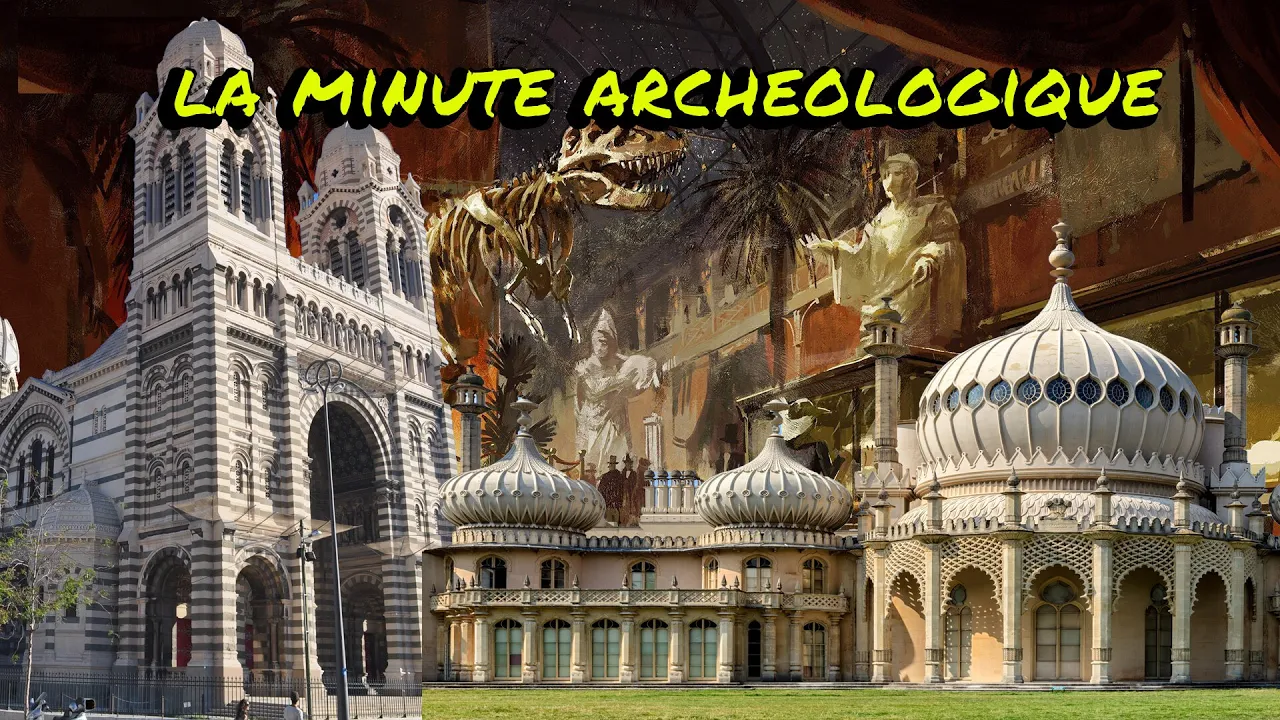
La Minute Archéologique, l'historicisme ou la mode des néo en architecture
1.4K
Historicist architecture emerged in the mid-18th century as a deliberate revival of ancient and historical styles, beginning with Neoclassicism's return to Greek and Roman forms, followed by the Gothic Revival sparked by Victor Hugo's 1831 novel Notre-Dame de Paris, which led to extensive restorations like Notre-Dame and Pierrefonds Castle; this movement evolved into eclecticism, where architects freely combined elements from multiple historical periods and cultures, resulting in buildings that prioritized aesthetic revival over functional appropriateness, ultimately giving way to modernism in the 20th century.
Click to watch →
Die geschichtsphilosophische Idee in „Kultur und Ingenium“ - Stilfolge abendländischer Architektur
7.6K
Classical architecture returns to the principles of Renaissance simplicity, characterized by flat, smooth surfaces and restrained ornamentation. Historicism, which follows Classical architecture, represents a return to ornamental excess through Neo-Gothic, Neo-Baroque, and Neo-Renaissance styles. This demonstrates the recurring pattern of alternation between ornamental richness and restraint throughout architectural history.
Click to watch →
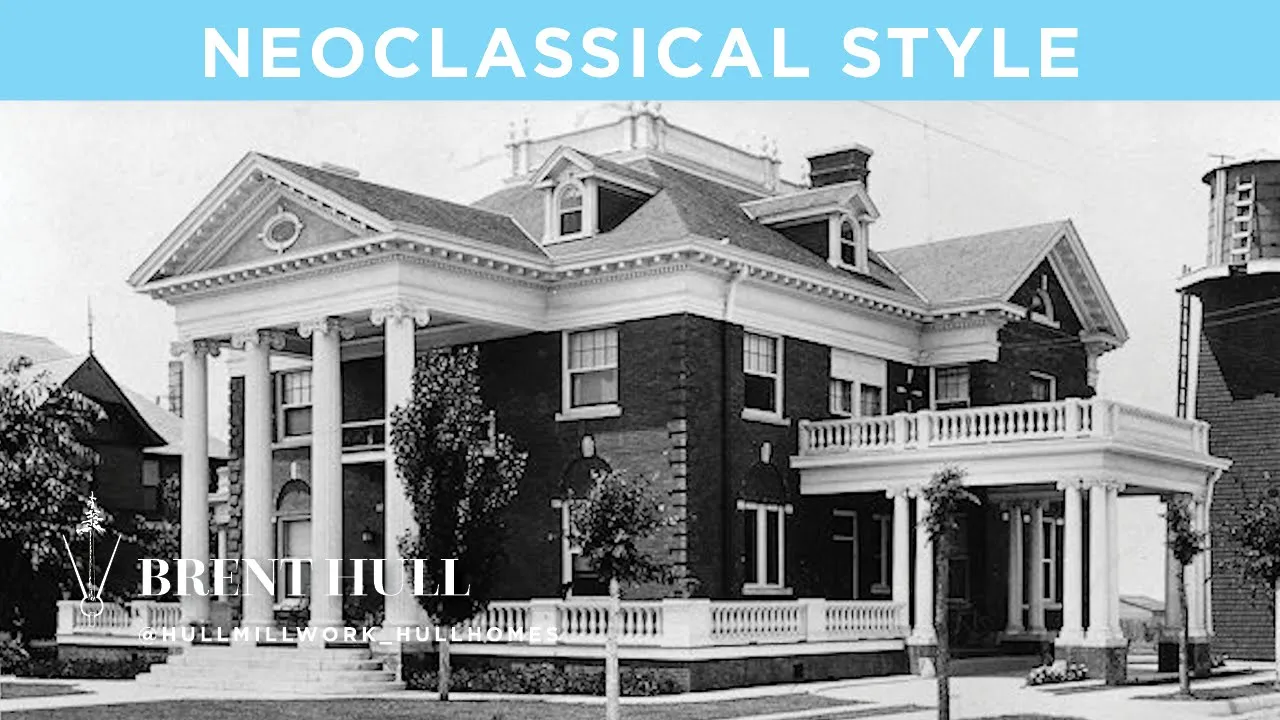
What is Neoclassical Architecture?
13.4K
Neoclassical architecture is a revival movement that draws inspiration from classical Greek and Roman traditions, characterized by symmetrical designs, columns, pediments, and temple fronts; it emerged in two distinct periods in American architecture—the late 1700s-early 1800s and again in the early 1900s (particularly through architects like McKim, Mead & White)—and can incorporate elements from various classical styles including Georgian, Federal, and Greek Revival, making it a flexible design language that allows for creative reinterpretation while maintaining classical principles.
Click to watch →
Deep Dive
The historical context of the Habsburg Monarchy in the mid-19th century, particularly the reign of Emperor Franz Joseph I.
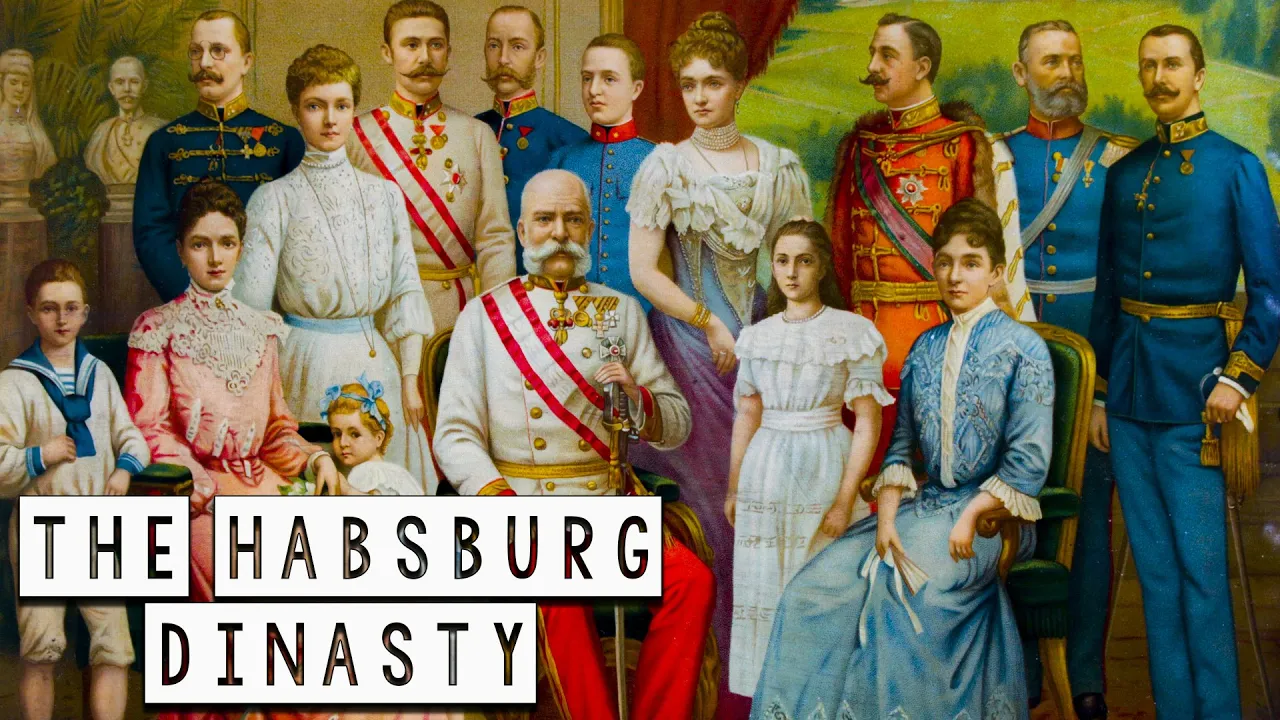
The Habsburg Dynasty - The Decline of the Greatest Monarchical House in Europe - See U in History
178.6K
Maria Theresa's reign (1740-1780) marked the cultural apogee of the Austrian monarchy with contributions from Italian, Slavic, and Magyar cultures. She established the Habsburg-Lorraine dynasty through marriage to Francis of Lorraine. Her reforms included centralizing administration, creating ministerial departments, and requiring aristocracy and clergy to pay taxes for the first time. Joseph II continued Enlightenment reforms, implementing religious freedom, abolishing serfdom in 1781, expanding the army to 300,000 soldiers, and abolishing censorship. The French Revolution proved more dangerous than Louis XIV's threat, with the execution of Marie Antoinette demonstrating revolutionary danger. After Ferdinand's abdication in 1848 due to mental illness, Franz Joseph I ruled for 68 years, the fourth longest reign in European history. His reign saw Austria's focus shift from French rivalry to competition with Prussia for German supremacy. More industrialized and better-equipped, Prussia defeated Austrian ambitions, leading to loss of Northern Italy to Piedmont and surrender of German influence. Hungary gained autonomy, forming the Dual Monarchy of Austria-Hungary. When Archduke Franz Ferdinand was killed in Sarajevo (1914), Austria-Hungary declared war on Serbia, triggering World War I. The war exposed internal ethnic tensions and technological backwardness, causing the empire to collapse.
Click to watch →

The ENTIRE History of the House of Habsburg - The Dynasty That Married the World & the Curse of Jaw
100.2K
In 1848, the 'springtime of nations' brought barricades to Vienna, Prague, and Budapest. The Habsburg dynasty faced extinction. Emperor Ferdinand V, suffering from hydrophobia, epilepsy, and simple-mindedness, asked his chancellor 'Are they allowed to do that?' when seeing revolutionaries, then asked 'But do I still get my dumplings?' He was forced to abdicate, and 18-year-old Franz Joseph was shoved onto the throne. In 1867, after humiliating defeat by Prussians, he signed the compromise creating the Dual Monarchy of Austria-Hungary—a political Frankenstein with two parliaments, two prime ministers, bureaucracy inspiring Kafka nightmares, and money printed in 10 languages. Franz Joseph ruled for 68 years as the eternal emperor while the world raced into the future with telephone, automobile, airplane, and electricity. He hated progress: refused telephone, typewriter, and cars, calling automobiles 'stinking mechanical carts.' He woke every morning at 4 AM, slept on an iron camp bed, and signed documents for 12 hours daily, trying to hold back history with paperwork.
Click to watch →
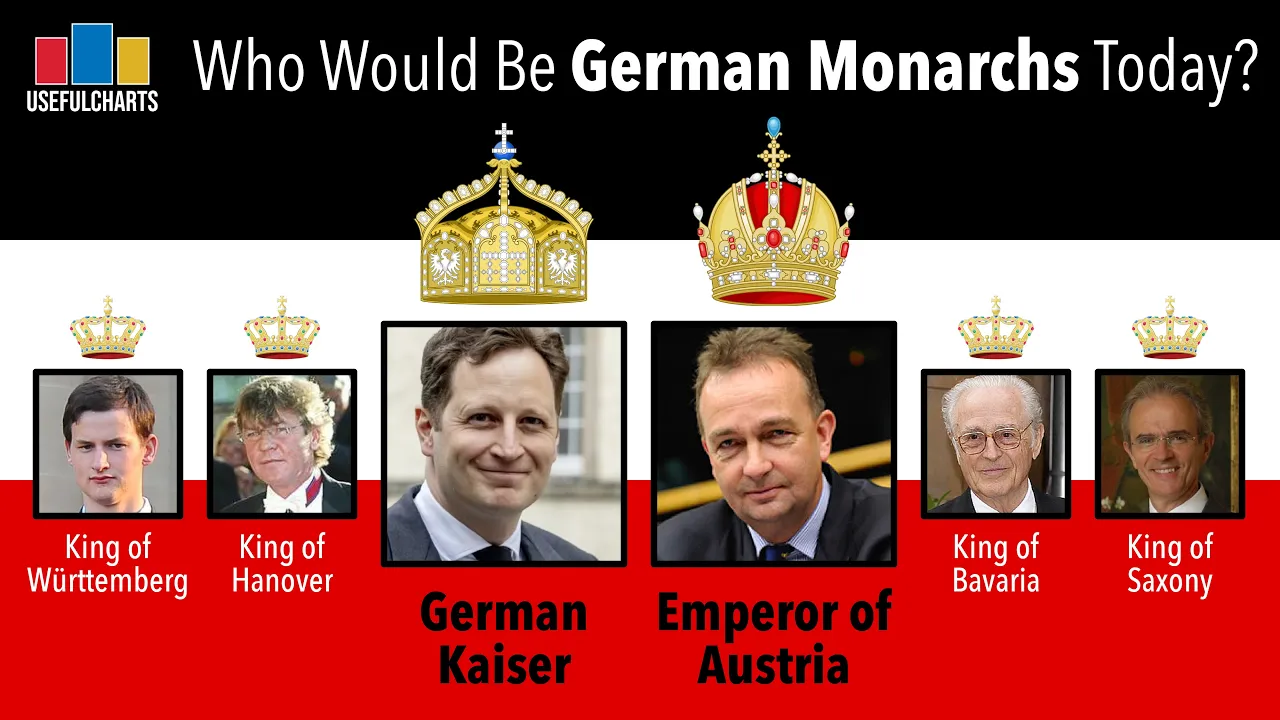
Who Would Be the Monarchs of Germany Today?
1.5M
The Emperor of Austria was Franz Joseph I from the House of Habsburg-Lorraine, who reigned almost 68 years—the longest reign in world history. His only son committed suicide mid-reign, so his heir became his younger brother Archduke Carl Ludwig, then Carl Ludwig's eldest son Archduke Franz Ferdinand (whose assassination sparked WWI). Franz Ferdinand married morganatically, meaning his descendants could not inherit titles. After Franz Joseph's death in 1916, his nephew Charles I became emperor but reigned less than two years before being exiled. The current claimant is Carl von Habsburg, who would also be Holy Roman Emperor, King of Hungary, and King of Bohemia if those titles were restored.
Click to watch →
ハプスブルク家全部やる!!【かぐら予備校】
291.9K
Franz Joseph I reigned as Emperor of Austria for 68 years, from 1848 to 1916. His reign began with the Revolutions of 1848, which forced him to take power. Despite his personal popularity, the Habsburg Empire was declining due to internal ethnic tensions, particularly with Hungary, and external pressures from rising powers like Germany.
Click to watch →
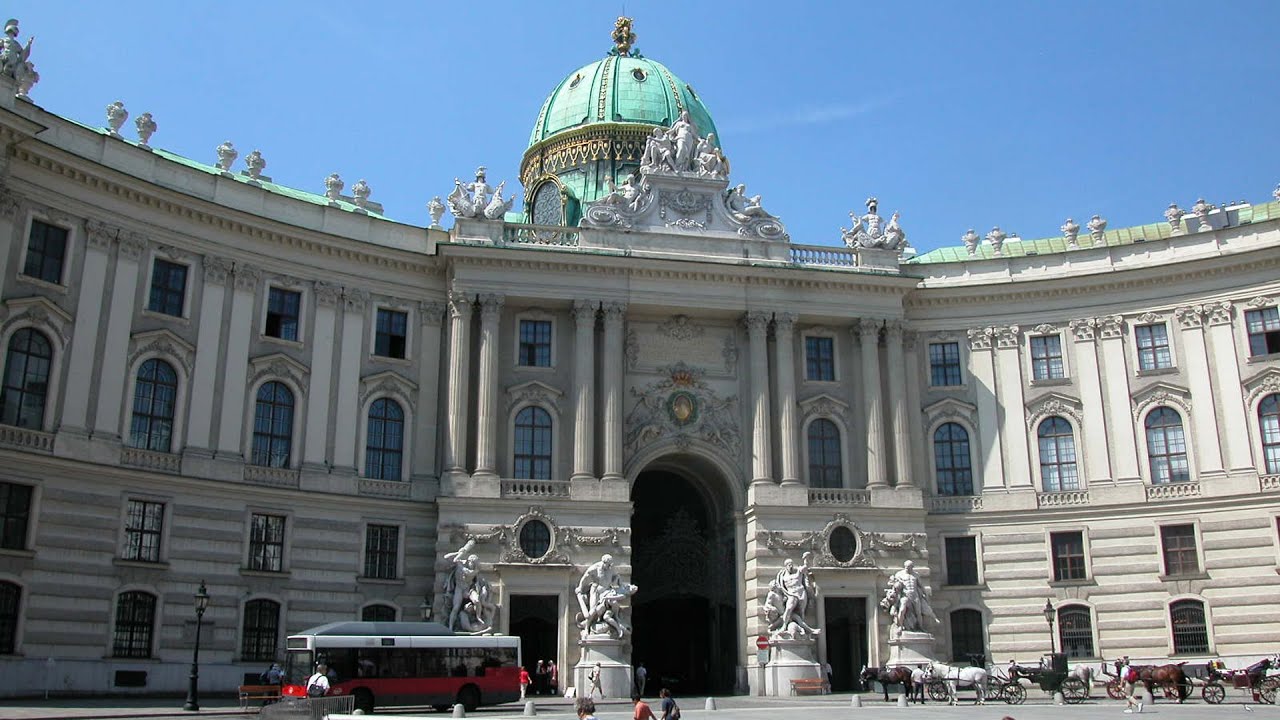
Vienna
2.4M
Six centuries of Habsburgs ruled from Vienna, including Maria Theresa in the late 1700s, famous for 16 children cleverly married into European royal families to expand the empire. Today's palace is furnished as it was in the 1800s from Emperor Franz Joseph, who ruled for 68 years and embodied the Habsburg empire in its final decades. With a stern upbringing, he instilled a powerful sense of duty. In 1915 at age 85, wearing his uniform to the end, he never understood his monarchy was becoming a dinosaur. Every citizen had the right to meet with him in the Audience Room. He presided over cabinet meetings with Hungarians present, and paintings showed the military defeat of Hungarian uprisings. He nurtured an image as Spartan and hard worker with a no-frills iron bed. While he had mistresses, his dresser was well-stocked with portraits of Empress Elisabeth (Sissi), his mysterious, narcissistic, and beautiful wife. Sissi's hard-earned tiny waist was 21 inches at age 50 after giving birth to 4 children. Her main goals were preserving her Empress image, maintaining her Barbie doll figure, and tending to her cascading hair. Servants worked two hours daily on her hair. Her bathroom had a huge tub—the finest anywhere—on Vienna's first linoleum floor installed in 1888. In 1898, while visiting Geneva, she was assassinated by an Italian anarchist.
Click to watch →
Deep Dive
Basic principles of 19th-century European urban planning, specifically the transition from fortified medieval cities to modern metropolises.

ОСТАНОВИТЬ ВОЙНУ!!!!!!!
33.2K
Urban planning as a formal discipline emerged in the late 19th century. Before this, cities were built without systematic planning, though medieval European cities had consistent patterns: fortified centers, churches, markets, courtyards, and narrow streets. The scale of medieval cities was much smaller than modern agglomerations because transportation options were limited to walking. For example, Paris in the 15th century was significantly smaller than today because the volume and variety of modern transportation did not exist. This meant it was critical to be able to walk to any point in the city, making large cities impractical.
Click to watch →
Thomas Doerfler Short History of Urbanism
1.5K
Urbanism is a modern phenomenon that emerged through the transformation of medieval cities into modern cities by industrialization in the 19th century. This transformation can be understood as an 'implosion and explosion' phenomenon: first, medieval cities imploded as baroque and renaissance cities crumbled, with only facades and museums surviving. Then, the new capitalist city exploded, with hundreds of thousands of people born in cities to work in industry, becoming what Marx called the working class. This new urban population required housing, groceries, and eventually subway and bus systems, fundamentally changing urban infrastructure and social organization.
Click to watch →

ULIMA - El Ensanche Cerdá para Barcelona - Luis Calvet
2.4K
The 19th century revolutionized urban planning by introducing theoretical design before construction. Cities like Paris, Athens, Turin, San Sebastián, Algiers, Madrid, and Barcelona emerged simultaneously from this paradigm shift. Key principles included: (1) planned cities over spontaneous growth; (2) separation of public from private land through block division; (3) infrastructure construction preceding buildings; (4) trazados (street layouts) and ordenanzas (building regulations) as regulatory frameworks. This approach created homogeneous urban forms with protected facades, while Barcelona maintained more flexible regulations enabling architectural diversity. The era established that cities could be designed according to theory rather than organic development.
Click to watch →
Série Ecce Homo: A Cidade
701
In the Middle Ages, surviving Roman cities and new ones followed a characteristic model with central market squares used for commerce and celebrations. Cities were fortified because power was directly related to land ownership. Christian churches provided all social services including schools, hospitals, and protection for the elderly and sick. Urban inhabitants had privileges escaping rural obligations like serfdom, tithes, and military service. However, space was limited, leading to burghs beyond city walls where merchants settled. Despite being small (rarely exceeding 50,000 inhabitants), medieval cities organized tax collection, customs control, and public finances. Living conditions were poor with narrow streets, tall houses blocking sunlight, and common diseases. Mortality rates were higher in cities than countryside, with infant mortality ratios of almost 2:1. In the 13th century, Northern European cities formed the Hanseatic League to protect trade routes, receiving wealth that enabled better housing. At the end of the Middle Ages, political power centralized as monarchs established capitals with impressive architectural projects. In the New World, first cities appeared in the 17th century with intense commerce. By the 18th century, rapid urban growth caused traffic jams without traffic rules. The 19th century Industrial Revolution transformed craft shops into factories. Philadelphia became the most important industrial city, while Chicago became a food production center. The train was decisive for urban growth, with factories built near railways and workers' housing agglomerated around factories. Urban populations grew vertiginously, with London becoming the second city in history to reach one million inhabitants in 1810. Between 1831-1840, cities were affected by cholera and typhus epidemics, prompting authorities to remove fortifications and allow urban expansion. In 1853, Baron Haussmann transformed Paris by demolishing epidemic areas and building boulevards. In the United States, rapid urban growth was fueled by natural resources and commerce. Most constructions were wooden, increasing fire risks that destroyed Boston in 1660 and Boston and Chicago in 1871. Fire was the greatest threat to life and security. After the 1871 fire, authorities prohibited wooden constructions, requiring brick or stone. This enabled skyscraper development. In the 20th century, modern cities adopted tall buildings, theaters, and cinemas. Public transportation enabled suburban development, beginning the American dream of houses with gardens.
Click to watch →

คุยเรื่องเต็ค EP.09 | Paris - เมืองที่มีดีไซน์อยู่ในทุกอณู | x Ativich Studio
1.4K
Paris's transformation from medieval city to modern metropolis demonstrates fundamental principles of urban planning. The evolution addressed medieval urban problems—narrow streets, inadequate sanitation, overcrowding—through systematic redesign. Baron Haussmann's 19th-century renovation established foundational principles including wide boulevards for circulation, standardized building designs with consistent setbacks, and integrated sewer systems. The transformation created the distinctive Parisian streetscape while solving practical problems of public health and urban mobility. This historical example shows how comprehensive urban planning can simultaneously address contemporary challenges while creating distinctive urban character that endures across generations.
Click to watch →
Deep Dive
Familiarity with basic architectural terminology such as pediments, colonnades, facades, and the classical orders of columns.
DO YOU KNOW THESE ARCHITECTURAL TERMS? TOURING NEW YORK CITY With Rajiv Surendra
1.3K
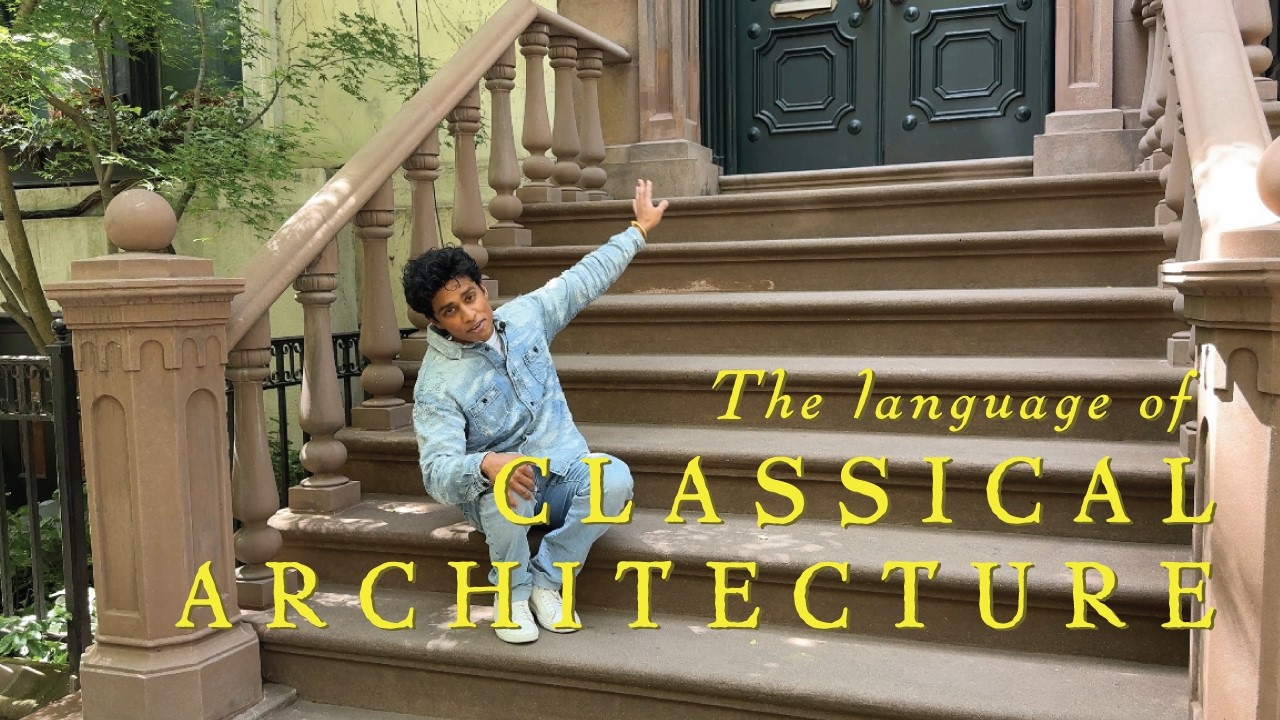
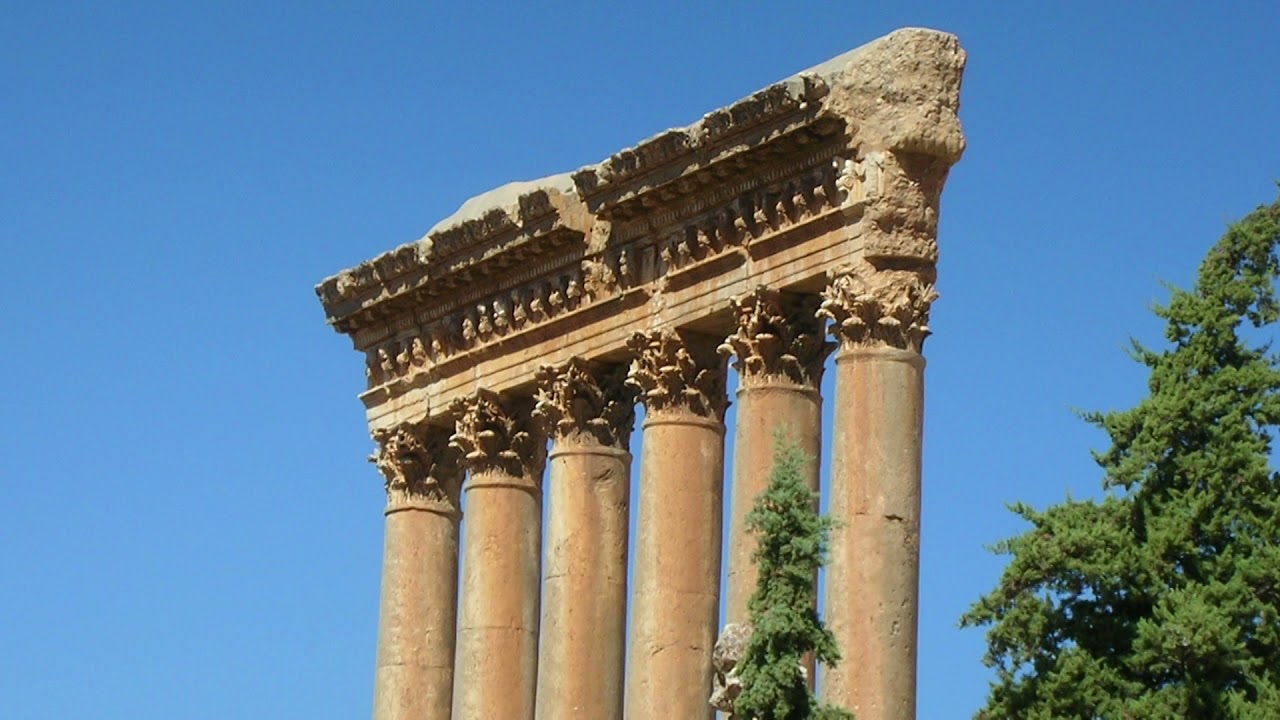
Classical Western architecture derives from ancient Egyptian and Greek temples, with the Parthenon as the iconic example. The entablature sits atop columns and consists of three parts: the cornice (top projection), frieze (middle decorative section with sculpted figures or lettering), and architrave (bottom section). Columns are divided into three orders: Doric (simplest), Ionic (middle with scroll-like volutes), and Corinthian (most ornate with acanthus leaves). Each column has three parts: capital (top), shaft (cylindrical middle), and base (bottom). A pedestal elevates columns decoratively, while a plinth is a plain, utilitarian block. Facade elements include corbels (bracket-shaped supports), pilasters (flat column-like decorations), and grotesques (stylized male faces). Egg and dart molding features alternating egg and pointed dart shapes from classical tradition. The acanthus leaf motif appears in transitions between square and circular shapes. Pediments are triangular crowns atop columns, often containing sculptural narratives.
Click to watch →
What are the CLASSICAL ORDERS of columns? | Different Types of Columns (Greek and Roman)
36.8K
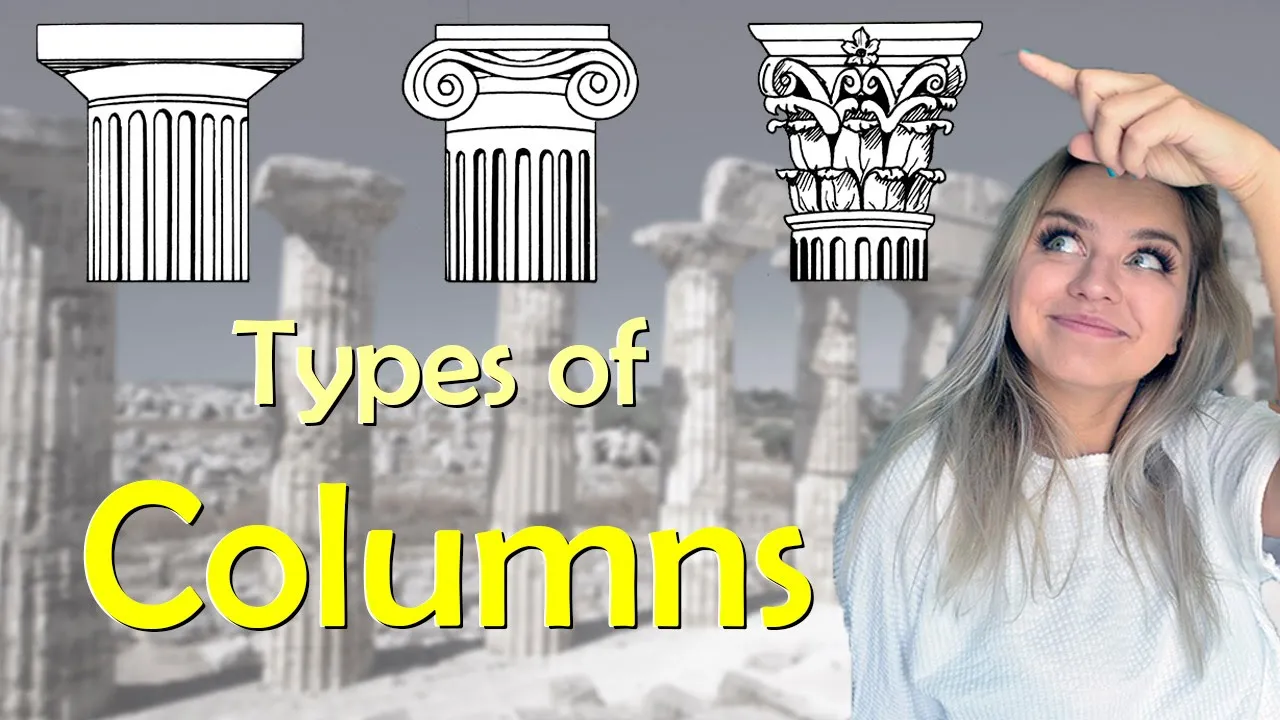
Classical orders are architectural systems originating from ancient Greek and Roman civilizations that define column design through specific proportions and ornamentation. There are five total orders: three Greek (Doric, Ionic, Corinthian) and two Roman (Tuscan, Composite). Each order has distinct characteristics including the stylobate base, fluted shaft, capital, and entablature with architrave, frieze, and cornice. The Doric order (earliest, male-proportioned, no base) contrasts with the Ionic order (female-line, volutes, Egyptian-inspired) and the refined Corinthian order (acanthus leaves). The Romans simplified the Doric into the plain Tuscan order and combined Ionic and Corinthian elements into the Composite order, recognized separately only during the Renaissance.
Click to watch →
Classical Architecture
2.3K
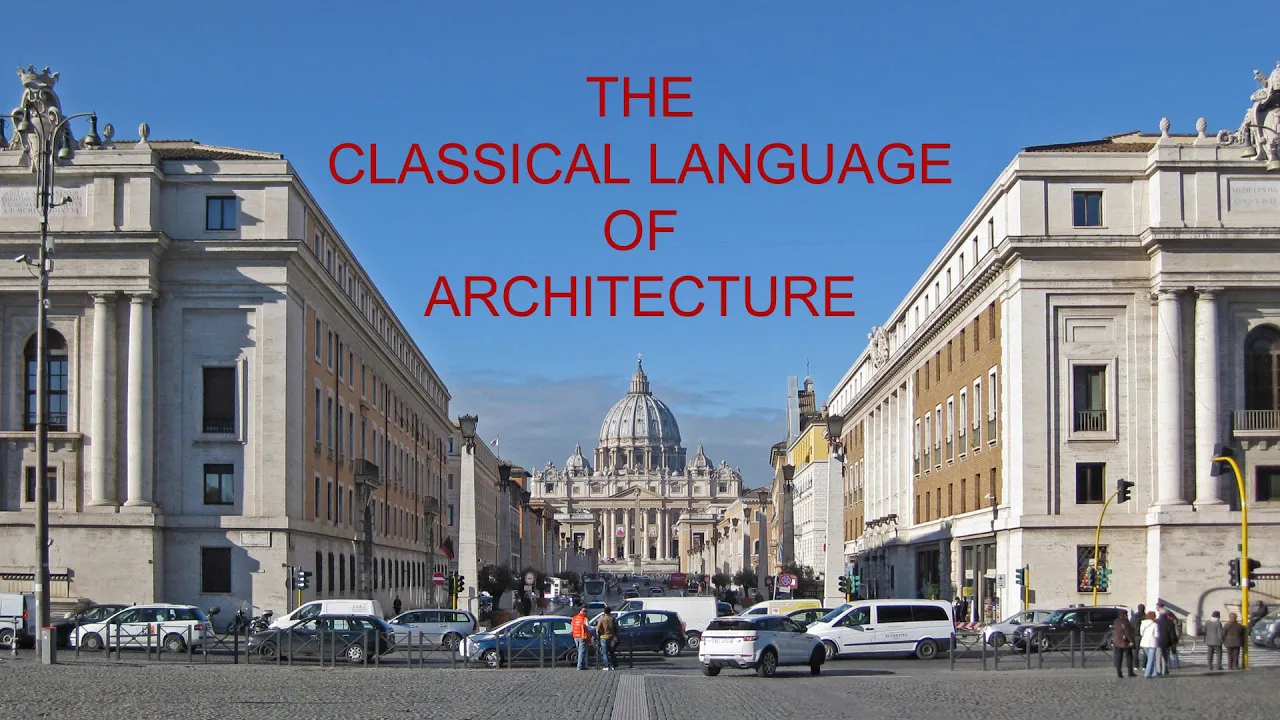
Classical architecture uses a standardized vocabulary of columns and entablatures organized into six distinct orders: Tuscan (simplest, plain), Roman Doric (fluted shaft, triglyphs and metopes), Greek Doric (no base, cushion-like capital), Ionic (volutes and egg-and-dart molding), Corinthian (overlapping leaves and tendrils), and Composite (combination of Corinthian leaves and Ionic volutes). Each order shares the same fundamental elements—a column with base, shaft, and capital, plus an entablature with architrave, freeze, and cornice—but differs in ornamentation and proportion, allowing architects to create buildings with consistent visual language.
Click to watch →
Мастер класс "Архитектура Древней Греции"
297
Columns are the most beautiful architectural details, serving both aesthetic and structural purposes. A colonnade is a row of columns emphasizing a building's facade. Greek temples dedicated to gods like Zeus and Apollo featured columns as their most memorable element. An 'order' determines the arrangement of vertical and horizontal architectural elements. The three main Greek orders are Doric (first, named after the Dorian tribe, characterized by monumentality and no capital decorations), Ionic (named after the Ionian tribe, more slender with volute capitals), and Corinthian (named after Corinth, most decorative with acanthus leaf capitals). Vitruvius compared these orders to human characteristics: Doric to masculine strength, Ionic to feminine delicacy, and Corinthian to maidenly slenderness.
Click to watch →

Arquitectura del Renacimiento 1- Arquitectura Clásica grecoromana - Ordenes clásicos
2.1K
The five classical orders—Doric, Ionic, Corinthian, Tuscan, and Composite—form the foundation of Western architectural language. Vitruvio first described the first three in his Roman treatise; Renaissance architects added Tuscan and Composite based on Roman ruins. Each order conveys distinct character: Doric for strength, Ionic for elegance, Corinthian for refinement, Tuscan for fortress-like structures, and Composite for luxury. A classical temple facade comprises three parts: frontis with tympanum, entablamento with cornice, frieze, and architrave, and portico with capital, shaft, pedestal, and stylobate. Porticos classify by column count: tetraastilo (4), hexastilo (6), octastilo (8), decastilo (10), and dodecastilo (12). Intercolumniation—spacing measured in column diameters (eustilo=2.5, diastilo=3, aerostilo=4)—creates rhythmic visual harmony.
Click to watch →
Prerequisite Knowledge
- Concept 01Fundamentals of Neo-Classical and Historicist architecture, including the revival of Greek, Roman, and Renaissance design principles.
- Concept 02The historical context of the Habsburg Monarchy in the mid-19th century, particularly the reign of Emperor Franz Joseph I.
- Concept 03Basic principles of 19th-century European urban planning, specifically the transition from fortified medieval cities to modern metropolises.
- Concept 04Familiarity with basic architectural terminology such as pediments, colonnades, facades, and the classical orders of columns.
Subsequent Learning
- Step 01A detailed architectural analysis of specific Ringstrasse landmarks, comparing the Greek Revival Parliament with the Gothic Revival Rathaus (City Hall).
- Step 02The rise of the Vienna Secession movement (Art Nouveau) as a direct modernist rebellion against the historicist academic styles of the Ringstrasse.
- Step 03Comparative urban studies analyzing how the Ringstrasse project compares to Haussmann's renovation of Paris and Cerdà's Eixample in Barcelona.
- Step 04The socio-economic impact of the 'Ringstraßenzeit' era, exploring how the boulevard reflected the cultural triumphs and class dynamics of the rising Viennese bourgeoisie.
Ringstrasse Tour
Danube Escape
Ringstrasse Tour
0:00Playing Section
- 1
Tram loop highlights Vienna's grand Ringstrasse boulevard.
- 2
Architectural styles reflect each building's historical purpose.
- 3
Sights include parliament, city hall, museums, and theater.
The Modernist Critique: Adolf Loos and the 'Potemkin City'
While the Ringstrasse is celebrated today for its grand historicist and neo-classical facades, it faced fierce criticism from pioneering modernist architects and theorists, most notably Adolf Loos. In his 1898 essay 'The Potemkin City,' Loos argued that the boulevard's architecture was a triumph of superficiality and cultural dishonesty. He criticized the practice of pasting historical styles—such as Neo-Renaissance or Neo-Baroque plaster moldings—onto modern brick structures, comparing it to the fake canvas villages built to deceive Russian Empress Catherine the Great. To Loos and the emerging Vienna Secessionists, this 'historicism' was a deceitful attempt by the rising bourgeoisie to mimic the grandeur of the old aristocracy instead of developing a genuine, functional style for the modern era. This counterpoint shifts the focus from aesthetic admiration to a critique of architectural authenticity, highlighting how the Ringstrasse symbolized a rejection of modern progress in favor of nostalgic, theatrical illusion.
Deep Dive
A detailed architectural analysis of specific Ringstrasse landmarks, comparing the Greek Revival Parliament with the Gothic Revival Rathaus (City Hall).

Episode 43: MURDER - Dagmar Fuhrich
189
The Vienna Ringstrasse was built in the second half of the nineteenth century after Emperor Franz Joseph I issued a decree ordering the demolition of the old city wall. This boulevard served dual purposes: preventing revolutionaries from easily locating narrow streets (similar to Parisian boulevards), and showcasing the wealth and power of the Habsburg Empire. Many impressive buildings line the Ringstrasse, including the Parliament designed to resemble a Greek temple (as Greece is the birthplace of democracy), City Hall with Gothic architecture, the twin buildings of the Museum of Natural History and Museum of Art History, the Stock Exchange, University, and luxury hotels.
Click to watch →
Vienna
2.4M
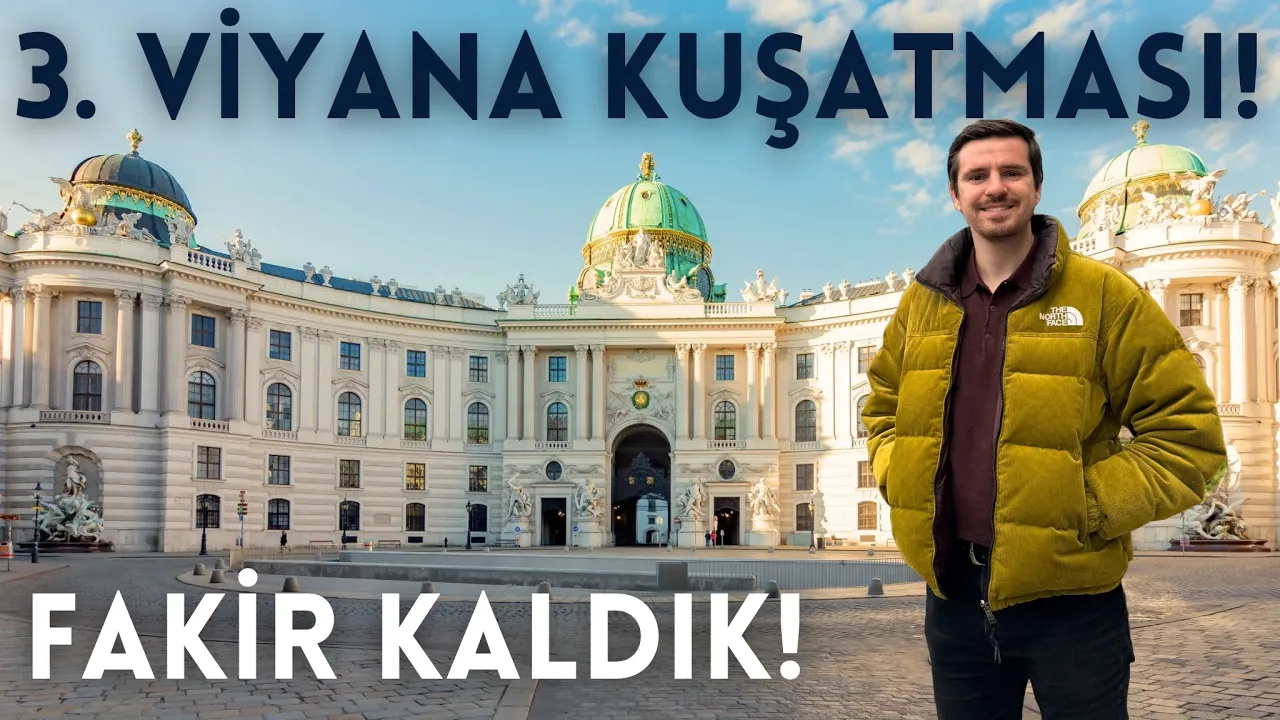
Vienna's old center is corralled by the grand circular Ringstrasse. In the 1860s, Emperor Franz Joseph had the medieval wall torn down and replaced it with this impressive boulevard arcing nearly three miles around the city's core. One of Europe's great streets, it's lined with top sights. For a budget tour, hop on Tram Number One. The ring road is older than the buildings lining it, featuring Neo-Renaissance, Neo-Gothic, and Neo-Classical styles. The Austrian Parliament is Neo-Classical (democracy from ancient Greece), City Hall is Neo-Gothic (recalling merchant governance), and museums are Neo-Renaissance (spirit of learning). The Hofburg Palace complex grew with the Habsburg empire from the 13th century until just before World War I. The lavish imperial apartments were designed for divine monarchs who claimed God ordained them to rule. The walls hide servants' corridors, and big ornate stoves heated rooms. The decor is splendid Baroque, serving as propaganda that some were born to rule and others to be ruled.
Click to watch →
Viyana’yı Viyanalılar Bu Kadar Anlatmazlar!
204.5K
Vienna's city center is surrounded by a Ring Road (Ringstraße) that was built after the original city walls were demolished between 1860-1890. This area contains significant historical buildings including the City Hall (Rathaus), built in 1883, and the Parliament Building (Parlament), also from 1883. The Parliament Building features architectural elements reminiscent of Greek temples. Both buildings offer free guided tours on specific days (City Hall on Mondays, Wednesdays, and Fridays at 10:00 AM), with a 50-person capacity requiring early arrival.
Click to watch →
Vienna Ringstrasse - Political Assassinations, Beethoven, Rathaus, Parliament + More! History Tour
514
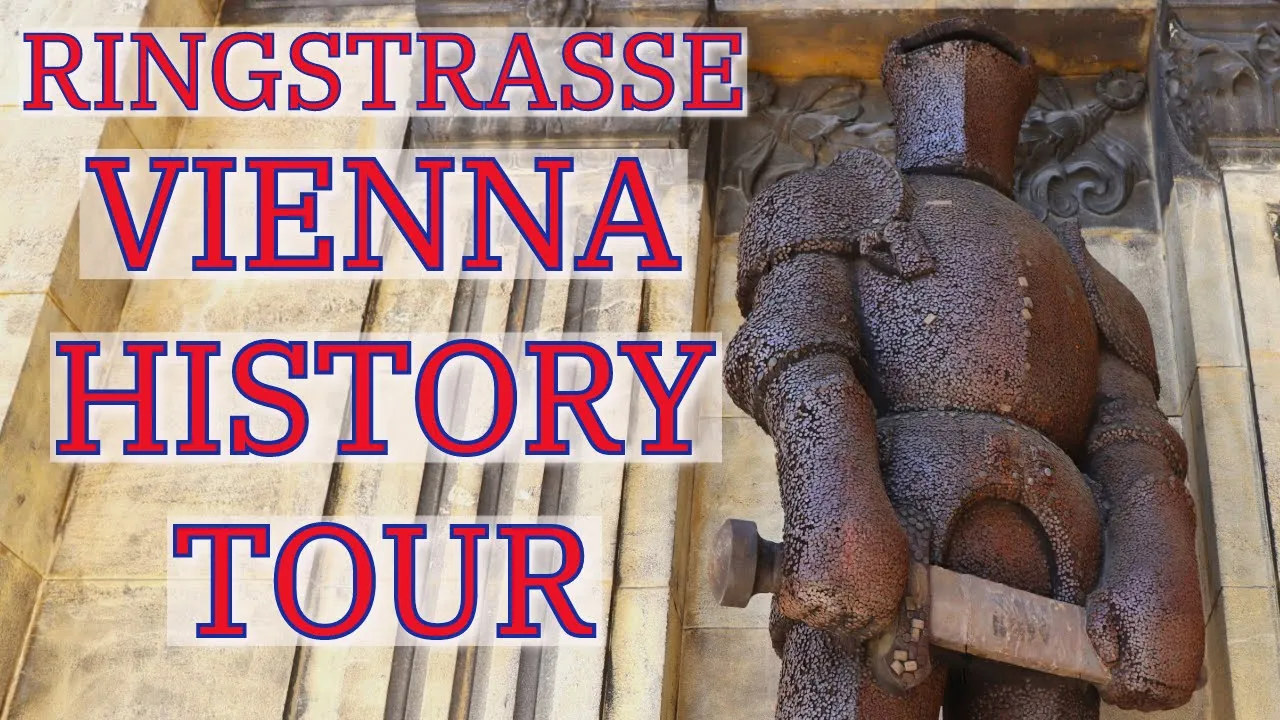
The Ringstrasse, Vienna's circular boulevard built from the 1860s-1890s following demolished old city walls, represents a major urban transformation under Kaiser Franz Joseph. This monumental project featured historicist public buildings imitating various historical styles, including the Kunsthistorisches Museum, Naturhistorisches Museum, Austrian Parliament (Greek Revival, 1883), and Vienna City Hall (neo-Gothic, 1883). The Rathaus reached 103 meters, becoming one of the world's tallest city halls until 1894. The Monument of the Republic (1928) honored Austria's new democracy after WWI but was controversially removed by Chancellor Dollfuss in 1934. This architectural and political landscape reveals how urban planning served imperial ideology while simultaneously reflecting tensions between democratic aspirations and authoritarian control in interwar Austria.
Click to watch →
VIENA 🇦🇹 A cidade mais linda do Mundo. Capital da Áustria.
168
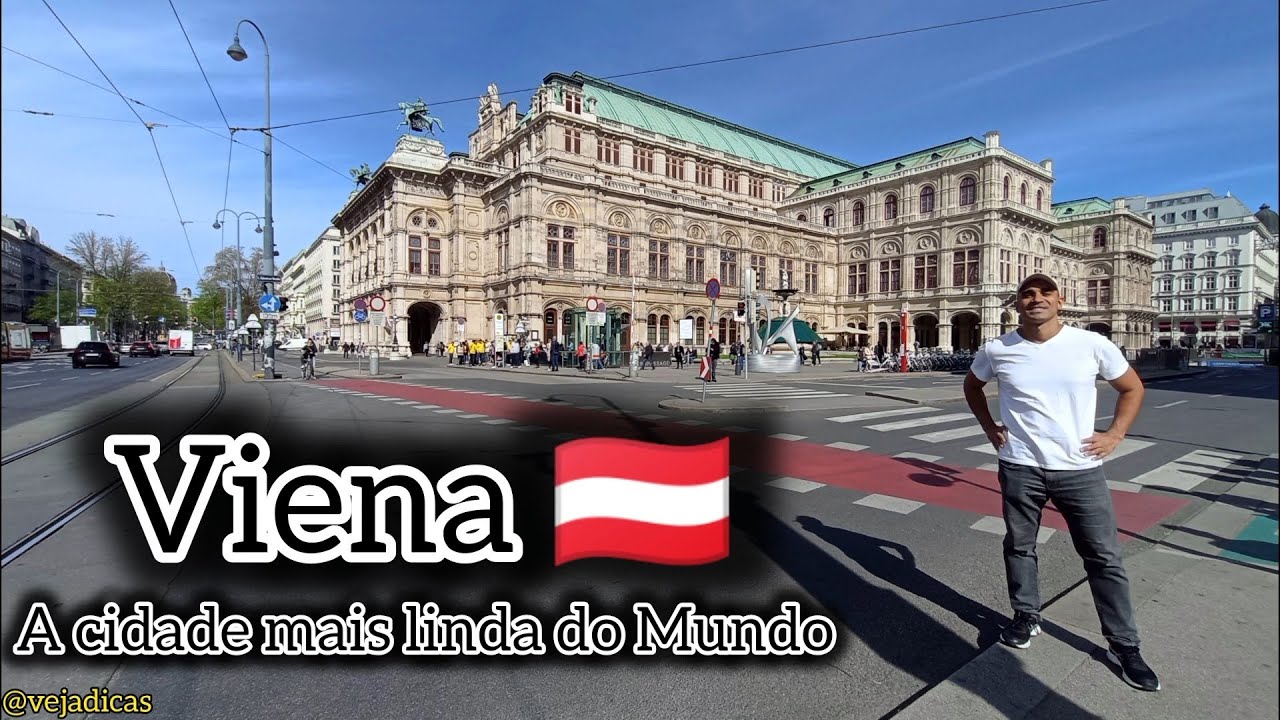
The Austrian Parliament building, constructed in the 19th century in classical style, is the most notable building on Ringstrasse (the circular avenue surrounding Vienna's center). Finished in 1884, it was designed in historicist style to evoke ancient Greece as the birthplace of democracy. Half the building was destroyed during WWII bombing, with reconstruction completed in 1956. The statue of Athena (goddess of wisdom) holds Nike (goddess of victory) and features allegorical figures. Maria Theresa Square, built in the late 18th century, honors Empress Maria Theresa and features impeccably maintained gardens between the Museum of Fine Arts and Natural History Museum.
Click to watch →
Deep Dive
The rise of the Vienna Secession movement (Art Nouveau) as a direct modernist rebellion against the historicist academic styles of the Ringstrasse.

Die Wiener Ringstraße 1/3 - Wie Wien zur Weltstadt wurde Doku
374.3K
The only building that should have been on the Ringstraße in the Art Nouveau style was the Secession building. However, the Habsburg elites considered it the offspring of extreme modernism, so this Viennese landmark stands today 300 meters away from the Ringstraße at the edge of Karlsplatz. This exile symbolized the rejection of modernism by the conservative establishment that controlled the Ringstraße's development.
Click to watch →
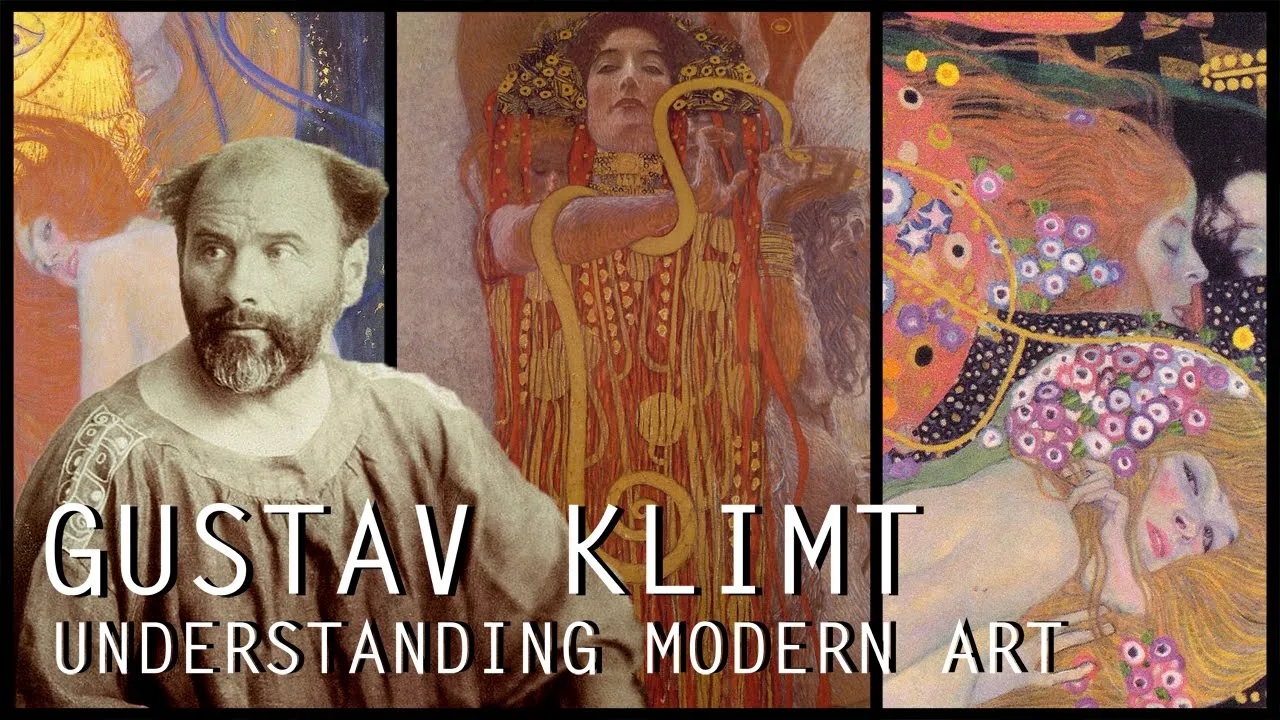
Gustav Klimt- Understanding Modern Art
87.6K
In 1897, Klimt led artists in seceding from Vienna's academic establishment, forming the Vienna Secession—the first major formalized break from academic systems. They published Ver Sacrum and built the Secession Hall, pursuing the Gesamtkunstwerk (total work of art) concept combining architecture, painting, and design. Their motto 'To every age its art, to every art its freedom' rejected historicism. Works like the Beethoven Frieze and Athena Parthenon demonstrated this philosophy, using allegory, decorative patterns, and dreamlike qualities influenced by Freudian psychology to challenge traditional artistic conventions.
Click to watch →
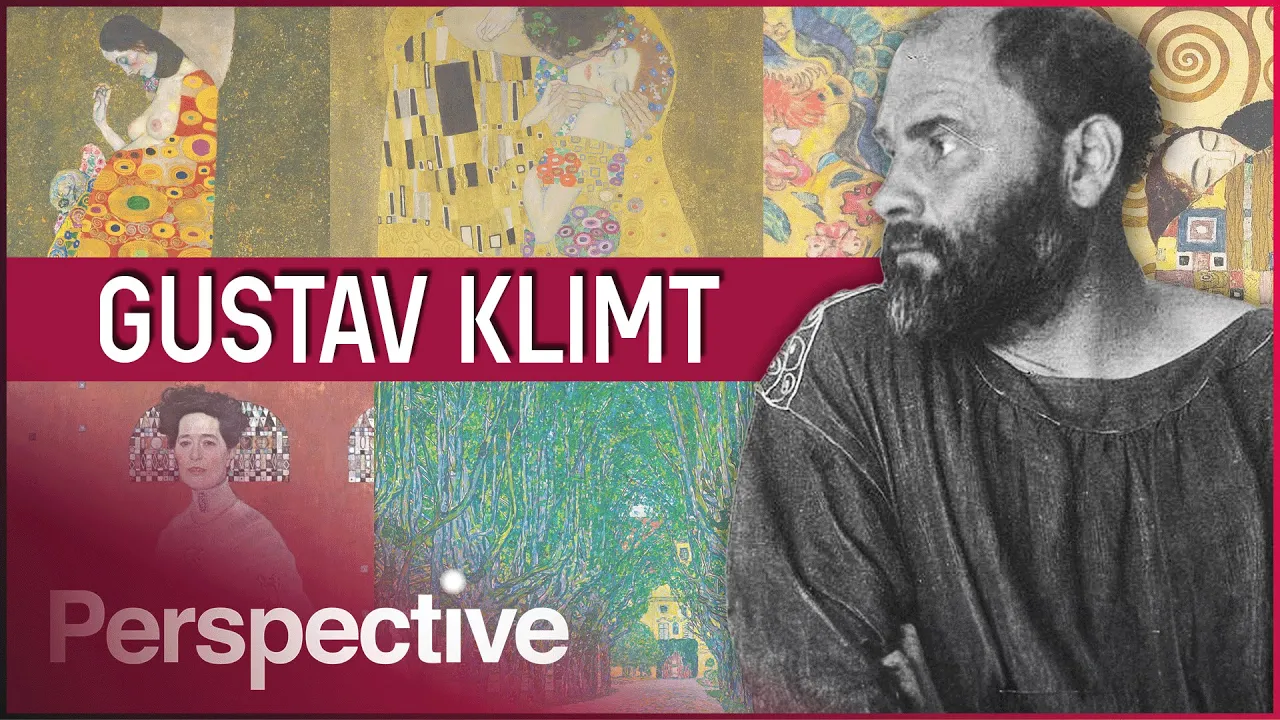
How Mural Master Klimt Became The Main Man Of Austria's Art Nouveau | Great Artists
234.6K
The Vienna Secession represented a fundamental break from academic art institutions. In 1897, 40 artists formed their own independent institution after being rejected by the establishment-dominated Consular House. Their first exhibition in 1898 attracted nearly 60,000 visitors, showcasing paintings, sculptures, graphics, and drawings together—breaking down barriers between fine and applied arts. Influenced by Art Nouveau's sinuous curves, natural forms, and symbolism, they embraced an antithesis to realism that allowed deeper meanings to be read into works. This movement was part of a broader European spirit, following secessions in Munich (1892) and Berlin (1899), representing a pivotal moment in European modernism where artists sought creative freedom beyond academic constraints.
Click to watch →
Klimt, Ornament, and Viennese Modernism: Art History Analysis
47.5K
Mid-19th century Vienna replaced medieval ramparts with the Ringstrasse, creating a boulevard connecting major institutions. Three revival styles emerged: medieval guild-style at City Hall (1883), classical Greek at Parliament, and neo-Baroque at Semper's Theatre. Critics complained these buildings had 'no original style' and appeared disconnected from urban settings, being called 'cakes on a platter.' This architectural crisis gave rise to Art Nouveau, exemplified by Otto Wagner's cast-iron structures and gold ornamentation at Karlsplatz tram station. The Vienna Secession, founded by artists breaking from the Academy, embodied this revolutionary response with their iconic building designed by Joseph Maria Olbrich. Gustav Klimt began as a master historicist but evolved toward the Secession, blurring distinctions between fine art and applied art through his gold leaf techniques. Richard Wagner's concept of 'Gesamtkunstwerk' (total work of art) profoundly influenced this movement, integrating architecture, sculpture, painting, and music into unified experiences.
Click to watch →
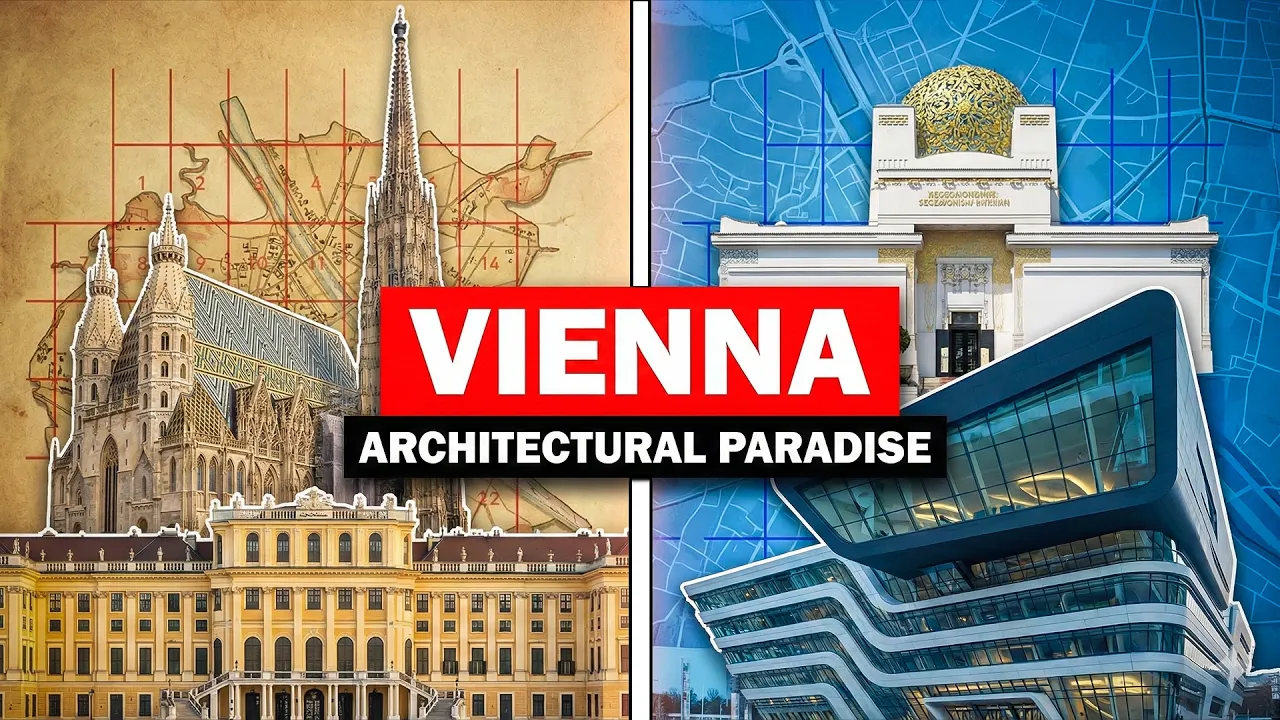
Why Vienna Is An Architectural Paradise
810
The 19th century brought Vienna's Ringstrasse revolution, replacing medieval walls with a grand boulevard and embracing Historicism that combined Neo-Gothic, Neo-Renaissance, and Neoclassical styles. The Vienna Secession then rejected historical imitation, advocating that each era deserves its own artistic language. Led by Otto Wagner and Josef Hoffmann, this movement prioritized function, clean lines, and modern materials. Early modernism took this further, with Adolf Loos declaring 'ornament is crime' and creating confrontational, unadorned architecture. This radical thinking challenged established conventions, forcing reconsideration of what architecture could be and establishing principles that continue influencing contemporary design.
Click to watch →
Deep Dive
Comparative urban studies analyzing how the Ringstrasse project compares to Haussmann's renovation of Paris and Cerdà's Eixample in Barcelona.
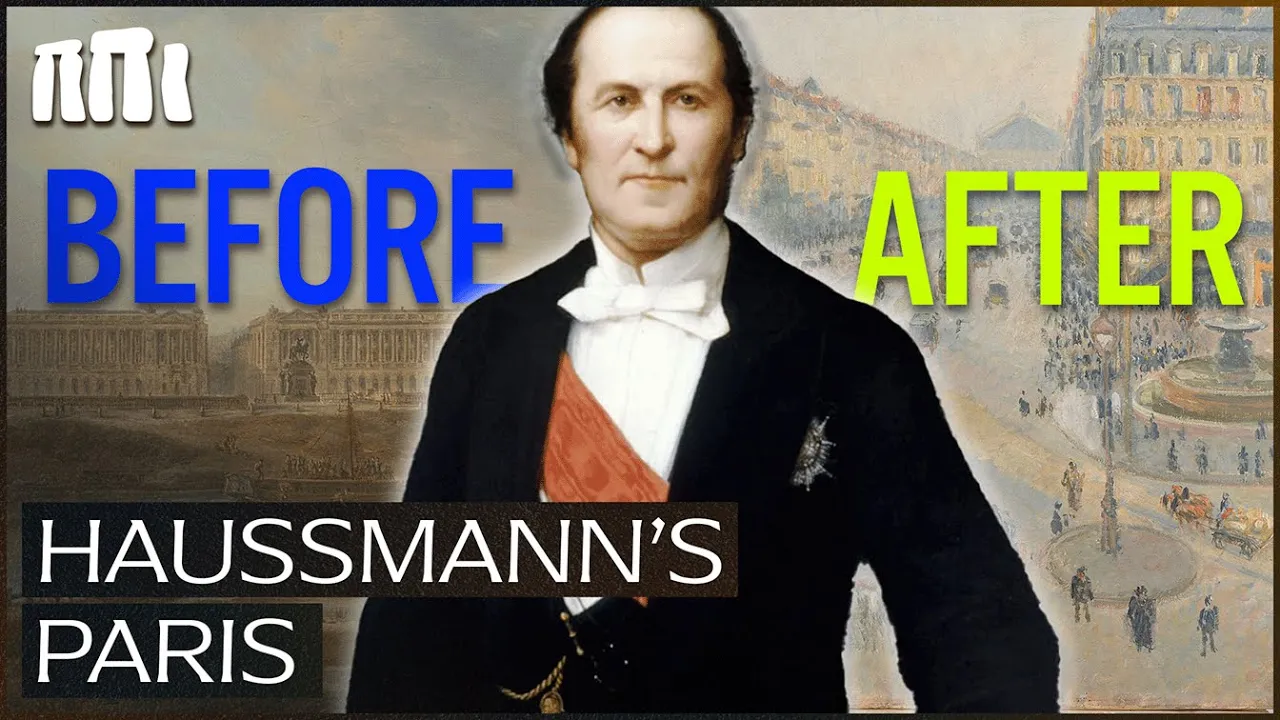
Baron Haussmann: How One Man Built Modern Paris
264K
Baron Haussmann, appointed Prefect of Paris by Emperor Napoleon III in 1853, undertook an unprecedented urban renewal project between 1853-1870 that transformed Paris from a medieval city of narrow, polluted streets into a modern metropolis with wide boulevards, uniform Haussmannian buildings, and improved sanitation infrastructure, including 63 km of new roads, 40,000 buildings, 2,000 hectares of parkland, and 380 km of sewers, though this progress came at the cost of displacing thousands of lower-class residents and workers.
Click to watch →

ВЕНА | Большой выпуск о городе для жизни №1. Главное о столице Австрии в 4К
654.8K
Ringstraße is Vienna's ring road built in 1857 on medieval city walls. Emperor Franz Joseph I ordered demolition of fortifications to enable urban expansion, inspired by Haussmann's Paris boulevards. The straight, wide streets served dual purposes: improving mobility and preventing barricade construction during uprisings. The avenue hosts major landmarks including the University of Vienna (founded 1365), New Town Hall, and the Parliament building, representing the city's imperial heritage.
Click to watch →

How Vienna Became The Largest Kingdom Of The Renaissance | Curious Traveler | Absolute History
236.5K
The Ringstrasse, Vienna's grand circular boulevard, represents a deliberate urban transformation project begun around 1858 under Emperor Franz Joseph. Similar to Paris's Haussmann project, it involved demolishing the medieval city to create a modern boulevard following the old walls. Each building serves as a 'temple' dedicated to specific functions—music, art, government—with diverse European architectural styles from Greek to Baroque. The Parliament buildings specifically use neoclassical design resembling Greek temples to assert Austria's power equivalence to ancient civilizations. This urban planning demonstrates how cities reshape themselves to reflect national aspirations and political messaging through monumental architecture.
Click to watch →
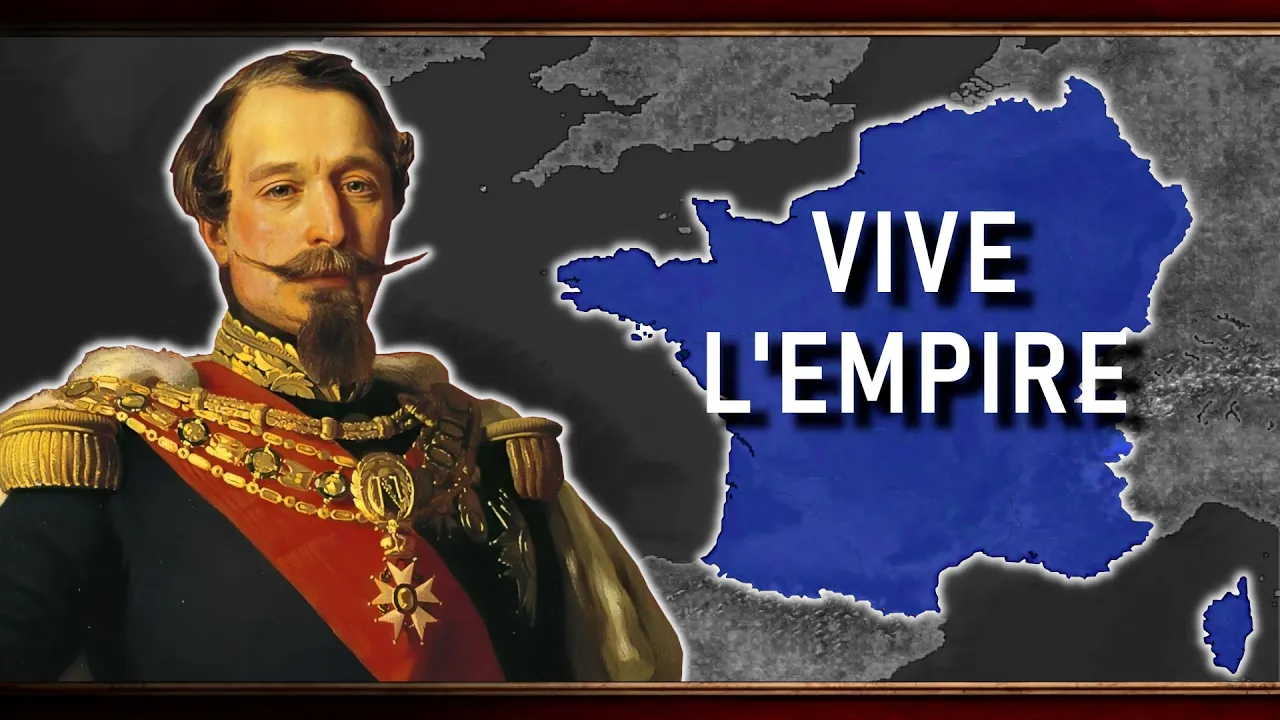
Napoleon III and the natural borders of France / Victoria 2 / RP storytelling
81.1K
With Paris growing from 500,000 to 1.5 million people, existing infrastructure could no longer support it. Napoleon, having lived in London rebuilt after the 1666 fire, commissioned Georges Haussmann as prefect of the Seine department with unlimited funds and powers. More than 60% of Parisian real estate was replaced. Narrow medieval streets with dead ends—breeding grounds for crime and disease—were replaced with wide boulevards with high-rise houses in unified Second Empire style. Sewerage, water, and gas pipelines were completely rebuilt, following London's example. Parks appeared within city limits, enabling flânerie—the act of walking along boulevards for entertainment and aesthetic pleasure. With the educated population growing, interest in history grew, and tourism began separating from pilgrimage in the second half of the 19th century. The first places to visit were temples and monasteries. Parisians remembered Notre Dame in dilapidated condition and Mont Saint-Michel with its beautiful abbey. These and other monuments were reconstructed during Louis Napoleon's reign, who was a history buff. Beyond reviving old monuments, France created new ones—in 1869 construction began on a 300-meter steel tower timed to the new universal exhibition, conceived as temporary but gaining lasting popularity.
Click to watch →
Die Wiener Ringstraße 1/3 - Wie Wien zur Weltstadt wurde Doku
374.3K
40,000 people died alone in the spring of 1945 during the Battle of Vienna. The bombing nights of World War II laid many Ringstraße buildings in ruins: the university was affected, the Burgtheater was destroyed, the Kunsthistorisches Museum suffered severe bomb damage, and the opera house was completely burned out. The Schwarzenbergplatz was half destroyed, with large construction gaps remaining in the 1980s. Even in the first post-war days, the Viennese began reconstruction. In the Palais Epstein next to the Parliament, the Soviet liberators established their command post. The Burgtheater and State Opera were carefully restored, and in November 1955, the State Opera was ceremonially reopened. Today, about 6 million tourists come to Vienna every year. The Ringstraße is more than a museum mile—it is a vital urban living space where Vienna presents itself as a light-hearted entertainment capital in the spirit of the 21st century. Events like the Rainbow Parade, the Vienna City Marathon, the annual opening of the Vienna Festival, and the Lifeball take place on the Ring. After a century and a half, the Vienna Ringstraße is a boulevard with character, a boulevard with history and full of stories.
Click to watch →
Deep Dive
The socio-economic impact of the 'Ringstraßenzeit' era, exploring how the boulevard reflected the cultural triumphs and class dynamics of the rising Viennese bourgeoisie.
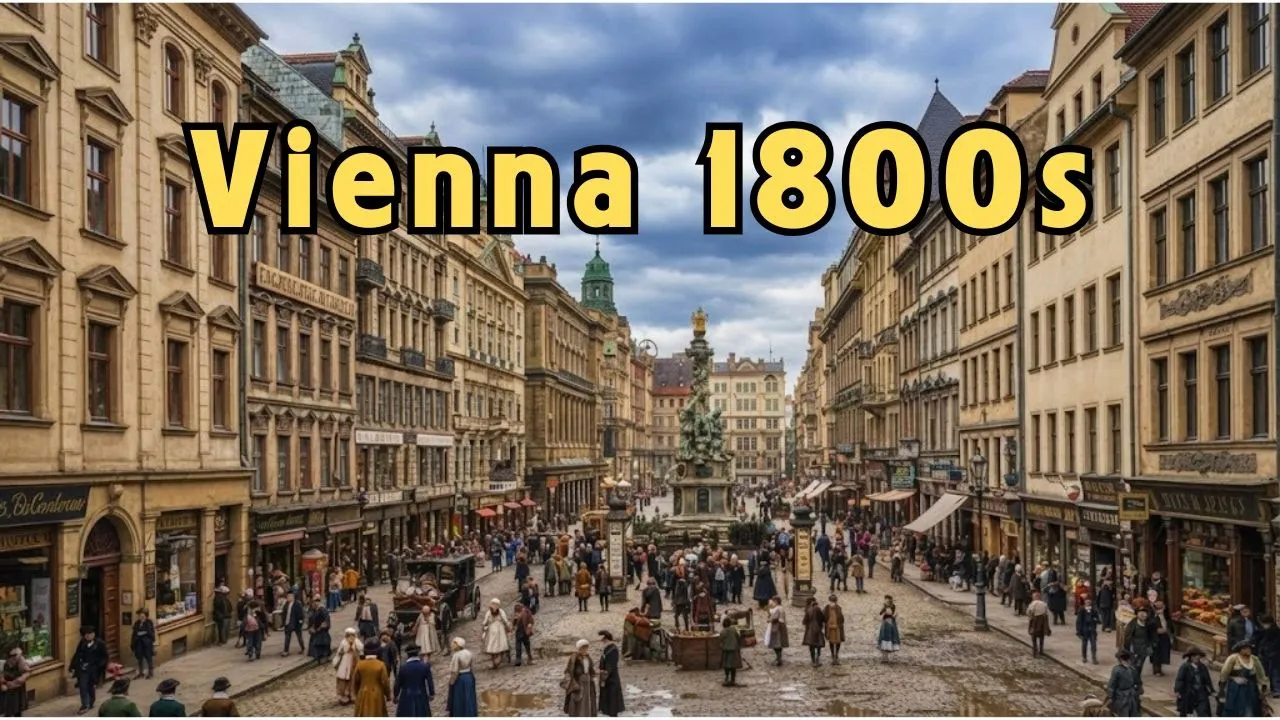
Daily Life Of Vienna 1800s (AI Reconstruction)
607
The Ringstrasse transformed urban life by replacing ceremony with rhythm and ritual with schedules. Shotenring attracted clerks, professionals, and visitors, defining space through access and movement rather than lineage. The boulevard organized visibility, where social position was expressed through presence rather than isolation. Burgring represents where Vienna's imperial past meets its planned future, with the Ringstrasse passing alongside the Hofberg. This proximity was deliberate—modern circulation did not replace imperial power but framed it. The Heinrich's Hoff illustrates how the Ringstrasse reorganized hierarchy spatially, where status became locational and address mattered as much as ancestry. This shift signaled Vienna's acceptance of bourgeois dominance within imperial structure, demonstrating how urban design could mediate political transformation while maintaining continuity.
Click to watch →
Die Wiener Ringstraße 1/3 - Wie Wien zur Weltstadt wurde Doku
374.3K
In the second half of the 19th century, Vienna's population exploded from 700,000 to 2 million, with wealthy bourgeoisie accumulating fortunes while a rightsless proletariat struggled in the inner city. Emperor Franz Josef concluded Vienna needed modernization, leading to the decision to demolish fortifications and build the Ringstraße. Construction began in 1861 with the Hofoper, and the opening ceremony on May 1, 1865, marked the start of one of the largest urban development projects of the 19th century. The Ringstraße was not primarily designed as a promenade but served military purposes: the 70-meter width prevented barricade construction while allowing troop movement. The Habsburg elites had profound fear of revolutionary potential, as remembered from the 1848 Revolution. The Ringstraße is not actually round but a polygon with straight shooting ranges, designed to allow shooting into crowds during a revolution. The era was characterized by enormous optimism following defeats at Solferino and Königgrätz, with a liberal constitution adopted and architecture reflecting bourgeois character rather than noble imitation. The Ringstraße became home to the great bourgeoisie of the Gründerzeit, including Jewish residents who gained property rights in 1860. The aristocracy stayed away, preferring their inner-city palaces. The Ringstraße can be seen as a Gesamtkunstwerk combining politics, economics, and art forms. While factories and industrialization transformed Europe, the Ringstraße revived traditional architectural styles: Gothic, Renaissance, Baroque, and ancient Greek and Roman architecture. This historicism revealed a mental shift where aesthetic trust in one's own time was lost, and people drew inspiration from the grandeur of other times.
Click to watch →

Occasional Lectures Series at San Diego Mesa College featuring Cecily Heisser
232
The Ringstrasse was a circular boulevard built around Vienna that connected the city to its entire history through architectural styles representing different historical periods. Gothic represented medieval times, Renaissance represented Republican democracy, Neoclassical represented the Baroque era, and Baroque was used for the opera house and university. This project, approved the year Rosa Mayreder was born, created cultural infrastructure including the Natural History Museum, City Theater, and City Hall. The Ringstrasse area was where the new Viennese identity was being constructed, and it was where her husband worked as an architect.
Click to watch →

Die gesamte Geschichte von Wien| Geschichte zum Einschlafen
647
After the Congress of Vienna, a phase of relative stability began in Europe. For Vienna, this meant political stagnation but simultaneously a cultural and social flowering known as Biedermeier. The political climate was strongly shaped by Prince Metternich, who as Chancellor from 1813 to 1848 determined Austrian policy with an iron hand. Metternich emphasized order, security, and the suppression of liberal and national movements. Vienna became the seat of a strict censorship authority, with assemblies and political debates heavily restricted. This political repression led to public life retreating into private spheres. In the private sphere, however, the city flourished like never before. Family life, bourgeois values, and domestic culture moved to the center. Citizens and craftsmen decorated their apartments with furniture in the simple, elegant Biedermeier style. Coffee houses and private salons developed into lively places of sociability, and Viennese folk life gained a new quality of intimacy and familiarity. On December 20, 1855, Emperor Franz Josef I ordered the demolition of the old city walls. In their place, a grand boulevard was to be built: the Ringstraße. The construction began in the early 1860s and lasted several decades. Along the boulevard, buildings emerged that still shape the city's image: the majestic Burgtheater, the imposing Parliament, the venerable University, the splendid Rathaus, the glorious State Opera, and numerous museums. Each building was constructed in a historicist style referencing earlier eras. The Ringstraße was more than a grand urban project; it represented a new social order. The aristocracy and wealthy bourgeoisie built their palaces along the street, standing in direct proximity to monumental state buildings. The Eröffnung der Staatsoper in 1869 marked a high point of this development. In 1867, the Ausgleich (Compromise) between Austria and Hungary created the Austro-Hungarian Dual Monarchy. Vienna became the capital of the 'Cisleithanian' Reichshälfte, gaining a status far beyond that of a national center, becoming the heart of a vast multi-ethnic empire of approximately 50 million people. The city became a multi-ethnic metropolis where people of diverse origins lived together: Germans, Hungarians, Czechs, Poles, Italians, Croats, Serbs, Slovenes, and many others. Jewish communities, which grew significantly in the 19th century, played an important role in economic and cultural life. The population grew from about 600,000 in 1860 to almost 2 million by the beginning of the 20th century. Around 1900, Vienna was a pulsating center of modernity. Artists, musicians, architects, writers, and scientists worked here and shaped the intellectual life of Europe. In architecture, Otto Wagner emerged as a pioneer of modern building art, turning away from historicism and creating new forms that combined function and aesthetics. The Vienna Secession, founded in 1897 by Gustav Klimt, Koloman Moser, Josef Maria Olbrich, and others, marked a radical break from academic art conventions. Gustav Klimt's works, including the famous Beethoven Frieze of 1902, defined the new style. In music, Johannes Brahms worked in Vienna until his death in 1897, and Anton Bruckner composed his great symphonies there. Gustav Mahler led the Hofoper and implemented comprehensive reforms. Arnold Schoenberg and his students developed the foundations of twelve-tone music in Vienna, fundamentally changing the music world. In literature, personalities like Arthur Schnitzler and Hugo von Hofmannsthal emerged, setting themselves in their works with the tensions of modern society. Karl Kraus published the magazine Die Fackel, in which he critically commented on the cultural and political life of Vienna. In summer 1914, the assassination of Archduke Franz Ferdinand in Sarajevo on June 28, 1914, was the fatal trigger for World War I. The monarchy declared war on Serbia, and within weeks the conflict expanded into a European war. For Vienna, the war initially brought a wave of patriotic enthusiasm, with people gathering on the streets to see off departing troops. Kaiser Franz Josef, who had ruled since 1848, was seen by many as a symbol of stability and the old order. However, the initial euphoria soon gave way to deep disillusionment. The economic situation deteriorated rapidly, with food shortages and rationing of bread and other basic necessities from 1915. Long queues in front of shops became a sad feature of the cityscape. The social contrasts intensified dramatically, with the aristocracy and wealthy classes relatively secure while workers and small employees suffered from hunger, poverty, and diseases. Women increasingly took over men's roles in factories and businesses. The Nationalities Question, which had long burdened the monarchy, became more acute during the war. In autumn 1918, the monarchy collapsed. On November 11, 1918, Emperor Karl renounced all participation in government. On November 12, 1918, the Republic of German-Austria was proclaimed in Vienna, ending nearly 700 years of Habsburg rule. The Treaty of Saint-Germain, signed on September 10, 1919, sealed the final breakup of the once-glorious monarchy. Austria was reduced to a small German-speaking territory, and an Anschluss with Germany was strictly forbidden. The transition from the proud capital of a vast empire to the capital of a small state with only about 6 million people was particularly painful for Vienna. Between 1919 and 1934, Vienna became a shining pioneer of modern social and housing policy. The Social Democrats won major electoral victories and shaped the city's politics, creating what became known as 'Red Vienna.' The program recognized the most pressing problems: housing shortage, poor hygienic conditions, lack of social security, and educational deficits. From 1920, a comprehensive housing program began, with more than 60,000 municipal housing units built for workers and their families at affordable prices. The most famous buildings, such as the Karl-Marx-Hof, became symbols of this new path. The Gemeindebauten were characterized by good equipment, green courtyards, kindergartens, and community facilities. The city also expanded education, introduced kindergartens, and promoted adult education. In healthcare, public baths, health offices, and counseling centers improved hygiene and significantly reduced disease rates. The political climate of these years was characterized by strong contrasts. While the Social Democrats had a clear majority in Vienna and implemented their reform policy, the Christian Social forces dominated in rural regions. These contrasts were reflected in the National Council and throughout society. Vienna developed into a stronghold of Social Democracy, while the rest of Austria remained predominantly conservative. The cultural of Red Vienna was characterized by a new self-confidence. Worker associations, sports clubs, and educational institutions were promoted. Political education and enlightenment were integral parts of the program. The city was not only to pro
Click to watch →
Vienne Histoire de la celebre Ringstrasse Vienne 1900
873
The Ringstrasse evolved from a military parade ground into Vienna's social and cultural epicenter. The emperor's 1853 mud incident—sinking to his knees during a parade—led to abandoning the planned parade ground, fundamentally altering the city's layout. The Palais Koko, originally surrounded by a public garden with height restrictions of 17 meters, became a luxury hotel after restoration. The Stadtpark, created in 1862, transformed from a health resort to an entertainment venue after Johann Strauss brought the elite to dance. The Vienna Concert Hall, completed in just two years, features unique acoustics with a ceiling membrane suspended from a metal framework. The Ringstrasse became the social epicenter of the Danubian monarchy, where the elite gathered to be seen and to see others, with the emperor himself sometimes descending from his carriage to admire shop displays.
Click to watch →
Ringstrasse Tour
Danube Escape
Ringstrasse Tour
0:00- 1
Tram loop highlights Vienna's grand Ringstrasse boulevard.
- 2
Architectural styles reflect each building's historical purpose.
- 3
Sights include parliament, city hall, museums, and theater.
The Modernist Critique: Adolf Loos and the 'Potemkin City'
While the Ringstrasse is celebrated today for its grand historicist and neo-classical facades, it faced fierce criticism from pioneering modernist architects and theorists, most notably Adolf Loos. In his 1898 essay 'The Potemkin City,' Loos argued that the boulevard's architecture was a triumph of superficiality and cultural dishonesty. He criticized the practice of pasting historical styles—such as Neo-Renaissance or Neo-Baroque plaster moldings—onto modern brick structures, comparing it to the fake canvas villages built to deceive Russian Empress Catherine the Great. To Loos and the emerging Vienna Secessionists, this 'historicism' was a deceitful attempt by the rising bourgeoisie to mimic the grandeur of the old aristocracy instead of developing a genuine, functional style for the modern era. This counterpoint shifts the focus from aesthetic admiration to a critique of architectural authenticity, highlighting how the Ringstrasse symbolized a rejection of modern progress in favor of nostalgic, theatrical illusion.
Fundamentals of Neo-Classical and Historicist architecture, including the revival of Greek, Roman, and Renaissance design principles.
The historical context of the Habsburg Monarchy in the mid-19th century, particularly the reign of Emperor Franz Joseph I.
Basic principles of 19th-century European urban planning, specifically the transition from fortified medieval cities to modern metropolises.
Familiarity with basic architectural terminology such as pediments, colonnades, facades, and the classical orders of columns.
A detailed architectural analysis of specific Ringstrasse landmarks, comparing the Greek Revival Parliament with the Gothic Revival Rathaus (City Hall).
The rise of the Vienna Secession movement (Art Nouveau) as a direct modernist rebellion against the historicist academic styles of the Ringstrasse.
Comparative urban studies analyzing how the Ringstrasse project compares to Haussmann's renovation of Paris and Cerdà's Eixample in Barcelona.
The socio-economic impact of the 'Ringstraßenzeit' era, exploring how the boulevard reflected the cultural triumphs and class dynamics of the rising Viennese bourgeoisie.
109.5K views3Klikes2:13@RickStevesEuropeOfficialOriginal Release: 2021-03-03
Vienna's old center is corralled by its grand circular Ringstrasse.
In the 1860s, Emperor Franz Joseph had the city's ingrown medieval wall torn down.
He replaced it with this impressive boulevard which arcs nearly three miles around the city's core.
One of Europe's great streets, the Ringstrasse is lined with many of Vienna's top sights.
For a handy do-it-yourself budget tour, hop on tram number one and make the loop.
In my guidebooks, I like to describe self-guided tours that take advantage of handy public transport routes like this.
Because this ring road is actually older than all the buildings that line it, what you see is very "neo" -- neo-Renaissance, neo-Gothic, and neo-classical.
The choice of style seems to fit the buildings' function.
The Austrian parliament is neo-classical -- because democracy came from Ancient Greece.
The city hall is neo-Gothic -- recalling the age when local merchants ran the government.
Museums are neo-Renaissance -- for a spirit of learning.
And Vienna's court theater is neo-baroque -- the age when Opera and theater flourished.
From the Ringstrasse, an efficient subway system takes us farther afield.
Like to the beach, the Danube beach.
In the 1970s, Vienna dug a canal parallel to the mighty Danube River creating both a flood barrier and a much-loved island escape.
This skinny, 12 mile long island provides a natural wonderland.
All along this traffic-free, grassy park, you'll find the Viennese at play.
For those who can't afford their own cabin or fancy vacation, it's an ideal place for a good old fashioned barbecue.
And the appeal of the ice cream cart is universal.
[ Bell rings ]
Up Next
5:24
The Kiss by Gustav Klimt: Art History & Symbolism Explained
@googleartsculture
1.1M views•2021-08-10

18:06
The Lewis Collection: Modern Masters of the Human Figure
@sothebys
417 views•2026-06-10
7:48
Ukiyo-e Art: History, Woodblock Printing & Influence
@japanathand
6.3K views•2023-06-08

16:34
Earliest Depictions of Jesus in Art: 10 Ancient Images Explained
@UsefulCharts
5.9M views•2022-06-03
Related Study Plans & Knowledge Roadmaps
Structured learning paths in Art History
art-history
Vienna Secession: Rebellion, Klimt & Schiele
01Fin-de-Siècle Vienna & Academic Historicism
02The Secession Movement & Klimt's Decorative Symbolism
03Gesamtkunstwerk & the Wiener Werkstätte
+ 2 more learning modules
9h5 modules
Explore Roadmap
art-history
Gothic Cathedrals: Engineering, Light & Society
01The Birth of the Gothic: Romanesque to Suger's Vision
02The Structural Triad: Pointed Arches, Ribbed Vaults, and Flying Buttresses
03Theology of Light: Lux Nova and Sacred Geometry
+ 2 more learning modules
14h5 modules
Explore Roadmap
art-history
Pre-Raphaelites: Realism, Symbolism & Critique
01The Victorian Art Establishment and Academic Formula
02The Founding of the PRB and Radical Realism
03Medieval Revivalism and Literary Symbolism
+ 1 more learning modules
8h4 modules
Explore Roadmap
art-history
Street Art: From Subways to Art Market
01Subcultural Origins in Philadelphia and New York (1970s)
02The Subway Era and Style Wars (Late 1970s - 1980s)
03The East Village Scene and Early Gallery Crossover
+ 2 more learning modules
10h5 modules
Explore Roadmap