





![Ancient Aliens Demontat HD - P10: OZN-uri în artă [Ro Subtitle]](https://i.ytimg.com/vi/80-vUz3lHxE/sddefault.jpg)

![[추석! 몰아보기– 미술편] 알고 보면 더 재밌는 미술 속 비밀](https://i.ytimg.com/vi/z5La0QTpvFE/maxresdefault.jpg)


![Les clés du regard [5] - Jan van Eyck](https://i.ytimg.com/vi/Tkq8LkUyV5o/maxresdefault.jpg)
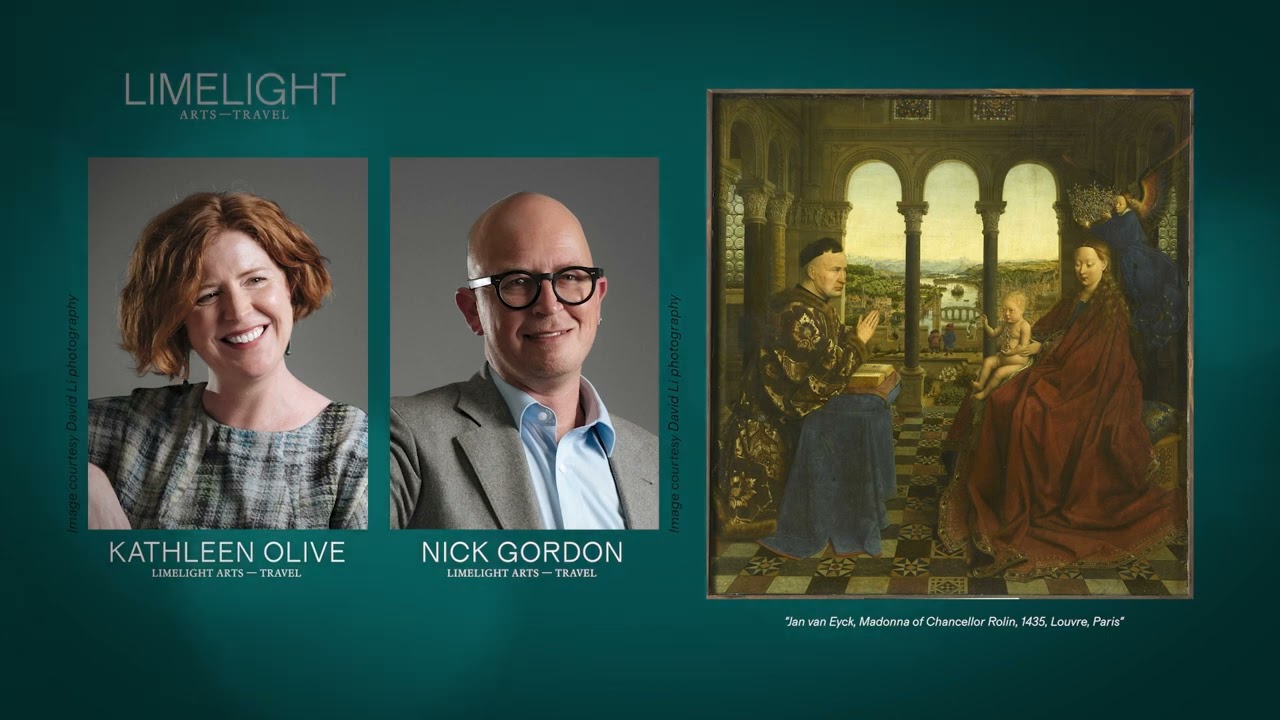



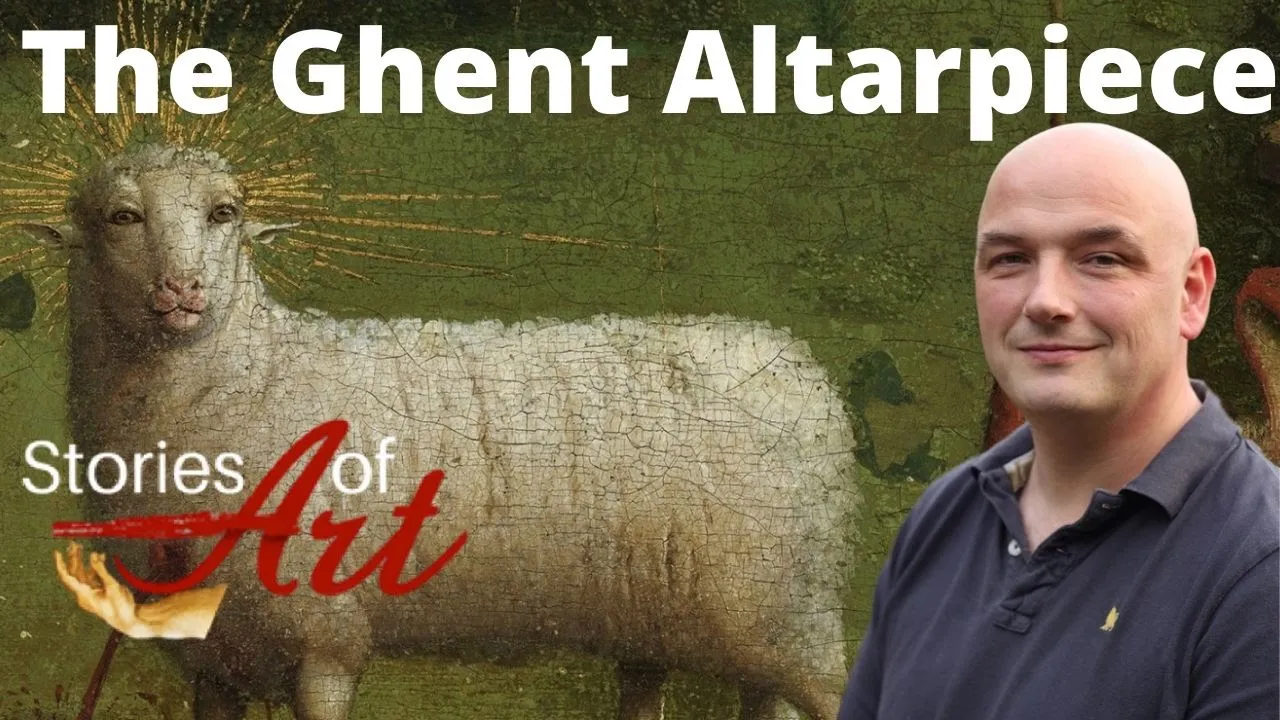
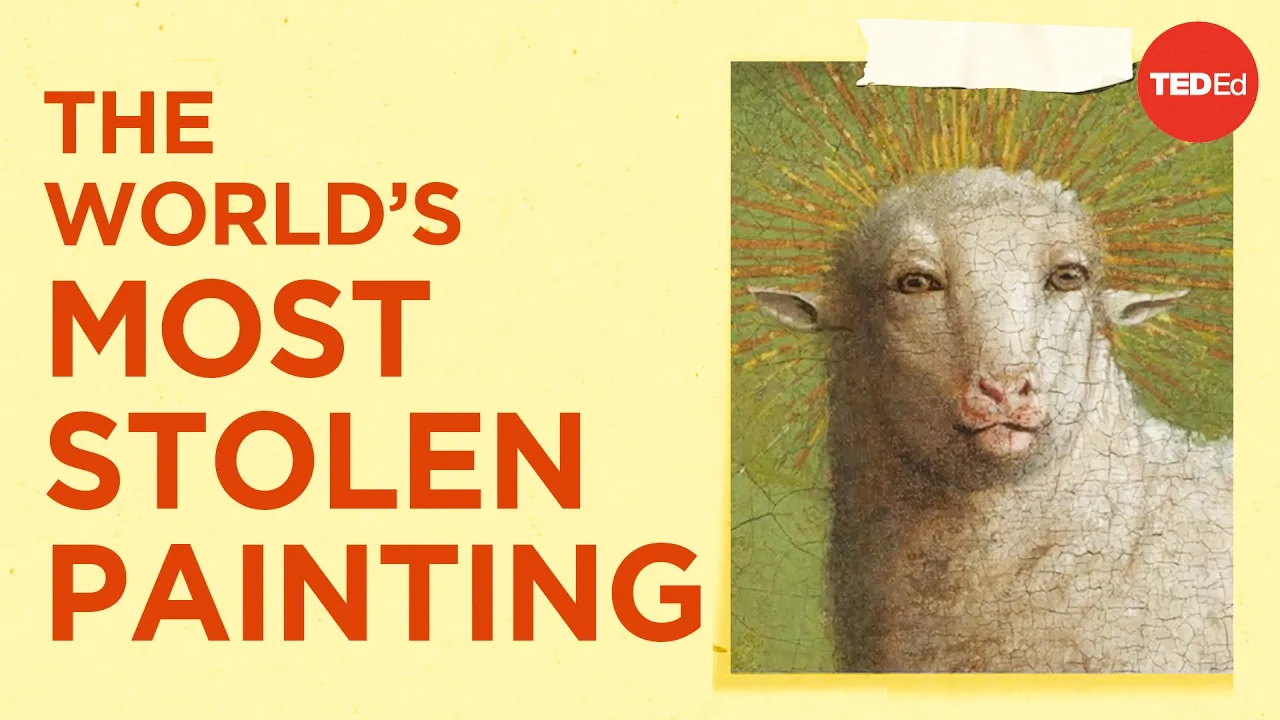
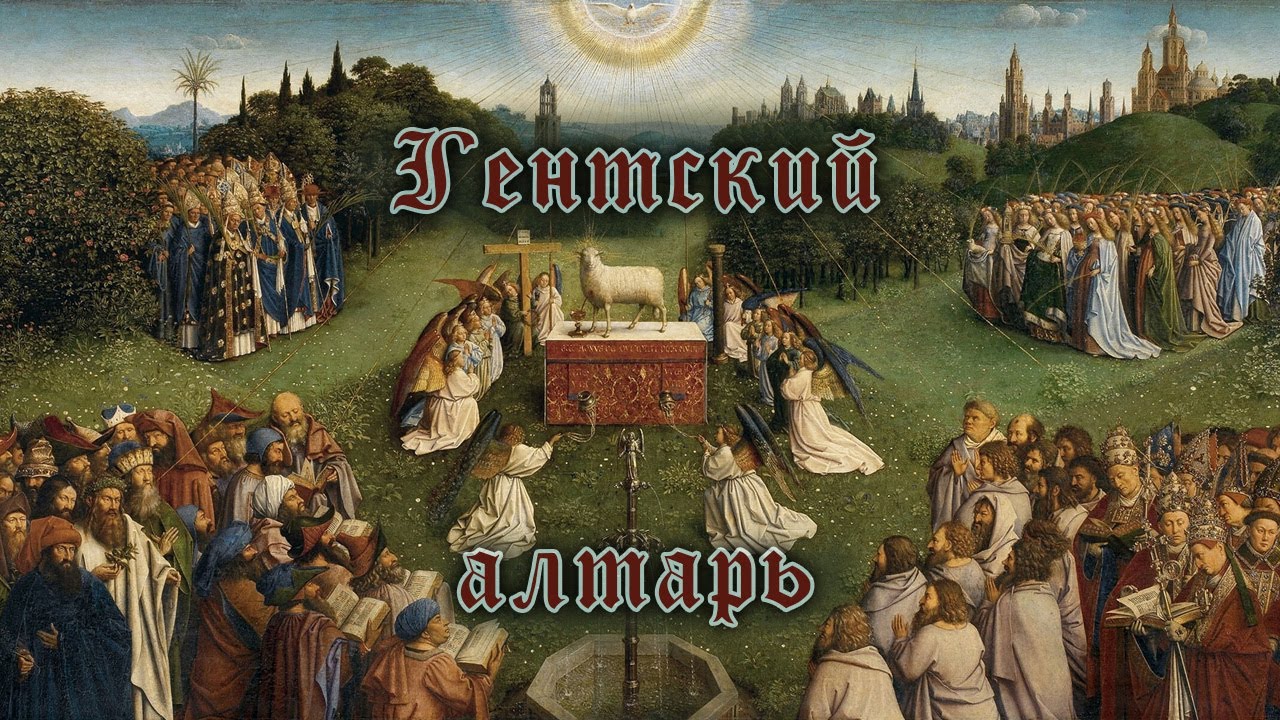



Jan van Eyck's Ghent Altarpiece (1432) represents a revolutionary approach to painting where the artist synchronized the painting's lighting with the actual chapel's windows, creating an immersive experience where the artwork and viewer share the same light source, effectively blurring the boundary between the painting's world and the viewer's reality.
Why Jan van Eyck's Ghent Altarpiece Is a Masterpiece of Detail
Added:Understanding of the historical distinction between the Northern Renaissance and the Italian Renaissance, particularly regarding regional artistic focus.
Familiarity with the religious function and structural design of multi-panel altarpieces (polyptychs) in 15th-century Christian liturgy.
Basic concepts of Christian iconography and how seemingly ordinary objects were used as theological symbols in Late Medieval art.
A fundamental grasp of the transition from tempera paint to oil paint and its significance for capturing light and texture.
Advanced study of Jan van Eyck's specific oil glazing techniques and his empirical, pre-scientific understanding of optics and light reflection.
Exploration of the Ghent Altarpiece's tumultuous history, including its numerous thefts, its survival of World War II, and recent high-tech conservation efforts.
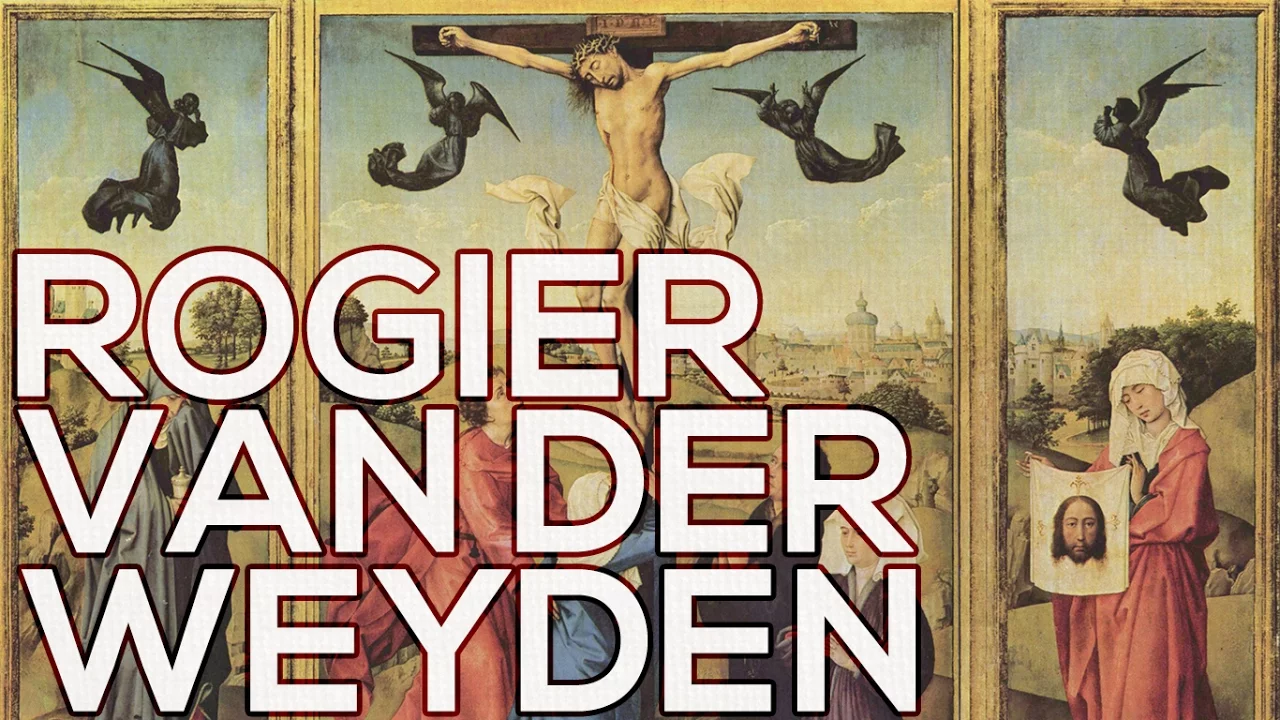
Comparative analysis of the Ghent Altarpiece with other major works of the Early Netherlandish school, such as those by Rogier van der Weyden or Robert Campin.
Investigation into how Northern European optical realism influenced the Italian Renaissance, specifically the adoption of oil mediums by Southern artists.
39.9K views1.8Klikes12:57Original Release: 2026-02-13
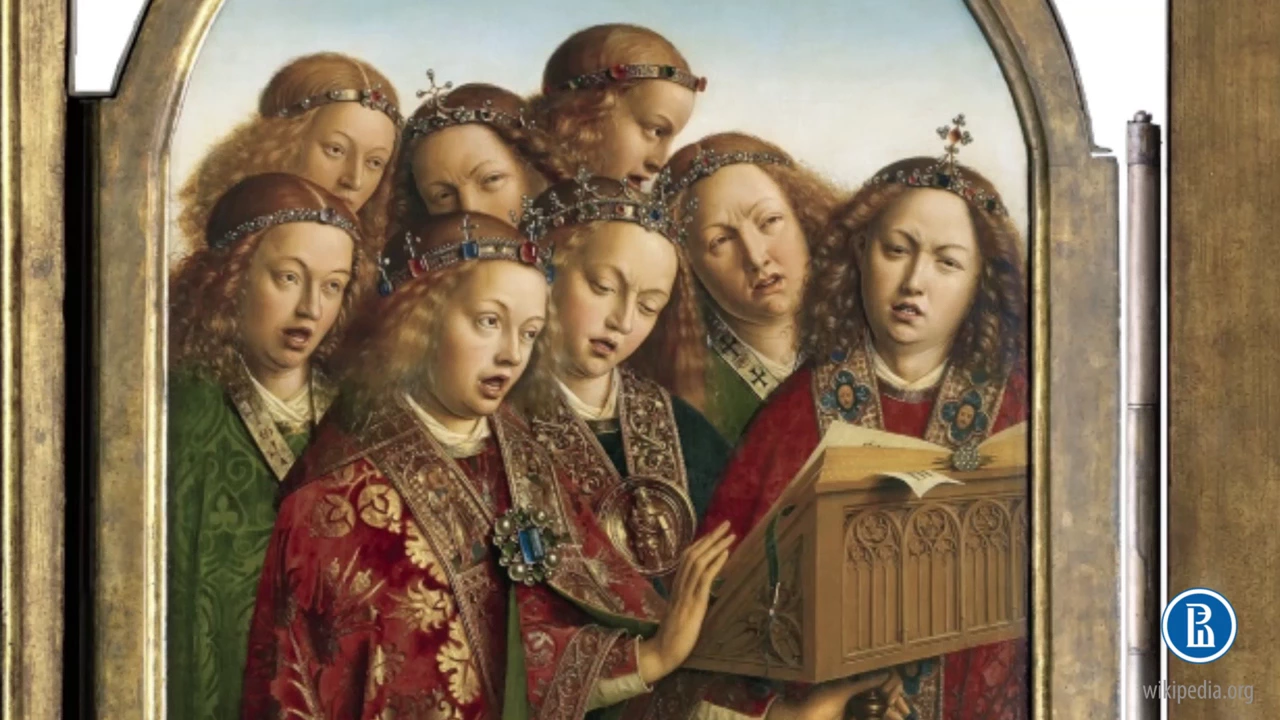
This is the reflection of a window painted inside a jewel on the chest of an angel with a pretty weird face.
More about that later.
Inside one of the 12 panels of the Ghent Altarpiece, a behemoth of a painting with wings that open and close and crammed with hundreds of details so precise you can zoom forever.
So let's do just that.
I'm going to show you tiny hairs weird faces and crazy reflections to reveal that all these details aren't just random flexes from an extremely skilled painter.
No, they're serving one single purpose and it's all about you.
Back to our jewel. Because this tiny window isn't just any window.
It's this one, a window in a side chapel of the Cathedral of Saint Bavo in Ghent, Belgium.
You see, Jan van Eyck painted his jumbo altarpiece back in 1432 for a man called Joris Vijd, a merchant with deep pockets and great taste, who wanted something spectacular for his family chapel.
And Van Eyck was like: You want spectacular? I'll give you spectacular.
So what did he do?
He synced the lighting of the painting to the lighting of the chapel.
So the scenes inside those panels are lit as if by the real sun streaming through those very windows, meaning that when you stand in front of the painting, you and the figures share the same light source.
That's insane.
Van Eyck painted the room into the gym.
It's a tiny piece of evidence that proves the painting knows where it is. And it doesn't stop with the jewel.
Let's close the wings of the altarpiece and have a look at the Annunciation.
It's the moment where Gabriel announces to Mary that she's about to conceive the Messiah.
That's a pretty big deal.
Gabriel has colorful wings that look a bit like watermelons, and he's holding a gorgeous lily, a symbol of purity.
And on the other side, Mary is gazing upward with a dove awkwardly floating above her and staring right at us.
I personally feel doves are the rats of the sky.
However, in this case it symbolizes the Holy Spirit.
Anyway, before we move on to the insane lighting in this scene, you probably want to know about the watermelon wings.
Well, it's hard to tell exactly why they look like this, but we do know that this pair of colorful fly arms isn't the only colorful pair out there. At all.
There's loads of them.
And art historians best guess is that they refer to rainbows, because the Bible says that rainbows are the link between God and the earth, just like angels are.
Hence... watermelon wings.
Back to the Annunciation.
Look at the middle.
It's empty.
Well, empty-ish.
Zoom in and you'll see a cityscape with tiny figures casually going about their day in the streets of 15th century Ghent, while right behind them one of the key moments in Christianity is happening.
But what's also interesting are the wooden frames of these panels.
Yeah. Have a good look at them.
And now look at the floor.
See it?
Van Eyck painted the shadows of the frames onto the floor.
And yes, they to match the chapel's light.
So imagine standing here in 1432, in front of this mind bending artwork.
It would feel like Mary and the angel and the Holy Spirit weren't stuck inside the world of the painting.
No, it would feel like they were just standing there with you, like heaven breaking into the chapel.
And you know what else is breaking into the chapel?
Adam's right foot.
Because if you open the wings and zoom in, you'll see that it's standing on the edge of the frame, toes poking out, and on his legs you can see the individual hairs, just like his eyelashes or his beard and the wild hair.
And just above sits a little bas relief showing Adam and Eve's two sons, Cain, a farmer, and Abel, a shepherd, each making sacrifices from their own fields to God.
And on the other side of the altarpiece there's Eve showing off her piece of forbidden fruit and leaning against the frame, and above her head.
there's the two kids again.
This time Cain is killing Abel with an animal's jawbone.
The very first murder in human history, at least according to the Bible.
Abel died, and the murderer, Cain became the father of us all.
Explains a lot.
The detail in all these panels is insane.
Van Eyck is using shadow and light to play with our senses.
Vision first, but also sound.
Yeah, you heard me right.
We've already met these awkward angels.
Their faces are weird, but their outfits are stunning.
They're all wearing these shiny tiaras and elaborate clerical cloaks.
One cloak even has the dazed face of Jesus embroidered on it.
The detail in this image is gorgeous.
The faces? Not so much.
You might be wondering what on earth they are doing.
Well, they're singing.
It's a choir.
And then you might wonder, is this what a singing face looks like?
Well, yes.
In fact, art historians and musicologists have studied the faces and concluded that the angels are probably singing in polyphony, meaning each of them is tackling a different tone or melodic line, which, taken together, probably sounds awesome but looks kind of weird.
And it gets even better because based on mouth shapes, specialists could even identify which angel sing soprano, alto, and so on.
So even though it looks kinda awkward, Van Eyck did paint a very realistic choir, and the symbolism fits. The panel with the choir flanked the panel with God on his throne.
Or that might be Jesus.
We don't really know for sure.
Anyway, on the other side, there's another band of musical angels, and together these two swiveling panels reflect the fact that, according to medieval theories, the gates of heaven open up to the tones of divine music.
And the thing is, the Ghent Altarpiece was only opened on Sundays and feast days.
So imagine standing here on Easter 1432.
The bells are ringing, the church choir is singing, and then the panels of the altarpiece open.
As the sound fills the chapel, the angels appear, playing music and singing.
So Van Eyck plays with our vision.
He plays with our hearing.
And then he pulls us into the main event.
The central panel, the Adoration of the Mystic Lamb.
It's obviously gorgeous.
Every plant, every pebble, every blade of grass is just perfect.
But the scene also seems a bit overloaded.
There's so much going on.
However, every saint and every symbol and every drop of water in this painting means something.
Let's start with these guys.
Rows and rows of saints and martyrs kneeling before the Holy Lamb.
One of them is carrying a bunch of stones in his robe.
That's Saint Stephen.
He got stoned to death because he loved Christ.
Behind him, a man holding a pair of pincers with a tongue in it.
That's Saint Livinus, his tongue got pulled out because he preached the word of God.
And a bit higher, there's the female saints.
This is Saint Barbara, carrying the tower she got locked up in before she got beheaded by her own father.
Saint Agnes is holding a lamb to symbolize her innocence.
She got stabbed in the throat.
And Saint Dorothy, she's carrying a basket of roses.
A miraculous bouquet sent to her straight from heaven.
She got executed for loving Jesus.
I love this club.
Anyway, there are more groups of important people and men with beards and serious faces and great hats.
But let's leave them and move on to the centerpiece of the altarpiece, because this lamb really deserves our attention.
Our medical attention, it seems, because the poor thing is being sacrificed by a flock of bloodthirsty angels.
They've got its side creating a cute little fountain of blood.
Animal cruelty taken aside, it does look stunning.
No less than 14 angels, again with the colorful wings surround the altar, kneeling, praying and swinging their shiny censers in full devotion of a sheep with a very freaky face.
More about that in a minute.
First the angels.
They're carrying the instruments of Jesus torment.
The cross, the crown of thorns and the nails.
The spear of Longinus that was used to check if Christ was dead already.
The pillar Jesus was tied to during his flagellation.
The whips used on him, and the vinegar-soaked sponge used to quench Christ's thirst.
Rude.
All these symbols point to the same thing.
This peaceful meadow and cute little lamb are all about bloody sacrifice.
The Lamb is Christ offering his life for you.
And if you zoom in on its gazing face, Van Eyck makes that uncomfortably clear.
You see, in the Middle Ages, it was common to represent the Lamb of God with human like eyes staring straight at the viewer.
And that's exactly what Jan van Eyck chose to do.
The dove above symbolizing the Holy Spirit, does exactly the same.
But not everyone liked it because the sheep got over painted in the 16th century and was only uncovered in 2020 during an extensive restoration.
So again, Van Eyck is connecting the image, the divine, with us, the viewer.
Not through light or sound this time, but through a lamb staring us down and through this fountain, the fountain of life.
It has crystal clear water that genuinely looks alive.
And if you follow the water, you'll notice that it flows downward, straight toward us, the viewer, and toward the altar below the painting in the Vijd chapel, the very place where the Eucharistic sacrifice was celebrated again and again during mass.
Once more, van Eyck closes the gap between our world and the world inside the painting, we are looking at salvation and somehow getting involved in it.
It's fantastic.
And the altarpiece still has so much more.
There's God or Jesus on his throne.
Mary and John the Baptist flanking him.
There are pilgrims, hermits, the Knights of Christ, and of course, the lost panel of the just judges, stolen in 1934.
Its location remains a mystery, but every panel, every corner of this monster of a painting is rendered with the same insane detail.
I mean, look at this flagpole.
Perfectly reflected.
Or this horse mouth.
You can count the teeth and feel the drool.
Or this pilgrim's hat decorated with a shell and a jewel four millimeters wide.
And yet, if you zoom in, it still clearly shows Christ's crucifixion.
Jan van Eyck painted this world to perfection as a gift for God and for you.
Because once you start gazing, that's it.
You're gone, hypnotized and pulled into a world where the distance between earth and heaven disappears.
And that's exactly where Jan van Eyck wants you.
Mission accomplished, Jan. Mission accomplished.
Hi there.
Thank you so much for watching.
This is my brand new book, Stupid Faces in Stunning Paintings.
It's a collection of 50 short stories about the weirdest faces in art history.
And yes, our little lamb and the angels are featured as well.
So if you're into art history or you just want to have a good laugh, this might be for you.
Thank you so much. Bye bye.
Up Next
5:25
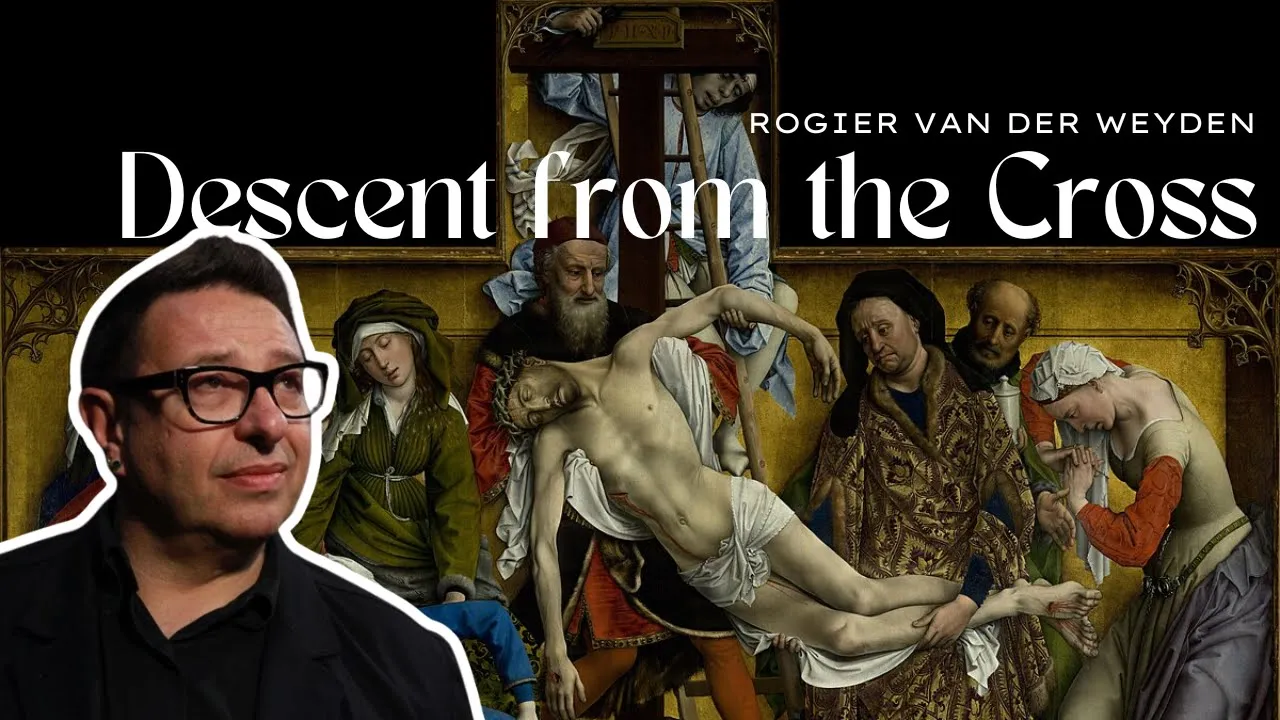
Rogier van der Weyden's Descent from the Cross: Emotional Realism
@zczfilms
41.8K views•2016-03-14

114:18
Christian Iconography: History, Theology, and Meaning | Fr. Panayiotis Papageorgiou
@Trisagionfilms
58.8K views•2020-02-21
7:48
Ukiyo-e Art: History, Woodblock Printing & Influence
@japanathand
6.3K views•2023-06-08

16:34
Earliest Depictions of Jesus in Art: 10 Ancient Images Explained
@UsefulCharts
5.9M views•2022-06-03
Related Study Plans & Knowledge Roadmaps
Structured learning paths in Art History
art-history
Gothic Cathedrals: Engineering, Light & Society
01The Birth of the Gothic: Romanesque to Suger's Vision
02The Structural Triad: Pointed Arches, Ribbed Vaults, and Flying Buttresses
03Theology of Light: Lux Nova and Sacred Geometry
+ 2 more learning modules
14h5 modules
Explore Roadmap
art-history
Pre-Raphaelites: Realism, Symbolism & Critique
01The Victorian Art Establishment and Academic Formula
02The Founding of the PRB and Radical Realism
03Medieval Revivalism and Literary Symbolism
+ 1 more learning modules
8h4 modules
Explore Roadmap
art-history
Street Art: From Subways to Art Market
01Subcultural Origins in Philadelphia and New York (1970s)
02The Subway Era and Style Wars (Late 1970s - 1980s)
03The East Village Scene and Early Gallery Crossover
+ 2 more learning modules
10h5 modules
Explore Roadmap
art-history
Classic Maya Art: Iconography, Glyphs & Ritual
01Foundations of Classic Maya Visual Culture
02Deciphering Maya Hieroglyphs & Text-Image Integration
03Sacred Geography and Cosmological Architecture
+ 2 more learning modules
14h5 modules
Explore Roadmap