























The Federal Trade Commission and Department of Justice have released updated merger guidelines to guide their review of corporate mergers and determine compliance with federal antitrust laws. These guidelines, the first since 1968, provide transparency about how agencies apply the law to market realities in 2023, focusing on protecting competition across all industries including technology, publishing, healthcare, and energy. The guidelines are business model agnostic and do not target specific companies but focus on mergers that could substantially lessen competition or create monopolies. The agencies have successfully challenged multiple mergers, including Penguin Random House-Simon and Schuster and American Airlines-JetBlue, demonstrating their commitment to maintaining competitive markets.
FTC and DOJ Unveil New Merger Guidelines: Key Updates and Impact
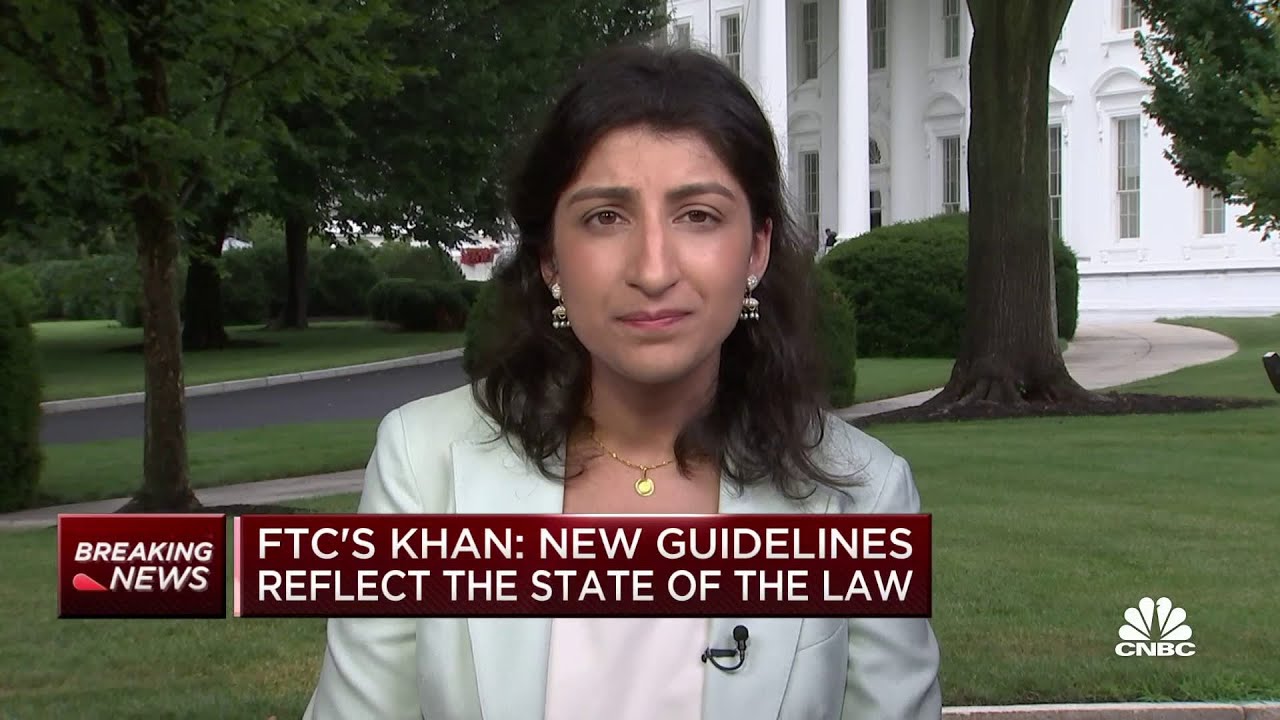
Added:a U.S Court ruling allowing the 69 billion Microsoft Activision merger deal to proceed was a big blow for the FTC last week the agency's Anti-Trust push and its focus on big Tech specifically has been no secret today it paused its in-house trial against that acquisition opening the door to settlement talks it's not just Tech though the Department of Justice and the Federal Trade Commission have both taken on companies and industries from Airlines to publishing and National Security last year's Highway Profile battle over a luminous purchase of Grail ultimately landed in the ftc's favor but only after an appeals process in that case the commission said the deal would quote diminish innovation in the U.S market all right well protecting this Innovation is key for both agencies now the ftcn the Department of Justice have released a draft update on merger guidelines it will be used to guide its review of deals and determine their compliance with Federal antitrust laws FTC chair Lena Khan has faced strong criticism from Republicans for the agencies sweeping antitrust agenda under her leadership speaking on the guideline she says quote open competitive resilient markets have been a Bedrock of America's economic success in dynamism faithful and vigorous enforcement of the antitrust laws is key to maintaining that success end quote now begins the process of public review before they are finalized joining us now with inside Jonathan Cantor Assistant Attorney General of the Department of Justice antitrust division thank you so much for joining us this morning so let's get into these uh regulations and we have a public review period up until September correct uh that is correct so we um because of it first of all thank you so much for having me it's wonderful to be with you all today um the importance of these guidelines is so significant that we have um set forth a longer than usual process for public comments so it'll be 60 days and that will expire at the end of September and we're extremely eager for input from the general public uh all stakeholders and Jonathan Rochelle here I'm looking at the guidelines here the 13 guidelines um in terms of the ones that are the most significant changes that people should be aware of especially given the success rate of the FTC and trying to address some of these mergers what do you think of the key standouts among those yeah so we built these guidelines um first of all let me say very clearly that these guidelines are not the law the law has not changed the law was written by Congress it's been interpreted by courts including uh the Supreme Court and we built the guidelines and we designed them to provide transparency regarding our agency practice in a way that reflects the law so we um these are the first guidelines ever since they started in 1968 to cite to cases and we do so extensively uh to binding and relevant precedence including from the Supreme Court because our merger enforcement our antitrust enforcement is law enforcement and we want to be guided by the law um so I guess it's Julie here Jonathan I guess I'm trying to understand then how you use the guidelines right if the law exists then what do the guidelines do yeah so the guidelines um help provide transparency about how we apply the law so as the agencies we have to get filings uh merger when parties want to merge they submit filings to the antitrust Division and the Federal Trade Commission we examine those filings to determine if the merger will substantially lessen competition or tend to create a monopoly that involves an in-depth process sometimes more often than not we don't have any thing to say about it at all and most mergers go through without any investigation at all but in some instances if mergers threaten competition we have the opportunity to investigate and these guidelines explain how we go about applying our legal framework to the market realities of today and focusing on the realities of how markets actually function here in 2013. so 2023 it's okay you went back in time a decade all right but one of those murders that was a high that was in focus it was the FTC had sued to block this the Microsoft Activision deal it's preceding you know um are these rules to follow up with what Julie was asking is this just lib service not at all so first let me say I it's um these guidelines are forward-looking in nature they don't relate to any specific case uh the case you mentioned is pending over at the Federal Trade Commission and I defer to my colleagues over there regarding the specifics of that matter um I will say that um you know we've seen a great deal of success in our enforcement program we've challenged and succeeded in court uh in um in blocking the penguin Random House Simon and Schuster merger the American Airlines JetBlue merger uh and when we look at the total number of trial victories Plus abandonments either post litigation or prior to litigation we've succeed success in over 15 transactions that is you know a record that I'm extremely proud of and one of the things that we do is we follow the facts and the law we make sure that we're applying the law using state-of-the-art economics and analytical tools and that's what we've done by in creating these guidelines is we've built them around the Legal Foundation that courts are going to apply uh when we bring cases before them and Jonathan obviously some of these multinational companies here and sometimes you'll see the EU rule a certain way in Turkish take a certain lead how much are these guidelines influenced by some of the actions that you've seen perhaps taken by the EU on some of these merger decisions yeah so again I think the law has not changed right the law was written by Congress it was very clear that if a merger you know risk it's a risk assessment may substantially lessen competition or tend to create a monopoly then we have the ability to intervene um and that's what we're doing and so the guidelines are really designed to help explain how that law might apply or how we might go about investigating uh as part of our agency practice to apply that law now there's an important Nuance here which is that I'll get it right this time in 2023 our markets look very different than they did 50 years ago when phones had rotors or even 15 years ago when most people not my dad would stop at a gas station to ask for directions uh and so nobody's had Jonathan I know I know I know I'm a dad now so I'm familiar with that Affliction but I think Market realities have changed and it's important that we're using state of the economic state of the art economic analysis to to apply the law to how markets actually function and so when updating these guidelines we've not only made sure to in our view faithfully and accurately reflect the state of the law but we've also made sure to faithfully and accurately reflect the state of Market realities and economics and economic analysis as it exists here today in 2023. so there's some criticism that this is political when you are unfairly targeting certain sectors like big Tech what do you say to that so I I encourage anybody with those criticisms to read our guidelines because what you'll see is their business model agnostic they don't focus on these specific companies or any specific businesses it simply says we want to protect and preserve competition it focuses on competition and in order to protect competition under the law we have to make sure that we recognize Market realities Market realities today include data it includes platform Technologies markets are no longer two-dimensional and vertical or just horizontal but they're multi-dimensional and this is not just true for Consumer Tech or Enterprise Tech it's true across our economy Healthcare energy Industrials fintech it's everywhere and so it's important that those economic realities are recognized and that when we apply the law we're doing so again with understanding of how our markets function today um Jonathan speaking specifically about Microsoft Activision um you know obviously that was a defeat for the department and the FTC well just very clear that was that was an FTC case um it's ongoing and it's Trade Commission I can't comment on that but the department did not have a role in that matter okay because I was going to ask what how do you think the approach could have been different or what exactly is at the heart there that the court disagreed on that perhaps could have been overcome yeah again I shouldn't it was it was an FTC case and it is pending Jonathan let me ask you this um so with the rules um what Industries or what kind of mergers just this place tighter scrutiny on so this is really again designed to be focused on um uh protecting competition across all Industries so we've started our analysis with how does competition in this market present itself and we're focusing on the companies that have Market power we're focusing on mergers that create clogs on competition that create uh Monopoly power that extend Monopoly power and that can occurred in any industry per if you look at our cases we focused on book publishing we focused on Industrials we're focusing on health care we're focusing on Aviation and we're focusing on Tech we're focusing on all of it and so again these guidelines are really designed to apply across our entire economy and work to the benefit of the competitive process which in our view really is a benefit to all Americans and American prosperity and Jonathan just quickly who is pushing for this is this perhaps smaller companies I mean are the public really pushing for this yes um we had a public comment process um in initiating these guidelines initially to get um uh input on creating them I think the last time they were drafted in 2010 the comment period generated about 30 or 40 comments this time I generated over 5 000 and those comments are not just coming from industry trade associations or Beltway insiders they're coming from nurses Emergency Room Physicians pharmacists Independent Grocers workers citizens who care about these issues we are hearing continually from businesses entrepreneurs that they want the opportunity to start business and they want to do it in the region of their choice not just on one in one part of the country Or Another We're hearing over and over not just from small companies but for big companies that they want the opportunity to compete based on the merits of their Innovations their pricing and their customer service and so so unless you're a monopoly you actually really do want the opportunity to compete and you'd be surprised how often we hear from businesses of all shapes and sizes asking us to enforce the laws so that we can provide opportunities for companies to compete and we'll certainly be keeping an eye on those guidelines and and see how many companies actually adhere to them a big thank you there for taking the time to join us on Yahoo finance this morning Jonathan Cantor Assistant Attorney General of the Department of Justice's Anti-Trust division thanks so much thanks for having me it's great to be here
Up Next

Microsoft Wins FTC Case: Activision Deal Analysis
@DestinL
63.1K views•2023-07-12
How Open Source Software Generates Revenue and Profits
@techquickie
493.5K views•2019-08-20

Decoy Effect: How Pricing Psychology Influences Consumer Spending
@bobinvestsUS
90K views•2026-01-05

The Planned Obsolescence of Light Bulbs and Tech
@veritasium
25.3M views•2021-03-26
Related Study Plans & Knowledge Roadmaps
Structured learning paths in Business