Reverse osmosis is a water purification process that reverses the natural osmosis phenomenon by applying pressure to force water molecules through a semi-permeable membrane, thereby removing dissolved salts and impurities from seawater to produce fresh water.
Reverse Osmosis Process Explained: How Desalination Works
Added:Deep Dive
The scientific concept of natural osmosis, specifically how solvent molecules naturally move across a concentration gradient.

New Added Syllabus | Membrane Separation - 03 | Mass Transfer Operation Crash Course | Manish Rajput
8K
Osmosis is a natural, spontaneous process where solvent molecules move from an area of low concentration to an area of high concentration through a semipermeable membrane. This occurs without any external force being applied. The driving force behind osmosis is the concentration gradient - solvent moves to equalize concentrations on both sides of the membrane. In this process, only solvent molecules pass through the membrane, while larger solute particles remain behind.
Click to watch →

Reverse Osmosis, V.V. Important, Class -12, NCERT- Chemistry, unit - 1st, solution
197
In natural osmosis, solvent molecules (water) pass through the semipermeable membrane from the dilute solution side toward the concentrated solution side. This movement occurs naturally without external pressure application.
Click to watch →

The Sci Guys: Science at Home - SE1 - EP14: The Naked Egg and Osmosis
1.2M
Osmosis occurs due to differences in concentration of solutes on either side of a semi-permeable membrane. Water molecules naturally move from areas of low solute concentration (high water concentration) to areas of high solute concentration (low water concentration) to achieve equilibrium. This movement continues until the concentrations are balanced on both sides of the membrane.
Click to watch →

Reverse osmosis|Solution and its colligative properties|Maheshkumar Jadhav|
213
Osmosis is the natural movement of solvent molecules from higher to lower concentration through a semipermeable membrane. In an experiment with pure water on one side and solution on the other, solvent molecules naturally move from pure water to solution side. This creates rising water level on the solution side, generating osmotic pressure that acts as a blocking force opposing further solvent movement. The semipermeable membrane allows only solvent molecules to pass while blocking solute particles.
Click to watch →

Osmotic Pressure Method I Determination of Molecular Weight I Polymer Chemistry I MSc Chemistry
28.9K
Osmosis is the movement of solvent molecules from a region of lower solute concentration to a region of higher solute concentration through a semipermeable membrane. When pure solvent and a solution are separated by a semipermeable membrane, a concentration difference is generated between them. This concentration gradient causes the solvent to naturally flow from the pure solvent side into the solution side through the membrane.
Click to watch →
Deep Dive
The definition and characteristics of a semipermeable membrane, including how pore size dictates particle passage.

Cell - The unit of Life | NEET | Plasma Membrane - Properties | Neela Bakore Tutorials
193.9K
A semi-permeable membrane allows particles to enter based solely on pore size—smaller particles that can cross the pore pass through, while larger ones cannot. In contrast, a selectively permeable membrane additionally controls entry based on whether the particle is needed by the cell, even if it could physically cross the pore. For example, harmful substances may be too small to be excluded by pore size but are still prevented from entering by selective permeability.
Click to watch →

Osmosis | Membranes and transport | Biology | Khan Academy
562.1K
A semi-permeable membrane is a barrier that allows certain substances to pass through while blocking others. In this context, the membrane permits water molecules to diffuse across but prevents larger solute particles from passing through. The selectivity is based on particle size, where only smaller molecules like water can fit through the membrane's pores or gaps, while larger particles are physically blocked.
Click to watch →

Part 4: Solutions | Complete One Shot | Dr. Mandeep Dalal | 12th, NEET, IIT-JEE Mains & Advanced
108
A semipermeable membrane allows only solvent molecules to pass through while blocking solute molecules. In osmosis, solvent moves from lower solute concentration to higher solute concentration. This selective permeability is essential for osmosis to occur. The membrane's pore size determines which molecules can pass through.
Click to watch →

L-6 solution and colligative properties, osmosis and osmotic pressure, knowledge adda, bsc 3rd year
61.2K
A semipermeable membrane is a barrier that allows only small solvent molecules to pass through while blocking larger solute molecules. The video explains that these membranes have very small pores that are large enough for solvent molecules but too small for solute molecules to pass through.
Click to watch →

TRANSPORTATION IN PLANTS MADE EASY|CLASS 8 | LECTURE 1| PART 1
103
A semi-permeable membrane allows solvent particles (like water) to pass through but selectively allows some solute particles. The size of the holes in the membrane determines which particles can pass through. This selective permeability is a key characteristic of semi-permeable membranes and is essential for osmosis to occur.
Click to watch →
Deep Dive
Basic chemical principles of solutions, including the relationship between solutes (salts), solvents (water), and concentration levels.

HW 5
184
Solutions consist of solutes (substances being dissolved) and solvents (substances doing the dissolving). Concentration refers to the amount of solute dissolved in a solvent. The solvent is always present in greater quantity than the solute. Adding solute to a solvent decreases vapor pressure because solute particles interfere with solvent molecules' ability to evaporate. This fundamental concept explains why saltwater has different properties than pure water.
Click to watch →

AGUA Y OSMOLARIDAD - CLASE DE BIOLOGÍA - FCM - UNLP
14.3K
A solution is a homogeneous mixture of solvent and solutes. Water is the universal solvent due to its ability to dissolve hydrophilic substances like salts, acids, bases, alcohols, and carbohydrates. Concentration quantifies solute amount per solution volume, with molarity (moles per liter) being the most common unit. For example, 0.5 moles of NaCl in 250 mL yields a 2 molar solution (0.5 moles × 4 = 2 moles per liter).
Click to watch →

Soluciones Químicas_parte1
224.9K
A solution consists of a solute (present in smaller amount) and a solvent (present in larger amount), with concentration defined as the proportion between the amount of solute and the amount of solution; four concentration formulas exist using grams of solute with either solvent or solution in the denominator, and density (mass/volume) and mass relationships (mass of solution = mass of solute + mass of solvent) are essential for solving concentration problems, with water serving as the universal solvent having a density of 1 g/cm³.
Click to watch →

แบบฝึกหัด 5.1 เคมีเล่ม 2 สสวท. part1 ฉบับกระชับ เข้าใจง่าย
674
A solution consists of two components: the solvent (ตัวทำละลาย) and the solute (ตัวถูกละลาย), with the relationship: solution = solvent + solute. In chemistry problems, water is used as the solvent in over 90% of cases. Concentration indicates the amount of solute present in a solution. The basic unit for expressing concentration is percentage (ร้อยละ or %), which can be expressed as weight/weight (mass of solute/mass of solution × 100), volume/volume (volume of solute/volume of solution × 100), or weight/volume (mass of solute/volume of solution × 100).
Click to watch →

integrated science sec 1 | water solutions and properties | الدرس الرابع ساينس اولي ثانوي ترم اول
28.5K
A solvent is the substance that dissolves another substance, while a solute is the substance being dissolved. Water is the most important solvent because it can dissolve many different substances. Concentration refers to the amount of solute dissolved in a given amount of solvent. When more solute is dissolved in the same amount of solvent, the concentration increases. For example, a cup of tea with four teaspoons of sugar has a higher concentration than one with only one teaspoon. The resulting mixture is called a solution.
Click to watch →
Deep Dive
The physical concept of pressure, specifically how applying mechanical pressure can oppose and overcome natural osmotic pressure.
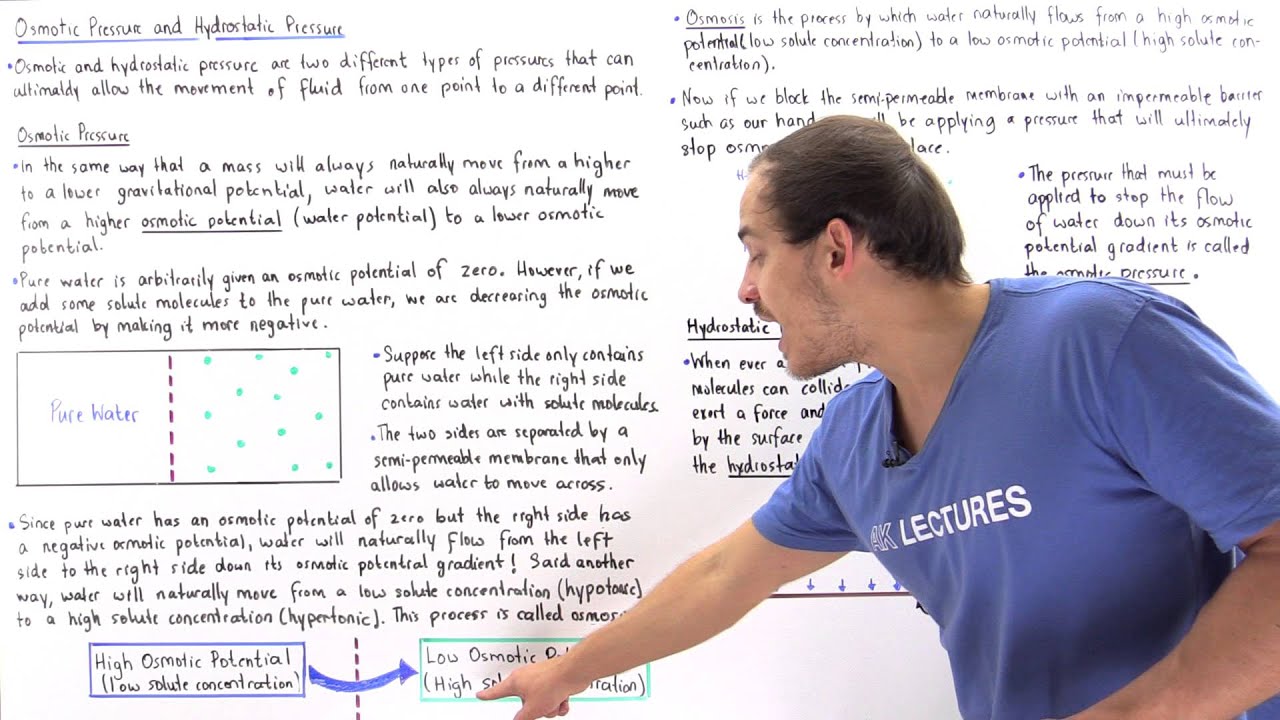
Osmosis, Osmotic Pressure and Hydrostatic Pressure
169.1K
Osmotic pressure is the pressure that must be applied to prevent water from moving down its osmotic potential gradient through a semi-permeable membrane, while hydrostatic pressure is the fluid pressure resulting from liquid molecules colliding with the walls of a conduit; water naturally moves from high osmotic potential (pure water, zero value) to low osmotic potential (solutions with solutes, more negative values) through osmosis.
Click to watch →

Solutions 05 | Depression of Freezing Point & Osmotic Pressure | Class 12 NCERT
148.3K
Osmotic pressure (π) is the minimum external pressure that must be applied to the solution side of a semipermeable membrane to prevent the flow of solvent molecules from pure solvent into the solution. When osmotic pressure is applied to the solution side, it counteracts the natural tendency of solvent to flow into the solution. The osmotic pressure is directly proportional to the molality of the solution and is given by the formula π = CRT, where C is the molar concentration, R is the gas constant, and T is the temperature.
Click to watch →
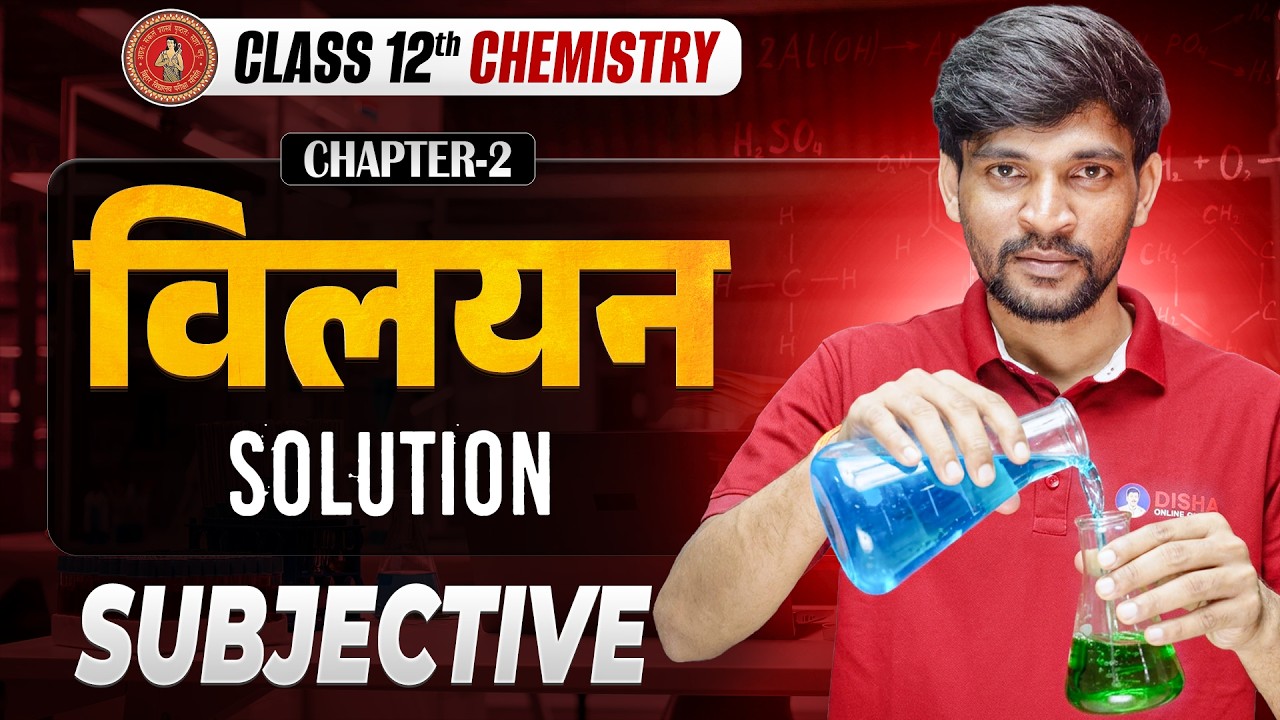
12th Chemistry Chapter 2 Bihar Board | विलयन Class 12 Chemistry Subjective | Solution 12th Chemistry
23.4K
Osmotic pressure is the pressure required to stop the flow of solvent molecules through a semipermeable membrane from a pure solvent into a solution. When pure solvent and solution are separated by a semipermeable membrane, solvent molecules naturally move from the pure solvent side to the solution side (osmosis). Applying external pressure to the solution equal to the osmotic pressure stops this flow.
Click to watch →

Transport in Plants | Part 3 | NCERT Line to Line | Thannambikkai Batch | NCERT class 11 Biology
102.8K
In an egg membrane experiment, a sucrose solution in a funnel is separated from pure water by a selectively permeable membrane. Water moves from pure water into the sucrose solution, causing the solution level to rise until equilibrium is reached. External pressure can be applied to stop water diffusion. The pressure required to prevent water from diffusing in is called osmotic pressure, which is a function of solute concentration - higher solute concentration requires greater pressure. Reverse osmosis applies external pressure to force water through a semipermeable membrane in the opposite direction of natural osmosis. Numerically, osmotic pressure is equivalent to osmotic potential but the sign is opposite - osmotic pressure is positive while osmotic potential is negative.
Click to watch →

الفصل الاول | الخلية | المحاضرة الـ 14 | 2026
75K
As water moves into the funnel during osmosis, it creates hydrostatic pressure (the pressure exerted by the weight of the water column). This pressure pushes against the membrane and counteracts the osmotic pressure. Water movement continues until the osmotic pressure equals the hydrostatic pressure, at which point equilibrium is reached and net water movement stops. This demonstrates that osmosis is a dynamic process that continues until opposing forces balance each other. The hydrostatic pressure is the pressure exerted by the water column, while osmotic pressure is the force driving water movement across the membrane.
Click to watch →
Prerequisite Knowledge
- Concept 01The scientific concept of natural osmosis, specifically how solvent molecules naturally move across a concentration gradient.
- Concept 02The definition and characteristics of a semipermeable membrane, including how pore size dictates particle passage.
- Concept 03Basic chemical principles of solutions, including the relationship between solutes (salts), solvents (water), and concentration levels.
- Concept 04The physical concept of pressure, specifically how applying mechanical pressure can oppose and overcome natural osmotic pressure.
Subsequent Learning
- Step 01The engineering of membrane pre-treatment systems to prevent membrane fouling, scaling, and degradation from organic matter.
- Step 02Environmental management strategies for brine disposal, exploring how desalination plants minimize the ecological impact of hyper-saline discharge on marine life.
- Step 03Energy efficiency in desalination, focusing on the mechanics of Energy Recovery Devices (ERDs) used to capture and reuse hydraulic energy.
- Step 04Alternative desalination technologies, such as electrodialysis reversal (EDR) and thermal desalination methods like Multi-Stage Flash (MSF) distillation.
Core Tech
Osmosis Defined
Natural Flow
Direction
Reverse Action
Pressurized Filtration
Core Tech
0:05Playing Section
- 1
Desalination plant relies on reverse osmosis.
- 2
Process inverts natural osmotic liquid flow.
The Ecological and Energy Critiques of Reverse Osmosis Desalination
While reverse osmosis (RO) is a highly effective technological solution for producing freshwater, critics and environmental scientists highlight significant ecological and economic drawbacks. RO is extremely energy-intensive, often relying on fossil-fuel-powered grids that contribute to greenhouse gas emissions. Additionally, the process produces 'toxic brine'—a highly concentrated salt solution mixed with treatment chemicals. When discharged back into the ocean, this brine sinks to the seafloor, depleting oxygen levels and threatening marine ecosystems. Critics argue that relying on desalination can create a false sense of water security, potentially diverting public funding and political will away from more sustainable, cost-effective alternatives such as wastewater recycling, rainwater harvesting, and aggressive water conservation practices.
Deep Dive
The engineering of membrane pre-treatment systems to prevent membrane fouling, scaling, and degradation from organic matter.

How to design the pretreatment of a reverse osmosis
5K
Pre-treatment protects RO membranes from fouling and scaling by removing damaging constituents including calcium, iron, manganese, silica, CO₂, and hardness. The objective is to extend membrane service life, improve operation efficiency, reduce energy consumption, and minimize cleaning/replacement needs. Without proper pre-treatment, systems face performance reduction, higher pressure losses, reduced permeate flow, and potential failure. Treatment strategies vary by water source: drinking water typically requires softening; well water needs filtration, iron/manganese removal, and softening; surface water always requires filtration with possible ultrafiltration pretreatment.
Click to watch →

Lecture 33 Advanced Wastewater Treatment
26.6K
Membrane fouling occurs when constituents from the feed water deposit and accumulate on the membrane surface, reducing flux and increasing required operating pressure. Causes include: concentration polarization near the membrane surface creating high osmotic pressure, biological colonization by microorganisms, precipitation of scale-forming minerals (iron, manganese), and chemical reactions with membrane materials. Prevention strategies include: pre-treatment to remove suspended and colloidal particles using microfiltration; removal of microorganisms; oxygen removal to prevent metal oxidation and precipitation; pH adjustment to 4.5-7 to prevent scaling; and removal of oxidizing agents like chlorine and ozone that degrade membrane materials.
Click to watch →

ENE 483: Membrane Filtration Theory and Practice
1.1K
Membrane fouling manifests as particle deposition forming a filter cake that impedes water flow. Scaling differs from fouling, resulting from exceeding solubility limits as concentrate becomes increasingly concentrated, causing precipitation of insoluble compounds like iron hydroxide. Biofouling involves microorganism colonization releasing extracellular polymeric substances that severely reduce permeability. Effective pre-treatment strategies include anti-scalants and sequestration agents to maintain solubility, pH adjustment with acids or caustic, disinfection to prevent biofilm growth, and pre-filtration for turbid waters. High-turbidity sources require pre-filtration to prevent rapid membrane clogging, demonstrating the critical importance of pre-treatment in membrane system longevity and efficiency.
Click to watch →

تصميم محطات التحليه ببرنامج Q+ Projection Software LG مع شرح خطوات التصميم واسس اختيار الأغشة
974
Flux optimization based on feed water quality involves analyzing characteristics (salinity, temperature, pH, fouling potential, scaling potential), selecting appropriate flux based on membrane characteristics and operating conditions, balancing flux against energy consumption, balancing flux against fouling potential, balancing flux against scaling potential, and balancing flux against membrane life. Pre-treatment requirements for membrane protection depend on feed water characteristics: high iron requires iron removal (oxidation and filtration), high manganese requires manganese removal (oxidation and filtration), high turbidity requires filtration, high silica requires silica removal (chemical treatment or specialized membranes), high sulfate requires sulfate removal (chemical treatment or specialized membranes), high alkalinity requires alkalinity reduction (acid addition or carbonation), and high organic matter requires biological or chemical treatment. Proper pre-treatment protects membranes from fouling and scaling, extending membrane life and maintaining system efficiency.
Click to watch →

What is fouling and scaling on reverse osmosis membrane filtration and water treatment?
4.4K
Fouling and scaling are major challenges in reverse osmosis membrane filtration, where fouling refers to the accumulation, deposition, or adsorption of foulants (organic matter, microorganisms, or colloidal particles) onto membrane surfaces or within pores, while scaling involves inorganic crystallization coatings formed when dissolved salt solubility limits are exceeded; both phenomena reduce permeate flow, increase pressure drop, and decrease membrane efficiency, and can be minimized through proper membrane selection based on water analysis, appropriate operating conditions, pre-treatment systems, and regular CIP (clean-in-place) cleaning protocols.
Click to watch →
Deep Dive
Environmental management strategies for brine disposal, exploring how desalination plants minimize the ecological impact of hyper-saline discharge on marine life.
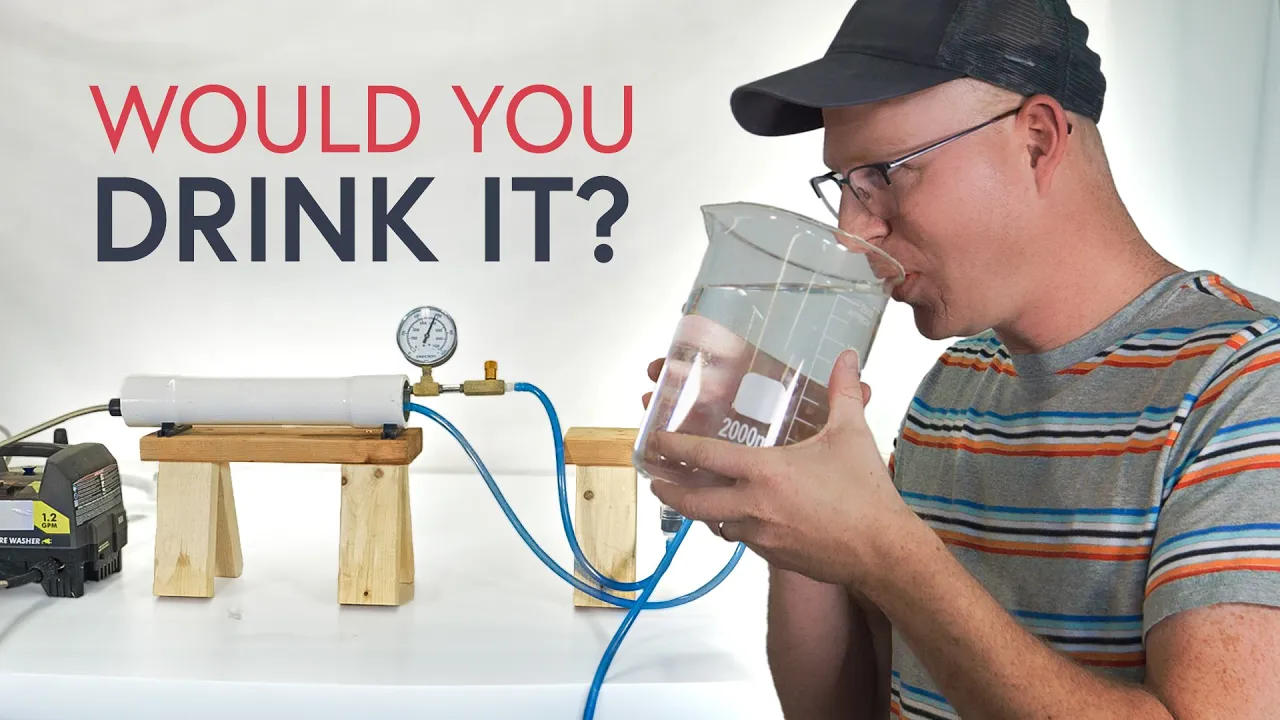
Why Is Desalination So Difficult?
4.4M
Desalination produces concentrated brine as a waste product, which cannot be discharged directly into the ocean without environmental consequences. Modern desalination plants typically recover about half of their intake flow, meaning the brine stream becomes approximately twice the concentration of normal seawater. Direct discharge would harm marine life, particularly organisms near the sea floor, since the dense, super-saline solution tends to sink. To mitigate environmental impacts, most plants use diffusers to spread out the brine so it dilutes faster, or blend it with other water streams like power plant cooling lines or wastewater effluent before release. When neither option is feasible, some plants inject brine into the ground, though this expensive approach adds significantly to operational costs.
Click to watch →
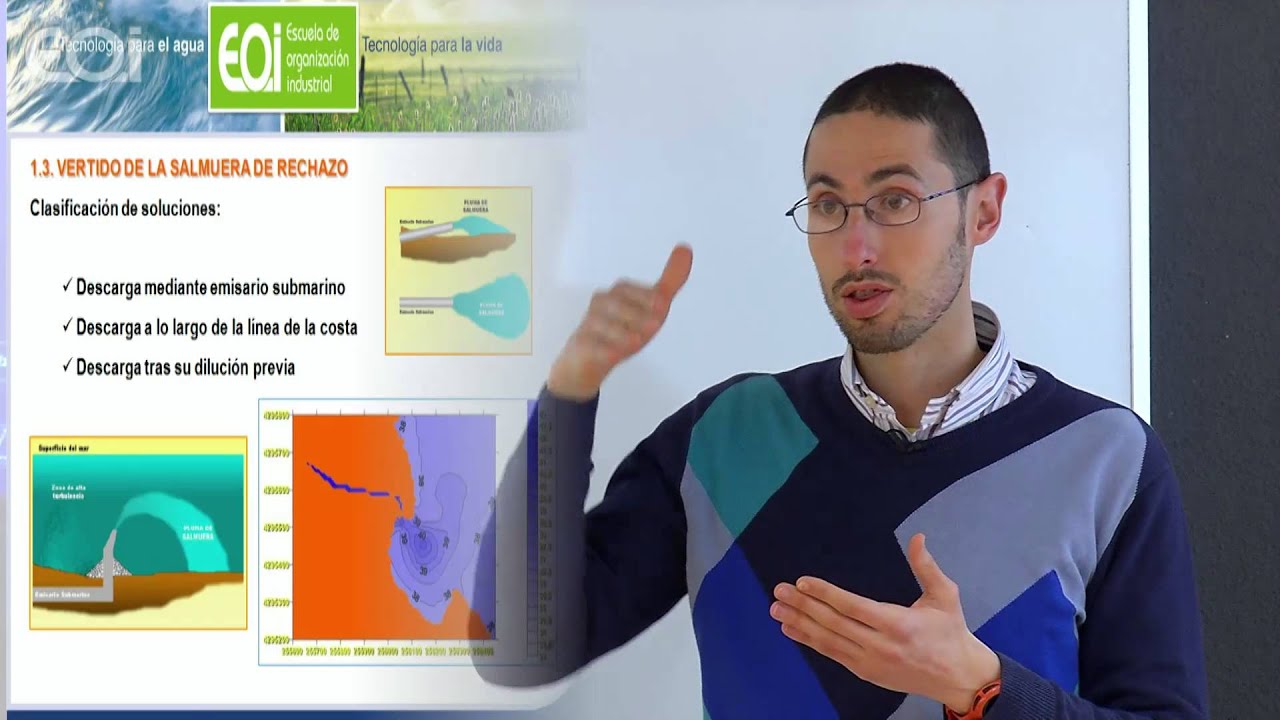
Clase abierta: Desalación: Procesos Unitarios (1)
16.2K
This section covers brine discharge environmental management and physical treatment systems in desalation plants. Brine discharge creates environmental impacts through increased salinity and density, affecting marine organisms like Posidonia oceanica. Environmental monitoring uses Posidonia as a bioindicator with mortality rates indicating impact levels. Brine discharge mitigation strategies include diffuser systems with high-velocity jets, parabolic discharge pipes, and dilution with seawater before discharge. Achieving zero impact requires dilution but increases energy costs. Physical treatment systems include conventional multi-material filters (bicapa, tricapa), ultrafiltration, and pre-treatment requirements for membrane systems. Ultrafiltration has become increasingly popular as a pre-treatment for membrane systems due to its compact design and better water quality, though it requires careful system design. Coagulation and flocculation are used with caution as excessive chemical use can damage membranes.
Click to watch →

FIRST Prize Winner!! Turtle vs Technology (Science Project)
532
Desalination plants releasing concentrated brine directly into marine ecosystems can cause mass mortality of marine species like turtles by disrupting the food chain; introducing halophytic plants (salt-tolerant plants) between the desalination plant and the ecosystem can absorb salt and prevent salinity spikes, protecting marine life.
Click to watch →

The Canary Islands paradox - Desalination plants: Curse or blessing? | DW Documentary
10.4K
Desalination produces hyper-concentrated brine (60 g/L salt versus normal 36-37 g/L) that returns directly to coastal waters. Researcher Fernando Espino documents dead zones extending 50 meters from discharge points, where no marine life survives. Beyond salinity, cleaning chemicals like sodium metabisulfite kill aerobic organisms, causing rapid fish mortality. Studies from the Red Sea, Florida, and Australia confirm long-term ecosystem damage. With 51 billion cubic meters of brine discharged globally in 2023, this invisible pollution threatens marine biodiversity and carbon-sequestering seagrass beds essential for climate regulation.
Click to watch →

Crabs Have Started MELTING, Oceans Have Become So DISGUSTING Animals LITERALLY Melt
59.8K
Desalination plants remove salt from ocean water to create drinking water, but they then dump the concentrated brine back into the ocean. This brine is denser than regular seawater and sinks to the ocean floor, creating a dead pocket of salty water that kills marine life along the food chain. This practice, while providing fresh water, causes significant environmental damage to ocean ecosystems.
Click to watch →
Deep Dive
Energy efficiency in desalination, focusing on the mechanics of Energy Recovery Devices (ERDs) used to capture and reuse hydraulic energy.
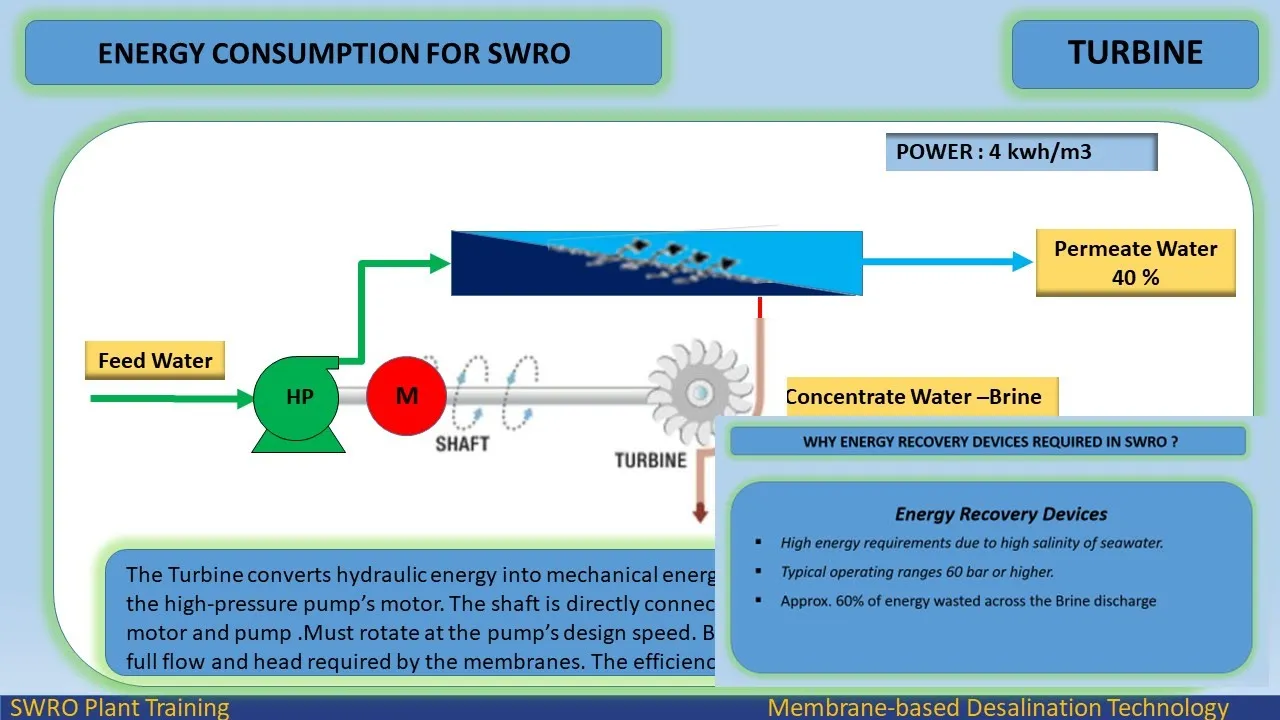
ENERGY RECOVERY DEVICES- ERD - REVERSE OSMOSIS SYSTEM
5.5K
Energy recovery devices (ERDs) are essential in seawater reverse osmosis (SWRO) plants because approximately 60% of energy is wasted across the brine discharge; these devices recover hydraulic energy from the high-pressure brine stream to supplement the main high-pressure pump, with three main types including turbine/centrifugal-based systems (Pelton turbines at ~87% efficiency, turbochargers at ~90% efficiency) and positive displacement pressure exchangers (PX) achieving over 90% efficiency but causing 3-5% salinity increase in feed water.
Click to watch →

W10L3_Energy recovery device(ERD)
149
Energy Recovery Devices (ERD) capture hydraulic energy from high-pressure reject streams in reverse osmosis systems and transfer it back to the feed stream, significantly reducing energy consumption; while ERDs are essential for seawater desalination where high pressure (60+ bar) is required, they are typically not used in brackish water systems due to lower pressure requirements and higher implementation costs.
Click to watch →

Conceptos y Criterios para el Diseño de un Proyecto de Desalación de Agua de Mar.
780
Energy recovery systems capture pressure energy from concentrate streams to reduce overall energy consumption. Two main types: (1) Isobaric energy recovery devices (ERDs) - transfer energy from concentrate to product stream, achieving ~30% energy savings; (2) Turbo chargers - use pressure differences to generate additional pressure, achieving ~31 kW savings per 360 m³/day plant. Selection depends on local energy costs and investment recovery time. In Peru, continuous operation may require 2-3 years to recover additional investment for isobaric systems.
Click to watch →

Lo que está haciendo Israel te dejará en shock: Bombear el mar hacia una montaña para salvar al país
440.2K
Traditional desalination is energy-intensive, but Israel's Sorec plant uses isobaric energy recovery devices that function similarly to regenerative braking systems in Formula 1 cars. Instead of discarding high-pressure brine (which retains nearly 70 bar of pressure), the system transfers this energy directly to incoming seawater. This technology recovers up to 98% of mechanical energy from waste streams, dramatically reducing energy costs. As a result, Israel achieved a world-record price of approximately 50 cents per cubic meter for desalinated water.
Click to watch →
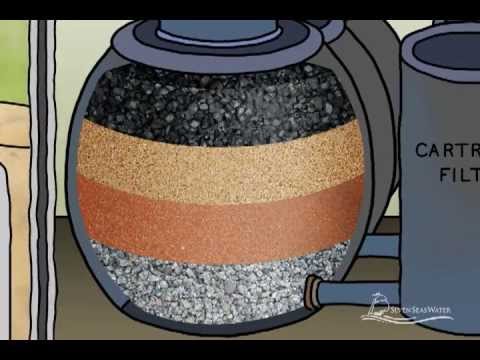
Seawater Desalination via Reverse Osmosis: Process & Technology
3.6M
To reduce energy consumption, the pressurized concentrated salt stream is piped into an energy recovery device where up to 98% of its energy is transferred to an equal volume of incoming seawater. This isobaric energy recovery device significantly reduces plant operating costs by recovering the concentrated salt stream energy and using it to pressurize approximately 60% of the seawater fed to the membranes. The concentrated salt stream has about 60% higher salinity than the incoming seawater.
Click to watch →
Deep Dive
Alternative desalination technologies, such as electrodialysis reversal (EDR) and thermal desalination methods like Multi-Stage Flash (MSF) distillation.

Momento de Tecnologia AESabesp - Engeper
117
A eletrodiálise reversa (EDR) é uma tecnologia de tratamento de água avançada que utiliza princípios eletroquímicos para separar íons e reduzir sais e condutividade em águas e efluentes, oferecendo eficiência superior em comparação com outras tecnologias. Diferentemente da osmose reversa que filtra a água, a EDR dissocia iões através de membranas catiônicas e aniônicas, permitindo operação com baixa pressão (2-3 bares) e consumo energético reduzido de aproximadamente 0,09 kWh por kg de sal removido. A tecnologia consegue recuperar até 95% do volume tratado em águas e 85% em efluentes, com membranas de alta durabilidade que podem durar até 20 anos. A EDR é indicada para remoção de cloreto, nitrato, flúor, cromo, dureza e sulfato, sendo aplicável em dessalinização de água do mar, reuso industrial em torres de resfriamento e caldeiras, recuperação de concentrados de osmose reversa, e tratamento de efluentes industriais. No entanto, a tecnologia tem limitações com ferro e manganês, que podem danificar as membranas, exigindo pré-tratamento adequado.
Click to watch →
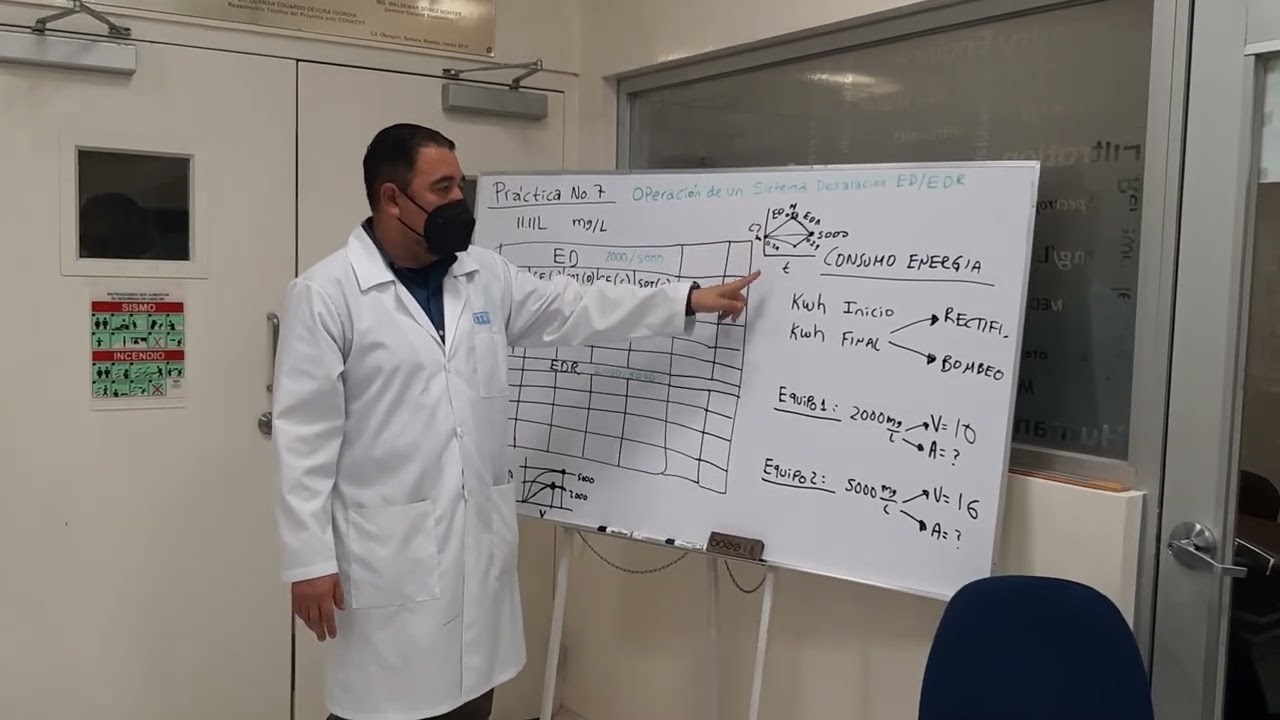
CLASE NACIONAL: Operación de sistema de Desalinización mediante Electrodiálisis Reversible (EDR)
125
The Electrodiálisis Reversible (EDR) process is a desalination technique that uses electrical energy to remove dissolved salts from water by forcing ions to migrate through ion-exchange membranes under applied voltage; the process demonstrates that higher salinity concentrations require more energy for ion migration, and reversing the polarity of the power source changes the direction of ion movement, allowing for controlled water purification.
Click to watch →
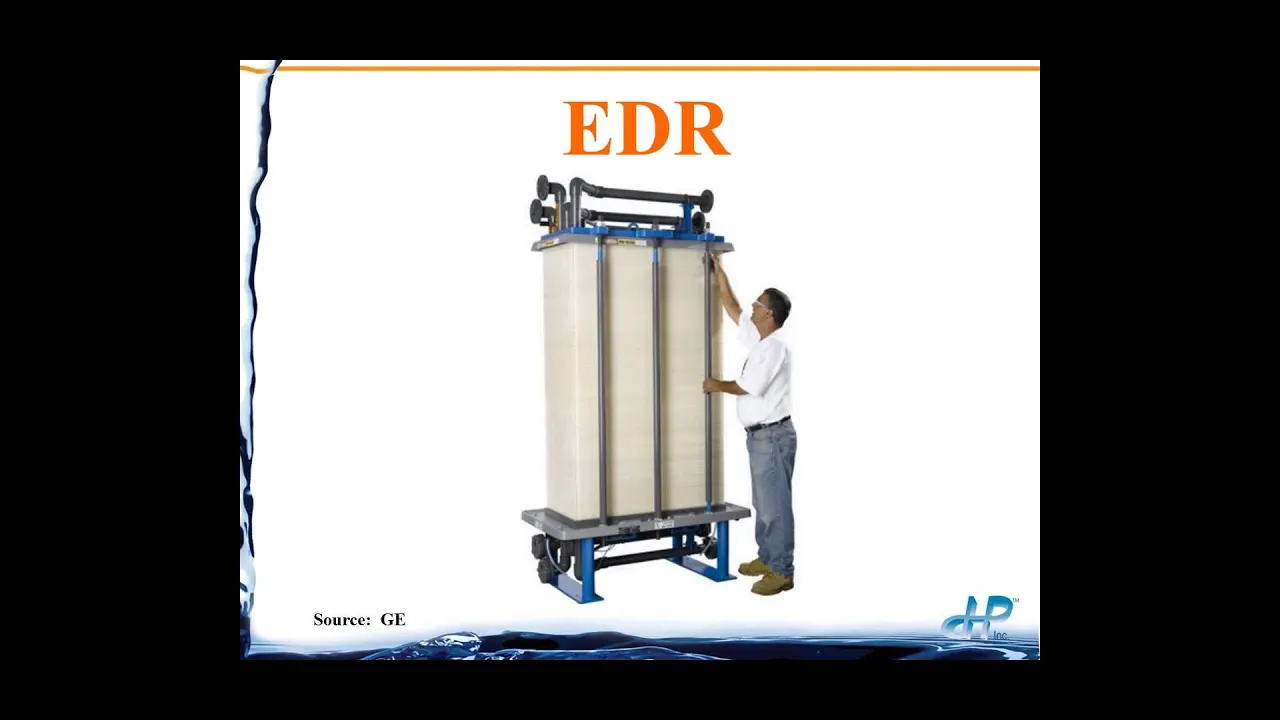
Water & Wastewater Minimization Using Electrodialysis Reversal (EDR)
14.8K
Electrodialysis (ED) is a membrane separation technology using alternating cation and anion transport membranes between electrodes. Under DC current, cations move toward the cathode through cation membranes while anions move toward the anode through anion membranes, creating dilute and concentrate channels. ED suffered from scaling and fouling because accumulated ions couldn't be removed. Electrodialysis Reversal (EDR) solved this by reversing electrode polarity every 10-20 minutes, swapping channels to self-clean membranes. Advanced innovations include electrode blockers preventing electrode fouling, homogeneous membrane casting for smoother surfaces, modular stack designs with leak-free compression, and monoselective coatings for organic resistance. EDR economics are driven by outlet TDS level, required salt flux, and brine concentration limits (typically 120,000-150,000 mg/L). EDR-RO hybrid systems provide synergistic benefits: EDR softens water upstream by preferentially removing scaling ions before RO, eliminating chemical softening needs. Industrial applications include produced water treatment for enhanced oil recovery, achieving 2,000-45,000 mg/L inlet to 2,000 mg/L optimal re-injection range. EDR handles dissolved and free organics effectively without extensive pre-treatment.
Click to watch →

Desalination summer 24 class 1
211
Electrodialysis (ED) uses electrical current to separate ions from water. When voltage is applied, cations (positive ions) move toward the cathode and anions (negative ions) move toward the anode, effectively removing salts. However, Electrodialysis has limited applications because it requires very high electrical current and has high operational costs. Before 2002, thermal desalination was the only widely used method. After 2002, membrane desalination became more prevalent. Currently, thermal desalination accounts for about 46% of global capacity, while membrane methods have gained significant market share. Regional preferences vary: Qatar uses 94% MSF (due to high natural gas), UAE uses 89% MSF, Kuwait uses 95% MSF (highest globally), and Japan uses 86% RO (due to lack of oil/gas resources). Countries with abundant fossil fuels prefer thermal methods.
Click to watch →

Multi Stage flash distillation (MSF), Defination, Principle, Designing and it's working
1.7K
Multi Stage Flash (MSF) distillation is a thermal desalination process that purifies seawater by passing it through multiple stages (typically 30) where seawater is heated and flashed into steam in chambers with controlled low pressure and temperature; the steam then condenses on cold seawater entering from the opposite side, transferring heat and producing fresh water while concentrating salts in the remaining brine, which is continuously removed as waste.
Click to watch →
Core Tech
Osmosis Defined
Natural Flow
Direction
Reverse Action
Pressurized Filtration
Core Tech
0:05- 1
Desalination plant relies on reverse osmosis.
- 2
Process inverts natural osmotic liquid flow.
The Ecological and Energy Critiques of Reverse Osmosis Desalination
While reverse osmosis (RO) is a highly effective technological solution for producing freshwater, critics and environmental scientists highlight significant ecological and economic drawbacks. RO is extremely energy-intensive, often relying on fossil-fuel-powered grids that contribute to greenhouse gas emissions. Additionally, the process produces 'toxic brine'—a highly concentrated salt solution mixed with treatment chemicals. When discharged back into the ocean, this brine sinks to the seafloor, depleting oxygen levels and threatening marine ecosystems. Critics argue that relying on desalination can create a false sense of water security, potentially diverting public funding and political will away from more sustainable, cost-effective alternatives such as wastewater recycling, rainwater harvesting, and aggressive water conservation practices.
The scientific concept of natural osmosis, specifically how solvent molecules naturally move across a concentration gradient.
The definition and characteristics of a semipermeable membrane, including how pore size dictates particle passage.
Basic chemical principles of solutions, including the relationship between solutes (salts), solvents (water), and concentration levels.
The physical concept of pressure, specifically how applying mechanical pressure can oppose and overcome natural osmotic pressure.
The engineering of membrane pre-treatment systems to prevent membrane fouling, scaling, and degradation from organic matter.
Environmental management strategies for brine disposal, exploring how desalination plants minimize the ecological impact of hyper-saline discharge on marine life.
Energy efficiency in desalination, focusing on the mechanics of Energy Recovery Devices (ERDs) used to capture and reuse hydraulic energy.
Alternative desalination technologies, such as electrodialysis reversal (EDR) and thermal desalination methods like Multi-Stage Flash (MSF) distillation.
914.7K views10.9Klikes1:25@SAWaterCorpOriginal Release: 2017-05-10
[Music] the core technology used at the Adela desination plant is called reverse osmosis first let's explain what osmosis is osmosis is a naturally occurring process in which a liquid such as water spontaneously passes through a membrane the membrane or semi-permeable barrier allows some molecules like water through but other molecules like the majority of salts are unable to easily pass through the membrane structure the flow of liquid through such a membrane occurs naturally to try and even out the salt concentrations between the two solutions that is the liquid flows from the less concentrated solution such as fresh water to a more concentrated solution such as seawater when the direction of liquid flow is reversed it's called reverse osmosis by pressurizing the concentrated solution in this case sea water we are able to force water molecules in the reverse direction from The Salty Sea waterer side through the membrane to the freshwater [Music] side
Up Next

17:53
Green Chemistry: Principles & Sustainable Glue Making Lab
@mitblossoms5237
7.2K views•2016-06-09

83:56
Biocatalysis and Catalysis in Islatravir Synthesis | Merck Webinar
@SCIwheresciencemeetsbusiness
675 views•2020-10-08
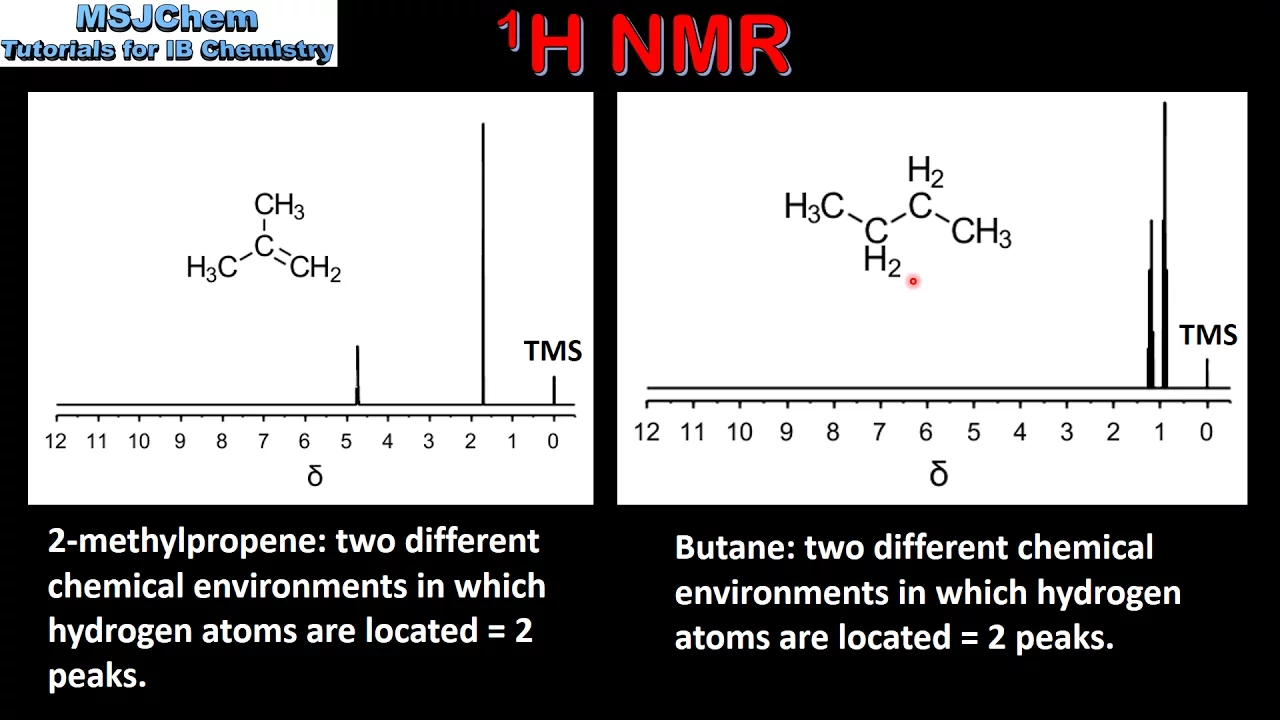
10:06
1H NMR: Determining Number of Peaks from Structure
@MSJChem
59.2K views•2017-04-06

17:31
Edible Water Bottles: A DIY Guide to Sodium Alginate Spherification
@ryan
10.5M views•2019-06-21
Related Study Plans & Knowledge Roadmaps
Structured learning paths in Chemistry
chemistry
Nuclear Chemistry: Decay, Meds & Fuel Cycle
01Introduction to Nuclear Structure and Radioactivity
02Decay Dynamics and Kinetics
03Radiation Interaction and Detection
+ 2 more learning modules
24h5 modules
Explore Roadmap
chemistry
Supramolecular Chemistry: Forces & Machines
01Foundations of Chemical Bonding and Intermolecular Forces
02Introduction to Host-Guest Chemistry
03Thermodynamics and Dynamics of Self-Assembly
+ 2 more learning modules
16h5 modules
Explore Roadmap
chemistry
Photochemistry: Excited States & Reactions
01Foundations of Light-Matter Interactions
02Molecular Orbitals and Electronic States
03Photophysical Processes and Jablonski Diagrams
+ 2 more learning modules
18h5 modules
Explore Roadmap
chemistry
Coordination Chemistry: Bonding & Properties
01Introduction to Transition Metals and Ligands
02Crystal Field Theory (CFT) and Geometry
03Magnetic Behavior and Spin States
+ 2 more learning modules
14h5 modules
Explore Roadmap