






![Arte, Consciência e Expansão - pte 2/3 [podcast + artecriativa]](https://i.ytimg.com/vi/mtmfP5Veblg/maxresdefault.jpg)







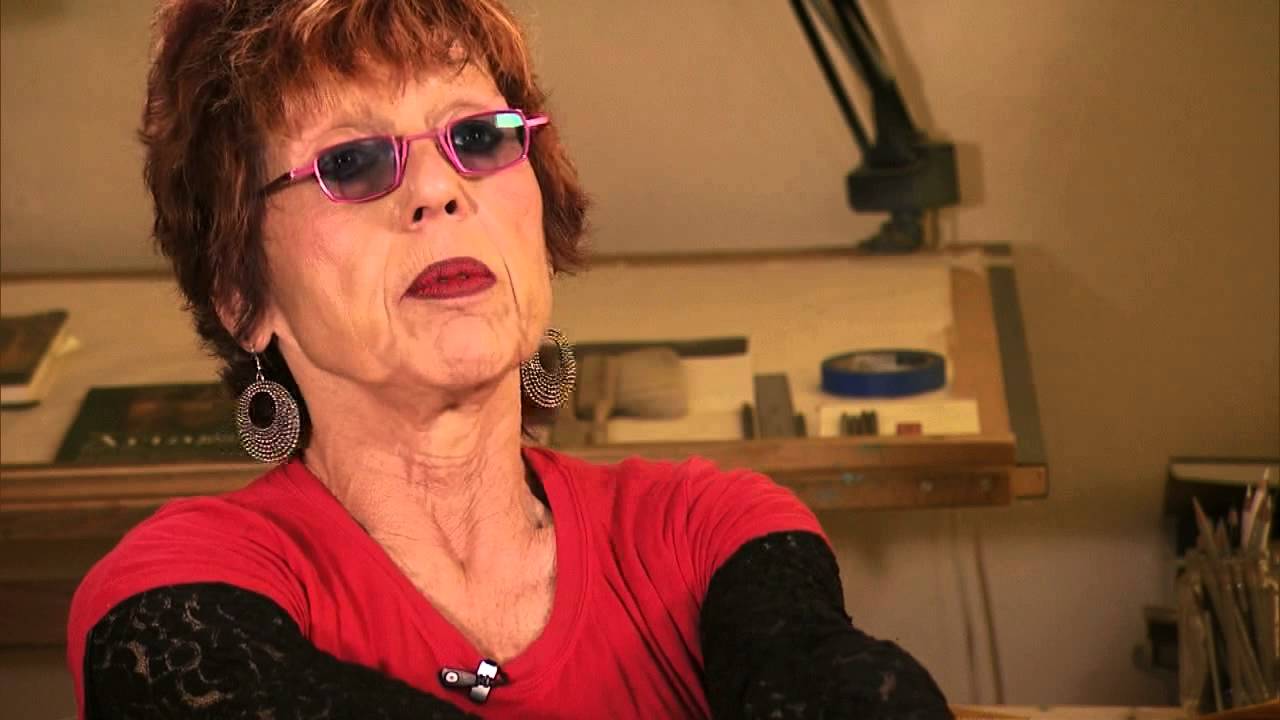












Judy Chicago's The Dinner Party (1974-79) is a groundbreaking feminist installation at the Brooklyn Museum that honors 39 remarkable women through meticulously crafted ceramic place settings, symbolically giving them 'a place at the table' in history; the work, created with a collective of women using traditional craft techniques like ceramics and embroidery, represents a pivotal moment in second-wave feminism by recovering women's neglected histories and challenging art world conventions through its explicit vaginal imagery on the plates.
Judy Chicago's The Dinner Party: Art History Explained
Added:Understanding of Second-Wave Feminism: Knowledge of the social, political, and cultural goals of the women's liberation movement in the 1960s and 1970s.
The historical distinction between 'Fine Art' and 'Craft': Familiarity with how mediums like ceramics, needlework, and embroidery have historically been gendered and marginalized in art history.
Basic concepts of visual analysis and iconography: Understanding how artists use symbols, metaphors, and spatial arrangements to convey complex thematic meaning.
The historical exclusion of women: Awareness of the systematic omission of women from mainstream historical narratives and the traditional Western art history canon.
Critical reception and controversies of *The Dinner Party*: Analyzing the debates surrounding the work, including criticisms regarding essentialism, racial representation, and the division of labor among Judy Chicago's collaborators.
The evolution of Feminist Art: Exploring subsequent generations of feminist artists, such as the Guerrilla Girls, Barbara Kruger, and intersectional feminist art practices of the late 20th and 21st centuries.
Social Practice and Collaborative Art: Investigating how modern artists use collective production, community engagement, and large-scale collaboration as a form of social activism.
Institutional critique and museum preservation: Examining how museums address the display, permanent acquisition, and conservation of monumental, politically charged installation artworks.
15.5K views477likes7:33Original Release: 2025-06-09
Dr. Steven Zucker: We're at the Brooklyn Museum looking at one of their most famous and most controversial works of art. This is The Dinner Party. Dr. Beth Harris: The artist Judy Chicago worked with a collective of women in her studio to produce this installation. And entering this space requires walking through a darkened hallway where we see banners overhead that speak to ideas of equality for women. And then we enter this large, dark, very formal space where this triangle of tables is spotlit.
Specifically, what we're looking at are place settings for 39 women.
This includes goddesses and also historical figures, 13 on each of the three tables. So we immediately have this idea of the Last Supper, of something that's sacred. Dr. Steven Zucker: The artist spoke to being inspired by images of the Last Supper, but she realized quickly that she wanted to celebrate more than 13 women, and even 26 wasn't enough.
39 was what she could accommodate at the table, but that wasn't enough.
And so if we look at the floor, these tiles are inscribed with the names of important women through history in gold, and there are 999 of them, and so an opportunity to at least include that larger group. Dr. Beth Harris: And so we immediately have the idea of giving these women, literally, a place at the table, a place in history, a recognition of their achievements and of the challenges that they faced. Dr. Steven Zucker: What we're looking at is the result of many hours of labor uncovering the history of women through time, histories that had been largely neglected. Dr. Beth Harris: And also researching historical artistic techniques. Dr. Steven Zucker: This isn't painting on canvas. This isn't marble sculpture. None of this is fine art in the traditional sense. The artist is clearly referencing art that had been associated with women. That is the painting of ceramics, embroidery, and needlework more generally. But she's creating an extraordinary and grand statement.
This is clearly fine art. Dr. Beth Harris: Each woman gets a place at the table, very specifically created for them. The gold, the embroidery, the white cloth, the runners, all speak to the idea of giving these women their due. Dr. Steven Zucker: Judy Chicago tells a story.
She was an undergraduate in college. She was taking a history class.
The syllabus was filled with the great men of history. But the professor had promised that the last session would be devoted to women and their impact. And she waited all semester for this. When that day came, the professor simply said that women had had no impact. She made at that point a kind of commitment to uncover the history of women, and she looks at The Dinner Party as very much the culmination of that research. Dr. Beth Harris: This is a large part of what second wave feminism or feminism in the 1970s was about. It was recovering the history of women that hadn't been told. Dr. Steven Zucker: The aspect of this installation that is by far, in a way, its most controversial is the imagery that we see in the plates themselves. Dr. Beth Harris: Most of the plates contain vaginal imagery. This is a historical moment when women are embracing a kind of freedom that had been unimaginable in the 1950s and began to emerge slowly in the 1960s. Dr. Steven Zucker: At a time when minimalism and conceptual art had been dominant, to bring art back to the body was a radical step. And this was very upsetting to the political right as well as to the fine art establishment. Dr. Beth Harris: But when this work was exhibited, when it was completed in 1979, hundreds of thousands of people turned out to see it. It obviously touched a nerve for many, many women. However, the institutions of the art world felt very differently.
Dr. Steven Zucker: So let's focus on one place setting. Dr. Beth Harris: We're standing in front of the place setting for Mary Wollstonecraft, the author of a very early feminist book called A Vindication of the Rights of Woman, a polemical tract that argues for the fundamental equality of women. Dr. Steven Zucker: And if we look directly below the place setting, we can see one of those inscribed names in gold, and it reads Mary Shelley. This was her daughter and, of course, the author of Frankenstein. The place setting itself feels very appropriate to the late 18th century. Dr. Beth Harris: Well, it looks to me like the kind of embroidery that women in the late 18th century were actually doing. And it shows a variety of wonderful techniques. And the embroidery is in some places very flat, in some places very three-dimensional.
Dr. Steven Zucker: But the delicacy and the propriety of the 18th century is shattered when we look to the top of the place setting, sculpted into the surface of the plate is this vulvic form with greens and reds and yellows. Dr. Beth Harris: In addition to its vaginal form, it gives us the idea of something unfolding. And in that way, it feels to me to be very appropriate to this emerging of a feminist consciousness in the late 18th century. Dr. Steven Zucker: What's interesting is that as we reach this last turn of the table, that is the part of the installation that is devoted to the modern world, the plates take on a three-dimensional quality. They begin very subtly with just a little bit of a raised edge. And then it seems with the plate devoted to Herschel just to the left, we see a part of the plate just lifting up. And we have that even more emphatically in this plate. Dr. Beth Harris: Above the plate, we see scenes that tell us about Mary Wollstonecraft's life, first as a teacher, as a writer. Dr. Steven Zucker: But this is only part of the story that the runner tells. The far side shows the tragic end of the author's life. Dr. Beth Harris: Mary Wollstonecraft died from complications after childbirth. And here we see a scene in a bedroom where Mary Wollstonecraft is on a canopied bed with her husband, William Godwin, on one side and her first daughter on the other. Dr. Steven Zucker: It's such an upsetting image. We see these pristine white linens. They're stained with blood and Wollstonecraft shown in real distress.
Dr. Beth Harris: Over the course of many years while Judy Chicago was working on this piece, several hundred women also worked alongside her.
And the woman who was working on this part of the runner talked about an interesting conversation that she had with Judy Chicago. Judy Chicago came up to look at the work and pointed out that Mary Wollstonecraft looked too relaxed. And at Judy Chicago's insistence, the artist who was working on this restitched the face to give Mary Wollstonecraft a haggard expression using Judy Chicago's technical drawing as a guide.
Dr. Steven Zucker: And this is a wonderful reminder that what Judy Chicago had done was created almost a kind of medieval workshop. That is to say, while hundreds of women worked on various aspects of this installation, Judy Chicago retained creative control. Dr. Beth Harris: It's so interesting to see visitors to this installation. Everyone walks slowly around the tables, reads the names, looks at the imagery. Some names are familiar, some aren't, but there is a kind of quiet procession around the table that seems really fitting to its subject matter.
Up Next

27:39
Women Artists in Focus: Hunter Museum Curator's Tour
@HunterMuseum
180 views•2020-09-10

114:18
Christian Iconography: History, Theology, and Meaning | Fr. Panayiotis Papageorgiou
@Trisagionfilms
58.8K views•2020-02-21

10:26
Redgrave's The Sempstress: Victorian Social Realism, 1846
@smarthistory-art-history
3.2K views•2011-10-22

16:34
Earliest Depictions of Jesus in Art: 10 Ancient Images Explained
@UsefulCharts
5.9M views•2022-06-03
Related Study Plans & Knowledge Roadmaps
Structured learning paths in Art History
art-history
Gothic Cathedrals: Engineering, Light & Society
01The Birth of the Gothic: Romanesque to Suger's Vision
02The Structural Triad: Pointed Arches, Ribbed Vaults, and Flying Buttresses
03Theology of Light: Lux Nova and Sacred Geometry
+ 2 more learning modules
14h5 modules
Explore Roadmap
art-history
Pre-Raphaelites: Realism, Symbolism & Critique
01The Victorian Art Establishment and Academic Formula
02The Founding of the PRB and Radical Realism
03Medieval Revivalism and Literary Symbolism
+ 1 more learning modules
8h4 modules
Explore Roadmap
art-history
Street Art: From Subways to Art Market
01Subcultural Origins in Philadelphia and New York (1970s)
02The Subway Era and Style Wars (Late 1970s - 1980s)
03The East Village Scene and Early Gallery Crossover
+ 2 more learning modules
10h5 modules
Explore Roadmap
art-history
Classic Maya Art: Iconography, Glyphs & Ritual
01Foundations of Classic Maya Visual Culture
02Deciphering Maya Hieroglyphs & Text-Image Integration
03Sacred Geography and Cosmological Architecture
+ 2 more learning modules
14h5 modules
Explore Roadmap