
























Magnetic nanoparticles (typically <100 nm) exhibit unique size-dependent magnetic properties due to competing demagnetizing field and exchange interaction energies; as particle size decreases, coercivity initially increases to a peak at the single-domain threshold, then falls to zero at the superparamagnetic limit, enabling diverse applications from cancer hyperthermia to magnetic data storage while imposing fundamental size constraints on storage density.
Magnetic Nanoparticles Explained: Superparamagnetism & Applications
Added:Fundamentals of magnetism, including the distinctions between ferromagnetism, paramagnetism, and diamagnetism.
The concept of magnetic domains and how they behave in bulk ferromagnetic materials.
Basic nanotechnology principles, particularly how material properties scale when dimensions shrink to the nanometer range.
The concept of thermal energy (Boltzmann constant multiplied by temperature) and magnetic anisotropy energy.
Chemical synthesis methods (e.g., co-precipitation, thermal decomposition) and surface functionalization strategies to stabilize magnetic nanoparticles in biological fluids.
The physics of Magnetic Hyperthermia Therapy (MHT), utilizing relaxation losses of nanoparticles under alternating magnetic fields to target cancer cells.
Advanced characterization techniques for nanomaterials, such as SQUID (Superconducting Quantum Interference Device) magnetometry and Dynamic Light Scattering (DLS).
Detailed mechanisms of MRI contrast enhancement, specifically how superparamagnetic nanoparticles alter T1 and T2 relaxation times of water protons.
32.5K views592likes13:45Original Release: 2017-06-16
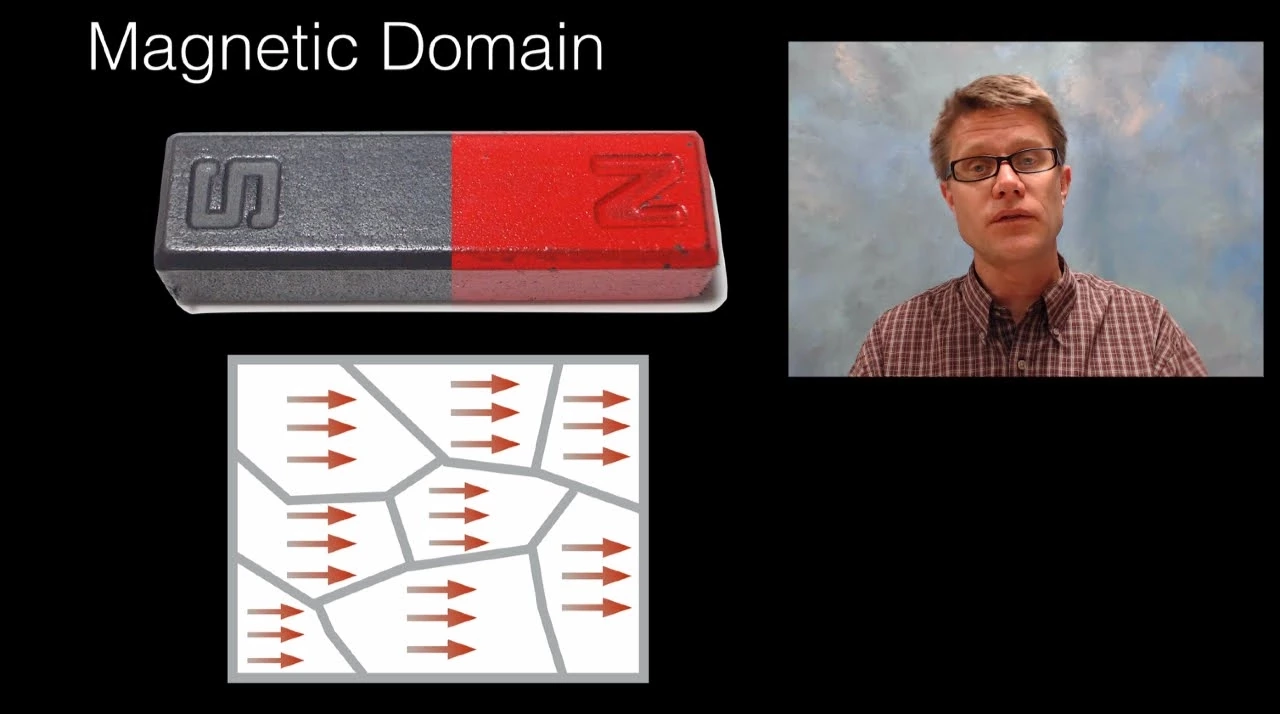
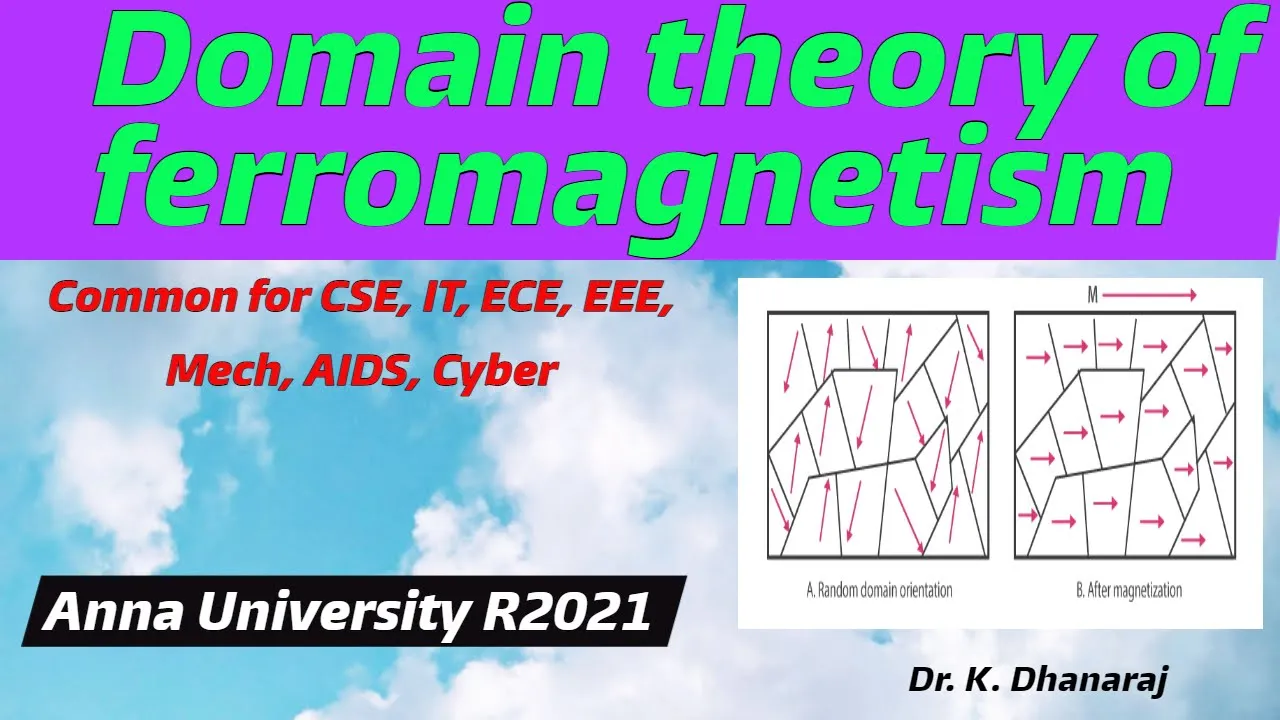
hi there so today I want to talk about magnetic nanoparticles so first of all let's define what we mean by magnetic nanoparticle well a magnetic nanoparticle on is particle that's typically less than 100 nanometers in diameter and there are a class of nanoparticle that can be manipulated using magnetic fields they're also made of ferrite which is iron oxides or metals like nickel iron or cobalt and they're usually coated or passivated with something like a silica gel or ligand or surfactant and this helps to prevent clumping or agglomeration of the nanoparticles and it also functionalized as the surface for whatever application that you want and of course the type of coating that you would pick to put on your nanoparticle depends on what you're going to do with it now in the last lecture I talked about basic magnetism that you might have learned about in your introductory physics courses so this is the magnetization curve or the hysteresis curve for a ferromagnetic material that we talked about in the last lecture so there's a couple of parameters that you can deduce from looking at your curve here and I'd like to talk about them because they can be pretty important in some of the nanoparticle applications so the first is the coercivity and the coercivity of the material is related to the width of the magnetization curve basically where it is a point P and F here that width all right it tells you what the magnetic field strength is that has to be applied in order to bring the magnetization of that material back to zero now this is important in applications like data storage for example you want the coercivity to be large enough that your bit doesn't flip spontaneously in other words if this is a very narrow curve than a small strain magnetic field might cause your bit to flip and yura got it to be then lost or overridden however you want the coercivity to be small enough that it doesn't cost you too much energy to write that fit in the first place so that's an important property another parameter from the magnetization curve is the remanence and that's the value of the magnetization of the material when the Colonel magnetic field strength is zero so that would be at points B and E here on your curve now magnetic recording applications since we're already talking about it they require a large remnant but other applications like magnetic nanoparticles for cancer treatment would prefer this value to be as small as possible now when it comes to my medic nanoparticle size really does matter a lot okay so let's talk about this plot here the blue curve here that you can see shows the size dependence of the coercivity of a particle with the radius plotted on the horizontal axis and you can see that this is a ferromagnetic material in the bulk so as it approaches large radius or infinite radius you can see it approaches an asymptote or a limit here alright so that means that it's going to have a magnetic field even in the absence of an externally applied magnetic field so it's a ferromagnetic material in the bulk it has a nonzero coercivity and then as you start to shrink the nanoparticle down you can see that the coercivity goes up okay until it comes to a peak right here now that is due to the fact that it's becoming a single magnetic domain so you can see that in a large particle you have a large number of domains and they're all kind of oriented randomly and then as you shrink it down there's fewer and fewer domains until it just becomes the one domain right now as you continue to shrink it down then on the coercivity actually falls to zero here and then it makes the transition to being called a super paramagnetic material and we'll talk more about that so why does this happen well this is partly because as you shrink the particle down the number of magnetic domains in the material shrinks until it's a single domain particle as we discussed and the critical diameter of that particle when this happens depends upon a lot of different factors so as you change the type of material and maybe even the shape of the nano particles that you've got then that value is going to change some of the reasons that it might change is because the value of the magnetic saturation of the material changes among other materials among other properties now it's really all about why this happens and what's going on here is really all about the free energy calculation and there's two main competing effects and those two competing effects are the demagnetizing field and the exchange interaction so what does that mean well the demagnetizing field or the strain field is the magnetic field that's generated by the magnetization of the magnet electric and magnetic fields have an energy density or you know cost to them if you will so this is true even a vacuum so if you have an electric or a magnetic field moving through the vacuum of space you might remember from introductory physics that there's an energy per unit volume or an energy density associated with just that field that's proportional to some constant times the the magnetic field or the electric field squared okay so the total energy associated with the demagnetizing field is found then by taking the integral over the volume of the magnet all right so what that means is that as the size increases that means that there's a greater energy and hence a greater energy cost associated with the demagnetizing field and this is the principal reason why no magnetic domains form in bulk materials if you have a bunch of magnetic moments scattered throughout the material oriented randomly then your net magnetic field is going to be pretty close to zero okay and since you're integrating over the volume and the magnetic field if the vector points basically to zero the cost associated with that demagnetizing field is also pretty close to zero right now quantum mechanics is responsible for the exchange interaction which is our second competing effect and quantum mechanics tells us that is energetically favorable for nearest neighbor atoms in ferromagnetic materials to have parallel magnetic moments so quantum mechanics wants neighboring atoms to have aligned magnetic moments and hence one domain basically in the whole material so this is because in certain materials and also depends upon the crystalline structure and how close the the neighboring atoms are among other things but basically quantum effects matter here because the wave options with the neighboring particles overlap and so the particles can influence our the atoms can influence one another and the formation of a domain wall where for example neighboring atoms would have magnetic moments that are not aligned so here you have atom a pointing one way and out of be pointing another right that costs energy in terms of the exchange interaction and so it would prefer to be this way where the energy is minimized due to the exchange interaction and so forming that domain wall between those two atoms costs energy okay so here's what happens actually when you take a bulk ferromagnet and you place it in an external magnetic field initially there is um if it's not a permanent magnet they'll be the domains will be randomly oriented they'll be pointing in lots of different directions and then what happens is when you place it inside of a magnetic field an external magnetic field there's going to be a torque according to the equation u cross V when use your magnetic moment to be is your external magnetic field and it's going to want to rotate those things now the energy is equal to the negative dot product of the magnetic moment with the external magnetic field which means since it's a negative dot product that that energy will be lowest when the magnetic moment and magnetic field are alive in best cases okay so that provides sort of a potential well that it can fall into so what that does is the size of the domains with the magnetic moments that are aligned with the field already or close to a length of the field those are going to grow that growth starts at the edge of both or the domain wall where the exchange interaction would already prefer those neighboring atoms to be aligned in their magnetic moments and so it's true that the magnetic moment will rotate in the presence of the magnetic field but it's not like it happens all throughout domains that aren't aligned at once it's going to start at the domain wall and rotate around onto a line and propagate outward as it happens okay so that's how a sample can become a permanent magnet because then if you take away the external magnetic field we have a coercivity for that and and it's going to remain kind of aligned with the field even in the absence of that external field now what happens in nanoparticles is at a critical threshold in the nanoscale particle the energy is minimized when one domain will grow to encompass the entire particle at that threshold value at that threshold critical size the energy cost associated with the demagnetizing field isn't very high because your particle is pretty small okay so let's look at this curve now with that new knowledge that we've gained in this discussion when the coercivity falls to zero it becomes what's called a super paramagnetic particle the susceptibility the magnetic susceptibility is still larger than a typical paramagnetic material okay because it is a Ferro magnet in the bulk right so it's going to have that susceptibility that's larger for example if you had an iron oxide and already has a larger susceptibility than something like an aluminum okay so the susceptibility is larger than a typical paramedic magnetic material and so it responds very strongly to externally applied magnetic fields and yet it's actually a small enough particle that edge effects and thermal effects are going to cause that thing to go back to a randomly oriented magnetic moment when the field goes to zero so it acts like a paramagnetic material in that in the absence of the field they're not all going to be rotated to align to be aligned with field see it goes back to a random orientation of your magnetic moment okay so when the applied field vanishes the particles no longer behave as magnetic materials and this can be really useful in a wide variety of applications it can also be a problem for a wide variety of applications as we'll discuss in a moment okay so particle size thresholds for common ferromagnetic materials this is applied taken from the introductory introduction to nanoscience and nanotechnology by horn yaw and other authors so here's a bar plot and it plus the nano particle diameter where these things happen various transitions happen for different particles and you can see that for different types of materials the sizes are going to vary sometimes by quite a lot if you look at this plot the dark gray corresponds to the range of sizes where it's a single domain particle but not yet a super pair of magnetic material so up here at the top you can see that transition happens about 100 nanometers and it goes drops down all the way to about say 50 nanometers for some materials so in the range of 50 to 100 nanometers you're getting that transition from being a multi multi domain particle to a single domain particle now then as the particle size continues to decrease they'll eventually be a threshold or critical value of the diameter where it will transition to being a super pair of magnets and so that happens in the range of say all the way up to 30 nanometers all the way down to about ten or five nanometers okay that transition happens now this property like I said super paramagnetism which does sound a little bit like super Calif riser lipstick looks like you're just going to break into song but anyway the property can be really useful in a lot of biomedical applications like contrast agents for MRIs targeted drug delivery hyperthermia to kill cancer cells etc however it does establish a limit the superparamagnetic limit which is a great title by the way on this storage density of hard disk drives basically it's going to place a minimum size on the magnetic storage particles because of course if it's a super paramagnetic particle in the absence of an external field you're going to lose your data and so that can cause a lot of problems now another fun application of superparamagnetic nanoparticles is therap woods so ferrofluids are colloidal suspensions of magnetic nanoparticles they behave like fluids even in the end even in the presence of magnetic fields are going to flow and I've posted a really awesome video external video that you can see it's very zen-like it's got music and it sort of shows the art of ferrofluids if you will and they're going to flow in response to these magnetic forces and preferred directions now the fair Louis often consists of iron oxide nanoparticles coated with a surfactant to prevent the agglomeration and then they're suspended in either water or oil they lose their magnetic properties when the applied field is zero and then they act like a normal fluid so um I hope you enjoyed that and if you have any questions as always let me know and thanks for your attention son
Up Next

12:19
Taste of Protons: The Science Behind Sourness and Sensory Perception
@SteveMould
349.4K views•2021-06-18

12:53
21cm Hyperfine Transition in Neutral Hydrogen: Radio Astronomy Basics
@AaronRobertParsons
12.4K views•2011-10-13

32:32
NMR Spin Physics I: Zeeman Effect, Resonance Condition & Larmor Frequency
@nptel-indianinstituteofsci8064
2.3K views•2024-01-17

27:14
Entropy and the Second Law of Thermodynamics Explained
@veritasium
27.5M views•2023-07-01
Related Study Plans & Knowledge Roadmaps
Structured learning paths in Physics
physics
Nuclear Physics (Decay, Fission & Reactors)
01Atomic Structure and the Binding Force
02Radioactive Decay and Half-Life
03Nuclear Fission Mechanics and Chain Reactions
+ 2 more learning modules
12h5 modules
Explore Roadmap
physics
Soft Matter (Polymers, Colloids & Rheology)
01Foundations of Soft Matter & Thermal Forces
02Polymer Physics and Macromolecules
03Colloids, Surfactants, and Self-Assembly
+ 2 more learning modules
38h5 modules
Explore Roadmap
physics
Analytical Mechanics: Lagrangian & Hamiltonian
01Mathematical Foundations: Calculus of Variations
02From Newtonian Mechanics to Constraint Dynamics
03The Principle of Least Action & Lagrangian Mechanics
+ 3 more learning modules
28h6 modules
Explore Roadmap
physics
General Relativity (Spacetime & Cosmology)
01Foundations of Relativity: Special Relativity
02The Geometry of Spacetime: Equivalence Principle & Curvature
03Einstein's Field Equations: The Mathematics of Gravity
+ 2 more learning modules
55h5 modules
Explore Roadmap