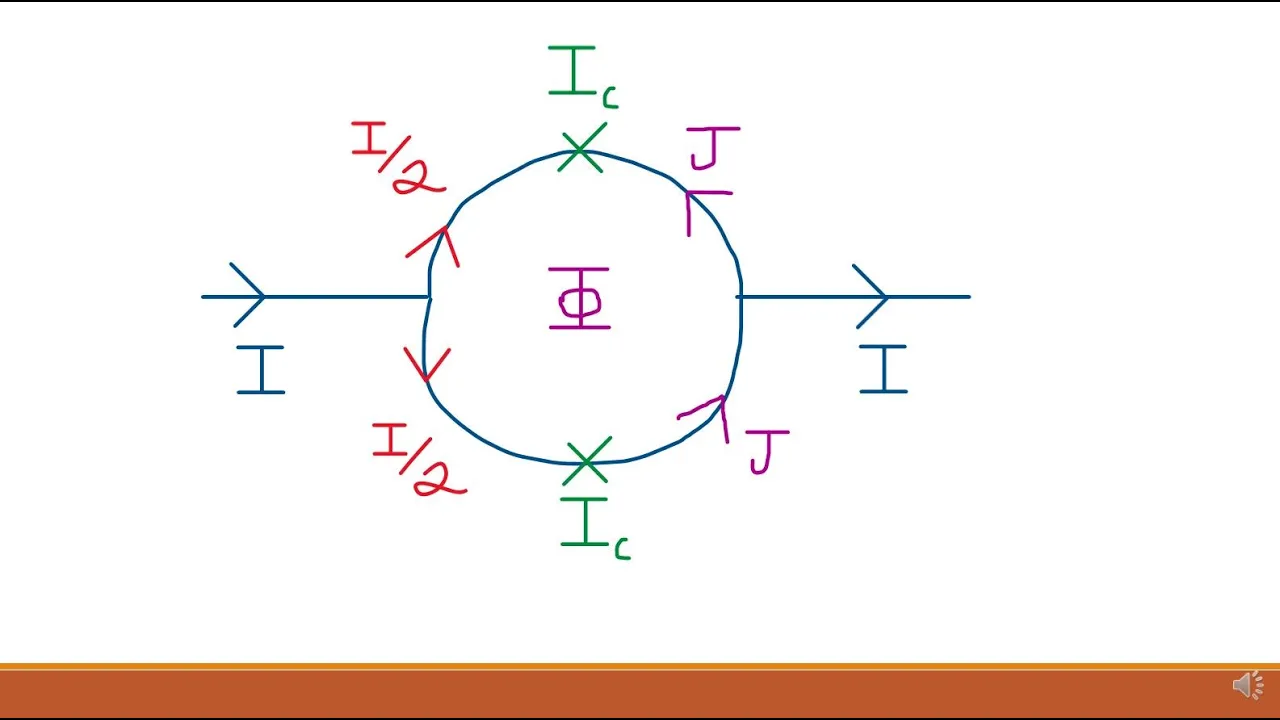
A SQUID (Superconducting Quantum Interference Device) magnetometer detects magnetic fields by using a superconducting detector loop with parallel Josephson junctions; when a magnetic flux from a sample interrupts the superconducting loop, an applied bias current reestablishes the superconducting state and indicates the sample's magnetism. The device operates at liquid helium temperatures (4.2 K), and measurements can reveal superparamagnetic properties through Zero Field Cooled (ZFC) and Field Cooled (FC) curves, where irreversible processes cause these curves to separate, while ferromagnetic materials exhibit hysteresis loops in their magnetic moment versus field plots.
SQUID Magnetometer Demonstration | Superconducting Quantum Interference Device
Added:Deep Dive
Fundamentals of Superconductivity: Understanding zero electrical resistance, critical temperature (Tc), and the Meissner effect.

Süper İletkenler | Deney | Modern Fiziğin Teknolojideki Uygulamaları | PDF
71.7K
Superconductors are materials that exhibit zero electrical resistance below a critical temperature. Unlike normal conductors where resistance increases with temperature due to atomic vibrations hindering electron flow, superconductors show a sudden drop to zero resistance at specific temperatures. Mercury becomes superconducting at 4K, lead at 7K, and niobium at 9K, while gold, silver, and copper never exhibit this property. Discovered by Kamerlingh Onnes in 1911 using liquid helium, superconductors enable lossless energy transmission since no electrical energy converts to heat.
Click to watch →

Unit 5th One Shot AKTU Exam special by Lalit Rathi sir #aktu #akturesult2023 #aktuexam #oneshot
31.8K
Superconductivity is the phenomenon where materials exhibit zero electrical resistance below a critical temperature (Tc). A superconductor is a material that exhibits this property. Key properties include: zero electrical resistance, perfect diamagnetism (Meissner effect), and specific transition temperatures. The Meissner effect causes complete expulsion of magnetic field lines from the superconductor's interior when cooled below Tc. Critical magnetic field (Hc) is the minimum field strength that destroys superconductivity, following Hc = H0(1 - T/Tc)². High temperature superconductors have Tc > 10K. Type I superconductors exhibit complete Meissner effect with one critical field, while Type II have two critical fields (Hc1, Hc2) and a mixed state. Persistent current is DC current that flows indefinitely in superconducting rings due to trapped magnetic flux. Cooper pairs are electron pairs with equal and opposite momentum and spin that move through the lattice without scattering. Coherence length is the distance over which electrons combine to form Cooper pairs.
Click to watch →

High Temperature Superconductors Finally Understood
29K
Superconductivity is a state where electrical resistance drops to zero, enabling lossless electricity conduction. Discovered by Heike Kamerlingh Onnes in 1911, it earned him the 1913 Nobel Prize. Key properties include zero resistance and magnetic field expulsion (Meissner effect). Lev Landau's 1937 phase transition theory earned him the 1962 Nobel Prize. The fundamental breakthrough came in 1957 with BCS Theory (Bardeen-Cooper-Schrieffer), explaining how electrons form Cooper pairs through phonon-mediated attraction at low temperatures, creating zero-resistance superconductivity.
Click to watch →

Supraleiterkabel in Deutschland getestet: Das kommt jetzt
301.7K
Superconductors are materials exhibiting zero electrical resistance when cooled below their critical temperature. Discovered by Heike Kamerlingh Onnes in 1911, they are classified as low-temperature (requiring liquid helium below 20K) or high-temperature (using liquid nitrogen around 77K) types. The Meissner effect causes superconductors to expel magnetic fields, making them perfect diamagnets. The BCS theory explains superconductivity through electron-phonon coupling forming Cooper pairs—electron pairs with opposite spins that move without resistance through the crystal lattice.
Click to watch →

¿Qué es un superconductor?
451.5K
A superconductor is a material that conducts electricity without resistance. Unlike normal conductors where electrons lose energy as heat due to resistance, superconductors allow electrons to flow freely. This remarkable property emerges when materials undergo a phase transition at temperatures below their critical point, typically around -260°C for conventional superconductors. At these ultra-low temperatures, electrons form paired structures that move in coordinated motion without colliding, eliminating energy dissipation entirely. The demonstration uses a cuprate superconductor cooled with liquid nitrogen (-196°C), showing how magnetic levitation occurs through the Meissner effect, where supercurrents expel magnetic fields and create repulsive forces.
Click to watch →
Deep Dive
Magnetic Flux Quantization: Knowing how magnetic flux is quantized in discrete units (fluxoids) within a superconducting loop.
Lec 1: Introduction to Topology
7.7K
For a wave function to be single-valued when transported around a closed loop C, the total phase change must be an integer multiple of 2π: Δφ = 2πn, where n is an integer. Applying Stokes' theorem to convert the line integral of the vector potential to a surface integral of the magnetic field, we find that the magnetic flux through any surface bounded by the loop must satisfy Φ_B = ∫B·dS = (hc/e)n. This demonstrates that magnetic flux is quantized in units of hc/e, known as the flux quantum. This quantization arises from the requirement that wave functions remain single-valued under closed loops around magnetic singularities.
Click to watch →
Lec 23: Circuit QED-I
378
The quantization of magnetic flux in superconductors can be derived from the requirement that the superconducting wave function must be single-valued. For a superconducting ring in a magnetic field, the current density J = (ħ/M)(∇θ - (Q/ħ)A) must be zero deep inside the superconductor. Taking the line integral around a closed contour and applying Stokes' theorem gives (Q/ħ)Φ = ∮∇θ·dl. Since the wave function must be single-valued, the phase change around a closed loop must be an integer multiple of 2π. This leads to the quantization condition: Φ = n(2πħ/Q) = nΦ₀, where Q = 2e (charge of Cooper pair), so Φ₀ = h/(2e) is the flux quantum.
Click to watch →

ВАЖНО! «С таким мы столкнулись впервые»: разговор с физиком, который (не)оставит вас в стороне
91.6K
Superconductors can trap magnetic fields in a completely impermeable loop. The magnetic flux through such a loop is quantized in discrete units (flux quanta). This phenomenon, discovered by Hertz 100 years earlier, is analogous to the quantum oscillatory circuits of the 2025 laureates.
Click to watch →

Папины дочки | Сезон 7 | Серия 144
398.7K
Quantum flux quantization is a microscopic quantum phenomenon where the magnetic flux through a superconductor can only take on integer values of the flux quantum (Φ₀ = h/2e), providing experimental confirmation of the microscopic theory of superconductivity which describes superconducting current as arising from the motion of Cooper electron pairs.
Click to watch →
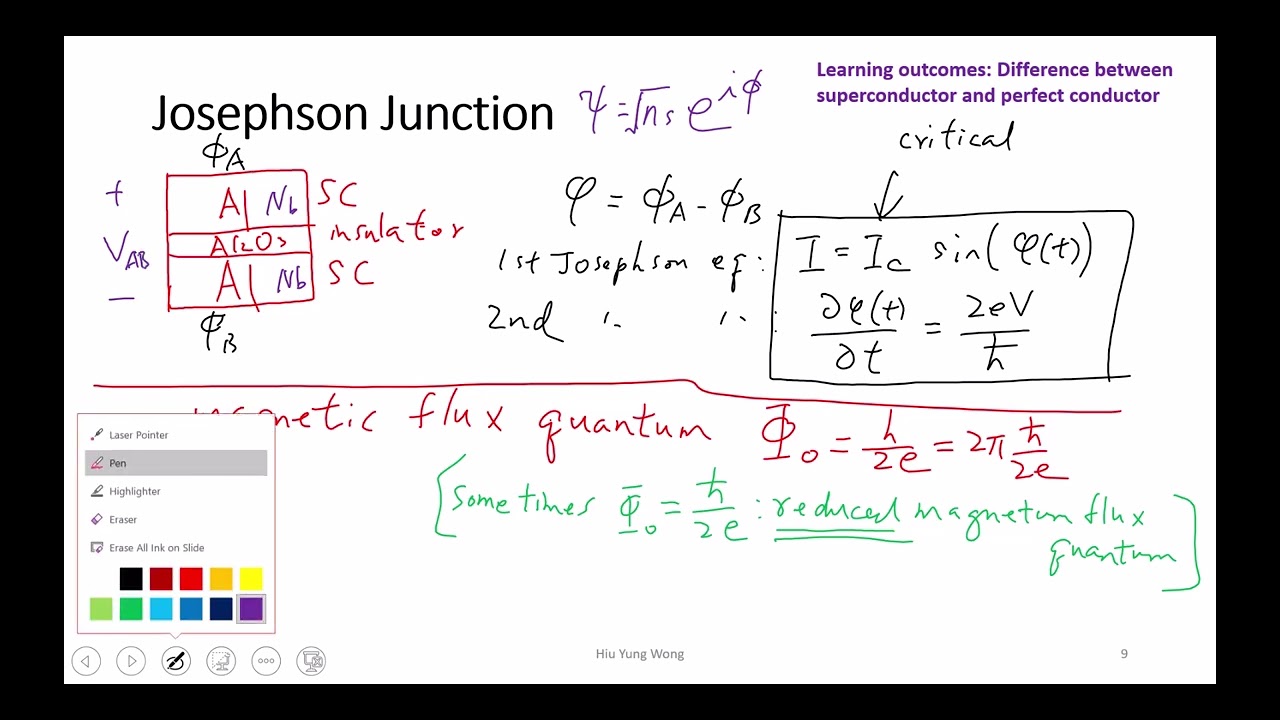
L19-3 Introduction to Josephson Junction
4.2K
Magnetic flux in superconductors is quantized in discrete units called magnetic flux quanta, Φ₀ = h/(2e). This quantization means magnetic flux cannot take arbitrary values—it must be integer multiples of Φ₀. Some literature uses the reduced magnetic flux quantum Φ₀/2, which differs by a factor of 2. Understanding this distinction is crucial when reading research papers or textbooks, as different conventions may use either definition depending on context.
Click to watch →
Deep Dive
The Josephson Effect: Understanding the quantum tunneling of Cooper pairs across a thin insulating barrier (Josephson junction).
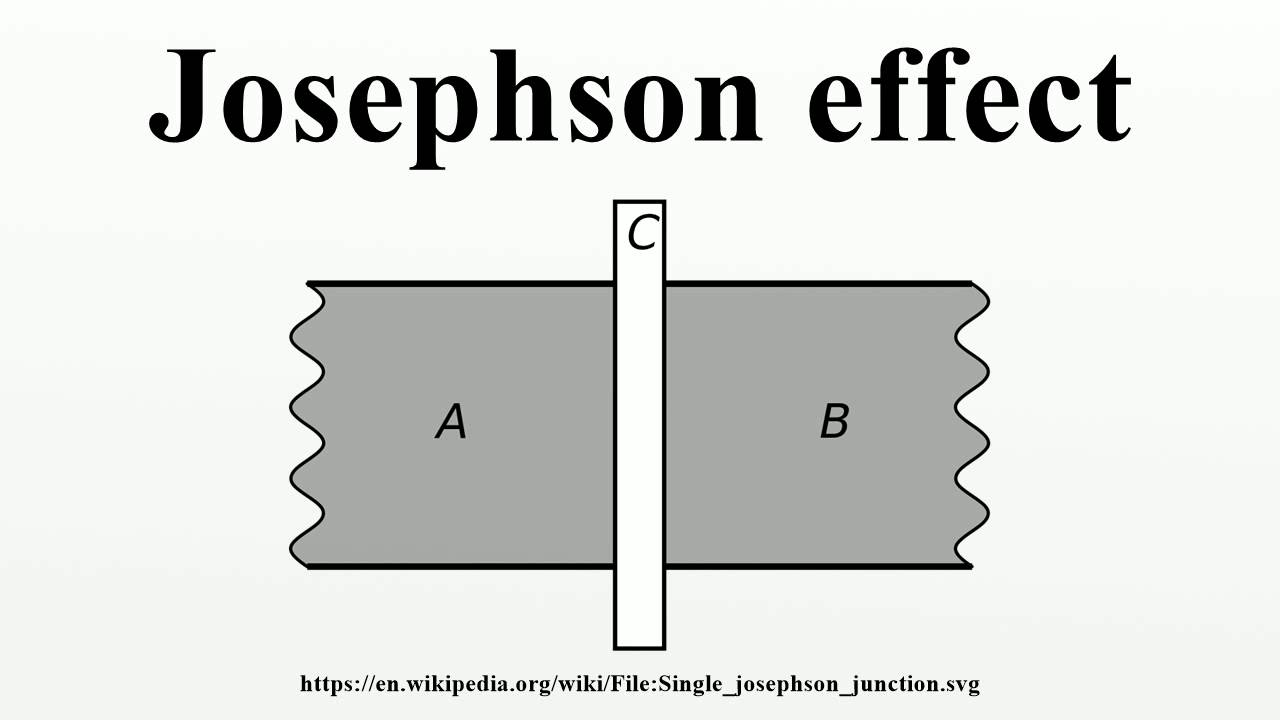
Josephson effect
33.1K
The Josephson effect is a macroscopic quantum phenomenon where a supercurrent flows indefinitely without voltage across a Josephson junction—a device consisting of two superconductors coupled by a weak link (such as an insulating barrier, nonsuperconducting metal, or physical constriction). Predicted by Brian David Josephson in 1962 and for which he received the Nobel Prize in Physics in 1973, this effect enables three main phenomena: the DC Josephson effect (direct current without external electromagnetic field), the AC Josephson effect (AC current with frequency proportional to applied voltage), and the inverse AC Josephson effect (DC current from AC voltage). Key applications include SQUIDs (superconducting quantum interference devices) for sensitive magnetometry, precision metrology standards for voltage calibration, superconducting single-electron transistors, RSFQ digital electronics, superconducting quantum computing qubits, and advanced radiation detection.
Click to watch →

Steven Kivelson | Superconductivity and Quantum Mechanics at the Macro-Scale - 1 of 2
108.7K
The Josephson effect, predicted in 1962 and observed in 1963, occurs when a voltage is applied across a narrow junction between two superconductors. A time-dependent oscillating current flows with frequency ν satisfying hν = 2eV, where V is the applied voltage. This relationship is exact and defines the volt in SI units. The precision of this effect is extraordinary—frequencies agree to better than one part in 10¹⁷ between different junctions.
Click to watch →

Brian Josephson won Nobel at just 33, then left Physics
215.8K
In 1962, while studying superconductivity theory at Cambridge, Brian Josephson became fascinated by the concept of 'broken symmetry' and wondered if the theoretical phase property of superconductors could be observed experimentally. He proposed a hypothetical setup of two superconductors separated by an insulating barrier, predicting that electron pairs could tunnel through this barrier—a phenomenon impossible according to classical physics. His calculations predicted two effects: a supercurrent flowing without voltage, and oscillating current at frequencies proportional to applied voltage. When he published his findings in Physics Letters, John Bardeen, co-inventor of the transistor and leading authority on superconductivity, dismissed the idea as impossible. At a conference in September 1962, Josephson publicly interrupted Bardeen to defend his calculations. Two months later, Philip Anderson and John Rowell at Bell Labs confirmed the effect experimentally. This discovery led to SQUIDs, advanced metrology, and earned Josephson the Nobel Prize at age 33, proving that being an outsider does not mean being incorrect.
Click to watch →

LK-99 Wouldn't Have Changed Semiconductors Anyway
141.4K
The Josephson Effect, predicted by Brian Josephson in 1962 at age 22, occurs when two superconductors are separated by a thin insulating barrier just a few atomic layers thick. This produces a supercurrent—a direct current that flows through the insulator without resistance or significant energy loss. Unlike traditional transistor gates that generate heat during switching, Josephson junctions operate with minimal energy dissipation. This effect demonstrates quantum tunneling observable at macroscopic scales and earned Josephson a Nobel Prize.
Click to watch →

Simple Explanation of Macroscopic Quantum Tunneling | 2025 Physics Nobel Prize
163K
When two superconductors are separated by a very thin insulating layer, Cooper pairs can tunnel through the insulator via quantum tunneling even when no voltage is applied. This quantum tunneling current was first proposed by Brian Josephson and is now known as the Josephson effect. The device formed by this setup is called a Josephson junction. For this groundbreaking discovery, Brian Josephson was awarded the Nobel Prize in Physics in 1973. Josephson junctions became key components in the experiments that led to the 2025 Nobel Prize.
Click to watch →
Deep Dive
Basic Cryogenics: Comprehending the properties of liquid helium and its use in cooling materials to near absolute zero.

Cryogenics An Introduction
698
Cryogenics is the branch of physics that studies phenomena occurring at very low temperatures (below 123 Kelvin or -150°C), utilizing gas compression and expansion cycles to achieve these temperatures; at cryogenic conditions, materials exhibit unique properties such as vanishing specific heat, superconductivity (simultaneous disappearance of electrical resistance and appearance of perfect diamagnetism, first observed in mercury at 4.15K by Kamerlingh Onnes in 1911), ductile-to-brittle transitions in metals, and changes in thermal conductivity, with applications spanning space science, medical preservation, food industry, gas liquefaction, and advanced technologies like magnetic levitation trains and MRI scanning.
Click to watch →

Low temperature physics | Wikipedia audio article
202
Cryogenics is the physics of materials at very low temperatures, with a cryogenics being a specialist in this field. The boundary between refrigeration and cryogenics is not precisely defined, but scientists consider gases cryogenic if they can be liquefied at or below -150°C, while the US NIST defines cryogenics as temperatures below -180°C. High-temperature cryogenics spans from just above liquid nitrogen's boiling point (-195.79°C) to -50°C. The field uses Kelvin or Rankine scales measuring from absolute zero. Key branches include cryobiology (organism preservation), cryosurgery (tissue destruction), cryoelectronics (superconductivity studies), and cryonics (preservation for future revival). Common cryogenic fluids include liquid nitrogen (most widely used, legally purchasable globally) and liquid helium (lowest attainable temperatures). Storage occurs in Dewar flasks—double-walled containers with high vacuum. Cryogenic processing began during WWII when scientists discovered metals frozen to low temperatures showed increased wear resistance. Eadie Bush founded Cryo Tech in 1966, pioneering commercial applications that extended metal tool life by 200-400%. Applications include pharmaceutical production requiring ~-100°C environments, cryogenic food freezing using nitrogen blast or immersion systems, and cryogenic milling for brittle materials.
Click to watch →

Introduction to Cryogenics
104.3K
Cryogenics is the branch of physics dealing with the production and effects of very low temperatures (below -238°F), enabling the efficient storage and handling of atmospheric gases by reducing them to liquefied states that occupy only 1/1800th the volume of their gaseous form; this technology relies on fundamental thermodynamic principles including phase equilibrium, evaporation, condensation, boiling, and flashing, which govern how cryogenic fluids behave under varying pressure and temperature conditions, and is applied across diverse fields such as medical oxygen delivery, food preservation, rocket fuel production, and industrial gas processing.
Click to watch →

Walt Disney foi congelado após a morte! E Se For Verdade?
94.2K
Cryogenics (crônica) is a technique that allows refrigeration of the body to temperatures of -196 degrees Celsius (nitrogen liquid temperature). This process stops deterioration and aging, enabling the body to be maintained in the same conditions for several years with the hope of future reanimation. When a person is placed in the nitrogen liquid tank, they are not definitively dead because, after death, all body cells collapse, blood coagulates rapidly, and organs and brain stop functioning. Therefore, the person must be induced into a deep coma before being placed in the cryogenic apparatus.
Click to watch →

Strange properties of solid air
206.1K
Solid air production requires extreme conditions beyond standard vacuum capabilities. Liquid air's triple point requires pressures 100 times lower than liquid nitrogen, requiring multi-million dollar equipment. Liquid helium achieves -269°C (73°C colder than liquid nitrogen), producing immediate fog from evaporating air. Solid air forms at approximately -220°C. Despite appearing solid, it rapidly melts and immediately vaporizes due to minimal difference between melting and boiling points. Solid air retains magnetic properties from concentrated oxygen, attracting to magnets even as it melts. This demonstrates how extreme cryogenics enables unusual states of matter normally impossible under Earth's conditions.
Click to watch →
Prerequisite Knowledge
- Concept 01Fundamentals of Superconductivity: Understanding zero electrical resistance, critical temperature (Tc), and the Meissner effect.
- Concept 02Magnetic Flux Quantization: Knowing how magnetic flux is quantized in discrete units (fluxoids) within a superconducting loop.
- Concept 03The Josephson Effect: Understanding the quantum tunneling of Cooper pairs across a thin insulating barrier (Josephson junction).
- Concept 04Basic Cryogenics: Comprehending the properties of liquid helium and its use in cooling materials to near absolute zero.
Subsequent Learning
- Step 01Magnetoencephalography (MEG): Exploring how SQUIDs are used in medicine to non-invasively map brain activity by detecting weak magnetic fields generated by neural currents.
- Step 02High-Temperature Superconducting (HTS) SQUIDs: Investigating SQUIDs that operate using liquid nitrogen cooling, comparing their sensitivity and practicality to LTS SQUIDs.
- Step 03Superconducting Qubits: Studying how Josephson junctions and superconducting loops serve as the foundational building blocks for quantum computing hardware.
- Step 04Geophysical and Paleomagnetic Surveying: Analyzing how highly sensitive magnetometers are applied in mineral exploration and mapping Earth's ancient magnetic fields.
SQUID Operation Basics
Data Analysis & Results
SQUID Operation Basics
0:00Playing Section
- 1
Setup involves refilling with liquid helium to maintain 4.2K temperature.
- 2
Sample is mounted and inserted into the measurement chamber.
- 3
Magnetic field parameters are set before initiating the measurement.
Optically Pumped Magnetometers (OPMs) as Cryogen-Free Alternatives
While SQUID magnetometers are the gold standard for ultra-sensitive magnetic field measurements, they possess significant drawbacks, primarily their reliance on expensive and logistically complex liquid helium cooling systems. A major alternative perspective in modern magnetometry is the rise of Optically Pumped Magnetometers (OPMs). OPMs utilize laser-excited atomic vapors to measure magnetic fields and can achieve sensitivity levels comparable to SQUIDs (femtotesla range) at room temperature. By eliminating the need for cryogenics, OPMs allow for much closer placement to the magnetic source (such as the human scalp in magnetoencephalography), drastically reducing system costs, enabling wearable imaging devices, and challenging the necessity of superconducting technology for high-precision magnetic sensing.
Deep Dive
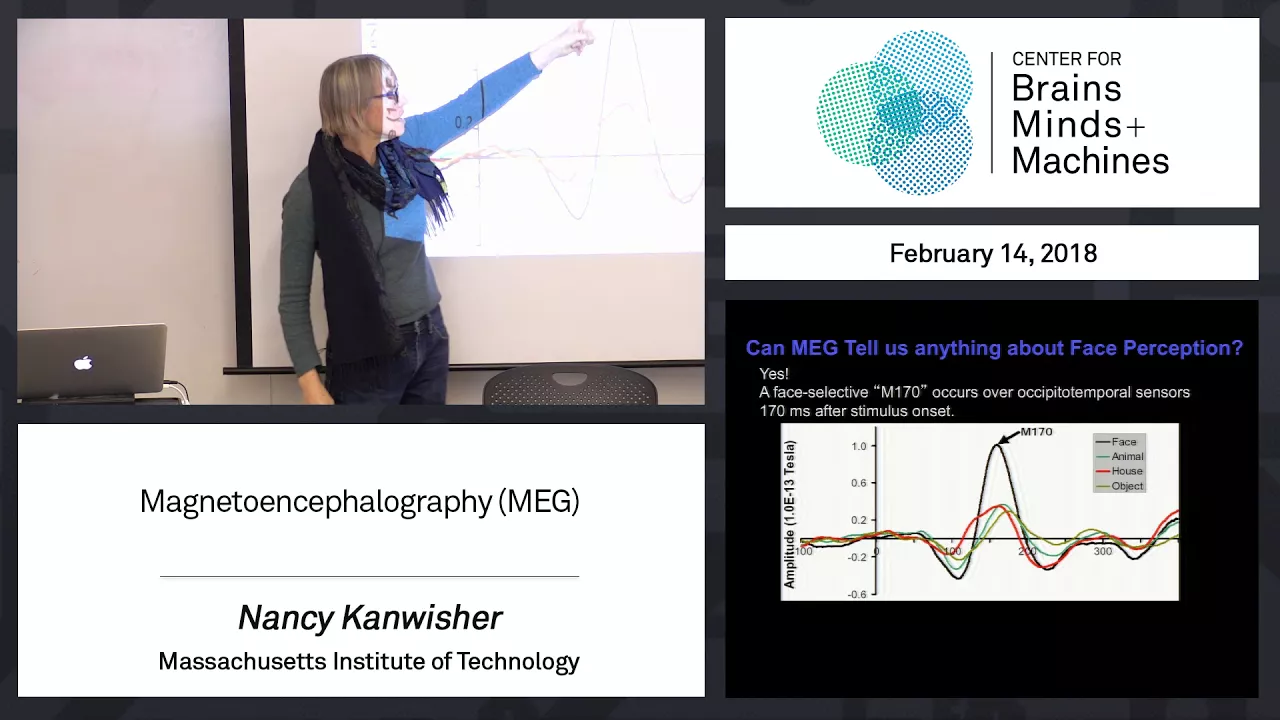
Magnetoencephalography (MEG): Exploring how SQUIDs are used in medicine to non-invasively map brain activity by detecting weak magnetic fields generated by neural currents.
2.10 - Magnetoencephalography (MEG)
21.7K
Magnetoencephalography (MEG) is a non-invasive neuroimaging technique that detects magnetic fields produced by electrical activity in the brain's cortex, offering excellent temporal resolution (less than one millisecond) for studying rapid neural computations like face recognition, which occurs within approximately 170 milliseconds after stimulus onset; MEG uses superconducting quantum interference devices (SQUIDs) cooled to liquid helium temperatures to detect extremely weak magnetic fields (about 10^-13 Tesla, one millionth of Earth's magnetic field), requiring extensive magnetic shielding to isolate these tiny signals from ambient noise; while MEG provides superior temporal resolution compared to EEG, both techniques share poor spatial resolution due to the ill-posed nature of the inverse problem in localizing neural sources from external measurements, making combined MEG-EEG approaches with machine learning algorithms increasingly valuable for decoding cognitive information from neural response patterns.
Click to watch →

Magnetoencephalography (MEG) explained! | Neuroscience Methods 101
24.7K
Magnetoencephalography (MEG) is a neuroimaging technique that detects magnetic fields generated by synchronously firing neurons, using superconducting quantum interference devices (SQUIDs) cooled to approximately -270°C; unlike EEG which measures electrical signals directly at the scalp, MEG measures the magnetic component of neuronal activity, providing superior spatial resolution since magnetic fields are not distorted by the skull, though MEG requires participants to remain perfectly still and is more expensive than EEG.
Click to watch →

When Thoughts Aren't Private: Will AI Soon Read our Minds?
81.6K
Magnetoencephalography (MEG) measures the magnetic fields produced by electrical currents generated when neurons exchange information. When neurons fire, they create electric currents that generate both electric and magnetic fields. MEG sensors pick up these changes in magnetic fields at each instant of time, allowing researchers to take snapshots of brain activity at very fast rates (around 1,000 images per second). Unlike fMRI, MEG does not directly visualize inside the brain but measures fields from outside, requiring sophisticated signal processing pipelines to localize the likely sources of brain activity.
Click to watch →

Creating bilingual minds | Naja Ferjan Ramirez | TEDxLjubljana
2.6M
Magnetoencephalography (MEG), nicknamed 'the hair dryer from Mars,' is a non-invasive, silent brain imaging technique specifically configured for studying baby brains. The research team uses special digitizing pens and hats to track the baby's head shape, allowing continuous monitoring of motion during brain scans while keeping babies happy and entertained.
Click to watch →

Наука медитации: как физиологи исследуют ресурсы мозга? / Александр Каплан в Рубке ПостНауки
43.3K
The video explains that MEG is an alternative method to EEG for studying brain activity. The video describes how MEG detects magnetic fields produced by neural activity, allowing researchers to measure brain function without direct contact with the scalp. The video notes that MEG requires expensive equipment, including superconducting magnets cooled with liquid helium.
Click to watch →
Deep Dive
High-Temperature Superconducting (HTS) SQUIDs: Investigating SQUIDs that operate using liquid nitrogen cooling, comparing their sensitivity and practicality to LTS SQUIDs.

NatMEG lecture: NeuroSQUID by Justin Schneiderman
491
High-temperature superconducting (high-Tc) SQUID-based MEG offers transformative advantages over conventional low-temperature systems. Operating at 77K versus 4.2K, high-Tc SQUIDs require minimal insulation (vacuum window only), achieving standoff distances of less than 1mm compared to several centimeters for low-Tc systems. This dramatic reduction in standoff distance provides signal gains of 10-100 times for superficial brain sources. Additionally, shorter cable lengths between amplifiers and sensors improve bandwidth, potentially enabling detection of megahertz frequency signals. The use of abundant liquid nitrogen cooling (versus scarce liquid helium) dramatically reduces operational costs. These advantages enable tighter lead field patterns, better spatial resolution, and more efficient sensor arrays, positioning high-Tc SQUID technology as a promising next-generation solution for biomagnetic imaging.
Click to watch →

NatMEG lecture: High-Tc SQUIDs for MEG and other prospective applications by Prof. Dr. Michael Faley
593
High-temperature superconducting quantum interference devices (SQUIDs) offer promising alternatives to conventional low-temperature SQUIDs in biomagnetic measurement systems like magnetoencephalography (MEG), with modern epitaxial deposition technologies enabling high-quality YBa2Cu3O7-x films achieving critical current densities of approximately 6 MA/cm² at 77 K and magnetic field resolutions around 3 fT/Hz, making them suitable for various prospective applications including medical diagnostics and fundamental physics research.
Click to watch →
Superconducting Quantum Interference Device (SQUID)
45.3K
High-temperature superconductors (HTS) like YBa₂Cu₃O₇ (YBCO) offer significant advantages over low-temperature superconductors: liquid nitrogen cooling (available cheaply and readily) versus expensive liquid helium; slower vaporization rate reducing maintenance needs; wider availability enabling remote deployment. While HTS-based SQUIDs are less sensitive than their low-temperature counterparts, they enable practical applications where high temperatures are necessary. This trade-off between sensitivity and operational convenience drives ongoing research toward higher-temperature superconductors.
Click to watch →

S1.GB.P04 S.Cybart High-Tc SQUID Technology
385
This video explains how researchers are developing next-generation high-temperature superconducting quantum interference devices (SQUIDs) using helium ion beam nanofabrication to overcome the limitations of traditional low-temperature SQUIDs. The key innovation involves using the superconductor-insulator transition in YBCO materials, where controlled ion irradiation creates nanoscale insulating barriers for Josephson junctions, enabling direct-write nanowires with feature sizes down to 50 nanometers. This approach allows for highly tunable resistance in SQUID sensors, achieving noise floors around 1 picotesla in devices smaller than 150 microns, with potential applications in more compact and cost-effective MEG systems.
Click to watch →

HIGH TEMPERATURE SUPERCONDUCTORS (HTS)
3.5K
High Temperature Superconductors (HTS) are materials that exhibit superconductivity at temperatures above 77 Kelvin (the boiling point of liquid nitrogen), unlike traditional metallic superconductors which require much lower temperatures; they are ceramic oxide compounds with complex layered structures, such as YBa₂Cu₃O₇ (yttrium barium copper oxide), and possess unique properties including zero electrical resistance, magnetic flux expulsion (Meissner effect), and the ability to carry large currents without energy loss, enabling revolutionary applications in magnetic resonance imaging (MRI), magnetic levitation (maglev) trains, particle accelerators, and sensitive magnetic field detection devices like SQUIDs.
Click to watch →
Deep Dive
Superconducting Qubits: Studying how Josephson junctions and superconducting loops serve as the foundational building blocks for quantum computing hardware.

Bits and qubits | fAQ podcast - ep 01
61.4K
Superconducting qubits are quantum bits made from superconducting materials (which have zero electrical resistance when cooled to very low temperatures). They are essentially microchips with electrons flowing through pathways. The way electrons move through the chip and how they are measured and manipulated allows aspects of the electron to be used as a qubit. This approach uses familiar computer chip technology but applies it differently for quantum computation.
Click to watch →

Entriamo DENTRO un Qubit di Google e IBM
121.3K
Superconducting qubits are artificial atoms used in quantum computers, with Google's Sycamore containing 53 qubits and IBM's Osprey containing 433 qubits. Unlike single-particle qubits (like electrons with spin) which are difficult to manipulate and unstable, superconducting qubits are larger quantum systems that are easier to control and more stable. Superconductors, when cooled near absolute zero (-273°C), exhibit remarkable properties like magnetic levitation. The first fundamental rule for qubit construction requires exactly two pure states (ground state 0 and excited state 1) with all other energy levels isolated and unreachable. The Josephson junction, consisting of two superconducting metal pieces separated by a thin insulating layer (~200nm), enables quantum tunneling of Cooper pairs (electron pairs that form in superconductors and behave like bosons), allowing current to flow despite the insulating barrier.
Click to watch →

La segunda revolución cuántica
77.9K
Superconducting qubits are made from tiny circuits containing capacitors and inductors. They behave like quantum harmonic oscillators with equally spaced energy levels. To create a qubit, an additional element breaks this symmetry, allowing focus on just two energy levels (ground and first excited state). These qubits require operation near absolute zero temperature.
Click to watch →

Superconducting Qubits: Build Quantum Computers | QuantumCasts
66.2K
Superconducting qubits leverage quantum mechanics to perform computations impossible for classical computers by utilizing superposition states, where quantum bits (qubits) can exist simultaneously in multiple states unlike classical bits that are strictly 0 or 1; these qubits are physically implemented as electrical oscillators made from superconducting aluminum circuits cooled to near absolute zero, which eliminates quantum errors caused by electron scattering in normal metals, enabling the rich computational complexity of quantum algorithms.
Click to watch →

Квантовые компьютеры - Как работают? Какими бывают? И стоит ли их бояться...
303.1K
Superconducting qubits, used by Google and IBM, are based on the quantum properties of superconducting circuits. Google's Sycamore processor, which looks like a golden chandelier, demonstrated quantum supremacy by solving a problem in 200 seconds that would take classical computers 10,000 years. However, subsequent research showed classical computers could solve the same problem in 5 days.
Click to watch →
Deep Dive
Geophysical and Paleomagnetic Surveying: Analyzing how highly sensitive magnetometers are applied in mineral exploration and mapping Earth's ancient magnetic fields.
Introducing geophysical surveying
62.9K
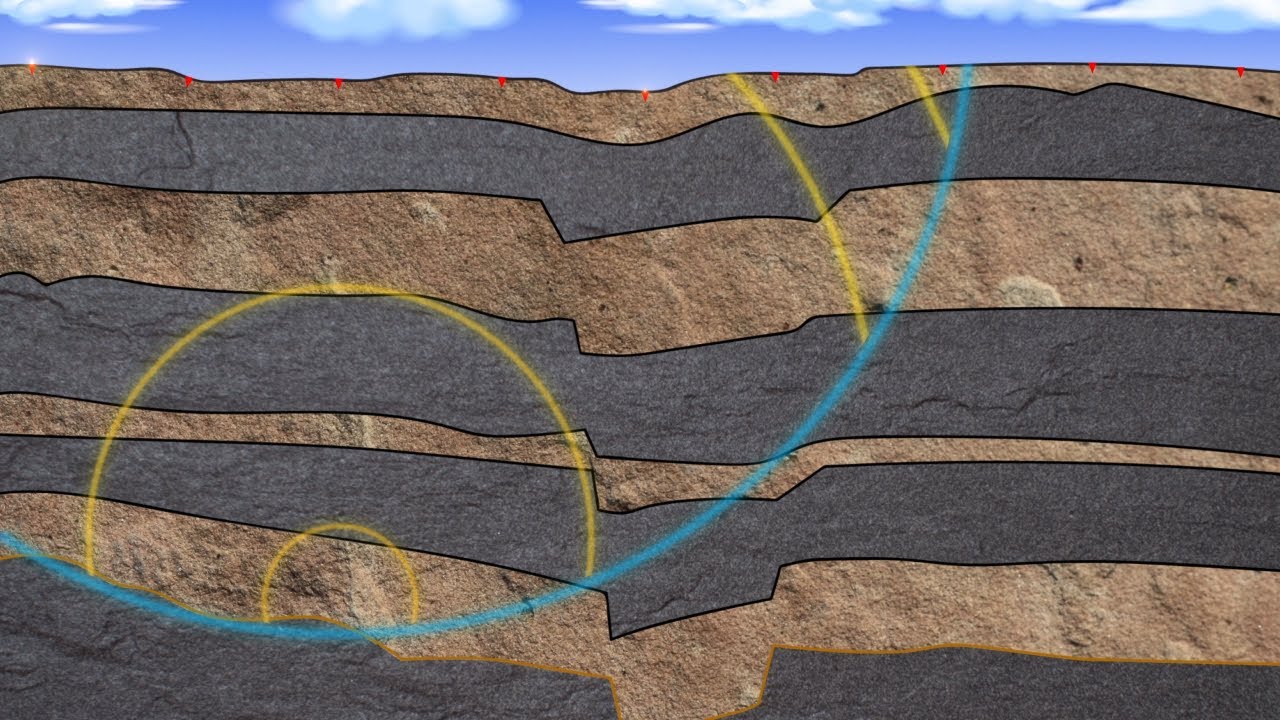
Geophysical surveys are techniques that allow geologists to image or see different rock types and rock structures down to several kilometers beneath the earth's surface. These surveys measure physical properties of rocks including density, hardness, electrical properties, magnetic properties, and the types of fluids contained within cracks and pore spaces.
Click to watch →

مكثف (حصة 6 ) - علوم ارض 2008 || الوحدة الرابعة - الاستكشاف الجيولوجي (2)
365
Geophysical surveys use different physical properties to detect minerals: (1) Magnetic survey (المسح المغناطيسي) measures magnetic properties, (2) Electromagnetic survey (المسح الكهرومغناطيسي) measures electrical conductivity, (3) Gravity survey (المسح الجاذبي) measures density differences, (4) Radiometric survey (المسح الاشعاعي) measures radioactive properties, and (5) Seismic survey (المسح الزلزالي) measures wave velocity through different rock types.
Click to watch →

Survey Geologi dan Geofisika (by. Siti Nur Zakiyyah)
124
Geological survey is a systematic investigation of rock structures forming Earth's upper crust. Geophysical exploration investigates geological structures suitable for resource accumulation using equipment like gravimeters, magnetometers, and seismometers. The survey supports oil exploration, mineral exploration, and infrastructure development. Key geophysical methods include: (1) Electrical resistivity method using electric potential fields and resistivity contrasts; (2) Seismic refraction measuring wave travel time using density and elastic modulus; (3) Ground Penetrating Radar using radio waves (1-1000 MHz) and dielectric constant; (4) Gravity method utilizing gravitational attraction based on density differences; (5) Magnetic survey measuring Earth's magnetic field anomalies from rock magnetic susceptibility differences.
Click to watch →

Kuliah Lapangan Geofisika 2020 - Metode Geomagnetik
2K
Geomagnetic survey is a geophysical method that measures variations in Earth's magnetic field caused by magnetized subsurface materials to identify geological structures, with applications in oil exploration, mineral prospecting, and archaeology; the method involves establishing a base station for diurnal variation correction and measuring at survey points using proton precession magnetometers, with data processed through reduction to pole to enable geological interpretation.
Click to watch →

3rd Year Physics - Magnetics Lecture (2015)
3.5K
Geophysical surveys require physical property contrasts between rock types to be meaningful. Magnetic surveys detect changes in magnetic susceptibility, while gravity surveys measure density differences. Field measurements are essential because textbook values vary by orders of magnitude. Station spacing must be carefully chosen to avoid aliasing, which produces incorrect signals. Airborne surveys cover large areas with 1 km spacing, while ground surveys offer higher resolution. Forward modeling creates geological models and calculates expected responses, while inversion modeling reverses this process. Both approaches require geological knowledge to validate results, as geophysical interpretation is inherently non-unique—multiple models can produce similar data. Understanding resolution limits helps geophysicists choose appropriate equipment and survey parameters.
Click to watch →
SQUID Operation Basics
Data Analysis & Results
SQUID Operation Basics
0:00- 1
Setup involves refilling with liquid helium to maintain 4.2K temperature.
- 2
Sample is mounted and inserted into the measurement chamber.
- 3
Magnetic field parameters are set before initiating the measurement.
Optically Pumped Magnetometers (OPMs) as Cryogen-Free Alternatives
While SQUID magnetometers are the gold standard for ultra-sensitive magnetic field measurements, they possess significant drawbacks, primarily their reliance on expensive and logistically complex liquid helium cooling systems. A major alternative perspective in modern magnetometry is the rise of Optically Pumped Magnetometers (OPMs). OPMs utilize laser-excited atomic vapors to measure magnetic fields and can achieve sensitivity levels comparable to SQUIDs (femtotesla range) at room temperature. By eliminating the need for cryogenics, OPMs allow for much closer placement to the magnetic source (such as the human scalp in magnetoencephalography), drastically reducing system costs, enabling wearable imaging devices, and challenging the necessity of superconducting technology for high-precision magnetic sensing.
Fundamentals of Superconductivity: Understanding zero electrical resistance, critical temperature (Tc), and the Meissner effect.
Magnetic Flux Quantization: Knowing how magnetic flux is quantized in discrete units (fluxoids) within a superconducting loop.
The Josephson Effect: Understanding the quantum tunneling of Cooper pairs across a thin insulating barrier (Josephson junction).
Basic Cryogenics: Comprehending the properties of liquid helium and its use in cooling materials to near absolute zero.
Magnetoencephalography (MEG): Exploring how SQUIDs are used in medicine to non-invasively map brain activity by detecting weak magnetic fields generated by neural currents.
High-Temperature Superconducting (HTS) SQUIDs: Investigating SQUIDs that operate using liquid nitrogen cooling, comparing their sensitivity and practicality to LTS SQUIDs.
Superconducting Qubits: Studying how Josephson junctions and superconducting loops serve as the foundational building blocks for quantum computing hardware.
Geophysical and Paleomagnetic Surveying: Analyzing how highly sensitive magnetometers are applied in mineral exploration and mapping Earth's ancient magnetic fields.
29.9K views191likes3:01@cmditrOriginal Release: 2010-12-07
[Music] so my name is Kon from no un University I'm a PD student so today uh we will demonstrate the squid super conducted Quantum interference device in a squid magnetometer the sample is moved through an external magnetic field a pickup coil links to a superconducting detector loop with parallel Josephson jum functions a magnetic flux from the moving sample interrupts the superconducting loop an applied bias current reestablishes the superconducting loop and indicates the magnetism of the sample the first step is to refill the squid device with liquid helium at 4.2 Kelvin a tube is used to siphon helium from the doer into the device yeah the computer reports the progress of the filling the rate should be slow at about 2.5% per minute and it is filled to 90% to contain the helium a positive gas pressure is applied from the external tank The Fill tube is removed being careful to keep its ends level press remove on the control panel to vent the chamber the sample tube is at the end of an insertion rod after the sample is loaded the chamber is purged enter the sample name Mass area and length set the magnetic field to 500ad initialize the transport to move the sample into the chamber click full DC scan the curve is centered at 2 cm different program sequences establish that conditions for the measurement for example it can be programmed to measure the magnetism as the temperature is changed from 350k to 10K establishes a 50 OE field and then scans from 10K to 350k in this output the zero field cooled zfc line shows the magnetism over a range of temperatures with no magnetic field the field cooled FC line shows the sample magnetism with an applied 500 OE field as the temperature range is scanned for super paramagnetic nanop particles the process is irreversible and the FC and zero FC curves separate a number of other curves can be generated the Magnetic Moment plotted against the magnetic field is not a straight line for a super paramagnetic material this curve shows a ferromagnetic property with a hysteresis Loop
Up Next
8:11
ESP32 ADC Voltage Measurement: Extending DC Range with Dividers
@G6EJD
85K views•2019-01-15

30:32
Ultrasonic Transducers: Resonant Frequency Measurement and Horn Design
@imajeenyus42
229.9K views•2017-02-22
54:16
Polymer Environmental Degradation: Mechanisms & Stabilization
@iit
1.8K views•2012-07-10

33:39
How a Student's Question Saved a NYC Skyscraper from Collapse
@veritasium
22.8M views•2025-04-26
Related Study Plans & Knowledge Roadmaps
Structured learning paths in Engineering
engineering
Building Acoustic Levitators: Physics & Arduino
01The Physics of Sound and Standing Waves
02Piezoelectric Transducers and H-Bridge Drivers
03Arduino Programming: Generating 40 kHz Signals
+ 2 more learning modules
14h5 modules
Explore Roadmap
engineering
Building Peltier Cloud Chambers: Particle Tracks
01Cosmic Rays & Cloud Chamber Physics
02Thermoelectric Cooling (TEC) Fundamentals
03Custom Liquid-Cooling Loop Design
+ 2 more learning modules
18h5 modules
Explore Roadmap
engineering
Yagi-Uda Antennas: Modeling, Build & VNA Test
01Introduction to RF and Antenna Fundamentals
02Yagi-Uda Antenna Design Principles
03Antenna Modeling and Simulation in 4NEC2
+ 2 more learning modules
18h5 modules
Explore Roadmap
engineering
ECG Monitor Design: Op-Amps, Filters & Noise
01Electronics & Breadboard Basics
02Op-Amps and Instrumentation Amplifiers
03Bioelectricity and ECG Fundamentals
+ 2 more learning modules
18h5 modules
Explore Roadmap