
















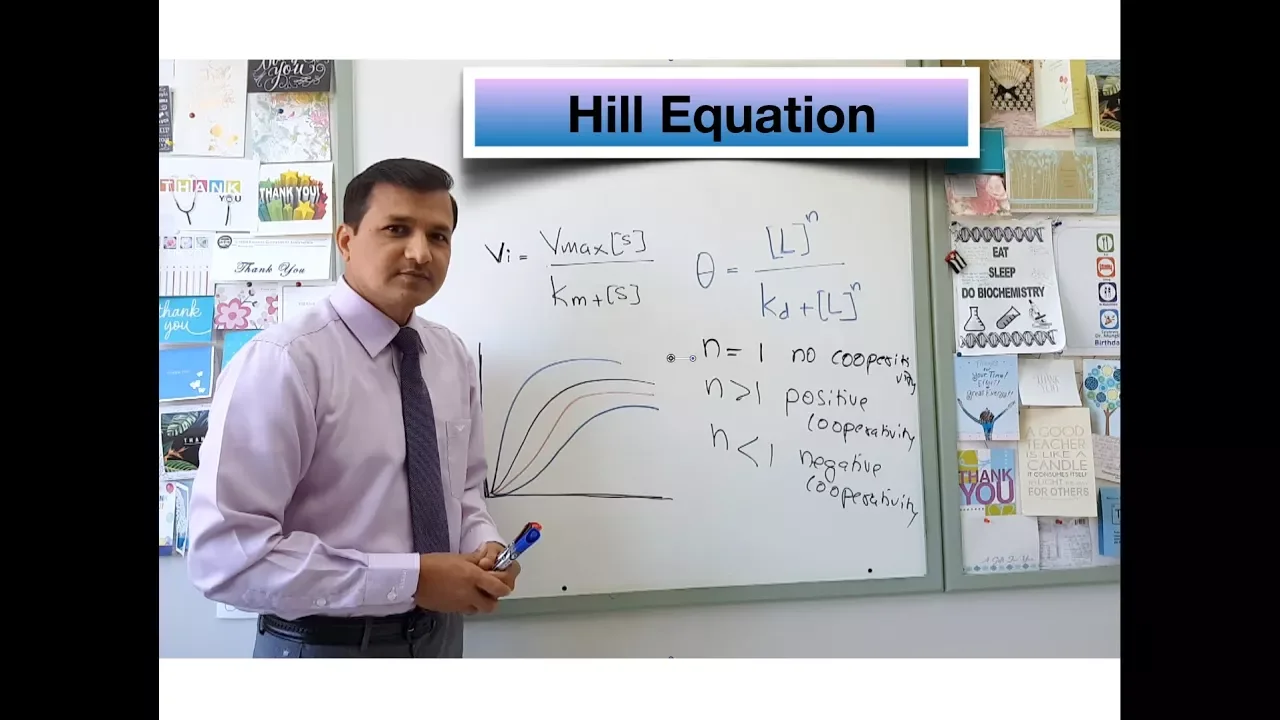



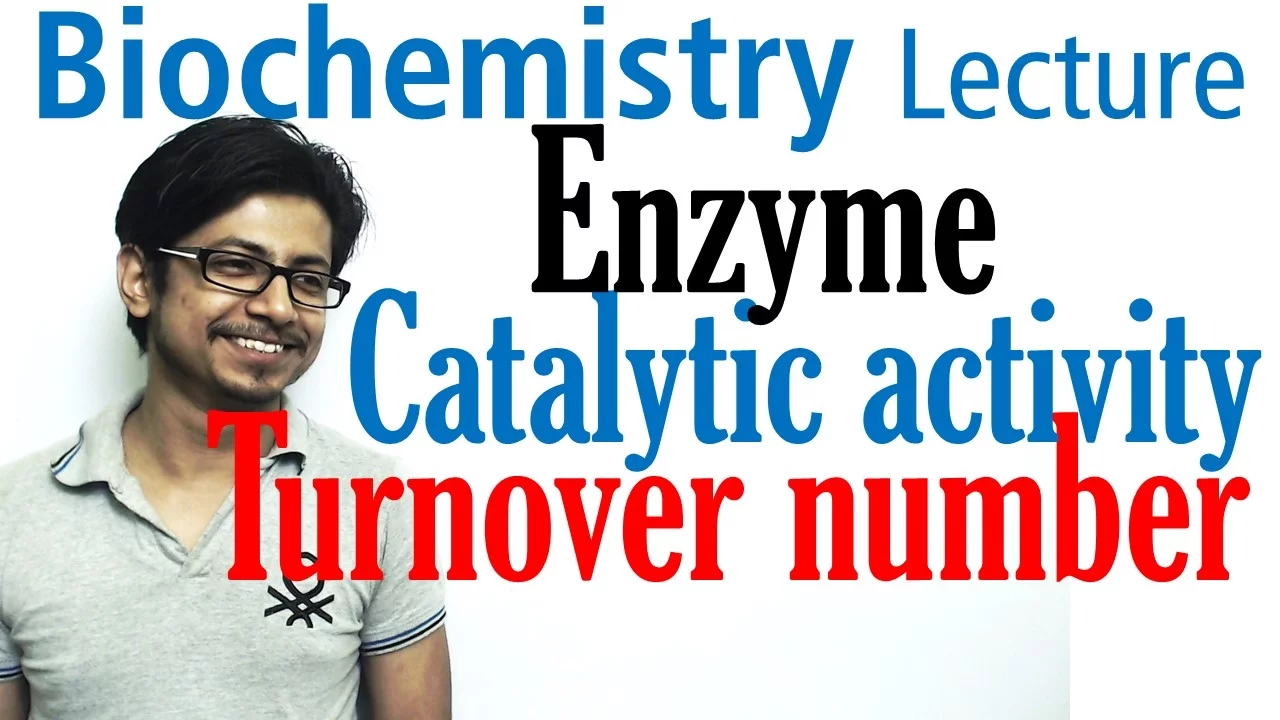






The Michaelis-Menten equation (V = Vmax × [S]/(Km + [S])) describes enzyme-catalyzed reaction rates, derived from the steady-state assumption that enzyme-substrate formation equals disassociation rates; Km represents the substrate concentration at half-maximum velocity and inversely correlates with enzyme-substrate affinity, where lower Km indicates higher affinity.
Michaelis-Menten Equation: Derivation & Enzyme Kinetics Explained
Added:Basic concepts of chemical kinetics, including reaction rates, rate laws, and reaction orders (specifically zero-order and first-order reactions).
The fundamental structure and function of enzymes, including the concepts of active sites, substrates, and the formation of the enzyme-substrate (ES) complex.
The Steady-State Approximation, which assumes that the concentration of the intermediate enzyme-substrate complex remains constant over time.
Basic algebraic manipulation and fractional equations, which are essential for following the step-by-step mathematical derivation of the kinetic model.
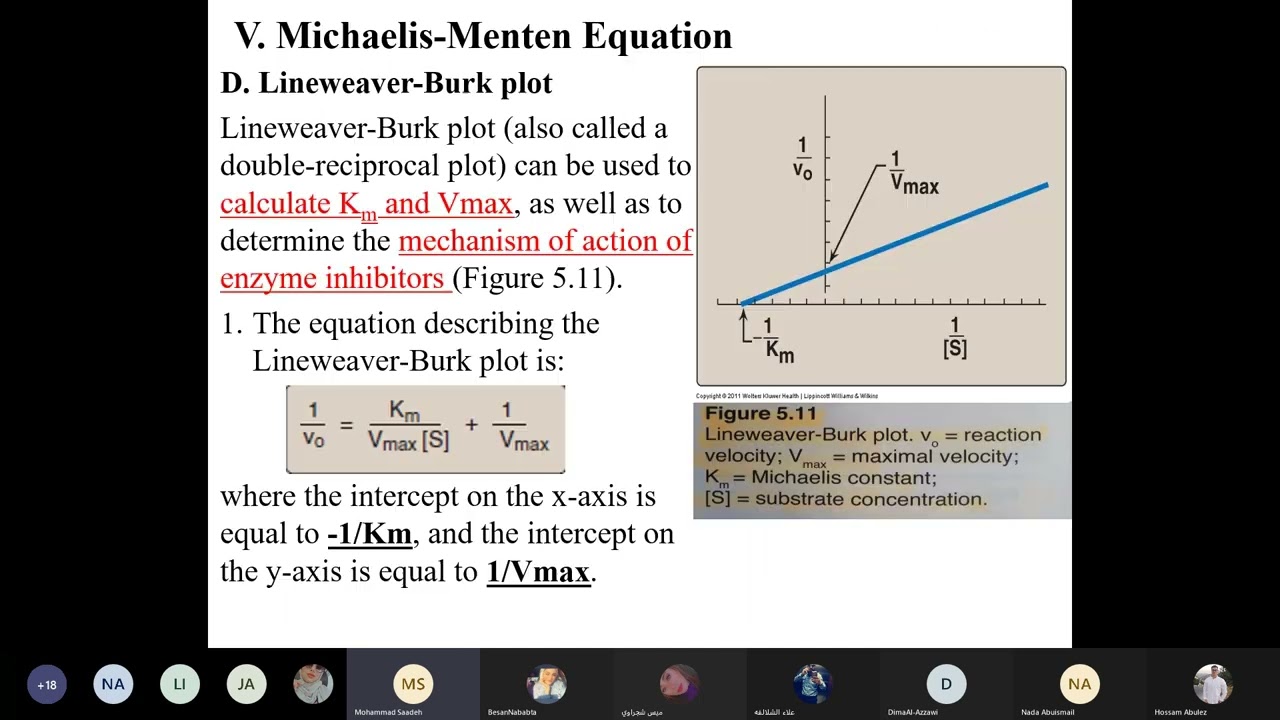
Lineweaver-Burk and other linearization plots (such as Eadie-Hofstee) used to experimentally determine Km and Vmax values.
Types of enzyme inhibition (competitive, non-competitive, uncompetitive, and mixed) and how they quantitatively affect Km and Vmax parameters.
Allosteric regulation and cooperative binding, which deviate from classic Michaelis-Menten behavior and follow sigmoidal kinetics (the Hill equation).
The concept of catalytic efficiency, specifically calculating the turnover number (kcat) and the specificity constant (kcat/Km) to compare different enzymes.
Real-world applications in pharmacology and drug discovery, focusing on how kinetic parameters inform the design of enzyme-targeted therapeutic inhibitors.
1.2M views16.8Klikes22:54Original Release: 2017-04-26
all right n gener ner in this video we're going to talk about enzyme kinetics but enzyme kinetics what is it basically well kinetics is referring to basically the rate of a reaction or the speed of a reaction so it's basically just turning the rate or the speed of a reaction with respect to an enzyme but it's kind of an umbrella term for a lot of different concepts that we're going to cover within this video the first first thing we're going to do because we're going to talk about a lot of stuff we're going to talk about the Michaelis men equation we're going to talk about its graph the line Weaver Burke plot competitive non-competitive uncompetitive and even suicide inhibition before we do any of that we have to develop a clear concept of this michis men equation so what we're going to do in this video is we're going to start with basically this concept this reaction and derive the michis men equation so let's go ahead and Dive Right In All right so the first thing so I wrote here Mich Menon equation we're going to derive I'm going to show you how we get to that point but we need to understand this General reaction right here so what does e stand for it stands for the enzyme so an enzyme is reacting with the substrate and when it reacts with the substrate through like an induced fit or a locken ke model it'll form an enzyme substrate complex and then what happens is that enzyme substrate complex will disassociate into enzyme and product so what we can say is the constant or the rate at which the enzyme in the substrate is turning into enzyme substrate we can denote this Arrow right here this one going towards enzyme substrate as K1 right then we can actually denote this enzyme substrate disassociating back into the enzyme and the substrate as K1 okay and then we can say that the enzyme substrate when it completely disassociates into enzyme and product that is K2 and then technically there is a reaction there is a reversible step here with enzyme and product going back to enzyme substrate but it's so small that at you know time when time is equal to zero that the K -2 is so small that we can just consider it to be negligible so this is just a unidirectional reaction okay now that we've done this we have to make a certain assumption what's that assump assumption called they call it the steady state assumption and basically what the steady state assumption is is that your enzyme substrate formation is equal to the rate of enzyme substrate disassociation so for example if I were to kind of make like a graph here and let's say that I have enzyme plus my substrate what's going to happen is as this reacts its concentration is going to decrease over time but then what happens is my enzyme and product is going to be increasing over time as the enzyme substrate decreases but there's this point where the enzyme substrate is constant throughout that entire process that's what our steady state assumption is saying so again what can we say the steady state assumption is equal to the rate of formation of the enzyme substrate and the rate of disassociation so let's go ahead and write that out then so if we say the steady state assumption is the rate I'm going to put f for formation is equal to the rate of D for disassociation well which one of these reactions if we're looking at these KS which one is actually going to form the enzyme substrate well if I look here the only arrow going to the enzyme substrate is this K1 where my K1 is telling me the the constant right the rate at which this enzyme in the substrate is turning into enzyme substrate so that's one reaction so what's the rate for that what's K times the concentration of my reactants and we're assuming it's like first order here so again this would be K1 for the rate times enzyme time substrate concentration that's the rate of its formation is there any other reaction well there would have been K -2 but again at time equals 0 we're assuming that that K -2 is so small that it's negligible so the rate of disassociation which one is showing the enzyme substrate complex breaking down well this one is and so is this one with K negative 1 it's going back to enzyme and substrate with K2 it's going to enzyme and product so what can we do here K negative one times enzyme substrate because he's acting as the reactant and he's disassociating into enzyme and substrate what else K2 so we can add that because K2 is showing the enzyme substrate breaking down into the enzyme and product so we say K2 is going to be times enzyme substrate concentration now what we' formed our steady state assumption now we need to do something else there's always when we have enzyme right so if I say that there's a total amount of enzyme total amount of enzyme what is the total amount of enzyme the total amount of enzyme is basically the amount of enzyme that's bound to the substrate as well as the free enzyme so when I take this into consideration the E total is the enzyme substrate plus what the free enzyme so the enzyme total is equal to the enzyme substrate plus the enzyme which is free enzyme now what I'm going to do here is I'm going to make an assumption here and I'm going to say what I really need to plug into this equation right here for that that e right there is I want to plug in whatever E equals with respect to this equation so what is e equal in this equation E equals en If I subtract over the enzyme substrate it's equal to enzyme total minus enzyme substrate complex right and I shouldn't have a lower case I should have an upper case here enzyme substrate now what am I going to do I'm going to take for here at e and I'm going to plug this right into the E so let's go ahead and do that real quick so K1 right and I'm going to put a parenthesis here is e is equal to enzyme total minus enzyme substrate and then what else let me put another parenthesis here because that'll come around that e and let's put the substrate concentration out here that's equal to all of this so let's just rewrite this K1 * enzyme substrate plus K2 enzyme substrate okay now that we've done that let's go ahead and follow our mathematical properties and we can do two things one thing is I can distribute this K1 into this whole concept into this whole um the parentheses in here so I can distribute the K1 into each one and look what else I can do I can distribute the substrate into each one another thing I can do if you look here I have K ne1 enzyme substrate plus K2 enzyme substrate enzyme substrate is a common factor between these two so I can pull out the enzyme substrate out of this out of both of them so what is that going to look like after I kind of simplify this so I'm going to distribute this these two guys in first so we got K1 times enzyme total times substrate's going to get distributed in there also then I'm going to distribute this K1 into this and this substrate into this right so I got K1 times enzyme substrate times substrate concentration so again I'm going in here and then in there and then I'm taking this guy in here and then in there and this is what I'm getting out of that and then what does that equal that equals and remember I said I was going to pull an enzyme substrate out of both of these guys well enzyme substrate is equal to parentheses K1 + K2 okay now look what I can do I have a K1 here which is similar across both of these equations and the reason why I want to I want to factor this one out is because there's another equation that I'm going to I'm going to use here there's an equation that says km which is your michis constant is equal to your K1 plus K2 over K1 so we can say that this is the rate of disassociation over the rate of formation is equal to the michaa constant well I already have this part I got to get K1 over here all right so let me get rid of this equal sign here guys that doesn't belong there let me actually fix this up a little bit make it look a little nicer okay so now that we have this km here and we got this K1 plus K2 over K1 now what can I do I can factor out this K1 let me factor that K1 out now so if I factor out K1 what do I have now I'm going to have enzyme total times substrate and I'll put a parenthesis there for this guys right there and then what minus what am I going to have over here enzyme substrate substrate concentration all equaling enzyme substrate * K1 + K2 okay now what do I do here now I can go ahead and divide this K1 over here so let me do that let me divide my K1 over so I'm going to divide my K1 and then what do we get well this guy cancels this guy out and this whole term here turns into km right because that's what km equals to the Michaela's constant is K1 + K2 over K1 so now let me simplify this so I'm going to have enzyme total time substrate minus enzyme substrate times substrate then what am I going to do make it equal to enzyme substrate and all of this is KM now I want to add over this I want to add over my enzyme substrate plus the substrate cuz I want to get my enzyme total by itself and I'll show you why in a second so let me go ahead and do that let me add over my enzyme substrate times the substrate concentration onto both sides so what I'll get over here let's see what we get out of this we're going to get uh enzyme total times substrate concentration equals enzyme substrate times km right Plus enzyme substrate times substrate concentration let me fix that up and make that look a little nicer guys so again enzyme substrate substrate concentration now what can I do now if you notice look what I have here I have an enzyme substrate that I can factor out of both of these guys let me go ahead and do that now so I'm going to factor that out so if I factor that enzyme substrate out of both of these guys what do I get enzyme substrate parenthesis I'm going to pull this guy and that guy out so it's going to be km plus substrate concentration all equaling enzyme total times substrate concentration all right so now it's looking pretty good here so now what I want to do is I want to get my enzyme substrate by itself why there's another equation we're going to use here in a second and it's V KN which is the initial velocity is equal to your K2 the rate of disassociation into enzyme and product times the enzyme substrate concentration this a velocity is dependent upon the rate at which the enzyme substrate disassociates into enzyme and product in other words I got to get this enzyme substrate by itself so that I can plug in what what is enzyme substrate equal to in this equation it's equal to V over K2 so I need to plug this term into my michis Menan equation because this is two uh too hard of a concept to be able to focus on I need to use other ways to be able to get this enzyme substrate equal to this concept here so let's go ahead and do that now so if I look how do I get enzyme substrate by itself divide over by km plus substrate concentration this cancels out and I'm going to divide over here by km plus substrate concentration and what do we get out of this okay let's write this all out now enzyme substrate concentration is equal to what this cancels out and I'm left with enzyme total time substrate concentration all over km plus substrate concentration now what did I say remember I told you that the enzyme substrate is equal to what the V over K2 well I'm going to take and plug that in now because now's the time that I can apply that concept now so let me go ahead and do that so let's go ahead and do this over here now let's come up okay now if I plug in V KN over K2 that's equal to what enzyme total times substrate concentration over km plus substrate concentration okay now what do I do to get vot by itself I multiply by I I'll take the inverse or the reciprocal of K2 what's the reciprocal of K2 well then I just do K2 over one cancels that out and what do I have over here I'll have K2 over here so I'm just going to put I'll rewrite this now K2 over one what do you get V KN is equal to K2 time enzyme total times substrate concentration over km plus substrate concentration here's where we make another assumption and our last assumption at this point in reaction of where your enzyme is reacting with your substrate perform making the enzyme substrate complex and getting converted into enzyme and product we're assuming that there is a point called V Max and V Max is the point at which all of your enzymes so remember what was our enzyme our enzyme is equal to our enzyme total minus the enzyme substrate or we can say the total amount of enzyme is equal to enzyme substrate plus the enzyme now there is a certain point in time when we reach maximum velocity Vmax in which all of the enzyme substrate is completely formed and there's no free enzyme left in other words you know how we had enzyme plus substrate to make enzyme substrate complex there's no more enzyme left over here to react with the substrate to make enzyme substrate so what do I have left in at Vmax enzyme substrate but what's my enzyme substrate equal to when I'm at VMAX e total well what was V equal to K2 * enzyme substrate that was your V right but now our maximum velocity is equal to K2 and now again there's no more free enzyme left we're at the maximum velocity what does that mean all the enzyme is completely saturated with substrate there's no more substrate there's no more enzyme available to add substrate no free enzyme so that means now enzyme substrate equals enzyme total so I can actually substitute an En enzyme substrate with enzyme total where do we see that in this equation right there so now what can I do I can say V is equal to V Max times substrate concentration all over km plus substrate concentration and what do we have here this right here my friends is the michis men equation that's a big mofo to go through and derive right but again what's the whole concept of this we can get from this General reaction we can derive an equation that's going to help us to understand a plethora amount of concepts related to enzyme kinetics this formula is essential to understanding these enzyme kinetics but I have to do one more thing before we finish up and start going into these Concepts I need to understand the concept of KM more specifically than just this so now I need to apply this concept with respect to the michis amenon equation and km let me do that quick now all right so let's if you remember when we talked about Vmax right what we can do is we can make this assumption so what I'm going to say is that if I say that V KN is actually the point at which Vmax is half so in other words I'm going to rewrite V so is Vmax over two all right and then I'm going to make it equal to this equation so V KN is equal to Vmax over 2 right so if I do that so V KN is equal to Vmax over two and now what I'm going to do is I'm going to plug this Vmax over two into this equation over here so let's go ahead and do that so if I come over here I'm going to say now actually I can just start right here I can say now that V Max over two which is again half Vmax is equal to that V not point there I'm going to make this equal to V Max time the substrate concentration over km plus the substrate concentration and then what I'm going to go ahead and do is I'm going to try to solve for km because I want to understand something about the mous constant here more than just that equation of it's equal to the K1 plus K2 over K1 so let's go ahead and do this so what I'm going to do is I'm going to take the inverse of Vmax over two here right or I could just let me just actually cross multiply so I'm going to cross multiply player so I'm going to get 2 Vmax time substrate concentration equals V Max times km plus substrate concentration here right because all I did was just cross multiply then what I'm going to do is I'm going to divide over by Vmax and when I divide over by Vmax what do I get if I have two substrate concentration right because the V-Max cancels out it's equal to km plus substrate concentration and I'm going to get km by itself how I'm going to subtract over the substrate concentration and what does that give me well two substrate concentration minus one substrate concentration is equal to one substrate concentration so what's the overall thing left over km is equal to the substrate concentration when when you're at half the maximum velocity so when you're equal when it's at half V Max this is another critical concept that we are going to need here to understand a little bit more about enzyme kinetics one more thing before we finish this video and start going into a lot of the enzyme inhibition here is I need to explain one more thing with respect to km km in the simplest terms because this is not necessarily the most true concept but it's going to help us to understand a little bit uh more about Affinity even though this isn't necessarily completely true but it's going to help us when we talk about km km tells us the substrate concentration at half Vmax it also kind of helps us to understand the Affinity of an enzyme that the Affinity that the enzyme has for a substrate so if we have a low km a decreasing km tells us that that enzyme will have High substrate Affinity so we can say that a low km equals High substrate Affinity okay then we can say the inverse if km is really high then we can say that it has a low substrate Affinity so this one had a high substrate Affinity this one will have a low substrate a Affinity to explain it in even a better way here is it can tell us how much substrate the enzyme can take on so with an enzyme with a low km it's going to have a high substrate Affinity so it's not going to be able to take on large amounts of substrate with an enzyme that has a high km it has a low substrate Affinity so it's going to be able to take on larger amounts of substrate this is a perfect physiological example here of two isozymes and I'm just going to mention them just for the heck of it here there is two enzymes that perform the same function in the body and our cells this one right here with a low km we can find this in our muscle cells this enzyme is called hexo kinas and all it does is it puts a phosphate on the six carbon of glucose there's another one that does the same function but it has a high km because it takes on more substrate so it has less substrate Affinity this enzyme is called gluco let me fix that sorry guys this is called gluco kinas and this is found in the liver so hexokinase is found in the muscles glucokinase is found in the liver and they're form the same function they're called isozymes they're similar enzymes with similar functions the only difference is the amount of substrate that they can take on and their affinity for the substrate so this formula is super critical for our understanding of enzyme kinetics this one right here as well as this one right here okay so out of everything that we talked about here the big Concepts that you guys should grasp out of everything is the mchis Min equation understanding how we derived it from this whole what part here this is another concept that we should really make important here is from this steady state assumption which is that the rate of formation is equal to the rate of disassociation right again these are two another two big Concepts to get out of all of this and then to understand how we get the Michaelis Menon equation and the relationship to the michaeles Menon equation with KM now that we've done that guys now we can go ahead and start talking about enzyme inhibition all right guys so I'll see you guys in the next video where we'll talk a little bit more about enzyme inhibition and my kis men graphs and line Weaver bur plots
Up Next
12:55
Nano Materials Properties: Quantum Effects & Surface Area (Ep. 4)
@keenandcurious123
41K views•2020-11-16
83:56
Biocatalysis and Catalysis in Islatravir Synthesis | Merck Webinar
@SCIwheresciencemeetsbusiness
675 views•2020-10-08
10:06
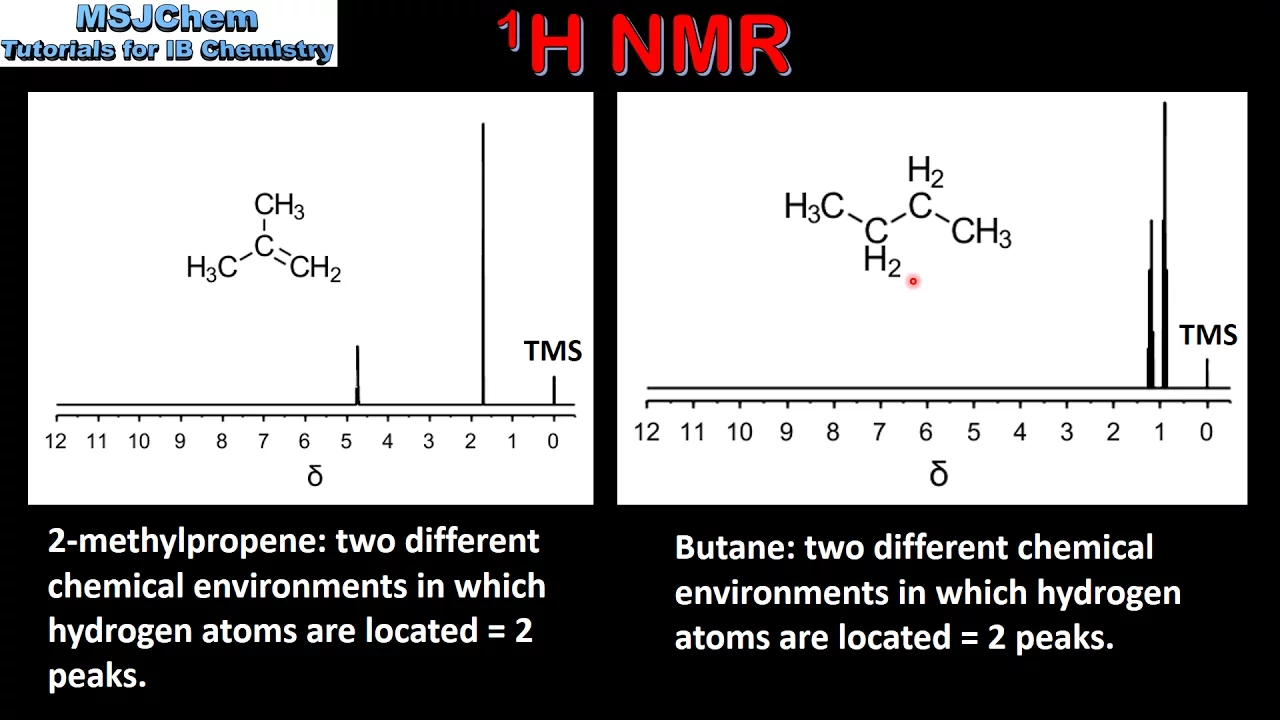
1H NMR: Determining Number of Peaks from Structure
@MSJChem
59.2K views•2017-04-06

17:31
Edible Water Bottles: A DIY Guide to Sodium Alginate Spherification
@ryan
10.5M views•2019-06-21
Related Study Plans & Knowledge Roadmaps
Structured learning paths in Chemistry
chemistry
Nuclear Chemistry: Decay, Meds & Fuel Cycle
01Introduction to Nuclear Structure and Radioactivity
02Decay Dynamics and Kinetics
03Radiation Interaction and Detection
+ 2 more learning modules
24h5 modules
Explore Roadmap
chemistry
Supramolecular Chemistry: Forces & Machines
01Foundations of Chemical Bonding and Intermolecular Forces
02Introduction to Host-Guest Chemistry
03Thermodynamics and Dynamics of Self-Assembly
+ 2 more learning modules
16h5 modules
Explore Roadmap
chemistry
Photochemistry: Excited States & Reactions
01Foundations of Light-Matter Interactions
02Molecular Orbitals and Electronic States
03Photophysical Processes and Jablonski Diagrams
+ 2 more learning modules
18h5 modules
Explore Roadmap
chemistry
Coordination Chemistry: Bonding & Properties
01Introduction to Transition Metals and Ligands
02Crystal Field Theory (CFT) and Geometry
03Magnetic Behavior and Spin States
+ 2 more learning modules
14h5 modules
Explore Roadmap