![TRUMP x ZELENSKY: O QUE ACONTECEU? [com Professor Hoc]](https://i.ytimg.com/vi/7WEMqzgjjBU/maxresdefault.jpg)

![La science du CLASH [La Tronche est à VOUS]](https://i.ytimg.com/vi/PbVEMxeOg64/hqdefault.jpg)















Affective polarization—the phenomenon where people develop strong negative feelings toward members of opposing political parties—has been documented through multiple research methods including feeling thermometers, social distancing measures, and behavioral experiments. Research shows that partisan identity is acquired early in life and remains stable over time, with Americans voting approximately 10 times more frequently than citizens in other democracies, which reinforces this identity. The phenomenon extends beyond political domains into interpersonal relationships, hiring decisions, and public health behaviors. While sorting (the alignment of political and socioeconomic cleavages) and media fragmentation are proposed explanations, the speaker argues that short-term interventions may be insufficient given the 50-year historical development of this phenomenon.
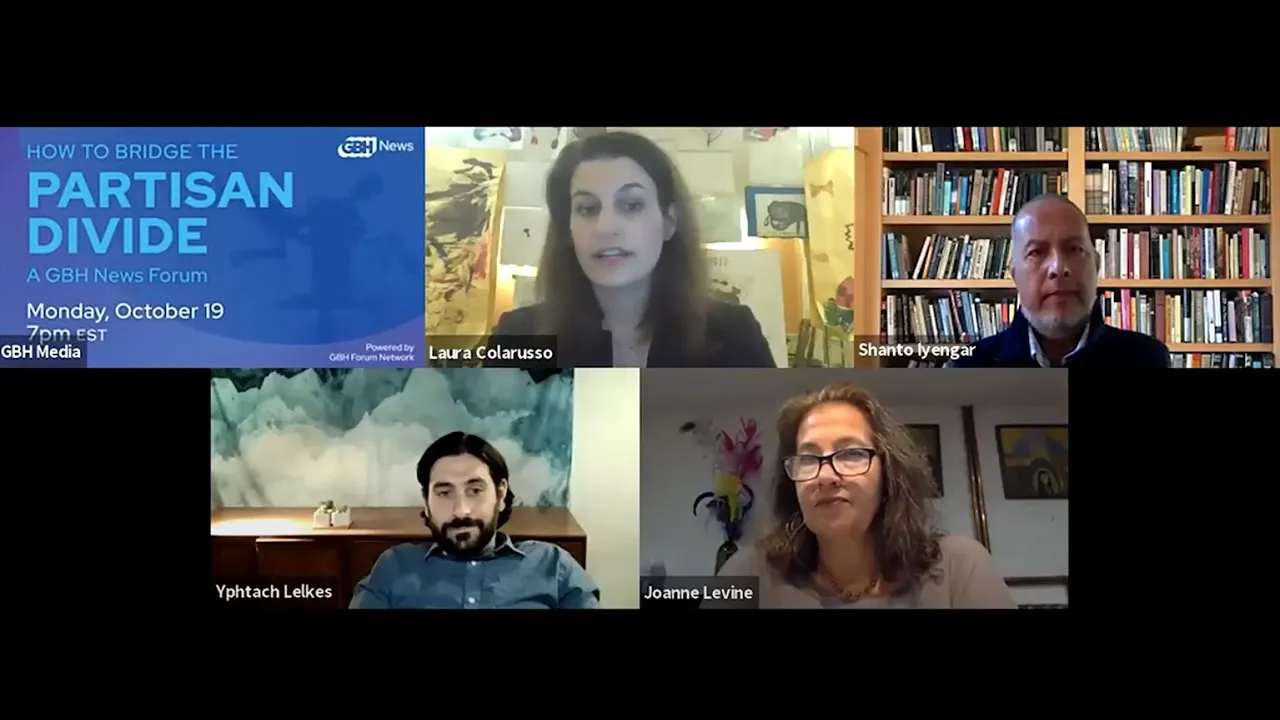
Affective Polarization Research: Stanford Political Science Talk
Added:[Music] available laughs hello everyone so I'm very excited to introduce you to today's teacher William Robertson co-professor of American studies and communication at Stanford University where he directs the political communication laboratory he is also the co-director of the polarization research laboratory and the copenport investigator of the American national election studies with Dr Valentino Dr eingar research has been supported by grants from the National Science Foundation the National Institutes of Health the board Foundation the future of the trust and the Healer Foundation he has written several books which have won his words such as the Philippine Converse the board of the American Political Science Association and the Goldsmith book prize from Harvard University he is also the recipient of the Marine Edelman distinguished career award so Dr Ivar's research areas of expertise include the role of mass media and Democratic societies political opinion and political Psychology today he'll be talking to us about the current state of the literature on aspect of polarization I just talk titled taking stock of research on how effective polarization looking back and forward please join the enlightenment generous introduction and thanks to everyone who doesn't make this possible um obviously I'm a big fan of the University of Michigan it's great to be back here I've spent countless countless days here it just felt like that well I would say even before you were around God I was uh as Mike tragat Mike Trout I was kind enough to send me photographic documentary evidence of the fact that I was here as a student in the 1970s in the summer program obviously well okay so without further Ado I want to make one point very clear this is not like a typical talk where I present a paper and can take questions and criticisms recording I'm talking now about an entire sort of literature and so feel free to interact at any point because the attribution of responsibility is not exactly clear it may not be my work you'll commenting on it maybe someone else so anyway so that's what I'm going to be talking about today is what do we know about affective polarization and are we in a position as I would say it was the latter end of the talk we are now supposedly where foundations are pouring millions of dollars into treatments quote-unquote treatments that depolarize are we really in a position where we can do things like that perhaps that will stimulate some discussion because I have fairly strong views about that to give you a preview I don't think we're in a position okay so honestly I'm going to begin with the Michigan connection since a lot of the data on affected polarization stems from the American national election studies which of course not would not exist whether not for people who were here at this very same Institute almost all of these survey data on the phenomenon of affected polarization derives from the Ames time series of course it's Campbell Congress Miller and Stokes and later iterations of the original floor many of them are sitting in this room touchings without you know so so this database is certainly Michigan can can claim all the credit for that aspect of this literature I want to make the point that it's not just the political scientists at Michigan who were instrumental in the development of this so this is a really interesting quote from one of the Millers interesting piece of history of the amas and and he points out that there were a whole bunch of psychologists who were implicated in the development of the NES as well including as you can see from this book including science who of course I had the Good Fortune to interact with him once understand okay so so Michigan has had a lot to do with this liturgy so historically speaking the context here is that in political science you know the initial wave of polarization research was heavily influenced by people in the modeling the spatial model was really sort of the theoretical inspiration this idea and you know the media motor theorem with the danzian logic but where is the median voter and so there was all this work showing that at the elite level if you looked at elected representatives particularly if you looked at the wrongful votes there's pretty clear documentation that Democrats and Republicans have diverged ideologically speaking Democrats are become super Liberal Republicans have become super conservatives so people and how Rosenthal were obviously the two principal proponents of this view Keith came up with the scaling algorithm that was used to DW nominate however uh when when the question arose as to whether the American public was similarly polarized yeah there was certainly no no General agreement and there still is an ongoing debate about the extent of ideological colonization not too late the level of the electric so you've got the people I'm calling the maximalist uh most prominently my very good friend who we overlapped at Stony Brook for several years Alan abramowitz has been writing extensively using AIDS data taking the argument that over time the Democrats and Republicans have moved pretty much in the direction of their Elites Democrats moving away from the center in a leftward direction and Republicans doing the same in a rightful Direction but my my staff and colleague Murphy Arena has been equally prolific on the other side of publishing multiple pieces on essentially noting that the American public this Bible by modality that you associate with polarization with the Peaks occurring at the extremes is far from District far from descriptive of American public opinion on almost any issue of current interest and and um follow Maverick at all have a forthcoming paper which pretty much makes the same point that that moderates still rule the roost in terms of the best pump Okay so so at that point I would say you know my take on the literature and polarization was well you know there seems to be this disconnect between the elite polarization and mass polarization that's an interesting question and one can speculate about why that is but if you wanted to know something about public opinion it's not necessarily we seem to have reached sort of a dead end that there's this ongoing debate to what it you know is it on a seven point scale is it is it a 4.2 which is a 5.7 and is that polarization and so on and so forth so it seemed it seemed an opportunity to sort of shift the debate a bit and so we came up with this idea that perhaps we could rethink the logic of mass polarization from the standpoint of social identity Theory and certainly to the extent that there was an identification with a political entity Democratic party or the Republican party to what extent did that also mean that people with a partisan identity would Express out group animals and of course the social psychologists in the room are well aware of social identity Theory and Decades of research documenting that there's this almost hard-wired tendency for people affiliated with the group to express in group favoritism in our group animals and so we wondered with that same characterization hold to the concept of party identification then we had some pretty strong prize to expect that it might since after all uh this is another Michigan connection uh we had very interesting longitudinal data suggesting that notion of partisan identity the idea that you consider yourself either a democrat or a republican is something that is acquired fairly early on and in this panel study the Jennings and Mimi High School senior study which tracked graduating seniors in the class of 1965 and surveyed them and then repeatedly resurveyed them I think five separate waves going all the way through perhaps 2005 or 2006 I've forgotten the date of the last wave but the important point to note here is that party ID is pretty stable over time this is individual level panel data and it's it's not ephemeral to say the least so it seems to be a salient it's a genuine identity and there's also a lot of socialization data from the 1960s suggesting that it's acquired at a very early age certainly a pre-cognitive development stage you know pretty much uh kindergarteners were being found in the 1960s to a pretty well developed sense I'm a Democrat or I'm a Republican and we're talking about this earlier on in regards seminar there's this United States seems to be quite distinctive in its in the extent to which people are asked to participate in the election year one thing we have it's a federal system so the number of times you vote compared to the normal British citizen I think a conservative estimate would be that Americans suddenly vote in probably 10 times more frequently than the average Brit since we have national election State elections local elections and on top of that we have this idea of the permanent campaign in Spain uh the campaigning is fixed at 15 days and most European countries I think the maximum would be 60 days whereas in this country of course it is said that the campaign for the next cycle Begins the day after the election so all of these things would lead you to suspect that this identity in question partisanship is something that people are encountering on a on a chronic basis that is to say they're being repeatedly reminded of their parts of affiliation so in that sense if we we would anticipate that you're going to get this in-group out of group phenomenon of Interest favoritism animus syndrome we would expect you you would you would have strong expectations to that effect so let's look at the ways in which people have tried to sort of observe this uh so the indicators of of animus in particular ingrown patriotism it turns out it's not of that not that much in it's not very interesting because it turns out over time it seems to be a constant uh that that the level of affinity for your fellow partisans is people are enthusiastic but the Ebbs and flows tend to be minimal whereas a lot of the movement we observe is occurring at the level without competence well first of all obviously the most important measure of our group members we have the feeling the feeling phenomenas I'm going to show you exactly what I mean these have been on the anes since 1968 but more systematically since the 1970s so we have a continuous measure of how do you feel about both the Democratic party and the Republican party over the last 50 odd years so obviously that's going to be our main source of evidence we also have secondary measures of social existence which has to do primarily about how you feel about the close interpersonal relations with people who are on the opposing on the opposing party there's a very famous study done in the 1950s the ominous study on the Civic culture and for some reason they asked this question about how would you feel with your son or daughter were to marry someone they would provide the party of which party is your son or daughter marrying into so you could look at whether or not it was from the same party that responded or some other party and of course that's an interesting Baseline because it's well before polarization developed and as you can imagine and I'll show you the side in a minute uh most people who are asked that question they had trouble actually comprehending the question they were wondering why would why would I feel anything about someone marrying a Democrat or Republican presumably if it was a Democrat you might imagine there'd be quite pleased about the prospect of marrying a republican since it might mean economic Mobility but at any bottom line is there was Zero social distancing in the ominous study but replications since then we observe fairly significant increases the third indicator of affective polarization of areas this is a more stringent indicator is that you have the kind of finding that people are dividing in a variety of non-political domains they're dividing along party lines so I think the covet the pandemic and Views about vaccination views about masking that would be a sort of a case of spillover I mean why would this is an entirely non-political domain why should Democrats and Republicans differ on questions of Public Health and there's a whole bunch of other studies Sean Westwood and I ran the study where we gave people the audit type studies we gave them resumes and asked them whether these kids were worthy of a scholarship and it turned out that when we inserted some very you know very subtle cues about their extracurricular activities being the president of young Republicans or the president of young Democrats those queues turned out to be very powerful in determining the scholarship the person that people selected and that that trumped sort of the credentials such as GPA and most finally if you if you subscribe to the view that survey research on matters of art group analysis to be taken with their thought and maybe there's a lot of cheap talk here but some people might call cheerleading and you want to see some real behavioral evidence well there's quite a bit of evidence along those lines today primarily from use of either the trust or dictator game where people are given money and asked to donate some to a second player and I'll say more about that in a minute and it turns out you get fairly large penalties for when you're playing with someone from the opposing side the donation is significantly diminished so that would seem to be more compelling evidence than what someone says in the context of a survey okay so those are the use the the ANS feeling thermometer essentially asking people to rate a variety of targets individuals or groups on scale going from zero very cold or unfavorable feeling to 100 and that's the midpoint where you don't have any feelings whatsoever and there's this card that in the face-to-face condition is read out to the respondent and I'll say more about the fact that in 2012 the NES developed the online platform which self-administered where the respondent does all of the work on their own and you might well look at that there are significant mode effects as you might as you might imagine okay so this is the uh so here's the time series uh this I um I don't want to act like we're the credit here for this but this is the only uh prison data presentation I can tickle that made this was on the front page of the New York Times I think it was maybe in 2017 where they actually the New York Times and a story of polarization and they produced the same graph using the NES data and they cited the areas right there on the front page of the New York Times so you can see that the the green line is the in-group rating and it's not changing very much there's a slight uptick around mid-1980s or so but it's pretty much in the 70s whereas the blue the thermometer rating of the opposing Party begins to decline probably around the late 1980s or 1990s kind of a mini Peak and from then on you see it's a pretty steady steady decline and in the last three or four Cycles it's been a pretty precipitous eventually the one point I would make is you can ask about whether the party is the relevant Target shouldn't we be asking about the Democratic party or the Republican Party in the philologist but what happens when you substitute the name of the nominee if you look at the presidential candidate in that year as you can see it's pretty much these are fairly overlapping time signals so the party measure or the candidate measure it doesn't matter which one you look at you're going to see the same increasing in group out of group score over time now this is looking at if you look at the Blue Line these are the people who give the art party the lowest possible score that is say zero and as you can see in the last three Cycles this is a non-trivial share of the sample that is willing to say or respond zero and I I've inserted this note here about the significant mode effects post 2012.
and you know I'm not sure what to make of the mode effect I mean it's clearly a significant effect statistically speaking that is to say when you're in the face-to-face condition when you're being interviewed and the interview was sitting right across from you you're much more likely to moderate your evaluation of the art party and when you're in the online mode you're more likely to you have an extreme a lower score now which of these is biased well probably both and it's not clear to me if I was to guess I would probably argue that the level of distortion is probably greater in the face-to-face interview since the social norms governing Civility and normal human discourse are very much in favor of being polite and being sort of civil so so you could argue that perhaps if you were cut if you were trying to come up with what is the true score what I'm saying is that I wouldn't necessarily say that it's the face-to-face interview that is the truer measure of article balance I mean so you can argue in both ways anyway it's about a it's about between a five and six percentage Point difference in the thermometer so it's a pretty big effect that you're getting increased ad group animus in the all in the privacy of your own home and Beyond Anonymous setting of an online survey that's clearly encouraging the expression about prevalence now there's also data I was talking about the socialization literature so there's the study from the 1980s Steve chafee and David Sears did this study on middle school children and they didn't it's not the same feeling thermometer they asked a question about trust in the Democratic or Republican parties and you can see the original data is on the left side of this graph you can see that the rating of the input the trust in the party and Trust in the output is not significantly different from each other so you you wouldn't see any traces of polarization but we replicated the exact same question 2019 as you can see by then the the kids in middle school and high school are pretty much emulating their parents suggesting that this is something that is being transmitted across the generations okay now this is I was out of conference a couple of weeks ago I wish this paper was presented using feeling thermometers and you can see the uh the divide the the ratings for for republicans and Democrats seem to be on the same order of magnitude as the israeli-palestinian divided Israel which obviously raises questions about are we on the verge of some kind of civil strife is it really is the cleavage is the partisan cleavage in the United States equivalent to the nationality cleavage in the Middle East well it seems to be again if you've Post January 6th maybe maybe the evidence we should no long we should run all along that that was going to happen these kinds I guess the question I'm asking are these feeling thermometers deep talk or are they really diagnostic of this sort of genuine reservoir of ill will that might perhaps lead to support for anti-democratic Norms willingness to engage in illegal activity willingness to support political violence and there's been a lot of commentary on that of late uh I would hold off on growing any from conclusions I'm going to get to that the what little evidence we have to date suggests that there is not much spillover from the feeling thermometers to these behavioral measures of democratic backsliding so let's hold off on that but that's an interesting point worthy of further discussion okay and the final point I want to make is of course that that there's something about partisanship that should be distinguished from other forms of social identity things like race and ethnicity and gender and religion so you can see from the feeling that moment as you know Christians Catholics Hindus Muslims atheists race SCS middle class who are rich you can see those divides do not elicit the same level of polarization on the thermometers so the gold standard seems to be the party Department so my point here is that if you can imagine yourself as a respondent in one of these Ania surveys and keep in mind that the feeling thermometer battery it's not a trivial encounter with the interview but you're you're being asked to give a thermometer score for you pretty close to 20 20 different targets okay Catholics Jews Hindus Muslims you can imagine the respondent who's being asked all these questions and then finally he gets the question about democracy about Republicans so you can imagine that there might be some pent-up demand that all these I've been prevented I've I I've been unable to give you my genuine feeling about any of these groups because I've been constrained by the norms and now at last you give me an opportunity zero perhaps that's maybe it's the pent-up demand that is driving okay this is again keep in mind this is face to face that's so you've got the count of railing Norm which is in you better be polite and nice and civil but despite that you're getting this big big sort of Advantage from the propolarization point yeah so don't you have experience for you manipulate the order of the targets I believe it's randomized in most Cycles so it's not it's your argument would be that this is something that happens later on yeah I'm going to get to that there's a there's one of the plausible mechanisms uh so we've just got a paper on that various as you know is is full of questions of part of the labels even before you get the thermometer section I've counted you've answered 50 questions that have a very clear partisan variance evaluations of the performance of the incumbent president the likes and dislikes of the candidates the likes so you can imagine what's happening here if you're a respondent and you've been asked I've just given you a partisan response indicating that I'm a Democrat or Republican 50 times before you've asked me the thermometers obviously I've I've been rehearsed by now you can say that I've my partisanship has been primed because I've just run through this task the very detailed task in which I've told you that I I like Democrats and I dislike Republicans so obviously when you ask me the thermometers I'm going to give you a fairly extreme so the experimental test of interesting is to run an exact run a survey in which there is zero partisan balance in the survey content and then insert the thermometers and see what happens that would be where there's it's Absolutely Fresh the first the first question with any partisan valence is the demand I think that would be a relevant test I'll tell you right now that we did that we didn't do it on the scale of the anes because obviously we couldn't we couldn't incentivize anyone sit for an online survey that took 60 minutes so we only did it it was only 15 minutes but in the one condition there was literally zero political content and the other condition we put in all of the anas extended likes to dislikes and we got exactly the same level of thermometer polarization in the non-political condition as in the political condition so yes that that's subject to we can certainly test that but in the context of the NES given the saturation level of partisan valence the other point I would make is again this is going to come up later on but since you've raised the question I'll bring it up right now is for the first time in in 2020 we decided to do a collaboration the AES with the GSS the General Social Survey which is the you know the counterpart in sociology is the national face-to-face although the pandemic it was all online the political content of the GSS compared to the ads is muted partisan valence in the GSS is much lower there is political content how much money should we be spending on various items how much confidence do you have in Congress they're up approximately a third of the GSS questions can be characterized of having some political content but a much smaller percentage of the GSS could be said to be strong partisan balance you're not constantly asking questions about how do you how much do you like on this bike Donald Trump or Joe Biden as is the case with the areas so the GSS is sort of a nice control group if you will and because I was involved with setting up the collaboration with the GSS obviously I asked them as part of this deal they were going to include a module of alas questions on the GSS and obviously I made it to the point that the thermometers were going to be included so the GSS and you can now look at it the GSS has the two party thermometers and they only answered the answer the party ID question and one other question there's two questions parties and Valence before they got it was on the thermometers so I was holding my breath before we got the GSS data but the GSS data guess what it's just as polarized so the feeling of Muhammad is on the GSS where presumably this kind of partisan priming is minimized shows exactly the same level of both those H so on both scores I would suggest that the thermometers are doing they're pretty robust uh it doesn't seem to be the case that there's some kind of artifact to the fact that you're forcing people to answer all these political questions and that somehow causing them I mean self-perception Theory and all of that that they figure out that they are you know they're either super Democratic or republican because they've gone through this ritual of answering these 50 questions so I don't know if I've answered the question but it seems like on measurement grounds this is another question which is why social norms don't constrain our communities the way you claim that well why was it because it's a voluntary it's you know it's not inherited it's not it's not kind of protected but we shouldn't feel that we should be constrained in any way which is why I was saying you would have bent up the bed because all these other groups aren't protected and given what we know about power of social norms especially today I think people are going to be super circumspect in what they say so in that sense this is one group that's not subject to the same constraint because you chose your party it's your fault I can hold you accountable I can blame you I can't blame you for anything else that's descriptive okay so I don't want to get I mean 300 kilometers are just sure they're part of the Enterprise are measuring it but given the fact there are all these other indications so look at the if you look at presidential performance you know how do people evaluate the incumbent you can see that there's a huge partisan Gap now in these approvals and it's really Gary Jacobson is the person who's done the most work on this and he's documentaries if you just track it over time it's massive the partisan Gap in evaluations of income of approval is now huge so if you look at Trump I mean it's night and day Democratic approval versus Republican approval it's like that's kind of an order of magnitude that's pretty massive which one is right who is right so it seems pretty clear to me that I retract myself oh you're getting back to the question of face-to-face versus online which one is right I just told you okay well you'll have to deconstruct that later on okay social distancing that's again this idea of you know that that that that party divisions are producing interpersonal tensions and that that that there's a sense that therefore people are going to go in on the basis of the political divine so I mean if you're a Democrat and I'm a republican you know I don't wanna have a beer with you well I was talking in earlier on about it just tells us how far we've come from you know in the 2000 election I'm old enough to remember the focus groups that were being run Sammy Greenberg was working for for Bill Clinton and then later on Al Gore and was Finding in these focus groups that people were saying you know that they'd rather sit down and have a beer with George Bush than with Al Gore and that was like you know that's just 20 years ago today I don't think you can find too many Democrats saying that would like to have a beautiful Donald Trump no matter how awful the Republic of the Democratic candidate might be but anyway the point is you can see now there's we've got a lot of compelling data from online dating sites suggesting that political similarity is a Big Driver of interpersonal attraction uh I think the the Huber and more Hotel study is pretty compelling there's other studies about Rose McDermott and her colleagues showing that there's a lot of what people reveal on these online foundations it's quite strategic that's why the Huber Malhotra binding is so compelling is that people are not openly advertising their political preferences because obviously they want to maximize they want to maximize the potential out there in the market like I said I voted for Trump three times that's not revealed but somehow people extract that information in the in the preliminary exchanges that are good I told Greg Huber that when they were running up that day you really hate to make that point that this your result is a super robust finding because you really have to dig into that to get that information it's not easily accessible but the finding is that it's the number one predictor of success meaning you know where people actually ended up going out where there was some kind of a relationship that was established political ideology was the strongest predictive and of course now we've got all this other data on the composition of your friendship groups and so on and so forth so all of this is suggesting that there's definitely spillover from the political divide into interpersonal interactions and to take you to the next step here's the ominous verbal data from the 1950s which is the left panel as you can see if you look at the British two-party system that's comparable you can see that in the 1960 data not even five percent of the American sample said they would be this please with the prospect of having an opposing partisan as a son-in-law or daughter-in-law but then uh don't ask me why that question was not asked for the next 48 years you'll have to ask Dr Rivers about that but we inserted that into a into a Hugo of my colleague Doug Rivers was the person who founded the company with Norman Nye a company that was initially called polymetrics that eventually morphed into this major online vendor of online surveys it's not known as yugoff so we got Doug to put in a question in 2008. as you can see there's this striking uptick in the proportion of partisans who Now respond feeling somewhat very upset and then two years later even more so whereas in the British case there's no such corresponding increase over time so that's the second sort of in addition to the thermometers we now have this kind of overtime data suggesting that people are choosing to segregate interpersonally on the basis of their politics and then of course we're gonna there's all this evidence now on on [Music] the idea that that you're selecting you're selecting into a long-term relationship based on political preference as opposed to a variety of alternative explanations which I don't have time to get into but there's obviously all kinds of other explanations as to why you might end up in a long-term relationship with the fellow Democrat or a fellow Republican but the fact that you end up with someone who's got the same problem that may have had nothing to do with this election itself okay but technically look for it there's a paper uh Tobias chronister myself and a couple of other people where we we test the selection mechanism against these Alternatives and we we argue that it is indeed selection but there's a lot of okay and this finding from the paper I decided that the number of couples today in which there is the potential for this kind of conflict or tension arising from political disagreement is about 15 whereas in the 1965 study I believe that's the next slide if you look at 1965 that's the Jennings and nimi study in which the high school seniors also a circle that their parents were interviewed you can see it's barely above 50 it's close to 60 percent had the same political party affiliation so you've got this dramatic increase in homogeneity of the household over time and you have to take my word for it as I say the argument is that this increase is attributable to selection and not to these alternative mechanisms that we could talk about okay and then finally giving up getting those four indicators that I talked about earlier here's the behavioral data if you're an anti-survey person and you don't take anything I've said to this point is Meaningful well maybe this will be more convincing so you know economists behavioral economists in particular I've been working with the dictator game and the trust game for years the dictator game is pretty straightforward you simply give you simply tell the responder I'm going to give you 10 10 bucks you're going to be playing with a player 2 and you're given a capsule description of who you are playing with so obviously in our studies we manipulate their political affiliation we say they're a Democrat or Republican in addition to a whole bunch of other stuff about their age where they live so on and so forth and then you're asked well okay you can now just donate I've just given you 10 bucks you can give as much of that as you like to player two and that's it and of course if you're an economist you know the the real question of interest is why the dictated game is now being administered in something like 50 different countries and on average about one-third of the initial donation is is donated which is obviously totally irrational uh from the standpoint of economic theory you have no you could just keep all of the ten dollars but for some reason people give about 30 of it and it just happens the chess game is an iteration of that here you told that look whatever you donate the study the people running the study will triple that and then player two can return some of that back to you so there's this kind of strategic element in the trust game so you might anticipate that people anticipating some reciprocity might be a bit more generous well anyway the point of the so Sean Westwood and I in our original paper we implemented the truss game I think we did both actually both games obviously yield a behavioral measure it's commonly used in the comparative politics of political science any transfer distribution you can since if you decide to sort of penalize people in terms of how much you're giving the only way you can explain that is it must be because you have decided to discriminate on that basis whatever the the relevant behavioral cue was that you provided in your description the manipulation that's the only explanation for the arc so here's what we found in the uh dictator game uh there's like a 1.50 penalty for being on the opposing side you only get two dollars and fifty cents whereas if you're same party as the player one you get four dollars and in the chess game it's somewhat reduced but it's still significant so this has been replicated multiple times yes and just quick question our real estate are these real oh yeah people are actually receiving the payouts absolutely not at all I mean the IRB the IR the IRB wouldn't approve yeah it wasn't genuine and in fact this is a footnote back my carpets who I actually work quite closely with in the years before his uncommon premature death he uh did because he suspected that because we would these are all virtual these are all games have been played online and so he actually we never published it but he ran and studied face to face more conventional old-fashioned way and found exactly the same so I'm fairly confident that this is not an artifact of the platform on which these games were played okay there's this other I told you about these audit studies so Sean and I did this where we gave them these resumes and as I said earlier we manipulated various different aspects of the resume but but it turned out that the extracurricular cue about being active in Party politics being president of the young Republicans or young Democrats was a super powerful predictor of which kid ended up winning the scholarship gift and gift is a is an interesting study actual job resume is being mailed out in heavily Democratic countries people who indicated that the Democratic affiliation were more likely to get a call back and the corresponding bias as you can see this is something that appeared in political behavior and there's a whole bunch of other studies mutual fund managers in my Stanford colleague Neil Malhotra has collaborated so there's a lot of evidence now that it's it's influencing economic behavior which again you this is totally non-political why should why should the party queue make any difference so the very fact that you're getting this kind of spillover is indicative of the power of partisanship and the extent to which the partisan queue is now being exported into these ostensibly non-political domains and sometimes these non-political domains might have life and death consequences which they have presumably that makes the test the polarization test especially robust I mean if you if you're willing if you're willing to die in the name of of maintaining in group favoritism well that seems to me to be a pretty rigorous test of modernization and here you see very clearly the fact that Republicans have a very significant lag in terms of adopting the appropriate Public Health behaviors okay so so the coffee and there's all kinds of papers now different manifestations of this blue red Gap in the area of Public Health this is one of my kind of favorite examples this idea that people are dying in you know they're willing to subscribe to these rather eccentric beliefs about things like y attacks on Trump Tower no rushing as you can see now you get Republicans are much more likely to be misinformed and I was we were talking about this earlier in the red class there is this ongoing debate in political science about whether these quote unquote misinformed responses are sincere or alternatively are they simply you know people say well I know there was no such thing as a wiretap but I'm a republican I'm just going to say that because it makes me feel good I'm supporting Donald Trump that's the so-called cheerleading explanation for misinformation and presumably one way of getting around that is by making it more costly for people to give the misinformed response and so people have adopted this design of paying people offering them a cash incentive for giving the objectively correct answer and presumably if you're going to earn money for being truthful you should these partisan gaps ought to be hard to disappear and the initial random Studies by John Bullock at all and Marcus Pryor and Skip repair found indeed that when they incentivized the level of misinformation was significantly reduced however there the questions featured in those studies were not not high on partisan balance if you take a look at the content of those Knowledge Questions they were pretty much standard you know what is the size of the federal deficit I think one of the questions is what is John McCain's middle name or something like that not questions like did Obama why attack Trump Tower did millions of illegals about in the election I mean these These are obviously valence questions coming right out of the month the Republican candidate for the president of the United States so Eric Peterson and I replicated the the cash incentives study with these questions and we got the reduction in the level of disinformation was on the auto magnitude of under five percent so we don't think it's cheerleading uh I don't think the folks who marched on the capital of my cheerleading I think I think it was genuine so in other words misinformation is indeed a spillover effect of volumization okay so now enough on I've probably gone over time as it is uh no good so I want to now move to this question of everything I've set up at this point is simply descriptive we've documented the phenomenon of increasing electrical panelists I want to now talk about what are the possible explanations for why everyone's the first explanation is simply this one the jargon the political science it's called sorting and sorting is simply if you're more of a comparative politics person it's this idea that political cleavages and socioeconomic cleavages are becoming more closely aligned so this idea that that you have reinforcing as opposed to cross-cutting cleavages so in this country it's pretty clear that over the last 50 years there's been a very clear pattern in favor of increased reinforcement so if you look at the racial divide the gender divide religious in terms of whether you're non-religious or religious you clearly see this pattern that I've indicated your Democrats are non-white female Urban non-religious and Young Republicans are on the other side on each of these divides so if that's the case and we know from the compounded politicization when you have a country like Belgium where you have people divided by Language by geography and by religion the potential for Strife is Amplified reinforcing cleavages tend to be more associated with violent outcomes a lot so if you're buying into that logic we ought to find more polarization because we've got the greatest sorting there's also this other definition of sorting which is that for years the NES has asked people not only about that party but also do you consider yourself to be liberal or conservative and of course in the 1950s and 60s and 70s the two parties were quite diverse on the question of ideology we had Liberal Republicans from the Upper Midwest and Northeast we had conservative Democrats most notably in the South but then of course post 1980 as the two the party system has gotten sorted ideologically there's obviously very few Liberal Republicans and very few conservative Democrats so the upshot based on this phenomenon of increased starting ought to be strengthened polarization and in fact if you replicate that feeling thermometer so if you just look at liberal Democrats and conservative Republicans it's off the scheme but if you look at that the thermometer difference is 56 whereas for all the slides I showed you earlier there's a lot of the differences about 49. so it's it's a pretty pretty robust increase in affective polarization associated with this idea of sorting okay so that's a fairly straightforward explanation if you look at Family homogeneity this is a really massive effect when we went for some reason we we never got this paper published I can't remember why I think the reviews were well you know we're not not super negative they're not super positive but we could have done something with it but Tobias was too busy um finding a job with a startup and we we ended up not doing anything with it if you look at people living in mixed households and thermometers for Clinton and Trump as you can see they're they're pretty they're pretty uh moderate uh so when you've got exposure to if you're in a cross-pressured household you say you don't say really bad things about the presidential candidate whereas when you're the same party household rating is pretty pretty negative so anyway that's the Sorting explanation explanation number two which is something to do with a phenomenon when it's very close to my own research agenda it's obviously the media system the information environment that Americans find themselves if you're old enough as I am to have lived through the 60s and 70s in which everyone listened to one of three major national newscasts you had the ABC Evening News CBS Evening News and the NBC Evening News and those three channels the audience the combined audience for those three channels was close to two-thirds of the voting age election so basically every voting age citizen was encountering the same information environment you would call that an information Commons there was no it was the same subject matter we've actually got good data on that Justin Grimmer and I have scraped the entire Vanderbilt abstracts and we showed that in the 70s the three networks are essentially substitute I mean there's no difference even almost The Ordering of the news items are almost the same so the the agenda is is absolutely common the same subject matter being covered in the three networks today obviously we've got high Choice media environment and we've got a fundamental change in the journalistic Paradigm thanks to Robert wardock and the onset of cable we now have a partisan journalistic paranormal where you can provide news in the guise of commentary so that's a huge a huge change now for many years people have been arguing my colleague has been quite vocal on this point well the cable the cable news audience is not that big if you look at the Nielsen ratings for any particular program on Fox Hannity or Tucker Carlson to highest trading they're between two and three million you could say compared to the days that I was talking about when you had 65 of the whole country watching those three deadlines that's like peanuts but well I think there's this new law firm in political science the law firm of Brockman and color which is reminds me of the law firm of Gerber and green in the old days if you wanted to know anything about campaign go TV getting out to vote you would have to consult governor and green I dare say in the next decade or so if there's anything you want to know about selective exposure you're going to have to consult rocket and color because they've just got this paper which I read two weeks ago where they actually have for the first time amassed Nielsen ratings on all the cable news outlets and they have merged the Nielsen ratings with various other auxiliary databases which allow them to look at the partisan composition of the cable audience well the first thing they find is a quote here from their paper approximately one in seven Americans can zoom over eight hours a month by nuisance standards that's like high exposure of television or partisan television consistent with Selective exposure and about two-thirds of buyers and media viewers are aligned to participants so once again I don't want to but if you want to deconstruct what's going on here so for the last 25 years there's been this strange disconnect in people studying selective exposure there's a variety of people using experimental studies where people are invited into the lab they're given a bunch of headlines the same headlines are attributed to different news sources and the bottom line evidence from these experimental studies is yes Republicans click on headlines when it's coming from box Democrats click on headlines when it's coming from affected post or MSNBC but the observational studies which derive primarily today from web browsing data web browsing data has been invoked now for about 20 years the web browsing Studies have repeatedly showed almost no evidence of of segregation on the basis of where people click so Andy yes at Princeton has written two or three papers on this and my colleague Matt ginskow and his longtime collaborator Jesse Shapiro wrote The Path breaking paper against Karen Shapiro from about 2011 I believe and they have a code in there something to the effect that that the typical reps you're likely to encounter more partisan segregation with your local grocery store than you are into any online news site well one of the problems with that web browsing literature is that they include what I would call portal websites like MSN or Yahoo and Google these are multi multi-use sites that don't they're not just providing you with news I mean the people who go to MSN and I haven't done a lot of people in their 60s and 70s who still use Hotmail and Hotmail I've got why do you go to MSN you go to MSN to check your Hotmail those and obviously you're not going to find any partisan segregation by including MSN and these portal sites so Justin Grimmer and I decided to Fed Up reading all this stuff on no selective exposure so we finally wrote a paper in which we took out the portal sites and we looked at Red browsing only dedicated news providers so the only visits were attacking our visits to websites that specialize like New York Times Washington Post CNN that's about 300. nothing else you can't go check your email make bets on bus racing or hey well guess what it turns out there's a significant level of partisan segregation when you take out the portal sites so the disconnect between the experimental and the observational is not as pronounced as you went it might be led to believe so the final so now we are now getting a whole bunch of studies along the called deprivation studies uh where it's sort of an interesting design where people are being paid to stop to sort of kind of provide a temporary blockage to their exposure to polarizing information so Brockman and kala have done this mostly got a lot of press play where they pay people to stop watching Fox for a month and instead to watch CNN and of course the immediate short-term effect of that was as you might anticipate it was depolarizing uh but when they did a delayed post-test I think it was only 10 days after the initial the effect disappeared so it's hard to know what to make of that and various people read Alcott who collaborate with Matt ginska they've done the same thing on a larger scale with Facebook and they too have found slide traces of depolarization so that's an interesting design and I think we're going to see more of that down the road so whether or not you can experimentally in a sense provide some sort of obstacle to selective exposure and then in a puzzle sense obviously that's giving you some leverage with the question of whether selective exposure is contributing to polarization okay I'm just putting in a plug for that paper by Justin McDonald which excludes the portals okay so that's the second possible explanation the third and the one that I'm particularly attached to since I also have an interest in TV advertising having done some studies along those lines a long time ago is exposure to campaigns as I find the outset we have this we've got an outlier the United States is in terms of the length of the campaign and the exposure to multiplicity of campaigns and and you have this trend tracking the content of dark and the gray contrast is just a euphemism it's essentially an attack ad in which you've got maybe five seconds of positive information thrown in about the sponsoring candidate it's not 100 attack so you can see that the tone of modern campaigning it's very much a dominant strategy to attack your opponent so uh maybe exposure to negative campaigning is contributing to some kind of opinion leadership but thank you and that's contributing to article patterns so we've been compiling data on a daily basis over the last several months and we're going to be continuing this over the next several years so by the time 2024 rolls around we will have we will have pretty will be highly highly powered to detect state-by-state effect type effects and as you can see even by 2022 if you look this is simply plotting the degree of the phenomenal difference between those two thermometers and you can see at the bottom you've got Wyoming Oklahoma North Dakota West Virginia Idaho states that are not in it by any means competitive but you're not going to have high levels of campaigning whereas the top you've got Michigan Wisconsin New Hampshire Pennsylvania Minnesota Nevada Arizona Arizona suggests to me that that the volume of campaigning has something to do with the level of polarization this is early days I get I would say stay tuned a year from now 18 months from now we'll have better data but I'm I have pretty strong prize that this is going to be a strong predictor of the level of affective polymerization okay finally this is the uh well I mentioned at the outset it's a long time good um the treatments potential treatments for affected polarization foundations of pouring millions of dollars my Stanford colleague Rob Willow has pioneered the strengthening democracy challenge that some of you may be aware of where he's asked Scholars from across the world to propose treatments for reducing affective colonization and he ran a competition where he make a study where he tested 25 of the yeah panel of Judges rate the proposed treatments and the ones that select got selected were then actually tested let's show you about to show you one of the most popular of the treatments is correcting inaccurate perceptions of the opposing party Nina sicaro has written important papers on this essentially when you find you know people have these exaggerated stereotypes of the opposition and when you provide them with corrective information it goes away the affected polarization is dramatically reduced and it's been documented now in 26 different countries seems pretty promising but then Jamie Duckman who is actually well authored on a couple of the papers showing that misperceptions are very good very powerful treatment he's not about a paper showing you know Jamie has always been promoting this argument that you have to do two-sided framing you can't just give them one side so he's done a study where he gives them the corrective information and he gives them the stereotypic information and of course I'm sure as I was saying at the seminar I would be very curious to know how his go out this is really a co-authors feel about this but of course he finds the effect disappears so that the the correcting misperception treatment may not be as powerful as it's as we've been led to believe okay here's the top performing this is in the Democracy Channel as you can see you've got all of the almost every treatment has a depolarizing effect uh which to me to me the most plausible explanation for this is there's got to be some kind of experimental demand that I mean it's kind of hard to believe that every single treatment would be effective but that's in fact this is just in terms of Commodities the outcome variable here is animosity so no matter what you do you can reduce outgroup animals but when you say what what about other kinds of things what about support for undemocratic anti-democratic Norms ah the treatments don't the same treatments it seems to be a very mixed Bank we've got about four treatments that work and you've got four treatments that produce opposite effects where you're getting people actually more willing to support anti-democratic practice so anyway I don't want to be able to the point and I don't want to unnecessarily give Rob's project to give any scrutiny but my point is I want to engage in some commentary here which is what I alluded to at the outset and the foundations are literally boring millions of dollars into these short-term fixes polarization as I described it has taken about 50 years to develop and we're being asked to believe that these short form by the way one of these one of the treatments that works I actually took the treatment and I'm not I'm telling you it's a six minute self meditation that's what it is and it's a guy speaking with an English accent and that's depolarize this video my my own reaction my blood pressure actually went up so it was not certainly did not work as advertised with me so a two minute three minute experimental nudge is sufficient to erase 50 minutes worth of societal level changes most interventions focus on attributes of Artisans I.E correcting accuracy making them arithmetic whereas the underlying causes may not be dispositional but societal so we may have some kind of a fundamental attribution error at work here and as I said earlier if you don't understand what's causing the problem then you're going to be engaging in this kind of symptom-based treatment logic which I think the history of Medicine so certainly has convinced me that's not a good way to proceed and there is finally this problem on how do you scale up these treatments I'm constantly arguing with my colleague Jim fishkin about this because he's come up with this notion of the deliberative Paul where you invite you know you bring 200 people together give them all kinds of high quality information about both sides of an issue you have experts you can ask questions of and after deliberation yes indeed people become less polarized or in the case of particular issues they become less Pro that penalty so on as well but it's a counter factual in the sense that people never encounter that environment in the real world so what is the point I mean yes ideal scenario that's fine and dandy but in terms of emulating the real world it doesn't seem to doesn't seem to fit that well okay so finally I want to just close what this does polarization represent a lot of people a lot of people have been arguing about backsliding January 6th does heighten the art group animus mean that we are the United States is about to sort of be part of this Global trend ah the symptoms that I've just described to you art group animus widespread misinformation unwillingness to adopt sound Public Health practices there's are these precursors of support for anti-democratic practices and candidates to date I would submit there is no evidence that partisan animus increases support for anything along these lines the only evidence we have is that this is another extremely powerful study by the same Law Firm except that it was designed and carried out by Sean Westwood they experimentally manipulated feeling thermometer animosity they had people play a trust game they told them that the player 2 was a Republican and if you're a Democrat the Republican in the dictator game gave you 10 cents something or whatever where you really got screwed by an opposing partisan so not surprisingly the manipulation produced huge in huge Inc so then what the trick is then they immediately had people do a bunch of other things now they're in a heightened State about group animosity are people now more willing to support you know anti-democratic norms and they found out of the 62 they ran only three basically there's a bunch of null results the only spillover effects they found were in the domain of social distancing very strong things people aware less interested in interacting with their opposing but that was it anything beyond that there was no evidence of Downstream spillable and I can't help um I just I was asked to review the Como and Mason book it's very interesting book showing that that Americans are now increasingly willing to support violent uh political end of violent actions to achieve political ends problem however is that the survey measures of support from violence are pretty generic they're non-specific and since they've got three-wave panel data it turns out you can do some pretty rigorous tests along the lines I took Phil convoices course on panel analysis way back as Michael Jordan reminded me I think it was 1971. and the first thing you learn from Phil Collins's panel analysis classes you learn about the black and white model which is essentially that when you've got three waves of panel data you can you can key diagnostic indicator of whether or not it's genuine change is the magnitude of the interwave correlations and if they are identical if T1 T2 T2 T3 and T1 T3 if those test three test correlations are all the same that's pretty compelling evidence that it's Randomness random change and indeed I I did that exact same analysis with the three wave data from the camera not from their study but a different study that used exactly the same question wording and three waves of data and it turned out to fit the black and white model pretty damn well so um so so I think even that the argument that we ought to be concerned about Rising levels support for political violence I think we need to take that okay I'm happy to I'm sorry that I went over time [Applause] uh the first thing that in the Bible was uh sorting which seemed sort of endogenous to affected polarization almost given that social distance is an important component of it and I'm curious about I guess the opposite direction of causality where app exploration causes sorting and if you're what your sense is that the state of literature at all which way possibility flows that's right well now again it depends on your definition of sorting if you take the the demographic the the cleavage definition and not the ideological the Confluence of body ID and ideology I don't think it's that endogenous in terms of these broad historical forces concerning the social the composition of the two-party coalitions that's just the way history has evolved there is an ongoing debate if you take the illogical so so Greg Huber and now increasingly Anthony Fowler is is also part of this group there's a group of people who are beginning to argue that affective polarization is simply an outgrowth of ideological problems and so Greg and his collaborators are arguing that it's it's the fact that people perceive that they are on opposite sides of an issue that's causing them to give these thermometer so on and then there's a bunch of people writing on the other side I I'm kind of like a pretty I'm pretty agnostic about that debate so my sense of the literature however I think I think Greg as is what cut out for him to persuade it I think there's pretty strong evidence to suggest that partisanship is prior to issue preferences the socialization I had two quick questions one is given the rise of frightening foreign respectable literature developing and comparative studies of active affective polarization where similar things are happening elsewhere yeah and and the other is you started out by making an extinctions just returned to it given this very interesting question between ideological polarization on the one side and aspect of polarization on the other roughly speaking one is more cognitive the other is more emotional right back to the evidence of regularity is very impressive on the affected polarization side these are very dramatic differences they move together over time and as you said you left the topic but you said the ideological literature is much more confused and uh unclear and I wonder uh what you made of that theoretically the distinction and whether it resides in some kind of distinction between affective systems and cognitive learnings well I'm still you know sufficiently old-fashioned to take your second question first I don't think that the average citizen is that attentive to the details of public policy so I still believe the old literature about you know the open-ended explanation of the times so on and so forth I don't think people are that Adept with positioning themselves on policy questions and I think a lot of people are just opting out of those questions by taking the middle ground opting to be you know I'm right in the middle so and I guess in that sense I'm I'm just not that I don't think that we have reached the point where the American electorate has become super familiar sufficiently familiar with policy narrative at any point in time so I'm so I'm dubious about this argument that ideological polarization is underlying an effective formalization and yeah that's the more interesting question as far as I'm concerned because the distinctive aspect of the American case is that's black and white because you've only got two parties so it's in or out whereas in the European military party context you've got Coalition politics and so who is in and who is out at any given moment is pretty pretty mixed up uh that there may be parties that are part of the governing coalition that maybe ideological ideologically speaking may be far apart so it's it's much more confusing I've only begun to to look at the cross-national work it seems to certainly suggest that the U.S is significantly higher in terms of the outcome so maybe there is something about two-party versus multi-party systems and coalitions versus zero-sum Politics as in the case of the United States that would be my our priority guess but I think in the next couple of years we'll know much more about it because I do know there's a huge outpouring of European and non-non-us research on this phenomenon of affective proposition yeah and the short-term treatment uh in your view what are long-term fixes to the affective polarization even though we can't really change the frequent campaigns well I think that's where we have to begin to work I think there's a the organization research lab has initiated a thing called the civility pledge where we're asking politicians all across the country to sign a pledge in which they campaign more on the sense of self-promotion than taking down the opposition and we've had the governor of Utah when he was he was one of the first people to participate and he forgotten his name he's a very nice guy and he when they ran this 2022 contest for the governorship they broke new ground history was made the Democratic candidate and the Republican candidate for the governor of Utah made they produced joint political ads in which the ad was paid for half by the Democrat half by the Republicans and they simply featured side by side the Democrats saying here's what I stand for and the Republicans saying here's what I said and that I think is what we need to build on that's the kind of intervention that I think will have an impact whether or not we can get sufficient people to sign up on that is an open question but the fact that we've got the governor of Utah who by the way has now become a big huge fan of This research on affected polarization at this conference two weeks ago and he showed up and gave the keynote presentation so it can't be done and this is not something you know it's not running for dog catches this guy is the governor of Utah and he is right now president of the governor's Association so he's trying to push the word among his colleagues that this is something worth doing and I think we can all we should all hope that he is successful and that this kind of intervention can take hold and gradually build up yes sir no uh I'm thinking about 300 students at least in the 70s and what I don't know is whether these are the future drawings that need to be explained the 50s or the 70s may be the unusual times possibly and I was wondering are there any data or any attempts to try to figure out what might be the abnormal conditions unfortunately given the history of survey research we can only go back to the 1940s and so we can't answer the question about you know what are there these historical cycles that we can identify as being normal Politics as opposed to periods of turbulence so it's possible that the post-world War II Generations were preoccupied resistance from Euphoria of the fact that the war is over and you've got Victorious commander-in-chief who's in office charismatic individuals so on and so forth but then you end you know the Vietnam War Watergate so I I don't this I I think I think you can make a strong case with the fact that what's happening today is that normal that the the denigration of the opposition is not what you would typically realize if we had data going back to the Civil War obviously but there is evidence on Congress that goes back that far that that suggests that's true during Reconstruction there were people being beaten up in Congress that maybe what we're experiencing right now is not so unusual rather I'm sorry but the social norms are a different back then back then right right um at the level of polarization we see in Congress now is like the level of polarization we saw at one time only and that was uh before the Civil War yeah okay another possibility is definitely machine learning on Clemson and press right parties are the uh a joined to negative words or not going back in time yes but I don't know if that would work we are very good chronological data on newspaper text yes yeah yeah on this point so the the content analysis that you've done on the campaign ads have you have you tried I haven't seen uh whether you've traveled from Wesleyan Wesleyan mediafraid have you tried to look at the increase in kind of uh it's not making out that commented but plain based or or vitriolic you can show that comparative ads are negative obviously that it's not just policies or policy texts but actually it's out first based on character character attacks taking president just that's right we'd have to do that I I don't know of anyone who's done that systematically but that shouldn't be difficult to do because obviously you could argue that an attack based on a platform that's totally substantive it's totally legitimate but to say that someone you know has been accused of corruption hush money for porn stars stuff like that that's much more tax on a personal level my suspicion is it's much more on the left yeah um I was wondering if you can help me reconcile the differences that I see I think in this Clover affects uh studies that you have presented like early on it was more like individual level how are you treating someone whether or not they get a job call back and so forth and there we're seeing Explorer effects and now we're sort of going to the sort of anti-democratic behaviors and then saying right we're not really seeing it right there so I wonder if it's just maybe because we don't we are not really getting at the ladder in a way that is sort of connected to what you were saying before which is if you ask someone and say hey would you like are you not giving this job to someone because they are a Democrat they would say no no no but they are doing that regardless so like is that you know worried about anti-democratic behaviors you know I think it's really important point I think one of the limitations of that study I was I was selling you a minute ago the rock band at all experimental side where they manipulate the affective colonization the problem with that study is that the manipulation is you're playing with an individual and this individual is screwing and so why would that experience of just maybe this is just some random guy he's not Nancy Pelosi so I was encouraging them to design a manipulation that would be much more societal in sort of in appearance and in sort of the experience very difficult to come up with something but so it's possible that the fact that they're not getting any spillover effects is simply because the treatment itself is highly personalized one-on-one interactions and I guess I guess maybe also the outcome as well like if you're treating an individual versus making a statement about the group similarly yes in one way you're more you can be more hidden that's right it will be cool if they could development manipulation in which you know something about the actions of a legislature something about you know partisan or you argue that here's the legislature controlled by Republicans and here's what they did would produce more spillover than the kind of treatment that they're using so anyone who wants to replicate that places yet that's what you think well one thing you are saying which is very important is that uh American affiliation with for people uh parties in Choice names yes right and because his choice based you are identity become your social identity and your social identity is but you feel and so that's the basis foreign but the choice must come from somewhere right so Choice requires some kind of choice steps and typically people take it for granted and those are choices are available except they are not really natural sense somebody needs to make it up so there must be some political Elite or something which are creating agenda and that that kind of committee cognitive polarization component and that's not really psychological and purely that is oh of course that seems like Collective process and right so now it seemed to me that CNN or Fox News or all sorts of uh mass media social media and political area inspired to take advantage of this Choice based system to create agenda and to manipulate those choices is this too cynical now once you conceptualize it in this way it seems like that very manipulation of choice space rarely points to a crisis of democracy more than anything else well but to make it a little bit more complete I was involved in some Society academic society and you know election not saying say president the election of some executive community members and so on right so uh election committee pick up a few names right and that's a clear something going on uh to explain why this guy and that guy happened to be the candidate or president but everybody else believed that there are two choices which are kind of seemingly natural they come up from somewhere and they make a choice as if they are selecting somebody except they are not the votes do have been selected beforehand for some reasons which are completely unknown to everybody else and that seems like a kind of violation of democratic process and I wonder if something similar might be going on in the last several decades to create some problems which we witnessed today in this country well I I think you're right when you say that the choice set is not entirely subject to choice in the sense that no no I understand that's right in this country the choice set is limited to d and r in terms of realistic associated with those two parties which are fairly fluent I'm young Dairy from time to time which issues are more Salient considered to be more crucial those are used to be manipulated that's true the the The Branding the reputations of the parties on particular issues might at UCLA has written very important papers on that phenomenon so yes it is true that the parties can sell themselves as being especially effective on a particular issue but I won't I want to get back to this notion that that somehow the media are conspiring with political Elites I find that hard to to to to to to take seriously because we're talking just about history now and then we have had a third party uh most recently when what was his name the chicken executive from Ross Perot we had Ross Perot in 1992 and we had John Anderson in 1976 so now and then we've had third party candidates Bubble Up and the choice set now is you know it's not just D and R it would be I'm not sure if if the anes actually asked thermometers of Ross Perot and John and that would be a really interesting test of this idea that when you've got a three-party competition it's like the question that Don was asking that so now you've got like a multi-party contest and does that just by nature of the choice set being a bit more complicated does that make the level of animosity less pronounced that would be a really cool I'm not sure we'll have to check and see if the NES people I doubt that they asked thermometers on Anderson so but that's that's absolutely that's a very good suggestion and we could certainly look into that all right it's five o'clock this last comment made me think back I'll say that Ken Coleman's talk about Dynamic partisanship too and how the parties are setting the agendas based on the space that they perceive as like sort of available to them to capitalize on so it's nice to see these all come around together so thank you so much for coming out and taking the time to talk with them [Applause]
Up Next
Gerrymandering and Political Polarization in North Carolina
@VICENews
136.7K views•2019-11-01

BRICS Pay and de-dollarization: A New Financial Order Emerges? | 55 chars
@DannyHaiphongYT
164.6K views•2024-10-22
Government Surveillance Methods: 10 Ways You May Be Watched
@BeAmazed
1.6M views•2017-04-09
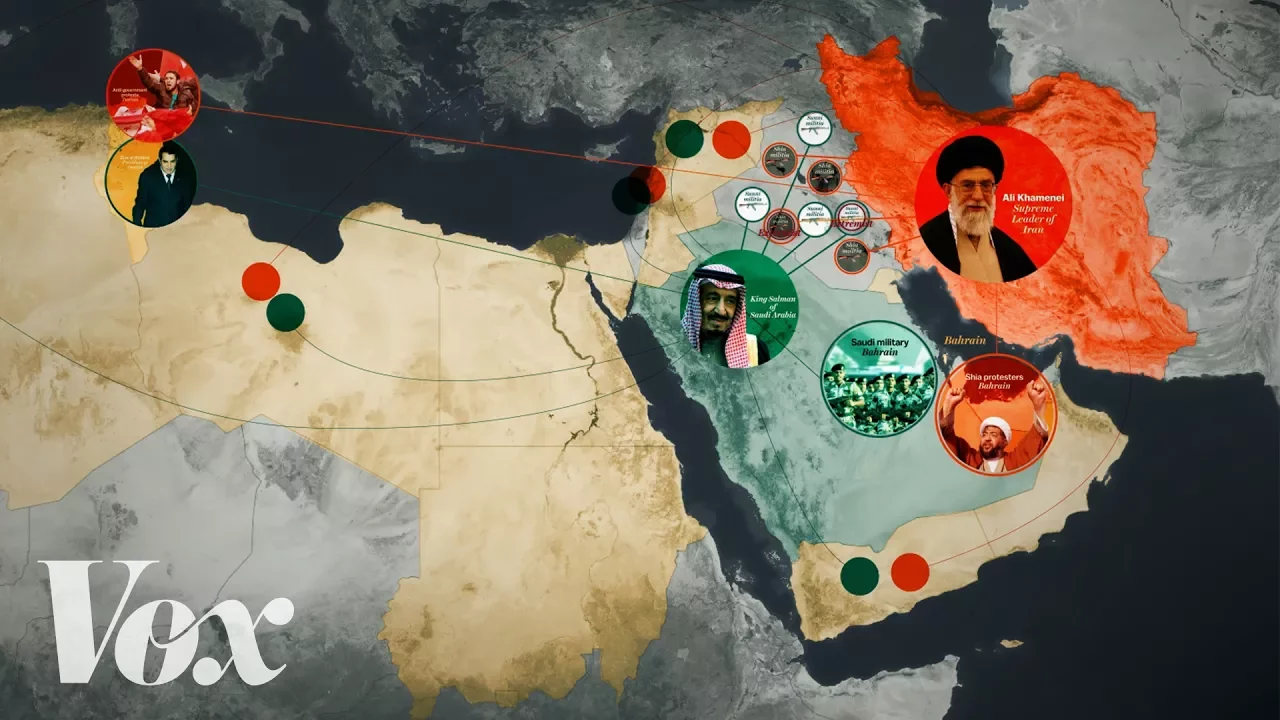
Explaining the Saudi-Iranian Proxy Conflict in the Middle East
@Vox
18.2M views•2017-07-17
Related Study Plans & Knowledge Roadmaps
Structured learning paths in Political Science