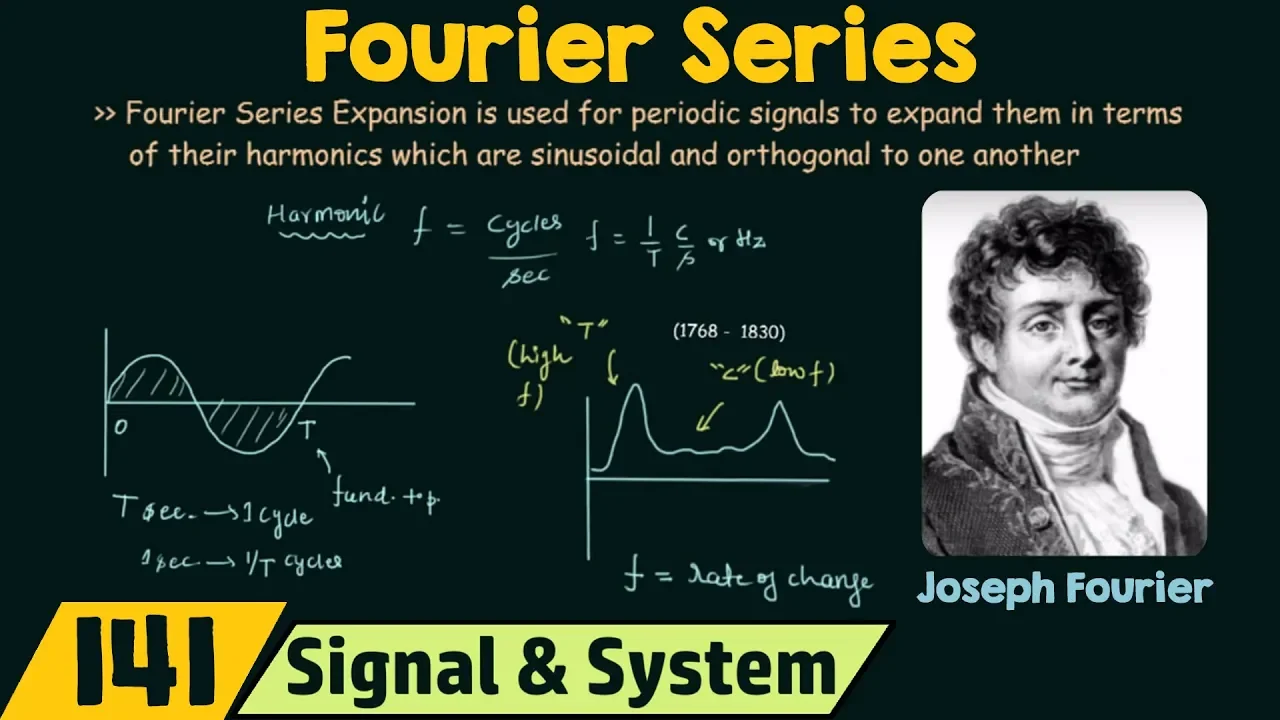

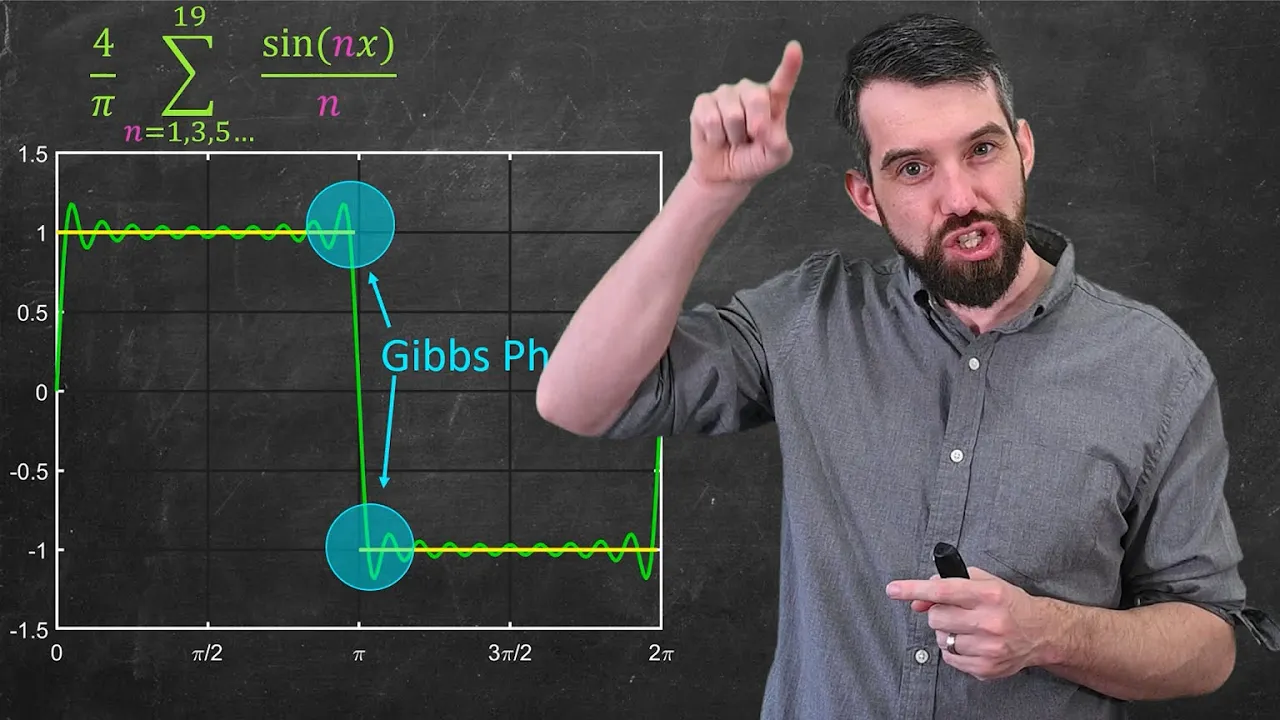
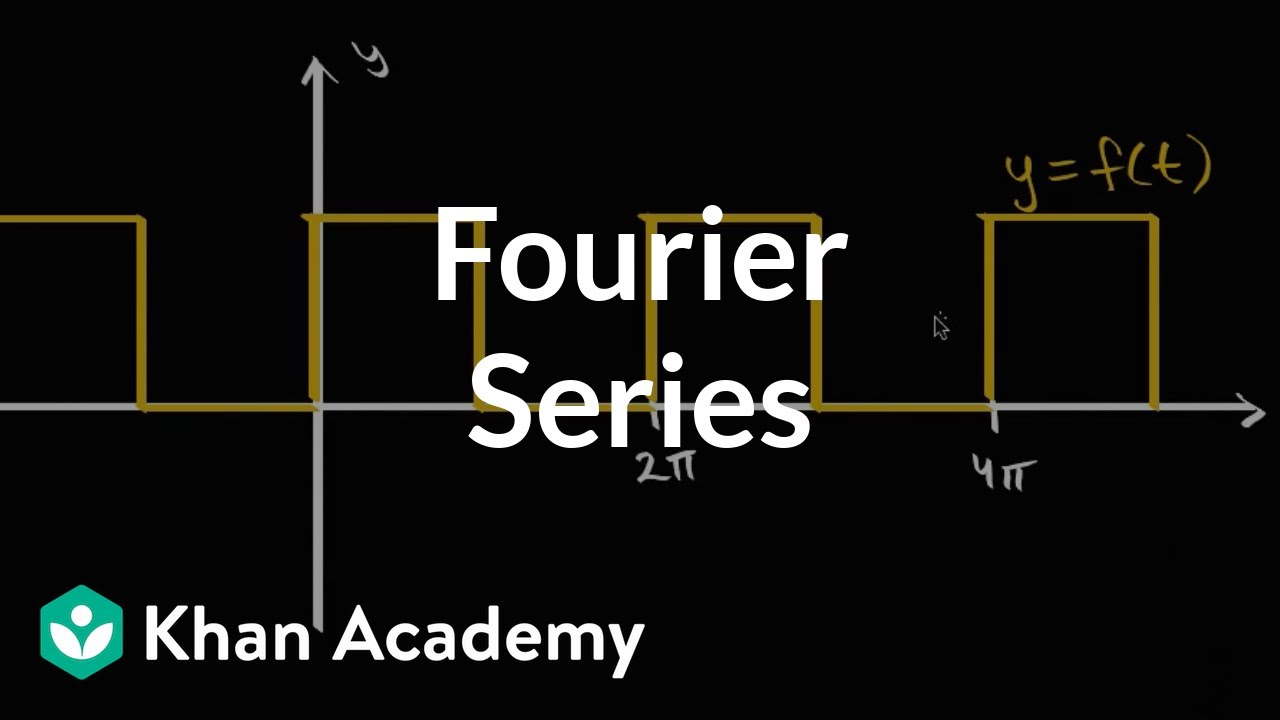
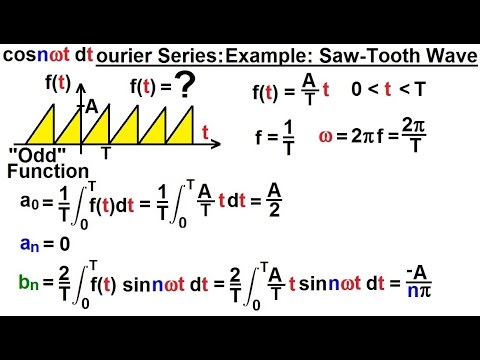











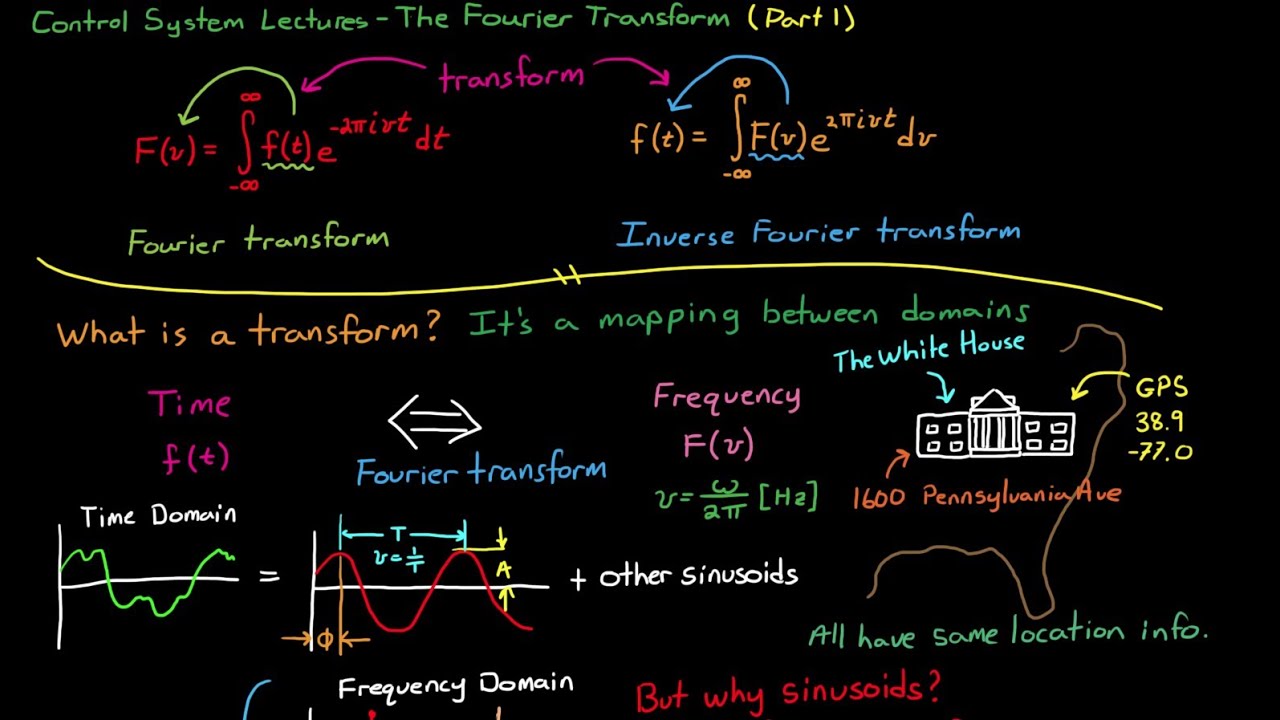
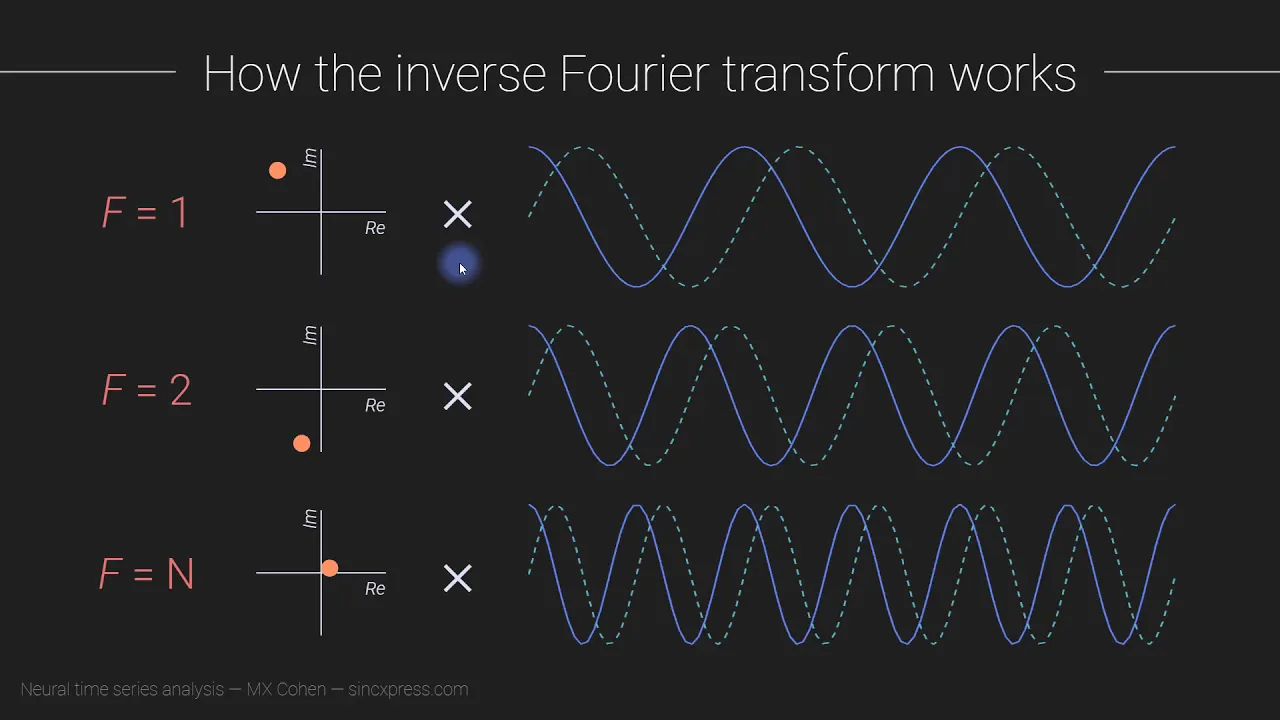






The Fourier transform is derived as a limiting case of Fourier series by considering a non-periodic function that is zero outside some interval, periodizing it with increasingly larger periods T, computing the Fourier coefficients, and taking the limit as T approaches infinity. This process reveals that the discrete Fourier coefficients scale like 1/T and converge to a continuous function, leading to the Fourier transform definition: F(s) = ∫_{-∞}^∞ e^(-2πist) f(t) dt and the inverse transform f(t) = ∫_{-∞}^∞ e^(2πist) F(s) ds, which analyze and synthesize signals into their frequency components.
Fourier Transforms and Their Applications | Stanford Lecture 6
Added:Fourier Series: A solid understanding of representing periodic functions as infinite sums of sines and cosines or complex exponentials.
Calculus and Integration: Familiarity with evaluating improper integrals over infinite domains and taking mathematical limits.
Euler's Formula and Complex Variables: Mastery of the relationship e^(i*theta) = cos(theta) + i*sin(theta) and basic complex algebra.
Concept of Periodic vs. Aperiodic Signals: Knowing the physical and mathematical difference between repeating waveforms and isolated, one-time events.
Properties of the Fourier Transform: Exploring key theorems such as linearity, time-shifting, frequency-shifting, scaling, and modulation.
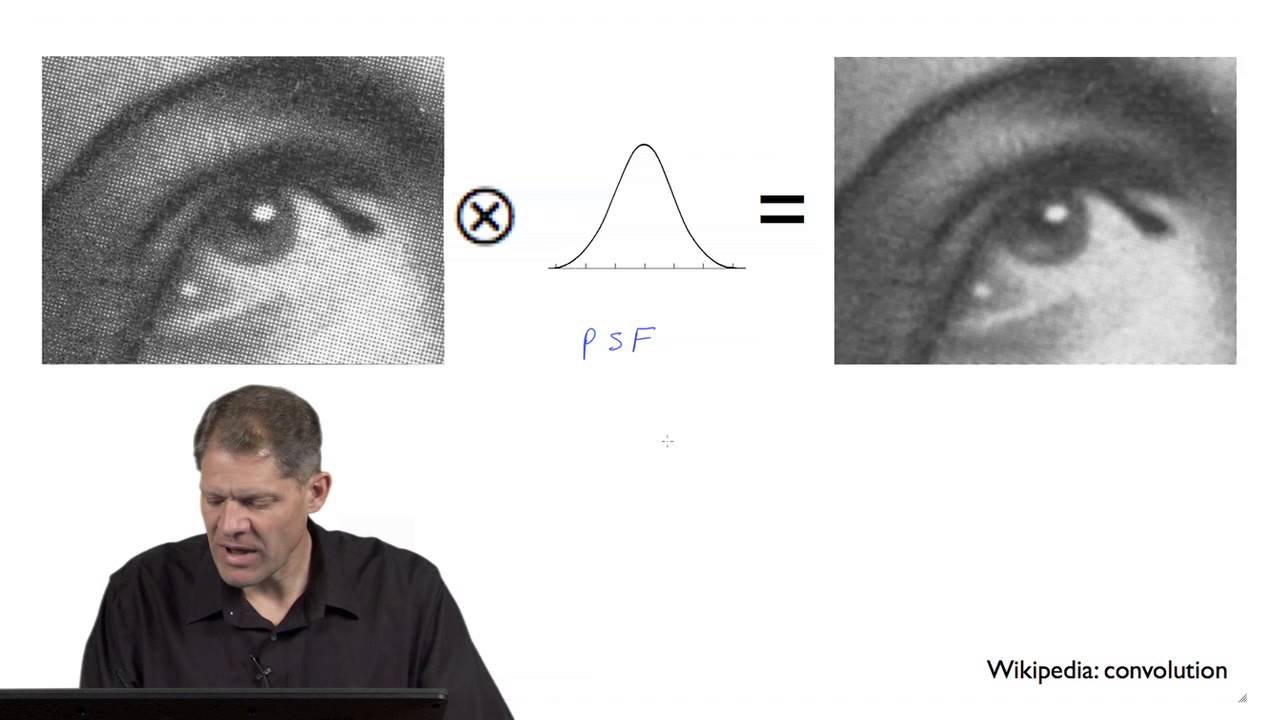
The Convolution Theorem: Understanding how convolution in the time domain corresponds to simple multiplication in the frequency domain.
The Inverse Fourier Transform: Learning how to reconstruct the original time-domain signal from its continuous frequency spectrum.
The Dirac Delta Function: Studying generalized functions to apply Fourier transforms to periodic signals within a continuous framework.
Practical Signal Processing Applications: Applying these transforms to filter design, image processing, and analyzing Linear Time-Invariant (LTI) systems.
103.9K views612likes47:52Original Release: 2008-07-04
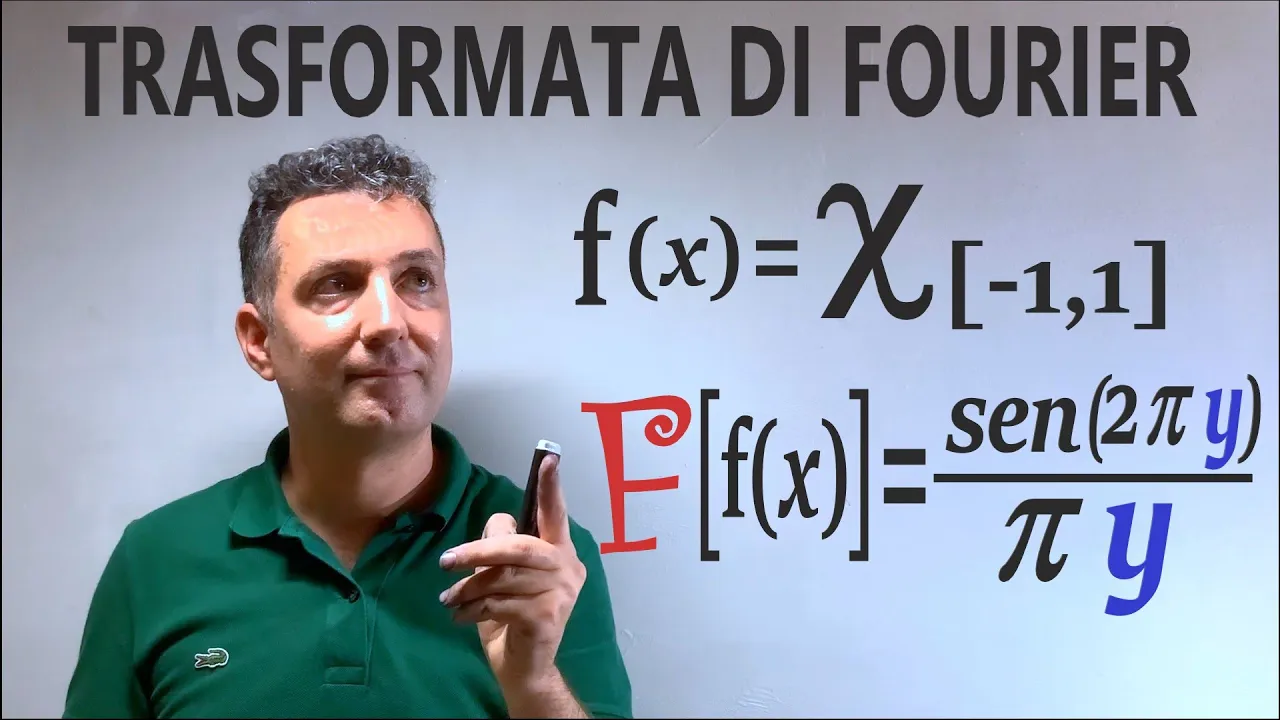
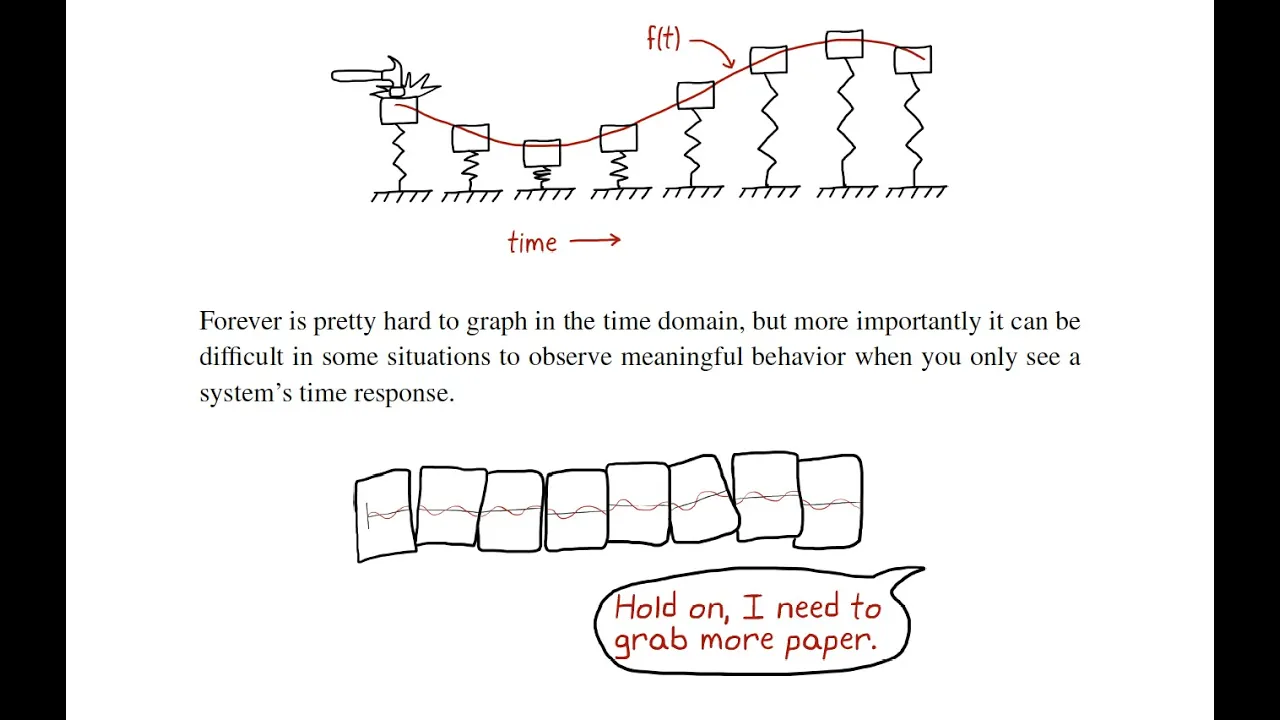
this presentation is delivered by the Stanford center for professional development um last time we had gotten right to the verge of discovering the 48 transform as a limiting case of frea series and I just wanted to pick up where we left off and finish that off and then launch into our more formal treatment of 48 transforms and and talk about how we're going to proceed so we are about to to get the fora transform as a limiting case of well actually there are two aspects to it there's a fora limiting case of the fora coefficient and then the fora series all right there's this the the analysis part and the synthesis part of the fora coefficient that's a capital f fora coefficient and fora Series so when I talk about the forier transform I'm sort of thinking of the two things together but there's really two parts to it and they both come out uh out of more or less the same analysis all right so let me remind you what the setup was and how I and what I mean by a limiting case I what by a limiting case I mean a non-periodic phenomenon I want to model as a periodic phenomena as the period tends to Infinity all right and I took a special case of this or just as a a case for illustration that is I suppose I have some function which dies off eventually so it's zero outside some interval now that's ultimately we're going to drop that restriction I'm just I'm just taking this as a case to sort of model what the situation should look like so I'm going to take the case and this is again this was a set of from last time so take a case where that looks like this you have some function that's F of T which is zero outside some interval I'm drawing it like it's positive but it can be very general all right but the fact is that it dies off at some point and then I periodize it so you can imagine this a very big interval to begin with but finite and then I periodize it I take an even bigger number capital T and I look at it from say minus t over2 to T over2 that's supposed to that's supposed to represent one complete period and then I periodize this function so the pattern repeats all right so periodize to make periodic of period T so think of t as big and eventually we think of t as going off to Infinity all right so I won't draw the picture but again the idea is I just take the same pattern and repeat it over and over again all right then you can write down the formula for the fora coefficient and you can write down the formula for the fora series so what does the series looks like the 48 coefficient looks like this CK is 1 / ttimes the integral from minus t/ 2 instead of integrating from 0 to t i integrate over any period so I I take the the period from minus t over2 to T2 and then the formula is eus 2 pi i k over t t that's how I wrote it last time F of T DT and the fora Series so that's the analysis part that's decomposing F into its components uh and the complex the corresponding complex exponentials are these and then the 4A series is to recover the function from its components as a sum from minus infinity to Infinity C subk of e to the 2 pi i k / T * T all right and what you would what you would like if you want to take a simple-minded approach of saying a frea transform and inverse fora transform and so on is is a limitting case of frea series is you let the period tend to Infinity you just like to let T tend to Infinity here but that doesn't quite work all right so you would like to just let T tend to infinity and lo and behold the formula is emerged but it doesn't work doesn't quite work all right so instead doesn't work because you don't get anything that is to say the 4A coefficient tends to zero doesn't because CK TS to zero as T tends to Infinity all right so what you do is a little Clues job here it tends to zero like one over T that's what I talked about last time and I won't repeat that argument because of that factor 1 over T in front this integral is bounded if the function is fixed again if the function is zero non zero only inable from A to B so that doesn't that's not that's ultimately not getting very big so it grows to zero like one over T so you scale up by T all right scale up by T and what I mean is I want to consider instead of 1/ T * the integral I just want to consider the integral and I want to view that as a to anticipate what's going to happen as a transform version of the function not evaluated at K although the indexing here is on K really it's K Over T that's the important thing all right it's again I want to let T tend to Infinity so I want to emphasize that connection so I want to I want to look at let me just use this notation or let me say right F of F at K overt all right so that's a new notation that's something I'm I'm introducing to indicate this sort of scaled integral as the integral from minus T2 to T2 of e to the - 2i i k / T * t f of T DT and then the fora series here has to incorporate that one over T again because that that does come into the coefficient so the frea series looks like f of T is the sum from I'll write it like this k equal minus infinity to Infinity um this transformed this coefficient K overt time the complex exponential e to the 2 2 pi i k/ t * T * this fact 1/ T this Factor 1/ T is coming in there again because that occurs in the definition of the 4A coefficient that I have to have that in there I mean the 4A series is in terms of the fre coefficient the one over T is in there okay now I want to let T tend to Infinity this is allistic all right this is not a proof it's an it's an argument for what the formula ought to look like as a limiting case of the forier series of a periodic case all right so now let T tend to infinity and you have to make an argument what the formula should look like all right and I said I said this last time I want to say it again the idea is that as T tends to Infinity these numbers K Over T of course for a fixed K that's tending to zero but the but the idea is that K is also going from minus infinity to infinity and what's happening here is that if you think of K overt as a discrete variable it is getting a it's approaching a continuous variable all right the spacing is getting closer and closer together they're spaced one over capital T Apart 1 over T 2 over T 3 over T 4 over T and as T is tending to Infinity they're getting spaced closer and closer together so the discrete variable is approaching for all to see a continuous variable which I'll denote by S all right so the discrete variable that's not a technical term all right all right I'm just reasoning again heuristically here tends to or placed by in the limit a continuous variable S and S is going to range from minus infinity to Infinity all right fine that is to say this formula in the limit as T tends to Infinity is going to be replaced by another formula so you're right F of f of s as the integral from minus infinity to Infinity e minus 2 pi i s t so K Over T again is being replaced by the by by the continuous variable s f of T DT but don't stop there also look what happens to the fora series as capital T tends to infinity and for the forier series which is here you have to recognize this as a discrete as a sum approximating an integral all right this is the function evaluated at the variables K overt K Over T here and it's t is tending to Infinity these are being these are approaching a continuous variable the one overt here is like the Delta s you know that comes in writing an approximating sum to an integral so as T tends to Infinity what happens to the fora series it is replaced by an integral replaced by the integral from my replaced by this formula replaced by F of T is the integral from minus infinity to Infinity e to plus 2 2 pi I I'll write it like this I'll keep the same order of the terms the 4A transform of f or the for this this thing which I'm going to now call the 48 transform in just a second F of uh this the 48 transform of F at s e to the 2 pi i s DS okay now feel like clouds ought to open up at this point because something really very momentous has happened here if only by analogy all right if only by a heuristic arguments saying you want to view a non-periodic phenomena as a limiting case of a periodic phenomena this is one way of doing that that leads to something that I'm going to spend the rest of the quarter convincing you is a good thing all right so let me say a little bit more here again this this this little journey here has been a way of making the transition from a case that we studied to a case that we haven't studied the the fin the the final step in the process is to declare victory that is to say and this is what happens in mathematics all the time and this is what what makes it very frustrating off for people when they're reading a mathematics book to try to figure out what the hell is going on and where the hell do these formulas come from and so on and so on you sort of erase all Paths of Discovery and you just declare what do you know I'm going to give the following definition how about that and that's exactly what happens so that's what we do now we sort of declare Victory all right I wanted to I didn't want you to miss the steps in between there they are let me write it over here this will be our Victory Blackboard over here I didn't want you to miss the steps in between because I actually view a very important part of this course is not just going over formulas and facts but in trying to give you a certain feeling for how the mathematics develops in the context of these problems all right because if you if you sort of get used to thinking that way it'll give you much greater power over the problems that you're likely to confront out there where you really have to apply mathematics using your own head using your own thoughts all right so what I'm what I'm describing to you is just the sort of process that you go through that ultimately results in a definition all right It ultimately results in the definition but the steps along the way are often hidden and I wanted not to hide them all right so we Define at this point now you just say declare Victory so if F of t is a function defined on the whole real line minus t from minus infinity less than T less than infinity you define it for a transform by the formula that I just wrote down before I transform at s is this integral minus infinity to Infinity eus 2 pi i s t F of T DT all right so here s also is a real variable going from minus infinity to Infinity but the fora transform itself is complex value because I'm integrating a function against a complex exponential here I didn't say whether or not F had to be real or complex as a matter fact in general I don't want to make that I I want to allow either case all right so I I'm F can be comp in many applications of course f is a real signal and and um that's fine but it makes sense as far as the definition goes to allow F to be either real or complex so I won't say anything more about that now there's a lot of course there's a lot more to say about the definition one thing that's should be S should be stated right up front and something I'll say more details about later is of course this the definition is only good if the integral makes sense all right you know to to write down this integral saying this is the fora transform but you know if you're going to if you're going to actually carry out this integration for a particular value of s you know you have to say something about whe the when the integral converges all right so you need to say something we'll need to understand the convergence of the integral just like we needed to understand the convergence of the fora series at least to a certain extent we also need to understand the convergence of the integral that defines the fora transform all right and that's an issue all right but not only have we uh been led to the forier transform we have also been led to forier inversion this is analysis all right the forier transform analyzes the signal the non-periodic signal into its component parts what are the component parts the component parts are a continuous family of exponentials not a discrete family of complex exponentials but a continuous family of exponentials the e to the 2 pi i s t all right fre a transform analyzes F of T into its constituent Parts but now we also have forier inversion forier inversion says that we can synthesize the function from its constituent parts and that's the second formula there that says that you you can if you know the 4A transform then you can get back the function that is you have F of T the signal equals the integral from minus infinity to Infinity of let me write like this e to 2 pi i s t the 4 a transform at s DS you often think of t as the time variable and you think of s as the frequency variable and you think of the function defined in the time domain and the for transform defined in the frequency domain you can think about it that way but you don't always think about it that way and I'll come back to that as well right so so you think of generally F of T in the time domain the fora transform of s in the frequency domain that is that is to say you think of t as a Time variable you think of s as a frequency variable that's fine but don't be wedded to that so completely that you're not willing to change your perspective all right the frea transform is a very flexible tool it comes up in a lot of different context T is not always Time s is not always frequency and you do yourself no favor if you you force yourself into thinking only in those terms all right it's good for many applications but not for all applications you will hear me say a lot you will hear me rant you know about notation and the sort of conventions and things like that because this subject is fraught with difficulties as far as notation goes as far as interpretation goes part of that is just because of the richness of it all right it's a very rich subject and any Rich subject can be abused in various ways all right right and this is I say not only no exception to that maybe a real Exemplar of the abuse that can be heaped onto uh onto different symbols in their interpretation okay now I could summarize what I just said actually into what I consider a major secret of the universe perhaps the most major secret of the universe that you will ever learn in your lives certainly in this class is that every signal has a spectrum you call s in the frequency domain or you call the values of the fre a transform Spectrum all right and that's a term I'm sure you're familiar with so if I can summarize this as to be this major secret of the universe right soon to be appearing on YouTube all over the world is that every signal has a spectrum and the signal and the Spectrum determin the signal all right to say that every s now like all secrets of the universe this is painted with a little too broad a brush all right to say that every signal has a spectrum means that you can take it for you transform but of course there are issues there does the integral really converge and so on all right to say the Spectrum determines a signal means that you can always invert it like this it means in particular that this integral always exists all right and that's there are also issues associated with that but never mind that let's just concentrate on the majesty and really the the enormous applicability and truth of this statement all right for for most cases and for the cases that you're certainly interested in this or some version of this is true and can be a guide to happiness okay the fre a transform the the the analysis and synthesis of a function are two ways of seeing the same thing you can look at the function in the frequency domain you can look it in terms of its for transform or you can look it in the time domain you can recover it from its Spectrum all right the two different representations of the same thing and if you have two different representations of the same thing you have tremendous power over it all right they're equivalent knowledge of one is equivalent to knowledge of the other you will not get anything more profound I think you know in any class anywhere anything how about that it's a way to start the weekend off all right now uh let me introduce one other bit of notation now so I'll have a chance to use it although I'm not going to make much more use of it today we'll certainly make make a lot more use of it later and that has to do with this sort of in inversion formula here that is it it pays to introduce a separate operator along with a for8 transform namely the inverse 48 transform which is defined in a very similar way except for a change of sign so it's useful so again the for transform of F at s is equal to the integral from minus infinity to Infinity of eus 2 pi i s t f of T DT all right that's sometimes called the for the forward 4A transform again well one thing at a time then it's also useful to introduce the so-call inverse 4A transform and let me let me call the function G uh as the integral from minus infinity to Infinity of e the plus 2i I S T say G of s DS all right now be careful about how the variable and then then what then this result the fact that you can recover a function from its 4A transform asserts that this really is the inverse operator of this all right so fora inversion says fora inversion says that the inverse 4A transform or the 4A transform of the function is the function and it also says for that matter if I take the fora transform and the inverse 4A transform of a function I get back the function okay now again I don't want to get too far on a rant now but um but just to start or just to give you a little warning of these of of of the of the things to come have to be careful when you look at this all right uh the role of the variables here this take a look at the definition of the 4 transform all right you're integrating e to the 2 pi I that depends both on S and T against the function of T you're integrating with respect to T what remains is a function of s all right that's why I call use the notation the for transform of F at s so it's an operation of taking the fora transform evaluated at the point s all right the operation is carrying out this integration but in order write that down you have to evaluate it at a point so you're evaluating at a point s it's given by this formula likewise for the inverse for I transform I'm integrating e 2 pi i s t that's a function of two variables s and t if I integrate against a function of s what remains is a function of T it's the inverse 4A operation carry out the integration I have to evaluate it at a point and the variable to use here is T because I'm integrating with a function of s and t against a function of s integrating with respect to S all right so Note two values here actually all right notice that um the 4 transform at zero so there's the operation of taking the 4A transform and then there's the operation so to speak of evaluating at a point so the 4A transform of F at zero is the integral from minus infinity to Infinity eus 2 piun i 0 * T and F of T DT I plug in s equals 0 into the formula and so that's just the integral from that's the average value of the function or at least what you consider of the average value of the function f of tdt there's no you don't divide by the length of the interval because the interval is infinite all right but it's the it's the intergral of the function it's the area under the curve if you want to think of it that way all right so the zero 4A the value of the 4A transform at zero is the intergral of the function this is analogous to the 0 4A coefficient being the average value of the function the integral over one period here I don't have a period and likewise by the same token the inverse 4A transform of a function at zero of g at Zer is the integral from minus infinity to Infinity I integrate the 4A transform times e to e to the zero I'm I'm not writing that this time I'm just giving you the final answer um so the intergal from minus infity to Infinity of the 48 transform that gives you the in value the inverse for a transform at the origin okay you have to always tell yourself and be clear what the role of the variables are in these Expressions trust me it becomes an issue when the formulas get a little bit more complicated as they will how the variables are used and keeping that straight is something you have to be careful about something you have to be careful about okay now so we've gotten to the stars of the show The 4A transform the inverse 4A transform the idea of 4 inversion it it is now the my responsibility for the rest of the quarter to convince you that this was worth it all right that is that these really are useful operations to consider and that they um can tell you much that is worthwhile uh in certainly an applications but not just in applications but certainly in applications and I want to tell you how we're going to proceed actually we're going to proceed to develop the ideas here in a way very much like in a path very much like the one you followed when you were First Learning calculus all right if you cast your mind back to those happy days when the world was new calculus was just an attraction on the horizon when you were learning calculus the path you follow we learned about derivatives and integrals all right two basic operations of calculus and the way you did it and was you you learned General you learned specific formulas like derivatives of exponentials derivatives of polinomial derivatives of Tri functions you use an integrals of corresponding integrals and then you learn General properties you learn how to differentiate you learn the product rule the chain rule integration by parts so you learn specific formulas that that are going to come up often enough that you want to know how to differentiate a specific function but functions come up in combinations products quotients compositions so you had to learn also general rules for taking derivatives you had to learn the product rule the chain Rule and so on and then of course you learned the applications of derivatives and integrals all right now also in in connection with the 4A transform let me call your attention to a fact to to a problem or to challenge you face in calculus the integral is a very rich operation I I'll come back to this I'll say this again later but when you first learn about the integral you learn a certain interpretation of the integral you learn the usually as some sort of motivating problem like the integral is the area under the curve or you recover the total change in the function from its rate of change or so on but the integral is a very rich concept and you do yourself no favor by clinging to one particular interpretation of the integral in all cases because maybe that interpretation won't really be a guide or won't really apply well again as I was just saying a minute ago that's a similar sort of thing with the for8 transform and the inverse for8 transform it has certain interpretations the variables often have certain certain interpretations time or frequency but you do yourself no favor if you cling to those particular interpretations and try to impose them where they don't necessarily belong however we're going to follow a similar path to the one in or not however but but uh analogously we're going to follow a similar sort of path path when we develop properties of the 4A transform that is we're going to need to develop specific transforms transforms of specific signals the kind of signal Society needs all right the society runs on and then we're going to develop General properties of the fora transform that is what to do when signals are combined in certain ways actually in the way they're combined is a richer in many cases a richer oper richer set of operations than the ordinary functions of that you work with in calculus the ordinary rules of calculus uh and then of course we're going to talk about a lot of applications of of these ideas it's very similar in its p in the past somehow um to the way that you studied calculus and I say that again because I hope it gives you a way of sort of organizing your own study of it all right realize at each stage here I'm learning a specific formula here I'm learning a general formula and so on and it'll it'll help and here I'm learning an application and this is the interpretation in this case this is the interpretation in that case it'll help you I hope sort of organize it in your head how the subject is evolving okay all right so let's look at a few let's start on that path and let's a few examples basic examples that is of calculations with a with a 4A transform now I'm only going to do a few of these because unlike calc when you first learned calculus your teacher I hope you know showed you how to do a lot of calculations in a lot of specific cases because all was new all right I'm not going to do that that now I'm going to do some a few specific calculations to show you the kind of techniques that always come in or often come in but you can read the derivations you can do the derivations there's no new techniques involved there all right there only the techniques are are our integration either integration by substitution integration by parts direct integration whatever that's not new what's new are the are the specific formulas that come up and that's something again that I am going to leave to you to read derive learn memorize whatever all right I want to spend a little bit more time uh on on on developing some of the general properties because there there are some new things there there are some interesting things that that you you haven't seen before or haven't seen other than uh in this context all right so the first example I want to take the very simplest one one that we've seen actually you've seen in some homework problems and we saw actually even in the context of fora series that's the the function that models a uh signal that's on again and off again or in this case since I'm not I'm not looking at the periodic version It's just either on or off and that is the so-called rectangle function Pi of X this is the notation I'm going to use this I think was advocated by bracewell and it's not bad I'll explain I I'll call it actually I'll call the variable T why not um I'll explain why use this notation in just a second it is one if absolute value of T is less than one and it is zero if absolute value of T is greater than or equal to one so its graph say toin for all values of T and here's zero here's here's excuse me here's minus one and here's one so is actually yeah I a little careful here no no see I already got it wrong because there's not Universal convention here I'm sorry I want it to be I want it to be of width one not not not width two so I'm going to take one2 one2 see I already messed it up damn okay it has total it has total width one so it goes from minus a half to plus a half it takes a jump minus a half to plus a half it takes a jump and it is discontinuous at the end points all right so it's zero in between the end points and from 1/2 and minus 1/2 on it's it's excuse me it's one between the end points and it's zero outside the end points now this is not and it's called Pi because Pi looks like a rectangle and isn't it stupid right and the I feel like I mean I feel really you know s sort of juvenile saying that but and or it's also sometimes called the top hat function because it's supposed to look like a top hat know as it goes up up up up down it looks like a rectangle so it's also called more grandly it's sometimes called the characteristic function of the interval from minus a half to a half it is sometimes called the indicator function of the interval from minus a half to a half all these terminologies are in day-to-day use all right depending on the field um I would actually tend to call it in mathematics you tend to call the characteristic function so I would have tended to call the characteristic function but I won't do that anymore I'm going to call it the rectangle function and there's also a certain amount of debate about how to define it at the end points all right I Define it a certain way at the end points other people would Define it differently other people would have it to be one at the end points some people would have it to have value one half at the end points because of this idea somehow at a discontinuity you ought to look at a the average value I mean this becomes a religious issue with some people you know how this function should be defined at the end points I do not want to get dragged into it it will never make any difference for anything we ever do right so this is my definition you don't like it go to hell all right so what is the fre transform the only recourse we have to calculating for transform is the definition all right there's nothing else to work with so you have to carry out the integration one has to carry out the integration I should say so what is one do one writes the definition down the integral from minus infinity to Infinity eus 2 pi i s t Pi of s d Pi of T DT careful about which variables we're using here I'm sorry I've already I've already got myself a little crowded the integral once again the integral from minus infinity to Infinity eus 2i i s t Pi T DT okay all right now Pi of T is only non zero from minus a half to a half so the only thing that remains here in the integral it's not an infinite integral it becomes a finite integral because the function is zero outside that interval so it's the interval fromus half to a half eus 2 piun i s DT you integrate that like you integrate any exponential the fact there are complex numbers in there does not matter all right the car carrying out the integration can is the same as ordinary integration in calculus so that is minus 1 over 2 pi i s you're integrating with respect to T all right so you're regarding s essentially as a constant as far as the integration is concerned so it's -1 over 2 pi i s e minus 2 pii St evaluated between T = minus half and T = plus a half all right that's the only thing you can do you you have to you have no recourse here other than to use the definition so let's do it quickly so that is what do I get I get at the at the at the top end point I get minus1 over 2 pi i s e to the - 2 piun i s * 12 minus -1 over 2 piun i s the only thing you can get wrong here is you know like minus signs and things like that all those problems you used to have you have trouble keeping straight in calculus well I'm sorry they haven't gone away the same sort of issues are there - 1 2 pi i s eus 2 pi i s minus a half so that's -1 over 2 pi i s e to the - pi i s minus a minus gives me a plus 1/ 2 pi i s e to Theus minus gives me plus pi i s or if you will allow me to write that differently that is one uh 1 over Pi s 1 over 2 I well I write like this e Pi i s minus E minus Pi i s / 2 I and I write it like that because you have to start to recognize how to manipulate these complex exponentials to bring in when it's when when called for the ordinary trig function SS and cosines and e to the pi IUS eus Pi i s over 2 I is the S of Pi s so this is the S of Pi s / by pi s and that's the formula for the frea transform period okay this is the most basic example and actually as simple as it is it's actually one of the most important examples it's one of the ones that comes up most often in applications so I'll write it down the for transform of Pi the rectangle function is the S of Pi S ID Pi s and this function comes up so often in applications it is given a special name it is called the sync function so by definition the sync function of s is s of Pi s ID Pi s now that's a function actually I'm sure any any electrical engineer has seen this function every electrical engineer engineer in fact sees this function in their dreams you also saw this function in calculus let me do it over here because it's an example of s of x overx a famous limit you know what happens is X tends to zero the limit of s of XX as x ts to Z is 1 and the limit is s TS to zero of s of Pi s over Pi s is 1 so this function is actually quite nice this function is continuous and even smooth and the graph looks something like this it dies off it dies off like one / s it's symmetric it's an even function that's a damn good sync function if I do say so myself so here's zero 1 2 3 it has zeros at the integers minus one well not so good I guess actually it's supposed to be even minus1 minus 2 and so on okay now you can look at the book I have a picture of the sync function I have many pictures of the syn function but don't deny yourself the pleasure of going down to Sunnyvale driving down to Sunnyvale going to the fries in Sunnyvale fries I'm sure for those of you who are new to the area and may not know is this huge electronic store and the fries in Sunnyvale has an enormous neon sync function All Right In Living Color it's incredible you go into that store and you see sync functions everywhere right they're on all the railings they're on the turn Styles I mean it's a nightmare all right so and there's a there's a and there is there is a picture I saw that I couldn't believe it there is a picture of it in the book all right everybody every electrical engineer and say knows this function mathematicians think s of X overx what is the big deal you know but in fact you know a large part of the world's economy depends on this stupid function so go down to fries see it live I'd like I'd like to like like to imagine the whole class standing there looking at it you know one one Saturday afternoon and having the people from the store go out and saying can I help you customer service you know what can I do are you here to return something all right who has been to that fries by the way okay I'm not I'm not making this up right yeah right but for the rest of you what a treat you have in store all right now let me look at a couple other examples all right because all I want to do is I want to I want to show you that again you have no recourse other than to the definition so if you're asked to compute a specific fora transform sometimes there are tricks but more often than not it's just a question of carrying out the integration so all those you know hard one skills of integration by parts integration by substitution and things like that those are going to be come into play when you actually have to calculate specific 4A transforms um but again it's like you know tables of integrals people have done this and so the the the you know the collective hard one experience is already out there but you have to know certain amount of it and certain amount of this I think you have to do for yourself just so you have the confidence in doing the calculations just so you see how it goes so related actually to the rectangle function is the triangle function remember of the first homework set that everybody loves so much the basic triangle function is 1 minus absolute value of T if T is less than or equal to 1 and uh zero if T absolute 5 T is greater than or equal to one and it looks like this um the graph looks like this called a triangle function because the graph looks like a triangle it goes up it go it's zero outside the interval from minus one to to one and then it goes up with slope one up to a height of one okay nothing to it it's very simple function but it's a very important function in itself what about it's fora transform so the fre transform of the rect of the triangle function evaluated s is again the intergral from minus infinity to Infinity of eus 2 pi i s t Lambda of T DT don't skip this step all right write that down so you realize what you have to write next and what you have to write next depends on how the function is defined the function is zero outside the interval from minus1 to 1 so it's only the interval from minus1 to 1 that you have to worry about but the function comes in two pieces it has a different formula on the interval from -1 1 to 0 and on the interval from 0 to 1 and they have to be treated separately so this is the intergral from minus1 to 0 of eus 2 pi i s t and on the interval from from Min -1 to 0 what's 1us absolute value of t t is negative there so it's 1+ t DT and then on the interval from 1 to from 0 to one is eus 2 pi i s t times the formula for the a triangle function on that interval which is just one minus t you cannot avoid this all right you cannot combine these integrals suppose you could do a little bit you know but but basically you cannot combine these integrals you have to do the integrals separately so how do you do them well I'm not going to carry it out in detail but I want to say just enough so you get a a feeling for the kind of calculations that you have to do similar to the actually calculations you did when you're calculating frea coefficients there are only a few techniques that are that are in play here all right and in this case the technique is integration by parts all right that's what that that comes up so let me remind you the formula for integration by parts the integral from A to B of U DV this is everybody's favorite is UV what you sometimes don't remember is what integration by parts looks like for definite integrals so the integral of UV is UV evaluated between a B minus integral from a to be a vdu and we all know what that means what that means is that in your integrand in your original you have to identify what the U part is and what the DV part is and I'm not here to teach you calculus but that's what you have to do all right so what do you do in this case so let's just look at the first [Music] integral and we'll wrap it up so let's look at the intergral from uh - 1 to 0 of 1 + T * eus 2 pi i s DT so looking at this you have to decide you have to look deep in your soul and decide what is U what is DV and what are the consequences of that all right well let me tell you all right u in this case you take to be 1+ T and DV you take to be eus 2i i s t DT all right you do that because you look ahead you are no fool and if you take = 1 plus T it's going to simplify things on the on the other part of the intergral because then du is just going to be DT du is DT and then if DV is equal to eus 2 pi i s t v is equal to you integrate with respect to T that means you're regarding S as a constant so it's -1 over 2 pi i s eus 2 pi i s t all right I love to integrate I spent a lot of weekends home alone you know just integrating it's a great Icebreaker at parties do you like integration by parts I do so if you do this then it becomes uh then the integral from Min - 1 to0 of 1 + T eus 2 pi i s DT becomes UV that's 1 plus ttimes -1 over 2 pi i s eus 2 pi i s t evaluated between -1 and 0 all right minus the integral from minus1 to0 of VD which is here's V is -1 over 2 pi i s eus 2 pi i s t and du is just DT right so that integral has become simpler because now it's just the integral of a complex exponential right you're with respect to T this s is a constant out here okay that s is a constant out there I have this right don't I yeah okay now I'm not going to take it from here I mean I love to integrate but not in public so um so I will not carry this out any further but let me tell you what happened but you can all right and you probably should I think it's carried out a little bit more in the notes and you have to do the same thing same thing uh for the other integral all right the two integrals you cannot avoid this all right right tough break but it's just the way it is so you can carry out this integration and what do you get so you get it's quite a nice formula actually you get at the end of the day get that the fora transform of the rectangle function is sin^2 of Pi s / pi^ 2 s^2 that is to say it is syn squar of s Isn't that cool the 4A transform of the triangle function is sync squared now in fact so once again for a transform of the tri of the triangle function of s is syn squ s all right now that's I mean I you know it's sort of fun if you like that sort of thing to see that emerging from this picture but I'm not going to do that all right I'm not going to do that I'm not going to carry it out in fact we will next week actually see a different reason why this is true I mean it's actually not a shock uh there's a there's there's a deeper reason why this is true having to do with convolution but that's that's that's a little bit in the future it's just but it can be done just by Straight calculation by no more than that and again for for many 4A transforms for many basic functions that you need to know that you'll work with that you need to know the answers for you have no recourse other than to carry out the integration to actually do it all right and again I mean you and you should do a certain amount of that this is one of these things where it's good for you to do but it's true just so you're just just so you you keep your facilities up because you know you're going to there there are going to be times when you have to do that all right no numerical work Matt lab won't do it for you you know you won't be able to find it in a particular table you'll have to be carry you have to you have to carry it out and again the techniques are usually are not beyond what you've already done they're typically involved either integration by substitution integration by parts something like that that's all that's involved here and and carrying out integrating the complex complex exponentials is the same um involves the same sort of steps same sort of techniques as you learned in the real case when you were when you just learning ordinary calculus all right all right we'll wrap it up there and then on Monday I'm going to pick up again with a couple more examples and then also develop the general properties of fora transform as we go on our path thank you all have a good weekend
Up Next
8:19
Fourier Transform Explained: Definition, Formula, and Applications
@nesoacademy
990K views•2018-01-04

4:43
Elliptic Curve Cryptography Explained: ECC, ECDSA, ECDH
@PracticalNetworking
28.5K views•2024-10-21
104:23
The Birth of Algebra: A Historical Journey | Stanford
@stanford
220K views•2012-12-11

6:00
The Mathematical Impossibility of Accurate World Maps
@Vox
23.3M views•2016-12-02
Related Study Plans & Knowledge Roadmaps
Structured learning paths in Mathematics
mathematics
Tensor Calculus: Vectors to Riemann Curvature
01Mathematical Foundations: Linear Algebra & Calculus
02Covectors, Dual Spaces, and Tensor Basics
03The Metric Tensor and Index Gymnastics
+ 2 more learning modules
40h5 modules
Explore Roadmap
mathematics
Gödel's Incompleteness: Logic, Proofs & Limits
01Introduction to Formal Systems & Hilbert's Dream
02Set Theory, Cardinality, and Cantor's Diagonal Argument
03Arithmetization and Gödel Numbering
+ 2 more learning modules
14h5 modules
Explore Roadmap
mathematics
Galois Theory: Fields, Groups & Solvability
01Foundations of Abstract Algebra: Groups & Fields
02Polynomials & Field Extensions
03Splitting Fields & Symmetries
+ 2 more learning modules
24h5 modules
Explore Roadmap
mathematics
Non-Euclidean Geometry: Models & Geodesics
01Euclid's Fifth Postulate and the Birth of New Geometries
02Hyperbolic Space and the Poincaré Disk Model
03Geodesics: Defining Straight Lines in Curved Spaces
+ 2 more learning modules
15h5 modules
Explore Roadmap