


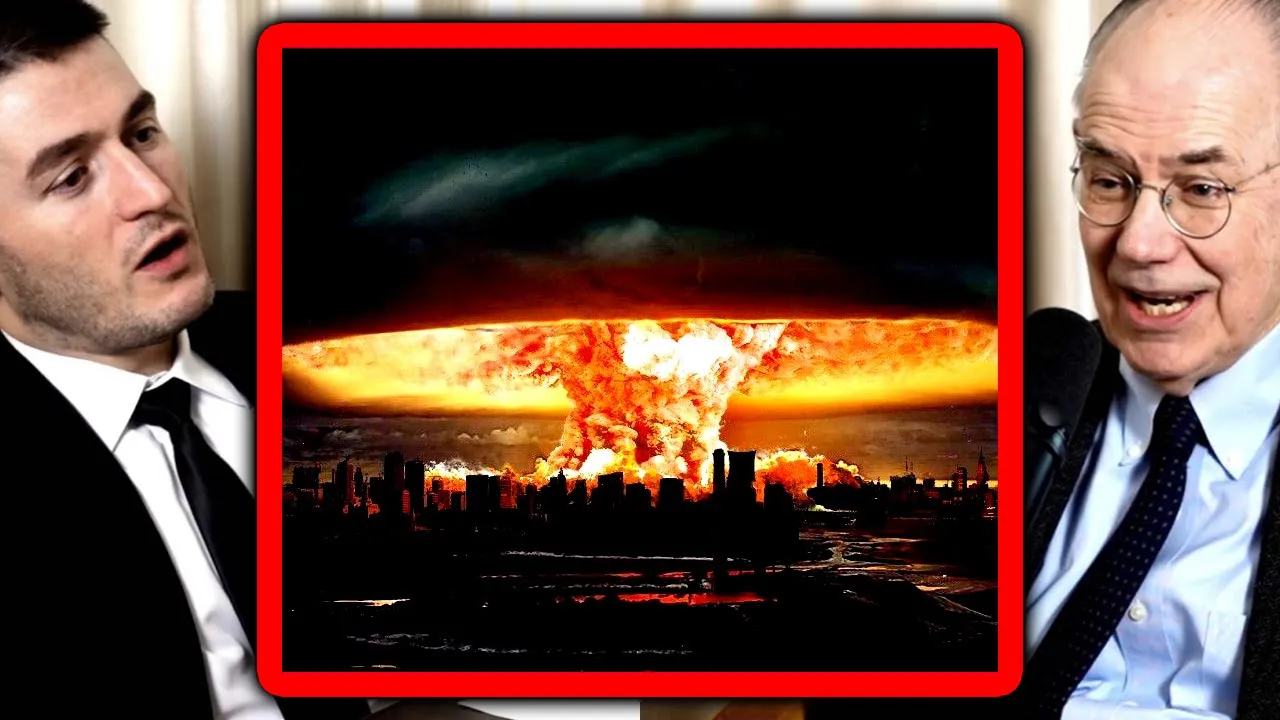










According to Professor Jeffrey Sachs, the US Deep State has maintained a consistent strategy since World War II aimed at regime change in Russia and breaking up the Russian Federation, driven by a combination of geopolitical competition, resource control interests, and ideological opposition to Russian influence, rather than genuine security concerns or provoked responses to Russian actions.
Jeffrey Sachs on Deep State Aims in Russia and Economics
Added:The history of US-Russia relations, particularly the post-Cold War geopolitical transition and the debate surrounding NATO's eastern expansion.
Fundamental concepts of International Relations theory, specifically the differences between Realism, Liberal Internationalism, and Foreign Policy Restraint.
The political science concept of the 'Deep State' and the Bureaucratic Politics Model, which explains how non-elected government institutions influence national policy.
Basic principles of International Political Economy (IPE), particularly how economic sanctions, sovereign asset freezes, and global trade dynamics are utilized as tools of statecraft.
A comparative analysis of competing US foreign policy schools of thought, contrasting neoconservative strategies with realist critiques of interventionism.
The geopolitics of 'de-dollarization' and the rise of a multipolar economic order, including the expansion of alternative financial structures like BRICS.
An academic evaluation of the efficacy and ethical implications of unilateral economic sanctions versus diplomatic negotiation in resolving international conflicts.
The intellectual evolution of Jeffrey Sachs, specifically contrasting his early-career economic 'shock therapy' policies in Eastern Europe with his modern critique of Western foreign policy.
30.2K views1.2Klikes1:07:27Original Release: 2025-01-07
hello this is Dan Klein for the January 2025 ejw podcast and I'm excited to talk with Professor Jeffrey saaks of Columbia University thank you for talking with me Professor sax how are you today happy New Year thank you thanks for being with us um Professor Sax's influence is enormous and are um and his areas of research are very diverse I'll give a bio but let me say something about why I'm so excited to be talking to Professor Saks I've been I've become highly interested in the Deep State and American foreign policy and watch channels on which he is a regular guest including judge napolitano's judging freedom and the Duran for today I hope to ask Professor saaks about being an economist the economics profession his own ideological Outlook and whether he feels he's undergone any kind of ideological migration and foreign policy especially with respect to Russia does that sound good or is there is anything else you think we should try to get to today that sounds like a lot of ground so let's let's get into it all right so for my own benefit if no one else's I I've got bio to read um Professor saaks grew up in the Detroit metro area and went to Harvard for three econ degrees then a faculty appointment and 10 years and full professorship at get this the age of 28 uh during two decades while on the faculty at Harvard he led the Harvard Institute for International Development and Center for International Development advised Bolivia in a profound way then Poland and then other postcommunist societies he is identified with the expression great uh shock therapy for transitioning economies with Andrew Warner he formulated an influential theory about openness and property rights being sufficient to become a convergent economy in 2002 he moved to his current home institution Colombia to lead the Earth Institute where he founded the Millennium Villages project and then the center for sustainable development in 2005 he published the Blockbuster the end of poverty and followed that up with Commonwealth economics for a crowded Planet he's been an adviser on E and development issues to officials all over the all over the world uh it seems in 20202 I'm sorry in 2012 he published a book about domestic us issues subtitled Reawakening American virtue and prosperity and in 2018 another on domestic issues which featured a forward by Bernie Sanders in 2020 he published a deeply historical book titled the ages of globalization I have to mention that and I looked up Professor Sax's Google site count and it's about 171,000 which is a heck of a lot back in 2014 we see perhaps a marker perhaps you can tell me whether this is right of a transition from a focus on ending poverty to a focus on ending war with a book subtitled JFK's Quest for Peace and in 2020 another book a new foreign policy Beyond American exceptionalism Professor Sachs is now profoundly counternarrative on several fronts uh most especially foreign policy there's so much in your career Professor Sachs uh is there anything you'd like to add by way of background no thank you for that summary that's very nice all right um so about just being an economist I figur this was a good opportunity and since we're econ Journal watch um let me share a thought and then a question yeah I I see a certain parallel between you and one of my heroes Thomas shelling in that both of you seem more interested in being an advisor and hence really making a difference um than a celebrated Economist like you both have the attitude I'm going to do things my way and if my fellow economists don't like it so be it um one difference from shelling is that you advise not only government Elites but the public at large something which shelling did to a much lesser extent and and much less outspokenly any thoughts on that comparison well it's I appreciate it because Tom shelling was a a wonderful Economist and a wonderful person and a wonderful friend uh whom I knew at Harvard so I I naturally like uh your linking me with him um he he was indeed a government advisor I think u a difference for me is that I've advised uh mostly uh governments in other places of the world not the US government although I kibit with the US government and have done so relentlessly for more than 40 years but my formal advisory activities have been around the world uh and that of course also for me explains uh some of my attitudes towards the US I tend to see the us from the outside looking in rather than from the inside looking out and I've never uh been nor have I ever desired to be an adviser to the US government per se uh I got interested in the World At Large early on I believe in a a world of peace and prosperity and so I tend not to be very interested in uh one country's uh patriotic appeals versus another but rather how how we can function together yeah that all makes sense any thoughts on the idea that you're going to do it your own way and whether your e you know fellow economists like it uh and kind of like applaud it like that secondary look life's short I I want to get things right that's my main idea I I think trying to be as accurate as I can be trying to understand things as accurately as I can be um experiencing things on the ground has made a big difference for me one of my lifechanging experiences was being engaged in a practical problem solving for the first time in not at a high level and 1985 in Bolivian hyperinflation and when I was involved and I made some policy recommendations that I think worked out pretty well my colleagues said well why didn't you do this why didn't you do that which was fair enough but I found the points frankly quite naive because I was there uh watching and participating close up and they were kibitzing from several thousand miles away away and I found it quite limiting uh so my whole intellectual strategy for uh it's now basically 40 years from 1985 till today has been to keep uh one foot firmly in Academia and conceptualization and theory and one foot very much planted in practice uh in uh in the world and each one helps me to uh inform the other side so theory and practice to my mind are completely complimentary they are not in the slightest way even conceivably antagonistic and at least for me I couldn't figure things out theoretically I I only I I need the Practical uh evidence in front of me and then I try to make sense of it I I I very much like the old expression attributed to Walter heler the policy Economist of the 1960s who purportedly said that an economist is someone who when he sees that something works in theory uh in practice tries to find out if it works in theory and I like that direction of of logic see if it works in something that's working in practice try to conceptualize it and understand it so in any event that's been my my approach to knowledge and understanding be deeply engaged in Practical problem solving and try to conceptualize what it is you're actually doing in that process I think that fueled shellings great insights and developments um so who are some of your favorite economists first pre-20th century anybody you want to mention well I'm I'm a a confirmed Aristotelian so though Aristotle is not typically counted as an economist he did of course write about economics he wrote about everything and so I'm a great admirer of uh Aristotle in many different dimensions I'm a huge fan of Adam Smith uh because I think both the 1759 the theory of moral sentiments and and uh 1776 The Wealth of Nations are two of the finest uh books about Society ever written um I have my quibbles and qualms and also my observations about ways that uh Smith has been interpreted or reinterpreted subsequently but of course he's an absolute giant there are many Giants we all need them as as our guides um in the 20th century by far the economist that I have most admired and tried to emulate in certain ways is John Maynard kanes by emulate I don't mean to be canes I mean to follow the methodology that he advised that he prescribed and one of the most notable points about his methodology in his eulogy to Alfred Marshall was to say that an economist should be a a multifaceted uh individual that could touch theory and practice together that could be both mathematical and practical uh that could be uh I think I don't remember his exalted language exactly but you know reaching to the heavens but also as down to earth as the politician uh and I really like that idea of the mix of talents that is useful for good economics is there anyone else in the 20th century you want to well I you know I I had two absolute Geniuses as immediate influences on me being a student in Cambridge Massachusetts uh Paul Samson absolutely dominated the scene uh he he was just a a great great genius a an absolute remarkable mind and his uh um brother-in-law um and fellow genius um uh the the Kenneth Arrow the the absolute uh probably the greatest po math that I met in the economics profession uh because well samon knew everything about economics about history about every theorem about uh every personality in economics Arrow seemed to know everything about everything about everything uh and uh when I was a an undergraduate student at Harvard I invited Arrow to lunch because we would be courage to invite our faculty to lunch and he asked me about my courses which included some literature courses some history courses some anthropology courses some math courses and so forth every single thing I touched on he went off into a complete absolute remarkable discussion at depth and it it was a lasting impression and I had another similar impression uh walking with him in uh in Venice actually at a at a conference and every street corner he told the history of some event some Revolution some personality he was just an incredible polymath and uh and and both of them were extremely kind people and uh had a had a huge inspirational impact on me I would say as a as a young student Simon KET with was another uh wonderful individual who a bit took me under his wing When I Was An undergraduate and I would visit him at his home he was an ameritus professor at that point and he told me about the origins of GDP accounting and the purposes and remember Jeff GDP is not a measure of well being and it was never meant to be a measure of well-being and um many many lessons uh Ken GB was also a extraordinarily uh kind giant of a mentor for me early on in in my undergraduate days so for me coming from Detroit arriving at Harvard uh and immediately uh falling into the uh orbits of samelson solo Arrow kets uh I and and many others was you know of course such a life-changing wonderful wonderful experience wow thanks for sharing um you me you mentioned a bit about how economists shouldn't be kind of confined to their field and uh that certainly had been a trend uh for I would say centuries right um but not necessarily a good one I gather you you you feel well there's room for specialization and there's room for generalization I'm a generalist uh and uh others are Specialists and you need both you need very deep Dives and you need people who can help put the pieces together uh I spend uh most of my time at the intersection of fields I would say trying to understand the intersection of Earth's physical systems engineering uh the macroeconomy uh the uh social uh economy um and so forth I've spent 25 years trying to build a field which I call sustainable development which comes from the the phrase sustainable development but I want it to be an academic field meaning that it is an integrated study of physical engineered political economic and social systems and how they fit together because I think we need that kind of broad understanding maybe it's what an ecologist does for the natural world not a specialist on any particular species but on how they cohere together um and for me that is important it there is a tradeoff there's no question economists are right there's such thing as scarcity uh the scarcity of our Attention our skill sets and so forth and if you become a generalist you gain certain skills and you forego others uh and uh if you are a a deep specialist you can make very deep dives into areas but uh you hope that your Deep dive interconn acts in a meaningful way with with the rest of our world uh so I've I've chosen the generalist approach uh and for me it also means uh a sense of uh that I'm a permanent grad student uh because I'm always learning new Fields always trying to learn new Fields um always believing yeah I'm going to spend some time trying to understand something that I really yeah didn't have my professional training in or my Publications in but that is absolutely important to get right and I I led an organization called the Earth Institute of Colombia for around 15 years which was hundreds of uh leading uh Scholars from across Colombia's faculties but including climate scientists civil Engineers uh economists political scientists psychologists sociologists um and a lot of my fun was learning a bit about each of their fields but also gaining uh the unique opportunity when a question say about uh climatology came up to be able to speak directly with one of the world's leading climatologists to get the lowdown on on the topic uh or with Engineers who could help me to understand how the power grid works and so forth and having that kind of generalist knowledge is really important in my view for a lot of the core policymaking that needs to be done in the world today and it's generally lacking that kind of uh General uh General integrative knowledge any general remarks about the econ profession today that you'd like to share well I wanted to do better in many ways uh I wanted to be more uh problem solving I wanted to be more grounded in uh ideas of what is a good Society uh I think it has to it it can't just be uh as Milton fredman uh wrote In 1953 a a positive field where the goal is a prediction uh among above everything else I think it has to be a uh a field oriented towards the good more than it is actually uh I often think because my wife is a medical doctor and I watched her train in medical school and through her residencies and special Iz ations and so forth what would it be like if a medical school said um we study disease we try to predict the course of disease but our job isn't really to intervene and choose something called health or not Health uh it would be quite interesting you go into the hospital and the doctor would predict well you'll be dead in seven days we have very good forecasting capacities well you know what about saving me doctor no that's not really my field that's a value judgment I don't want to get I don't want to get too involved in that I find that approach to economics not sensible okay I'd like to ask about your ideology uh and whether it's undergone if you feel it's undergone any change and this is rather apart from foreign policy just to kind of imagine more of an economist looking at the national economy domestic policy um and there's a lot your career that points in favor of individual liberty and free markets uh on the other hand in your re in a recent uh podcast you called Franklin Roosevelt our greatest president and and yet you get on great with napalitano that's where you said that and I believe he's a Libertarian um and and you know I mean it's great to get on with everybody it's not like a big deal just like with Tucker Carlson in an interview with him you said the Biden Administration has been the worst of our governments in modern history and you said very favorable things about ran Paul as well as Tulsi Gabbert and you kind of Express a a hope about uh the incoming Trump presidency uh in terms of a foreign policy change so I mean I I mean don't you know I'm not trying to be tricky or anything no no I understand first I I don't I don't I don't like the normal categories yeah I just want to add just um for my part just yeah I don't see a lot of if you will very like you talked about your amazing pedigree at Harvard and everything and um like a lot of people like you who you know like would say that about the Biden Administration publicly so I just wonder like what do is yeah what would what do you make of yourself first uh the the main change is I know more than I used to because when I got into economics I knew almost nothing uh and in fact I got into economics because I was kind of amazed at how little I understood about almost anything about our economy or our society uh and I wanted to understand so this has been now a 50 uh threeyear Venture uh because I started as a student in in 1972 in economics in the fall of 1972 um and I'm still learning so this is the first point second I'm skeptical of all labels they are of course some people do Pride themselves on bearing a particular label I'm skeptical that there's very much depth in that approach uh words like capitalism socialism uh Liberty uh market economy and so forth they can mean a lot of different different things these are Big vague terms third as an Aristotelian as I mentioned Aristotle uh praised a mixed form of government uh when he came down to his analytics of politics in in the politics he talked about government of the one government which could be of a good or bad form it could be a monarchy or it could be a desperate of government of the few it could be of a good form an aristocracy government of the best or an oligarchy or government of the many it could be mob rule or it could be republicanism I he made two points one the formal structures don't Define the quality of the outcomes this is one of his genius points that it's debating the formal structure of the economy uh leaves a lot out second he advocated a mixed form of government take some of the government of the ones some of the government of the few some of the government of the many because different kinds of problems require different kinds of organization this is true of an economy there are one of the things I learned from and love about uh Paul samuelson's approach to economics was he said there are private goods and there are public goods uh and he defined rigorously the difference of the two which I think is one of the most uh eye-opening developments of economics in the 20th century that we could actually identify in which cases individual Behavior would lead to desirable outcomes such as Paro efficiency and in which cases that would not be true and those have those are uh partly due to the technical char character of a particular uh good or service whether it's rival or nonrival whether it's excludible or non-excludable so I think we owe a lot to Samuelson for clarifying these basic concepts and I always love the field of public economics in particular because public economics defined when do markets work well when don't they work well when should we use auctions when should we uh use normal Market mechanisms why are there firms all these great classic questions of the 20th century show that the economy is much more than a convex set of preferences and technological transformation curves that lead to the first and second welfare theorems so in this sense we need a richer institutional understanding so that's why I find all of the uh kind of tendentious ideological discussions off base and it's interesting for me I advis the Polish government in 1989 I think I made good recommendations they set and Stage Decades of Rapid economic catchup for Poland which was exactly the idea that I had in mind so it wasn't an expost uh an expost observation it was an ex Ane uh visiter adum um but when I made the recommendations they thought well this guy's in super liberal free market Economist shock therapy you know extreme liberalism and I said come on are you kidding that's not me at all but if you start with the Soviet economy what the hell are you going to do you're going to liberalize if if you start the other direction maybe you're going to go in the other other direction so I found my found myself constantly typ cast or misunderstood or oversimplified in in the public media okay who who can no time to complain but just as a sociological observation what you're painted as is often pretty weird compared to what you believe uh the IDE idea that while I was a free market radical and then I had a conversion on the road to Damascus when shock therapy failed and tried to make amends you know many uh absolutely absurd quasi biblical allegories were stated for the few who actually cared about what I was saying so you okay and and so you don't you don't report any particular change policy view whether it's especially I guess domestic policy we're talking about not not on the Left Right Spectrum to to the extent just like interventionist big government small government no because you know I was trained first I went into economics to solve problems so it was already a bit of an interventionism I would say as a as a as a basic philosophical position that the world has problems and that they are solvable should be solved so that that is a kind of maintained hypothesis for me second I grew up in the mure of the neoclassical synthesis of Samuelson and K's Kane said you you have to intervene to make the economy work uh Samuelson said yes but don't overdo it you know markets are are pretty good and then for me a kind of uh you know BL blindingly uh fresh and clear Insight was this public and private good distinction of course uh it it has many many levels of sophistication to it but the basic idea that certain things you leave to the market other things you don't leave to the market was not only part of my upbringing uh very Samuel sonian uh in Cambridge Mass in the 1970s but I think fundamentally correct uh which is uh this is uh um how a complex world is you need often complex Solutions I I would say two other big influences uh on me one was at a distance because I never met a Yan tinbergen who received the the Nobel Prize for targets and instruments uh and that's a great idea you set targets uh you understand the economic structure and therefore and thereby you set your instruments at the right levels you turn the dials and the levers in the right way to achieve your Targets this is a fundamentally good smart idea in my view so I was very tinberg in all my all my life um and uh another influence for me was uh travel uh seeing other plac places and one of the places I went to early on was Scandinavia uh and boy I I liked what I saw High Prosperity Social democracy there was no poverty uh everybody had health care uh it seemed whoa how' they figure this out and private markets big business free trade what a mix who thinks of Sweden social democ is a free trade country but of course it's a free trade country uh of course it's a country where the government doesn't intervene and to say don't lay off workers it says absolutely lay off workers Mo so that they move to more uh productive activities so I came back from a trip to Sweden after uh my undergraduate degree and I went to my advisor uh who was Martin feldstein uh I'd say on the whole a a free market oriented Economist and I said Marty I'd like to write my dissertation on social democracy uh and he said nah that's not very interesting go down to MIT and study international monetary economics which I did to great benefit with rudiger dor Bush um and uh I became an international finance Economist instead but this is all to say I was interested in social democracy uh I was 25 uh and I found it very uh compelling and in Poland in 1989 when I was asked about my supposed free market nostrom uh in an interview in the New Yorker I said to the reporter in the fall of 1989 on the verge of shock therapy so-called that the country I admire the most is Sweden so the idea that this is some conversion from you know hyper liberalism to interventionism is is a a biographical ahistorical let me put it that way thank you it's very fascinating um I'm sitting in the Stockholm area right now oh okay great um yeah so I'd like to turn then I guess I mean I follow so much of the discourse on those channels that I mentioned and and uh the foreign policy stuff so I I can't resist trying to talk to you about a little bit about that um yeah it seems to me um that and and you know I think this resonates with you but also from John John me shimer Glenn dies other guests on napalitano and the Duran that a lot of dominant Western Government Elites if I can put it that way are are are actually kind of bent on regime change in Russia and breaking up the Russian Federation kind if maybe peeling off you know republics at a time what would you agree with that of course I think you know one one of the things of growing up and by that I mean reaching the age of 70 which I've reached uh is uh understanding one's own country more clearly it takes decades when you live within a mil it's actually not easy to understand the immediate mure uh you're uh living within it may be easier to understand a rural African village or a Highland economy in in in the alapo in the Andes in in Bolivia than it is to understand your own Society um and I did not understand American foreign policy uh for much of my career in depth I had skepticism early on because even as a 14-year-old I was marching against the Vietnam War and I grew up in the era of the assassinations of JFK RFK and Martin Luther King and uh in in the uh uh Watergate era so I don't want to say I was you know naive and and panish but the extent to which the US relentlessly as a government resorted to assassinations coups and Wars of choice is something that uh I only came to understand step by step you know you'd learn about yeah mosc in Iran in 1953 it's it's a learning experience it's not something I was taught in class that's for sure or lumumba's assassination uh largely at the hands of the CIA and Cahoots with the the belgians in 1961 uh and then you find out step by step by step that there are dozens and dozens of these cases and then you come to learn uh or I came to learn at least uh only over time How Deeply systemic it is and how it became completely embedded in American foreign policy institutionally through I'd say most notably the 1947 National Security Act which established the CIA as a secretive Army of the president of the United States that could do almost anything beyond the law without accountability and this is to my mind the reality of US foreign policy and when you think about the ability of presidents to bring us into to Wars to overthrow governments to assassinate foreign politicians it's a it is a tyan tyrannical State it's not a democratic State I've of course over the years came to know many members of Congress they don't do their job because institutionally they're suborned they're bribe not to they're extricated if they try to do their job there's been only one real congressional oversight of the CIA and that was 50 years ago this year the church committee for 50 years there has not been accountability of the Central Intelligence Agency so does the US government try to overthrow other governments nonstop uh has it aimed to uh ba basically uh divide up Russia after 1991 in the same way that it tried to uh end the Soviet Union between 1945 and 1991 absolutely yes uh and uh it's spelled out in many places but you have to look for them uh and you have to know where to look and uh when you do look it's not a happy story yeah do you tune in at all to Michael Benz no I mean I know who he is but uh I don't uh unfortunately given time constraints I don't unfortunately have the chance to tune into too many other too many he he's awesome on knowing so much of the institutional Play byplay blowby Blow detail um uh I really find him worthwhile and recommend he calls it the department of dirty tricks CIA you know one one thing that I think is uh for me I work with governments all over the world of course I work on economics don't work on intelligence or security issues but I have the chance to speak with people all over the world all the time much of what is called secretive or covert of course is completely known it's just denied what we mean by a covert operation is that it's a denied operation not that it's hidden from view the coup is there in broad daylight sometimes it couldn't be more obvious it's just that the US government says me I didn't do it and so in this sense you you definitely hear a lot and the New York Times says it the same way the New York Times is useless unfortunately except if you want to know uh what theater to go to or what play to see other than that useless in terms of trying to understand foreign policy a big point that I learned from Benz and that he drives home and illustrates really nicely is that the dirty trick Playbook has been turned on inward has been turned on us with the censorship persecution uh you know the whole nine yards um propaganda um intimidation and so on law fair well I guess laware is an aspect of it um and and I just I just I just wonder if that's like how you feel about it that that um the moral attitud the moral regard for people outside the country has been very terrible and and disgraceful and that that kind of almost moral rot is now like very much affect infecting our domestic politics does that make sense I think there's no question that to use a maybe a cliche analogy uh the Roman Republic became the Roman Empire and the American Republic became the American Empire and I think that this is true and Imperial power does not look uh so well on yeah on on internal threats as well and I'm of the school that JFK and RFK and MLK were taken out by uh forces in that included parts of the US uh government you know I I don't think that this is uh I've spent decades now like probably many of my generation to uh try to understand those events and I think what is absolutely undeniable is that the forensics are contrary to the official story and second that there was never a serious investigation of these assassinations and that tells you a lot uh to my mind and uh aside from motive and opportunity just the sheer Behavior Uh of senior reaches of the US government the fact that CIA documents uh regarding the Kennedy assassination are still not released 62 years later despite repeated calls by Congress for their release and Biden again in the long list of presidents kept secret documents from decades ago ah it tells you something um another question for you um do you is it is there anything to the idea U my idea that the more you realized this about if you will the Deep State Foreign policy and the influence of sort of th those considerations on economics generally speaking like did does this perhaps in some way explain because I see kind of a shift in your career from a focus on poverty to a focus on peace um does that make any sense I'm just kind of conjecturing well it I would say a couple of things first if if your goal is to uh improve the world if I you know it sounds I hope that's not too high futin uh but that is my goal to do what I can in in in my way during my career uh and so I as I've said I view economics as as a problem solving field and a and a normative field to try to help make things better well you know the truth is war is is a terrible inefficiency uh let me just say it's just extraordinarily frustrating to try to be building something and to have trillions of dollars invested in destroying it uh and so it's not only maddening uh it's to my mind uh you know verging on a on a kind of insanity uh second the nature of our war is terrifying in my view uh in that we are closer to nuclear Armageddon than an any time during the entire nuclear age I live through the Cuban Missile Crisis we're in a kind of prolonged Cuban Missile Crisis right now we're actually firing missiles us missiles us Personnel at Russia can this possibly be right the answer is no we're actually talking openly about war with China by 2027 and there are a lot of people in Washington who are proudly talking about that and we have official documents that we must prepare for war with China by 2027 and so forth and all of this in nearly the complete absence of diplomacy of trying to solve the problems trying to understand why would that be how could we avoid this are we really on a a same M course so this is for me simply one of the reasons why this became a priority for me when you do reach the Doomsday Clock at 90 Seconds To Midnight this is not a small matter uh and it's it's one worthy of attention but then I realized another thing which is I've been there to these places I I was an advisor to Mel gorbachov I was an advisor to Boris yelson I was an advisor to Leonid kuchma the second president of Ukraine I've seen the maidan I've seen the postou government I've met these people I know them and so that also changes the stakes for me I've seen it with my own eyes this misbehavior I've had say I've had president say to me they're going to take me out and then the CIA literally marched them out I'm talking about President Ares of Haiti who said to me they're going to take me out Jeff and I laughed and no no Mr President we're going to solve this uh and so on but not only could I not help when they froze the IMF lending when they froze the World Bank lending part of the normal Playbook to bring down a poor government but then they marched the president of Haiti out to an unmarked plane and flew him I think it was 23 hours to the Central African Republic uh and then denied that the US launched a coup and the New York Times by the way wouldn't even cover it I called the reporter whom I knew in Port of Prince I said well are you going to cover it she said to me and I'm quoting my editor is not interested so when you see these things before your own eyes it's not reading them in the history books it's not making a surmise it makes you sick frankly uh and uh it also raises the stakes and that's why I've gotten more and more involved on on these geopolitical issues it's also I might say if you're working on issues like Environmental Protection or poverty reduction it's just amam annoying that we're spending trillions of dollars on destroying things and killing people and not focusing on these other problems and so this is also in in my way saying could we clear away the the uh underbrush so that we could get on to things that really can improve the lives of people G getting back to Russia you I'm I believe you feel that much if not most of what is said in the major Med Med in the west is false about Russia it's laughable if it's tragic also it's just pure propaganda and the words come down from on high the word of choice after 2022 was unprovoked it's not such a common word but the New York Times used the word unprovoked by my count 26 times in the first year of uh the uh special military operation that commenced on February 24th 2022 it's not an accident that that word was used repeatedly uh it was the word of choice of course it wasn't provoked the the one thing that the paper might have done was run one story to say well what are the antecedence of what happened on February 24th 2022 why did Putin decide that Russia would have this military operation uh what had Putin put on the table with the US on December 15 2021 uh what had happened with previous agreements like the Minsk 2 agreement what about that coup on February 22nd 2014 uh that brought down Victor yanukovich well my experience with the New York Times is they would not run one analytical story or one oped that would even raise these questions much less present the evidence and so this is to my mind simply journalistic dishonesty and they blame Russia for so many things it's like the go-to blame for like something that's wrong or and sometimes even you know our own you us officials Deeds well there's a also yes there there's know it from social psychology we actually have theories of it from evolutionary biology called two-l selection that we're very good at loving ourselves and very good at hating the other uh and so uh we uh choose the evidence accordingly we filter the evidence we have confirmation bias we have uh every kind of of Behavioral economics bias in a particular direction and we have pervasive and non-stop media bias uh last week uh there was an article uh after the tragic uh probably accidental shooting down of the aeran uh airplane which had flown into a conflict Zone uh in Russia where Ukraine was attacking with drones and Russia was counterattacking with with the anti-drone missiles and quite possibly though we don't know to this moment uh the civilian aircraft was shot down by Russian anti-drone uh missiles or by the shrapnel from uh some related explosion anyway the uh Washington Post columnist wrote well this is you know basically what uncivilized countries do and it it's just the Russia's uncivilized there The Barbarians uh were the Civilized country you know of course the whole concept of who's civilized and who's Barbarian uh goes back about 3,000 years it's a uh a trivial point that one side is always the Civilized side and the other side's always the Barbarian uncivilized side but do we have to read this baloney in our press from grown-ups uh who are writing these columns I generally don't uh but once in a while I do and then I remember why I generally don't why are Western Elites governmental Elites like so bent on breaking up Russia well first of all I think it has been our strategy since 1945 uh as as soon as World War II ended uh the whole US security system even before there was a CIA when there was just an OSS uh and when there was still the operational committees uh of uh the US military uh said we're going to have a war with Russia or Soviet Union shortly by 1952 was the estimate then uh we already from that moment even before that had uh refused to share information about the atom weapons development and so forth with with the Russians the idea was the Bolsheviks were our enemy and we're going to take them on next and the CIA was basically created with that long-standing mission uh to keep out leftist governments to overthrow leftist governments and to topple the Soviet Union what's interesting is that when the Soviet Union ended in December 1991 the mission continued it was just redefined as now we have to dismember or decolonize uh or otherwise weaken Russia uh in the same way as the Soviet Union we almost there uh and uh the game plan became surround Russia with NATO uh weaken Russia around the margins double down on our strategy that dates back to Big brinsky in 1979 on uh funding jihadists to weaken Russia's periphery because that's the Islamic periphery uh around Russia and uh funding jihadists to fight uh the uh Russian Orthodox Russians uh was a longstanding CIA operation we started it up in h Chia in the Balkans again and so forth and so this never ended this is where I came in individually into the St why but the question is why it's like Russia in some sense said you know gorbachov was kind of like yeah yeah I guess you guys are right and the West couldn't take yes for an answer oh there's there's such a a wonderful line of Henry Kissinger I'm going to read it because I pulled it up on my screen to quote it in a 1994 interview uh actually December 5 1994 on uh PBS with Robert mcneel uh M mcneel asked why are we expanding NATO uh For Heaven's Sake and uh kiss and and McNeil says my understanding is there there are no borders that are threatened at the moment even the existing borders of NATO are not threatened at the moment why are we expanding NATO he's asking and Kissinger says the existing borders of NATO can't be threatened because they are now adjoining friendly countries so there's nobody there with any capacity to threaten the borders at least not from the East so the problem is whether the new states of Eastern Europe the former Soviet satellite should be included into NATO and then Kissinger says if we are reluctant to antagonize the Russians today when they're weak it's an illusion to think that somewhere three four years down the road we can suddenly move in that direction it's it's mindboggling to me it's almost hilarious what's he saying he's saying of course we should antagonize them either we do it when they're weak or we should do it when they're strong but he takes it for granted there's no threat but we should aniz them amaz it's amazing but we're like repeating the thing to be explained so is it like what what underlies this the the idea that uh I I think traditionally there are uh three claims for State motivation uh one claim is fear uh so you act in a way because you feel threatened well Kissinger explains no we're not doing exactly that this isn't fear the second is glory in one form or another Alexander the Great really did want to conquer the entire world he thought he was the son of Zeus he was told that by uh the zeuss in Egypt and he went out to prove it to the World um and the United States doesn't put it exactly that way but it uh puts it that we have a a mission in the world the same uh Mission civil atrice of the French Empire or the civilizing mission of the British Empire we are America we are the liberal uh leaders of the Free World we will make the world safe in in our image uh and people grown-ups again although not in a grownup way in my view Ser take this stuff seriously like Robert Kagan liberal hegemony we just should run the world that's the best way for the world and then the third is uh you know is is the grubbier motives uh attached to this Lindsey Graham who I regard as the stupidest senator in the US Senate uh and uh he comes along and confirms my thoughts uh with high frequency uh says well we've got a fight in Ukraine they have 10 trillion dollar of minerals uh you know this this is we got to control them so the Russians and the Chinese don't control them uh so the fight over resources plays a role or the perception of that fight there are two kinds of resources at stake one is the is the direct War or as business resources the the military-industrial complex after all is a $1.5 trillion a year operation it's and a lot of I'm sure a lot of it goes in all sorts of directions by the way it goes to fund the think tanks all along the east coast this is every Think Tank my own University uh the think tanks in Washington they're funded by these companies they're funded by the US government this is a National effort after all so I think the the warmongering the military-industrial complex the crude perception that those resources are ours to be taken uh the glory of running the world the purported or claimed threats although Kissinger made clear there are no threats we should just antagonize them when they're weak so we don't have to do it when they're strong these are all motives there's no single motive uh for this except to say that war is a state activity and running a complex state is a coalition of forces it's not one person it's not huge but it's military contractors it's uh politicians it is ideologues uh it's uh uh private companies doing business alongside um it it it is a coalition and the structurally the permanence and unaccountability of the CIA in my mind is the single biggest structural liability of the US system because we created an institution literally outside of legal control and did so knowingly and deliberately and to the regret of famously of Harry Truman himself who signed the National Security Act to the fear of Dwight the Eisenhower uh uh who warned us of the military-industrial complex and in my view to the demise of JFK and RFK who I think perished for their opposition uh to this uh secretive unaccountable state within a state one one last question so I I really can't imagine having a conversation along these lines with with any other I don't know any other Economist much less a very very prominent and and effective and influential one I mean millions and millions have watch you I bet you every week if maybe that's a bit of an overstatement but not not too much um so how come if if if you're right and I as you can see I'm inclined to agree like why is it so difficult there's two questions here why are like I still want to kind of know like how why if it HP if no one else does what you're doing I don't know if the thing to be explained is why no one else does it or why you're the one who does but there's that question about like why are you different and then that's kind of the bigger question of it does seem so inyour face actually so much of this and the whole way they're they're raping democracy like in Romania recently um it's just so inyour face and like why is there such a strong taboo and and and like will it will there be like an Awakening of some sort about all this you know it's it's a funny thing it is it is in our faces to to a shocking extent uh you have nordstream blown up for example ex Le after President Biden says if Russia invades we will end it And the reporter says well how and he smirks Biden smirks and says well we have our ways and then it happens and then everyone says duh it was the Russians it was the Russians and you watch all of these columnists and uh Talking Heads on television propounding idiocy another example uh Co I chaired a major commission with serious people for the Lancet uh medical journal and uh I have I wouldn't say I'm a public health expert but as an economist I've devoted a considerable amount of my time to understanding public health issues and I led a major commission for who I helped to created the idea of the global fund to fight AIDS Cuban malaria I've been around this issue I got into the co issue it was it's Crystal Clear the US government has lied and lied and lied about the origin of the virus we don't know every bit of the story we know that there's a cover up that's what we know well duh it's natural we're told come on can people behave even minimally honestly and rationally well the Capac now the public believes little that the government says this is what what's very interesting for me when the government says Lee Harvey Oswald is the sole Assassin of JFK despite all the forensics and Siran Siran is the sole Assassin of RFK despite the fact fact that the coroner himself in the postmortem said it couldn't have been because the shot was fired from behind not in front the public doesn't believe any of this it's just that the government doesn't have to say anything more it just says that's the answer pure and simple we don't actually give a whether you believe it or not okay this is our context on many different issues they don't care that they're blowing smoke in our face and we know it but they don't care well I don't know call me old-fashioned but I sat through a lot of seminars in my youth where the idea was to poke holes in the mistakes of the paper presenter that's how I was trained that you challenge the claims uh and uh you try to look at them and when the claims that are being made are not only on their face false but extraordinarily dangerous because they're leading us closer and closer to the brink of nuclear Annihilation it's worth calling them out yeah well you're poking holes in very big narratives I'm very grateful for what you're doing and thank you for talking today great to be with you I appreciate it and again happy New Year thank you same to you let me just turn this off
Up Next
60:54
Democratization's Bright Side: Progress, Rights & Development | Expert Panel
@Uppsalauniversitet
417 views•2017-10-05
88:38
Patronage and Political Machines in Southeast Asian Elections
@NewYorkSoutheastAsiaNetwork
511 views•2023-04-05
7:33
Government Surveillance Methods: 10 Ways You May Be Watched
@BeAmazed
1.6M views•2017-04-09
10:19
Explaining the Saudi-Iranian Proxy Conflict in the Middle East
@Vox
18.2M views•2017-07-17
Related Study Plans & Knowledge Roadmaps
Structured learning paths in Political Science
political-science
Analyzing Clientelism: Patronage & Vote-Buying
01Foundational Concepts of Clientelism
02Mechanics of Patronage and Resource Allocation
03Vote-Buying, Turnout Buying, and Ballot Secrecy
+ 2 more learning modules
12h5 modules
Explore Roadmap
political-science
Economic Statecraft: Sanctions & Chokepoints
01Foundations of Geoeconomics and Economic Statecraft
02The Mechanics of Weaponized Interdependence
03International Sanctions: Types, Implementation, and Efficacy
+ 2 more learning modules
12h5 modules
Explore Roadmap
political-science
Central Bank Independence: Politics & Policy
01Foundations of Central Banking and Monetary Policy
02The Time Inconsistency Problem & Inflation Bias
03The Delegation Model and Designing Independence
+ 2 more learning modules
12h5 modules
Explore Roadmap
political-science
Consociationalism: Power-Sharing & Stability
01Democratic Dilemmas in Divided Societies
02Introduction to Consociational Democracy
03The Four Pillars of Consociational Design
+ 2 more learning modules
12h5 modules
Explore Roadmap