





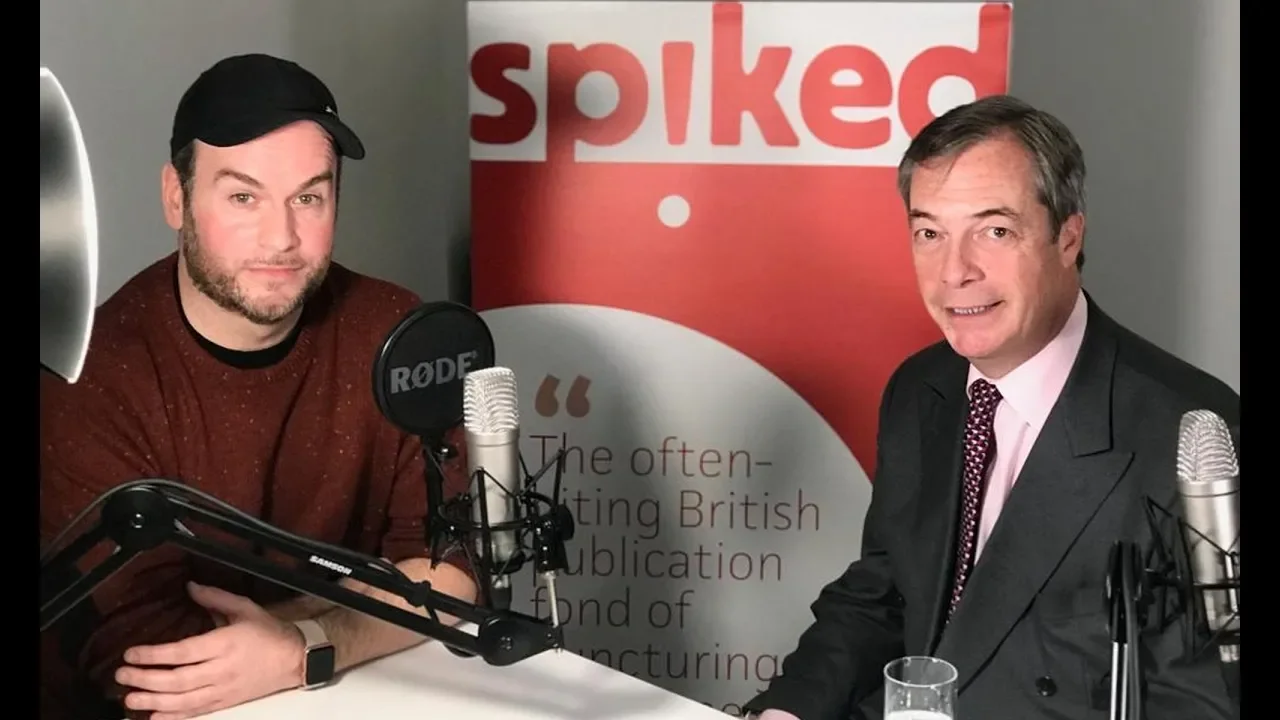





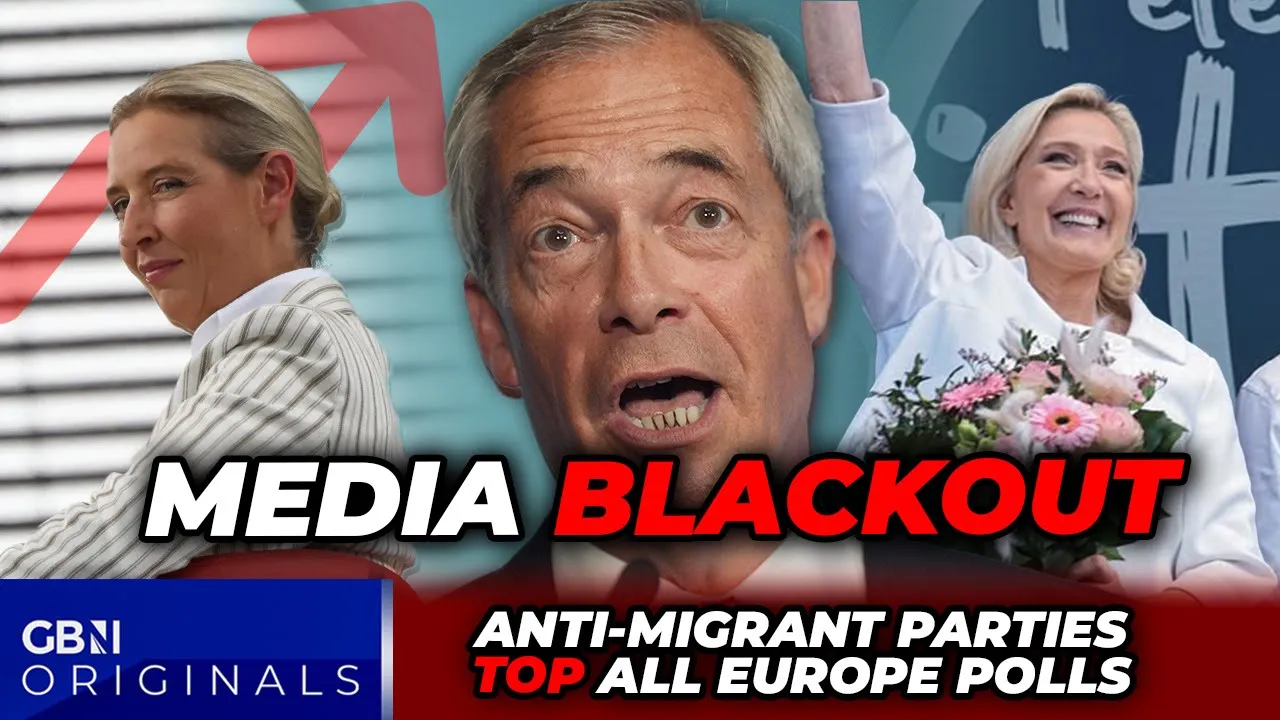












This video examines the rise of populist politics in the UK, analyzing how Nigel Farage's Reform UK movement challenges the traditional two-party system and questions the credibility of political manifestos when they fail to deliver on promises. The content explores how political parties may share underlying globalist interests despite different public personas, and discusses the relationship between democratic processes and authoritarian control mechanisms. The speaker argues that voters should critically evaluate political promises and that populist movements may represent legitimate responses to systemic corruption and unaccountable governance.
Nigel Farage vs Keir Starmer: UK Immigration & Populism Analysis
Added:The structure of the UK Westminster political system, including the roles of the Prime Minister, Leader of the Opposition, and the rise of third parties.
The definition and core characteristics of populism as a political ideology, particularly its framing of 'the pure people' versus 'the corrupt elite'.
The history of Brexit and Nigel Farage's pivotal role in shifting the UK's political discourse around national sovereignty and immigration.
The conceptual distinction between globalism (prioritizing international cooperation and open markets) and nationalism (prioritizing domestic interests and strict border control).
A comparative analysis of European populist movements, examining similarities between Reform UK, France's National Rally, and other right-wing populist parties.
The empirical economic and sociological impacts of immigration on public services, housing, and labor markets in post-Brexit Britain.
An in-depth study of Keir Starmer's governing strategy, specifically how a center-left administration balances global economic alignment with domestic pressures on border control.
The role of media ecosystems, alternative news platforms, and social media algorithms in amplifying populist rhetoric and shaping public perception of mainstream politicians.
428.8K views17.3Klikes19:36Original Release: 2024-06-21
in our country the UK something extraordinary is happening as well we're on the brink of electing a globalist politician a the head and leader of the labor party who has extraordinary CIA links and is a self-declared globalist and advocate for Davos meanwhile a last minute Surge from my own literal onair sparring partner Nigel farage means that a right-wing populist movement called reform will likely make significant gains in the next election Nigel farage is he the British Trump and could he create a trump likee surprise usurping the presumed next elected prime minister Kama a man who has CIA links and is an advocate for globalism let's get into it first of all let's have a look at Nigel farage now I've known Nigel farage for a while I've been on question time with Nigel farage called him a pound shop Enoch pal he is a pound shop Enoch pal and we got to watch him it was a this Enoch pal was a sort of a popular right-wing politician who talked about the threat as he described it of immigration in the 70s and 80s the argument around immigration continues but more and more you can see that people are concerned about sovereignty National control and borders because well for a number of reasons but mostly I suppose what it does to the job market in your country a lot of people think it's used to order demographics and Order votes there's a lot to talk about on the subject of immigration there certainly is whatever the reason for liberalism affording open borders I'm increasingly skeptical about it being compassion and Duty and care because I don't see a lot of compassion Duty and Care in the way that neoliberalist run the world right now let's have a look at Nigel farage is he the British Trump and what does it mean for Britain if k starma a kind of devout and overt globalist is elected let's get into it Nigel farage my question is to Penny Mor given that your 2010 Manifesto your 2015 Manifesto your 2017 Manifesto said you reduced net migration to tens of thousands you know 2019 Manifesto said immigration would massively reduce and that net 4.3 million people have come into the country since that time why on Earth should anybody believe the fifth Manifesto that promises cuts to net migration because of the record of this prime minister so we've had we that's fine fig out today people laughed out loud because Rishi sunak another globalist whose father-in-law owns emphasis which sponsors the WF which many people say has significant contract with the UK on a variety of tech matters is a laughing stock he was like the third unelected prime minister we had in in this country they kept just coming up with them out of thin air almost Boris Johnson recently was prime minister you will know potentially in the United States as the man that derailed the zalinski Putin peace deal after being instructed by well maybe globalist Diddy style handlers I don't know who ultimately controls these things here's Nigel farage giving a speech in the constituency that's the territory that he's standing in the rather unglamorous clack a Seaside town in Essex where I used to go on holiday as a boy that has a blue collar community that are highly likely to elect Nigel farage making him the sort of de facto leader of the opposition and a step closer to being the British Trump in the last two years 2 and a half million new people have come to our country think of it one in 30 people in this country today has come in the last last two years Britain needs reform nothing works anymore how are you getting on folks for GP appointments what I think is amazing when you see British politics is it seems so parochial and local I can never imagine seeing Donald Trump talking about how you getting on seeing a GP which is our syntic for Doctor our phrase at least for Doctor a local family doctor and njel farage is offering the idea that the reason you can't see GPS is because of population explosion certainly is resonating with his audience down there in clacton even if British politics seems somehow a lot less glamorous than American politics but hey glamour is that the answer has it ever been and what would a British Donald Trump look like I get the feeling he would be wearing a brass buttoned Blazer and potentially what we're about to see is if not the election of Nigel farage the ascent of Nigel farage to the defacto leader of the opposition because the Tory party our version of the Republican party is imploding and shattered and Scattered and justifiably so because it was a corrupt little organization that was crap the problem is that the labor party is ultimately the same thing with a slightly different veneer like with many politicians in your country you could move them around throughout the parties ultimately knowing that the same corporatist globalist interest will ultimately remain in control you're still going to have war between Russia and Ukraine you're still going to escalate tensions globally you're still not going to advocate for peace across the middle east in any meaningful and significant way and you are still ultimately going to put powerful interests ahead of the interests of Ordinary People the very people that voted for you how do we know this well for a start K Dharma says that his Allegiance will be to Davos rather than Westminster that's our Congress he's also has weird links to the CIA and he's a lawyer and when he was practicing institutional lawyer within our country with a remit of controlling legal cases across all of London he made some extraordinary decisions which will touch on in a moment first of all though let's have a look at K st's peculiar relationship with the CIA K stama joined an international grouping closely linked to the US and UK intelligence Services while serving in Jeremy Corbin's Shadow cabinet for a minute the labor party was run by Bernie Sanders style politician that was anti-establishment remember as Steve BN said there will be a Resurgence of populism he didn't know he said Bannon a couple of years ago whether it'll be leftwing or right-wing populism but people are so sick and tired of corrupt systemic institutional increasingly authoritarian and hypocritical governments that they're going to look for a populist response to the establishment as you know we can't make this content without the support of our sponsors here's a message from them now fume flavored air is becoming the leading alternative to vaping and smoking a movement towards better habits from today's sponsor fume the alternative this alternative helps you kick your bad habit in an enjoyable way fume is an award-winning device no batteries no charging looks awesome feel the weighted quality and the high quality design it's made to fidget with to calm anxiety spin your fume device on this base we're not using it look at that ah the Earth spins on its axis one man trou BS and another relaxes be their next success story for a limited time you can use my code Russell brand to get your free fume base when you order the journey pack head to trium.vira reducing magnificent what an incredible Sol get back here I can't live without that thing click the link in the description and remember try the QR code on your screen to get your free fume base I mean this thing's quite good this can save you quite a lot of trouble use the code Russell Brand to get your free fume base now back to the content thank you fume for sponsoring this video in the UK for a minute Jeremy Corbin looked like he was going to benefit from that energy and looked like he was leading a labor movement that could meaningfully impact the interests of the powerful K dama was a member of The Shadow cabinet the opposition cabinet at that time and he took odd meetings with us and UK intelligence Services the trilateral commission that's the name of this sort of cabal of intelligence Services describes itself as a global membership organization which thinks to discuss and propose solutions to some of the world's toughest problems discuss and propose solutions to some of the world's toughest problems its meetings are strictly off the the record it was founded by a billionaire Banker David Rockefeller as a networking group for Elites from the US Europe and Japan Rockefeller was close to the leadership of the CIA at the time in a sense these are the kind of organizations that it seems to me wield incredible power never having to suffer the indignity of standing before an electorate whether it's an organization set up by rockerfeller or a charity or philanthropic organization set by Gates or the clintons or whatever or groups like NATO or the who there seems to be a number of ways where bureaucracy can bypass the will of the people and indeed as we saw yesterday with NATO's Trump proofing of funding to Ukraine even in the event that a popular leader Rises up that is opposed to some of their agenda they find ways to control and ctail that indeed the control of the social media and online space is about ensuring that movements like the ones that could emerge from spaces such as this never get off the ground that's why you have to smear denters create confusion have no real ethical principles or real positions over in China yeah the vaccines they're bad for you don't take them in the US if you say the vaccines are bad you're basically going to prison you're certainly not leaving your house you're going to be essentially under house arrest starma this is the presumed next leader of the United Kingdom was a member of the trilateral commission alongside of two former heads of the CIA and spoke at one of its London events alongside the former heads of MI5 and gchq which is another deep State service in our country former CIA director Mike Pompeo said we will do our level best to stop Corbin getting elected there is a globalist agenda It Is by using the Deep state that they ensure that electoral processes or even the kind of chaos that can emerge when people are largely dissatisfied is mitigated controlled dampened down you'll notice a few things when the establishment has decided who the next leader is they start to sort of publicly support them you'll see stories like this a former major conservative donor has announced he will be voting labor for the first time describing richy sunak as an absolute thud founder phones for you John cwell said the label Le the K sta really hits the spot with a lot of issues with me right so we're seeing billionaires move over have a look at this this is when the sun started to support Tony Blair this was a comparable moment this is when we knew that it doesn't matter which party you vote for you're getting the same interest because of course what this was was an indication of Tony Blair's deep relationships with of Murdoch that included actually being Godfather to one of his children and some people will say that the relationships went a little further than that but we'll wait for further corroboration before getting into it now this is how K starma handled the riots that broke out in the UK after a man died in police custody you know this is a pretty common story in your country but it happens here too a young black man Mark Dugen I think was his name died in police custody it led to riots in London and there was was really curious about it is riots started springing up in cities everywhere what I think is extraordinary about that is it shows that there is a deep dissatisfaction a sense that people want to change this is what K tharma did when he was head of the crown prosecution service check it the penal response to the writers was enormous and unprecedented in a bid to ramp up the shock and awe of the Criminal Justice System I.E if you Riot if you cause trouble you're going down look at what's happening with the January 6th insurrectionist protesters weird long prison sentences right it's peculiar the shock Andor of the Criminal Justice System every stage of the process has been shown to have been made more punitive and more authoritarian the crown prosecution service LED at the time by Kama immediately relaxed the threshold used to determine whether or not to press charges that means they just went we're going to press charges for smaller crimes small crimes became criminalized long standard advice that suspects under the age of 18 should not be tried for minor offenses were suspended they tried kids kids actions normally regarded as theft were treated as burglary so as to ensure maximum jail time this is lawfare like we're all becoming familiar with they change it they change the law the law is not objective and Justice isn't blind it's just another tool of the system and democracy is the best way to create tyranny you have the illusion of choice but indeed you have despotism of a kind that was unimaginable in 20th century militaristic dictatorships cases were pushed from the magistrates the crown courts again amplifying the significance that's sort of basically making something a federal crime rather than a misdemeanor ensuring that longer sentences were available and costing miners their right to anonymity in the Press existing sentencing guidelines were abandoned and despite criticisms that he was playing politics starma ordered the courts to stay open 24/7 for emergency sessions where's the compassion and the care then we've seen K dama tur and prevaricate on the issue of gender and is it transphobic to say only women have a cervix well it is uh something that uh shouldn't be said it is not right is it right or is it wrong for Rosie Duffield to say only women have a cervix well look biologically she of course is right like unable to say of course we should be compassionate to people with gender identity issues but there does seem to be a biological reality when it comes to sex at the molecular level and instead of being to say that he flips and flops all over the place but when it came to sentencing rioter who even if it seemed like they were you know stealing a pair of sneakers or trainers were ultimately expressing Mass dissatisfaction with a corrupt system and brutal authoritarianism and indeed the ability of the state to kill they open the courts Round the Clock this is authoritarianism and this is what authoritarianism looks like these are the symptoms of it these are its signs these are its markers while political pressure was undoubtedly put on the police and on the courts many of these emergency Innovations were the result of the justice system taking the initiative it was to borrow sociologist Karly light towers and legal scholar Hannah qu's phrase a moment of prosecutorial Zeal and judicial abandon isn't it extraordinary the ideas that come from Rel religion like Zeal or perhaps they come from Human Nature you can have that argument in your own mind and abandon the idea that you can just put aside who you believe yourself to be in order to embrace something more deeply that you can have an enthusiasm a power rush through you a spirit that could change the world deployed only in order to create more control more Authority more fear it culminated in 2,000 people facing jail terms which were four and a half times longer than those same offenses would normally warrant that is authoritarianism if you link authoritarianism to globalism you have technological feudalism tyranny dictatorship you tell me but I'll show you this this is K stama telling you where his allegiances lie let let's just ask you quickly you have to choose now between Davos or Westminster Davos why because Westminster is too constrained um and you know it's closed and we're not having meaning once you get out of Westminster whether it's Davos or anywhere else you actually engage with people um that you can see working with in the future West just a tribal shouting play yeah people you could work with in the future like CLA Schwab sadly he's retired or maybe Albert bowler do you imagine for a moment that the election of this individual is going to lead to any kind of progress or change or benefit for ordinary people or is this simply a further advance of the kind of globalism that was ineptly practiced by the previous government being practiced now with people wearing slightly different colored ties and inviting you to cheer and holler the Democracy Reigns well don't shout too loudly or you might find yourself in a 24/7 Court getting locked down unless you do something crazy like vote for populist but I guess we're all too tied up in ideas like oh God man you know but what does he mean what does he represent it's extraordinary it's extraordinary so there you are what would be a better bet for most people populism or authoritarianism I don't know but it's a question that people are asking all across the globe only in the UK it looks like there's a slightly different Dynamic at play and we might be moving deeper into populism but that's just what I think why don't you let me know what you think in the comments and the chat You Beautiful People hey this is exciting we've got a great partner today it's Rumble but beyond Rumble it's rumble's l latest Venture let me ask you first are you a sleepy Joe type character with zero cognitive performance struggling to must focus and brain power for basic things like running the United States of America you got to stop drinking woke liberal coffee that hates you in your way of life and start your day by drinking rumbles very own 1775 coffee this is going to be the best tasting coffee you've ever had seriously good ethically sourced from a family farm in the High Altitude mountains of Bolivia not in the Bolivian low Lands Run not by a family but by a single man still living with a pet no instead of waking up and drinking your big Corporation owned woke ideology coffee that's probably making you sick from the pesticides it's sprayed with tri rumbles 1775 revolutionary coffee support freedom of speech build a parallel economy that actually values you and loves you my favorite it's dark of course I've always found the lure of the dark irresistible I'm sorry how can I stay mad at you but you're just going to have to wait over there for a little while level up your morning routine with a 1775 coffee sleep all night knowing your hard-earned doll dues are going towards supporting Freedom loving creators like me on Rumble visit 1775 coffee.com now pick up your first bag use the code brand to save 10% on your first order oh come on why choose you know hey thanks for watching if you want to see more uncensored content where Free Speech can flourish join our live stream click the link right here to watch the next video if you want to or become become a member of a growing movement download the rumble app and you'll be informed every time we make a new piece of content Stay Free
Up Next

12:00
Two-Party System and Democratic Polarization: Causes and Reforms
@thehill
7.7K views•2021-02-24

24:30
BRICS Pay and de-dollarization: A New Financial Order Emerges? | 55 chars
@DannyHaiphongYT
164.6K views•2024-10-22
7:33
Government Surveillance Methods: 10 Ways You May Be Watched
@BeAmazed
1.6M views•2017-04-09
10:19
Explaining the Saudi-Iranian Proxy Conflict in the Middle East
@Vox
18.2M views•2017-07-17
Related Study Plans & Knowledge Roadmaps
Structured learning paths in Political Science
political-science
Economic Statecraft: Sanctions & Chokepoints
01Foundations of Geoeconomics and Economic Statecraft
02The Mechanics of Weaponized Interdependence
03International Sanctions: Types, Implementation, and Efficacy
+ 2 more learning modules
12h5 modules
Explore Roadmap
political-science
Central Bank Independence: Politics & Policy
01Foundations of Central Banking and Monetary Policy
02The Time Inconsistency Problem & Inflation Bias
03The Delegation Model and Designing Independence
+ 2 more learning modules
12h5 modules
Explore Roadmap
political-science
Consociationalism: Power-Sharing & Stability
01Democratic Dilemmas in Divided Societies
02Introduction to Consociational Democracy
03The Four Pillars of Consociational Design
+ 2 more learning modules
12h5 modules
Explore Roadmap
political-science
Rebel Governance: Legitimacy, Economy & State
01Foundations of Rebel Governance and Statehood
02Establishing Political Legitimacy and the Rebel Social Contract
03Wartime Economies and Rebel Resource Management
+ 2 more learning modules
14h5 modules
Explore Roadmap