
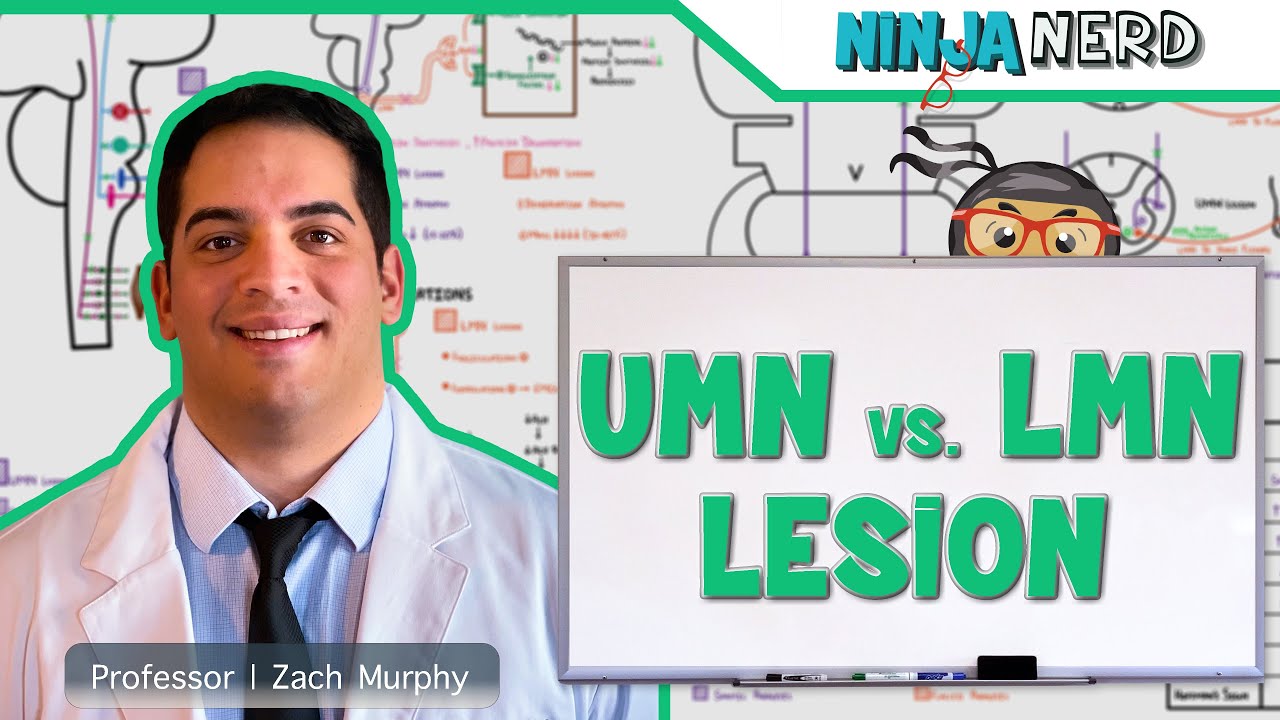


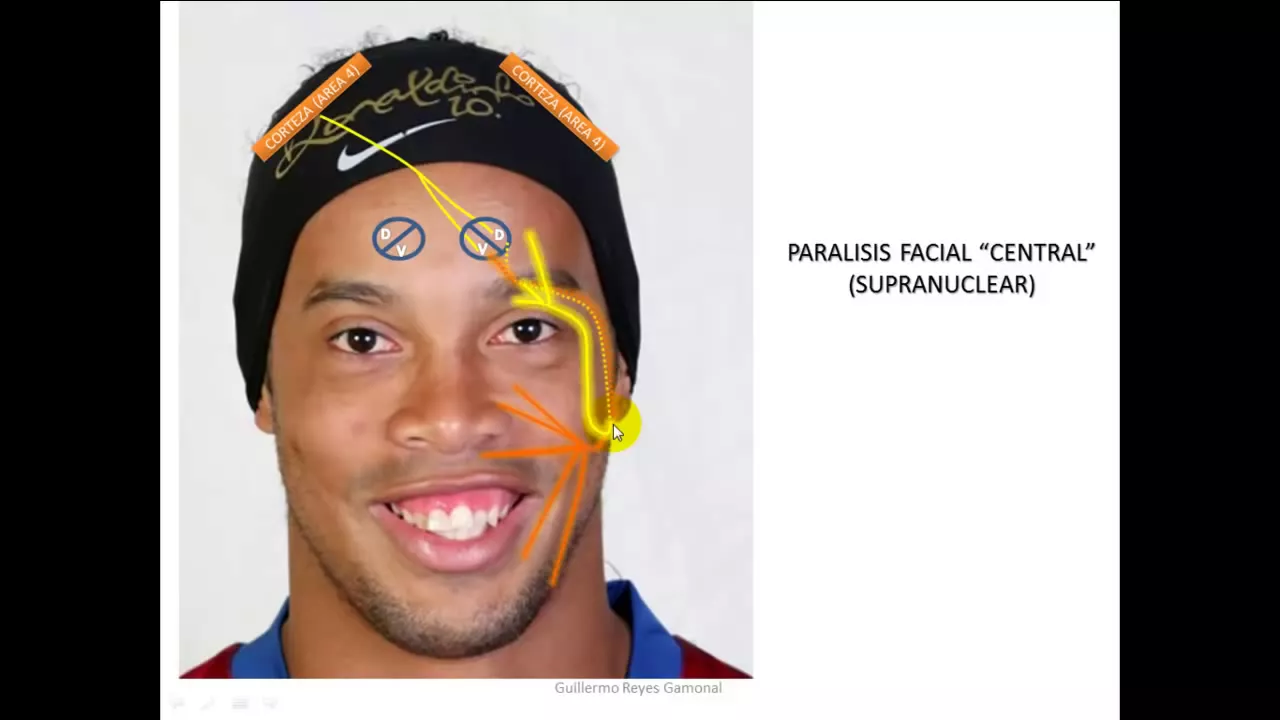









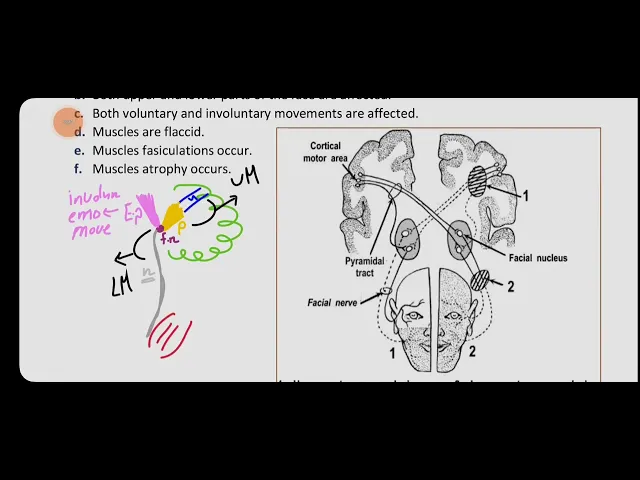


Facial palsy from upper motor neuron lesions causes contralateral lower facial paralysis with preserved upper facial function (inability to smile but able to raise eyebrows), while lower motor neuron lesions cause ipsilateral paralysis of both upper and lower facial muscles (inability to smile or raise eyebrows on the affected side). This distinction occurs because the upper facial nucleus receives bilateral motor cortex innervation, whereas the lower facial nucleus receives only contralateral innervation.
Facial Palsy: Upper vs Lower Motor Neuron Lesions | Clinical Guide
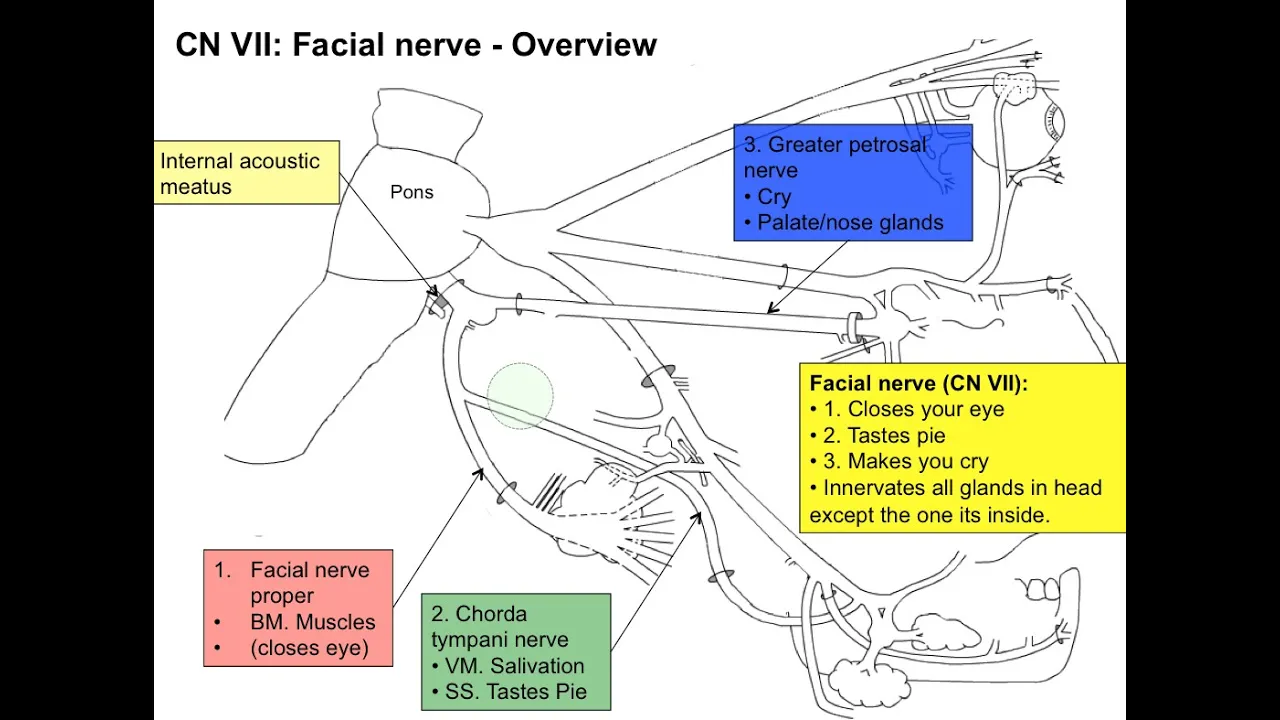
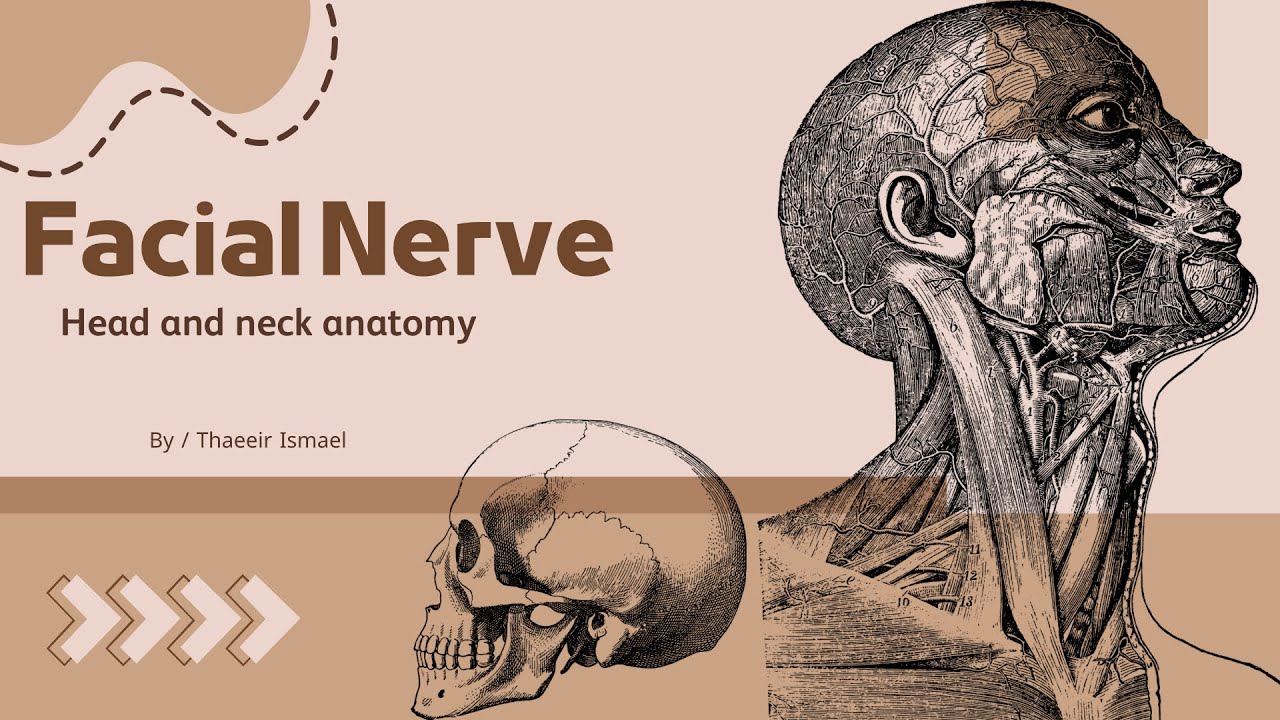
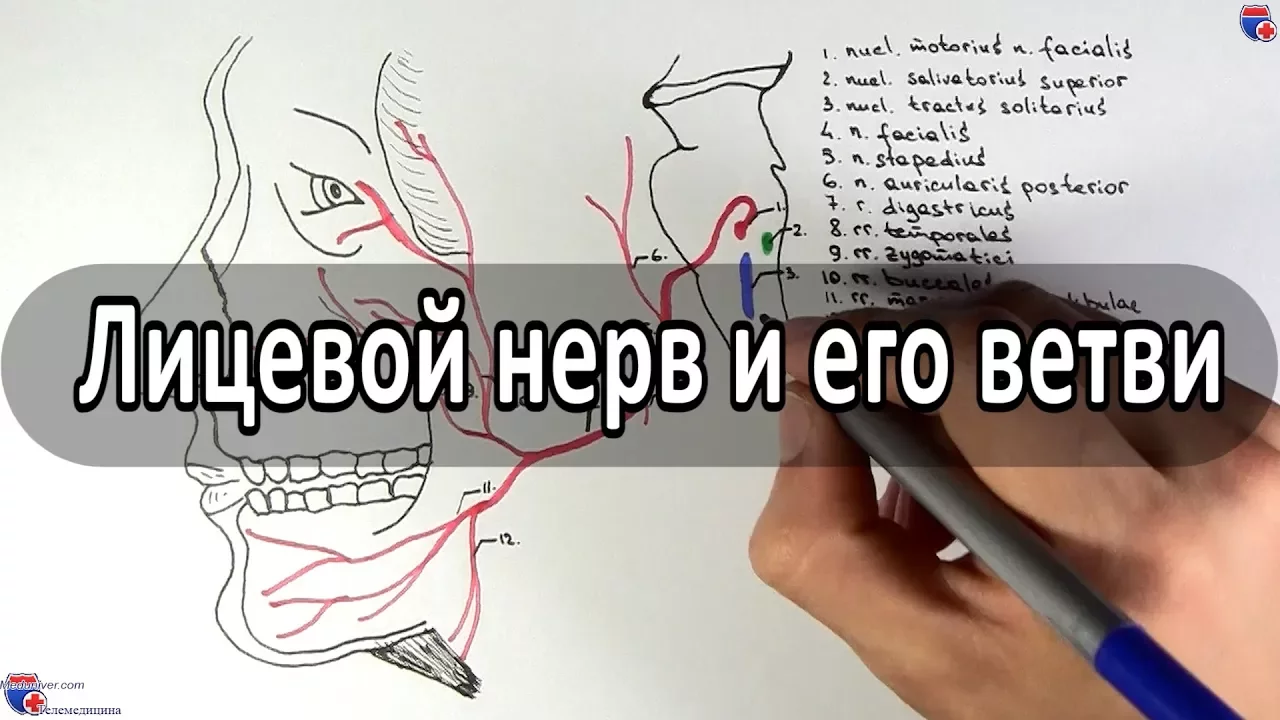
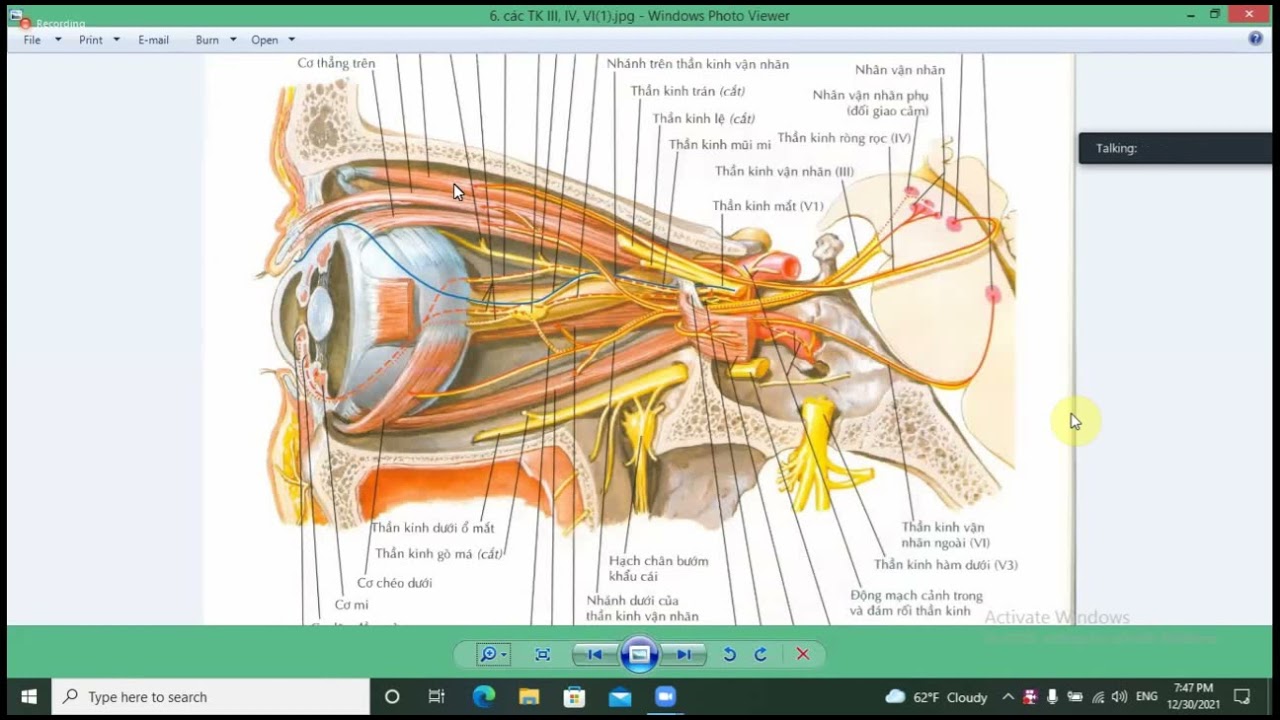
Added:Anatomy and pathway of the Facial Nerve (Cranial Nerve VII), including its origin in the pons and its branches to the muscles of facial expression.
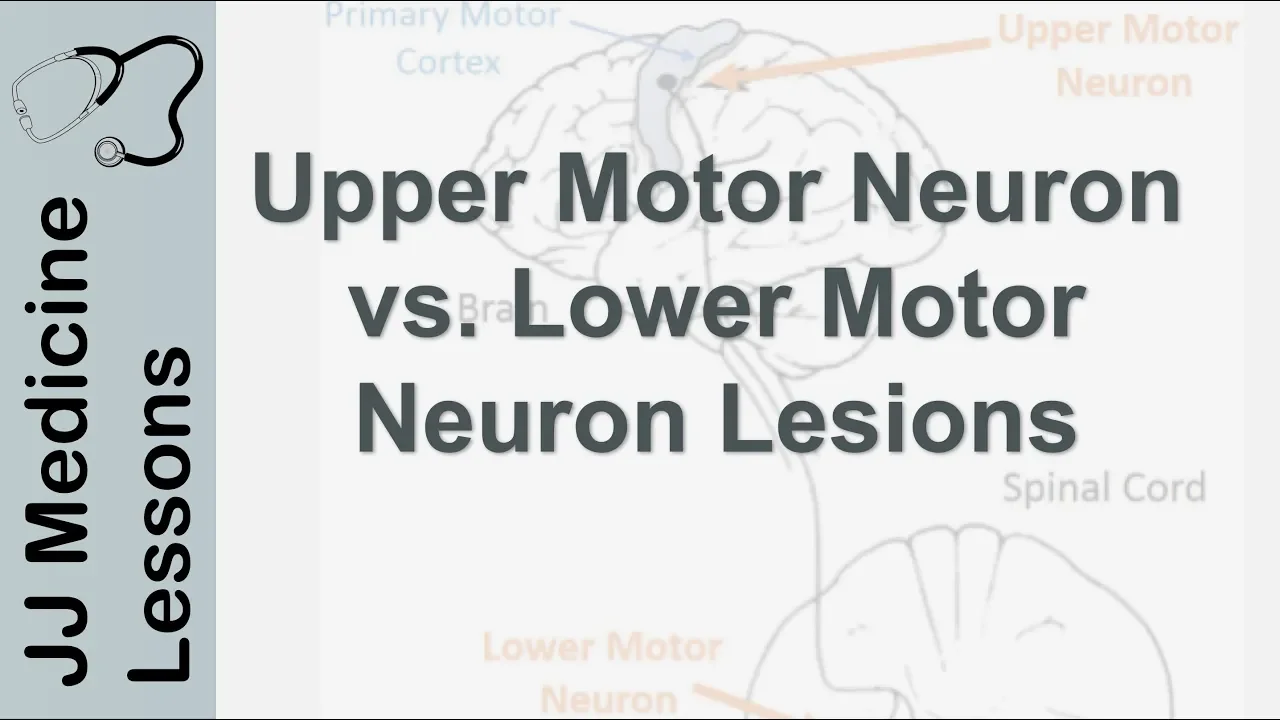
The general physiological distinction between Upper Motor Neurons (UMNs) in the central nervous system and Lower Motor Neurons (LMNs) in the peripheral nervous system.
The concept of bilateral versus unilateral cortical innervation, specifically how the upper and lower regions of the face receive motor signals from the motor cortex.
Basic clinical examination techniques for Cranial Nerve VII, such as assessing facial symmetry during voluntary movements like smiling, frowning, and closing the eyes.
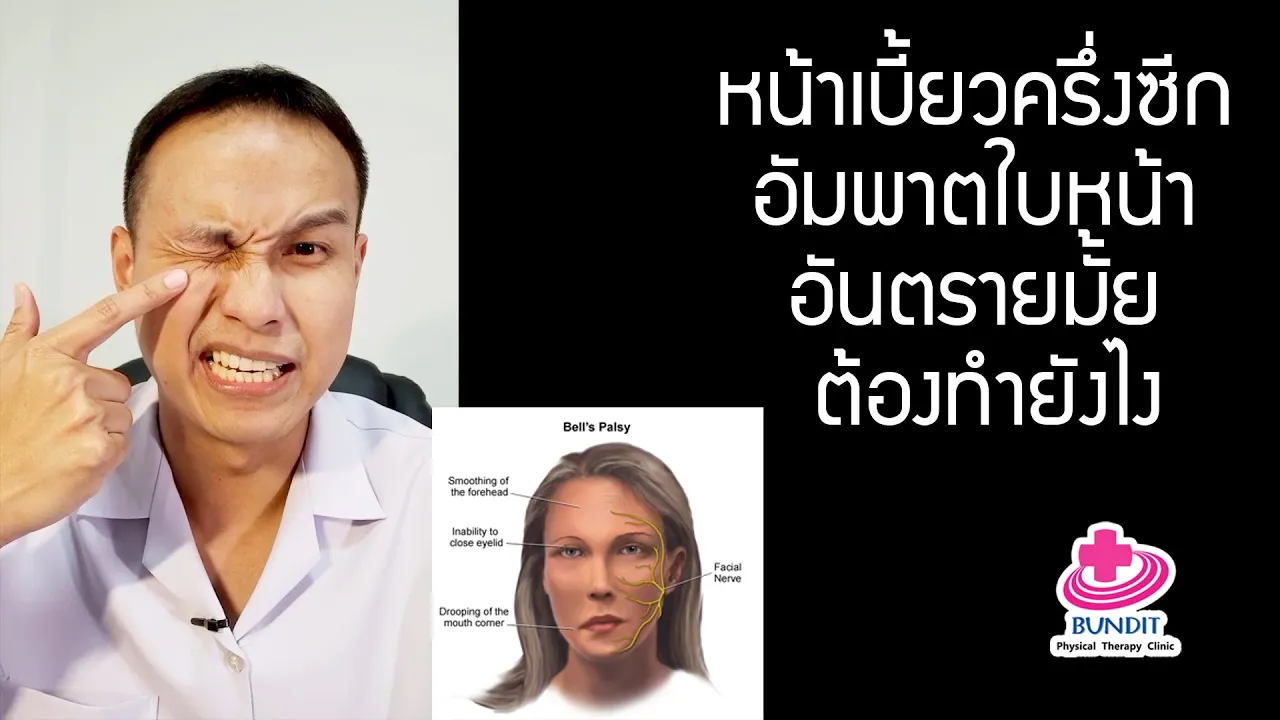
Differential diagnosis of acute facial weakness, distinguishing between common etiologies such as Bell's Palsy (LMN) and acute ischemic stroke (UMN).
Localization of brainstem lesions and associated syndromes, such as Millard-Gubler syndrome, which involve the facial nerve nucleus and surrounding pathways.
Clinical management protocols, including the pharmacological treatment of Bell's Palsy with corticosteroids and the emergency management of stroke-induced facial palsy.
Electrodiagnostic testing methods, such as electroneuronography (ENoG) and electromyography (EMG), to assess the degree of nerve degeneration and prognosis in facial paralysis.
368.8K views8.5Klikes5:37Original Release: 2015-08-12
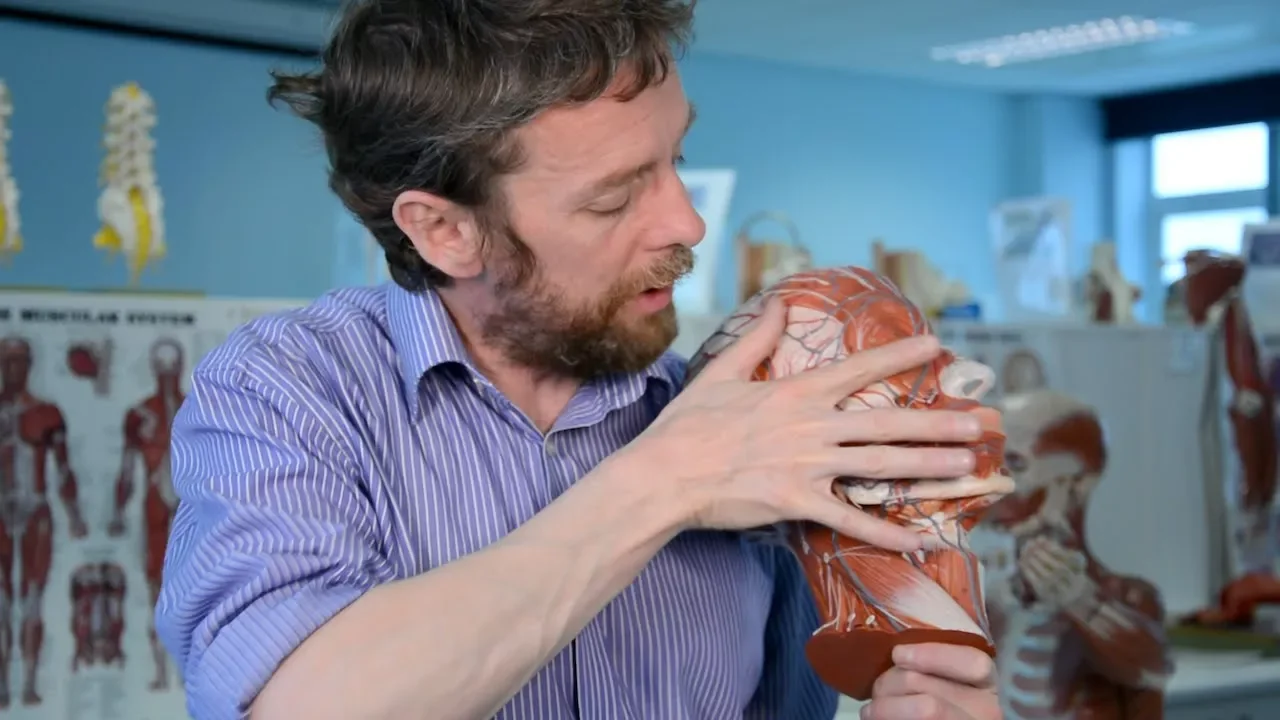
[Music] hi guys in this tutorial we're going to work our way through the concepts of facial py and in particular discriminating a upper motor neuron leion from a lower motor neuron lesion let's start by covering some important terminology lesion means a region in an organ or tissue which has been damaged through the process of injury or disease pausy means paralysis or the loss of the ability to move contralateral means the opposite side of the body to the leion whilst epil lateral refers to the same side of the body as the lesion perfect now of these terms in our Arsenal let's begin with our brain and it's two hemispheres next we add in our brain stem with three components the midbrain ponds and Medela the size of the ponds is disproportionately larger in this diagram as it is the location of the seventh nerve or facial nerve nuclei the facial nerve is responsible for the muscles of facial expression which as we will see can be used clinically to help discriminate whether a facial pausy is due to an upper or lower motor neuron Legion the facial nucleus is conceptually split into two halves the top half provides the fibers that innovate the muscles or facial expression of the upper face while the lower half of the nucleus provides the fibers to innovate the muscles of facial expression of the lower face the upper half of the nucleus receives Innovation from not only the contralateral motor cortex but also from the ipsilateral motor cortex this is very relevant clinically which we will come to the lower half of the facial nucleus however is only innovated by the contralateral motor cortex if we now consider our face and add an imaginary line which demarcates the upper and lower muscles of facial expression the upper half of the facial nucleus provides a lower motor neuron which supplies the upper facial expression muscles whilst the lower half of the facial nucleus on each side provides a lower motor neuron which supplies the lower facial expression muscles so if there is a facial pausy due to an upper motor neuron lesion what would you expect to see clinically paralysis of the contralateral lower facial musculature which would present itself through inability to smile on the affected side importantly the upper facial musculature is not involved because the upper half of the facial nucleus receives bilateral motor cortex innovation so clinically the patient should still be able to raise both eyebrows How about if there is a facial pausy due to a lower motor neuron lesion of the facial nerve what would you expect to see clinically paralysis of the epil lateral upper and lower facial musculature this would present itself through inability to raise the eyebrow or smile on the side of the lesion great so hopefully now the clinical features of a patient facial weakness will help you discriminate whether the problem is due to an upper or lower motor neuron lesion to help consolidate this knowledge this tutorial will conclude by presenting several different clinical presentations of facial py the aim is to First identify the abnormal clinical features and then identify whether there is an upper or M neuron leion and on what side you will have 10 seconds for each for me however this is goodbye thanks for [Music] watching [Music] [Music] [Music] [Music] [Music]
Up Next

26:33
Synapse Properties in CNS Physiology | MBBS 1st Year
@PhysiologyOpen
11.8K views•2024-05-05

48:47
Graphic Medicine: Comics for Collaborative Healthcare Communication
@nationalpatientadvocate
189 views•2023-12-04

10:28
Neuroanatomy: Central and Peripheral Nervous System Divisions Explained
@AKLECTURES
136.2K views•2014-09-20
3:05
Stages of Labor and Vaginal Birth | Childbirth Animation
@nucleusmedicalmedia
52.1M views•2017-08-18
Related Study Plans & Knowledge Roadmaps
Structured learning paths in Medicine
medicine
Abnormal LFTs: Diagnostic Workup & Pathology
01Liver Anatomy and Basic Physiology
02Introduction to Liver Function Tests (LFTs)
03Hepatocellular vs. Cholestatic Patterns
+ 3 more learning modules
12h6 modules
Explore Roadmap
medicine
Analyzing Blood Smears: RBC, WBC & Platelets
01Introduction to Blood Components & Smear Preparation
02Normal Morphology of Blood Cells
03Erythrocyte Pathologies & Morphological Variants
+ 2 more learning modules
12h5 modules
Explore Roadmap
medicine
Mechanical Ventilation: Waveforms & Alarms
01Anatomy and Physiology of Breathing
02Introduction to Mechanical Ventilation & Core Modes
03Ventilator Settings and Waveform Interpretation
+ 2 more learning modules
12h5 modules
Explore Roadmap
medicine
Neuro Exam: Localization & Stroke Syndromes
01Foundations of Neuroanatomy and Vascular Supply
02The Neurological Examination: Step-by-Step
03Principles of Neurological Localization
+ 3 more learning modules
18h6 modules
Explore Roadmap