







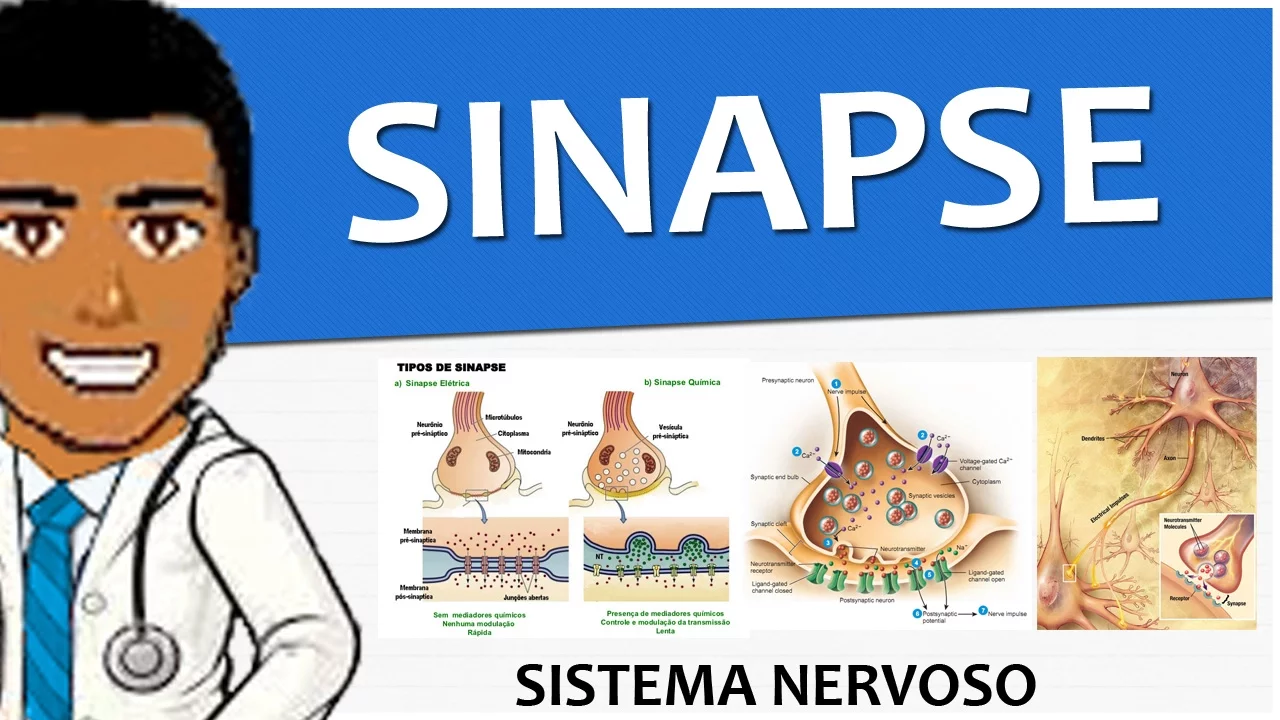



















Synapses exhibit key properties including forward conduction (unidirectional signal transmission), synaptic delay (0.5-1ms due to chemical processes), convergence (multiple neurons impinging on one neuron enabling information integration), divergence (one neuron connecting to many neurons for widespread effect), spatial and temporal summation (combining EPSPs/IPSPs to reach threshold), synaptic facilitation (subthreshold neurons becoming active when multiple inputs converge), synaptic occlusion (shared targets reduce combined effect), synaptic fatigue (neurotransmitter exhaustion from repeated stimulation), and synaptic plasticity (ability to strengthen or weaken connections based on activity, including long-term potentiation and depression).
Synapse Properties in CNS Physiology | MBBS 1st Year
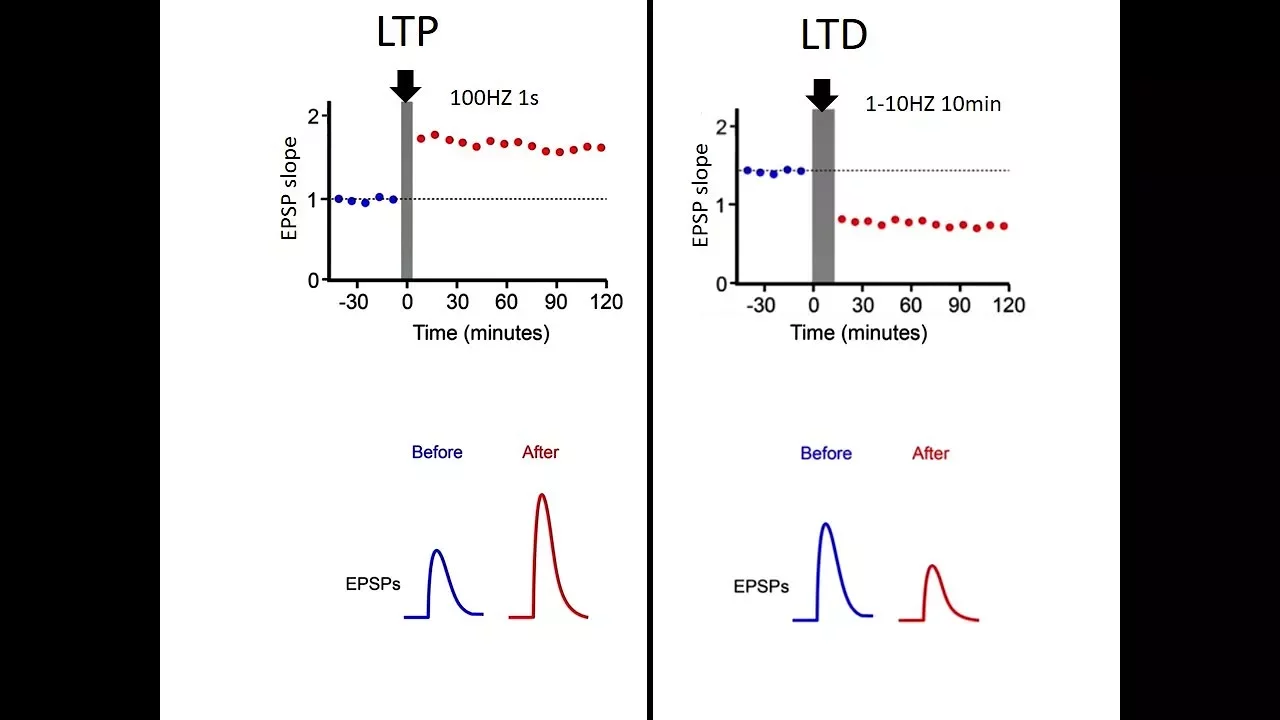
Added:due to the many properties of sinapsis complex function of nervous system is possible these properties of sinapsis include forward conduction catic delay convergence and Divergence summation which is a spatial summation and temporal summation synaptic facilitation synaptic occlusion synaptic fatigue and synaptic plasticity let us discuss each of them one by one so first one is for conduction the term forward conduction means that the impulse can only be transmitted from preoptic neuron to post synaptic neuron so here is a schematic diagram showing a pratic neuron where this is the cell body this is the Exon and this is the neuron terminal which is making contact with the post synaptic neuron so the impulse can only be transmitted from neuron a to neuron B and not not from B to a and why is that this is because the neuron a actually releases neurotransmitters from its nerve terminals which act on The receptors which are present on the derrites or the cell body of the post synaptic neuron so it is because that the preoptic neuron is releasing the neurotransmitters which act on The receptors present on the postoptic neuron such that the impulse can only be transmitted in one way forward conduction and not in the opposite direction so that is the first property coming to the next property that is synaptic delay synaptic delay means that there is a delay of approximately 0.5 millisecond to 1 millisecond which takes place at the level of this synaptic transmission see basically impulse conduction here is movement of the charges and that movement of the charges is very fast because it is an electrical phenomena but when we talk about synaptic transmission here chemicals are involved and there is some time which is involved in the release of the chemicals the diffusion of the chemicals in the synaptic Cliff to its receptors then binding of the neurotransmitters to their receptors and finally the time taken for the opening of the Ion channel so this all takes some time and that time is5 milliseconds to 1 millisecond so why is this property important see if there is a pathway which is having large number of neurons which are connected in series okay say suppose five neurons are connected in series on the other hand there is another pathway in which only three neurons are connected in series so can you tell that which of them will have a faster conduction obviously the chain of neurons with lesser number of sin absis so that is the importance that time taken for the conduction of the impulse along the full pathway now why is this important why do we want to know the time taken for the conduction of the impulse throughout the track well it decides our reaction time to the various environmental stimuli say suppose you might have heard about the visual reaction time or the auditory reaction time see the auditory pathway is having lesser number number of sinapse in its pathway on the other hand the visual pathway is much more complex and the number of shapses are more so that is the reason that visual reaction time is more than the auditory Reaction Time meaning the time for us to respond to a visual stimulus is more than the time for us to respond to an auditory stimulus so that is the importance of synaptic delay let's move on to the third property that is the convergence of the neurons now here is a simple diagram which is showing three pratic neurons which are converging on a single postsynaptic neuron and actually it's a very simplistic diagram actually on a single neuron there are approximately thousand synapses okay thousand synapses per neuron are present so so many neurons are impinging on a single neuron so this is known as convergence and this is very important because this enables our nervous system to basically collect information from various sources and then finally the response is made based on the integrated information so depending on whether the stimuli is coming from these two or the stimuli is coming from all three the response which occurs in the post synaptic neuron will differ so it is kind of functioning as an integrator of information and final responses occurring so here we are talking basically convergence from different sources one example I will tell you like for the regulation of the blood pressure see for the regulation of the blood pressure you know that Barrow reflex is there but you see the final integration also depends on the input of the proprioceptors not only the Baro receptors proprioceptors then also the chemo receptors isn't it what is the status of the oxygen and Par pressure of carbon dioxide in our blood and final response for the change in BP occurs based on the convergence of all these inputs so that is one type of convergence that is Convergence from multiple sources but there is another type of convergence as well so here this diagram is showing convergence from a single Source you see what I have drawn here that this is a single neuron and the Exon is dividing into lot of nerve terminals which are making contact with the single post synaptic neuron so one single neuron is making lot of synapses at the level of the post synaptic neuron now what is the importance of this see when an action potential arrives what happens there is release of the neurotransmitter and either there is generation of epsp or ipsp at the level of the postoptic neuron by the way I have made another detail video on epsp and ipsp the concept of epsp and ipsp do have a look at that video as well so yes I was talking about that there will be generation of epsp and ipsp at the level of the post synaptic neuron and generally the value of this epsp is not much it is like 0.5 molt so with a single action potential only this much epsp or ipsp is generated so this amount of epsp is not sufficient to cause the change in potential to reach to the threshold isn't it so say suppose rmp is- 70 mol generally the threshold is+ 15 molt from the resting membrane potential okay so maybe the threshold is minus 55 M so this much epsp is not sufficient to reach to the threshold and for the generation of action potential but you see when one neuron is making lot of connections with a single postoptic neuron now this neuron can make more change in epsp so four neuron terminals means that a single neuron will cause a change in potential by approximately 2 mol so you see the weightage of the effect of this preoptic neuron on the post synaptic neuron is more so let us come back to this example say suppose one neuron is having more number of synapses okay more number of synapses and say suppose these is inhibitory synapses these are inhibitory synapses so you see if this particular neuron is activated the effect will be much more than the other two neurons so that is how the weightage of the effect of one particular pratic neuron on the post synaptic neuron depends on the number of synapses it is making on the post synaptic neuron fine so that was about the convergence let's move on to the next property that is Divergence so here again there is a schematic diagram of Divergence now one common example of Divergence is seen in descending pathway that is the pyramidal tracts pyramidal tracts and what is this Divergence you see that first a single Exon divides into two nerve Terminals and makes contact with two neurons which further divide and make contact with two other neurons so this is what this is Divergence of the information from from a single neuron to many other neurons and as I told you that this is seen in pyramidal tract what is happening that actually the neurons of the motor cortex carry the plan okay plan of movement and what happens that if we stimulate a neuron of the motor cortex then we get the contraction of a group of muscles so suppose these are Alpha motor neurons of the spinal cord and they are supplying the muscle fibers so what we get that when we stimulate a single motor cortex neuron we get the contraction of a group of muscles So the plan of action is being executed so that is one kind of Divergence another kind of Divergence also occurs in which information goes to different paths for different actions for example our proprioceptors right our proprioceptors that is information is going via a sensory neuron what happens that from here in the spinal cord this neuron so this is in the ventral region this neuron gives off a branch and makes contact with another neuron that is the Alpha motor neuron so this information is coming from muscle spindle okay so this is making contact with the alpham motor neuron and that is leading to stretch reflex but also this this information goes to the cortex it also goes to the cortex isn't it also it goes to another region it goes to cereum also so information goes to various other regions and what is the role here it is important for maintaining the balance the position of the body so that is also happening that is also a kind of Divergence so that was the next property moving on to summation and first one in that is a spatial summation so this diagram you have seen before what is it showing it is showing convergence right so many neurons are impinging on a single post synaptic neuron now suppose all these three neurons fire simultaneously say suppose these two are excitatory neurons so they are going to generate epsp say suppose they generate a epsp of 0.5 molt right on the other hand this is a inhibitory neuron inhibitory neuron and that also fires so it will generate a ipsp of minus 0.5 mol so summation is that the end result the end voltage change which happens on the post synaptic membrane is a result of the summation of these potential change so if we sum this up it will come to a epsp of 0.5 molt so this is known as a spatial summation so that's what I was talking about the integration of information in convergence again detail about spatial summation and temporal summation I have given in the video of epsp and ipsp very important video please do have a look on that also to understand the concept clearly coming to the temporal sumission now you see in this diagram I have not shown the convergence here a single neuron is making contact with the single post synaptic neuron so while in a spatial we were talking of the neurons in space which are separated in space in temporal summation we are talking about the action potential in single neuron okay and how these Action potentials are occurring repeatedly in time so say Suppose there is one action potential and after say suppose 0.5 milliseconds there is another action potential okay and then again an action potential so what is happening that these Action potentials are repeatedly stimulating our post synaptic neuron so now say first action potential causes a epsp of 0.5 molt okay now next action potential comes it will again cause a epsp of 0.5 molt right then third action potential again it will lead to a epsp of 0.5 molt okay but remember that there is a little time Gap there is a Time gap of 0.5 milliseconds so by the time the next action potential Comes This epsp there is little bit loss of the charges and it may become like 0.4 molt okay so next action potential it came it became 0.5 molt again a new epsp I mean so 0.5 M by the time third epsp came there will be again some loss of the charges in this small time right so maybe this has become 0.3 molt right so already some potential is there and this has become 0.4 molt and the third one it is coming 0.5 molt now all these will be summed up right so how much it will be actual total epsp will be 0.9 molt so this is known as temporal summation where the summation is happening over a period of time due to repeated Action potentials in a single neuron spatial summation where the summation is happening over the space of the post synaptic neuron because of various pratic neurons making contact with the post synaptic neuron fine now with this concept of convergence and summation let us move on to next important property that is synaptic facilitation so this is just an extension of the property of convergence and summation so let us try to understand it with a simple diagram say suppose here there are two pratic neurons let us call this a pratic neuron one and this one is pratic Neuron 2 and we have four different post synaptic neurons let us name them as a b c and d right now suppose this pratic neuron one makes lot of synapses with this first postoptic neuron that is a post synaptic neuron and the number of sinapsis are so much that the epsp actually leads to change in potential to the threshold directly so from - 70 molt it changes to- 55 molt okay so so much epsp is generated on this preoptic neuron if that happens what will be the end result there will be generation of action potential understanding so when first preoptic neuron is stimulated there is ction potential in a post synaptic neuron however this prpic neuron one doesn't make so many synapses with the post synaptic neurons B and C the synapses number is quite less so will action potential be generated in B and C no right there will only be epsp epsp in B and C so we call it that b and C are in subliminal Fringe subliminal Fringe of this preoptic neuron one okay so they are in subliminal Fringe while a is excited it is activated and it is known as in linal Fringe linal Fringe okay these are certain terms you should know there are other names as well this linal Fringe also known as discharge Zone okay because discharge when we say the word it means the generation of action potential so this is discharge zone or also known as excited Zone excited Zone fine on the other hand there are other names for this also subliminal Fringe where we can call it as facilitated Zone facilitated zone or sub threshold Zone because the apsp is not reaching to the threshold so sub threshold zone so you see the term facilitator Zone and what is the property known as it is known as synaptic facilitation so these B and C neurons are being facilitated by the preoptic neuron number one fine now let's go on to the second one here what we are seeing again you see the pre synaptic neuron number two suppose it makes lot of synapses with this G neuron so what will happen again this becomes in the discharge zone or linal Fringe zone of the pratic neuron 2 and there will be action potential in the D neuron but again this B and C they will only generate epsp so we have to hide this first one only when I'm talking about two that means only the second neuron is stimulated so there will be epsp in BN C now let's consider the third scenario where both first and second are stimulated simultaneously what is going to happen when both are going to be stimulated simultaneously they will be action potential in Neuron a obviously there will be action potential in neuron d as well right but now because these B and C are stimulated together by these pratic neuron 1 and two there will be more epsps and maybe it reaches to the threshold also and there will be action potential in both B and C so when we talk separately about these neurons one and two then this B andc are in subliminal Fringe or the facilitated Zone but see because of the property of convergence and because of the property of summation what has happened that when both of these neurons are stimulated simultaneously then the epsp can reach to the threshold and lead to the generation of action potential fine so that is the property of synaptic facilitation moving on to synaptic occlusion again we are having the same diagram but to understand synaptic occlusion you see what is going on that maybe the stimulation of first neuron leads to action potential in all these three neurons so what we are saying is that it is making lot of synapses with all these neurons right so everywhere the epsp will reach through the threshold and lead to generation of action potential in a b and c on the other hand when we talk about the second only second we are stimulating then again if this neuron is making lot of synapses with all these neurons then stimulation of second neuron will again lead to action potential in BC and d right so if you see stimulation of first neuron leads to action potential in three neurons okay on the other hand stimulation of second neuron also leads to action potential in three neurons right but if we stimulate both of the neurons simultaneously then action potential occurs in how many neurons yes there are only four neurons right so there will be action potential in all of the neurons that is four neurons action potential so what we say that synaptic occlusion is that when one and two are stimulated simultaneously simultaneously then the effect is less than the stimulation of 1 and two separately and if we add them up you see what we are saying again you see that first neuron stimulation then action potential in three neurons second neuron stimulation again action potential in three neurons mathematically if we add them up it should come to six neurons but that is not happening so when we stimulate them simultaneously the effect is less than the sum of the effect of one and two neurons stimulated separately and why is that what is the reason simple because there are supplying two common neurons so that is just by the virtue of supplying two common neurons that we are getting the effect which is lesser than the sum so that is known as synaptic occlusion moving on to the property of sinapic fatigue what synaptic fatigue says that if there is a repeated stimuli in a single preoptic neuron then due to repeated stimulation there will be exhaustion of the neuro transmitters which are stored here right every nerve terminal has a store of neurotransmitters and if repeated stimuli are coming lot of these neurotransmitters will be released and finally there will be exhaustion of these neurotransmitters so we call it that synaptic fatigue has occurred that now even though action potential is coming the impulse will not be transmitted to the post synaptic neurons because hardly any neurotransmitters are there and this phenomena we might might have all experienced where we see a fatigue after a heightened state of mental activity right suppose you are doing heavy work and after heavy cognitive activity I mean you will feel extremely tired that is synaptic fatigue that for some time you will not be able to do the similar kind of heavy cognitive work another example is that uh in scissors in epileptic attacks what happens that due to extreme ex activity in the nervous system right extreme continued state of stimulation of the neurons after some time there is exhaustion of the neurotransmitters and there is a spontaneous stoppage of this epileptic attacks fine now let us move on to the final synaptic property that is synaptic plasticity so synaptic plasticity means ability of the syapse to change over time on the basis of past experience what does this mean this means that suppose this is the connection of the neuron this is pratic Neuron and post synaptic neuron and this preoptic neuron generates a epsp say suppose of 0.5 molt now what sinapic plasticity says that with experience due to past experience or when we talk about syapse let's not use the term experience let us say that the past activity in the prese synaptic neuron this epsp may either increase it may become 1 molt right so that is known as strengthening of the response or it may become 0.2 molt so there is weakening of the response right so the transmission what is occuring that has changed so this property is known as synaptic plasticity and there are various ways of synaptic plasticity there is long-term potentiation long-term depression habituation sensitization and all of these I have dealt in other videos long-term potentiation I have a separate video please do have a look on that habituation and sensitization again I have a separate video and long-term depression is nothing but little bit opposite of long-term potentiation potentiation means increase in the strength of the syapse that means epsp from 0.5 molt it will become 1 molt long-term depression means decrease in the strength of the sinapse so from 0.5 molt it may become 0.2 m old fine only one synaptic plasticity mechanism I will discuss here that is post tetanic potentiation and what is it post etnic potentiation says that if there are multiple stimuli repeated train of action potentials in preoptic neuron then there will be lot of calcium influx in the preoptic neuron that happens in any synaptic transmission because of action potential there is opening of voltage gated calcium channels and then calcium enters into the preoptic terminal and it is this calcium which causes the release of the neurotransmitters now if this repeated train of action potentials is coming what will happen that more and more calcium is going to enter into the preoptic terminal and because of this increased calcium influx there will be increased release of the neurotransmitters and that is going to increase the amount of the epsp change which is happening on the postoptic neuron and mostly I'm talking about epsp here but remember it depends on what type of syapse it is so anyways increase neurotransmitter release so that means more neurotransmitters will act on their receptors and hence the potential change will be more so that was about synaptic plasticity for other mechanisms please watch my other videos so these were all the properties of the sinapse thanks for watching the video if you liked it do press the like button share the video with others and don't forget to subscribe to the channel physiology open thank you
Up Next

Gut Health & Age Reversal: Dr. William Davis on Microbiome Strategies
@JesseChappus
249.7K views•2022-02-01

Graphic Medicine: Comics for Collaborative Healthcare Communication
@nationalpatientadvocate
189 views•2023-12-04

Neuroanatomy: Central and Peripheral Nervous System Divisions Explained
@AKLECTURES
136.2K views•2014-09-20
Stages of Labor and Vaginal Birth | Childbirth Animation
@nucleusmedicalmedia
52.1M views•2017-08-18
Related Study Plans & Knowledge Roadmaps
Structured learning paths in Medicine