


![영화 편집의 정석...을 깬 편집 [영화학개론5화]](https://i.ytimg.com/vi/OHgoCqPZ6K0/maxresdefault.jpg)



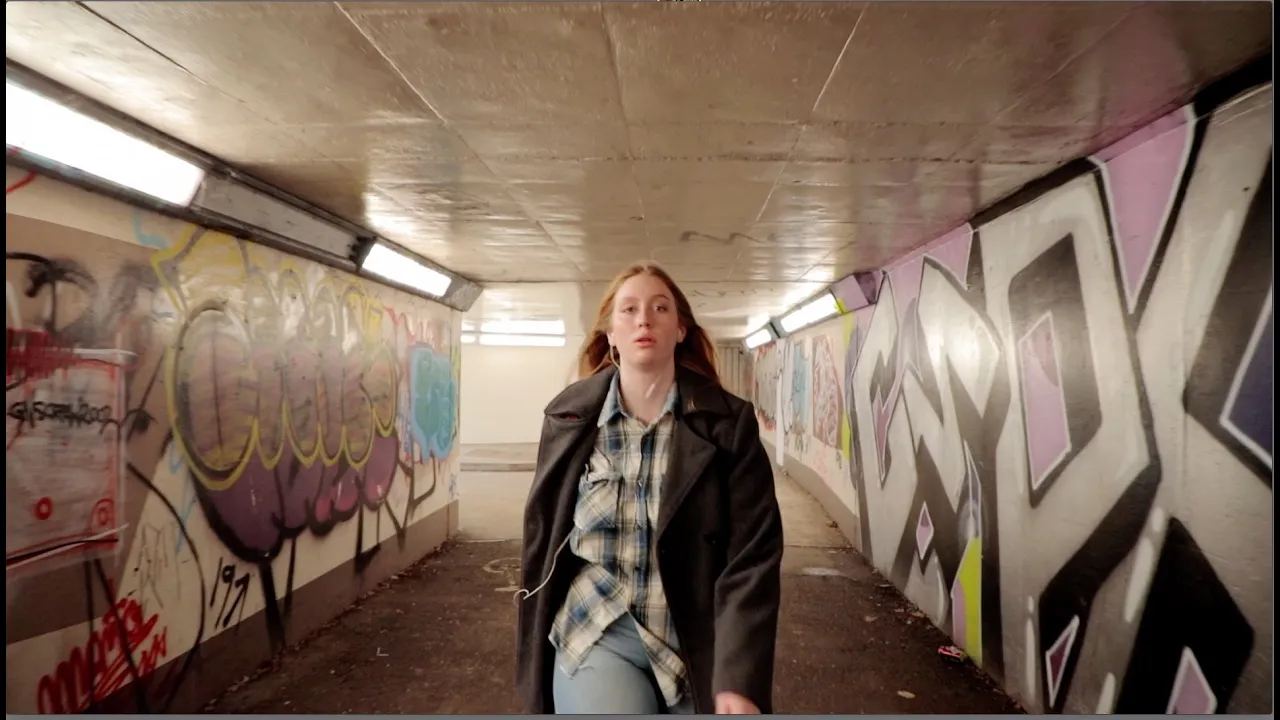










This video explains how filmmakers use cinematic techniques like reaction shots, thought cuts, eyeline editing, and ambient sound design to portray trauma and internal psychological states in storytelling, demonstrating how visual and auditory elements work together to immerse audiences in a character's subjective experience and emotional landscape.
Analyzing Trauma Representation Through Editing in Sharp Objects
Added:Basic concepts of film editing, including continuity editing, jump cuts, and non-linear narrative structures.
Fundamentals of cinematic sound design, specifically the distinction between diegetic and non-diegetic sound.
An introductory understanding of the psychological effects of trauma on memory, such as fragmentation, flashbacks, and intrusive thoughts.
The concept of subjectivity in cinema, or how a director uses audiovisual cues to place the audience inside a character's perspective.
Comparative analysis of trauma and memory representation in other modern media, such as 'Manchester by the Sea' or 'Eternal Sunshine of the Spotless Mind'.
Advanced editing theories, such as Soviet Montage Theory or French New Wave techniques, to understand the historical roots of expressive editing.
Applying these analytical skills to practical filmmaking or screenwriting, focusing on how to write or edit scenes that represent psychological distress.
Exploring the role of color grading and cinematography in tandem with editing to construct a cohesive psychological atmosphere.
170.2K views5.7Klikes13:28Original Release: 2019-08-05
(WHISPERING) Don't tell Mama.
♪ (TENSE MUSIC PLAYING) ♪ MICHAEL ZAK: Sharp Objects, based on the GIllian Flynn novel, is an uncomfortable look into the darkest aspects of trauma.
A murder mystery that favors character insight over a familiar procedural plot.
A cinematic experience built on reaction shots.
Reaction shots let us experience a moment twice; first when we see something happen, and then when we see a character react to it.
Sharp Objects is driven by Camille and her reactions.
Where she goes, we go.
-Where she looks, we look. -(SOBBING) What she feels, we feel.
Reaction shots are the best thing we've got to get into the character's head.
(ENGINE STARTS UP) ZAK: Or are they?
(INDISTINCT YELP) Trauma means you can't escape your memories and thoughts.
But would you translate thoughts into a film?
The obvious solution would be to use a voice over, an internal monologue... BIGGER THOMAS: Maybe everybody's blind.
(CHUCKLING) Even me.
ZAK:...especially since it's very prominent in the book the show's based on.
Instead, Marti Noxon and the writing team decided to create a narrative with strong perspectives.
To bring this ambitious vision to life, the director Jean-Marc Vallée and his team used the one tool that's unique to cinema... Editing.
ZAK: As Camille opens up about her childhood, we're shown brief flashes of her memories.
The thoughts are silent and unexpected, both detached and grounded in the moment.
Maybe I should have.
ZAK: Because thoughts don't make the world go away; they exist on top of it.
These thought cuts are an intimate insight into Camille's mind.
Often, it's messy, mimicking the way we think.
Fears, memories and urges rolled into one.
(CAMILLE PANTING) (MOANS SOFTLY, SIGHS) ZAK: The show goes deep into the thought process, one thought triggering another, layers of cascading memories that always point back to the present.
(WATER RUNNING) Camille also reacts to her own thoughts, just like we sometimes question why a particular image popped into our heads.
She might smile when it's a nice memory... ZAK:...but sometimes, thoughts take over, mercilessly connecting the dots and painting a horrifying picture.
A terrible realization that washes over Camille.
(BABY CRYING) ADORA CRELLIN: God has given me another sick baby.
(CRYING CONTINUES) ZAK: Aside from thought cuts, we also get a disorientating blend of memories and hallucinations.
A constant state of déjà vu made possible by intricate editing patterns.
(CHOKING) ZAK: Camille's past becomes almost tangible.
-(CHOKING CONTINUES) -M-- Ma-- Mama!
Mama!
ZAK: An out of body experience, past collapsing on the present.
Camille's trauma cuts deep.
She can't escape her past and it still haunts her, like a ghost.
(WHISPERING) It's not safe here for you.
ZAK: It all feels like a waking dream.
Or a nightmare.
(GASPS) ZAK: Reaction shots and thought cuts are a way to bring us close to Camille.
We inhabit her mind and experience the story mostly through her perspective.
The director wants us to be in the character's head.
And being in someone's head is not just seeing what they see, it's also hearing what they hear, and how they hear it.
♪ (MUSIC VIBRATING) ♪ Because perspective is not just about the visuals.
If Camille falls asleep listening to music and an earphone falls out of her right ear, we lose that channel.
Sound mix is key to make us feel like we're there with the characters, inhabiting the same spaces, experiencing the same things.
Even if it's tinged with paranoia from all the whispers.
-(INDISTINCT CHATTER) -(WHISPERING) WOMAN: ZAK: As much as filling the space with schizophrenic voices, sound design can be as effective when removing elements of reality.
The gruesome murder triggers an overwhelming reaction in Camille.
The world shutting down around her, the sound closing in.
(ECHOING BREATHS) (THUD) We're treated to anxious soundscapes, unnerving rumblings of a car engine, mimicking the feeling of a panic attack.
Rising and dropping in a nauseating fashion.
Can I talk to Curry?
WOMAN: Sweetheart, what is it? Are you okay?
(CAMILLE EXHALES) I just really... (SNIFFLES) WOMAN: Sweetie, you're scaring me.
ZAK: But it can also have a liberating quality, a mind on ecstasy.
♪ (HAUNTING MUSIC PLAYS) ♪ ♪ (MUSIC STOPS ABRUPTLY) ♪ ZAK: Most of the time, the director and his team don't just resort to layering artificial sound effects on top of the environment.
Instead, they use what's already out there and amp it up.
(TRAIN HORN BLARING) We've got fans, cicadas, AC units, and some more fans.
(FANS WHIRRING) Ambient sound plays a big role in developing Camille, creating a hostile environment that overwhelms and swallows.
(PIGS SQUEALING) We're so used to Wind Gap's loud ambient noise that when it's gone... it's almost as unnerving as when it's on.
The director is committed to full immersion.
If we can hear it, they can hear it too.
It brings us closer to the characters because we feel like we're there with them.
♪ (SOFT PIANO MUSIC PLAYS) ♪ This is especially true for music.
When was the last time you watched a film that has no original score, uses exclusively music for characters themselves to put on?
(ENGINE REVS) ♪ (ROCK MUSIC PLAYS) ♪ Each character is defined by their musical choices.
-Or lack of. -ALAN CRELLIN: ZAK: They're in control of what's playing.
The songs reflect their personalities and the way they feel, whether it's a way to vent... ♪ (ROCK MUSIC PLAYS) ♪ ZAK: A way to suppress and block out feelings of guilt, or a means to escape.
AMMA: ♪ (MUSIC PLAYS) ♪ ZAK: Music is a glue that binds us together, the trigger that brings about memories and feelings.
It's a way to look within, to process our emotions.
No wonder that Led Zeppelin in the show is considered inscape music, a word with two meanings.
(READS PROMPT) A part of Alice that Camille still holds onto.
An escape within, an inward look.
♪ (MUSIC STOPS) ♪ But just like the nested memories in the dollhouse within a house, there's yet another layer to the show.
Editing and sound design aren't only used to portray the internal state of the characters.
As much as they look at themselves, often there's someone else watching them, too.
CONGREGATION:...Temptation and deliver us from evil.
ZAK: In Sharp Objects, Wind Gap is a character in its own right, a town defined by its secrets and silences.
RICHARD WILLIS: I can handle it.
CAMILLE: ZAK: The toxic environment where appearances are more important than truth.
ZAK: In Wind Gap, no one is safe from gossip.
ZAK: Everyone's watching everyone.
RICHARD: Hey.
ZAK: Even the fan in Adora's bedroom... a silent witness to abuse.
In most cases, it's peeping and eavesdropping, a feeling of seeing something you shouldn't have.
There's a voyeuristic quality to the way the scenes are set up.
We often start from a point of view of someone observing in the distance.
Their perspective guides where we look.
(HORN BLARES) Well, isn't this a shit ton of stupid?
ZAK: Coupled with reaction shots, we filter the events through the eyes of spectators.
ADORA: ZAK: It provides a deeper understanding of the characters.
They're constantly reacting to what's happening around them.
(CLAMORING) ZAK: This is achieved using an editing concept: Eyeline.
If the character looks to the left, we're guided to see what they're looking at.
Eyelines in Sharp Objects drive everything.
We're naturally drawn to looking at people's eyes when we talk to them.
The same thing goes for watching films.
It's the eyes that we focus on and by extension, we focus on what those eyes are looking at.
WOMAN: ZAK: We stumble into the scenes and cover them with Camille, wherever her gaze takes us.
MAN: ZAK: Sharp Objects takes the concept of eyelines to dizzying heights by casting a web of looks and reactions as a tool to set up a scene.
It's a way to connect characters.
Reinforce themes of the show... ZAK: and ramp up tension.
The eyes are guiding the cuts.
It's all about perspective.
♪ (MARCHING BAND MUSIC PLAYING) ♪ Jean-Marc Vallée's signature directorial and editorial style manifests itself in all aspects of the show.
The choice of camera lenses that feel more like human vision, and creating thematic connections using match cuts... to the way scenes are intercut in surprising ways.
It's the story of a fractured mind, told in a way only cinema can, teasing us with splinters of information and brief flashes of memories that make up Camille.
The show takes non-linear storytelling to the extreme.
(DISTORTED YELLING) ZAK: And makes it personal.
ZAK: The end result is a show that takes its time, letting us feel the harsh hangover daylight... and ominous nighttime.
(GASPS) ZAK: It's atmosphere over plot......focusing on Camille, not the murders.
(MUFFLED SCREAM) ZAK: Sharp Objects is uncomfortable, suffocating, and sticky.
It puts us in the head of a person who's experienced unimaginable trauma and asks us to explore their thoughts and memories.
It's a challenge.
But that's what makes it so worthwhile.
It's a unique proposal, a truly bold exploration of storytelling and empathy through editing.
A show packed with "blink and you'll miss" details, that rewards a closer look.
So put your headphones on.
♪ (MUSIC PLAYS) ♪ And dive in.
♪ (MUSIC CONCLUDES) ♪
Up Next
4:17
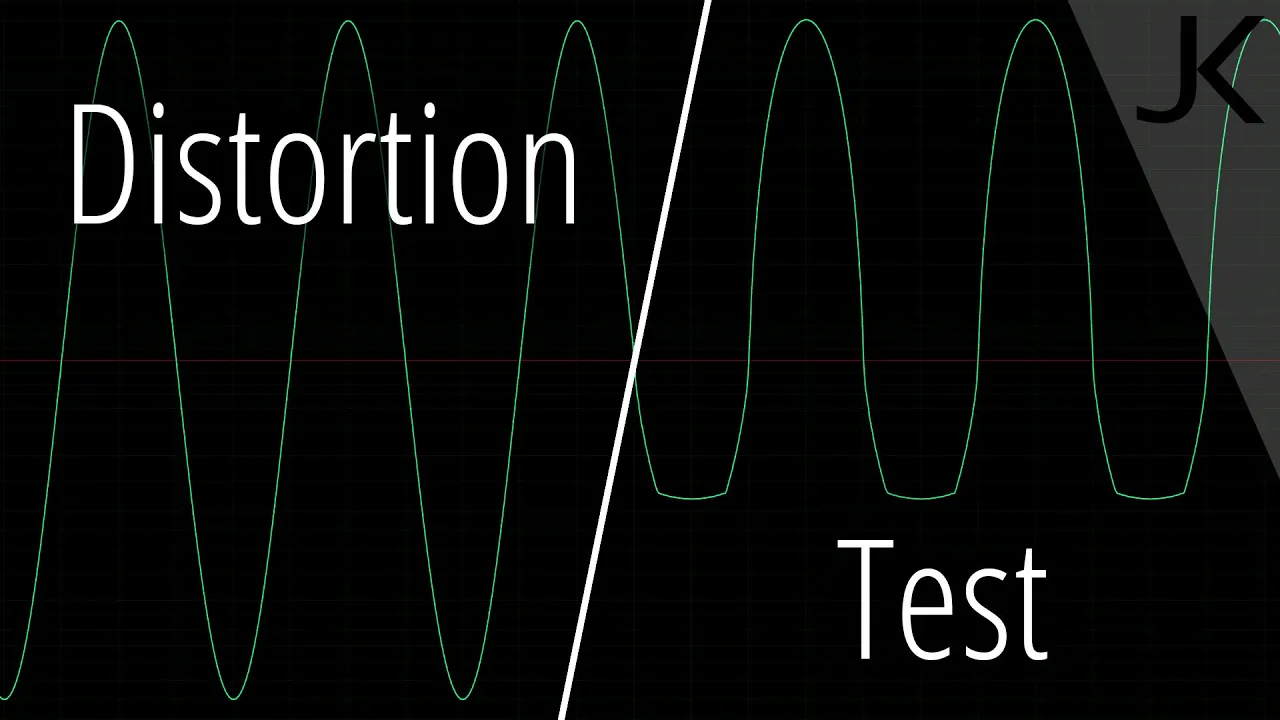
Audio Distortion Threshold Test: Audibility Analysis
@JulianKrause
140.5K views•2019-09-15

12:54
Triumph of Orthodoxy Icon: Byzantine Art & History Explained
@BenCallan
2.1K views•2024-08-06

9:49
FastAPI vs Flask vs Django: Choosing the Right Python Web Framework
@TechWithTim
302.5K views•2024-05-26

1:42
Game of Thrones Opening Credits: A Cinematic Analysis
@gameofthrones
46.3M views•2011-04-18
Related Study Plans & Knowledge Roadmaps
Structured learning paths in General & Interdisciplinary Studies
general-studies
Elevator Engineering: History, Physics & Cities
01From Hoists to Safety Brakes: The Dawn of Vertical Lift
02Hydraulic vs. Traction: The Engineering Physics of Elevators
03Modern Speed, Safety, and Algorithms
+ 2 more learning modules
12h5 modules
Explore Roadmap
general-studies
Rubber: Material Science, History & Geopolitics
01Origins of Natural Rubber & Mesoamerican History
02The Chemistry of Natural Rubber & Vulcanization
03The Geopolitics of the Rubber Boom & Colonization
+ 2 more learning modules
12h5 modules
Explore Roadmap
general-studies
Containerization: Evolution, Logistics & Trade
01Ancient Trade & Bulk Cargo: Amphorae to Barrels
02The Industrial Revolution & Cardboard Packaging
03The Containerization Revolution: Malcom McLean
+ 2 more learning modules
12h5 modules
Explore Roadmap
general-studies
Textile Tech: Evolution, Labor & Global Impact
01Pre-Industrial Textiles: Handloom & Cottage Industry
02Mechanization: The Spinning Jenny to the Power Loom
03The Factory System & Global Labor Transformation
+ 2 more learning modules
10h5 modules
Explore Roadmap