



![[꼬꼬정 EP.01] 문우진 교수님 | 정치학, 정치제도, 민주주의, 한국 정치 | 꼬리에 꼬리를 무는 정치학](https://i.ytimg.com/vi/ZgB_4IR1Bgw/maxresdefault.jpg)








![[LIVE] Bez litości. Wszystko o polityce, mediach i służbach. Jan Piński i Tomasz Szwejgiert](https://i.ytimg.com/vi/1W_Od8Ni8uM/maxresdefault.jpg)







Dictatorships vary significantly in their structure and stability, with personalist dictatorships (ruled by a single leader) being the most unstable and prone to violent exits, while single-party regimes and monarchies tend to have smoother, more institutionalized transitions due to built-in succession mechanisms and collective decision-making processes.
Why Dictators Fall: Lessons on Authoritarian Breakdown
Added:Understanding basic regime typologies, particularly the distinctions between democracies, hybrid regimes, and different forms of autocracy (e.g., personalist, military, and single-party regimes).
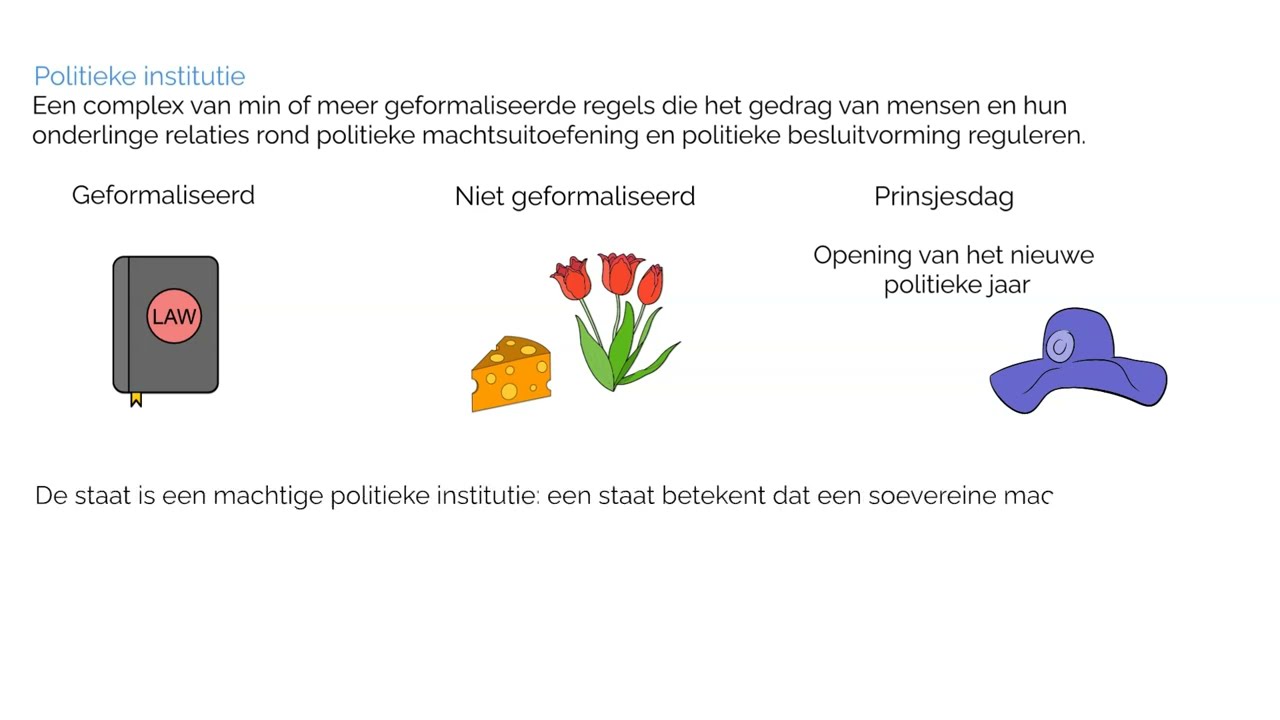
The fundamental concept of political institutions and how they structure power, distribute resources, and establish rules within a state.
The core mechanisms of political survival, specifically how rulers maintain authority through coercion, co-optation, and legitimacy.
A basic overview of democratization theories, including how socioeconomic development and elite bargaining influence political transitions.
The study of 'Competitive Authoritarianism' and hybrid regimes, examining how modern autocrats leverage democratic institutions to entrench their power.
Transitional justice and institutional design, exploring how post-authoritarian societies prosecute past abuses and build resilient democratic structures to prevent backsliding.
In-depth analysis of 'coup-proofing' strategies and the 'Dictator's Dilemma,' focusing on how autocrats manage internal elite rivalries and information asymmetry.
The geopolitics of authoritarian survival, analyzing how external shocks, foreign aid, international sanctions, and autocratic alliances (like regional partnerships) affect regime durability.
130.4K views2.4Klikes17:54Original Release: 2014-11-05
Translator: Zsófia Herczeg Reviewer: Peter van de Ven Welcome, everyone.
Two-thirds of the world lives under dictatorship, yet we know very little about dictators.
We make the assumption that all dictators and dictatorships are the same, and yet we know that that's not the case.
So the purpose of this talk is to explain how dictatorships are different and then try to explore what the significance is of these differences.
For example, why do some leaders step down from power really peacefully, while other leaders cling to power until the very bitter end.
In order to do so, we're going to take a look at the different types of dictatorships, and you can see here - if we're getting it.
We first define dictatorship under Barbara Geddes' definition of "Any regime that has no turnover in power of the executive."
But there are a lot of different types of dictatorships, and this is determined by who leads them.
So you can look at who is leading them: Is it a political party, like China's Communist Party?
Is it a military junta, like some of the military juntas that were in charge of Argentina during the 1970s and 80s?
Is it one leader, which we refer to as a personalist dictatorship, which I'm going to go into more, the definition, in a little bit, and in this case, it's just one leader that controls everything.
Is it a monarchy or a ruling family, like in Saudi Arabia?
And sometimes there's different hybrids of all these different groups.
So you can look here above, we have different pictures of dictators in the different types here.
You can see, there is Mathieu Kérékou of Benin, and he's a personalist dictatorship, and underneath him is Trujillo of the Dominican Republic.
In the middle below, you have Lee Kuan Yew, who for many years led Singapore under the PAP, and he led a single party regime.
Then on the top, you can see Algeria's military dictatorship and also Argentina's military dictatorship, and then at the bottom, you have a monarchy that is led by King Abdullah of Saudi Arabia.
So a lot of differences with dictatorships come from the structure which I just mentioned, but another thing that's really interesting to explore is the threats, and most of the threats for dictators actually come from within the regime.
Here, we have a picture of Pinochet, and in the back he has some of his military leaders; the people who would be the most threatening to him.
There's an assumption that revolutions just take place all over the place and dictators fall because there is a massive explosion of people who decide they're tired of dictatorship; they push for the dictator to leave, and then, that's how he gets ousted from power.
But the biggest threat to a dictator is actually coming from within the regime: the people who have the most potential to stage a coup and to oust the leader from power.
The other thing is that the survival of this leader depends on the relationship between him and his elites.
So how do dictators rise to power?
Well, they need a launching organization.
This launching organization could be a military - like in the case of Argentina's military junta - or it could be a single party.
Now, to gain power is a lot easier, of course, when democratic institutions are weak, and the launching organization - if it is really, really weak - then you're going to see a dictator concentrating power more and more tightly into his own hands, and then, that's where you see a dictatorship will become personalist.
So some examples of personalist dictatorships, I mean, they are all over the world, a lot of them are highly concentrated in Africa, of course, like Mobutu in Zaire, Idi Amin of Uganda, in the Caribbean, you had François Duvalier of Haiti, Gaddafi of Libya, Saddam Hussein of Iraq, Rafael Trujillo of the Dominican Republic, Jean-Bédel Bokassa of the Central African Republic, and Asia had Ferdinand Marcos of the Philippines.
So we're going to explore some questions: What types of dictatorships are the most durable?
Which are the ones that last the longest?
In which type of dictatorship is the process of leadership transition the smoothest?
And also, we're going to even explore what types of dictatorship are more prone to kleptocracy, or stealing in large volumes.
So if we look at personalist dictatorship, once the personalist dictator is in power, he is very, very consumed with staying in power, and because there are no institutionalized mechanisms for succession - to hand over power to someone else - he becomes more and more paranoid.
So he does everything he can to eliminate potential rivals.
He could deliberately weaken the military, which is known as coup-proofing the regime.
The military could be weakened by not having training, by not having access to weapons, or by creating a parallel military organization to offset the power of the traditional military.
He can also weaken his own political party, deliberately, by ousting those that have the most expertise or those that have the potential to possibly challenge him.
The other thing that the personalist dictator may want to weaken is the legislative branch and the judicial branch.
The courts are deliberately weakened by selecting people who are going to listen to what he has to say, or he can threaten them with their life or with their job if they don't make decisions that he agrees with, and he can also weaken the legislature by literally deciding who gets to run for office, who gets to be in a particular office, purging individuals that he finds to be disruptive or challenging to him.
Then, the other thing that is weakened is bureaucracy.
He may weaken the bureaucracy by playing musical chairs with the individuals that are part of the bureaucracy, by putting them in position for just a couple of years and then putting them in another position, firing them, hiring them again, making them feel completely insecure and creating a very chaotic environment.
So he'll weaken the bureaucracy so much that it barely is even functioning.
And the purpose of this is that he doesn't want any group of people to be able to have any kind of expertise or ability to challenge him.
So the dictator actually prefers, in the personalist case, where you have just one person ruling, they actually prefer disorganized chaos to dealing with a host of organized groups.
So as a result, the regime is completely deinstitutionalized and completely personalized under the power of this one particular leader.
That brings me to that third question that I was talking about, that which types of regimes are more kleptocratic, and the answer is personalist regimes of all the different types of dictatorships are the most kleptocratic, meaning they steal a lot from their own people.
So because personalist regimes - the personalist dictators, they see life in power as very fleeting.
They even think they may even have a violent exit, and they are right; they will have a very violent exit, which I'll get to later.
So because they see their time horizon is really short, they decide that while they are in power, they're going to hoard as much as possible while they have the chance to.
And they'll hoard in large volumes.
But the other aspect of personalist dictatorship that leads to more kleptocratic behavior is that there are absolutely no checks on this person's power to ensure or prevent the dictator from stealing.
So they can steal large amounts of money, and no-one says anything about it, and then that makes things even worse because then a culture of corruption develops where they just sort of allow these large amounts of wealth to be stolen with nothing being said about it.
The other thing has to do with the mode of exit.
The mode of exit in the personalist dictatorship - because institutions are extremely weak, there's no mechanisms of power sharing or succession or of transitioning from one leader to the next - the mode of exit is extremely violent.
I'll get to a little bit later why that's the case, with some examples.
The dictator constantly lives in fear of this.
Another type of dictatorship are single party regimes and monarchies.
I grouped them together because they function very similarly.
Unlike a personalist dictatorship - where it's just one person that holds all the power, that has deinstutionalized the regime completely and all the decisions are being made by one person with no checks on their power - single party regimes and monarchies have lots of people making decisions.
They have family members in monarchies, that are fairly large, that work and consult with each other in making decisions, and in single party regimes a huge amount of people are working together to make decisions.
And as a result, policy output is very slow - it takes a while for policies and decisions to be made - but these decisions are made with a lot of discussion.
Many leaders in monarchies and single party dictatorships, and maybe to a lesser extent military dictatorships, have also decided, because there are so many people involved, to implement some form of institutionalized succession.
For example, the PRI in Mexico will only allow the president to be in power for six years, so they decided that no one person can have so much concentration of power into their hands.
China's leadership has also institutionalized succession, so every ten years, there's going to be a very smooth type of transition from one leader to the next.
The same has happened with the PAP in Singapore.
They've institutionalized succession.
The rules are very clear, and you know who's going to be in power in a very seamless process.
So therefore the leader is not as paranoid as the personalist dictator is of how they're going to die or how they're going to leave power.
So for example, the single party leader, they know that there's rules of how they're going to get ousted, that it's probably going to happen either every six years or every ten years or at a certain point in time.
And they know they're going to be able to leave with their life intact, and they can go on and continue to be a politician in the party or decide to retire.
So other members of the party are also able to check the power of the leader much better, and that prevents them from hoarding everything, from stealing everything.
So you don't see anywhere near as much kleptocratic behavior with this type of dictatorships as you do with personalist dictatorships.
The other thing that's important, and this isn't always the case, but in many cases, the process of the breaking down takes a very long time.
It's very protracted, and there's a lot of negotiation involved.
And often, it's pacted, too.
It's rare and pacted, and by pacted, it means that the elites and the opposition are working with one another, and they're making compromises and trying to figure out who's going to get what, and it takes a very long time to decide how that's going to happen.
In military regimes, they don't really want to be in power for that long.
In fact, when you look at military regimes across the world, their average duration that they are in power is by far the least of any different type of dictatorship.
In fact, the average is only about two and a half years.
So they'll seize power quickly, in a coup, and then they decide, "I don't really want to run the country because it's not what we are meant to do."
So they want to go back to the barracks, particularly if their corporate unity has been threatened.
And what I mean by that is if they feel they are no longer unified because running things and being in power create splits within their corporation, they're going to feel like, "We don't really want this.
We're going to go back to what our day job was."
They also don't want to upset the legitimacy in the hierarchy within the military.
So, they may decide, "Well, running things and ruling and being involved in politics does upset our hierarchies and does cause us to lose legitimacy among the public, and so therefore we should just step down while we're still considered somewhat legitimate."
The other aspect of why they may move back - I've mentioned this before - is they do have a day job.
The personalist dictator doesn't have a day job, they don't see any life after politics, and because of that, it makes it more difficult for them to leave.
The other thing is that the dictator can exit on more favorable terms.
So, they may decide they have a lot of bargaining power because right now, they are not considered to be so terrible to the population, that if they exit now, they can still wage a lot of power behind the scenes and have a huge military budget, which is really what their main preference is.
One thing to know is when the military has been communally recruited, that means they are recruited along ethnic lines or religious lines - like the Syrian military, in the case of Syria, that has recruited mostly Alawites - they're going to be less likely to give up power, especially if this particular ethnic group, religious group or sect is tied to the regime.
They do not see that they do have an exit.
They think that if they leave power, they could be punished just like the leader would be punished.
You're going to see these types of militaries more likely to cling to power for a very long time.
The other thing really important to note about military regimes is that the process of democratization is extremely bumpy, and it goes in a zigzag fashion.
They'll leave power very quickly, and then they'll come back, and leave power quickly and come back, and you see that they never really want to leave.
They've got used to ruling, they are comfortable with it, they don't want to do it forever, and they go back and forth, which creates a lot of instability.
I'll give you some examples at the end.
So when will a dictator step down?
The key question is what his life will be like after politics.
Does he have a day job? Is he going to die or go to jail?
This makes it much less likely that the dictator is going to step down, if he feels he's going to face a life in exile, jail or be killed.
In rare cases, the dictator is able to engineer his own retirement, and when they do this, they may create themselves a very important position, as some sort of elder or statesman, maybe they can run things with their party behind the scenes.
We have seen this in the case of Julius Nyerere in Tanzania, who stepped down peacefully, and then he was sort of an elder statesman for his political party in Tanzania.
Jerry Rawlings of Ghana also did this, and then he was given - though he was very brutal at the time he ruled - he was given a lot of acclaim for stepping down early and has been able to tour the continent and be an important speaker.
So why is the mode of transition so violent for these personalist leaders?
I've already touched upon it a little bit, but they've been surrounded by sycophants, that means fawning fans or entourage, for decades in some cases.
And these sycophants are just reporting to them falsehoods and lies, and telling them what they want to hear.
And so then this can shape the personality to make the dictator even more narcissistic and delusional than they may already be.
This is exemplified, definitely, with the case of Gaddafi and Hussein, who both wanted their entourage to give them false reports, false information about everything, telling them that they're the best and the greatest, that they need to be in power forever, that anyone that tried to challenge them would die, that any of their enemies were weak.
And the longer that these types of dictators stay in power, the more they believe that they are one with the state, they personify the state - they can't see any life outside of being one with the state.
So because they can't separate themselves from the state, they have a very difficult time stepping down.
And in most cases, like you see with Gaddafi and with Hussein, they cling to power until the very end, and they see just no other life for themselves.
There is a small subset of the population of personalist dictators that have led for decades and decades and get to this point, but if they've had the chance to lead for long periods of time, then you see this type of very, very delusional behavior.
So what are the paths authoritarian leaders can choose?
They can decide they're going to preemptively step down and reform, die in office, or, which is obviously not their choice, or be forced out.
And there's all different types of ways they can be forced out.
They can be deposed in a coup, they can be forced to resign by elites, they can be assassinated, they can be ousted in a conflict, there can be a very violent revolution that takes place, there can be an international intervention and there can be nonviolent protests.
So the chances of being forced out are actually very high in dictatorships, and the next slide will illustrate this.
So the fall of dictators, really only under 20% actually reform on their own, and under 10% go by some sort of nonviolent protest, 20% just die in office, but the rest are forced out in a way that's not on their terms and that could be very violent.
You can see there are many assassinations, forced resignations, coups and assassinations.
The biggest percentage is of course coups; that's the number one way in which most dictators leave power.
And then, it could be some sort of violent protest or intervention that takes place.
So the types of dictatorships that are the smoothest, that are going to be less kleptocratic are single party dictatorships.
We see they're able to manage succession better, there are a lot more checks on their power, so therefore the transitions are smooth.
The issue is that the transition can take a very, very long time.
We have some examples of that, with China, with Singapore, with Tanzania and Senegal.
The different parties that are responsible for managing these transitions are listed there.
On the final slide, I'm going to talk about authoritarian breakdown in North Africa.
With the Libyan case, it was a personalist regime under Gaddafi, and it was violent, in the way he fell, he was very kleptocratic when he was in power, and because there are absolutely no institutions, the transition to democracy has been very, very difficult.
Mubarak led a military regime, they left quickly, but we're seeing the zigzag behavior continue - that they're leaving, come back, they're leaving, come back.
And then Tunisia had a single party leader, and that one has the best chance of reform.
So the end of the talk illustrates one important thing, that in dictatorships institutions matter.
Thank you.
(Applause)
Up Next
14:08
Overthrowing Governments: A Historical Analysis of CIA-
@jaketran
1.1M views•2022-01-26

24:30
BRICS Pay and de-dollarization: A New Financial Order Emerges? | 55 chars
@DannyHaiphongYT
164.6K views•2024-10-22
20:55
The Politics of Food: Who Shapes What We Eat? | Phillip Baker
@TEDx
71.5K views•2016-11-22
10:19
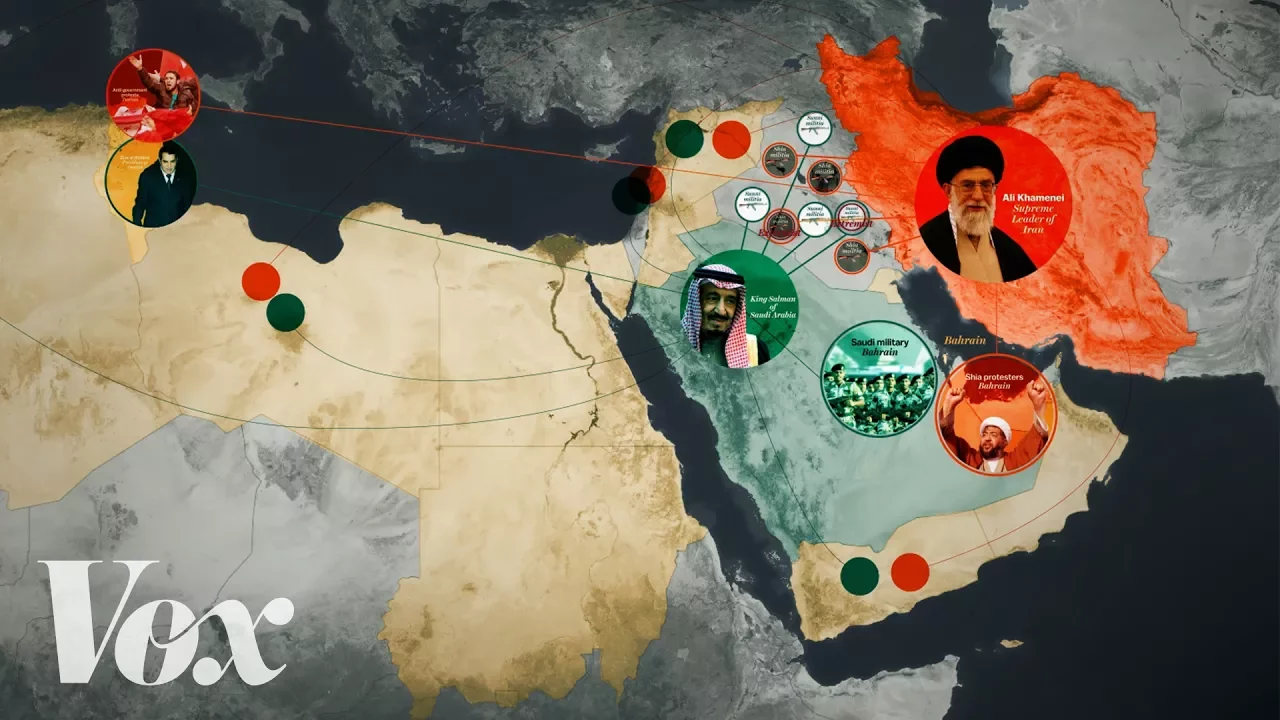
Explaining the Saudi-Iranian Proxy Conflict in the Middle East
@Vox
18.2M views•2017-07-17
Related Study Plans & Knowledge Roadmaps
Structured learning paths in Political Science
political-science
Economic Statecraft: Sanctions & Chokepoints
01Foundations of Geoeconomics and Economic Statecraft
02The Mechanics of Weaponized Interdependence
03International Sanctions: Types, Implementation, and Efficacy
+ 2 more learning modules
12h5 modules
Explore Roadmap
political-science
Central Bank Independence: Politics & Policy
01Foundations of Central Banking and Monetary Policy
02The Time Inconsistency Problem & Inflation Bias
03The Delegation Model and Designing Independence
+ 2 more learning modules
12h5 modules
Explore Roadmap
political-science
Consociationalism: Power-Sharing & Stability
01Democratic Dilemmas in Divided Societies
02Introduction to Consociational Democracy
03The Four Pillars of Consociational Design
+ 2 more learning modules
12h5 modules
Explore Roadmap
political-science
Rebel Governance: Legitimacy, Economy & State
01Foundations of Rebel Governance and Statehood
02Establishing Political Legitimacy and the Rebel Social Contract
03Wartime Economies and Rebel Resource Management
+ 2 more learning modules
14h5 modules
Explore Roadmap