Sudan's prolonged civil war stems from decades of deliberate military fragmentation under former President Omar al-Bashir, who employed 'coup-proofing' by weakening the official army and allowing tribal militias and the Rapid Support Forces to proliferate, creating competing power centers that inevitably turned on each other after his 2019 overthrow.
Sudan's RSF: A Coup-Proofing Legacy Explained
Added:Deep Dive
The political science concept of 'coup-proofing'—the strategies authoritarian leaders use to prevent military overthrows, such as creating parallel security forces.
Why Arab Armies Keep Losing Wars They Should Win
100
Coup proofing is a deliberate survival strategy adopted by nearly every regime in the region. A ruler who took power through the military knows how vulnerable that same military makes him going forward. Instead of building the strongest possible fighting force, he builds the safest possible fighting force that can never realistically turn its guns back on him. The strategy includes: filling senior command with relatives, in-laws, and childhood friends instead of the most capable available officers; building a second parallel force that answers only to him to counterbalance the regular army's strength; creating multiple competing intelligence agencies that spy on each other almost as much as they spy on the actual enemy; and deliberately starving ordinary units of shared information because information is power inside these systems and shared power is what a coup proofed regime cannot afford to allow. These regimes were not accidentally producing weak, dysfunctional militaries out of ignorance or lack of resources. They were deliberately trading battlefield strength for regime survival and doing the underlying math correctly for themselves, even while losing repeatedly to Israel, to the United States, and eventually even to a country as poor as Chad.
Click to watch →
CIO SHAKE UP BEFORE 31 JULY! | What Does Mnangagwa Know?
1.1K
Since 2017, President Mnangagwa has repeatedly reshuffled the military through retiring senior commanders, rotating positions, and appointing new commanders. Political scientists describe this as 'coup-proofing'—ensuring no single military figure becomes powerful enough to challenge civilian leadership. A similar large-scale reshuffle has now reached intelligence services, with Rumbidzai Kanyangarara promoted from assistant director to deputy director, nine new deputy directors, 23 assistant directors, and several divisions with entirely new leadership. This represents rebuilding the engine while the car is still moving.
Click to watch →

LIVE: Russia's Position Just Got Dramatically Worse | Here's Why
10.5K
This section examines how authoritarian regimes prevent coups through couproofing—intentionally balancing and weakening power centers. The downside is that weakened forces cannot effectively fight when needed, explaining why oil-rich countries often have poor militaries. The section analyzes Russia's National Guard, which has 400,000 people but failed to protect the regime during the Wagner uprising. This demonstrates that even large security forces may lack capacity or interest in protecting the dictator when they lack proper oversight or motivation.
Click to watch →

The Empire Was Doomed by Its Own Chain of Command
748
The Galactic Empire appeared disciplined externally but was internally dysfunctional by design. The Emperor intentionally created competing power centers—the navy despised the army, the army ignored the navy, and the Stormtrooper Corps operated as an autonomous branch. Darth Vader held no formal military rank, addressing him as 'Lord' rather than Admiral or General. The ISB was embedded within the military with authority to override any rank. By 14 BBY, 20 Moffs governed sectors answering directly to the Emperor, creating parallel chains. Political scientist James T. Quinlivan defined coup-proofing as actions regimes take to prevent military coups, including promoting for loyalty over merit, rotating commanders, creating parallel structures, and embedding security forces. The predictable cost is battlefield effectiveness. The autocrat trades battlefield effectiveness for regime survival—the coup is prevented, the war is lost.
Click to watch →

All about Saudi Arabia's Military
599
The Saudi Arabian National Guard is a separate army with its own chain of command, ministry, and budget, fielding 100,000 full-time personnel plus 28,000 tribal irregulars. Unlike the regular army, it lacks heavy tanks and artillery. The purpose of having two armies is not redundancy but coup-proofing—ensuring the military itself is not a threat to the royal family. This creates a force more loyal with more certain loyalty, standing between the royal family and the regular army. The price paid for coup-proofing is reduced military effectiveness, as demonstrated in the Yemen War where Saudi forces proved incapable of sealing their 900-mile border with Yemen.
Click to watch →
Deep Dive
The historical origins of the Sudanese Rapid Support Forces (RSF) from the Janjaweed militias during the Darfur conflict in the early 2000s.
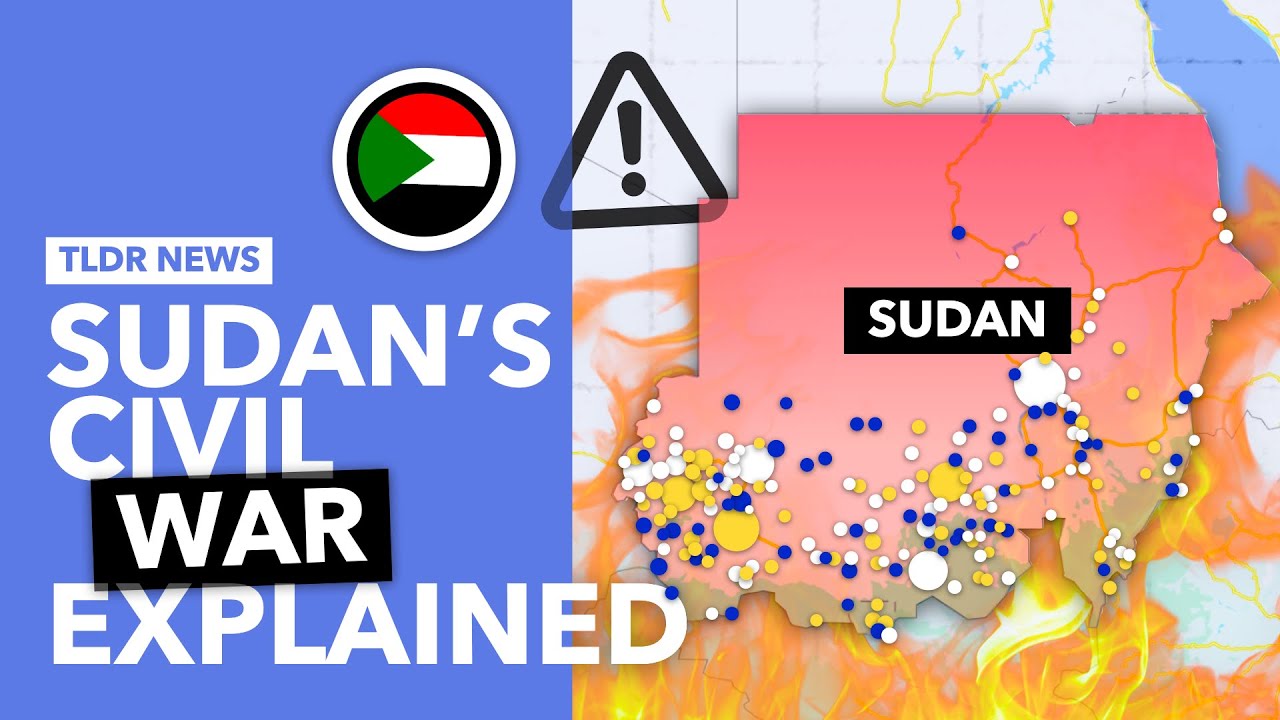
Who is Winning Sudan’s Civil War and What Comes Next?
140.7K
The Rapid Support Forces (RSF) emerged from the Janjaweed, a predominantly Arab militia group that was used by former President Omar Al Bashir in the 2000s to brutally suppress rebellions by non-Arab groups in Darfur region. The atrocities committed by the Janjaweed and Sudanese military were declared genocide by the United States, and numerous arrest warrants were issued by the International Criminal Court for genocide, war crimes, and crimes against humanity. The RSF was officially founded in 2013 and grew into a key component of Sudan's security apparatus, representing a powerful paramilitary force with complex historical roots in Sudan's ethnic conflicts.
Click to watch →

What’s Happening in Sudan
293.6K
The Rapid Support Forces originated from the Janjaweed militia, which was created by Omar al-Bashir's regime in Darfur to suppress the 2003 rebellion against government neglect. The Janjaweed, meaning 'those who fight on horseback,' committed widespread atrocities including killing, displacement, and rape, documented by Human Rights Watch. Muhammad Hamdan al-Hussein (Hemeti) rose through these ranks, transforming his faction into an imperial guard for Bashir. Despite committing crimes, he received military promotions and eventually became a major power broker, illustrating how armed groups can be co-opted by regimes and later turn against them.
Click to watch →
ايه اللي بيحصل في السودان ؟ حكاية السودان من طقطق لسلام عليكم
996.2K
The Rapid Support Forces (RSF) originated from the Janjaweed militia, established by President Omar al-Bashir in 2003 to suppress the Darfur rebellion. The Janjaweed, composed of Arab tribes from Darfur, was initially led by Musa Hilal and later by Hamidti, a camel trader who accumulated wealth through gold mining. In 2013, Bashir formally integrated the Janjaweed into the Sudanese Armed Forces as the RSF, with Hamidti retaining command. The RSF grew to over 40,000-100,000 fighters and became a parallel military force independent from the regular army. Hamidti was accused of committing crimes against civilians in Darfur, including killings and rapes.
Click to watch →
La pire guerre dont vous n’avez jamais entendu parler
156.7K
In September 2004, the UN declared the Darfur situation 'genocide.' The ICC issued an arrest warrant against El-Bashir in 2009. South Sudan's 2011 independence deprived Khartoum of oil revenue, destabilizing the regime. In 2013, El-Bashir created the Rapid Support Forces (RSF), consolidating Janjaweed militias into a paramilitary force under his control, appointing Hemedti—a commander infamous for Darfur atrocities—as its leader, unknowingly creating the instrument of his own downfall.
Click to watch →
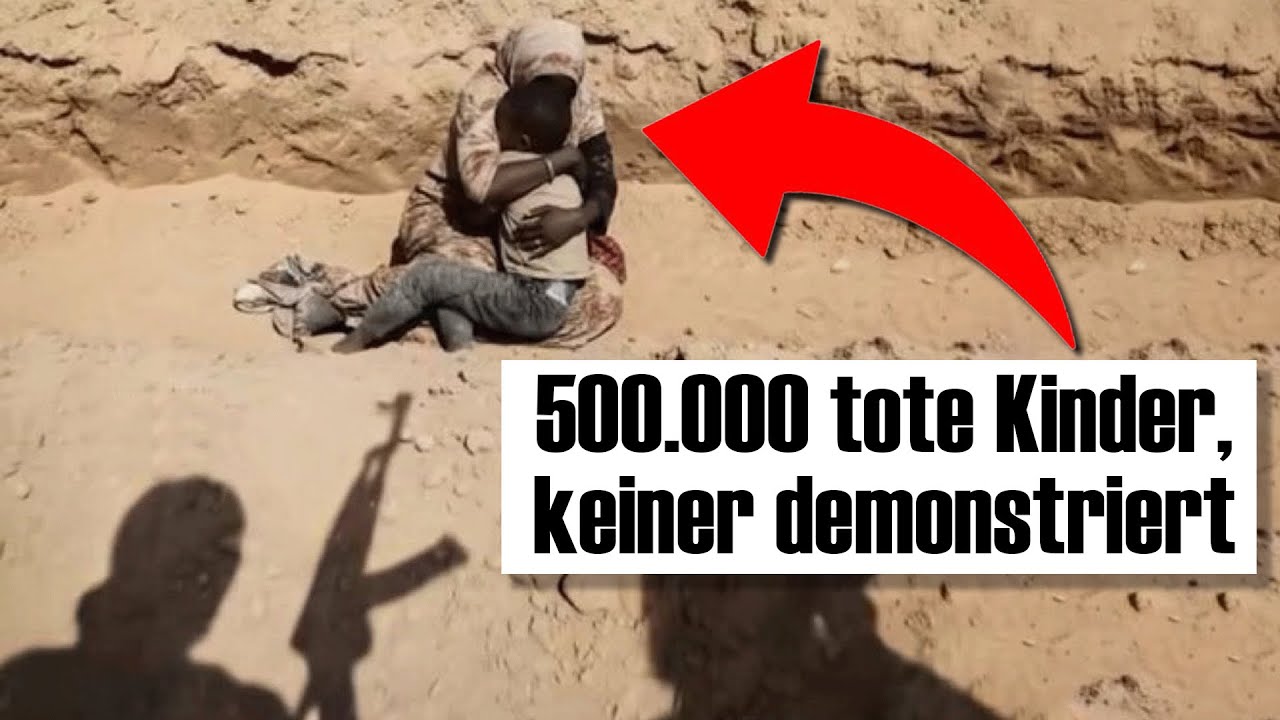
Der schrecklichste Krieg der Welt - warum gibt es keine Proteste?!
88.7K
The Rapid Support Forces (RSF) evolved from the Janjaweed militia, an Arab-dominated armed group that committed genocide against black populations in Darfur during the early 2000s. The RSF was incorporated into official Sudanese structures under former dictator Omar al-Bashir, who used it as private security to prevent military coups. The RSF maintains its power base in Darfur, where it previously committed atrocities, and continues to be a major military force in the current conflict.
Click to watch →
Deep Dive
The legacy of Omar al-Bashir's 30-year authoritarian regime in Sudan and his strategy of fragmenting the country's security apparatus.

Sudan Civil War Crisis expalined in Hindi | सूडान में गृहयुद्ध क्यों हो रहा है, जानिए पूरी कहानी.
59.5K
Omar al-Bashir seized power in 1989 through a coup, establishing a 30-year authoritarian regime. To maintain power, he created the Rapid Support Forces (RSF) as a parallel security apparatus loyal only to him. The RSF served multiple purposes: smuggling gold for personal wealth, eliminating political opposition, and serving as a counter-coup force. In 2013, al-Bashir transformed the RSF into a semi-military force. When Sudanese citizens protested in 2018 against corruption and economic exploitation, the RSF partnered with the regular army to overthrow al-Bashir in 2019, demonstrating how military forces can turn against their original patron.
Click to watch →

What is Happening in Sudan? 🇸🇩 - SAF | RSF | UAE | AFRICA | Varun Talks
58K
Omar al-Bashir, who ruled Sudan as an authoritarian dictator for 30 years, created the conditions for the current conflict. When he left power, he deliberately created two rival military factions to divide and rule, ensuring that Sudan would remain in a state of perpetual conflict. This strategic maneuver allowed him to maintain influence even after his departure.
Click to watch →
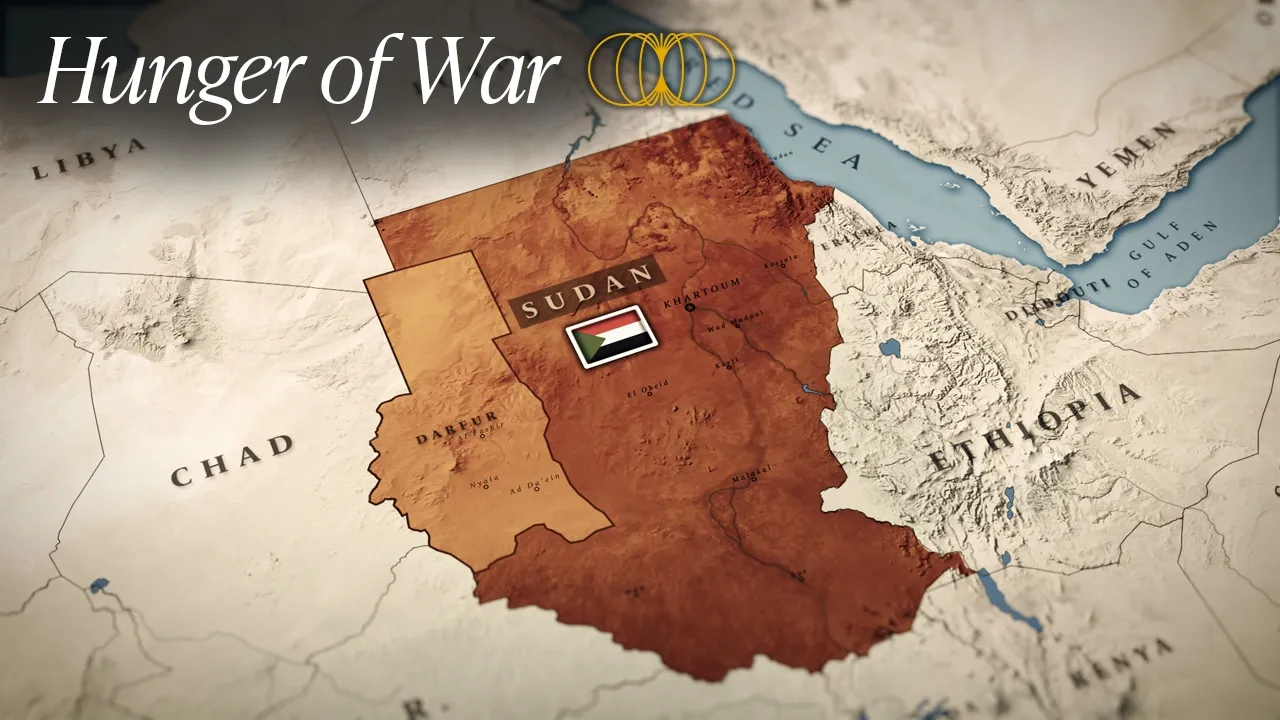
Sudan's (Hunger) Crisis Explained.
64.8K
Omar al-Bashir ruled Sudan for 30 years until 2019, rising to power in 1989 when he led a coup to topple the government of Sadiq al-Mahdi, the only democratically elected leader of Sudan. After a 4-year transitional government, Bashir proclaimed himself president in 1993 and remained so for 25 years. He overhauled the political system, established a support network largely chosen from the Bedouin Arab tribal group, and introduced Sharia law to all three mostly Christian regions of southern Sudan.
Click to watch →

🇸🇩 What's keeping Sudan's president in power? | Inside Story
33.2K
Authoritarian regimes maintain power through strategic manipulation of security forces and military apparatus. Omar al-Bashir, born into a farming family in 1944, rose through the army ranks and led a 1989 coup that ousted the civilian government. His survival for 30 years despite facing challenges like the loss of South Sudan, war in Darfur, and an ICC indictment demonstrates how military leaders maintain power through repressive tactics, silencing opposition, and building complex power networks. The crucial factor in regime survival is the behavior of security forces, which may fracture under sustained pressure. Bashir manipulated security services and military elements against each other, creating multiple lines of authority within the apparatus. When some military elements sided with protesters, it created uncertainty about whether other branches would also turn against him.
Click to watch →

مقابلة خاصة مع محمد الحسيني يناقش فيه تداعيات اغتيال حسن نصرالله
3.2M
Proxy groups can experience internal fragmentation when they lose state sponsorship, with different regions and factions acting independently and undermining organizational cohesion. Proxy groups maintain security apparatuses that operate independently of their political leadership, providing continued operational capability even when political leadership is compromised. This demonstrates how state-sponsored groups develop sophisticated internal governance systems that can function independently of central command.
Click to watch →
Deep Dive
Basic dynamics of civil-military relations, specifically the tension that arises when state armies coexist with state-sanctioned paramilitary institutions.

Арестович: Отставка Резникова: что дальше? День 558 (04.09)
823.8K
The video analyzes the structural conflict between centralized state apparatuses and paramilitary organizations like Wagner Group. The analysis concludes that centralized state machines ultimately prevail over paramilitary groups because they possess superior organizational capacity for large-scale operations including mass mobilization, sustained offensive campaigns, infrastructure targeting, and complex diplomatic negotiations. The video cites the example of Russia's central government absorbing Wagner's African operations, demonstrating that while paramilitary groups may achieve tactical successes, they lack the institutional depth to sustain prolonged state-level competition.
Click to watch →

Uribe es el autor intelectual de la mu3rt3 de Castaño - P4r4militares lo señalan ¡20 años 1mpun3!
482.9K
The program explores the relationship between the state and paramilitary organizations in Colombia. The former President Álvaro Uribe Vélez was described as having the power of a king, with access to all state secrets, police, intelligence agencies, and military forces. This power dynamic is seen as a key factor in the paramilitary phenomenon, as it allowed paramilitary leaders to operate with relative impunity and to eliminate those who could potentially speak about their activities. The program explores how the power of the state and paramilitary impunity interacted to shape the broader paramilitary phenomenon in Colombia.
Click to watch →
En vivo: audiencia de Salvatore Mancuso ante la JEP
120.5K
Paramilitary groups emerged from a combination of regional elite support, military sector backing, drug trafficking connections, and guerrilla pressure. The JEP identified four factors explaining paramilitary violence: regional elites providing political and financial support, military sectors offering advice and assistance, drug trafficking group leadership, and guerrilla pressure. COVACs (Cooperativas de Vigilancia y Seguridad Privada) served as a legal facade created under presidential decree, with at least 529 established across 24 departments. These civilian organizations provided paramilitaries with access to resources, legitimacy, and connections to state institutions while maintaining a veneer of legal compliance. The emergence of paramilitary groups was directly linked to structural failures within the Colombian state, particularly in the military's ability to combat insurgency.
Click to watch →

Kuki Inpi President gi Paokhum... !
222K
This segment analyzes the role of state forces and paramilitary organizations in maintaining order and control. The content examines the relationship between state authority and armed forces, exploring how these institutions function within the political framework. The analysis considers the implications of state force deployment and the role of paramilitary groups in the broader political and social context.
Click to watch →

RODOLFO, ADIÓS VAQUERO
163.1K
This segment presents evidence that the Colombian state, specifically Governor Álvaro Uribe Vélez of Antioquia, granted legal personality to paramilitary groups like Convivir. This legal recognition allowed these groups to operate with official authorization. The video explains that Convivir groups received funding from companies like Chiquita Brands and Banacol in exchange for protecting banana plantations. The segment also discusses the organizational structure of paramilitary groups, mentioning specific commanders like Julián Bolívar (alias El Chepe Barrera) and other leaders including Salvatore Mancuso and Monoleche. This illustrates how state institutions can inadvertently or deliberately support armed groups through legal frameworks.
Click to watch →
Prerequisite Knowledge
- Concept 01The political science concept of 'coup-proofing'—the strategies authoritarian leaders use to prevent military overthrows, such as creating parallel security forces.
- Concept 02The historical origins of the Sudanese Rapid Support Forces (RSF) from the Janjaweed militias during the Darfur conflict in the early 2000s.
- Concept 03The legacy of Omar al-Bashir's 30-year authoritarian regime in Sudan and his strategy of fragmenting the country's security apparatus.
- Concept 04Basic dynamics of civil-military relations, specifically the tension that arises when state armies coexist with state-sanctioned paramilitary institutions.
Subsequent Learning
- Step 01The specific triggers, regional dynamics, and humanitarian consequences of the April 2023 conflict between the Sudanese Armed Forces (SAF) and the RSF.
- Step 02The role of natural resources—particularly gold mining in Darfur—and external state sponsors in funding and sustaining the RSF's autonomy.
- Step 03Comparative analysis of coup-proofing outcomes in other historical contexts, such as Iraq under Saddam Hussein, Libya under Muammar Gaddafi, or Venezuela.
- Step 04The structural challenges of Security Sector Reform (SSR) and Disarmament, Demobilization, and Reintegration (DDR) in transition-era states.
Power Fragmentation
Predicted Conflict
Power Fragmentation
0:10Playing Section
- 1
Bashir weakened state army via militias to prevent overthrow.
- 2
Decades of rule created fragmented security forces in Sudan.
- 3
Army and Rapid Support Forces colluded briefly before rivalry.
The Center-Periphery Conflict and Political Marketplace Model
While the 'coup-proofing' narrative attributes the rise of the Rapid Support Forces (RSF) to tactical maneuvering by Khartoum’s central elites, an alternative perspective views the RSF through Sudan’s historical center-periphery dynamics and the 'political marketplace.' This model argues that the RSF’s trajectory reflects a violent assertion of agency by historically marginalized populations from Sudan’s western peripheries (specifically Darfur) against the hegemony of the riverine Nile Valley elites who have dominated the Sudanese Armed Forces (SAF) since independence. Rather than being a mere domestic security byproduct, the RSF evolved into an autonomous transnational enterprise. By seizing control of lucrative gold mines and securing direct foreign patronage (such as mercenary deployment in Yemen), the RSF bypassed state dependency. This viewpoint shifts the focus from institutional coup-proofing to structural socio-economic inequalities and the commercialization of violence, framing the conflict as a struggle by peripheral forces to overturn a century of central elite dominance.
Deep Dive
The specific triggers, regional dynamics, and humanitarian consequences of the April 2023 conflict between the Sudanese Armed Forces (SAF) and the RSF.
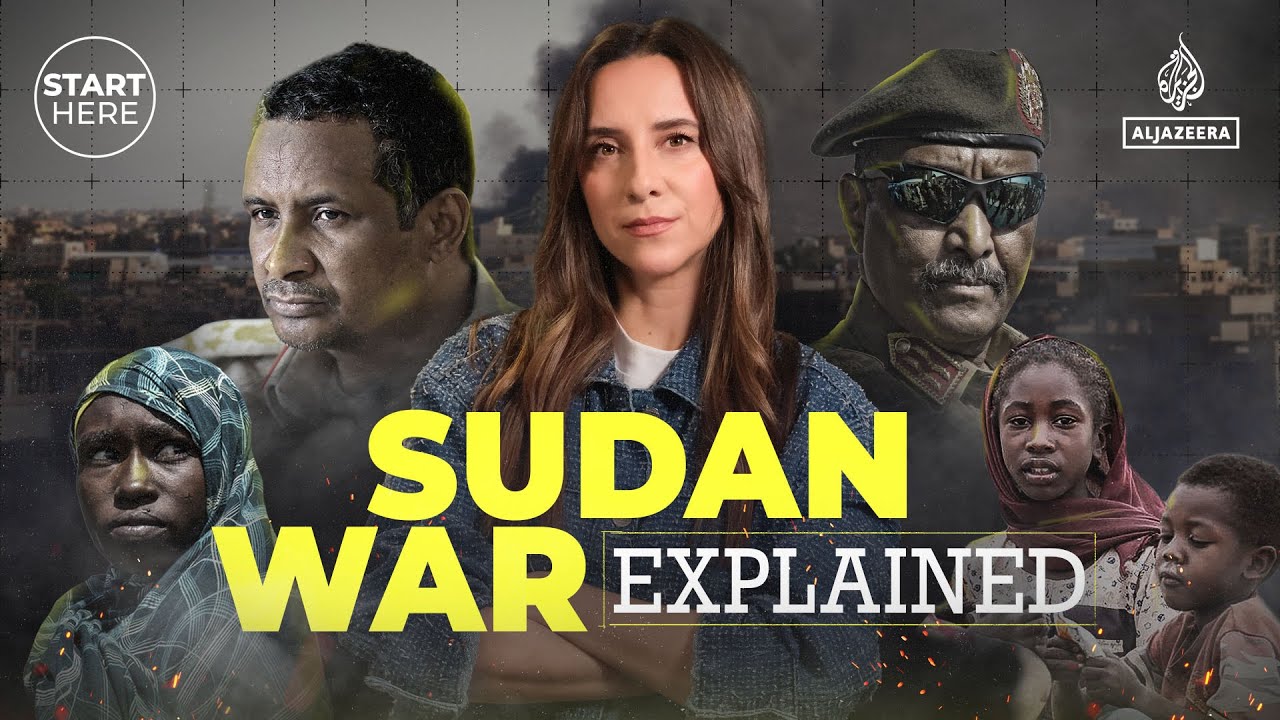
Watch this to understand the war in Sudan | Start Here
565.3K
The war in Sudan, which began in April 2023, is a brutal conflict between the Sudanese Armed Forces (SAF) and the Rapid Support Forces (RSF), driven by ethnic divisions between Arab and non-Arab communities that originated during British colonial rule. The conflict emerged from the power struggle between SAF leader General Burhan and RSF leader Mohamed Hamdan Dagalo (Hemeti) following the 2021 military coup that ended the brief democratic transition after Bashir's 2019 removal. The RSF, originally formed from the Janjaweed militias that committed genocide in Darfur in the early 2000s, now controls western Sudan and has been accused of continuing atrocities against non-Arab communities. The war has displaced over 12 million people, created the world's worst humanitarian crisis, and is fueled by gold mining revenues and external support from regional powers including Egypt, Turkey, Iran, UAE, and others, with diplomatic efforts to resolve the conflict failing so far.
Click to watch →

Sudan के लिए क्यों आपस में भिड़े Muslim मुल्क? क्या है Civil War के पीछे की पूरी कहानी? | Iran | UAE
408.5K
Sudan is experiencing its most devastating period in history, with over 10,000 dead and 800,000 displaced. The conflict between Sudanese Army (SAF) and Rapid Support Forces (RSF) has nearly divided the country. Regional powers are deeply involved: UAE and Libya support RSF, while Egypt backs SAF due to Nile River concerns. UAE denies supporting RSF despite allegations of weapons and mercenaries. The International Court of Justice rejected Sudan's case against UAE because UAE had not ratified the Genocide Convention. This conflict stems from the 2019 power-sharing agreement between SAF and RSF, which collapsed into civil war in 2023. The humanitarian crisis includes deliberate blockades of aid, widespread atrocities against civilians, and famine-like conditions affecting 1.5 million people.
Click to watch →

ماذا يعني تصعيد حميدتي ضد مصر الآن؟
107.2K
The Sudan war has caused over 20,000 deaths, 13 million displaced persons, and 25 million facing hunger, with cholera and flooding compounding the crisis. The Rapid Support Forces (RSF) under Hemedti are mercenary forces from Sudan, Central Africa, Chad, South Sudan, and even Ukraine, not a legitimate military unit. Hemedti rose during the Darfur conflict (2003) by partnering with camel traders, controlling armed militias that protected cattle caravans and gold mines. Unofficially integrated in 2013 and officially in 2017 with First Lieutenant rank, his 100,000 forces were overlooked despite crimes. After Bashir's 2019 overthrow, the 2021 military takeover placed Hemedti as al-Burhan's deputy. The war began April 15, 2023, dividing Sudan geographically. RSF escalated tensions with Egypt by accusing Egyptian forces of bombing RSF camps and supplying the Sudanese army, with advisors suggesting attacking the Aswan High Dam.
Click to watch →

Sudan Crisis 2023 Explained | Military conflict
2.5M
The conflict between Sudanese Armed Forces (SAF) led by General Burhan and Rapid Support Forces (RSF) led by Muhammad Hamdan Dagalo has escalated into open warfare. Hemedti built a business empire in gold mining and other sectors. Tensions intensified when civilian leaders proposed placing RSF under SAF control, which Hemedti opposed. On April 15, 2023, RSF fighters entered densely populated areas, prompting SAF airstrikes in Khartoum. This conflict demonstrates how paramilitary forces challenging state control can trigger violent confrontations, with civilians bearing the brunt of military competition for power.
Click to watch →

Війна про яку забули. Судан.
113.7K
The transitional government quickly showed readiness to use brutal tactics against protesters, as seen in the June 2019 Khartoum massacre where over 120 people were killed. The power struggle between al-Burhan (SAF commander) and Hemedti (RSF leader) intensified. Al-Burhan demanded integration of the RSF into the SAF, while Hemedti resisted fearing loss of control. On April 15, 2023, regular combat operations began in Khartoum, opening another chapter in Sudan's painful history. The conflict quickly spread to Khartoum and Omdurman, which had previously been unaffected by Darfur violence. After the conflict passed the one-year mark, Sudan's territory was almost evenly divided between the RSF (controlling the west, including all of Darfur) and the SAF (controlling the east). The center remained contested with ongoing large-scale battles. The International Committee of the Red Cross reports at least 15,000 deaths (potentially 150,000), 12 million displaced persons, and 25 million requiring humanitarian assistance. The RSF bears particular responsibility for atrocities, including the June 2023 killing of Darfur Governor Hamis Abakar. Both factions receive foreign support: RSF from UAE and Russia, SAF from Iran. The conflict's main driver is economic, particularly gold mining in Darfur, which makes Hemedti extremely wealthy. The RSF has battle-hardened forces with combat experience from Darfur and Yemen, where 40,000 Sudanese fighters served as mercenaries for UAE and Saudi Arabia. They have received modern weapons and training from the UAE, transforming them into a dangerous fighting force. The SAF lacks recent combat experience since Sudan remained peaceful until 2011. The RSF has demonstrated advanced capabilities, including drone attacks that nearly killed al-Burhan. Iran supports the SAF with high-tech weapons like drones, while Russia supports the RSF through Wagner Group mercenaries.
Click to watch →
Deep Dive
The role of natural resources—particularly gold mining in Darfur—and external state sponsors in funding and sustaining the RSF's autonomy.

Dubai's Gold.
891.5K
Following the 2011 split, Sudan's economy collapsed because oil was gone, leaving gold as the only valuable resource. However, much of Sudan's gold is located in RSF-controlled territory in Darfur. The RSF was originally established in 2013 as a cost-effective way for Sudan's president to police Darfur, loyal only to the president personally. After the 2019 coup, the RSF 'broke free' from central authority. By 2023, the RSF had become so powerful that they controlled Sudan's foreign policy because they guarded natural resources. The SAF, desperate for money after losing oil, tried to take gold from RSF territory without compensation, causing Darfur residents to feel betrayed. Russia supports both sides: the SAF has a major deal with the Russian government to build a warm water port on the Red Sea, while the RSF works with Russia's Wagner Group. The UAE sends more money to the RSF than ten multiple countries combined sent to the SAF. Combined with weapons smuggling, this transformed Sudan from having one powerful army and several poorly-armed rebel factions into two equally funded and powerful armed militias.
Click to watch →

How the U.A.E. Just Ruined The Best Chance At Peace In The Middle East
104.4K
The UAE has been financing and arming the Rapid Support Forces (RSF) led by Muhammad Hamdan Dagalo (Hemedti) in Sudan's civil war. Since 2014, a Dubai-registered joint Russian-Emirati company called Emiral Resources has been a major player in Sudan's gold mining sector. In late 2025, the RSF committed genocide in Darfur, resulting in over 15,000 Masalit tribe deaths and nearly 150,000 total deaths in El Fasher over an 18-month siege. At the beginning of this conflict, the UAE set up a hospital in eastern Chad to transport weapons to the RSF, marking boxes as humanitarian aid supplies while smuggling weapons to commit war crimes.
Click to watch →
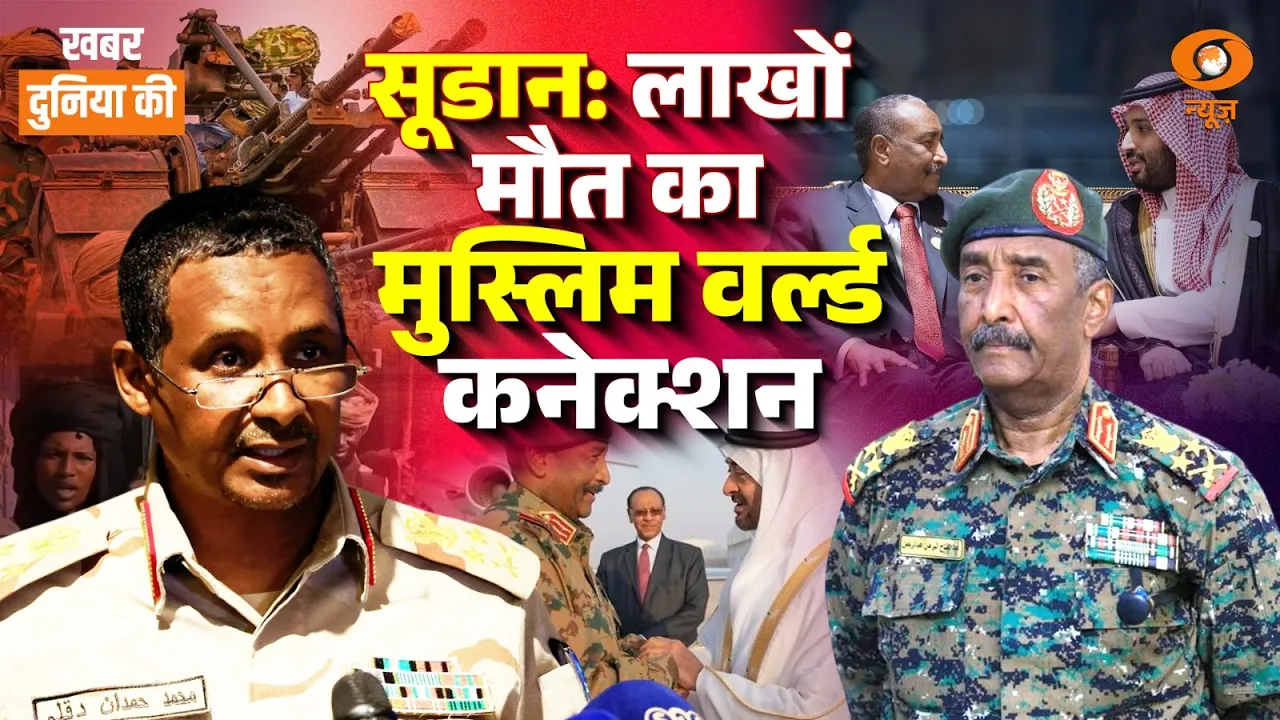
World's gravest humanitarian disaster | सड़कों पर बिछी हैं लाशें | Sudan | Analysis | CS Joshi
138.3K
Sudan's civil war stems from deep ethnic divisions between the RSF (evolved from Darfur's Janjaweed pastoralist militia) and the Sudanese Army (dominated by Nile Valley agricultural populations). These groups have historical grievances dating to President Bashir's era, when RSF was used against protesters. Economic interests further fuel the conflict: Darfur's gold mining creates direct financial connections between RSF leadership and UAE markets, with gold smuggling sustaining military operations. External state support prolongs the conflict: Egypt, Turkey, and Iran back the Army, while UAE and Libya support RSF, with RSF fighters even supporting General Haftar in Libya. The potential for Sudan's partition mirrors South Sudan's 2011 independence, with RSF controlling Darfur and Army controlling Nile Valley regions. This case illustrates how ethnic tensions, resource economics, and international interventions create self-sustaining conflicts that resist resolution.
Click to watch →
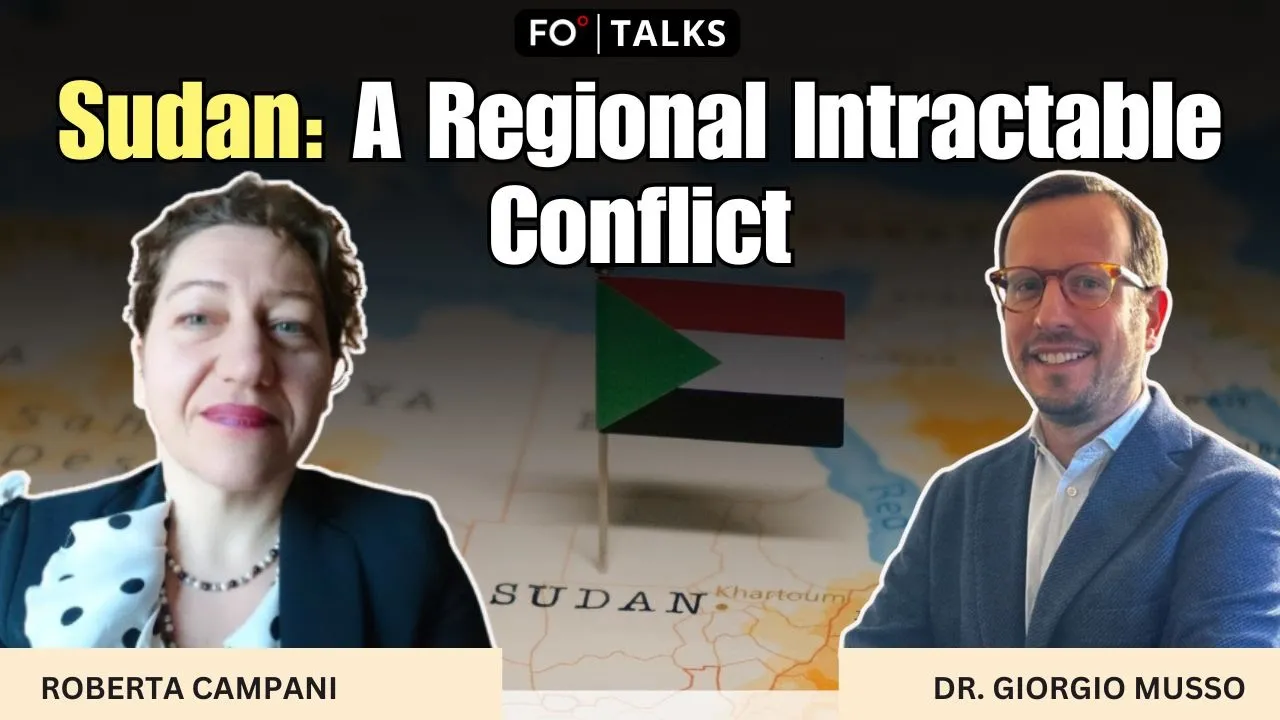
Sudan: A Regional Intractable Conflict | Fair Observer
122
The Rapid Support Forces emerged as a counterinsurgency militia in 2005, regularized in 2013 under President Al-Bashir with border patrol and presidential guard duties. Primarily composed of Arab tribes, they control gold mines in resource-rich Darfur. After losing two-thirds of oil revenues with South Sudan's secession, Sudan increased gold exports as compensation. Rising gold prices enabled RSF economic independence, allowing them to establish connections with the Wagner Group for weapons and funding. This demonstrates how resource wealth can create autonomous military actors challenging state authority.
Click to watch →
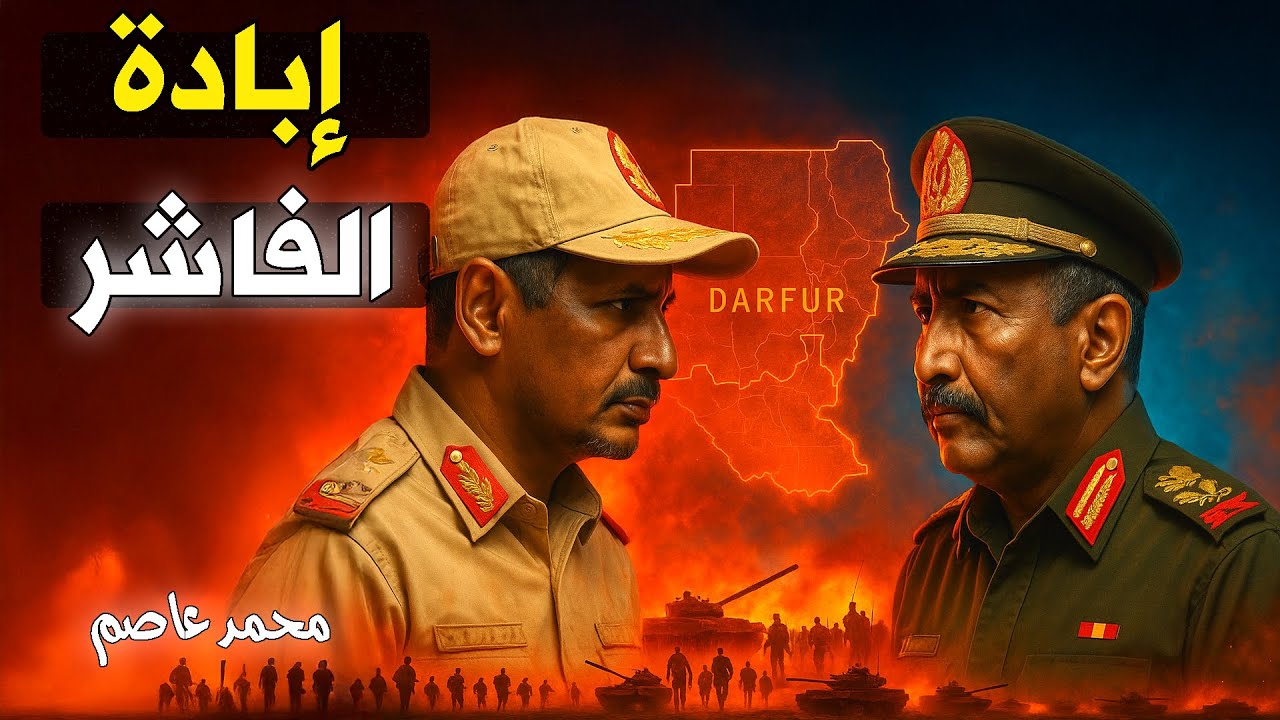
الفاشر تسقط! الإبادة العرقية بدم بارد... هذا ما تفعله ميليشيا الدعم السريع الآن!
34.7K
The fall of El Fasher to Rapid Support Forces (RSF) militias in Sudan represents a systematic ethnic cleansing campaign driven by resource control, where RSF forces have killed over 150,000 civilians in Darfur, including 2,000 on October 25-26 alone, to secure control over the region's gold mines that constitute 45% of Sudan's exports, with external actors funding the conflict through gold laundering networks.
Click to watch →
Deep Dive
Comparative analysis of coup-proofing outcomes in other historical contexts, such as Iraq under Saddam Hussein, Libya under Muammar Gaddafi, or Venezuela.

#YaCasiVenezuela ⁉️ | Análisis de @Juliococo #NoBeta
76.7K
Military interventions in Iraq and Afghanistan demonstrate that removing dictators does not guarantee stability. The 2003 Iraq invasion captured Saddam Hussein but created ISIS, requiring a global coalition to combat. Iraq remains under US occupation 20 years later. The 2001 Afghanistan invasion captured Bin Laden but left behind US equipment that now arms the Taliban. The 2011 Libya intervention removed Gaddafi but created a tribal civil war claiming 15% of the population. Venezuela's Maduro regime has no restraint on violence and does not fulfill its own 1999 Constitution. Capturing regime leaders is not a solution because the country faces immense economic and institutional crises. The Maduro apparatus includes 1.5 to 4 million people who would be arrested, creating chaos. Venezuela's opposition has protocols for violent response if they lose power. The involvement of mercenaries raises concerns because mercenaries can only be trusted if they can be killed, which only powerful entities can do.
Click to watch →
Guardians of the Arab State
3.1K
Coup prevention involves balancing military effectiveness with political control. Coup-proofing techniques like weakening officer corps, random executions, and limiting military capabilities create significant risks - in Libya 2011 and Iraq 2014, these policies contributed to military collapse. Constructive engagement, adequate funding, and public recognition of military contributions are more sustainable approaches to maintaining civilian control over military forces.
Click to watch →

Zeitgeist 2 The Federal Reserve (Full Documentary)
325
The video describes the 1981 Panama coup where economic hitmen tried to bribe Omar Torrijos, who wanted to renegotiate the canal treaty to return it to Panamanian hands. When economic hitmen tried to bribe him, he refused, stating he needed the US to repay debts for destruction caused, wanted to help other Latin American countries achieve independence, and wanted the Panama Canal back in Panamanian hands. In May 1981, he was assassinated in an airplane crash. The video describes the 1998 Venezuela coup where Hugo Chávez was elected president following a line of corrupt presidents who destroyed Venezuela's economy. Chávez stood up to the US, demanding Venezuelan oil be used to help Venezuelans. In 2002, a coup was staged (the video states 'no question in my mind' the CIA was behind it). The video describes Iraq as a perfect example of the system: economic hitmen first tried to corrupt Saddam Hussein, jackals were sent but couldn't take him out, and the military invaded in 1991 and again in 2003.
Click to watch →

US Strategy for Democracy in Venezuela After Maduro
1.5K
Couproofing refers to measures taken by authoritarian regimes to prevent or reduce the probability of successful coup attempts. Maduro has implemented several mechanisms including rapid and selective promotion of flag officers (over 2,200 promotions since coming to power), counterbalancing through civilian militias (Bolivarian militia) and paramilitary collectivos used to suppress protests, and embedding intelligence agents from Cuba and Venezuela's own counterintelligence organizations within the military to disrupt coordination. These measures create difficulties for coup coordination at the officer level.
Click to watch →

Cheaters Contfronted & Reacts Day #2 | YXL Salah
178.1K
Pol Pot, the architect of Cambodia's genocide that killed up to 2 million people, died on April 15, 1998, in a bamboo hut near the Thai border. He had been under house arrest by a splinter faction of his own former movement for nearly two decades. The timing was suspicious, as remaining Khmer Rouge leaders had agreed to hand him over for an international war crimes trial. The Khmer Rouge displayed his corpse to journalists to prove he was really dead, and his body was cremated on a makeshift pyre of tires and trash, avoiding accountability for his crimes. Saddam Hussein, the former dictator of Iraq, was executed on December 30, 2006, after a lengthy trial for crimes against humanity following the US-led invasion of Iraq. At dawn, the 69-year-old former dictator was led into an execution chamber at an Iraqi military base in Baghdad. Official protocol was supposed to keep things dignified, but someone in the room had a cell phone. As Saddam stood on the gallows with a noose around his neck, guards began taunting him with sectarian insults. Saddam responded with defiance, reciting prayers until the trap door opened and he dropped. The execution was captured on a grainy cell phone video that leaked online almost immediately. Muammar Gaddafi, who ruled Libya for 42 years, died on October 20, 2011, begging for mercy in a drainage pipe. During Libya's civil war, Gaddafi fled Tripoli as rebel forces closed in and made it to his hometown of Sirte, where he held out for weeks before NATO air strikes destroyed his convoy. Gaddafi escaped the wreckage and hid in a concrete drainage pipe with a few remaining bodyguards. When rebels found him, they dragged the 69-year-old dictator out into the open. Multiple cell phone videos captured his final moments, with Gaddafi appearing bloody, disoriented, and pleading. He was reportedly shot in the head and died shortly after his capture. His body was later displayed in Misrata, where locals lined up to see the corpse of their former dictator.
Click to watch →
Deep Dive
The structural challenges of Security Sector Reform (SSR) and Disarmament, Demobilization, and Reintegration (DDR) in transition-era states.

Civil-Military Relations & Security Sector Reform in Political Transitions
499
Security Sector Reform and Disarmament, Demobilization, and Reintegration (DDR) are large requirements for Libya. Traditional SSR and DDR are not possible right now, requiring thinking outside the box. The military has about 100,000 members, with 20% being officers, half of which are generals or colonels. There are series of militias given legitimacy to operate, called 'Libya Shield,' with 12 brigades. These militias have been repressing minorities in southern Libya and have been used instrumentally by some powers and tribes for personal interests. At the local level, efforts should focus on sustaining municipal administration, developing local communication platforms, empowering civil society, and creating hybrid security arrangements with civilian oversight for militias to provide security.
Click to watch →

Africa's Evolving Security Landscape - Stavros (Aki) Stavrou
544
Effective post-conflict transitions require comprehensive state building across multiple interconnected dimensions. Security Sector Reform must encompass defense, police, intelligence, prisons, and non-state security providers—not just the military. DDR cannot succeed without accompanying SSR, yet international actors often fund these separately, undermining effectiveness. Criminal justice system reform—including police, courts, and corrections—is equally critical. Sustainable recovery requires expanding livelihood opportunities, particularly agriculture given Africa's demographic dependence on rural economies. Beyond technical reforms, organizational culture determines success—culture eats strategy for breakfast. DDR programs face verification challenges, with studies showing 85% of participants in some programs having no genuine combatant experience. Special needs groups including women, children, disabled persons, and psychologically traumatized ex-combatants require separate reintegration pathways for sustainable outcomes.
Click to watch →

ENGLISH AFTERNOON NEWS 10TH-DEC-2025
860
Stakeholders engaged in discussions on fostering the activities of the Commission for Disarmament, Demobilization and Reintegration (DDR). The discussions drew the two arms of the government including executive and legislative. The Chairperson of the National Transitional Committee emphasized the importance of peace and stability as a catalyst for economic and political stability. The Chairperson of the DDR Commission described the commission as a major pillar of security sector reforms, calling on the government to support the commission to deliver needed services such as transformation of ex-combatants and skills training for running businesses. The commission aims to build a strong army while giving people skills and education, helping them understand that business can reward them better than military service.
Click to watch →

Security Sector Reform - Dr. Christopher Fomunyoh
3.3K
Security sector reform in post-conflict contexts requires holistic approaches addressing former spoilers who were sources of insecurity. Disarmament, Demobilization, and Reintegration (DDR) programs are essential for rebuilding armed forces by reintegrating former combatants into civilian society. Successful DDR creates stable security services capable of fulfilling legitimate state functions, while failed reintegration allows former fighters to return to rebellion when new conflicts emerge. Nigeria's effective handling of Tamanrasset rebels contrasts with Mali's experience, demonstrating how complete societal reintegration prevents spoilers from exploiting new instability opportunities.
Click to watch →

Post-Revolution Sudanese Security Sector Reform and Social Transformation
441
Sudan's peace agreements are not promising as they devolve from how Sudan should be governed to who will govern it, essentially a division of spoils. The structure limits transparency and participation, with armed group leaders in back rooms while decisions are made there. The old spoils system dependent on oil revenue is gone, requiring alternate economic structures. Power sharing means wealth sharing, but agreements leave Sudan with a massive unaffordable military and lack mechanisms for local accountability. The DDR process risks creating an arms market, and demobilization language assumes women won't be in the military. Pro-reform forces lack a common agenda, and civil society representation is absent from most agreements. The Eastern Agreement is the only one calling for civil society representation through a consultative process.
Click to watch →
Power Fragmentation
Predicted Conflict
Power Fragmentation
0:10- 1
Bashir weakened state army via militias to prevent overthrow.
- 2
Decades of rule created fragmented security forces in Sudan.
- 3
Army and Rapid Support Forces colluded briefly before rivalry.
The Center-Periphery Conflict and Political Marketplace Model
While the 'coup-proofing' narrative attributes the rise of the Rapid Support Forces (RSF) to tactical maneuvering by Khartoum’s central elites, an alternative perspective views the RSF through Sudan’s historical center-periphery dynamics and the 'political marketplace.' This model argues that the RSF’s trajectory reflects a violent assertion of agency by historically marginalized populations from Sudan’s western peripheries (specifically Darfur) against the hegemony of the riverine Nile Valley elites who have dominated the Sudanese Armed Forces (SAF) since independence. Rather than being a mere domestic security byproduct, the RSF evolved into an autonomous transnational enterprise. By seizing control of lucrative gold mines and securing direct foreign patronage (such as mercenary deployment in Yemen), the RSF bypassed state dependency. This viewpoint shifts the focus from institutional coup-proofing to structural socio-economic inequalities and the commercialization of violence, framing the conflict as a struggle by peripheral forces to overturn a century of central elite dominance.
The political science concept of 'coup-proofing'—the strategies authoritarian leaders use to prevent military overthrows, such as creating parallel security forces.
The historical origins of the Sudanese Rapid Support Forces (RSF) from the Janjaweed militias during the Darfur conflict in the early 2000s.
The legacy of Omar al-Bashir's 30-year authoritarian regime in Sudan and his strategy of fragmenting the country's security apparatus.
Basic dynamics of civil-military relations, specifically the tension that arises when state armies coexist with state-sanctioned paramilitary institutions.
The specific triggers, regional dynamics, and humanitarian consequences of the April 2023 conflict between the Sudanese Armed Forces (SAF) and the RSF.
The role of natural resources—particularly gold mining in Darfur—and external state sponsors in funding and sustaining the RSF's autonomy.
Comparative analysis of coup-proofing outcomes in other historical contexts, such as Iraq under Saddam Hussein, Libya under Muammar Gaddafi, or Venezuela.
The structural challenges of Security Sector Reform (SSR) and Disarmament, Demobilization, and Reintegration (DDR) in transition-era states.
422.6K views1.8Klikes2:36@aljazeeraenglishOriginal Release: 2023-04-16
thank you he essentially did what is called coup proofing in which he was concerned about any security institution being strong enough to overthrow and challenge him so he allowed you know he allowed basically a proliferation of different um armed groups and centers of power within the country he of course ruled Sudan for 30 years starting from 1989 and near the end of his time in power before he was overthrown by the Sudanese revolution in 2019 the Sudanese Security Forces had grown really fragmented he'd let the official Army weaken quite a bit there was a lot of tribal militias [Applause] [Music] these two main actors the Army and the rapid support forces were able to collude you know now successfully for about four years uh to stay in power themselves but there was always that core tension um about who was the top dog between them [Music] crisis group was warning just 10 years ago while Bashir was still in power that if he ever left power one of the big concerns would be that he left behind such a mess in terms of the military insecurity that a huge risk was that these parties would themselves turn on each other when he left power [Music]
Up Next

7:51
Benin Army Claims Coup: President Talon's Fate Unclear | West Africa Crisis Analysis
@aljazeeraenglish
458.9K views•2025-12-07

24:30
BRICS Pay and de-dollarization: A New Financial Order Emerges? | 55 chars
@DannyHaiphongYT
164.6K views•2024-10-22

27:35
Bosnia's Dayton Peace Accords Crisis: Silajdzic Interview | Analysis
@aljazeeraenglish
64.1K views•2025-03-16
10:19
Explaining the Saudi-Iranian Proxy Conflict in the Middle East
@Vox
18.2M views•2017-07-17
Related Study Plans & Knowledge Roadmaps
Structured learning paths in Political Science
political-science
Economic Statecraft: Sanctions & Chokepoints
01Foundations of Geoeconomics and Economic Statecraft
02The Mechanics of Weaponized Interdependence
03International Sanctions: Types, Implementation, and Efficacy
+ 2 more learning modules
12h5 modules
Explore Roadmap
political-science
Central Bank Independence: Politics & Policy
01Foundations of Central Banking and Monetary Policy
02The Time Inconsistency Problem & Inflation Bias
03The Delegation Model and Designing Independence
+ 2 more learning modules
12h5 modules
Explore Roadmap
political-science
Consociationalism: Power-Sharing & Stability
01Democratic Dilemmas in Divided Societies
02Introduction to Consociational Democracy
03The Four Pillars of Consociational Design
+ 2 more learning modules
12h5 modules
Explore Roadmap
political-science
Rebel Governance: Legitimacy, Economy & State
01Foundations of Rebel Governance and Statehood
02Establishing Political Legitimacy and the Rebel Social Contract
03Wartime Economies and Rebel Resource Management
+ 2 more learning modules
14h5 modules
Explore Roadmap