





























Edward Bernays, nephew of Sigmund Freud, pioneered modern public relations and advertising by developing techniques to manipulate public perception and create artificial desires, fundamentally transforming society from a needs-based to a desires-based economy where corporations shape culture and consumer behavior through psychological manipulation rather than direct persuasion.
The History of Advertising and Consumerism | Edward Bernays Documentary
Added:Basic Freudian Psychoanalysis: Understanding Sigmund Freud's theories of the unconscious mind, human instincts, and repressed desires, which Bernays (Freud's nephew) directly adapted for commercial marketing.
The Shift from Need-Based to Desire-Based Consumption: How the Industrial Revolution and mass production created a surplus of goods, necessitating a cultural transition from buying for utility to buying for self-identity.
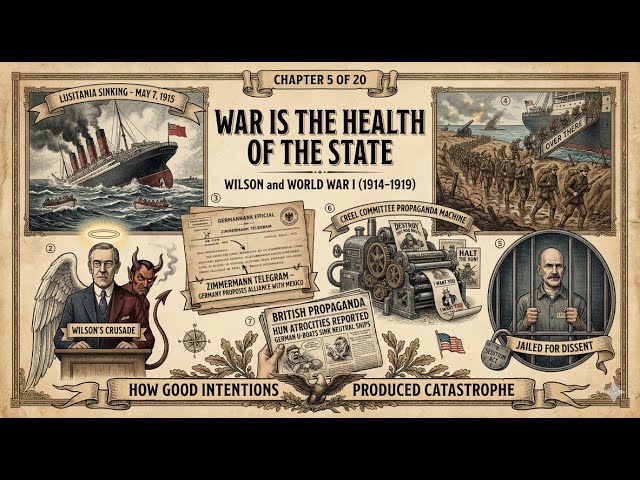
WWI propaganda and the Committee on Public Information: Familiarity with how governments used psychological warfare and media to mobilize public opinion during World War I, where Bernays honed his techniques.
Basic Principles of Media Literacy: Understanding how information is constructed, filtered, and distributed through mass media channels to shape public perception.
Manufacturing Consent: Analyzing Noam Chomsky and Edward S. Herman's propaganda model to see how media institutions filter information to serve corporate and elite interests.
Modern Neuromarketing and Behavioral Economics: Exploring how contemporary advertisers use brain-imaging technology, big data, and cognitive biases to bypass conscious decision-making.
The Evolution of Political 'Spin' and Lobbying: Investigating how Bernays' techniques are utilized in modern political campaigning, public relations management, and corporate lobbying.
Sociological Critiques of Consumerism: Examining the psychological and environmental impacts of hyper-consumer culture, such as the 'hedonic treadmill' and commodity fetishism.
49.9K views1.3Klikes46:54Original Release: 2019-11-24
[Music] tidewaters powerful relentless seemingly unpredictable but ever moving ever changing as these swirling currents are daily they are being checked charted and forecast as to the time and size of their urban flow like the waters of a mighty ocean people also represent a tremendous force the understanding of which is of greatest importance to the American Way of life this force is known as consumer power this week we've got a really exciting show covering a topic that literally dictates the world and culture we live in today but we're gonna wait a minute before we dig right into that and instead start with a little bit of history lesson and to begin that maybe a little bit of a song so in Latin America during the 30s and early 40s FDR's good neighbor policy promised to avoid military aggression and interference with Latin American domestic affairs and his calls for freedom and and into oppression and tyranny gave many Latin Americans hope but it was a hope that did not translate into reality for the majority of people and the story of United Fruit an American company highlights this contradiction between the expression of American ideals like freedom and the forces that govern people's lives some of the capital cities of banana land or as large as Jacksonville Florida or Texas this is Guatemala City as seen from the air now huge streams of water being sprayed over a banana plantation is our first introduction to why this rich area is called banana land and it was in Guatemala which borders the southern tip of Mexico that united fruit thrived the country was perfect it had lush vegetation ample rain bananas but most importantly a brutal dictator that restricted the freedoms and rights of the people ensuring a vast supply of cheap labor and this dictator general Jorge Huber co ran a regime that benefited landowners one of the policies under the general made it possible to legally kill any peasant who worked less than a hundred days a year for a landowner and United Fruit which owns 70% of all private land profited handsomely from this arrangement but eventually this oppression exploded into massive demonstrations in 1944 which forced the resignation of the dictator and led to the democratic election of a people's hero who was succeeded in 1951 by hih kobo Arbenz and these democratically elected presidents sought to increase the freedoms of the people but this meant going head-to-head with United Fruit they introduced labor rights and challenged the company's rail monopoly but the big blow came when Arbenz signed a decree in 1952 at the time United Fruit owned huge swaths of land that were completely unused they simply held on to it in the event they needed to shift agriculture around but this decree expropriated this unused land divided it up and gave it to thousands of peasants to live on and to farm oh you know what that sounds like maybe a little bit of communism going on right there which if I'm remembering my history correctly this is what 50s yeah 1952 that seems like exactly the time when cold war was just getting started and heating up yeah that's right David and the Cold War was really a war between capitalism and communism and it was so intense that almost any struggle around the world could be framed within this ideological framework and United Fruit would use this to its advantage to fight back against the social reform threatening its profits the company had hired a man in the 40s to help sell more bananas but they realized around this time that they could use his skills to help them in the struggle against Arbenz season this man's specialty was not in direct advertising but in the manipulation of perceptions to indirectly change the world to better suit corporate interests this was a man who once increased sales for a hair net company by influencing women to wear their hair a different way in the case of United Fruit this man knew that if you could align the interests of the company with the interests of the United States government the reforms of Arbenz could be undone and full-fledged exploitation could resume the strategy he designed to do this would associate Arbenz with communism and convinced the American public that this represented a threat to American security he created a fake newspaper the flooded journalists with press releases about the communist infiltration of Guatemala he distributed an anonymous report on Guatemala to every member of Congress and he convinced publishers to reject articles that were sympathetic to Arbenz among other things okay this is this goes way past just simple advertising now right I mean he's literally creating a fake newspaper in order to push this idea and then it seems almost like whole scale control of the media right so he's sending off things specifically to Congress people providing pre-written material to journalists in order to push a story this is very intensive manipulation and something that I think maybe people suspect might be happening now but this was 1950s I had no idea things were so sophisticated in terms of media manipulation at the time the Guatemala Honduras border the town of nueva octopiggy headquarters of the Guatemala insurgents is invaded by a plane load of American news men including our waldron Movietone veteran war photographer here to bring the world reliable newsreel reports from this latest global hot spot his camera catches a press interview with secondary anti-communist liberation leaders captain Mandi Atoll and Colonel Lopez who with maps explain how they hope to capture the capital city confronted by the greatest crisis since the communist invasion that caused the Korean War the United Nations Security Council with Henry Cabot Lodge as president sits in extraordinary session a Sunday convocation that hears Guatemala's chief delegate alleged that his country is the victim of international aggression the facts show that the rebellion now disturbing Central America is one conducted by patriotic and he read Guatemalans which inspires Russia to err the worn-out charge that the u.s.
created the trouble you mentioned earlier David how Arbenz land reform policies sounded a little bit like communism but the fact was that President Roosevelt was one of Arbenz heroes and a lot of his policies were inspired by the New Deal so this is somebody who just wants to help the common man and give a little bit back to the people that elected him and then somebody in America the owners of this Fruit Company and then this man they hired to influence public perception came in and said you know what this is wrong we want to go back to the dictatorship exploitative ways where it's legal to kill peasants if they're not doing the work for us and we're gonna convince everybody that this is the proper correct thing to do that's crazy well this strategy was so effective and and remembered that the United States was fighting just a couple years earlier for freedom and democracy abroad during World War two right and this was a democratically elected leader but nonetheless the US president and the CIA were convinced that something drastic had to be done and so the United States criticized Guatemala internationally so they could first ban weapons sales to the country and then the CIA flew a man named Castillo Armas Florida they had identified him as someone they could trust to replace Arbenz and restore United fruits property the CIA trained Armas gave him an army and lots of guns and then in 1954 Armas marched into guatemala accompanied by a naval blockade a campaign of psychological warfare against guatemalan citizens some bombing and the general threat of a US military invasion Armas took over and all the while the United fruits hired man acted as the primary source of information for international news thus controlling the narrative and once Armas was in power he immediately imposed a totalitarian police state unions and political parties were outlawed books were banned newspapers were closed banana workers were stripped of their rights and many who had supported Arbenz and his policies were killed but most importantly land that had been given to peasants was taken and handed back over to United Fruit if a community's economic distribution becomes slanted his middle income groups grow smaller and despotism stands a better chance to gain a foothold where land is privately owned one sign of a poorly balanced economy is the concentration of land ownership in the hands of a very small number of people when farmers lose their farms they lose their independence this one can stay on but not as his own boss anymore to the extent that this condition exists throughout a nation the likelihood of despotism is increased well the good news is this did increase value for a lot of shareholders oh yeah we can't lose sight of that but but yeah and Guatemala was honestly never the same but that's not the focus of this show what we're actually here to talk about is the man that United Fruit hired and his ideas that are still with us today so who was this man the United Fruit hired to pull off this coup really right the public relations genius a man who almost single-handedly invented this field whose ideas are with us today whose techniques have changed culture and our society oftentimes for the worse this man nephew of Sigmund Freud of all people was named Edward Bernays now what kind of man would willingly pull off a coup for a Fruit Company you might be asking and that's what we're gonna delve into a little bit of psychology and thinking behind this man someone who loved the word propaganda so much he quite literally wrote the book on it propaganda now this was a man as you might guess from somebody who's pulling off a coup for a Fruit Company that had very little respect for the masses for the people in fact you might almost go so far as to call it contempt he felt that these masses that people were incapable of governing themselves of finding direction in their lives if they were primitive raw emotions and power and nothing more and instead that society culture and the world at large you need to be led by what he called the invisible government and as Illuminati as that sounds it wasn't actually a real government but the fact that he understood that a few people these thought leaders we might call them now are able to shape public opinion to direct the energy of these public forces and with that tool shape society and culture as a whole and he used these tools and techniques and thoughts to create the industry known as public relations and to a larger extinct advertising Bernays started his career as a press agent for an opera singer but when the u.s. entered World War one the government hired him to promote war interest to the public and he did such a good job of this that Woodrow Wilson invited him to the peace conference in Paris after the war ended and when Bernays got there he was so surprised to see how President Wilson was portrayed in Paris as this hero of the people the crowds just went crazy for him and it made Bernays wonder if people could be swayed in such a significant way during war when emotions were high and so much was on the line could they be influenced in similar ways during peace in this the field of propaganda of public relations of advertising was really born chain stores in their neighborhoods their journey carries them past powerful messages had been Teja sleep laced on nearby poster panels at night as they visit their favorite movie houses or sporting centres and in the day while going to and from the neighborhood drug stores and centrally located supermarkets the local service stations or to work in any one of the busy industrial centers these hundreds of thousands of fires repeatedly receive up-to-the-minute information concerning products necessary to their daily living Edward Bernays had a number of core concepts of how this field works let's take a moment to explore some of these and give you examples of him really putting these ideas into place so what are the main components of this isn't that advertising that public relations isn't about just telling someone to buy that's the simplistic understanding of advertising of selling things we used to be I have this product it's better than the other product you should buy it and that was it you would tell somebody this thing you said go buy this go buy this go buy this join the army buy war bonds and that would be the end of the relationship between advertiser and the potential consumer and but that was the old way of thinking Bernays realized you're far more effective at selling products if you make those products indispensable to the individual to the consumer so no longer are you trying to sell them this thing but the consumer is begging to buy them and he did that by just in culture one of his campaigns is a really great example of just how I put this idea into practice let's take a look at that Mozart pianos hired Bernays to increase their sales and like you mentioned he knew that the right approach was not to just create advertisements that said buy more pianos if you really wanted to increase these sales you had to change culture you had to change habits and perceptions so that the idea of owning a piano became second nature to the consumer now how is that even possible to do he did this by first organizing an exhibition in which different styles of music rooms were designed by well-known interior designers and they would be decorated with fancy tapestry and fancy furniture and then invited important influencers and different artistic fields to this exhibition so maybe this would be like a famous musician to sit in this room and these images of these elaborately decorated music rooms with these famous musicians and other artists would then be broadcasted to the public so that the image of these rooms could be raised into the public consciousness then what he would do is he would get together a bunch of the most famous architects in the country or in the world persuade them to include a music room into their blueprints with maybe even a little nook in the corner measured out perfectly for a piano and then once these major players were on board with this idea the less influential but more numerous architects would then imitate these people so that ultimately at the end of this campaign every house that was being built would naturally have this music room and so by selling the music room as a necessary part of the modern home and a natural way to impress and host visitors the piano became a necessity you can't have a music room without having a piano in it right that doesn't make any sense it was no longer the manufacturer that had to approach dealers and consumers and say hey please buy this piano but now it was the reverse consumers were coming to the manufacturer saying please sell me a piano I think that last point you made there no longer let me sell you a piano but please sell me a piano is really the important concept to take away from this and what Edward Bernays was really pushing here the idea that by shifting culture by changing what is expected and standard in our world in our society then you can use this to manipulate people to do certain actions in this case buy a piano that's shift in thinking changed everything and continues to stay with us today which we'll explore more in a little bit it was such an enormous paradigm shift that it's taking people decades to realize that this was even happening to them and even so now we're still trying to keep up with the constant blitz that's occurring from advertisers from public relation managers from corporations from politicians from the media as a whole who are all trying to shift our culture to shift our society to shift the way that we think as individuals and work together as groups in order to modify our behavior to serve their needs whether that's selling us pianos giving us to vote for somebody buy a new product it doesn't really matter but the concepts the ideas of how to achieve this were laid down at this time by Edward Bernays and another example Bernays was hired a few times actually by the tobacco industry to help increase sales in each time he came up with some brilliant campaign to indirectly create a positive association with cigarettes the big obstacle in the 20s was the fact that very few women smoked there was a taboo against it and Bearnaise had hired a psychoanalyst who told him that cigarettes were a symbol of the penis and men's sexual power very Freudian his uncle would be proud so Bernays figured he needed to find a way to connect cigarettes with the idea of challenging men's power and he planned to do this at the big Easter Parade in New York City where there would be thousands of people and lots of press attention this was in 1929 when it was time for the parade he hired a group of young women to join it and at a specified time they started smoking ranae's then ran over to the press and said there's a bunch of women in the parade that are part of the suffragette movement you should go check it out and when the press investigated the women told them that they thought of cigarettes as their torches of freedom and an expression of their independence late I love this story unlike a number of levels first off torches of freedom has to be one of the most hilarious slogans anyone's come up with in the entire 20th century especially for cigarette so funny unintentionally so but additionally we see this same concept this idea today of harnessing these people who are out there working for social change being captured by corporations by private interests we say well how can I use this to advance my product so taking these young attractive women for working or dramatic social change the suffragette movement and although in this case I don't think the women were actually involved in the suffragette movement he's just well yeah yeah I mean that that's that's part of the point so like it doesn't matter if they are or not these are hired actors playing a part the idea is that we're selling this suffragette movement thing whether it's genuine or not and so these corporate interests are trying to take advantage of these grassroots movements in order to afford their products and this is nothing new this is not something that's come up in the past decade a few years there were that Pepsi came up for the first time but this extends back into the 1920s because of Edward Bernays and what are they really trying to do or what was Bernays trying to do by using these movements or connecting these products with something other than a product itself he got this idea really from his uncle Freud right at the time Freud was putting forth this new theory that deep within all of us are these primitive sexual forces and they need to be controlled to avoid chaos and Bearnaise his idea was hey if we can harness the subconscious these forces within everyone and associate them with these products then we can create this irrational connection between the product and the person so in the example of the women smoking their torches of freedom because of this brilliant propaganda women obviously started smoking and they came to associate the idea of smoking and a cigarette itself with freedom and independence right and by connecting a cigarette for example with the unconscious desire for freedom and independence in a way this propaganda is taking away the agency of these women because they have a real underlying need for independence in this case but it could be any positive change but this propaganda is appropriating that need and replacing it with a product is that so different than sending thoughts and prayers from changing your avatar on Facebook instead of actually doing any sort of real social change you get the same bump emotional dopamine hit saying by smoking these cigarettes I'm part of a movement that's making a change or what Pepsi said Pepsi it's the drink of social change maybe they're fooling you maybe they're not but it replaces that desire to actually do something gives you that same sort of feeling like you're making a difference while subduing you and actually making sure that nothing substantially changes and that energy then maybe would have pushed things forward Arendt said being redirected towards a product it's a point that Bernie stresses in his book the need to be covert and indirect with these campaigns what kind of idiots do they take us for but then you look at the numbers in this stuff actually war so maybe they're onto something and we are really the suckers that they think we are but maybe it's also just because this advertising this PR this culture shifting methodology is so pervasive and impossible to escape that we have no choice that it becomes part of us part of our brains part of the way that we think and we end up programmed by this manipulation Commission time time that's correct you've been wanting and best of all time to take your pick from that scrumptious array of tasty treats waiting for you at the snack bar where the popcorns poppin the cold drinks are sparkling the hotdogs are laying the coffee is steaming and a luscious treasure of confectionery delights with ice cream and candy and so much more to tempt any taste is waiting for you now at the snack bar you'll be notified in plenty of time when the next show is about to begin [Music] I'd like to begin with a fact a simple yet shocking fact it is this a flood tired of Filth is engulfing our country in the form of Newsday an obscenity it is threatening to pervert an entire generation of our American children disseminating this filth high-speed presses rapid transportation mass distribution all of combined to put the vilest obscenity within reach of every man woman and child in the country this traffic continues to increase and flourish for one reason it is big business profitable business for the mercenary persons who produce it and this is really a sort of covert manipulation again so the idea that when Pepsi runs an ad that says you do this thing you'll feel this way that's like a very obvious way of advertising but these more subtle ways of shifting culture of introducing book shelves into architectural designs into building music rooms in new construction the ways that manipulate our world around us so we react a certain way sort of like giving a hamster wheel so it runs on that by shifting our physical space so that we have no choice but to purchase these products stacked in these specific programmed manners is a really sort of covert very subliminal and very manipulative way of advertising of manipulating these masses to get to your in goals and it's not just in these physical examples but also in the manipulation of media right so in that initial opening story about United Fruit Company the important part of it was that Edward Bernays and his team were controlling the narrative they created the newspaper they were the only source of news coming out of Guatemala they were completely dictating how people read the situation they were how you were thinking about this thing because they were the only ones saying anything about it and this wholesale control of media is really the ultimate concept that we're gonna take away from this and and maybe this is something I am slightly qualified to discuss because I work in ciliary to advertise my day job is coloring all these ads that you see on TV I'm a colorist I charge outrageous sums of money in order to color up commercials that you watch I tell you to buy Motorola phones I've done things for Exxon Mobil I've done things for banks from Merrill Lynch I've done things for these companies that track you for Google for Apple by day I sell out and I've seen the interior process of this world of the way advertisers think and of the way that we try and sit down and manipulate you and so this control of media again there's only a couple of companies that represent basically every single source of media you see whether it's websites TV traditional newspapers television movies radio magazines all of these sources of media that control the things that we talk about how we talk about them everything in this world are run by a very small number of companies that have the power to have the same sort of manipulation of information just like Edward Bernays was and even though it's multiple companies now six or seven really that control the vast majority of this that's a very small amount to be able to dictate the narrative in the same way that Edward Bernays single newspaper was doing or United Fruit Company in Guatemala our community rates low on an information scale when the press radio and other channels of communication are controlled by only a few people and when citizens have to accept what they are told in communities of this kind despotism stands a good chance and we are in a place where it's very easy to get back to that same scenario where it's the interests of these media companies aligned then we might only be hearing hearted story we might be being influenced in ways that we can't even imagine because there's only a small part of the narrative being told because things are being left out but because stories just aren't being told at all well David I feel like if you're talking about magazines and newspapers and television I think the common response is well I'm not affected by advertising I don't go to some fast-food joint just because I see it on television I make my own choices but again it comes back to this covert Miss and this misdirection that goes into these propaganda campaigns right we are a culture that gives a lot of attention to celebrities and other personalities on TV our politicians and our athletes and things like this and one of the things that Bernays stressed in all this is the manipulation of those people so in a lot of ways this propaganda these campaigns aren't directed at us directly but it's directed at these people who we look to for sources of inspiration and for directions on our culture and I hear this all the time you know we talk about presidents we talk about athletes and we talk about their genuine personality and who they are and why we like them but Bernays saw personality as something that was meant to be crafted to fit the objective that you were looking for and he has this joke that he tells in his book it's a little outdated but it gets the point across he says you know there's a story that this banker fired his partner because he had divorced his wife and his partner says but what does my private affair have to do with my banking business and the man says well if you're not capable of managing your own wife the people will certainly believe that you are not capable of managing their money and that is and as sexist as that is he goes on to describe in his book how look if you're a propagandist you need to realize that this personality is something that you should treat with scientific precision you need to craft the personality so that when people see this person they see something genuine that appeals to their interests in a way that gets them to buy your product and so the same person who says look advertising doesn't affect me well if they go watch TV and their favorite athlete gets up and is wearing a green shirt and they say you know I like that shirt and it subconsciously affects them so that they go out next time they're at Nike or adidas or something they're buying green athletic wear yeah soccer players are hugely influential in this they basically dictate men's hairstyles as funny as that is yeah exactly and so I think we should be skeptical of this quality in our society of worshipping these figures of looking at these politicians these athletes these actors these fashion models and trying to take cues about what we should do and how we should live our life from them because if Bernays was manipulating our cultural leaders in the 20s I guarantee you that that technique has only been refined over and over again [Music] [Applause] to a degree she travels [Music] and she spends money in any case our consumer is a real person one of a large group of individuals of that make up our consumer world have this idea of influencers today right that's the marketing word for people that they know if they show using a product then people will buy they will use this product they say oh this guy is girl she's using this thing and so it must be good and I'll use that to a more insidiously Edward Bernays uses the same idea this is one of my favorite stories about him to sell the idea of bacon with breakfast so the American idea of breakfast is very foreign to the rest of the world they look at what we eat our cereal our bacon the typical component of a healthy breakfast as you see advertised on TV as totally insane our cereal is leftover grains that are actually I just saw an article today saying it less nutritious than pizza so we should be eating pizza for breakfast instead of cereal and bacon and eggs now this is a campaign that Edward Bernays worked on many years ago the idea was to sell that bacon was part of a healthy breakfast maybe you've heard you know a hearty breakfast actually that saying that came from this campaign and he didn't do this by telling people buy bacon eat bacon with breakfast is good for you because he realized that people don't get advice on their health from advertisers from companies trying to sell products where do they get that health advice from their doctors of course and so he realized doctors in this situation are the influencers of people's health and nutrition and so he went out reaching out the doctors advertising to nutrition boards creating boards that recommended bacon as part of a healthy hearty breakfast and then doctors took this information said oh yeah of course this pamphlet says it's healthy this is what people should be eating and when people would come in for the checkups when they were sick a doctor would say are you getting enough food for breakfast you know you should have bacon and eggs every day it's part of a healthy hearty breakfast next thing you know bacon sales went up in Edward Bernays legacy of a healthy hearty bacon and egg breakfast is with us today and I guess you could say well David I like bacon and eggs so maybe I'm not too upset that he somehow introduced that into common mainstream but the point of all this is that this is preying on our very natural tendencies and desires to trust people and to look to authorities to tell us what to do that's good for us and best for us and under a healthy society or a healthy community these types of influences would come from people that we know personally that have common interests with us people that we can trust to influence us towards a mutually beneficial goal but when these influencers are coming from this very shady place that we don't really understand what their incentives are in influencing us but maybe we should talk about where exactly the incentive for this manipulation comes from I mean why are these propagandists really trying to shape us is it for our benefit or is it for some other reason we'll if you ask any competent propagandists and that's the word I'm gonna keep using and I'm gonna start bringing that to the advertising agencies when I'm working there but they will absolutely say I'm here because I believe in this product because I'm trying to help people but that's part of this whole trick of convincing yourself that what you're doing is good and helpful because without believing in that you're not gonna be effective at selling people that never Bernays was a master of this but ultimately these are all people serving the corporation's the companies and occasionally the politicians that are trying to sell these ideas these products and it sounds silly when you sit down and you watch these advertisements on TV or the pre-roll before your YouTube ads and you say there's no way that these things are having any sort of effect on me I'm a savvy consumer I'm an independent person but remember a lot of this isn't about necessarily your individual actions at your agency but instead about shaping the world you live in so you have no choice but to do certain things if you have a bookshelf built into your wall you're not gonna leave it empty you're gonna fill it with books and knickknacks it's about creating situations and leave consumers no choice but to act in certain ways that benefit these corporations companies and politicians and you say these marketers they feel like they're making the world a better place and Bearnaise certainly felt that way but it's important to realize that who he was ultimately serving what his vision for society was was that the masses would be manipulated by the corporate elite or economic benefit so I guess in his vision making the world a better place means making it more profitable for a small group of people who run the major corporations of the world and we have to ask yourself is that the way we want our world to go and is that what we feel is the direction towards a more utopian a more fair society and I really want to just piggyback off your point about how these campaigns shift our world so that it takes options off the table without us even realizing it that's a really insidious part about all this propaganda is that say we see an ad for AT&T and then we see an ad for Comcast and we say okay they're trying to convince me should I go with company a or should I go with company B and we think that's very natural what we don't realize is that before these advertisements even showed up on the air there was a propaganda at work to get rid of option c d e f all the way through Z which may not have been individual companies but whole lifestyles and whole concepts of how society could be structured maybe at one point the idea of a free municipality provided internet was available but that got taken out of the conversation without us even knowing it and now we're stuck with this well should I go with Company A and pay them $65 a month or $100 a month for internet or should I go with Company B and pay $100 a month without even realizing that maybe there were alternatives not just to these individual companies but whole ways of living that we can no longer even see and one of the very major ways that this happened was the shift in the relationship between producers and consumers so for most of human history things were created to supply a need right so I need something and so somebody creates that in order to fulfill my need and make a little bit of money off that situation and that's how things were economically for the vast majority of human history but with the but with the advent of mass production coming out of the geared up factories from World War one that's shifted these factories needed to be always producing in order to stay profitable and you can't constantly produce and turn these products out if you're only supplying demand because you can over produce and so the cataclysmic shift that happened in the way that consumers and corporations interacted with each other was pushed by Bernays and other propagandists of the time in shifting needs to desires so no longer it's just I need a pair of boots otherwise they would have their feet now it's I want a new pair of boots because it's in fashion and this is really the creation of the consumer and consumerism we must shift America from a needs to a desires culture Rhoda Lehman Brothers executive people must be trained to desire to want new things even before the old has been entirely consumed man's desires must overshadow his needs and as a result our factories and industrial plants are turning out an every increasing amount of goods things that people want and need but as industry grows so also grows the problem of how best to get the products of industry into the hands of the consumer how to maintain and increase the efficiency of distribution how to cut down the cost between the end of the production line and the ultimate purchaser outdoor advertising is a powerful force to this end day after day by keeping consumers informed concerning what products of industry are available and where they may be obtained outdoor advertising is making its contribution to the development of American prosperity and maybe this is the greatest legacy of Bernays and his contemporaries the creation of consumerism which really is the creation of America and capitalism as we know it today and what's interesting is even past that as time has gone on in the decades have ticked by advertisers propagandists have taken that desire and turned it back into a need so now it's not only just I want this thing but now it's become a need once more I want this thing so much I needed to have it or else I'll be unhappy and that's really the final coup de Gras in this process one of these shifts in the economy came with the diamond industry De Beers the owners of mines in South Africa at the time discovered huge deposits of diamonds and they said how can we get people to buy these as ingrained in our culture as diamonds are today at the time they weren't they were sort of an odd stone that people would only use in humongous sizes and colors so De Beers had this very black luster by they were common they weren't anything particularly special it weren't scarce at the time and taking a page right out of Bernays propaganda they sought to associate diamonds with the idea of romance so that it became a necessity anyone who wanted to express romance had to purchase a diamond and they used the traditional models that we talked about they use actors and they produced campaigns to show that famous wealthy people wore diamonds and they created a discussion around it and the whole idea was hey let's target poor working-class Americans and people and make them look to these celebrities make them look at these actresses we want these poor women to say man I wish I had what she had a campaign that was obviously very successful yeah and that sticks with us through today the idea that a diamond is the only way to propose the idea that an engagement ring is supposed to be X number of months of your salary that phrase diamonds are forever all these things live with us today affect our culture should our society are very mating rituals as a species and it was created less than a hundred years ago because somebody had a mind full of worthless diamonds and wanted to sell them to us and there's all sorts of stories like this when I turned 18 years old David I received in the mail this package from Gillette razors I got one too really it was a it was like a bottle of shaving cream and it was a brand-new razor and I was so impressed with this I said Wow no one's ever sent like it was a gift that I got in the mail for my birthday because you're a man now right exactly I was a man actually I couldn't really use it for another year because I was still you know I guess I wasn't quite a man at that point but that idea stuck with me and I was a Jillette man for a long time I always bought their product and it was expensive as help you buy this little shitty razor and plastic and the cartridges are behind the locked case because they're so expensive and they're such a necessity and they were good for like one two three four uses and then I had to throw them out but it left such an impression on me that I used them for a long time these sort of actions by these companies affect us as individuals and consumers all they did was send you a gift that cost him a couple of dollars and they had your brand loyalty for years until you realized their products are actually terrible these are very modern examples of this stuff and one of the examples that really stuck out in my mind is when Edward Bernays design a campaign to get women to buy more clothing at the time women and I guess everybody really just wore kind of the same outfit every day which suited everybody just fine but it didn't result in the type of profits the fashion industry wanted and so he hired celebrities to get on TV and talk about how oh if you're a woman and you wear the same thing every day you give off an image that you're boring and bland and there's certainly interesting things about you and you should show that through the clothes that you wear wear new clothing mix it up show that you're an interesting person and so this association of character and worth as a person became associated with the clothes that you wore and this idea that I'm a woman and I want to go to a shopping mall to buy a dress because that dress is gonna make me happy and it's gonna show off my interesting personality question that where did that idea come from because that idea was planted in our culture by a sexist middle-aged man that had no interest in fashion no artistic talents for it and really didn't care what women thought in the first place is that where we want the motivation to buy things to come from and as you expand that you start questioning every part of our culture saying why is this this way why do we do these sort of things and if you travel a lot you'll find that Americans in particular are very peculiar in some of our cultural norms and many of these are because of the legacy of these advertisers of these corporations of people like Edward Bernays and as you experience more you realize that a lot of these things are specifically designed to take advantage of us and so when you begin questioning every single thing you do saying why am I doing this why are we doing this who does this benefit then you start getting a very different perspective of the world a perspective I think is ultimately liberating yeah exactly if you associate a purchase or an object or anything in your life with a feeling ask yourself where does that feeling come from is it truly your own or did it come from somewhere else somewhere that possibly was designed and manipulated to make you feel that way and if so do you really want to continue to make that part of your life what I want people to take away from this is as silly as these ideas seem as cliche as it sounds to say well what is making you want to do this thing and asking yourself well somebody's trying to sell something it really is true right we've shown time and time again the different ways that our society culture and very physical space that we live in is manipulated in order to get us to do certain things and act in certain ways and so it's okay the question this it's real these are actually how our world is built this is the actual things going on around this you don't have to look like a crazy person this is not a conspiracy these are text books they are stories that these people brag about that write autobiographies on and that continue to affect and shape our world today it's okay to question this you're not crazy this isn't conspiracy stuff it's okay dissatisfaction and boredom with the daily routines of life are increasingly apparent and no matter how streamlined the design of modern living everyday tasks in the 20th century are often regarded with distaste [Music] in this age of tension man is a situation eager in his search for relaxation too often unhappy with himself he drifts into easy avenues of escape hey mrs. something we want to do remember as we continue to explore the effects that media advertising and prop again as a whole have on our lives as a society as a culture as a group of people and also as individuals we feel that this type of propaganda is just a symptom of these underlying structures this need for infinite growth the desire to consume to keep these factories producing forever and continually expanding those underlying structures are the same ones that are leading to our climate problems right and this propaganda is not just a symptom of these underlying structures but it also enables and encourages it because by encouraging more consumerism we're keeping those factories running and we're keeping the minds open and we're keeping the extraction of these resources going at full force and that's why we are attacking these structures from every angle possible [Music] [Music] [Music] you you
Up Next

20:04
The Economics of a $14 Million Stradivarius Violin
@BusinessExplainsTheWorld
610.2K views•2025-05-05

12:54
Triumph of Orthodoxy Icon: Byzantine Art & History Explained
@BenCallan
2.1K views•2024-08-06

9:49
FastAPI vs Flask vs Django: Choosing the Right Python Web Framework
@TechWithTim
302.5K views•2024-05-26

1:42
Game of Thrones Opening Credits: A Cinematic Analysis
@gameofthrones
46.3M views•2011-04-18
Related Study Plans & Knowledge Roadmaps
Structured learning paths in General & Interdisciplinary Studies
general-studies
Elevator Engineering: History, Physics & Cities
01From Hoists to Safety Brakes: The Dawn of Vertical Lift
02Hydraulic vs. Traction: The Engineering Physics of Elevators
03Modern Speed, Safety, and Algorithms
+ 2 more learning modules
12h5 modules
Explore Roadmap
general-studies
Rubber: Material Science, History & Geopolitics
01Origins of Natural Rubber & Mesoamerican History
02The Chemistry of Natural Rubber & Vulcanization
03The Geopolitics of the Rubber Boom & Colonization
+ 2 more learning modules
12h5 modules
Explore Roadmap
general-studies
Containerization: Evolution, Logistics & Trade
01Ancient Trade & Bulk Cargo: Amphorae to Barrels
02The Industrial Revolution & Cardboard Packaging
03The Containerization Revolution: Malcom McLean
+ 2 more learning modules
12h5 modules
Explore Roadmap
general-studies
Textile Tech: Evolution, Labor & Global Impact
01Pre-Industrial Textiles: Handloom & Cottage Industry
02Mechanization: The Spinning Jenny to the Power Loom
03The Factory System & Global Labor Transformation
+ 2 more learning modules
10h5 modules
Explore Roadmap