




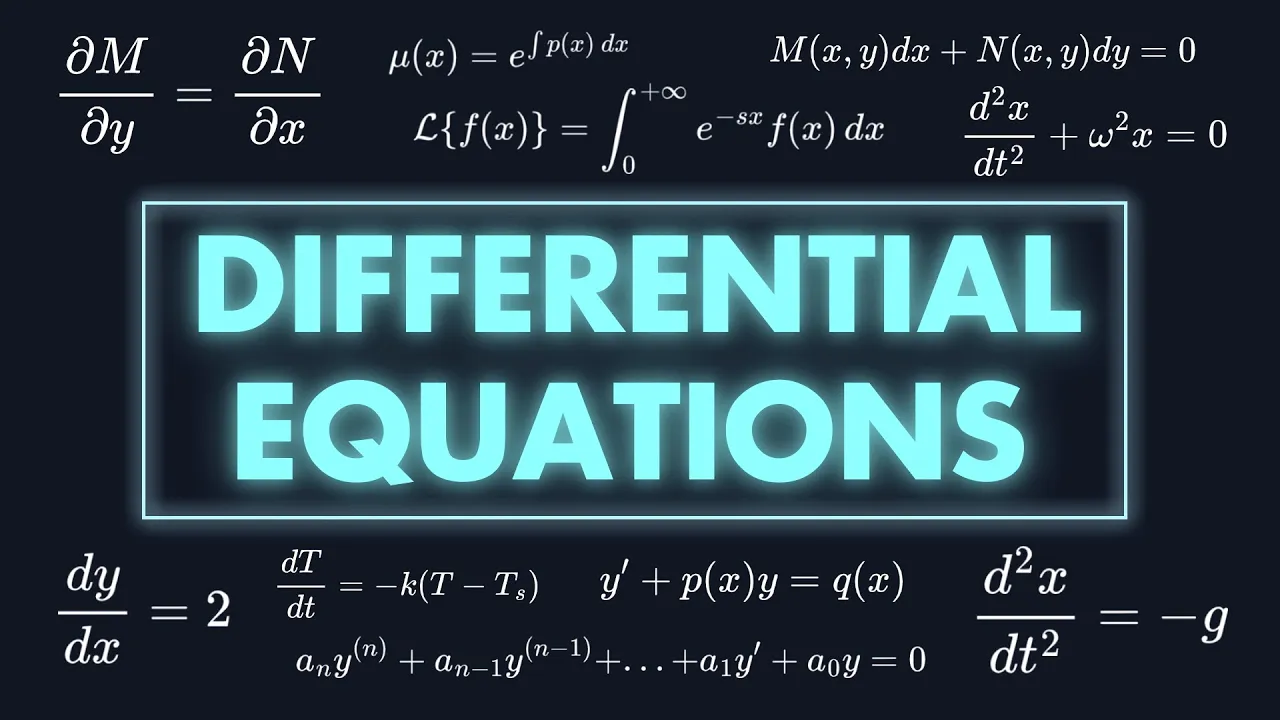
![1) Adi Diferansiyel Denklemler : Dif. Denklem Tanımı ve Örnekleri [Ordinary Differntial Equations]](https://i.ytimg.com/vi_webp/BkVCADUC2wQ/maxresdefault.webp)











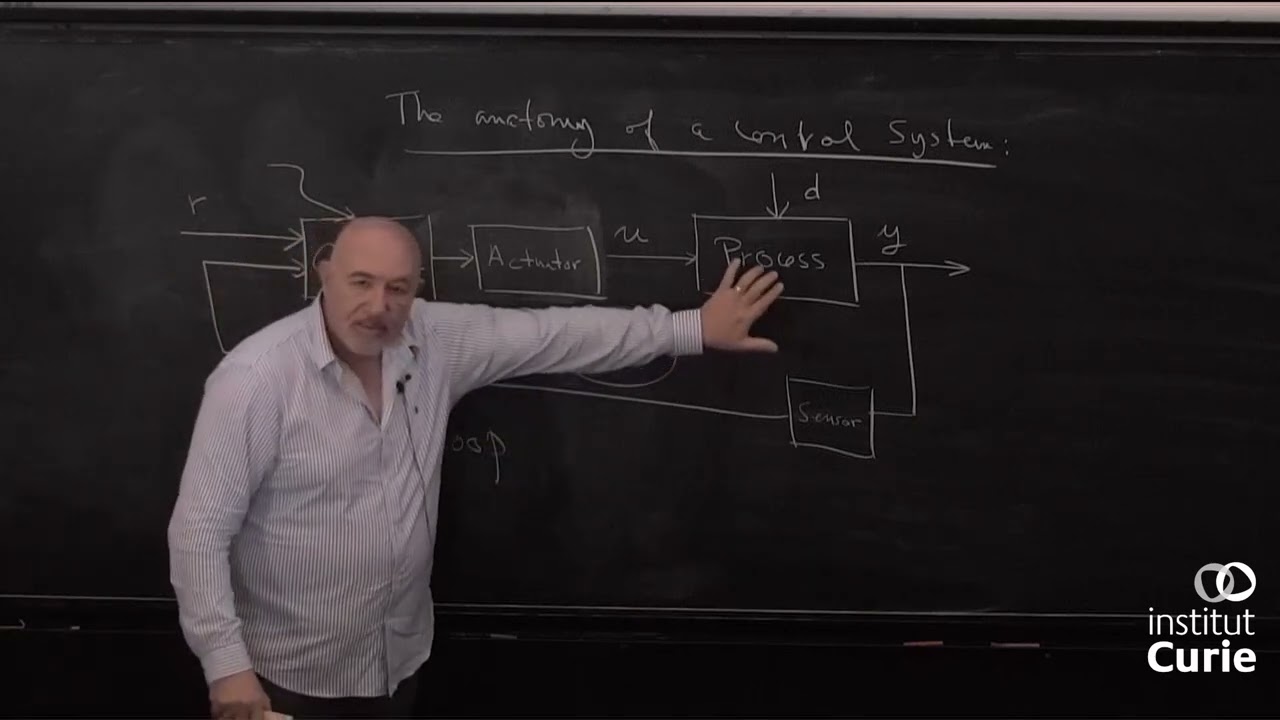









Mathematical modeling serves as an essential tool for designing and controlling synthetic microbial consortia by enabling prediction of system behavior, identification of key mechanisms, and rational tuning of complex biological systems; specifically, positive feedback loops are crucial for achieving coherent oscillations across spatially extended communities where diffusion-limited signaling would otherwise prevent synchronization, as demonstrated through engineered bacterial circuits where model-guided design allowed researchers to predict and control emergent behaviors across different strain ratios and spatial configurations.
Mathematical Modeling of Synthetic Microbial Consortia
Added:Basic Microbiology and Synthetic Biology: Understanding microbial growth, genetic engineering, and interaction types such as mutualism, competition, and commensalism.
Ordinary Differential Equations (ODEs): Familiarity with using calculus to model dynamic systems and rate changes over time.
Population Ecology Models: Knowledge of foundational ecological models, particularly the Lotka-Volterra equations and Monod growth kinetics.
Introduction to Systems Biology: Basic concepts of how individual cellular metabolic networks operate and influence population-level phenotypes.
Community-Level Flux Balance Analysis (FBA): Learning advanced metabolic modeling techniques (like dFBA) to simulate resource allocation across multi-species consortia.
Cybergenetics and Feedback Control: Studying how to implement real-time, closed-loop controller systems to stabilize synthetic microbial populations.
Industrial Bioprocess Scaling: Applying consortium models to optimize the yield of biofuels, bioplastics, or pharmaceuticals in bioreactors.
Microbiome Therapeutics and Bioremediation: Exploring clinical and environmental applications, such as designing synthetic gut microbes or pollutant-degrading soil consortia.
223 views3likes40:19Original Release: 2019-11-20
and so these speakers before so this is nature 2001 is genetics which were genes each other and it was a really similar circuit just compose a Freesat of Fiji's that repress each other circle and so this generates oscillations and both of these if you look at these papers both of these were inspired by and I know the system so we'll the end of the system these are not nice to capture the behavior of these systems exactly but more to motivate constructions of these circuits and that predictably observed so so we come to the point and illustrate that where guess in check well it becomes very difficult to construct these synthetic the increasing complexity or poppy balance systems are constructed between different strains that communicate with each other so just checking all the possibility exhaustively becomes some some modeling to guide a design will be necessary just respect to fit the model and you're satisfied that describes the behavior you observe you can try to identify the mechanisms that make a circuit behaving the way you've been for a mortgage in your in perspective you could predict the behavior of the circuit for a few experimental constants ask the question how does a circuit but sort you behave as you change the environment in which it grows and then change the different parameters you can have a good model you can fit the model to go experiments the experiments I think that's a much larger situation ideally what we would like to do is as a network or a circuit on paper on computer than just the right to translate that into a biological system now so talk mostly about the first two of these and predict the behavior so what I'm going to talk about are actually engineered communities or engineering the color communities so there are different strains that have Co cultures together communicate with one another and then the behavior is emergent from this interaction right so if you just grow each of these strain individual you wouldn't necessarily see anything interesting but we'll circle culture the communication between percent of net worth of loot and that makes the search behave in particular way the first one so this is working with my graduate students that work there cheated most of the experiments and Jake you can lose that yesterday so the first circuit that we look at that website was an extension of this Google feedback oscillated it was filled in at a C's lab yet years ago this is if you look at this this is again one one gene that activates itself and one gene that represses itself very simple if you look at neuroscience of neuroscience monotube Wilson Calvin model and exhibits the same types of oscillations st. Nicholas's is an oscillating circuit if this peak was constructed in a single cell exhibit robust oscillations maybe is to actually then take this particular gene and essentially break this circuit up among two different strains one string that contains only this part of the circuit and activates itself and the opposing screen via and more of sensing molecule molecule diffuses across the membrane and through the medium and then activates the sage in its both in itself any muscles activates in the corresponding gene other the other stranger school culture and again there's another quorum sensing molecule two thousand importance of argument then it also is expressed by the opposing circuit but represses itself and so same circuit it's here but then constructed separate into two different interactive sites and if you so this can be the circuit to implement this takes a bit of work you're not going to go through the description right here but essentially activator strength circuit that implements but just talk about detail and here is a circuit repressive strain at the commence depressing part here in SCORM sensing molecules in green and red use across the membrane both ways in couple the two string strings together into this so you built this so this was not you know this was not the stuff this was really engineered it was tinkering with checking and guessing didn't have a model opera jewelry of this but but Jay King later on once this was built did create a model or relative large sending the pressure equation delay differential equations that captured in detail interaction between the components in these two states so if you just throw the activator string on its own you can see myself you looking at right here is a microfluidic trap which forces these materials ie coli admission these genes are expressed to grow in a two-dimensional sheet and you see just the active universe between and the strain grown in its home and we see anything interesting because interest activates itself as new oscillations the group is not a closed this is only half of the circuit so this is surprising but you go culture to still needs together you close the loop and you the communication between through strength your the activators and repressors strain constantly an emotionally repressed a strain on its own because only one sees just apply itself so one thing we notice this point is that these are these small traps looking at about a hundred is the expression another so the complaint defeat these cells this sorry 40 times in the future business problem or coherent oscillation across the entire it yes there's actually there's just a few deals I'm skipping here it does actually something out right so you start with sufficient missiles it's one of these things start to do an experiment so what are the kinds of special patents they see a synthetic biology we look at seating this with a different number of off cells initially so from two would you start with a couple cells you said she'll get mostly everything you know yellow to one side everything this was an oscillation to strengthen you can do statistical interesting and spatial patterns and if you as you as you introduce more cells you get more and more comfortable and write down the models you can see that seemingly depth depends essentially surprisingly doesn't mean the diffusion so it seems there to be less induction at the border between you through sulfide yes yeah so the streets communicate both so restrained oppresses itself and the others just like it's really like excitation on your vision all networks excited herself excite themselves right so GE then these different type of variations of the original circuit by removing this self-excitation in the self and efficient self repressions and self activation this right so you guys four different variants depending on which of these self additional subluxation move let me just name these in different ways and p2 stands for both of these arrows most positive arrows and Houston's are both negative arrows and if there's a peep one or one year that means that the respondent Harold has been environment spatial arrangements emerging special arrangements of type of spill and you see that you see relatively Pro human oscillations across the entire track but if it's not included the you still get oscillations local localized this is just one example movie this also happens but the removals really synchronizes the oscillations across the trap so why is this just we catch I mean so interesting but just go to bank so p1 even one if you go back one slide just a ball I just has you stable so this is essentially because it's the signal to these are not if you you can build this staple notice it's the same as far as effects of growth most of the streets I'm gonna talk about grow different he's different types of circuits all oscillator about here is just to better represent a spatial temporal evolution of these patterns we took the trap average that across the vertical dimension to get a line and it's stacked the line of different times into a single picture so you get a section of space and time in these fingers if these are coherent but as you get nice if there's a change of the yellow and black that means that you're human oscillations across the entire across the entire trap and if this break up that means that sort of different parts of the track did not oscillate secret even small tracks these hundred by hundred might compress that I've talked about before regardless of what type of strength the both type of architecture you use you get four clear no solutions frequency changes a little bit but the oscillations in these Loretta traps you can hear in oscillations if you include the positive feedback okay visitors to example during this work as well and if you exclude it if you don't include this positive feedback from the oscillations breakup minnetonka if you multiply up you this promoter that order parameter and compact trots and small traps you get high order parameters in large traps you get hyper parameters with positive feedback and small and the only difference besides the only difference do you think this is human differences the socks so here this is compact presumably cells can communicate relative nuances 50 microns about the distance at which they communicate this is about on that order this is 2000 microns so it's much larger if you get the order analysis just locally on the right hand side would you also compartments each of which can be modeled by the same set of only easy for these 17 zone means that we using the previous people and then we coupled those via diffusion so the only really thing that we need to you from separate experiments and so how do you analyze this our secret occurs here so well first results of experiments are in the numerical experiments of as you see very similar behavior right so if you have if you have positive feedback you get very high and human you get low ordered parameters like in some examples it's mostly because the population breaks into two parts that are out of these and if you exclude a battery you get much less super new email solutions but they're they're not organized across the entire same size as as in the experiments so how do we hope you can be analyzed this so that is to take a going back to newer science people have looked at synchronization and treatment others you know science what they've done is look at the base response though it's a classical thing has to take the output of one of these strings and look at how in this model how does a signal diffuse from a population that's here at the origin in this picture right so this is the the level of that signal at a particular distance wrong the population this is this essentially an empty track except for a population that's here in the middle and then we do is measure that signal single receipt by a population that just doesn't express anything just sits there a particular distance from population in the middle and what you see is that the signal received at about 35 minutes from this central population is pretty pulsatile so here is me activating used a depressing signal that they so look like pulses in time which makes the analysis a little bit simpler because what we can do isn't user simply response technique which essentially basically tells you is that if you have an oscillator and you receive a perturbation at a particular point in the in through the oscillator phase what you can measure is then how much that perturbation shifts your face so our instance of my blocking and something pushes me and I stumble and I keep on walking my face is going to be perturbed but depending on where the push happens during my during the cycle of my step the perturbation can do great little a beer and so the phase response curve essentially measures that right so for instance in this case the perturbation here would that's the phase operations you can do the same thing for this in this model system and measure the things advance in the phase delay and once you put these together in you can actually then couple here the space responsiveness eventually we'll get two populations to communicate with each other and predict what the phase difference is going to be on the next cycle given the phase difference at the present cycle and these phase response curves and would you find here is that the addition of positive feedback extends gives you a very large region where phase difference is map relatively large phase differences can map to negligible phase differences on the next cycle right secretly Chris very quickly and these or in the case of the positive feedback if you do not it was a positive these differences to the region where phase differences I mean increase from cycle to cycle becomes much smaller so you can then look at back at the experiments if you start with two populations with a small phase difference indicates a positive feedback loop that diminishes over time a large phase difference administers over claim if you will even a larger phase difference that matter persists all their time because you're outside of the pushes together or if you remove the positive feedback you know this gives you a little bit of an idea for its you see the safe leaders to meet you see the same thing mr. Mendel day up if you look in two different populations nearby these different systems other people and they tends to shrink and stay and once they synchronize then you have the presence positive feedback so Chris me the is the positive feedback loop here is this the hysteresis that's causing this resistance to phase perturbations so this was the most difficult this is the most difficult era graph because now when you have this you can actually look it's just there's a several steps that are involved here you can say 17 is it 17 equations there in your paper models but these some models really but - if you were to to take a look at a much simpler you know kind of combination right positive and negative is there any is there any kind of clue there as to whether it's it's essentially you know this pulls the phase in just the right direction existence of the positive essentially amplifies the signal T and pulls the phase just in the right direction when it's received right so - so soon so one way to think about the positive negative feedback combination is that the positive feedback is creating a switch and the negative feedback is moving you between the two it's hysteretic you moving you messiness a and and so my question was whether the phase robustness is arising because embedded in this there is a switch in effect which is which is basically resetting you more efficiently than it would be with a pure nary a consolation I think that's the case beside you mean try not to I spit up so the positive feedback together with the slow negative feedback would give you a relaxation oscillation which is okay that's what I want it done okay okay so so just recap so we have the model points the potential mechanism you can understand a complex but you can explain it a couple times and see what the different molecular interactions are or propose a different set of interactions that caused these two also known as positive feedback to pull everything together so next is oh I think you should keep I mean this is not technically you have until 935 be fed a ton of questions all right so is this is at this frequency so rather than two screens we have these two means of communicating in the affordances of otherness in a and this is a very standard motif for signatures for where screen acts actuate strength Y and Salinas activates string C but straight body repressive spencey but so what you expect to see is a poll since this you have a delayed I mean this longer pathway you have a double eight inactivation of strands even to induce strain X which then first inactivated mystery X and then after some time is repressed be a straight line generating new process is a person who did the experiment in Matt's lab what you see is is pulsing but it's a little cool how did by something since it's not quite as clean because what you get is the cells inter stationary phase about so these are not grown in microfluidic devices anymore if thrown in wells so the inter stationary phase about two hundred sixty two hundred fifty thousand sixty minutes after you suck broadly this pulse here it is not generally at you to the circuit that simply because cells stop wrong movements look at something's present for us and rotating it just this part over here is due to this stationary phase so really the interesting part is everything that happens before 250 mils 50 to 50 minutes before the cells and I mean if you look the pulsons the precipitate that pulls and strains II it does happen before death time so we did some cool experiments to see that this is in fact due to the circuit itself and nothing to name is string.c stopping bro so what we did then is this series of experiments experiments and ask what is going to be if you change the ratio of these three Springs these wells what is going to be effect of the dynamics of the circuit so to simplify this somewhat we kept strain Z at the fixed ratios always at one third of the entire volume and change the ratio of strain x2 string wines so from one to nine so strain X 1/10 of the remaining two thirds that are remaining after we fill the well with strain Z and the nine tenths go to strain Y all the way to nine tenths off the two thirds to occupied by string X in one event and what you see in screen X's as you increase as you increase the ratio of strain X this signal function X goes up there's more strings at the same time again because they're their sum together to two thirds of the entire volume strain by Y signal goes down and what you would predict that all the string Z is at the constant fraction the ratio of strain Z is not changed from one third as you increase the ratio of strain X the signal the activating string go from strain x increases and at the same time the repressing signal from strain Y decreases size of the scale which would which predicts it which you see in experiments that the pulse in strain Z increases as you increase the ratio of straight X and as you wouldn't imagine this effect happens repeatedly in these so what we did here is now look at the when we asked is how much can you predict right so in a previous case we're asking more about a mechanism here we're going to propose a model and then try to predict from a few experiments what this peak height and the peak shape is going to be in the other experiments right so can we do effectively extrapolate and predict the behavior of the circuit across a larger set of experimental conditions from just missions so went through series of experiments and for the number of models and came up with this kind of a minimal model that captures the behavior of the systems really enough Celebrezze just increase trains row but approximately the same rates as well you have the expression of strain which is just subject to ins and medic degradation and pollution strain why it gets an input signal from string X right this is a signal from string X and string C gets an activating signal from strain X and a repressing sailor from state Y an excitation and pollution and then we try both with signaling without explicitly modeling modeling sequences and so what that not allows you to do is to fit the model to one experiment a set of ratios remember you're only changing the ratios of x and y which gives us a simpler two possibilities because our X and our Y have to add up to one remaining the remaining what remains in the trash and so it's a person so mister we could actually also very keen we also allowed to very Z as well right so far it's and out of wine RZ happen out to one which gives us a simplex and based on these experiments on let's say with just one experiment particular ratio of Rx and ry with our scene and I'll turn invite it from the sum of these two you can predict across the entire trap using the model what's the height of the height of the peak an expression of strength is going to be right so what you do is you take one of these previous experiments let's say this one you've hit the model to the experiment we do basic techniques to do that and from that you take all three recordings and from this let's say from just this one experiment you predict the entire rest of this night courses particularly interested here Claudius is the height at the maximum of this the model works well to be what right so again so this is the experiment and this is the model and if you get a relatively good agreement between the two with the agreement really diverging at low ratios right with the ratio Y is relative luxury agency long range we asked is can you control you can use that to control the height of the peak so you take one set of experiments you predict that peak height across different ratios off the strain X and X Y and then find such an isocline a curve along which you predict the heights of the peaks to be constant you can just do it then go back to give those two David it basically straits together measures the peak and then you check whether the peak Heights are constant and or so they're not so you don't because so what happens you can then do sequencing experiment so actually happen in this case is that David was not quite people to get these ratios okay so there was a systematic deviation in the experiments due to confusion that we don't really understand that that gave us fit and so that their ratios were not the ones that were we wish them to be but actually median actually will use those sequencing experiments to actually you can use agent-based models or combination of spatial arrangements traps with certain boundaries so to engineer and fitting models to data remains a challenge both from the data set means if you say there's a lot of data but frequently the data is somewhat limited both in both indicate that it comes to it comes in but it's hard to analyze and ultimately what you would get is a model being that's I think satisfying from both the engineering side you know it allows you to build but once you have a model that actually works you can also look into under the hood and try to understand the mechanisms that make certain things [Applause]
Up Next

10:17
Solving Linear Systems by Elimination | MIT Linear Algebra
@mitocw
419.6K views•2011-12-09

4:43
Elliptic Curve Cryptography Explained: ECC, ECDSA, ECDH
@PracticalNetworking
28.5K views•2024-10-21
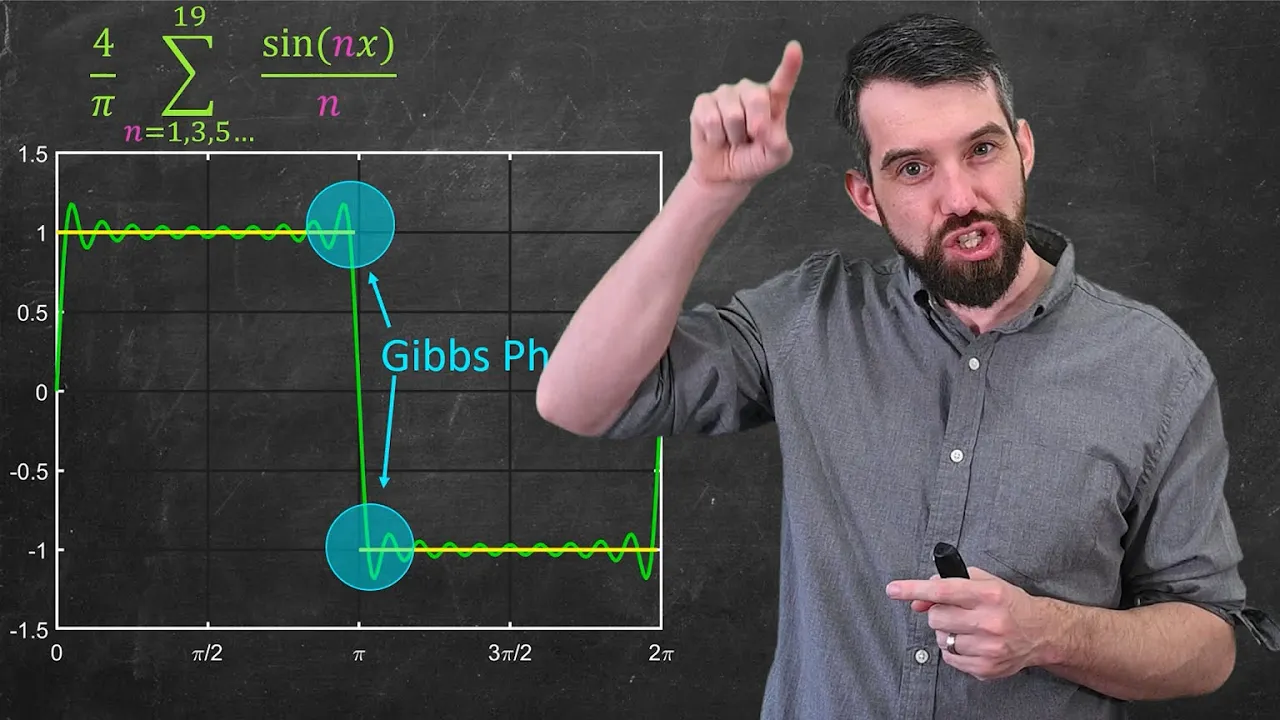
10:44
Fourier Series Introduction: The Big Idea Explained
@DrTrefor
387K views•2021-05-03

6:00
The Mathematical Impossibility of Accurate World Maps
@Vox
23.3M views•2016-12-02
Related Study Plans & Knowledge Roadmaps
Structured learning paths in Mathematics
mathematics
Tensor Calculus: Vectors to Riemann Curvature
01Mathematical Foundations: Linear Algebra & Calculus
02Covectors, Dual Spaces, and Tensor Basics
03The Metric Tensor and Index Gymnastics
+ 2 more learning modules
40h5 modules
Explore Roadmap
mathematics
Gödel's Incompleteness: Logic, Proofs & Limits
01Introduction to Formal Systems & Hilbert's Dream
02Set Theory, Cardinality, and Cantor's Diagonal Argument
03Arithmetization and Gödel Numbering
+ 2 more learning modules
14h5 modules
Explore Roadmap
mathematics
Galois Theory: Fields, Groups & Solvability
01Foundations of Abstract Algebra: Groups & Fields
02Polynomials & Field Extensions
03Splitting Fields & Symmetries
+ 2 more learning modules
24h5 modules
Explore Roadmap
mathematics
Non-Euclidean Geometry: Models & Geodesics
01Euclid's Fifth Postulate and the Birth of New Geometries
02Hyperbolic Space and the Poincaré Disk Model
03Geodesics: Defining Straight Lines in Curved Spaces
+ 2 more learning modules
15h5 modules
Explore Roadmap