![[#10] THE END - ÔN CUỐI KÌ //ROBOTICS HUST//](https://i.ytimg.com/vi/83dGd17VYOU/maxresdefault.jpg)











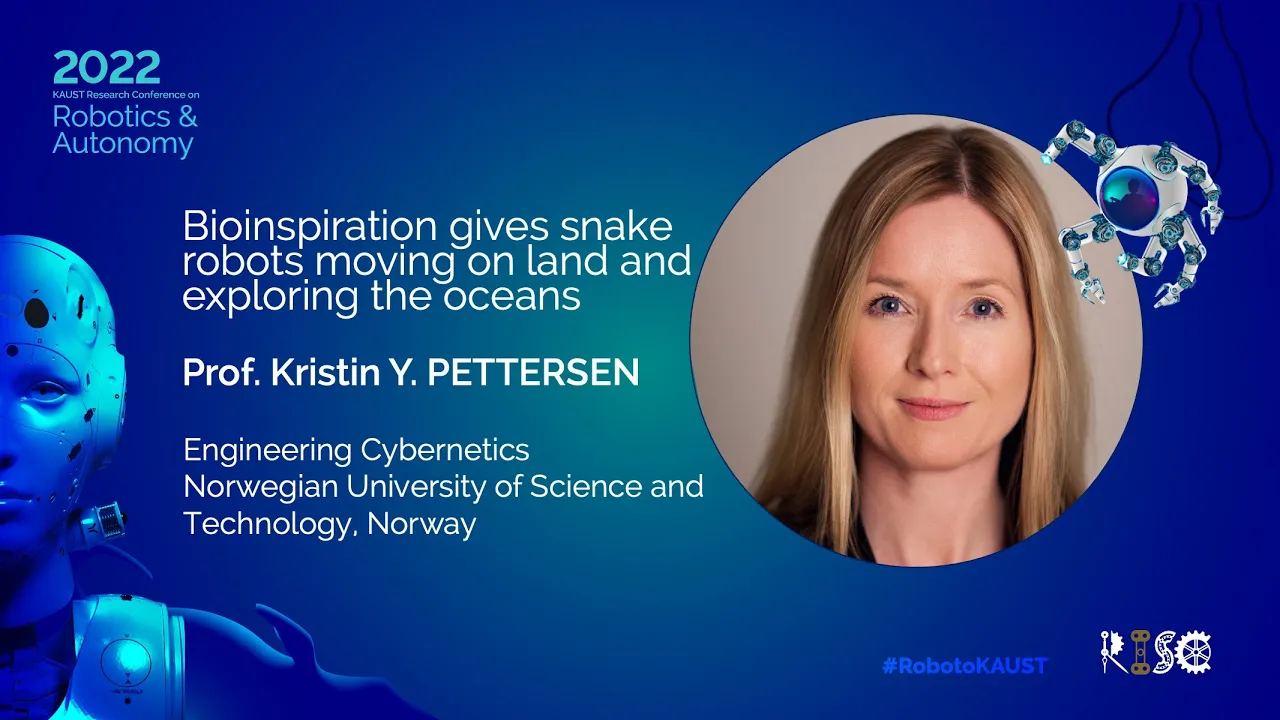







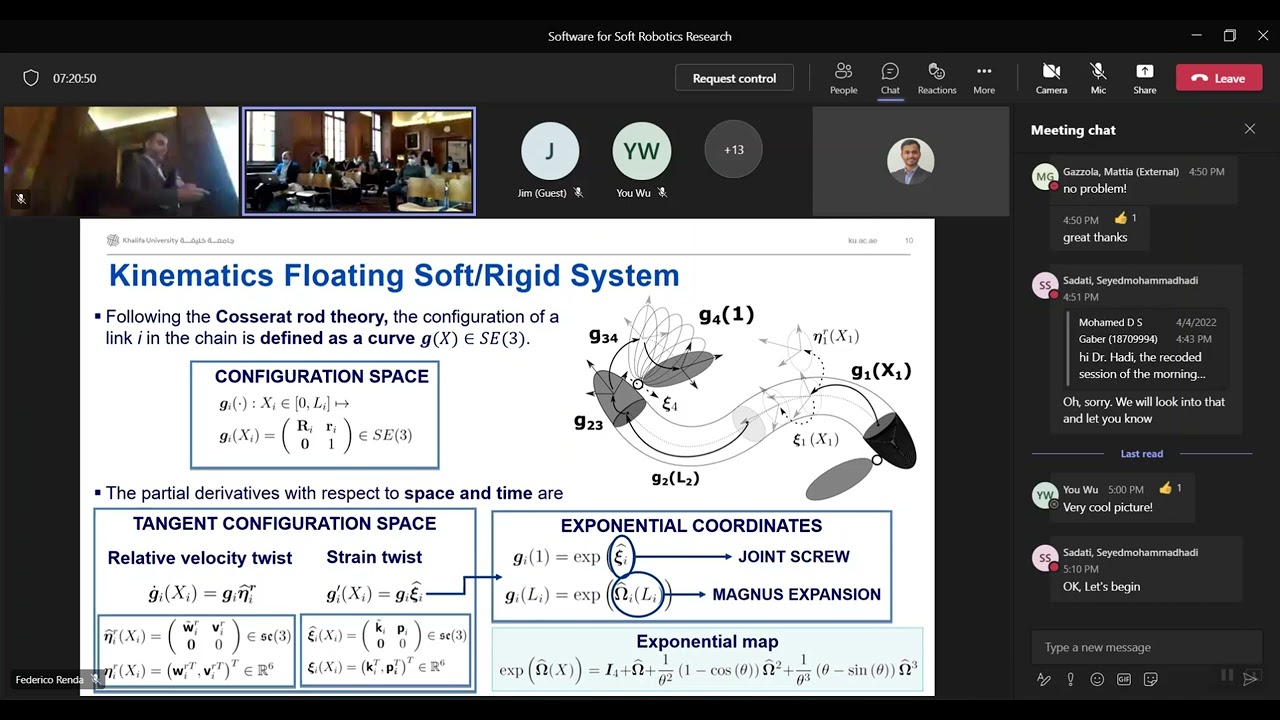

Bioinspired robotics should focus on identifying and replicating core principles demonstrated by biological systems rather than superficially copying biological forms; this bidirectional approach allows robots to serve as test platforms for validating biological theories while enabling robots to potentially outperform biological systems by systematically understanding and implementing fundamental locomotion principles such as wave propagation, curvature modes, and phase relationships between horizontal and vertical motion components.
Bioinspired Snake Robots: Principles & Locomotion | IROS
Added:Fundamentals of robot kinematics and dynamics, specifically regarding multi-jointed, hyper-redundant linkages.
Basic biological locomotion principles of limbless organisms, such as lateral undulation, sidewinding, and concertina movement.
Introduction to control theory, including feedback loops, trajectory tracking, and actuator control.
Foundational concepts of soft robotics, including material compliance, fluidic actuation, and smart materials.
Advanced mathematical modeling of snake robot gaits, including the derivation of serpenoid curves and snake-like locomotion equations.
Decentralized control and consensus algorithms for multi-robot coordination and collaborative manipulation.
Real-world deployment strategies for snake robots in extreme environments, such as search-and-rescue, pipe inspection, and surgical applications.
Design and optimization of hybrid soft-rigid robotic systems to balance structural payload capacity with environmental adaptability.
111 views1likes1:18:10Original Release: 2014-12-11
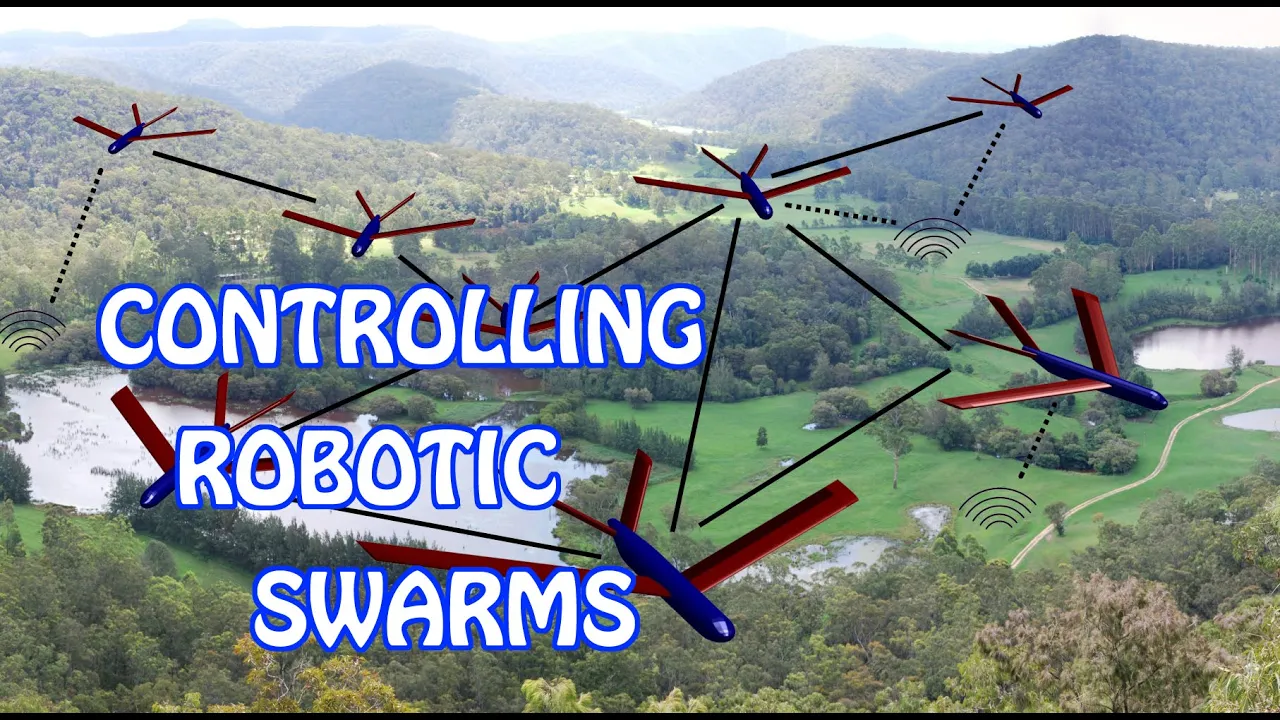
okay thanks for the introduction uh so some of you who know my research group know that we've been working on these snake-like robots for quite quite a long time and what's great about these devices is that they can thread through tightly packed volumes into locations people machinery otherwise can't access and they're capable of producing kinds of locomotion that machines of their size scale normally can't so a common question that we get uh when working on these robots is are these biologically inspired and i think uh my computer just crashed powerpoint does anyone know what to do when powerpoint freezes i wish the clock would stop do you want me to try and just do it let's try heat buttons okay okay so um the thing is a lot of times people what they do is they ask us you know is this biologically inspired because if you look at a real sick you look at the robot there's the obvious similarities but the truth is we in our experience we went and started to develop all sorts of core principles and then from that we're able to make the robot go but we were only able to make the robot go so far um so what i want to do today is is sort of change your view a little bit on what is biologic oh you let's do that yeah you didn't hit the wrong button all right just let it go it'll it'll work its way out so what i'm gonna try and do is do the challenge of giving a talk that has really great videos without the videos and see how well that works um so the thing we want to do is we want to sort of change our view of what we mean by biologically inspired robots so instead of just looking at the biology and saying yeah that looks nice and try and try and uh copy it over what we want to do now is try to understand what are the core principles that biology is trying to demonstrate can we identify those principles and then replicate them on the robots but i think we can do a little bit more we can sort of use the robot as a template that biologists can otherwise oh that was the thing let's close the program cancel if anyone's been in this situation before with powerpoint now's a good time to come up and help me out because i uh don't know what else to do it's great that's perfect ladies and gentlemen ciao aegon with a backup to my talk the irony is you flat warfare and why don't you go on this slide here okay why don't you hit advance it for me okay uh because it's a mac and i don't know how to use a mac uh so okay here's the slide uh this is the second slide so next one so what we wanna do now is we wanna ask ourselves what are the principles that biology is demonstrating and then can we replicate those principles to make the robot better but perhaps we can return the favor to biology by saying hey here's a way that you can test some of your ideas on a template or a robot and then see if those ideas corroborate what what what your theories were in biology so what we're trying to do here is sort of a bi-directional illumination where it's bio-inspired robotics as well as robot inspired biology we want to kind of go both ways so let's talk about principles um here what i'm going to do is i'm going to point out uh some of the people that have influenced my group's thinking uh this is not meant to be an exhaustive survey what's happening in the field however if we're going to talk about snake robots for a second we can't not mention professor hirose and his pioneering work from 1971 and what he gave us is not only building the first snake robot but he prescribed this curve called a serpenoid curve that describes sort of in terms of curvatures how a wave-like mechanism you know should locomote in the ground the very challenging talk it's a good name so the next person that influenced our thinking that's not our fault the iron is my computer to come back we're going to run powerpoint okay that's good so the next key influencer was greg trichian and what he did is he built the first uh snake-like robot in the united states where he coined the term hyperindent manipulator and one of his ideas was this notion of being able to fit a mechanism to a curve thereby reducing the uh the computational burden inverse kinematics instead of one large inverse kinematics problems you have a whole bunch of small ones where you fit to a curve and he also started thinking about representing these curves in terms of modes and that's another idea that helped us quite a bit next slide finally next is i want to acknowledge jim ostrowski he was a graduate student when i was a phd student as well and he introduced us to these notions of geometric mechanics which allowed us to rigorously uh begin to understand you know what it what it means for a system to locomotes and finally mark yim he's helped us in a bunch of ways one of them is he gave us his initial designs for his modular robots so ideas and modularity helped us quite a bit but also uh because of the specific design that he gave us it got us thinking about multiple waves that may be passing through this the snake robot of course we have to acknowledge uh joel burdick he was greg's and jim gregson my advisor and it was his intellectual leadership uh as well as taking some what would seem like disparate problems and helping us put them together to address uh uh you know these problems and then finally we have to thank the snake uh this snake also did did provide us inspiration and here i want to point out my clinical my uh biological collaborator uh and a physicist uh dan goldman he was the one who really got us thinking about having to specifically look at principles in biology and then seeing what we can do to replicate them on the robot so let's start talking about some of these principles i think we're all familiar with this term a gate a horse scallops we walk run these are different gates these are cyclic motions in our internal joints our internal shape space that allow us to propel forward say in our position space now horses aren't the only animals capable of gate motion these worms snakes hyper-redundant mechanisms they're also capable of gate like motion and here i just noticed a problem with your talk all the videos aren't linked here what you would see with another i bet you you weren't going to see this many changes of talks and once controlled the microphone you all applaud it maybe a little bit so this is a lesson to students out there always check your talk before the presentation where's the clicker yes okay so hyperin mechanisms uh in biology also are capable of of this kind of uh gate like locomotion here we have an inchworm sidewinder and so forth so what i want to do is take a deeper look as to what's going on in this gate like motion where we're separating our shape space from our position spaces this is an equation called the reconstruction equation that i learned from jim's thesis topic where essentially we have our instantaneous velocity you know our x y theta dot let's say in the plane multiplied through a linear function uh through our shape variables so this is like a joint one theta dot joint two theta dot and so forth if you blur your eyes a little bit it looks like a jacobian and followed by a momentum term now my grad student ellie shamas he was able to use this equation to analyze a variety of systems which at the extreme are kinematic systems but in the middle have some dynamic uh components however this analysis really took off well when ross hatton came over and he started this looking at the kinematic systems and one of the things that's great about ross's work is that he was able to show just by simply modeling kinematic systems how much representation how much analysis you can get away with in terms of making the snake robot go as well as modeling the biology so what ross did is if you look at this this uh equation again our body velocity times this jacobian term and our shape velocity what you can do is if you plot the rows of this matrix here remember jacobian the columns tell you the contributions of joint i the rows tell you the contribution in the workspace direction you're going to go so let's say the first row here would correspond to say your x dot velocity what he was able to do is you plot a vector field one for each row of this matrix and then in this vector field you can draw a loop that corresponds to your gate where a the tangent if it flows with the vector field you're going to have a motion in that direction if you're perpendicular to the field you'll have no motion because you know the dot product of two vectors is zero now designing gates in this way can be a little bit cumbersome so what we were able to do next is um again here's our equation if we integrate our velocities integrate this side we'll get some form of displacement and instead of designing gates in this vector field space we take recourse to stokes theorem where instead of integrating along a path on a vector field we look at the volume contained by that path and then in the right coordinate system we're actually able to show that this approximates true displacement so now designing gates for these simple say three-link systems is relatively straightforward all you have to do is look at one of these functions draw a loop that encompasses encompasses the volume and the volume enclosed is how far you're going to displace the thing is this is a little bit of a naive system for one thing this is a three-link robot the snake robot in which we're interested has 16 degrees of freedom so what we're going to do is we're going to borrow some ideas from hirose and from greg and think instead of thinking these of these things in terms of joint angles let's think of them in terms of curvature modes so an example of a curvature mode when you have joint angles is this nice drac delta function it it spikes at joint one spikes at joint two but instead what we'll do is we'll have our curvature modes be sinusoids this is exactly what herosai's serpenoid curve was he was able to show that you had two sinusoids or he intuited two sinusoids was enough to specify what that wave equation was like so now what we're able to do is prescribe a path using the same gate design tools look in this height function space for this continuous robot the thing is the kinds of motions that the snake robots and all these mechanisms are capable of doing they work in three dimensions and everything here i just told you was two dimensions so what we realized and again this is some inspiration from mark is that there's really two waves that are going through the robot or through the mechanism of the biological mechanism at the same time one is a horizontal wave or a lateral one and the other is a dorsal or a vertical wave both waves provide both waves okay both waves provide locomotive benefit to to the robots but the vertical wave is a little bit different what it's doing is it's brokering contact between the environment and the mechanism almost like a legged locomotion locomotion system so with that in mind we were able to come up with a what we call a generalized serpenoid curve which is essentially a serenoid curve just going through um the horizontal wave and the vertical wave at the same time and these are the parameters that describe that space and you know seven or eight parameters and with that we were able to model a lot of biological behavior as well as make the robots repeat that however we found all these just through brute force search searching our seven eight dimensional spaces i have a lot of undergrads working in my group and that that's what they were doing so we want to come up with a more principled way of finding these parameters so let's just um use sidewinding as an example so when a snake is sidewinding it's sort of moving like a tank tread it's taking it part of its body up and putting it down front putting it down in front and so forth it's repeating that process over and over again so we had ross and my students we had this uh intuition that it was like a cylinder with a moving tank tread so what we do is we wrap a backbone curve around that tank tread so we can sort of visualize it and then we can um animate this backbone curve to get what the joint trajectories are for you know to achieve this motion we perform a fourier transform on uh these joint trajectories now that we're living in the trajectory space and you see very quickly we get an equation where there's just one mode only one mode really dominates this motion it's interesting to note by the way that even if we vary the ee scientificity of the ellipse a little bit it's the same frequency it's the same mode and it's also interesting to note that the phase offset that's that delta there between the vertical and the horizontal modes is pi over two and that was something that was corroborated by the biologist a long time ago so we were able to at least confirm what the biologists were able to see the thing is we want to have something a little more interesting snakes can turn so what we did here is we we developed the escape cha wei my my assistant he uh iterated on ross's work and we developed this gate called conical sidewinding where instead of rolling like a cylinder we roll like a a cone and again we fit the oh another picture and we fit the uh backbone curve onto this cone the aperture angle of this cone determines the angular velocity or the or your steering excuse me your steering direction so what we were able to do now is do a a fourier transform on each uh for each possible aperture angle and that's what we're plotting here this this plot this vertical axis is now aperture angle and what emerges is that three modes three dominant modes except for the one in the middle because that's where you're going straight uh emerge as to what would be the driving factors for these uh of these conical sidewinders however with some inspection what we were able to do was observe that there's this linear function multiplied by one mode uh that gets us this conical sidewinder so what's nice is now we have a single variable this a of n which we can vary in order to steer the snake robot and still have one mode to provide locomotive force the thing is one we had to use our intuition to come up with this linear function and two we want to let ourselves discover other kinds of motions other than this conical siding sidewinding so once again we return to the snake for some advice so here this is this is data that we collected from dan goldman's group and what we do is for every gate every dis uh every every possible gate we plot again the introductory space uh what the motion is and then each uh this color choice is a little bit off here this is this is gate one gate two and gate three and you'll see why the color choice is off in a second but the thing is we can't do a fourier transformation we can't do a singular value decomposition on this entire space because this is too much data but what we did instead is we do a fourier transformation on each uh slice or we decide what number of modes we want and we and we just project our trajectory data onto the basis functions of the fourier transformation for each slice and that leaves us with a variable in the vertical direction the behavior or gate direction and there we can't use fourier analysis again it's too much data and the other thing is it's not sinusoidal the way you'd expect but what we were able to do instead was factor out this problem and do an svd on this vertical axis and what we're able to do very very quickly is from the data we were able to collect we were able to observe that two modal functions dominate and with those two modal functions we were able to derive a controller that very easily allowed us to achieve a wide variety of motions that again were corroborated uh on the real snake so here's the controller that was automatically found out and we were able to verify you know what those modes were uh on the robot now with these modes identified we were able to now search this lower dimensional space to come up with motions that were otherwise you know hard to reach uh through our derivation so here we have this snake robot this is real time turning wickedly fast using controllers that we derive from the real snake the thing that i'm going to run out of time for which is unfortunate because this is where it gets interesting is we have to go back and look at the vertical wave because right now all we've done is we've analyzed the horizontal wave and then for the vertical wave we put the same wave through but just added that pi over two offset what we want to do now is intentionally respect what that vertical wave is the thing is we don't have data on that vertical dimension you know all the data we get is from above you can't aim the camera from the side however we were able to observe that when the snake does make a point contact with the ground its velocity instantaneously is zero so looking for those zero velocity points we were able to quite faithfully represent where the snake is making contact and we just passed a sinusoid through those points of contact to approximate what our vertical wave is and in doing that we were able to run through the same factorization algorithm again to come up with uh really cool turning gates that sort of work and say sand but this this is the thing that we're really happy about what we have here is a cool turning in place gate what's happening is when a real snake turns in place um you'd figure that its wave is going from head to tail so it's going along like so and when it turns around it's a sharp turn going backwards the snake does not reverse the direction of the wave okay this the waves are still going forward now for us to start walking backwards we just change the direction of our of our internal joints and back we go for the robot it's also easy to turn the joints uh the direction to the joints backwards but the real snake doesn't do that what happens and we were able to observe this because of the analysis that chadway found is that the real snake its vertical wave experiences an instantaneous phase change of 180 degrees and just because of that with the gates with the waves still going forward we were able to make the snake we were able to explain why the snake reverses and how to make the real snake robot go in reverse so i only have four seconds left so i'll have to end it there but the take-home message that i really wanted to say is um if we were to copy biology let's look at the principles try to copy the principles and then let's return the favor to biologists by saying hey our robots are good test platforms on which you can validate principles that you've taught and this collaboration with dan goldman's georgia tech has been incredibly fruitful for us and already i'm proud to say we have our first paper in science coming out with that i'll stop thank you fiction it's a set of differential equations at the base and the tip there are complementary boundary conditions and by solving this boundary value problem we can obtain the shape and configuration of the robot now the compliance follows directly from the forward kinematics model and it represents a linearization with respect to the tip applied range also here we have a complementary set of boundary values at the two sides of the robot and by solving this binary value problem we are able to find the compliance of the robot the solutions can then be assembled in form of a compliance matrix an important aspect of our study is the experimental validation here we took a flexible tube attached it to a six degrees of freedom force sensor and applied arbitrary loads to the tip now only from these force measurements it's possible to obtain the tip position tip forces and compliance of the robot we also used a 5 degrees of freedom position measurement in order to obtain the tip position compliance however cannot be measured directly instead we can evaluate the tip velocity resulting from the compliance matrix and the change of external forces in time and we can compare this to the differentiated position measurements now coincidence between these two uh curves proves as the validity and correctness of the compliance matrix here on this graph you can see these velocities for some arbitrary applied loads the compliance matrix on its turn can then be used for either force control to assess behavioral properties of robots or other aspects here on this video you can actually see a force control experiment where a rigid robot and a flexible instrument is attached to the robot so the compliance matrix here is used directly to cancel out the stiffness of the actual device for the proposed university of tulsa hands um an under-actuated hand with two synergies each controlled by one of two extrinsic actuators capable of achieving a wider variety of useful postures in single synergy hands and where the force and displacement from the actuators are transmitted through an elastic element or compliant web to the system of finger tendons that are biologically inspired we based this on the idea of postural synergies which are the coordinated motions of finger joints and the combinations of these motion patterns comprise the grasp posture we drew some inspiration on some previously existing under actuation strategies for example the toronto bloorview macmillan hand here which has a branched interconnection where each finger is connected to a single actuator in the palm and an alternative under actual strategy the university of pisa hands which features a cable circuit interconnection but while both of these hands have only a single mode of conforming to an object we propose a two synergy system with the elastic transmission element and our paper proposes that we model the complex elastic behavior of each constituent element as a multi-port network and a concept borrowed from electrical engineering where each complicated system is treated as a black box where we only consider the input and output behavior and we also develop expressions for the interconnection of these elements so in this paper we derive a general expression for multiple multi-port networks connected in parallel and in series and the positive definiteness of the stiffness matrix is proven to be positive definite which indicates that the grass will be stable we also analyze or apply this multiport network analysis to a three-digit planar mechanism and the future work we're hoping to develop a toolbox of compliant mechanisms with unique characteristics to build up this compliant web and also experimentally validate the two-port network modeling so if you're interested in the details about the theory and its implications then stop by the interactive session thank you hi today i'll be going through how the fastest robotic fish was developed our robotic fish namely i splash 2. it's able to actuate at high frequencies of 20 hertz this is a real-time video that shows the video it's not working here we go this is this real-time video shows the bolt actuating in there around half its maximum frequency the prototype is able to transmit large forces with accurate kinematic parameters this real-time video shows the first ever run i splash 2 is capable of outperforming the maximum velocity of real karangaform fish measured in body lengths a second achieving a consistent swimming speed of 11.6 bullet lengths a second in comparison current robotic fish have achieved a maximum velocity of around one body length a second chronicle form fish such as a common carp cruise around three bottlenecks a second and have a maximum velocity of 10 billion lakes a second our main objective was to develop a high speed build to achieve the fastest swimming speeds of live fish so that navigation for a real marine environment is possible the traditional approach of previous designs typically confines the waveform to the posterior half of the body length this approach creates interior destabilization for free-swimming robotic fish therefore leading to kinematic errors over the full body length based on intensive observations of real fish we introduced a full body length approach on our first generation prototype which was found to coordinate the interior mid body and posterior parameters increasing linear swing speeds i splash 2 weighs 0.8 kilograms and is formed in pla filament the prototype has a length of 32 centimeters and has a high quality density with the primary actuator 75 percent of the total mass distributing power across the full body length we found that developing build has a force of up to nine newtons we can see the system is robust and consistent attaining high tail frequencies without early peak decline or mechanical failure therefore we look to continue to raise frequency to achieve even greater speeds this real-time video shows the latest version able to accelerate to top speed in approximately 0.6 seconds and carries its own power supply which lasts for around 10 minutes at maximum velocity faster passing real fish which have a limited duration of only one second at top speed thank you hello my name is hee jung kim from chennai national university south korea and now i'm going to talk about designing a multi-functional lag inspired by diving beetles the performance of the lag has been verified through the underwater experiments and you will see today assemble the multiple multi-legged underwater robots let me start with the motivation of this work there are many type of the type of underwater robots using different type different kind of proposals while they are mostly operated for forward ocean detection we approach this matter for the purpose as shown in the conceptual drawing on the right side of the slide the robot started to be developed for having working and swimming underwater and to efficiently of overcome they overcome environmental limits such as high tidal currents and then poor visibility and also uneven seabed currently we have focused and developed establishing swimming technology for this and for this legion a diving bed was chosen for there for the research after records the somebody asked me the why the diving beard was chosen then i all the time say that after we call that that the building was cheap and easy to get raised and here is the over process of our work the research has been divided into two areas started from starting from a local motion and structure analysis of the diving barriers firstly following the green line on the above a swimming pattern generator has been designed to produce bio-mimicking locomotion simultaneously the multifunctional leg multifunctional leg has been developed by employing the structural advantages such as bristles and passive segments on the diving beater's leg it turns out that it's quite helpful to generate more propose extra purpose and also reduce water resistance during the recovery storage stroke all joints and electronics have been made in from the modules to efficiently solve the issues of waterproofness and also easy maintaining for more detailed explanation will be discussed during the interactive section and you are very welcome to share the ideas thank you so uh again sorry for the last minute change we had uh an unexpected change in personnel so i'm gonna present this work this is mainly the work that david rollinson uh and some of our students have been doing uh over the last year or so we've been developing this series elastic snake robot what we're able to do is put a spring in series with the actuator and the output so it's motor spring output since we can do this we can put an encoder at the end of the motor and at our output and then through hooke's law we can infer what is the torque that's going to the system or at least feel the torque that the system is experiencing so we have a nice torque control robot now here's a a video of that robot um i am not doing well with videos today i promise you i checked before coming up here again so here's a video of the robot another uh benefit of this mechanism is that we really iterated on the modularity of the system what we're able to do now is put the robot together without using any tools and what's really novel here is not only the mechanical uh modularity but it's also the electrical and computer modularity because now all the modules are able to just plug together they start talking to each other and they know where everything is so you can move one module out put it someplace else put another module in its place it's really full modularity here what we're showing is even though there's a 350 to one gear reduction we can program the robot to experience either no force or some force we can act have it act like it's in honey or act have it it's in water so with his own fingers he wouldn't be able to turn this joint but since we were able to command it to experience zero force we can actually bounce it around as if it's uh in this case in the air and if we wanted we can have it bounce around again if it's in honey so one of the things that we did is we implemented a controller this is from uh gil pratt and and his students work where we were able to specify that the torque the joint should exert will be proportional to the first derivative of the joint angle and in doing that we're able to get the mechanism to sort of feel its way through this is you know a form of optical aided locomotion just by banging it hello um my name is paul liebeck i'm a postdoc researcher at the norwegian university of science and technology uh i will present a motion planning framework for snake the main motivation behind this paper is to enable snake robots to move in challenging environments this capability will enable numerous applications of these mechanisms so while previous control approaches for snake robots are based on specifying directly the joint reference angles of the robot our new approach is rather based on specifying the body shape more or less directly using shape control points and then interpolating between these points to define a continuous body shape curve this body shape curve is then mapped to the joint reference angles of the robot for the robot by aligning a virtual snake robot along the shape curve and simply retrieving its joint angles and we believe motion planning based on this shape control point concept will significantly simplify the task of adapting the body shape of a sneak robot in a cluttered environment here are some simulation examples to illustrate this approach in this simulation the shape curve is developed according to sidewinding motion and the virtual snake robot is progressed continuously forward along the shape curve and as a result the physical robot undergoes sidewinding motion in this simulation the virtual snake robot is fixed on a shaped curve consisting of three shaped control points where the end points undergo circular motion and as a result the physical robot rolls sideways this is a vertical wave motion simulation and here the shape curve is developed according to the shape of a staircase to enable the snake robot to climb stepwise down the stairs um we have also used this motion planning framework to achieve adaptive locomotion in an obstacle environment by assigning spring damper dynamics to the shape control points so we make we measure contact forces acting along the body of the robot and we make these contact forces displace nearby shape control points in order to make the body shape automatically adapt to these contact forces and this enables the snake robot to maintain propulsion in an obstacle environment without getting stuck yes that's it thank you for your attention all right good afternoon everyone my name is philip walker i'm going to be talking about our work on human control of robotic swarms with dynamic leaders this work is done with people like carnegie mellon and university of pittsburgh um so we're all probably fairly familiar with what swarms are although there are different definitions depending on who you ask but swarms are typically thought of as robust and scalable systems of multiple robots coordinating through local interactions to give rise to some global behavior this global behavior is sort of we think of as emergent and some of the problems with this in terms of human control are that it's difficult to predict what's going to happen with this behavior either before or during the operation it's difficult to specify this behavior beforehand it often involves sort of you know trial and error planning and so our our question that we're trying to address in our lab is what are different ways that we can provide clear scalable input to a swarm after it has been deployed to help the human influence the swarm to change its goal or change its operation during the mission so for our approach um we took a leader-based swarm control approach uh so we we have a intermediary leaders that are operating um as sort of a way for the human to give the leader commands and then those leaders can disperse those commands throughout the swarm specifically in this instance we have dynamic leaders or multiple leaders that are dynamically selected during the mission operation using a modified random competition clustering algorithm and one of the parameters we can specify is that of an nhop guarantee which is a way for us to sort of um specify the density of the leaders in the mission so our hypothesis was that as we as we raised this nhop guarantee that we'll lower performance and that we can restrict information to only the leaders and not harm performance um this is just a quick little slide of what the interface looked like we kept it very simple leaders are in red and the human operator could control the swarm via virtual joystick those commands would be passed to the leaders and then dispersed through the rest of the swarm so in terms of our results we did confirm both of our hypotheses we found that when you move from one hop when a one hop guaranteed to two or three hops that performance will decline but then going from two hops to three hops or more there was really no difference in performance part of this is explained by the fact that if you look on the right there are much fewer leaders in the two or three hop conditions than the one hop condition but going from two to three there was really a little difference a small difference in liters and again there's no difference in terms of restricting information to the leaders which means humans are just as good at controlling the swarm even when there's limited information hello i'm chadwe working with howie today i'm going to talk about generating an adaptive sidewinding behavior on a snake robot side warning is an efficient and fast translation of the gate can be can look more efficiently on a rigid flat ground to generate a sidewinding motion on such a high degree of freedom system we can use the compound serpenoid curve written on the top of the slide by tuning these parameters inside we can change the gate property of sidewinding to like let it adapt to different type of environment previous research on site winding mainly focused on applications for rigid level grant however as we start moving towards a more realistic session for example for application on this environment as being less structured um we can easily see like a pulitzer police full choice of gate parameters might quickly lead to the failure of sidewinding motion so the failure mainly comes from two different resources the first is we do not have a adaptive approach to control decay parameters and the second is we have very limited situational awareness which means the snake does not know what type of environment it is operating so this paper going to focus on these two aspects so to generate an adaptive side of one motion what we did is an offline learning approach we use gaussian process-based expensive optimization by taking the offline robot experiment data it can fit a optimal policy say giving it a slope angle what the best control parameter should be another benefit of the gaussian process is it not only fits such an optimum policy it also tells us what's the what the next experiment we should do to maximize our expected improvements so only after 20 trials of robot experiments we were able to converge to an optimal policy so what it does is give it what the current inclination angle the robot is operating on it will tell you what gate parameters you should choose such that it can maximize the traveling speed of the snake robot and then to improve the situational awareness we use a average body frame called virtual chassis which intuitively represents the orientation of this negro but in the workspace and then we use a state estimation technique which gives us the pose of the average body frame and then according to a empirically determined relationship between the pitch angle of this virtual chassis and the inclination angle ideas of radium and by consulting the optimum policy we were able to let the robot adaptively choose the parameter here is one demonstration of the final result which is the combination of these techniques combined together hello everyone my name is pablo valdivia alvarado i'm a research scientist at smart mit this work was done in collaboration with kartik sekker and michael trentafilu we're presenting a new design for a flapping actuator inspired on finra mechanisms found in fish also called lepidotrikia in our lab we develop underactivated soft robots for locomotion in fluid environments and to improve locomotion performance and maneuverability a very accurate control of body deformation is is required good example is shown here by these movies in this robot that is mimicking a batoid type swimming mode so as a result we're always looking at new ways of both controlling and activating body deformation in this study we look at fin ray mechanisms found in fish fins and the basic concept is shown in this figure on the upper left the model is fairly simple we have two inextensive inextensible rigid beams joined at one end but three at the other sandwiching between the two beams you have a viscoelastic layer that allows relative motions between the the beams in the tangential direction but prevents any separation in the normal direction as a result when you force a differential motion in between the two beams at the at the base the whole mechanism is forced to bend so our approach is to try to gain dynamic advantages by combining different material properties we manufacture a continuum flapper and the beam regions are made with materials that have modulus that are orders of magnitude larger than the modulus of the intra beam layer in turn the inter beam layer has a very low shear modulus because of the geometry we can model fairly accurately the deformations of this structure by this continuum relatively simple continuous models as a result of the low shear modulus we have a fairly smooth flap in motion in addition the intra array material has a very high normal tear strength which prevents the two beams from buckling out of plane and separating so we can control fairly accurately the deflections the curvature and the curvature distribution by playing around with the geometry in the material properties vector is also stable at high frequencies it has a very good bandwidth and we can model force and energy consumption among many other things if you are interested in finding out more details please look at our sites and stop and talk to me in the interactive session thank you hello this paper is about the design and implementation of a low-cost pump-based depth control of a small robotic fish i am ali bransonis and this is work done along with macro demetrius michalis and papadopoulos of angelus at control systems laboratory and ua athens we're interested in controlling the depth of small underwater vehicles our goal was to develop a methodology for controlling the depth of small underwater vehicles at minimum cost and size in the past people have done control using on off control or fuzzy logic control they used bulky and expensive depth sensors they didn't handle non-linearities such as dead zones actuator saturation etc and most importantly they could not control depth at zero speed because they were using fins in our work we developed the first methodology for controlling the depth of small underwater vehicles with a small dc pump a pump encoder and a pressure sensor we verified it by simulation and experiment we used partial state feedback control with non-linearity inversion the gain tuning was implemented with root locus and simulation we implemented it with components of low quality and cost and we simulated and tested experimentally the pump dead zone the actuator saturation the depth sensor noise and the disturbances due to leakages at zero speed we achieved depth control with good accuracy here on the left up you can see the actual robotic fish down is the concept we implemented and on the right you can see the results the red line is the simulation of the ideal model the black line is the simulation of the real model and the blue line are the experimental results thank you very much to save some time my name is andre dietrich and i'm a researcher at the university of magdebuck at the department of distributed and embedded systems just wait for the topic and the work i'm going to present is dealing with the problems of data reciting and smart environments and how it can be structured and organized in a way that any kind of valuable information can be generated out of it so to start with the system's point of view or data might look like this just think of a robotic or mobile robotic platform for example that for the first time enters the manufacturing hall it might require a map of the environment of the target environment some sensor measurements that have been done in there or probably also some information about additional systems in that area well at this stage it's yeah the data is somehow yeah it's there but it's simply not organized not really accessible and distributed on different nodes in the system and so what we did at first starting bottom up we try to categorize data according to metadata which can be used to describe systems like robot sensors in terms of their capabilities interfaces and also data formats then we have abstract data like maps abstracted from a set of laser scans recognized objects with their geometries humans and so on and of course a lot of a whole bunch of measurement data with status information commands which have both real time as well and historical value and on top of this we put in virtual overlay database by using cloud-based techniques and the idea was that every node in this structure now represents a certain entity of the environment which might be some kind of a location a robot a sensor and so on by using this structure which can be for simplicity described as a distributed scene graph it's possible to reconstruct something like this a local environment model which of course has to be connected to the real-time data to keep up to date we believe that this kind of environmental representation can be used as an application specific or central uh representation from which all other representations as well as informations can be derived of and from for this purpose we have developed a new kind of declarative language called select script as a general interface so well it looks somehow like sql and you can use it like this simply select everything from the environment and generate an occupancy grid map out of it if you want to or if you are interested in all identifiers and positions of objects that unreachable distance to a katana manipulator or if you want to do some kind of increased localization for example by using external sensor measurements you can query for all sensors in this case that are measuring a certain entity or simply simply another representation so but it's even possible to define hello my name is tobias nagle today i'm going to talk about our work on environment independent information flight for microaerial vehicles this work was done at dth zurich we took inspiration from nature this video shows a large swarm of starlings which is in a waste some site in particular you can get an impression of how highly dynamic and accurate such a formation flight can be such formations have high potential as for example in entertainment and search and rescue formations like this have inspired recent work in robotics as for example path planning for terrestrial robots in particular from flying formations with mmvs has been started by various groups here we see one example of mrv formation flight by upenn this formation flight is controlled by a centralized computer and a room fixed viking system gives highly accurate and fast position data on the right side we see an outdoor formation that relies on a gps system and again centralized control center control and external tracking can be major hurdles for deployment in our work we want to enable accurate formation flight indoors and outdoors in arbitrary environments this means we can we can't rely on external sensors such as gps or a room fixed weight system for formation stabilization we don't want to rely on external infrastructure to stabilize the formation therefore our approach only uses onboard sensing using vision and inertial measurements as well as a agent to agent communication framework we estimate the formation state using a distributed estimation and control strategy on a high level our algorithm works like this the distributed estimator and controller consists of individual instances running on every agent of the formation once one specific problem we had to solve is to estimate the formation state the state of the formation is estimated using a distributed extended kalman filter the recursive filter equation contains a prediction term as well as a measurement and communication term this video shows our proof of concept system flying indoors here only the center of gravity is steered with a remote control whereas the algorithm stabilizes the formation the agents can also perform dynamic formation changes we also tested our system in an outdoor environment to our knowledge this is the first first implementation of a flying formation relying on a completely distributed control and estimation architecture using on-board cameras only thank you very much i'm looking forward to talk to you during the interactive session good afternoon my name is stefano carpin and i will present the paper about rapid multiple deployment with time constraints this is joint work with marco stanford and brian seder at the armory research lab and is part of the master cta the problem we're considering is the following we're given an environment within which n locations have been identified and we have given k robots with k much larger than n and the objective is to compute a control policy that will bring at least one robot in each of the locations so that the robot can collect information to pass it later on to human operators entering environment and this task has to be completed obeying to a strict temporal deadline and we want to compute the exact probability of success or failure the task will be executed over robots like the microarray vehicle you see down there so we achieve robustness through redundancy because it's okay to break some of these robots along the way and there's obviously a risk velocity trade off the faster you move to make the temporal deadline the more likely you are to break things so we solve this problem as a chance as an instance of just constrained decision making and in particular we use constrained markov decision processes for those of you that are familiar with market decision processes cmdps extend the model by introducing the l additional costs lowercase the i's and l bounds capital k is the i's and each of these costs is a function of the state and the action like the primary costs so solving smdp means finding a policy that minimizes the primary objective function while making sure that all the additional costs are bounded despite the similarity with markov decision processes the solution is rather different you cannot use dynamic programming you have to use this linear program that you see on the right and most importantly the solve the optimal policy major now to be randomized so we solve the problem as follows we start with the graph every vertex of the graph is more mapped into a state into the cmdp we add an additional state which is called s the one you see down there on the right which represents failure and for every edge in the original graph we create a set of actions in the mdp in cmdp relating time to make a move with probability of failure if we use this model we get the main theoretical result which is that we can exactly compute on the failure probability for a single robot and this in turn maps to the failure probability of the team as a whole while trying to complete the deployment task eventually this leads to these charts that we call uh analysis and design plots which relate quantities like the number of robots uh the time threshold and probability of success so you can answer questions like how many robots do i need to complete a task within a certain temporal deadline with a given level of confidence and there are many more details if you are interested you can come to poster number 14 later on thank you very much uh hello everyone i am hyunjuk park a graduate student from university of illinois who's working with ss hutchinson title of this study is a distributed optimal strategy for random view of multi robots with random node failures in this study we propose a distributed motion control algorithm for group of multiple robots with limited sensing that achieve rendezvous tasks in the presence of random node failures so in this study we consider a particular case when the connectivity between pairwise node is determined by the distance this of euclidean distance between them so we consider a distributed discrete time synchronous system and at every time step each node solve their obtain their control by solving an optimizing problem and we call that problem a distributed rendezvous problem and when if we model one of the random random node failures as random variable uh we consider we reconstruct a stochastic version of that and solve obtain the solution uh with sqp so here's how the distributed rendezvous problem looks like and so for the fall free case each node basically moves to the average of the position of the neighbors and the position of the load itself and uh by modeling uh the uh in the case when they're in the case of uh false we minimize the expectation of the cost with respect to the probability of no failures and here here's uh some examples of our simulation results we compared our result with a circumstantial algorithm so in the video uh on the left left left videos are for a circumcenter algorithm and rights are stochastic version our of our algorithm and the top is when there are no failures and then bottom when 10 percent of the node fails as you can as you can see our algorithm shows approximate convergence in both cases and we conducted this simulation with a a hundred hundred samples and verified that our algorithm uh works statistically better than the circumstantial algorithm for those of you who have questions or interested more details of it you can visit me during the interaction interactive sessions thank you very much good afternoon i'm thank you lee from rice university and let me give you a talk about cohesive configuration control for multi-level system so the purpose of our controller is to deform this kind of initial configuration that contains on concave boundary and even more body-like shape to the binary configuration that is all fully convexed and regular shaped final configuration our algorithm is based on the previous work by doctor lederer curry saver at that person university but his flocking controller has few drawbacks such as allowing some disconnected robots voice or on articulation point to solve this algorithm we propose on boundary force boundary post algorithm which is inspired by a nature of sufficient tension force on a water drop so every robot basically detect and update whether it is on the boundary or not and every boundary will pairs on generate an attractive force and compute the vector sum which is called on boundary poles this boundary pulse removes all concave region and makes some additional inward pressure to make spinach configuration more cohesive so here is some simulations okay let me keep going so unfortunately some initiative configuration has some on articulation point there might be there might be some failure even we use our boundary force algorithm to solve this problem we also propose our network sensing and mode switching algorithm so first if some loop detects on that articulation point then all would switch it to another mode called parent following and if all articulation points are removed then all robots switch back to their normal flocking mode so this is this is our simulation widget using 104 robots with a separate articulation points in it and our literature shows that with our given network sensing algorithm all was completely from the target configurations and here is our experimental wizard showing our algorithm they are all implementable hello everyone my name is adam victor and i'll be presenting our paper on decentralized and complete multi-robot plant motion planning and confined spaces so our project deals with the problem of coordinating the motion of multiple robots in single lane tunnel environments so that's basically any environment where it's too narrow for two robots to pass one another as this scales up to larger problems it's really challenging to handle this with a centralized control architecture where one computer is planning the motion of all the robots additionally these constrain these confined environments often have limitations on communication and so a decentralized control architecture is often the best way to get around these two constraints we propose the push swap weight algorithm which is the first algorithm to be both decentralized and complete meaning that it guarantees a solution will be found in all cases in order to make that guarantee we have to make a few assumptions most importantly we assume that there are fewer robots than there are leaf nodes we also assume that the robots can form ad-hoc communication networks and that they have knowledge of the map beforehand so jumping into a little bit of how the algorithm works we start by building a spanning tree of the environment using a breadth-first search we then assign a unique priority number to each robot using a post-order traversal of the tree the highest priority robot gets to move first so it drives towards its goal and pushes all the other robots out of the way as it goes in many cases it isn't going to be able to just drive straight to its goal and it'll have to swap with one other robot as needed we also added a waiting mode to the system in order to guarantee completeness even in cases when communication is lost and robots leave the network we provide a proof of completeness in the paper it's a bit lengthy but to summarize it here we start by proving that any two individual robots can swap and that once they've swapped they'll never need to swap again then we can show that the highest priority robot is solved through a series of these swaps and that once it's solved it never becomes unsolved so then by iterating through all the robots beginning with the highest priority robot you can show that the algorithm as a whole is complete we tested the algorithm in matlab running over 200 random problems as well as many that we designed specifically to stress aspects of the algorithm we also implemented the algorithm on the dr robot jaguar platform and had systems of up to four robots successfully navigating a hallway summarize our results the runtime is linear for this problem and it scales very well to large systems so we think it's very well suited to real-world applications thank you and i look forward to talking to you more in the interactive session hi my name is i come from university of technology sydney australia we have done some research regarding robotic sensor network that can be used to monitor spatial phenomena such as temperature humidity and rainfall in this study we utilize mobile sensor network for efficient spatial prediction and you know in environmental study it's necessary to monitor environment however the fundamental question is where we can apply a sensor to monitor and predict the fuel efficiently suppose that if you deploy sensor permanently the network cannot adapt the chain environment or cannot respond to affiliate sensor therefore we propose to you a mobile robotic sensor network to collect measurement by moving on optimal sampling bars the difference of sensor mobile sensor network is resource contents such as communication energy or memory the challenging in this issue is how mobile sensor network can collect maximum information with efficient computation in extinguished work is frequently used as in process to model space field by measurement collected we can predict the field at an absorbed location by using gaussian process regression however factorizing covariance magic is cubic in dimension which makes our communication very complex in this study we proposed to replace gaussian processed by russian mechanical field as featured by markov property with the spa prince and magic customer currently feel very significant benefits in communication we also propose information criteria for fighting assembling paths to minimize uncertainty as our own unrelated location in result we compare our method with a public approach and standard question process and as you can see a rooming square error result shows us our approach very highly comparable to standard question process and in communication time our books very appealing we would love to discuss further this issue in our instruction session with you thank you very much we're looking at a sparse sensor network where the sensors want to share information with each other but cannot communicate directly unmanned aircraft are perfect to act as mobile routers or data ferries and enable delay tolerant communication in this sensor network the throughput of the network depends on the communication link scheduling between the sensor and the unmanned aircraft and the motion of the aircraft around the environment of course to optimize these parameters we need accurate models of the rf environment traditional parametric rf modeling techniques struggle in complicated environments because of shadowing multipath or unknown noise sources planning a ferry trajectory with such a model will result in worse network throughput than expected and is far from what can actually be achieved thus for accurate planning and optimal performance some form of online learning or refinement is necessary typically online learning plans trajectories to maximize the learning but we're primarily interested in data fairy therefore this paper focuses on integrating the non-parametric learning with the optimal path planning for data fairing by doing the learning opportunistically using the communication that's already happening between the sensor and the aircraft starting from some prior rf model the data fairing problem is solved in a cascaded manner a genetic algorithm with heading control generates a good trajectory and a new fast near optimal policy generates the bandwidth allocation for each trajectory the aircraft then flies the selected optimal path ferries the data and samples the environment by comparing the ferry's measurements with that a priory rf model a gaussian process can learn the rf variations in the environment that is it can learn the errors in that a priory estimate the predictions of the gaussian process are used to update the radio model which the ferry planner uses in the next iteration our simulation study shows that through this iterative process the ferry performance grows rapidly achieving eighty percent of optimal within four iterations and ninety three percent after nine iterations our recent results show that compared to least squares estimators like the ones shown in green and red gaussian process learners shown in blue consistently perform better in environments with diverse characteristics and complexities so please come see me at the interactive session to hear more of the details and the results thank you good afternoon everybody my name is rajdeep dutta i'm from university of texas san antonio i'll be talking on a novel formation controller which not only makes a formation of multiple uavs around the target but also maintains the connectivity of the network of a network plays very crucial role and without it one agent or multiple agent may get lost being out of communication so here i show a sample video of how connectivity may fall down to zero and the network may not work the formation may not work so so in this sample video four uavs are trying to track one target and they are starting from a particular position and they want to make a desired diamond shape formation which is shown in the right figure but as you can see because the connectivity is going down to zero so after certain time two of the agents blue and red they go out of the communication so in order to overcome this drawback we consider a time varying topology and this topology can be captured by a time varying laplacian matrix where the matrix elements are decreasing function in relative distance so this matrix is positive semi-definite matrix and the matrices second smallest eigenvalue gives us a measure of the network connectivity so we want this second eigenvalue always greater than zero in order to maintain the connectivity of the network so here is a nonlinear based back stepping technique based designed controller which tries to drive the relative distance vector towards the desired one and we artificially make the new controller weights wij so that these weights are actually considering the connectivity case these words are made in a way that whenever the connectivity goes down this reinforces the connectivity because this wij has a opposite profile of the laplacian elements aij so that's why it actually increases with distance so now i show a typical simulation results where the top figures correspond to the existing controller and the down figures correspond to the new controller so the right side of the figure shows the connectivity profiles as we can see the new controller is able to make the connectivity and here is a video my name is alessandro giusti i am presenting this joint work with fabrizio giringalli who is with politecnico di milano and other co-authors at my institution which is the dalai mali institute for artificial intelligence in lugano switzerland so when you develop and deploy a multi-robot system you look at your robots moving around and at some point maybe you observe something that is not quite right and you need to make sense of what's happening maybe sensing is not working or there is some issues with algorithms or actuation then this is already a challenge to solve when working with one single robot and becomes nightmare when we it involves multiple interacting mobile robots so our goal is to help the system designer make sense of what happens in a multi-route system we visualize an augmented reality overlay to the physical environment which shows the specially located entities that a robot is perceiving or that are part of the robot's internal state here we show the view of robot 14 and the circles represent the perceived positions of the neighbors our solution has two components the first is a visual tracking module which detects identifies and tracks robots by means of a single coded blinking lead per robot it also integrates odometer information which is sent by the robots in order to track through occlusions moreover this also allows us to keep track of the robot's orientation when the robot is stationary the second module is an augmented reality overlay which receives data from robots in this case it is visualizing the bug messages next to the robot that originated them robots can also visualize specially situated data expressed in their own reference frame for example this is their view of the world from robot 15.
this square represents the perceived position of the yellow navigation landmark the system is interactive and allows us to change the subject robot by clicking by clicking on it for example now the view has switched to robot 32 the system works in real time and only requires a fixed camera plus one blinking led per robot we are ready to release our implementation please contact us if you are interested thank you
Up Next
32:29
Arduino Uno R4 WiFi: Tilt Compensated Compass Tutorial
@paulmcwhorter
1.7K views•2025-11-13

58:25
MathWorks Virtual RoboSub Simulation Environment | Webinar 2026
@RoboNationInc
209 views•2026-03-10

11:04
How to Build a Self-Balancing Robot: Arduino Nano & MPU6050
@easytechzones
16.8K views•2022-03-09
25:22
Micromouse: The Fastest Maze-Solving Robots on Earth
@veritasium
23.5M views•2023-05-24
Related Study Plans & Knowledge Roadmaps
Structured learning paths in Robotics
robotics
Building Delta Robots: Kinematics & Pico
01Foundations of Delta Robots & Mechanical Design
02Electronics and Microcontroller Setup with Pi Pico
03Delta Robot Kinematics and Coordinate Math
+ 3 more learning modules
65h6 modules
Explore Roadmap
robotics
Building Ballbots: Dynamics, Kalman & LQR
01Embedded Electronics & Omniwheel Actuation
02Ballbot Kinematics & Rigid Body Dynamics
03IMU Sensors & Kalman Filter State Estimation
+ 2 more learning modules
42h5 modules
Explore Roadmap
robotics
Micromouse: Hardware, PID Control & Flood-Fill
01Electronics & Teensy Microcontroller Basics
02Sensors and Actuators: Motors, Encoders & IR
03Precision Movement: Implementing PID Control
+ 2 more learning modules
35h5 modules
Explore Roadmap
robotics
CDPR: Kinematics, Arduino & Winch Control
01Foundations of Arduino & Basic Electronics
02Stepper Motors and Winch Mechanics
03Kinematics of 2D Cable-Driven Robots
+ 2 more learning modules
28h5 modules
Explore Roadmap