














High-speed solar wind streams from coronal holes, characterized by low plasma density and high velocity, have been observed to correlate with increased probability of major earthquakes (magnitude 7+), as evidenced by historical analysis showing that significant earthquakes since 1972 coincided with coronal holes in geoeffective positions; the current geomagnetic storm (G1-G2 level) from an unusually large coronal hole extending across multiple solar rotations creates conditions that may elevate earthquake risk, though this is not a guarantee but rather an indicator of potential seismic activity.
Solar Wind High-Speed Stream Impact on Earthquakes
Added:Fundamentals of solar physics, specifically the structure of the Sun's corona, coronal holes, and the generation of solar wind.
The concept of Earth's magnetosphere and how it interacts with solar plasma to produce geomagnetic storms (including the NOAA G-scale).
Basic principles of seismology and plate tectonics, including fault dynamics, stress accumulation, and earthquake triggering mechanisms.
The distinction between scientific correlation and causation, particularly in geophysical statistical analysis.
The Lithosphere-Atmosphere-Ionosphere Coupling (LAIC) model, which explains electromagnetic interactions between Earth's layers.
Advanced statistical seismology methods used to analyze potential periodicities and external triggers of seismic activity.
The study of Geomagnetically Induced Currents (GICs) and their physical effects on both human infrastructure and geological formations.
Evaluation of peer-reviewed scientific debates and consensus regarding the validity and physical viability of space-weather-induced seismicity.
153.2K views8.2Klikes58:59Original Release: 2025-04-21
Boom, boom, boom, boom, boom, boom.
Shaka Laka. What up everyone? Hey everyone, geoysicist Stefan Burns here.
We are now in the middle of the high-speed stream that's being emitted from this monster coronal hole, meaning that we are currently having a G1 geomagnetic storm. This may strengthen to a G2. The solar wind velocity has gone over 600 km/s. The solar wind density is now dropping to very low values. And as we discussed in yesterday's video, we often see these increased amounts of earthquakes and higher magnitude earthquakes when that solar wind density drops anomalously low. So the earthquake watch has begun.
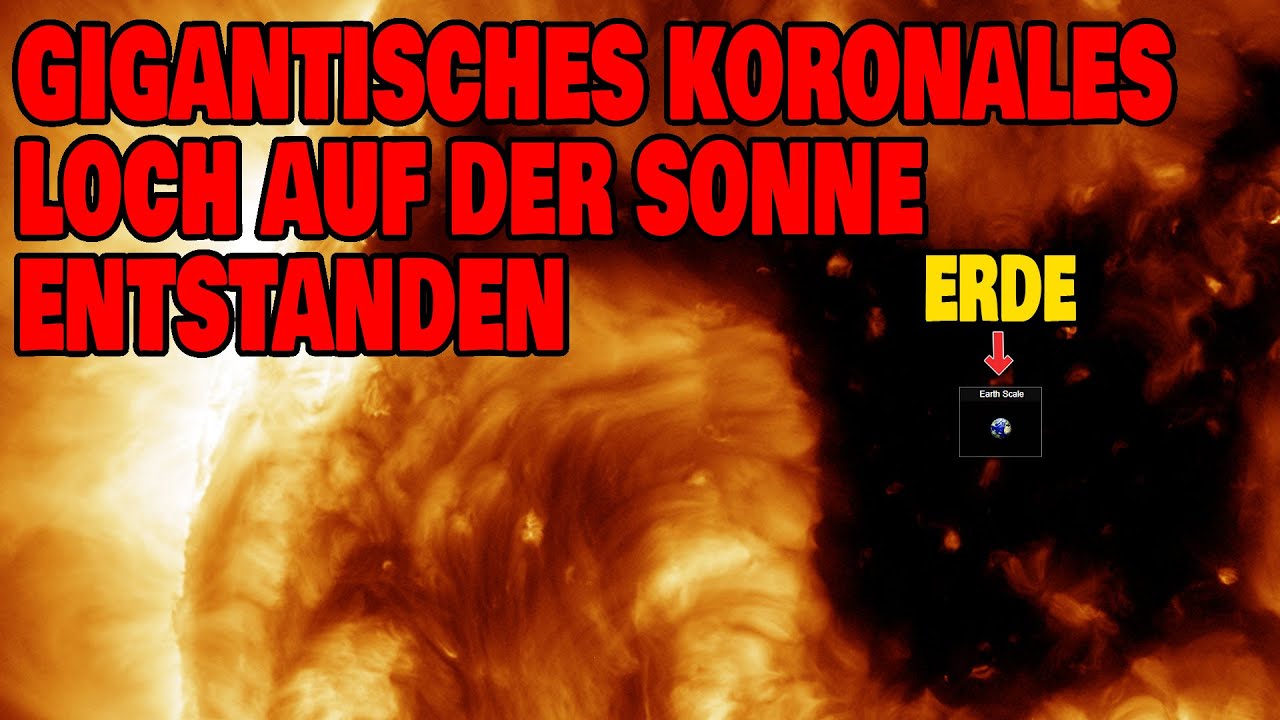
This is by no means a guarantee that we are going to see elevated earthquake activity or high magnitude earthquakes which would be magnitude 7 or even giant earthquakes magnitude 8 or mega- thrust earthquakes magnitude 9 or greater. It's no guarantee that we're going to see that. But these are the sort of conditions that lead to that sort of elevated earthquake activity. We see that in historic record. We're going to look through that record today. But first, we're just going to go through what is happening currently at this moment in time because of this geomagnetic storm. What's happening with this chronal hole? You'll notice that it is very, very large. The lateral extent is incredible. And down here in the south where it continues to extend, we also have a very large chronal hole up here that's looking like it's about to connect to the southern one. And so, it's not just this chronal hole right there that we have to go through that high-speed stream. That's already a huge coronal hole, the eighth rotation of it.
But now we have probably the largest overall cumulative surface area of uh reduced plasma temperature and vibration and open magnetic field configuration of the corona. You know, these coronal holes in I I don't know the longest that I've looked through the historic record.
We don't typically see this sort of activity during solar maximum, but we are. So that's the kind of the the the the special characteristics right now is that we've had all this energy loading from solar maximum, but now all of a sudden we're having the solar wind density drop really quick. You have a bit of a shock from that higher velocity. The magnetic field is open and that's what could very well lead to some very high magnitude earthquakes. So the earthquake watch has begun. Um and yeah, let's look at the magnetic perturbations that occurring right now on the globe.
uh because we are in this storm as we speak. We can go to our our geospace um our ground magnetic perturbation model here. And let's get this loaded up. This is for the past 3 hours or so.
This is our scale here, our legend showing the delta B. B is magnetic field. That's the symbol that they use.
Delta is the change. And we're looking at the globe here. And so these are the polar regions where most of this energy funnels in. And we see also just in general the mid latitude and equatorial regions. So we'll see that our greatest magnetic field swings in nanotesla are up in the polar regions.
And we do see some magnetic fluctuations that occur also further south and further north into the mid- latatitude and equatorial regions. And there's this pulsing to it. It's not like you just get one continuous push of increased geomagnetic flux. You kind of have waves of it. You get this pulse and then it pulls back and then a pulse. And this all depends on the solar wind, the magnetic field configuration of the solar wind, the solar wind velocity, the density, temperature, some of these other things. The the angle of the magnetic field of the solar wind, um the clock angle, the fire angle, all that stuff influences the geomagnetic conditions that we experience here on Earth. But the volatility in Earth's magnetic field secondarily I mean it's it's the primary thing but it it is secondary to the influence of the solar wind or solar storm but the magnetic field swings come from the ionosphere the uppermost part of Earth's atmosphere that is about 1% plasma has a charge and it's the movement of that plasma in the ionosphere that causes these changes to Earth's magnetic field that we feel at the surface and then those changes to the magnetic field can induce electric currents in the ground surface or in anything that's very conductive like transmission lines. And so you have to be uh mindful of for example power grids and technology during geomagnetic storms especially the strong ones and we just had a G4 storm not that long ago. This is just a G1 at this moment in time but it could strengthen to a G2 unlikely to go beyond G2. Um and we'll see why when we look at the real-time solar wind. So, let's check that out and we'll just go up here. This is all on our um Noah space weather portal. So, there's a link to some of this stuff in the video description. I always put links to the different data that I show and also research papers that I reference in the video description. So, if you you know, the purpose of this channel is to educate. is to also it's to show what's happening but also to empower you to understand this to a point where you can look at this data yourself and make your own conclusions uh do your own research and more. So here we have the past 7 days of solar wind data as observed by the discover satellite at L1 um and we are seeing uh 7 days. So, we have this solar storm impact coming in right here. Here's our G4 minus storm that we had. First, a pulse of geometic activity going to G2 and then we went up to a G4 minus because that KP index there is a 7.67. So, you have an 8, that's a G4 storm. And if since we're a little bit below that, we call that a G4 minus. If you were slightly above that, like an 8.33, that'd be a G4 plus. Uh, just 3 hours. But in general, we see G3 levels there. We see a high G2 level right there. And so that's a that's like a second pulse of activity that we had.
And here is our solar wind characteristics. So velocity and then density. And we see that velocity all of a sudden has gone up just in the past 24 hours. Density has gone down. Here's our magnetic field. We see that increased magnetic field strength starting to peter out. Now we see our southward component there in red which is a special vector orientation magnetic field. When it's in this negative zone, it connects really nicely earth magnetic field. Hence the increased geomagnetic volatility there. Though it's also dependent on the solar wind velocity. So let's go into our 3-day view so we can see that even better. And um yeah, so we and actually we were having some uh you could call them almost like substorrms right here. Look at our southward component when negative solar wind uh overall interplanetary field strength went slightly up and up and up. It is increasing. Then we had a G1 storm right there just briefly. But we did have some aurora that was uh visible during that time frame. And then we had this really rapid increase all the way up to about 18 nanotesla. I think that's the highest that it reached 18 nanesa which is about three times stronger than normal. Normal strength's 5 nanotesla. For reference, Earth's magnetic field is 23,000 to 67,000 nanotesla across different parts of the globe. So the interplanetary magnetic field is quite weak in comparison to that. But magnetic fields decay via inverse square law. So if you double the distance, then you uh you reduce the strength by four times. So it really drops off quick. So at some point earth's magnetic field has a strength of five nanotesla and that's where it meets the solar wind that's called the magnetos. When you have the solar wind increase its magnetic field strength it pushes that magnetos in deeper and so it closer to the earth and then that triggers a stronger uh geomagnetic storm. So 18 pushes that in quite a bit because it's three times stronger again the inverse square law. And then we saw that we had these negative uh southward zones there as well. Kind of some fluctuations. If this had stayed permanently south, we would have seen like a G probably G3 storm from that.
But it was kind of fluctuating up and down. And so it did slowly start to increase. And then here just on about 6 a.m. universal time today, that high-speed stream impact came in. This is the co-rotating interaction region.
And then we got the high-speed stream to follow. So, let me let me show you in fact um a graphic displaying that very nicely. I've shown this before, but I'll show you now because I'm sure there's new people here watching. And hello everyone, welcome. Um and this should show up nicely. So, here's our coronal hole emits this high-speed stream like this. This is low density, high velocity. Because it's high velocity, any plasma in front of it will get compiled and compressed into a high density plasma sear. Um and then that is sweeping along. Um it spirals out like this. Here we have Earth. This is Earth's orbit. And so first we'll get the high density SER to hit us and then the high velocity stream follows behind it. Uh because you continuously have this high velocity solar wind being emitted. So a lot of it's piling up, compressing, but there's always going to be new higher velocity solar wind following up right behind it. So if we go back to our display capture, we see that the solar wind magnetic field strength increased increase increased, right? Successive kind of steps there, starting to go down and then we had that higher velocity come in. And look at the density as we've been discussing on the channel. It does seem that it's the solar wind density dropping low that is connected to these giant earthquakes.
There's a strong connection there. This is still a new science and I'm still doing a lot of research into this. Um, but a lot of the connections seem to really be coming into focus just rapidly in the past couple weeks because of some of the conditions that we've been experiencing. Uh, you know, seeing it for yourself, experiencing it for yourself really helps you to like conceptualize the system. Uh, but look at that point 4 for the density. And I mean these values are hovering 79. So, even less than one. Looks like we've had a little bit of an increase just recently, but we zoom in here to get the latest data.
Um, well, I guess I'm going to have to go down here to do it. Uh, let's see what it says for one day. But normal density is like 10 or so. I mean, we go back here, uh, you know, 13. If you go back even before that, um, 30 or so. So, you go below one, that's a 30x decrease.
And here it's even 0.5. Here we have some values that are going basically right to the bottom. Point uh there's one right there. I'm trying to get it's like 2 or something. It's very very low.
Uh 0.27. Yeah. So solar wind density is dropping. And again because of the extent of that coronal hole, the velocity again 650 or so 675 km/s because of the extent of this coronal hole here. Let me put this back on because the extent of that uh we're going to be in this for a while. We're going to be in that high-speed stream for a while. Uh I think it I think it's going to be the fact that this unfolds across time that really gets things going. You know, having a little a little drop of low density, okay, you know, that does something. But I think an extended duration is when things get really kind of wild, uh perhaps. And we have an example of that. Let me show you the example. Let's go to 2011 with the uh earthquake in Japan. We show this in yesterday's live stream, but let's just quickly look at it again live so you get an example because there's new people here. Hello and welcome. I'm your host Stefan Burns, geohysicist, space weatherman. Um just a cool guy, just a chill dude. And we'll zoom in on 2011.
We'll get this data pulled up. We have uh we have it right here.
Yeah, we'll go we'll go to that one and that should do it. Okay, so here we have our solar wind data going back to uh March through April of 2011. And the magnitude 9.1 that struck Japan right off the coast was on March 11th, 2011.
Okay. Well, here we have this high-speed stream impact come in. And look at how long of a duration the drop in plasma density was. Right now, this is like around the 7th of uh March going through like the 8th. We see that right there.
March 8th. If we scroll over to the the beginning of this is all the way like March 2nd. So that is like basically a week where plasma density was very very low. Okay. Before the earthquake, then it started to recover and then right in this period here where it dropped off again, that's when the earthquake popped off. So we could see a dynamic like that. We could not see a high magnitude earthquake at all. Th this is just an increased probability of there being high magnitude earthquakes based on the available science that we have concerning coronal hole highspeed stream impacts. How they influence the solar wind then how that influences the earth geophysical system the global electric circuit terrestrial geohysics and more.
This also influences weather. We see really strong connections between coronal hole high-speed streams and intensification of severe weather like hurricanes or rather cyclones and tornadoes. So keep that in mind. Uh storms can intensify really quickly from this injection of energy and the unique solar wind parameters and there perhaps is a connection with volcanoes. So I haven't read any research that's looked at that. Um, but perhaps that's just if if there's something with earthquakes, I would I would posit that's probably something volcanoes, but I can't really speak at all definitively on that. But the data with earthquakes is pretty clear. Uh, more to be done, but much, you know, it's pretty solid. It's pretty solid. Um, we can look at our solar wind for about the past a little bit less than the past week, but some of you commented on if this will load. Let me let me refresh this for you all. Some of you commented on a unique coronal mass ejection that we had launched from the sun recently and that was from like the easter limb and went directly south.
It's very bizarre. Uh well, we can see that on our coronagraph here launch out very high density. Check this out.
Really, really interesting. Um, and this will load better once it's fully loaded up, but check out how quick and high velocity that chronal mass ejection was going directly south of the ecliptic plane. So, very, very bizarre. Um, let's go to the beginning one more time. So, check this out. It was like a very high velocity coronal mass ejection launched from what what we saw was a uh an M-class flare, like a 4.0 M-class flare, but boom, right to the south at the edge of the coronal hole. And I talk about a lot on the channel how sunspots seem to be more active if they're at the very edge of a chronal hole because chronal holes have those open magnetic fields.
Sunspots have their own complex magnetic flux loops and that seems to cause them to be a little bit more unstable. You get more magnetic reconnections and then boom, you get this ejection of plasma.
Um, so that is and this is I don't know why this is like stalling out.
Um, regardless launch it fell off. Well, there's no there's you have to think about gravity. So, uh you know what's what's what's a gravitational influence pulling that? If you're talking about something falling, then you're talking about gravity. U so no, it it launched off. But let's go to our here we go. Let's go to our HB 30 and HB60 indices. And FMJ Tristan is asking what's the chance of a Carrington event next 30 years. chat. GBT says this.
Well, a AI just tells you what you want to hear. I think most the AI answers are complete garbage. Just my personal opinion, but I don't trust anything that artificial intelligence tells me at this point in time because it's garbage in, garbage out. Uh, but ch yeah, there's there's a very high likelihood of a Carrington event in the next 50 years or 30 years. They actually happen pretty regularly. 1859, 1872, 1921. We had a a lucky miss in 1972, 2012 missed us by seven days. What just happened on March 28th of this year was pretty close to a Carrington event. Not not as much like not the same uh intensity, but closer to Carrington level than not. So they happen.
Um so here we have our past 10 days of geomagnetic activity.
We're looking at the KP or the HB60 index. So, similar to KP index, but it's a 1 hour resolution. So, allows us to see the more nuanced changes in geomagnetic volatility on Earth. Scale rating goes from 0 to 9. Actually, this index can go above 9 if it's a really severe storm. We saw that happen in May of last year. This thing was going off the scale. Uh, but this is that G4 minus storm. So, first the first pulse right there, G2, then G4 minus, and then we actually, you see, had some geomatic activity. This is when we had that little substorm right before this high-speed stream came in. And so you see that just the past 10 days have been pretty active. This is quiet conditions, moderate conditions, and high conditions with red. Um, and so that's we're we basically have been in it now for more than a week. Uh, perhaps you've been feeling it. Um, so yeah, be mindful of that. Earththing grounding is really really key. I have earthing and grounding shoes available on the website at wildfreeorganic.com/store. helps you stay grounded um and harmonize with your energies more often in your day-to-day as you're just about and doing things.
These are the shoes right here, the slip-on, this is the men's shoe, and then there's also boots that are available for hiking, exploring, adventuring, traveling, and more. So, you can check that out on the website wildforgganic.com/store. Uh but barefoot's best. You know, you can go outside to the park, you can put your bare feet on the ground, the grass, you know, sink your toes into the grass.
That helps ground you. swimming in the oceans really really good. But when you have these sort of long periods of enhanced geomagnetic volatility that affects our biopysics, our the magnetic field has very strong um uh regulating influence over our circadian rhythm and also it it interacts with our heart rhythms like it connects directly to the biofield created by our heart. whole bunch of research there. And so it's good to equalize to the earth and just reduce your charge um to stay a little bit more balanced and uh during these sort of periods of increased energy flux. We also have our ionosphere model here. I want to show you this because this is um this is basically where these geomagnetic fluctuations are coming from is you know the ionosphere currents that are pulsing at any given time. Uh yeah, sandals are coming out this May. So sandals are coming out this May. They're going to be insane. The best sandals basically you can buy. You know, they have really good sandals. If you go to like Greece or Turkey, um any of these sort of place or Italy, you know, good leather quality sandals. These are just as good. Not some cheap Chinese trash or something like that. These are the best.
So they're coming out in May. Uh get ready for that. Here we have our ionosphere model. This is our uh our u our total electron content vertical basically. So they're measuring all the the electrons that are vibrating along a column through the ionosphere and red shows a high tec and blue shows low total electron content. You notice that on the nighttime side of the earth total electron content goes down. The ionosphere decharges slightly. You have for example the d region the lowest region actually disappear at night. um you have the two F regions combine uh at night u and there's still plasma in the iosphere but decharges and you know there's a reduction and then sunlight comes in and starts to ionize it again because there's x-ray light extreme ultraviolet ultraviolet light all those can break molecular bonds and cause and create more plasma so we see uh this increased charge flowing across the globe this induces toic currents in the ground surface that also flow at the same time through the ground surface.
And so this is all plasma basically. And when you have aurora on the planet like we have right now with this storm, right? We're in a geometric storm right now. There's aurora, I'm sure, up in the polar regions because of the magnetic fluctuations. That's plasma, folks. Like you're just basically looking at plasma in the atmosphere. So we need to understand that most the universe is plasma. 99% of the Earth is pl uh the universe is plasma. The sun has a bunch of plasma, right? Maybe there's condensed matter on the inside and some unknowns as to what the sun really is.
But we know that the sun is generating a tremendous amount of plasma because of the solar wind. The interplanetary medium is all plasma. Interstellar space based on the Voyager probe measurements is plasma. Um, and we have plasma up in our atmosphere. We have plasma, you know, moving through the ground surface.
If there's a geo reactor in the center of the planet that's creating plasma through the production of light elements, these fision byproducts like helium and others, you know, that's all these neutrons going off can break molecular bonds and create a lot of plasma. And that's very low density. So, it's going to flow up from the center and then go out. And, you know, before high magnitude earthquakes, we get earthquake lights. And you literally see these beams of plasma shoot up from the ground surface and go straight up really quickly. Um, and you only see that when you happen to catch it at night because during the day you're probably not going to see the plasma. It's, you know, there's too much daylight. Uh, but at night it lets off a glow. It lets off light. A any ion that's vibrating will give off some sort of light. Whether this is like radio frequency or visible light or higher frequency light like X-rays, but it's going to give off some sort of radio frequency or just some sort of electromagnetic signature. So this is plasma moving through the upper atmosphere causing there to be a movement of energy and charge and plasma through the ground surface. And the idea is that if you have enough energy moving over a fault that can cause it to rupture if it's already at a critical stress. So that's what we're concerned about as it relates to this earthquake watch. Are we at a critical stress on a big fault that's ready to go? If we're not, then yeah, you can have these special solar wing characteristics. you may not get a rupture because well none of the faults are ready. There's also uh research that's come out just recently talking about how when you have a a fault at a really high stress it actually produces plasma at like the molecular level this can generate these these free ions and then you know you you generate enough of them along a fault you actually have a sizable amount of plasma. So a fault itself at critical stresses can generate plasma based on that research. That that makes a lot of sense to me. We know that rock circuits exist, right? The flow of electrical energy through the earth. And if you are able to close a circuit now, you can really cause that increased flow of energy because if there's a resistive gap, you're not going to have that flow of energy break the gap unless it's extremely ionized and now you've closed the circuit. So you need a you need a complete circuit for there to be a flow of energy. Um and we also know that minerals are pois. So you apply mechanical stress to them, they emit electric signals and electric charge because you cause these embedded ions whether positive or negative to pop out of the crystalline matrix and flow outwards. And a fault under tremendous stress is you know mechanical stress is going to create these electric signals.
We see radio frequency precursor signals before high magnitude earthquakes. we see precursor signals in the Schuman resonances. Um plasma that's oscillating generates radio frequencies. So the the only radio frequencies or in general the only uh electromagnetic emissions that you'll get from plasma are those that are higher frequency than the actual natural plasma oscillation frequency because otherwise it won't actually leave the plasma. But plasma has a a natural resonant frequency depends on the characteristics of the plasma. Um but so all it'll generate a whole wide range of frequencies. All the frequencies higher than its own natural oscillation frequency get emitted outwards. The others stay internal within the plasma or the plasmoid. So we observe these sort of radio frequencies and just in general electromagnetic signals from uh plasma. And so we have a rich body of research and evidence supporting some of the the I don't even want to call them hypotheses and I don't want to call them conclusions because of course the jury is still out but theories good theories solid evidence for it and it really all begins with the ionosphere we see these big ionospheric disturbances before during and after earthquakes um it seems that ionospheric disturbances are able to perhaps trigger earthquakes and likewise earthquakes can trigger ionospheric disturbances.
there's this relationship between them.
So there's a short course on uh earthquakes and plasma and electromagnetism and more. Um I also want to check out before we get into some of the historic data I want to check out our sun right now in terms of sunspots. Here we have the sunspots on the earth facing side of the sun. What does that mean? Well basically earth is rotating its orbit. The sun is also always rotating but there's some part of the sun 50% that's always facing us.
That's what we call the earth facing side of the sun. It's not like the moon where it's tidily locked or anything.
You know, this is just the side of the sun that we always see. Um, and so we see a big sunspot group right there, Earth center direct. These two about to be, they are Earth center direct, but about to really be in that strike zone.
This guy also in the southern hemisphere soon to be there. And then we have a new one rotating in. Um, and so there's that new one, not not too large. This guy right there is just a single core. None of these are like especially uh troublesome, you could say. None of them are, especially the magnetic field configurations. They're not, you know, unusually complex or large, but we do have some sunspots. Remember that coronal hole is stretching here and also right there. So, they are basically spread out around that coronal hole, but still Earth center and direct. So, now we are in that high-speed stream. Low plasma density for the solar wind. If we did happen to get a significant chronal mass ejection from one of these, not saying that's going to happen, but there's a probability, there's always a probability. If we did get a significant chronal mass ejection from one of them, they would travel through the interplanetary medium very quickly because we already have high velocity solar wind and very low density solar wind. There' be very little uh impediment to the travel of that chronal mass ejection and they would launch from Earth Center direct. So, that's a potential. I'm not putting big money on that, but it's worth pointing out for everyone here. It is definitely something that could happen. And uh I think yeah, the last So, let's go to our earthquakes. Let's see what's happened. I don't think we haven't had anything big yet. Um let's just see. We're set to largest magnitude here. We have a 5.4 in Indonesia. And actually, I'm going to switch this over to universal time.
uh 5.2. So, actually, we haven't had really any uh magnitude 6 earthquakes for a while. Let's do seven days. And let's do magnitude 4.5 and greater. Last magnitude 6 was a 6.6 on the 16th. Yeah, down there. So, that's interesting. We talked about that on the channel. That happened um basically right as a storm came in. You know, we discussed that. I put out an alert for there being a magnitude 6 plus earthquake. And basically right after my video got published, it happened. Uh but that's the last magnitude 6. We had a magnitude 5.9 in the Philippines. That was uh on the 19th. So just a couple days ago. We see that right there. Uh but nothing big yet. But let's look through the historic record at the largest earthquakes have occurred since 1972 and the solar conditions that existed because uh we have data going back to 1972 in terms of synoptic maps of the sun and we have of course our USGS record here. So, and so we will go through our earthquake catalog and we'll do custom here. If you've never played with this before, this is what you do. And we'll set this to 1972. There might be some older records of what was on the sun going back. I'm sure there are uh but I I still have to kind of find them and look through them. But we have a really easy way to access these solar synoptic maps going through 1972 to now.
So, we'll we'll stick with this for now.
And we'll go custom on our magnitude.
And we'll set this for magnitude um last time I did 8.5 or greater. Let's set this for magnitude 8 or greater. And let's just do this. Do search. So, we have it set for largest magnitude first. You see there's a lot.
We're not going to go through all these, but we're just going to go through the highest magnitudes uh list. Okay?
And that it starts with the uh great Tohoku earthquake in Japan. That was the largest magnitude. Also, Sumatra 2004. Um and I think what we'll do, well, first off, let's get our solar synoptic map up. This is what we have for today. So, this is an example of a solar synoptic map. Look at those coronal holes, right? They color them black. Some people use this digital one.
Other people that they they post these every 12 hours. Others they do them by hand. But again, here's the extent of our coronal holes. Very, very significant. But if we go down to data, you'll see here this archive is available from the NGDC. So we'll click that. And here is our archive. Okay. So we have our 9.1 March 11th and we'll go down here to the 11th. You see, I've already gone through some of this data. We'll find March and the 11th is right here. And we'll choose one day before the the big earthquake that we're going to be looking at. Okay. Here's our solar synoptic map for uh January.
And oh, not that actually. And lo and behold, there's a chronal hole right there. Uh and actually, and I showed this on yesterday's video, I have the video of it actually, but we're just going to stick to synoptic map for today. Let's go to the 11th in particular. You'll notice how much it grew. Grew significantly going from the 10th to the 11th. So, the chronal hole specifically, um, if we kind of punch in here a bit more for you, just so I can really show you, they are these circles with the lines dashed inwards. So, that is a coronal hole because they also draw other features.
For example, they're drawing like a little bit of a solar disturbance there, like a sunspot, right? That's a That's a bigger sunspot right there. But and they show the different polarity regions of the sun. But when they have this outline with the dashes going in, that's a coronal hole. So big coronal hole, very similar to what we're seeing now back at the time of the 9.1 earthquake in Japan, March 11th, 2011. Let's go back and let's check out the next one, which is Somatra over here. Okay, so that was on I think December 26th of 2004. And so let's pull it up. We have the We have the We have the data. Go to 2004. We'll go to December and we'll go to the 20.
This is the 26 right there.
Um, thank you Slider for the super thanks. Um, and affecting electronics, light bulbs, radius, computers by just walking by. Coincidence? I don't know.
uh you know that sometimes if you build up a charge and you touch something metal, you can get that shock. So, I'm not going to discount it, but I don't personally experience that experience that. But we do people get that we do get people that comment about that and you just trust your intuition, I would say. But thank you so much for the super thanks. God bless. Um yeah, 1972 graphics were prepared by real people.
Yeah. So, here we have our data for Sumatra. Okay, this is December. We look at the date up here. Okay, if you want to know the date for all these, I mean, we're going through the data, but there's the date right there. Even tells you who did. This is Spencer. Spencer, the space weather forecaster. There's our coronal hole in that geoffected position right there. Again, we see the line. We see the dashes inwards. That's the coronal hole. We also see two others there soon to rotate also as well.
Another big coronal hole present in the geoffected position right when we had a magnitude 9.1 earthquake. Those are the two strongest earthquakes that we've had basically since the 60s. 1964 in Alaska, I believe. Uh, all the others in between were magnitude 8s. So, wow, big. Okay, let's go to the next one. Uh, magnitude 8.8 in Chile. This is 2010, February 27th. Uh, let's let's check it out. So, we go to 2010 and February 27th. So, pull that up. And you'll see I've already gone through these cuz I I put these links in yesterday's video, but I want to go through it today. Well, guess what? More coronal holes in that center or geoffected position. Not as large, but we get this one here to the south. And we get this one right there in the center as well. So, there's some more coronal holes present on the sun during these highest of magnitude earthquakes.
And 8.8 in Chile. We go to the next one.
8.6 in Indonesia. And that is on the 28th of March 2005. So, let's go back. March 2005, the 28th. Boom. Look at that. More coronal holes. Actually, a lot of them. This one right there. Uh, still in that geoffective position. Uh, this guy there as well, but some of it having moved out, meaning that there's already been a longer enhancement of the solar wind.
Chronal hole there, chronal hole there.
8.6 Indonesia. This is 2005. You see big chronal holes. These are big. That's a big coronal hole. you add in the others, we see that on the uh earth facing side of the sun. Next one was an 8.6 2012, April 11th. Let's check it out. Uh again, this was 2012, April 11th. We just got past April 11th recently for 2025. Hey, another coronal hole right in that geoffected position.
How about that, folks? Uh wow. So, you know, going through this data, you start to really piece things together. Now, what we're not doing, I want to be clear, what we're not doing is looking at every single coronal hole, right? We're specifically looking at the earthquakes and then pulling up the solar data. The inverse is that you could basically look through every single solar synoptic map, see where chronal chronal holes are, and then check the earthquakes. Now, a lot of them don't have these, you know, magnitude 8 earthquakes. they may have a magnitude 7 or something, but you're certainly going to get periods in time where you have a coronal hole in this position and you don't get a high magnitude earthquake. So, there's a little bit of selection bias here. But the point is that basically so far, we're going to do a few more is that so far all these giant earthquakes have had coronal holes present. So, that does seem to be a pretty important factor in these giant earthquakes for popping off.
uh it's not 100%, you know, guaranteed that if you get a chronal hole, you'll get an earthquake. But it seems to be the inverse that you have an earthquake, a giant one. There should probably be a chronal hole there. And it's probably because of the solar wind dynamics. Uh because a bigger system like the sun and the solar wind can influence a smaller system like Earth's geohysical and global electric circuit system to a greater degree than just our own internal mechanisms. Of course, stress build up on the fault is really important. what's happening deeper within the planet the mantle the core is really important perhaps what's happening with the magnetic field is relevant too things of this nature but the sun has a very powerful influence so let's go through uh some more we have an 8.4 4, 2007. Uh, September 12th. This is in India. Oh, no, Indonesia. Sorry. And this is 2007. September 12th. Let's find the 12th here. We have a super thanks from Gaia Watcher. Thank you so much. Read this fascinating scientific article about plasma having consciousness on research gate. Quantum physics of plasma plasmoids. Just came out recently. Uh, awesome. Thank you. You know, if you could um I'm in the middle of a live stream now, so if you could send that to Wild Free Organic, the contact there, that'd be great. I'll read through that, but I just also read a book on plasma consciousness by Robert Temple. So, I'm I'm pretty pretty to plugged in, you could say. But yeah, plasma's conscious.
This is what I believe. Do your own research. Um, here we have this magnitude 8.4 in Indonesia. This is 2007, September 12th. Lo and behold, some coronal holes. This is solar minimum. Right, we're actually in the descending phase now. So, you're not going to get many sunspots, but we have a chronal hole there in that center and geffected position. We also have a big one up there in the in the polar region.
Uh, so that's another one. Now, these are the largest earthquakes since 1972 in descending order of magnitude. Now, we have 8.4 on 2011 in Peru. So, let's go there. And maybe this is the last one that we do. We'll do one more after this because it goes to 1977. So, we have 2001 and this is on June 23rd. And I haven't looked at these yet, so I don't know. Uh I stopped uh earlier yesterday with the record. So, we have what? June 23rd. That should do it right there. And here's our sun. And this is 2001. So, this is solar maximum for solar cycle 23. And we see our coronal hole there.
Another one. And we also see some on this side. Not geoffective yet, but there. But that one right there is definitely geoffective in that center and then even into that more geoffective position. Pretty large. Not, you know, it would be nice to actually see this too because sometimes they draw in these coronal holes and then there's also a region surrounding it that's lower plasma temperature but not as significantly as this and they only draw in the most significant zone. So, this actually could be larger. Like some of these could have been larger than we see on these synoptic maps. We're losing a lot of detail when they draw it. Just keep that in mind, too. But we see another one there. And the last one we'll do is this 8.3 uh in Indonesia again. And this is 1977.
So, we're going to have to go way back in our record, but they have it, which why we're going to do this. And this is August 19th. Uh oh, it looks like they don't have data for August 19th. Or just in general, do they have it for September? What's the deal?
Maybe, you know, maybe some of this older data they don't have versus intermittent. Let's just kind of go through this randomly. Yeah, it's intermittent. So, we don't have solar synoptic data for that. So, that's the last one. Um, but yeah, basically every single one that we looked at, the highest magnitude earthquakes have occurred that we had data for had coronal holes right in that that center position. So, pretty wild. pretty pretty wild. Let us now do our question and answer. And so if you have a question, please type Stefan Burns. I will do my best to answer your question.
Uh super thanks get priority simply because people are, you know, putting some money behind it. Uh but you don't have to do a super thanks to ask a question and hopefully I'll see it. I'll answer it. We'll run through a few of them. Please keep them on topic. If they're if they're really off topic, I'm I'm not going to answer them. So stay focused on what's happening now. Um and yeah, I've been your host Stefon Burns, geoysicist, space weatherman, and more. Just another human being who likes, you know, understanding what's happening on our planet. Not only looking at the sun and the cosmos to see how the in the planets to see how that influences the earth energetically, but also how that influences us bioelectrically, our health, our wellness, our consciousness, and more.
So yeah, thank you all for being here.
We have 4,200 people in the live stream right now. It went up to 4,400 at one point. Ion, thank you so much for the super thanks, bro. Uh, you're awesome.
Uh, I I recognize you. So, thanks for being a long-term viewer and subscriber.
Thanks so much. And we'll start to see if we got some questions coming in. Tessa is saying, "If you had to guess, where do you think the next big one will be?" Uh, I would put it along the the ring of fire. I would put that either in Indonesia or Papa New Guinea or Japan, Alaska, basically any big subduction zone. But it's really hard to guess.
Basically, which fault is the most loaded up that hasn't gone? That's a good question. Maybe California. It's pretty loaded up, but that's a strike slip fault.
Um, and we don't really have the best data in terms of knowing the stress accumulation on faults and where they are in terms of like their potential for rupture and that magnitude. That's still very new science as well. So, if you had that, I could pinpoint it easier for you, but don't have that data. So, um, I don't know a lot of people are worried about Japan and they get big ones. So, we'll see. But again, we don't know that there's going to be a high magnitude earthquake from this chronal hole highspeed stream. It's not guaranteed since we're on an earthquake watch.
There's a higher probability of that over the next week or so, perhaps even a little bit longer than a week. So, um, and then yeah, Art of Meta, did you see any precursors in the Schuman resonance?
Good question. I have not been seeing any precursor signals in the Schuman resences yet. We have very limited data on that, right? We don't really have good global coverage. So that's one of the big limiting factors, but with the data feeds that we do have, I have not seen any yet as of this moment in time.
Sue Allen's asking, "During a chronal hole, are accidents and death more common?" Uh, kind of a oddball question, and I don't have an answer for you, but in general, we can talk about a few things. In general, during a geomagnetic storm, there's going to be increased energy volatility, and the magnetic field connects to our heart rhythms. And we know that emotions are stored in the heart. And a lot of people do a lot of things because of emotions, right? Makes people love makes people crazy, for example. Um, and so if you have more erratic heart rhythms and things of this nature, perhaps you're a little bit more volatile and unsettled and you know, that can make you a little bit more clumsy or be, you know, perhaps that causes you to lose it in some way.
There's probably a a slight statistical significance to it, but I don't think anyone's done those studies. They've looked at geometric storms and heart attacks and like infarctions and you know um arrhythmias and things. Uh the other thing that we can point to is how u during the full moon people get a little bit more crazy as well. Talk to anyone in an emergency room that works there. They'll tell you they hate full moons. They don't want to work the full moon shift. Uh and so we see that disconnection with our moon and increased light from the moon also can cause people to be a little bit more unsettled. So, uh, high speed, you know, geometric storm from a chronal hole. Can that make things like accidents and deaths more common? Perhaps, but I don't know of any research that's looked into that specifically. And Boo Boo is asking, wondering about the New Madrid fault on a ridge that was created by one very long ago. Uh yeah, New Madrid earthquake 1812 like a magnitude 8.1 maybe, you know, big earthquake, but it's a it's an old fault and it doesn't doesn't rupture that often. So, uh I mean if I lived in that area, I just wouldn't live in fear of the new New Madrid fault. Like my sister used to live in San Francisco and she was always just afraid of there being the big one. And you just can't live your life in fear. Um, so I I know you're not saying you're afraid, you're just wondering about it. But I we don't I don't know if that how how much stress is on that fault and whether it's close to rupture and what that rupture would be. Uh again, we have very limited data on this. So uh anyone that's saying this is exactly going to happen at this date and this magnitude, whatever, you know, they're just creating fantasies in their head and they're sharing that with people. That's my belief. That's what I think. Um, so you know, but the but wondering about it, yeah, it can have big earthquakes. Magnitude A, like low magnitude A earthquakes can happen on the new New Madrid fault. So, it's possible. It's been more than 200 years since that's happened. So, yeah, definitely a thing. Thank you, Lauren, for the super thanks for the two quid. Thank you so much. I just like this comment right here by uh Fly Gal. We are spiritual beings in human body. That is absolutely right. And I'm behind now on the questions. I'm sorry, but let me get to this one. Caicil, thank you for the super. Thanks. Are you do you think there's any fault lines you think are most likely to go off at this time?
Yeah. So, I just kind of talked about that, but in general, the the faults that I know are the ones that are close to home for me, which is California. I know that the Hayward fault is overdue and the the San Andreas fault is overdue. So, I don't want them to go off, but you know, they are definitely loaded up and stressed out just like the people in California. Uh, so we hope that's not the case. We know that there's big faults running through the ring of fire, Southeast Asia, even into Himalayas. Uh, you know, the Antolia fault in Turkeyy's really big, but they just had a big release. So, I'm not worried really about Turkey.
Um and and Neil is asking, I wonder if there's also chronal holes, for example, one month before these events. I could not reach the library. Can you send a link?
Well, the link is just go to solar synoptic maps and then go to data on that tab and you'll see that link there.
Um but yeah, so that's a good point.
Typically, the dynamic is that these coronal holes don't just show up once and trigger an earthquake. is that they've actually had successive rotations over and over and over and you've had four, five, six passes of that high-speed stream constantly hitting the earth every 28 days or so.
That seems to be a very important factor in this through that energy loading and eventually it breaks. So, that's the other thing. Not only a do we have a long transit with this chronal hole because of how wide it is and also this group up there. It's almost certainly not just going to disappear um in like the next rotation. It's already been there for eight. It's probably going to be there for nine. And in fact, I think this is the biggest that's ever been. So we have rotation 9 coming up a month after this. That's in May. That's going to be around May 17th or so. And in fact, we have some really critical planetary geometry coming up on May 17th. We also have a Uranus Kazimi. Um, and so I I'm looking at that date actually very closely. I've been talking about May 17th for a while now. I'm going to do an official forecast video on that probably this month before the month ends. But if we have this crawl hole again a ninth time lining up with the Uranus Kazimi and also some really critical heliocentric planetary geometry, watch out folks. Um, that doesn't guarantee anything, but definitely it's like when you start to have all these things combined together, converge in on like one date, that's in my experience, having done this now for a while, that's when we that's when we see these things pop off. That's just when we see something happen. Uh, and I've been pretty good with my forecasting because I look at all these other factors. I look at planetary geometry, right? I look at what's happening with the ionosphere. I look at what's happening with the sun and the solar wind. I put all that together and that's helped inform me. And in general, and just in general, it seems I've had the b the best track record of the space weather forecasting people on YouTube and such um since I've basically started the game because I am taking those things into consideration and other people aren't and that's just giving me an edge. Um, and it'd be a tremendous amount of work for you to go through and verify that by watching my videos. But me having actually done this, you know, it's my channel, then I'm com I'm confident saying that. Maybe with AI, you could verify that claim. If you're just a new person, you're like, "How do I know?" Well, you don't know. Um, so take that for what it's worth. But I've been consistently really good with my forecast. Not perfect. There's times I've been off on forecast, but typically they've just been like small storm impacts. You know, I I think there's a G1 storm coming in and actually we don't get anything. But often I've said like, "Hey, we got a G4 coming in." The official forecast is for like a G2 and guess what? We get like a G4 because I incorporated these other things. I'm like, "I think it's just going to get bigger than people think." So the the whole point of that is that anyone that utilizes these different sciences and puts them together can also uh start to do I think more accurate space weather forecasting, earth geohysical forecasting and and such. So um now I'm going to scroll all the way down to new comments. So sorry if you put a comment. I did not see it. I did see one super thanks come in. Let me see if that has a comment to it. Uh we have Allison here with the super thanks.
Thank you so much. Do you also study simatics and what will you be doing on the 22nd which should be the big day?
And do you have your own frequency generator reporting here from Mterrey, California? I love Monterey, California.
Actually, I I like that you asked this question. I do have a frequency generator on right now. Um I did a podcast with George Roth about two weeks ago. I mean, I released it like about two weeks ago, a little less than that.
and he uh he's a bioelect electricity practitioner healer and he works with a company uh and I think he's actually maybe the founder but in general he he's created a variety of devices to help you harmonize your bofield. One of them is called the safe zone. It's a Schuman resonance generator. Uh so it creates Schuman resonances and you know it's a box. I have it plugged in the corner over there. I have it on right now. Uh, and there's different intensity levels that you can set it to, night and day cycles, things of this nature. It's really well designed, made in Canada.
Um, I have that on right now. Uh, simatics is really interesting. I think simatics is a very important study.
Helps us to understand the the, you know, the effect of frequency and vibration on our reality. Um, and so yeah, you know, you're you're changing your simatic environment, you could say, when you turn on like a frequency generator. So, uh, that is at, uh, that's the safe zone. I'll put a link in the video description once this, uh, video is over, but you can also check out my video with Dr. George Roth, which is talking about Schumar residences, uh, just recently in my video list, and you'll see all the links there. And there's even a coupon code for um, I think it's like 10% off using the code stfan burns. Uh, and that should be at matrixmag.com. I believe it's matrixmag.com. You'll see all that there. Um, so thank you so much Allison for the super thanks. I saw another uh Mr. Reluctant Stacker 69. Thanks for the uh the super thanks as well. And Boo Boo saying, "Thank you so much, Stefan. You're fantastic." Thank you. Thank you. Thank you. Um, Ion is asking, "Do you think solar storms are provoking strange dreams?" Yeah, there seems to be an increased connection with more vivid dreams, lucid dreams, precognition dreams, and solar storm impacts. In fact, last night I had a lucid dream. I I have them every now and then, but they're not super super regular. But I had a lucid dream last night. Uh I also woke up with a headache. Now, keep in mind that I also took a really hot bath. I was like Daenerys Targaryen in the bath last night. It was like, you know, bleaming hot. But I took a really hot bath last night for a long duration. I think that also maybe triggered my headache a little bit. Um but the GMADX storm did not help. But it did help trigger a lucid dream. In general, I was a little bit unsettled in my sleep. So, it can make it can just keep you a little bit more conscious because there's just more energy volatility and your brain waves are just a little bit more potentiated.
And that's what you need to uh to have, you know, a lucid dream is to realize that you're dreaming. Um so yeah you know that is why having spirituality on hand is one of the best things when there's a geometic storm because dreams are a portal into your subconscious and therefore into healing but also uh they connect you to these like collective consciousness energies the schuma resonances all the energy stored within them the past the present the future I've had pre-cognition dreams when I'm drinking spirituality dreams that tell the future right those those exist I've had quite a few now and they're not just mundane either. They're like pretty detailed. So, this is the the tea blend to have on hand when there are um geomatic storms because you can drink this. It'll improve your sleep, but also improve your dreams, help you connect to those a little bit more. And um that's available on the website wildfreeorganic.com/store as well. So, you can check that out. But that's like a key key thing to have on hand. I sell this United States only currently. So, if you're in the US, you can pick this up. I'm actually doing a big batch. I'm shipping out today. Um, so perhaps you will even get in on that. Um, so yeah, that's all there and we'll take just a couple more questions before I got to sign off. Um, so let me just go up and see find any. And Josh is asking, "What's the probability of having another May 10th or 11th, 2024 solar storm again in the near future?" Thank you so much. Yeah, so that is the Mother's Day storm. This was a G5 storm that came in the Mother's Day storm, also known as the Ganon storm. Really big solar storm, the biggest one we've had in solar cycle 25.
The biggest going back to 2003, I believe. Uh, you know, very significant solar storm. And we're just going to look at some of the magnetic perturbations here from that. Um, we see some of the different satellites going around, magnetic field lines. Here's the Earth.
You even see the glow, the ionosphere.
We're going to zoom out. Here's like the magneto right there. There we see a solar wind coming in crunching on the magnetic field. Boom. Chaka laka. Check that out. There you go. How cool is that? Um, do we have another one coming up? I think we'll I think we'll have another G5 storm this solar cycle. And if not one, actually a couple. It's very possible. I think it's almost guaranteed that we have another G5 storm just because it's been a very active solar cycle and we get a lot of storms during the descending phase, too. So, that's very, very possible. Now, in terms of predicting when that's going to occur, perhaps you can use the method from JH Nelson looking at heliocentric planetary geometry to to get that. Um, and so again, that's not an exact science.
You're going to sometimes see geometries that don't result in a storm. Sometimes you'll have storms that don't have a geometry associated with them. But I called the disturbances in that global seismic burst back on March 2nd with my forecast by looking at the heliocentric planetary geometry. I was very accurate with that. So that's definitely a method utilized. And again, the date that I'm seeing coming up is May 17th. May 17th.
So we don't know if anything's going to happen then. Um, but I'm looking at that closely. Looks to looks to be just like a energy congregation, you could say, on May 17th. Uh, but yeah, we'll definitely have uh more storms, whether that's G2, G3, G4, even G5. I think we'll get another G5 or two this solar cycle. You could get a Carrington event. That's possible. you know, they happen. It's not like they only happen once every two 200 years. They actually happen about every 30, 40 years or so. Um, one that hits Earth. So, yeah, we can very well have one. And, uh, yeah, we're going to leave it there. So, thank you all so much for watching. Uh, I hope you found that information useful. If you did, smash that like button and subscribe to stay informed as to what is happening here on Earth energetically by examining Earth geologic events and geohysics. We also examine planetary resonances, what's happening in the solar system, of course, the sun, and even galactic influences like gammaray burst, uh, cosmic ray flux, things of that nature.
We talk about all that and more, how it affects our biology, our health, our wellness, our consciousness, our spiritual evolution journey. I've been with Stefan Burns. Uh, I'll keep you up to date on this high-speed stream impact because again, we have this now for like a week. This is just a huge chronal hole. uh we have this group up there and yeah, it's going to be a while now. So, this is just the very first report on this. I'll keep you up to date. Um and just make sure you go out, you do some earthing, some grounding, fresh air, clean water, spring water, eat good food, you know, go easy on the cortisol production. Just treat yourself. Make sure you give yourself some extra time and space and do more self-care. And that'll help you improve your um your health and your wellness and stay more grounded during all this and stay a little bit more sane, right? We don't need more madness on the planet at this moment in time. There's already enough of that with the all the clowns out there and the actors um and high positions. So, let us here, you know, a little bit closer to the surface. Hold that frequency of love and truth and um and harmony. That's what we can that's that's that's what we can do and that's what I'm going to do. So, I hope you all do that as well. Thank you again uh all so much and I'll see you all very soon.
Up Next

13:18
Solar Cycle 25 Impact: Space Weather & Satellites
@StarTalk
147.8K views•2023-08-29

12:54
Triumph of Orthodoxy Icon: Byzantine Art & History Explained
@BenCallan
2.1K views•2024-08-06

100:14
Solar Flare 1.9 X-Class: Implications for Tech & Infrastructure Risks
@StefanBurns
443.1K views•2025-12-01

1:42
Game of Thrones Opening Credits: A Cinematic Analysis
@gameofthrones
46.3M views•2011-04-18
Related Study Plans & Knowledge Roadmaps
Structured learning paths in General & Interdisciplinary Studies
general-studies
Elevator Engineering: History, Physics & Cities
01From Hoists to Safety Brakes: The Dawn of Vertical Lift
02Hydraulic vs. Traction: The Engineering Physics of Elevators
03Modern Speed, Safety, and Algorithms
+ 2 more learning modules
12h5 modules
Explore Roadmap
general-studies
Rubber: Material Science, History & Geopolitics
01Origins of Natural Rubber & Mesoamerican History
02The Chemistry of Natural Rubber & Vulcanization
03The Geopolitics of the Rubber Boom & Colonization
+ 2 more learning modules
12h5 modules
Explore Roadmap
general-studies
Containerization: Evolution, Logistics & Trade
01Ancient Trade & Bulk Cargo: Amphorae to Barrels
02The Industrial Revolution & Cardboard Packaging
03The Containerization Revolution: Malcom McLean
+ 2 more learning modules
12h5 modules
Explore Roadmap
general-studies
Textile Tech: Evolution, Labor & Global Impact
01Pre-Industrial Textiles: Handloom & Cottage Industry
02Mechanization: The Spinning Jenny to the Power Loom
03The Factory System & Global Labor Transformation
+ 2 more learning modules
10h5 modules
Explore Roadmap