








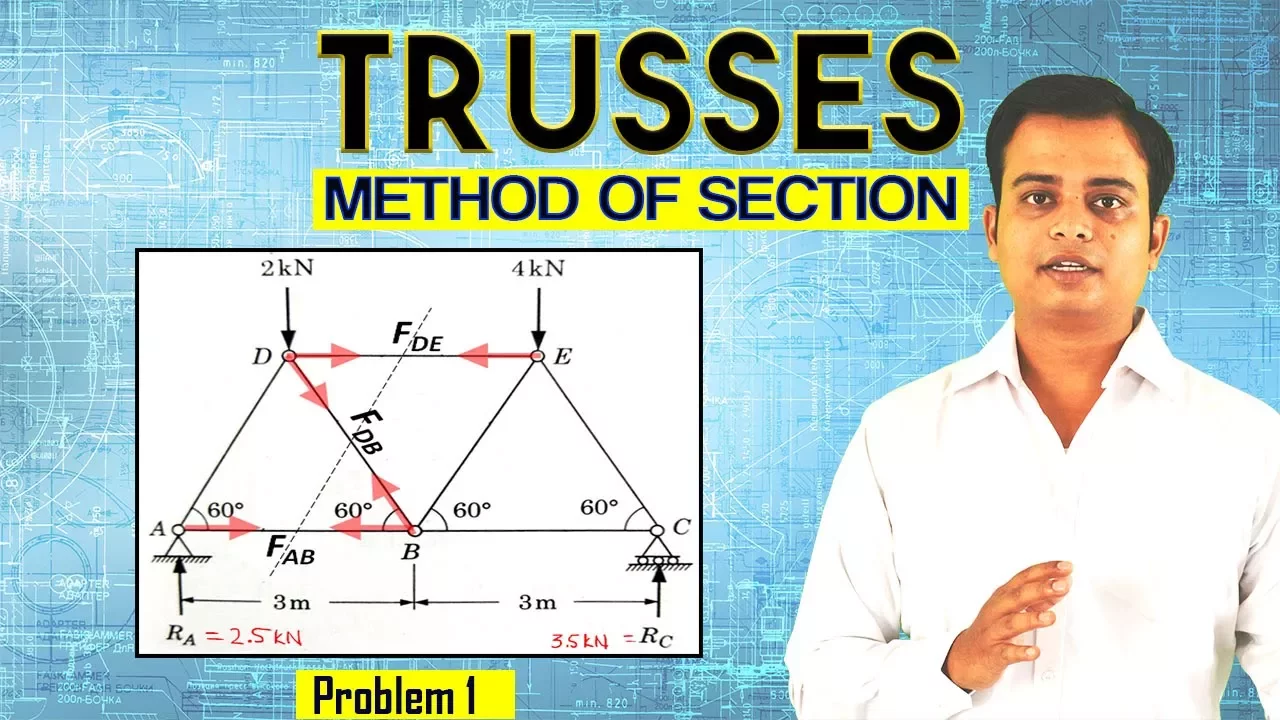



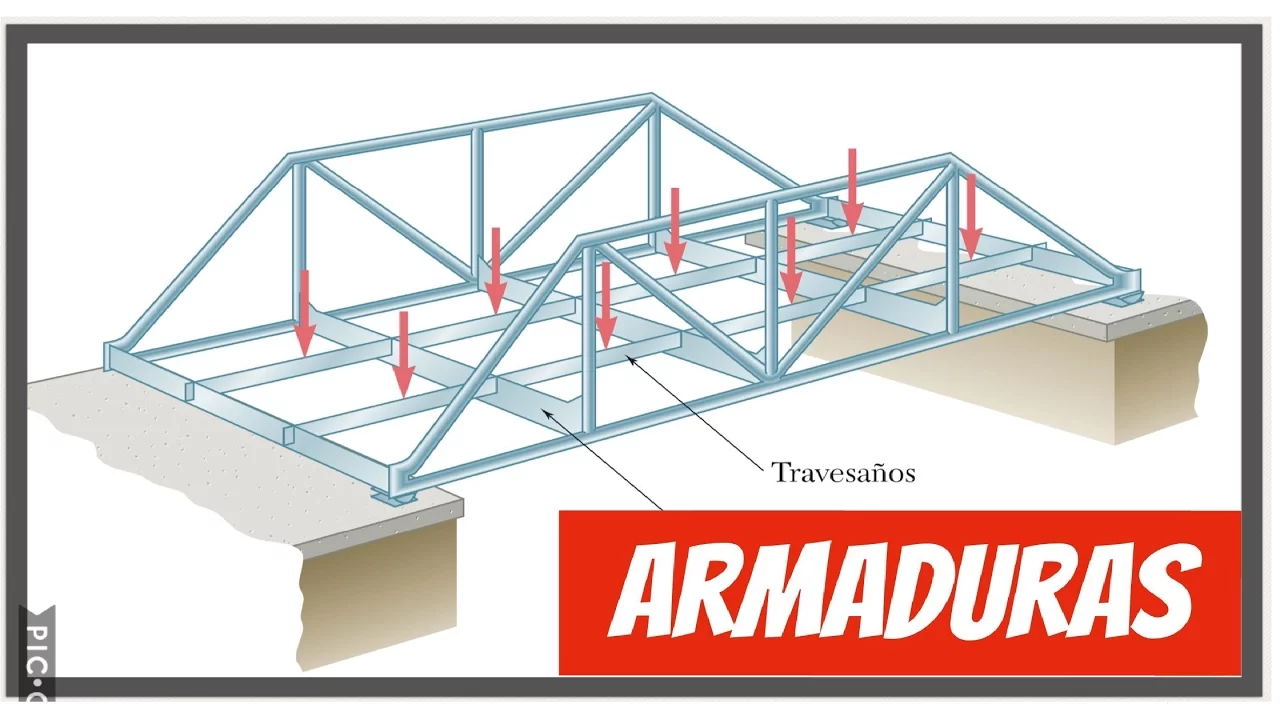


A truss is a structural system composed of linear members arranged in triangular patterns that distribute loads to supports through tension and compression forces; when a member experiences tension, it lengthens, while compression causes it to shorten, and recognizing zero-force members—non-load-bearing elements occurring at joints with three collinear members—simplifies truss analysis by eliminating unnecessary calculations.
Truss Tension and Compression Explained | Structural Engineering Basics
Added:Fundamental concepts of static equilibrium, specifically that the sum of forces and moments acting on a system in equilibrium must equal zero.
The ability to resolve 2D force vectors into their horizontal and vertical components using basic trigonometry.
Understanding the physical definitions of axial forces, specifically the difference between tension (pulling apart) and compression (pushing together).
How to construct and interpret Free Body Diagrams (FBDs) for particles and rigid bodies.
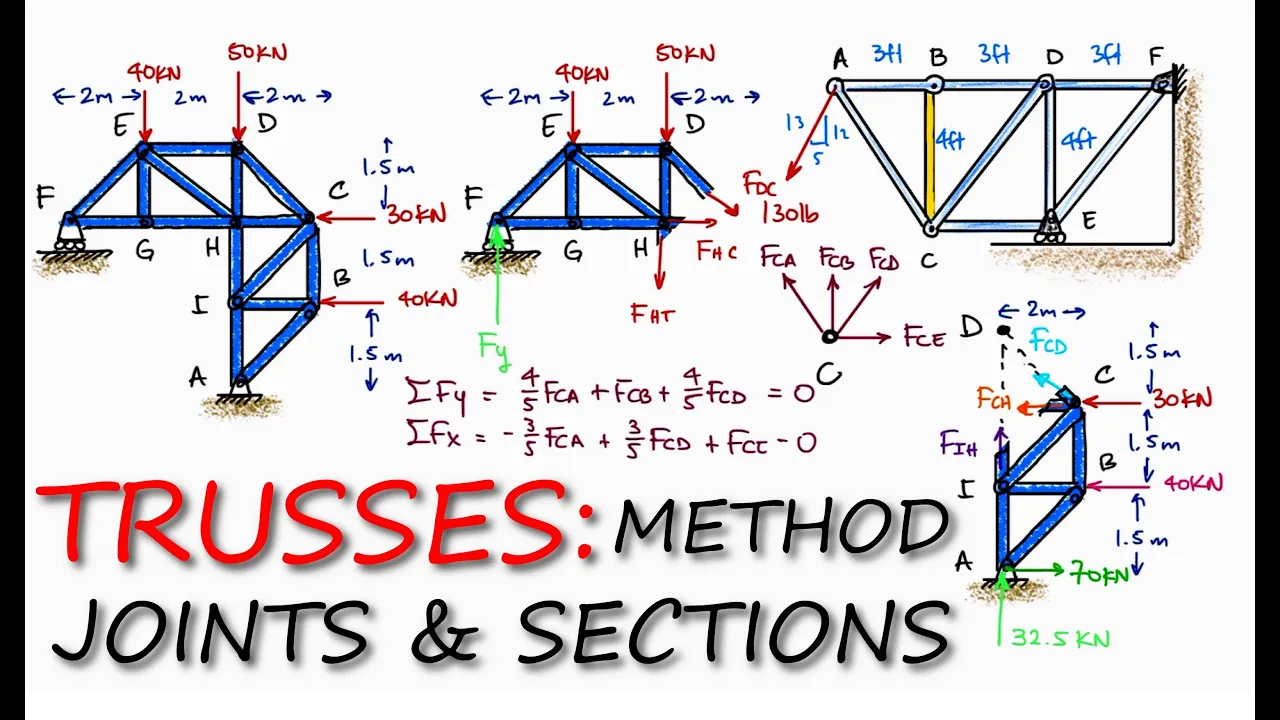
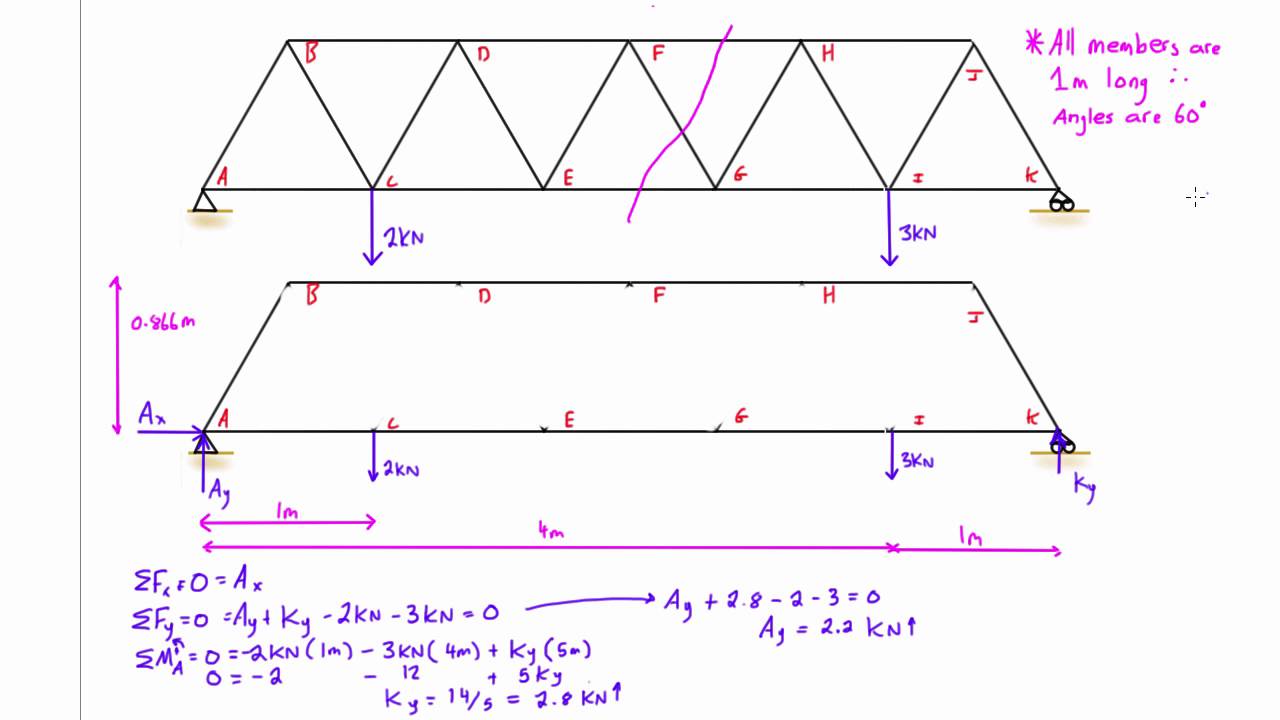
Mastering the quantitative analytical methods for solving trusses, specifically the Method of Joints and the Method of Sections.
Introduction to structural determinacy, distinguishing between statically determinate and indeterminate trusses.
Understanding member design limits, such as Euler buckling in compression members and tensile yielding in tension members.
Exploring common real-world truss typologies (e.g., Pratt, Howe, Warren) and their specific applications in bridge and roof design.
129.9K views475likes3:50Original Release: 2012-04-23
[Music] wow [Music] hi my name is Stephen Hal I'm here today with my partner Cole har to demonstrate tension and compression in different trusses first let me start by defining a trust a trust is a structural member that through different various size members distributes the weight or the load to the supports different trust members undergo tension and compression depending upon the location of the load and the design of the trust when a member is in compression the member is actually shortened and likewise when it is intention it is actually lengthened the First Trust we're going to demonstrate is a modified version of the king post trust the reason we modified the truss was to make the tension and compression more apparent for demonstration purposes this truss consists of two right triangles with 8 in bases 6 in height and 10in hypotenuses now I'm going to apply a force using my hand to the top center of the truss notice as I apply pressure that the two hypotenuse members ba and BC compress and a result create a tensil stress in the base members the centerpiece of the trust is called a zero Force member because it does not carry any load all of the the way it is distributed by the two hypotenuses being able to recognize zero Force members can make seemingly complicated trusses much less confusing zero Force members occur when a joint has three members two members running in the same direction and a perpendicular member at the Joint the next trust we're going to demonstrate is a modified version of the through warrant trust as you can see it is a little bit more complicated than the previous truss once again it has been modified to show more clearly the tensil and compressive stresses in the members notice that this trust has three zero Force members members BH CG and DF in this demonstration I'm going to place a load in the center of the base due to the rigidity of the bals of wood and the design of the truss it is difficult to see the tension and compression at work so what we've done is we' colorcoded the members to show which ones are in tension and which ones are in compression we've shown them members in compression in blue and the members in tension in red when the load is applied to the truss the base members go into tension to counter the force of the hammer likewise the Top members go into compression to counter the tensil stresses of the connecting members in conclusion trusses are all around us in homes offices schools all kinds of buildings a truss is a structural system that distributes loads to supports through a linear arrangement of various size members and patterns of planer triangles under stress the members experience tension and compression depending upon the trust and the location of the load tension lengthens the member and compression shortens it zero Force members are non-load bearing members of trusses that when recognized can make solving trust problems much simpler
Up Next

0:43
Understanding Wood Strength and Structural Limitations
@HorchataSoto
3.3M views•2026-03-25
30:32
Ultrasonic Transducers: Resonant Frequency Measurement and Horn Design
@imajeenyus42
229.9K views•2017-02-22
54:16
Polymer Environmental Degradation: Mechanisms & Stabilization
@iit
1.8K views•2012-07-10
33:39
How a Student's Question Saved a NYC Skyscraper from Collapse
@veritasium
22.8M views•2025-04-26
Related Study Plans & Knowledge Roadmaps
Structured learning paths in Engineering
engineering
Building Acoustic Levitators: Physics & Arduino
01The Physics of Sound and Standing Waves
02Piezoelectric Transducers and H-Bridge Drivers
03Arduino Programming: Generating 40 kHz Signals
+ 2 more learning modules
14h5 modules
Explore Roadmap
engineering
Building Peltier Cloud Chambers: Particle Tracks
01Cosmic Rays & Cloud Chamber Physics
02Thermoelectric Cooling (TEC) Fundamentals
03Custom Liquid-Cooling Loop Design
+ 2 more learning modules
18h5 modules
Explore Roadmap
engineering
Yagi-Uda Antennas: Modeling, Build & VNA Test
01Introduction to RF and Antenna Fundamentals
02Yagi-Uda Antenna Design Principles
03Antenna Modeling and Simulation in 4NEC2
+ 2 more learning modules
18h5 modules
Explore Roadmap
engineering
ECG Monitor Design: Op-Amps, Filters & Noise
01Electronics & Breadboard Basics
02Op-Amps and Instrumentation Amplifiers
03Bioelectricity and ECG Fundamentals
+ 2 more learning modules
18h5 modules
Explore Roadmap