









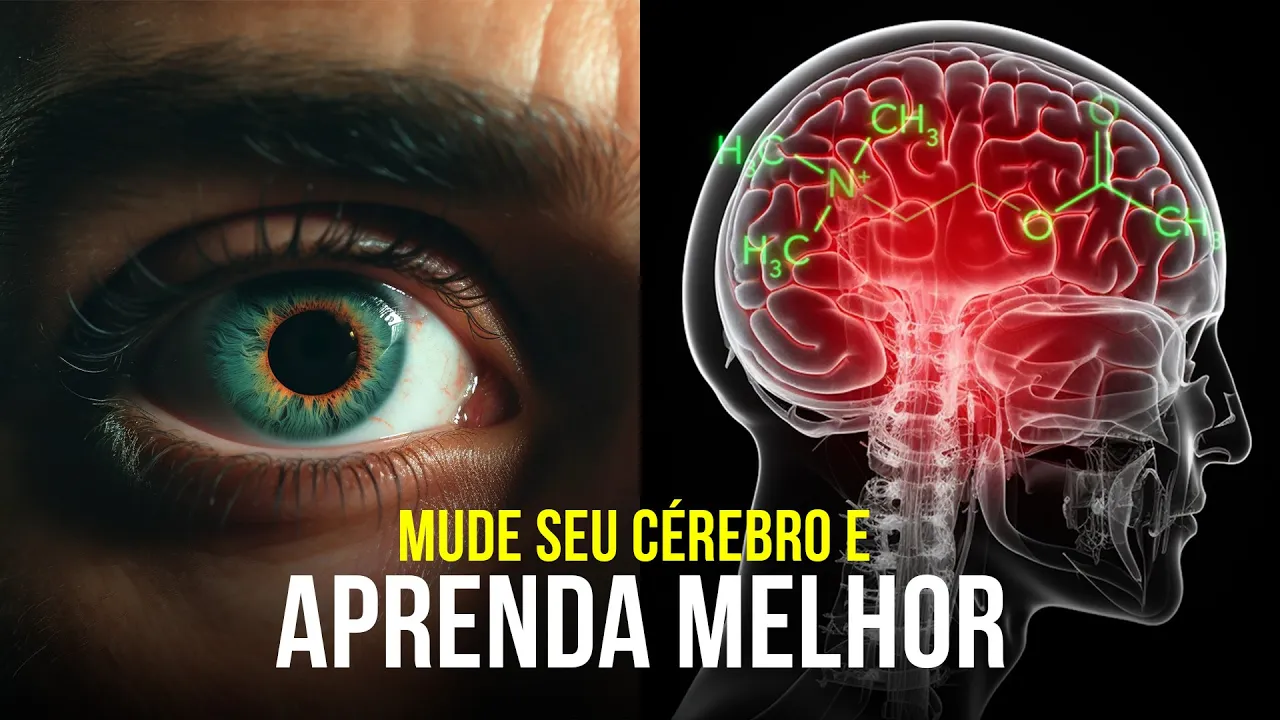








Peak performance requires a specific balance of three neurochemicals: dopamine (released during fun, which acts as a brain booster speeding up thinking and learning), noradrenaline (released when slightly over-challenged, serving as a wake-up call that motivates the brain to rise to the occasion), and acetylcholine (released during focused attention, creating laser-like focus by highlighting important ideas). The key insight is that focus problems are often symptoms of imbalanced fun and fear levels rather than the core issue itself.
Brain Chemicals for Peak Performance: A Neuroscience Guide
Added:Basic structure and function of a neuron, including synaptic transmission and how neurotransmitters send signals.
The concept of neuromodulation, specifically how certain chemicals regulate large-scale neural networks rather than single synapses.
An introductory understanding of the autonomic nervous system, particularly the role of the sympathetic system in physiological arousal.
The psychological definition of cognitive focus, attention, and the concept of the 'flow state' as described in performance psychology.
The mechanisms of neuroplasticity, specifically how acetylcholine and focused attention signal the brain to structurally reorganize and lock in learning.
The neurobiology of burnout and chronic stress, examining how sustained high levels of noradrenaline and cortisol deplete cognitive reserves.
Advanced cognitive enhancement strategies, including the science behind sleep architecture, light exposure, and physical exercise on baseline dopamine levels.
Clinical deficits of these neurotransmitter systems, such as the relationship between dopamine dysregulation and ADHD, or acetylcholine depletion in cognitive decline.
30.4K views668likes17:53Original Release: 2019-12-03
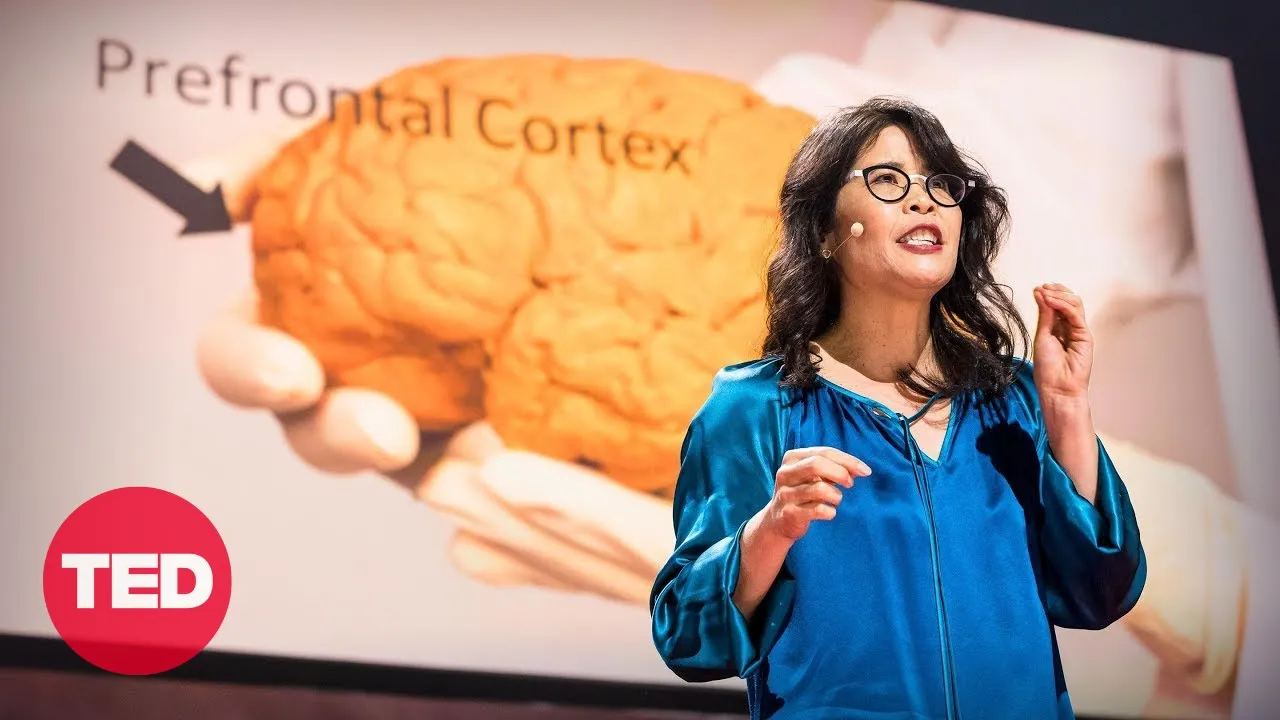
[Music] do you know that feeling when you're on a really really really bad date and while your date goes on about his ex-wife and his fear of dogs all you can think of is where's the emergency exit that's how I felt the other day in a business meeting my client asked me to have dinner and while he spoke about astrological signs and something that Scorpios are very sensitive people all I could think of was let's hope he doesn't order dessert this Tuesday had a huge keynote a huge stage and we had a technical check I was about to put on my headset when my client approached me she walked up to me and she said I really don't know how to tell you this tell me what well your pants my pants are beautiful my pants are pretty I just bought them what's your problem with my pants it turned out that my pants had a huge haul in a very awkward spot and this was 10 minutes before I had to go onstage so I panicked everybody was running around one lady she literally took off her pants she gave them to me and when I was about to log into my iPad to present my mind went blank I didn't even remember the code anymore these two things happen to me this very week in one moment I was extremely bored at this boring dinner and in the other situation I was so stressed to the point that my brain didn't work anymore to me these were just short moments even though I must admit that the dinner very very long for other people and for some people all their life looks like this right two thirds of people report being stressed at work to the point where they can't sleep well anymore at night and just as many people are disengaged and bored at their jobs it doesn't have to be that way everybody can be happy at their jobs and everybody can reach peak performance all you need are three simple things and I like to call them fun fear and focus why should we have fun fear and focus at work in order to understand that and how you can reach peak performance thanks to these three magical ingredients let's take a look at how the brain works so here we have performance let me just fix this here we have performance and it doesn't work so my mind is going blank this very moment but I will have to fix it and I will fix it okay let's forget about it so here's the thing and I you know this wasn't pre-prepared I do bizarre without so in some situations we are so bored that our brain will not go into peak performance because our brain is a lazy couch potato it doesn't like to go into peak performance when you're sitting in a very boring meeting it's just not going to happen and in some situations you're so stressed that your mind goes blank right and then you can't fully focus anymore we need a certain level of stress in order to reach peak performance but not too much and not too little in order to reach peak performance you need to have just the right mix of chemicals in your brain when you reach peak performance you're fully present here now you're losing the concept of time and you love what you do and that's when your brain releases a cocktail of numerous chemical in your brain that will put you into peak performance so what does fun fear and focus have to do with that let's start with fun when we're having fun at work our brain releases a chemical called dopamine and dopamine is a real brain booster when your brain is high on dopamine it's going to be faster you're going to think faster you're going to learn faster everything is going faster when you're high on dopamine so dopamine is like a real brain booster and I'm not speaking about the fun that you have after work right I'm speaking about having fun while you're at work so the after work party is not going to fix that so how can you have more fun at work I have lots of girlfriends and they tell me that yoga changed their life ok they tell me it calms my mind I feel so centered it improved my posture it toned my legs and I'm thinking oh hey where can I sign up right so the other day I went to a yoga class these were the longest 60 minutes of my life I hated it while we were doing these poses all I could think of is you know when could will it stop and afterwards my first thought was can I do now a real workout to get rid of all these stress hormones that I accumulated while doing yoga yoga just isn't my thing millions of women dream of becoming a yoga instructor not my personal dream my daughter is six years old and the other day I picked her up from school and the other lady walks up to me another mother and she says Oh Bonita are you coming to Tara's birthday party this weekend he's so excited I'm awfully sorry but I won't be able to attend I have an appointment Oh an appointment what are your plans I have an appointment with my room for many kids being invited to the birthday party is the highlight of the week they think about candles and balloons and all the fun they're going to have for my daughter her biggest fun is after school going straight to her room so she can do arts and crafts she's a little artist she will spend hours in that room and when she gets out she always has made something so fun is highly individual is anybody here who likes doing their taxes well I see one lady over here she raised her hands well so does my tax advisor I have noticed that when he calls me up for a missing receipt there's true excitement in his voice so the other day I asked him loot car do you like doing taxes is that your passion and he said of course for me doing taxes is like solving a huge puzzle I put the pieces together and in the end I have a beautiful picture it doesn't stop there then he said to me doing my taxes is like playing chess I make one movement and then I already planned the next steps I was amazed but you know this is how it works if you never have fun at work it's probably because you're on the wrong spot you need to find your passion you need to find a work that is in line with your talents and then you will have fun every day and fun is not just nice to have because only when we're having fun will your brain release dopamine and that's the first ingredient we need for the cocktail that will put our brain into peak performance the next factor is fear when I speak about fear I'm not saying you should have a toxic boss that yells at you and gives you negative feedback all the day right I'm not speaking about being so stressed at your work that you can't sleep well at night anymore I'm speaking about being slightly over challenged most people think that your best performance happens when your skill set is in line with the challenge that's not true your best performance happens when your challenge is a little bit too big for you because that's when your brain will release a substance called noir adrenaline and noradrenaline is like a wake-up call for your brain it tells your brain wake up this is important you need to rise to the occasion you need to live up to the challenge own only then will your brain go up into peak performance do you know that feeling when you jump into a cold pool or you just take a cold shower it's a bit scary at first but once you're in there it gives you that burst of energy and that kick that's sin or adrenaline kicking in and we need that in order to reach peak performance but people have different sweet spots let me explain the other day my husband came home from work and he looked like he was in a really bad mood so I said honey what's wrong everything went well today my husband is a sensation seeker that's how scientists call people who due to a mutation in the drd4 receptor for dopamine seek sensations they need a lot of stuff going on in order to reach their peak performance they need a constant change they might even start a little fight with somebody at work just to get going for me probably my technical setup failing today is perfect that's just what I need to go into peak performance because I'm a sensation seeker myself when journalists call me up for an interview they will usually send me an email and say we will send you the questions beforehand so that you can review them prior to the interview now we say no no no no no no no don't send me your questions that's the worst thing you can do if you send me the questions beforehand we will have a very very boring interview because I need that cake I need to be kept on my toes I need to have these unexpected questions where I need to give a spontaneous answer otherwise I just go through the motions but I will not reach peak performance in that interview so some people are sensation seekers they have a high stress point they need a lot of challenges and changes in order to go at their best what about the people who have a low stress point who will require very little stress to reach their peak performance many people will think that these are the bureaucrats the slow ones the inflexible ones the stupid ones in an organization that just are not flexible enough it couldn't be further from the truth think about Nobel Prize winning scientists who work on one molecule for 20 years and find the cure for cancer think about Pulitzer Prize winning authors who write and rewrite and edit and re-edit a book until it's perfect imagine you were going to have surgery tomorrow would you take the surgeon who loves to experiment and is a bit adventurous and loves to try out new things Oh would you rather take the guy who has performed this very surgery many many times and who will do it the exact same way tomorrow who wants the crazy surgeon no one right so people have different stress points not everybody likes the same kind of work environment but we all need to be slightly over challenged you need to find out what that means to you right if you feel slightly over challenged if you get that little kick where you feel that your nervousness is helping your performance then you're in the right spot that's where you need to be finally focus that's the third ingredient we need for our neurochemical cocktail for peak performance imagine Serena Williams at the Wimbledon finals holding her racquet and about to hit the ball and then she says hold on a minute I just really need to take the call yes we need pickles we need her fans would be shocked yet in the business world people behave like this all the time people have open plan offices people have open door policies and people multitask all the time and when people multitask they make 50% more mistakes and they take 50% longer to complete the task that's insane our brain needs to be focused in order to reach peak performance because that's when a magical ingredient will be released and its name is acetyl Colin acetyl Colin is like a highlight like a spotlight it will highlight your most important ideas and everything else remains in the dark it gives you that laser-like focus unless you're fully focused you're not going to peak performance so the question is how can we learn to focus at work many people will tell you maybe you should try some yoga or do mindfulness meditation you can do that but I have a much easier solution for you guys you can hack your brain for immediate focus and here's how it goes let me explain the other day I worked with a group of top executives we were sitting in this boring conference room everybody thought that this was going to be a day looking at slides and falling asleep a guy walked in like this and he had a huge bag on his shoulders he put down the bag he took out an empty bottle of wine and he smashed it on the floor like this he took out another wine bottle boom boom boom boom he smashed all of the wine bottles until the floor was covered in pieces of broken glass everybody was a bit like this right who's that guy and then he said take of your shoes take of your socks let's walk all over it that's what we did do you think that anybody was texting while walking over the broken glass do you think that people were checking the Instagram stores do you think I was sitting there telling people please focus on the broken glass of course not here's the thing when we have the right level of fun and the dopamine kicks in and people were having fun in this situation and when we have the right level of fear and then our adrenaline kicks in focus will follow naturally so if you find yourself having trouble to focus at work or anywhere else the problem is not the focus it's just a symptom not the disease what you need to be thinking is am I having the right level of fun am i having the right level of fear and once you find those and once you find the right level of fun and the right level of fear focus will follow naturally [Applause]
Up Next

11:05
How to Grow New Brain Cells: Adult Neurogenesis Science
@TED
8.3M views•2015-10-30
21:56
Investigating Circuits of Conditioned Fear | Greg Quirk
@MichiganEngineering
1.9K views•2016-06-20

19:18
Neuroscience of Fear and PTSD: Rewiring the Brain's Amygdala
@TEDx
136.6K views•2012-11-13
13:03
How Exercise Benefits Your Brain: Science Explained
@TED
11.4M views•2018-03-21
Related Study Plans & Knowledge Roadmaps
Structured learning paths in Neuroscience
neuroscience
Fear Circuits: Amygdala, Context & Extinction
01Introduction to Brain Anatomy & Neurobiology
02Fundamentals of Fear Conditioning & the Amygdala
03Microcircuits of Threat Processing and Defense Responses
+ 2 more learning modules
12h5 modules
Explore Roadmap
neuroscience
Appetite Regulation: Brain Circuits & Hormones
01Foundations of Endocrinology and Brain Anatomy
02Introduction to Energy Homeostasis
03Peripheral Signals: Leptin, Ghrelin, and Insulin
+ 2 more learning modules
14h5 modules
Explore Roadmap
neuroscience
Neuroeconomics: Value, Risk & Brain Mechanisms
01Foundations of Neuroscience and Brain Anatomy
02Introduction to Neuroeconomics and Subjective Value
03Dopaminergic Prediction Errors & Reinforcement Learning
+ 3 more learning modules
18h6 modules
Explore Roadmap
neuroscience
Spatial Navigation: Cells, Grids & Brain Maps
01Foundations of Brain Anatomy and Memory
02Place Cells and Head-Direction Cells
03Grid Cells: The Brain's Coordinate System
+ 2 more learning modules
12h5 modules
Explore Roadmap