















The Mongol Empire's military success was fundamentally enabled by their nomadic pastoral lifestyle, which provided them with exceptional logistical capabilities; they sustained vast herds of horses (requiring only grass) that allowed individual warriors to carry multiple remounts, while their armies employed a flexible flying column system where fast-moving cavalry struck ahead while a slower main body with supplies followed, supplemented by an extensive yam postal network that connected the empire and facilitated the coordination of large-scale campaigns across Eurasia.
Genghis Khan's Logistics: Supplying the Mongol Army
Added:Understanding the lifestyle and ecology of Eurasian nomadic pastoralism versus sedentary agricultural societies.
A basic overview of the geography of the Eurasian Steppe, including its vast distances, climate, and terrain.
The historical context of Genghis Khan's unification of the Mongol tribes and the rapid expansion of the Mongol Empire.
Fundamental concepts of pre-modern military logistics, such as the standard challenges of feeding troops and draft animals on campaign.
The Pax Mongolica and how secure logistical routes facilitated unprecedented trade, communication, and cultural exchange across Eurasia.
An in-depth comparative study of Mongol logistics with other highly mobile military forces throughout history, such as Alexander the Great or Napoleonic campaigns.
The legacy and evolution of the Yam relay system into post-Mongol state communication networks in Imperial Russia and China.
Analysis of how Mongol logistical capabilities directly influenced their siege warfare adaptability and psychological warfare strategies.
412.9K views15.1Klikes20:18Original Release: 2021-02-11
An army is only as effective as its ability to feed and supply its own men, and the armies of the Mongol Empire were no exception.
As with so much of the Mongol military, popular depictions of the logistical capabilities of the 13th century Mongol army are a mix of hyperbole and exaggerated claims of Mongol feats.
For this next part of our series on the Mongol army, we will detail the means and methods the Great Khans utilized to supply their forces across the breadth of Eurasia.
Speaking of the hordes… The sponsor of today’s video Brutal Age: Horde Invasion is a free-to-play strategy game available for free on Android and iOS.
Forge your tribe with cities and outposts on the map and push the border against global competitors.
Challenges await, prepare your warriors for a big hunt!
Come to experience the most original PVE and PVP battle in this free MMO Strategy Game.
Ally with your friends, and be Brutal in the prehistoric party!
Become a legendary Warchief!
In Brutal Age you can do everything you want to do in a strategy game - train 15 barbarian troops with different skills, hunt mammoths, sabertooths and other ancient monsters, and terraform your land!
Brutal Age just got an update: 1 new Outpost and 3 new unit types!
Buildings now can be upgraded to a higher level!
For example, the highest level for Stronghold is now 30 instead of 25.
Valentine’s Day event is now available in the game!
Support our channel and Download the game with our link from the description!
In order to get 200$ in rewards Upgrade your Stronghold to Lv.4, Tap the event portal at top right, tap "Player Invitation" event in "Recommended", enter our code and tap use.
Quite rightly, most discussions of the Mongols’ logistical ability has focused on their lives as nomads, and how they utilized their animals herds- sheep, goats, oxen, camels and horses.
As pastoral nomads, their very lives provided them excellent experience in the skills of strategic logistics.
Every seasonal movement had to be well planned and organized, for timing of the weather and pasture availability.
Pasture had to be carefully managed to avoid overgrazing, the animals kept in the right proportions for water usage and avoiding its contamination.
Pastures for winter grazing needed to be secured and avoided.
Lacking sufficient alternative fodder, the animals needed to be able to provide for themselves by eating through the snow; the sheep, goats and oxen following behind the horses as they instinctively dug through the snow with nose and hoof.
In turn, each animal provided milk, meat, felt, clothing, and more, providing nomads much of their requirements to survive.
Each nomad had to learn how many animals were necessary to survive off of, and had a lifetime of experiencing moving vast herds of livestock from horseback over great distances.
Any Mongol who survived to adulthood knew how to withstand harsh environments, live off little, make use of every part of the animal and take advantage of local resources; all valuable skills for any army on the march.
As stated, the Mongols did not provide fodder for their herds, subsisting them almost entirely off of grasses.
In the great Eurasian steppes, this provided any nomadic people an immense advantage, not requiring the difficult and lengthy procurement of grain supplies for troops and horses.
Larger horse breeds of sedentary societies, for example, cannot maintain body weight and strength enough to campaign from only grass alone, and require regular feeding of hay or preferably, grain.
For the smaller horses of the Eurasian Steppe, grass provided their necessary nutritional intake.
With no shortage of grass in the steppe, it was also much easier to field immense herds of horses; far more than any sedentary rival power could compare to.
A single Mongol warrior could go on campaign with 5 or more remounts, rotating between the horses so as not to overexert a single animal.
While the vast herds of their animals were a key aspect of everyday life in Mongolia, the five snouts were rarely all brought on campaign.
Sheep and goats simply cannot travel as quickly or as long as horses; 5 kilometres per day, or 3 miles, is a reliable speed with these animals.
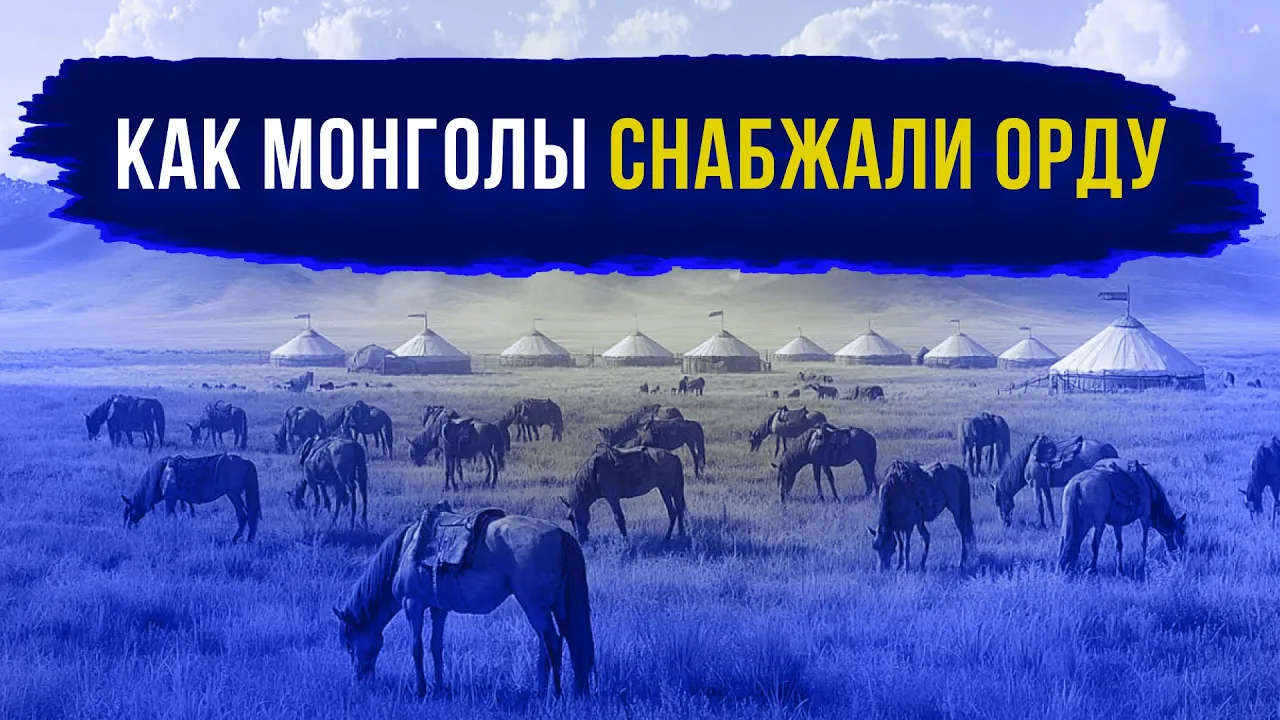
Depending on the campaign and as conditions allowed, we sometimes see instead a central, slower moving army, which may have sheep, goats, supply and tool carts pulled by oxen, and some families, a base camp called an ordu, generally commanded by the Khan’s, or a general’s, wife in his absence.
The warriors would ride separately in flying columns well ahead of the ordu.
Travelling with only their horses, these columns could strike with greater speed before returning to this slower main body, to resupply on those things which they could not have carried with them.
This would mean stocking up on staples of the Mongol diet to carry back with them for the next stretch of the ‘horse only’ part of the attack.
A group of 10 men, an arban, would stock up on strips of dried meat, borts, or dried milk curds called aaruul or cheeses called eezgii.
The arbans returning out to campaign carried this among themselves and their spare horses, which themselves were a source of nutrition for the Mongols.
Mares were preferred, as both their milk and blood could be drunk, providing nutritional value when other alternatives were scarce.
If the horse died on the march, then it would be cut up on the spot for its meat to be reused; even the bones would be used for a broth called shulen, thickened with millet and whatever pieces of meat and vegetables could be collected.
These meals were augmented by hunting when he could, be it big game, enemy livestock or marmot- a useful practice to keep their archery skills sharp as well.
Little was wasted, and numerous primary sources remark, often with disgust, at the willingness of the Mongols to eat anything.
But the Mongols knew quite well that picky eaters did not last long in the cold winter.
Yet even in the steppe the supplying of so many animals was not without issue, especially at the end of winter or in drier years.
When campaigning against their enemies, this became an even greater struggle, for there was simply not the same expanses of grassland to rely upon the further they rode from the steppes.
In order to overcome this, the Mongols relied on an exceptionally predatory foraging strategy.
Mongol armies travelled in divisions and smaller units, spreading themselves out across the countryside, feeding their horses on both the smaller areas of grassland, and local grain stores, while the riders would feed themselves on the peasants’ harvests.
This would also play into their strategy of harassing and driving the peasants from farms and rural villages towards major urban centers, spreading fear and straining the enemy’s resources.
It also had an advantage of making it difficult to react to Mongol armies; for the defenders, reports would come in of Mongols everywhere, coming and going in each direction.
The chaos of the panic-stricken flights of the peasants would have certainly brought with them exaggerated stories of the scale of the enemy forces, sowing always further confusion.
This takes us to one of the most popular myths of the Mongols, that they were a shockingly fast force, a lightning bolt from the steppes.
This is a result partly of the intentional confusion caused by the Mongols; when they were striking cities hundreds of kilometres apart, it would seem they were crossing great distances at lightning speeds.
But calculations by John Masson Smith Jr., noting, when available, the rough length of time and distance travelled by the Mongolian armies, found there could be great variation in the speed at which they travelled.
The greatest speed recorded was the great invasion of western Eurasia under Batu and Subutai in the 1230s; their journey from Qaraqorum to the Volga River, nearly 5000 kilometres over an estimated six months, made an average daily speed of around 27 kilometres per day.
This part of the journey, with little campaigning and nothing but grassland before them, was made with the greatest haste.
In Smith’s calculations, the average kilometres per day for other campaigns with available data was around 22-24 kilometres per day.
Smith suggests that the speed made by Batu and Subutai was the maximum top speed for an army based on steppe horses in ideal conditions.
Time in the day needed to be given for the horses to graze and sleep, and as it takes longer for horses to meet their daily feed requirements via grazing rather than grain, this puts a cap on the top speed of these armies.
And yet such ideal conditions would not be met elsewhere.
Smith is also able to make calculations for much of Hulegu’s route during his march in the 1250s.
At the fastest part of his journey from Karakorum to Almaliq, Hulegu covered approximately 2697 kilometres in some six months, some 15 kilometres per day.
Across Transoxiana and Iran, Hulegu rarely made such speeds again, usually between 6 and 9 kilometres per day depending, and often halting for months at a time.
For Hulegu, the campaign was much more methodical than the immense tidal waves they are often depicted as.
The sources describe Hulegu marching in the mornings, then allowing horses to graze over the afternoon and sleep through the night, while his own men rested and drank.
It’s important to note that for armies like Hulegu’s, often estimated around some 70-150,000 men, only a part of the force was actually Mongolian.
Aside from fellow nomadic peoples like the steppe Turkic tribes who would handle the journey similarly, semi-nomadic Khitans and Jurchen accompanied them, as did Tanguts, Northern Chinese, especially as engineers, and other subject people along the route through Transoxiana and Iran.
Such huge and varied armies could not live off of Mongol mare’s milk and blood.
Instead, such campaigns took advantage of the ever developing administration of the Mongol Empire.
By the time of Hulegu’s expedition, Great Khan Mongke ordered vast depots of supplies to be made for his brother’s army along the route, immense hills of skins of flour and wine produced from across western Asia.
All pastures that Hulegu’s armies may need were to be cleared and let fallow for their horses.
Roads were cleared, bridges built and mended or ferries prepared to aid in their passage, both for the men and the many carts travelling with them, carrying supplies, weapons, and tools to construct siege machines.
As Hulegu marched across Asia, he met with Mongol appointed governors and vassals, who had to help arrange more supplies for the army.
Marches had to be carefully timed, aiming to avoid the harshest summer weathers and take advantage of pasture availability.
While it is popular to think of the Mongols living and fighting purely from their horses, by the time of their great campaigns they needed supplies as much as everyone else.
These marches were generally made without the families of the warriors.
Even for Hulegu himself, most of his wives were only able to arrive in the Ilkhanate by the end of the 1260s; only then did they learn of Hulegu’s death in 1265.
If even for a royal prince it was hard to bring his wives with him, then a great many Mongolian families were permanently separated by the campaigns.
For tamma garrisons, stationed on the frontiers of the empire, such a consequence was outright stated.
Travelling without their original families, in the regions where these tamma forces were based such as parts of modern Afghanistan and Azerbaijan, these men took local wives and mixed with the local cultures.
The family separation policy of the Khans accounts in part for the rapid absorption of the Mongols into the Turkic and Farsi peoples in the west of the empire.
Much of the aforementioned comments are also reflected in the arming of the Mongol soldiers.
For their base equipment, each Mongol was expected to produce and maintain his own weapons; building his own bows and arrows, his own saddle and the like.
At the start of the conquests, blacksmithing in Mongolia was difficult but not impossible.
Access to the raw materials was a great hurdle and often relied on trading with the Chinese dynasties to their south.
For these reasons, specialized equipment such as swords and full sets of metal armours would have been uncommon and restricted to those with the wealth and means to afford them.
If the average Mongol trooper had a metal weapon, it was likely cheaper yet effective, such as maces and spears, or if metal armour, perhaps nothing more than a helmet.
As the empire expanded, so too did their access to more varied weapons and armours.
A great many Mongols must simply have repurposed looted equipment.
After a battle, Chinggis Khan’s orders were to collect and redistribute the weapons and armour of the defeated enemy forces, though doubtless the Mongol elite and bodyguards were given priority in this.
From both conquest and tribute, as well as the forced migrations of artisans and craftsmen, the Mongols gained reliable access to great numbers of blacksmiths and the raw materials necessary for their crafts.
On the eve of the invasion of the Khwarezmian Empire, one of the rising members of Chinggis Khan’s entourage and a great minister of the Mongol Empire, Chinqai, founded Chinqai Balasaghun, meaning Chinqai’s City, in western Mongolia.
Made of mainly captured and relocated Chinese craftsmen, Chinqai turned this into one of several “manufacturing centres” in Mongolia.
Both a farming settlement and weapons production facility, it supplied Chinggis’ host as they moved west for the invasion of Khwarezm.
Even the imperial capital, Karakorum, had smithies and arms producers.
It is unclear to what extent these finished products actually made their way to the regular soldiers, outside of arrow production.
By providing their warriors millions of iron tipped arrows, the Khans would have been giving them the most effective, and deadliest, assistance they could.
No evidence seems to indicate there was ever a concerted effort to armour the vast majority of Mongol troops or provide them a regular kit, though the soldiers were expected to have some base equipment such as knives, bows, ropes, sewing kits and other basic tools.
The Franciscan Friar William of Rubruck, during his return journey to Europe from the court of the Grand Khan in the early 1250s, had only two of the twenty Mongols assigned to protect him armoured; both were in hauberks of maille from the Alans of the Northern Caucasus, according to Rubruck.
Other travellers such as John de Plano Carpini and Marco Polo also indicate that outside of the Khan’s keshig, little effort was made to furnish the regular army with equipment.
Communication between their forces was an important tool of the Khans.
In this, they developed one of history’s most famous postal systems, the yam.
Situated on average roughly 30 kilometres apart, the yam stations, also known as ortoo, were locally supplied relay stations which snaked across the whole of the Mongol Empire.
The communities the ortoo were situated in provided foodstuffs and animals; messengers bearing either written or verbal communication, would ride furiously to each station.
There they would be resupplied, fed, jump onto fresh horses and be on their way to bear messages to and fro.
Each user was provided a passport, called gerege in Mongolian or paiza in Chinese.
The highest level of the gerege, the golden ‘tiger-head,’ bore the name of Chinggis Khan and stated: “By the name of Chinggis Khan, endowed by Eternal Blue Heaven: This man is empowered to act with the same freedom as I myself should exercise, had I come in person.” Below it would list what supplies this level of passport provided the bearer.
The yam system may have been brought to Chinggis Khan’s attention by defectors from the Jin Empire, be they Chinese, Jurchen or Khitan, or they may have organically emerged out of necessity of retaining some semblance of authority over the ever-growing empire.
No matter the origin, Chinggis Khan had recognized the utility of such a system by the 1210s.
The yam was expanded over the course of the thirteenth century, particularly under Ogedai and Mongke, but continually disrupted and a source of frustration for the locals, who had to both supply the yam, and the greedy officials and merchants taking advantage of their ‘generosity.’ In much of the empire its presence was marginal even at the height of the authority of the Great Khans.
Yet it provided means to connect far flung sections of the empire and retain contact between the various, long ranging armies carrying out the Khan’s will.
Via the yam, orders could be relayed across the empire to organize timetables, such as the new censuses carried out on the orders of Mongke, and then the demands for troops and supplies to be mobilized.
Because of this, Hulegu was able to meet up with more contingents and successfully stocked food depots without needless delays.
By the time he reached the Hashashin fortress of Maymundiz, so successfully had the yam stations been able to line up the campaign that forces sent from the Jochid ulus were able to cross the Caucasus and unite with Hulegu in northern Iran for the fall of these fortresses: both armies have marched on opposite sides of the Caspian Sea.
Our series on the Mongol army will continue, so make sure you are subscribed and have pressed the bell button.
Please, consider liking, commenting, and sharing - it helps immensely.
Our videos would be impossible without our kind patrons and youtube channel members, whose ranks you can join via the links in the description to know our schedule, get early access to our videos, access our discord, and much more.
This is the Kings and Generals channel, and we will catch you on the next one.
Up Next

23:46
The Economics of the Mongol Empire: Trade, Tax, and Power
@MrFinanceChronicles
128 views•2026-07-25

33:02
The Great Schism of 1054: Causes and Consequences
@SacredCathedrals
113.5K views•2026-02-19

19:41
The Great Schism: Catholic-Orthodox Rivalry in Medieval Christianity
@KingsandGenerals
2.6M views•2020-02-06

17:05
Understanding the Cold War: Superpower Conflicts and the Road to Détente
@OverSimplified
46.1M views•2019-01-24
Related Study Plans & Knowledge Roadmaps
Structured learning paths in History
history
Byzantine Iconoclasm: Theology, Art & Politics
01Foundations of Byzantium and Early Christian Images
02The First Iconoclasm: Leo III and the Crisis of Images
03Empress Irene, Nicaea II, and the Second Iconoclasm
+ 2 more learning modules
9h5 modules
Explore Roadmap
history
Iranian Revolution (Causes, Events & Legacy)
01The Pahlavi Dynasty and the Roots of Discontent
02The Spark of Rebellion and the Rise of Khomeini
031979: The Fall of the Shah and the Climax of the Revolution
+ 2 more learning modules
8h5 modules
Explore Roadmap
history
Mali Empire: Mansa Musa, Trade & Timbuktu
01Foundations of the Mali Empire
02The Trans-Saharan Gold and Salt Trade
03The Reign and Pilgrimage of Mansa Musa
+ 1 more learning modules
6h4 modules
Explore Roadmap
history
1947 Partition: Politics, Borders & Legacies
01Foundations of British India and the Divide
02The Political Negotiations and the Mountbatten Plan
03Drawing the Boundary: The Radcliffe Line
+ 2 more learning modules
8h5 modules
Explore Roadmap