








![[2] Lord Balian of Ibelin Battles Saladin For Jerusalem! | CK III KOH RP (Kingdom of Jerusalem)](https://i.ytimg.com/vi/-kSiIbvRsic/maxresdefault.jpg)
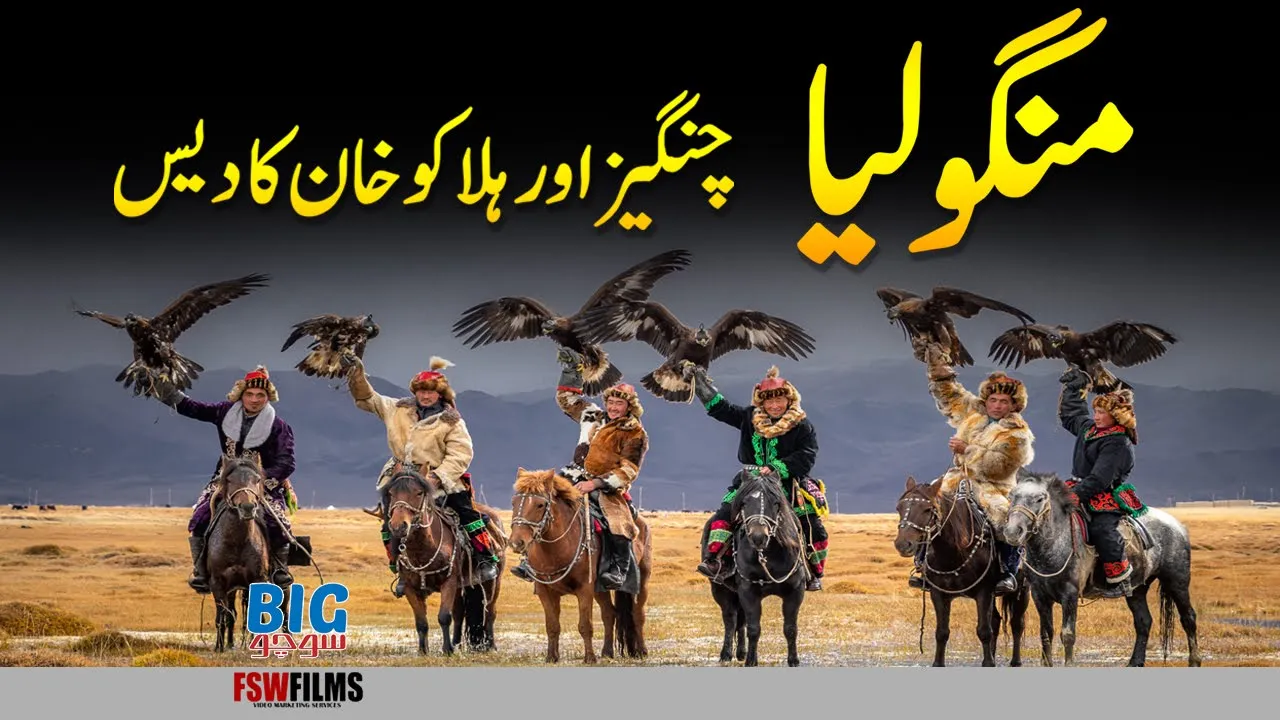









The Mongol Empire's lasting economic achievement was not its conquests but its creation of a unified continental trade network spanning 24 million square kilometers, which connected nearly the entire Eurasian landmass into one economic system through standardized taxation, protected trade routes (yam relay stations and paiza passports), and merit-based multinational administration; this infrastructure, which enabled unprecedented commerce and knowledge transfer, ultimately collapsed when the same connectivity that made it profitable also facilitated the rapid spread of the Black Death in the 1340s, while its institutional innovations survived to influence later empires including Ming China, the Ottoman Empire, and the Russian state.
The Economics of the Mongol Empire: Trade, Tax, and Power
Added:The basic geography and historical significance of the Silk Road prior to the 13th century.
The social and military structure of nomadic pastoralist societies in contrast to settled agrarian civilizations.
Fundamental economic principles of medieval trade, including tribute systems, tariffs, and commodity exchange.
The rise of Genghis Khan and the initial territorial expansion of the Mongol Empire.
The economic and epidemiological consequences of the Pax Mongolica, specifically the facilitation of the Black Death's spread.
The monetary policies of the Yuan Dynasty, particularly their pioneering and widespread use of paper fiat currency (Chao).
A comparative analysis of land-based imperial trade economics versus the maritime trade networks of the early modern era.
The institutional legacies of Mongol administrative infrastructure, such as the Yam postal system, on modern state-building.
128 views6likes23:46Original Release: 2026-07-25
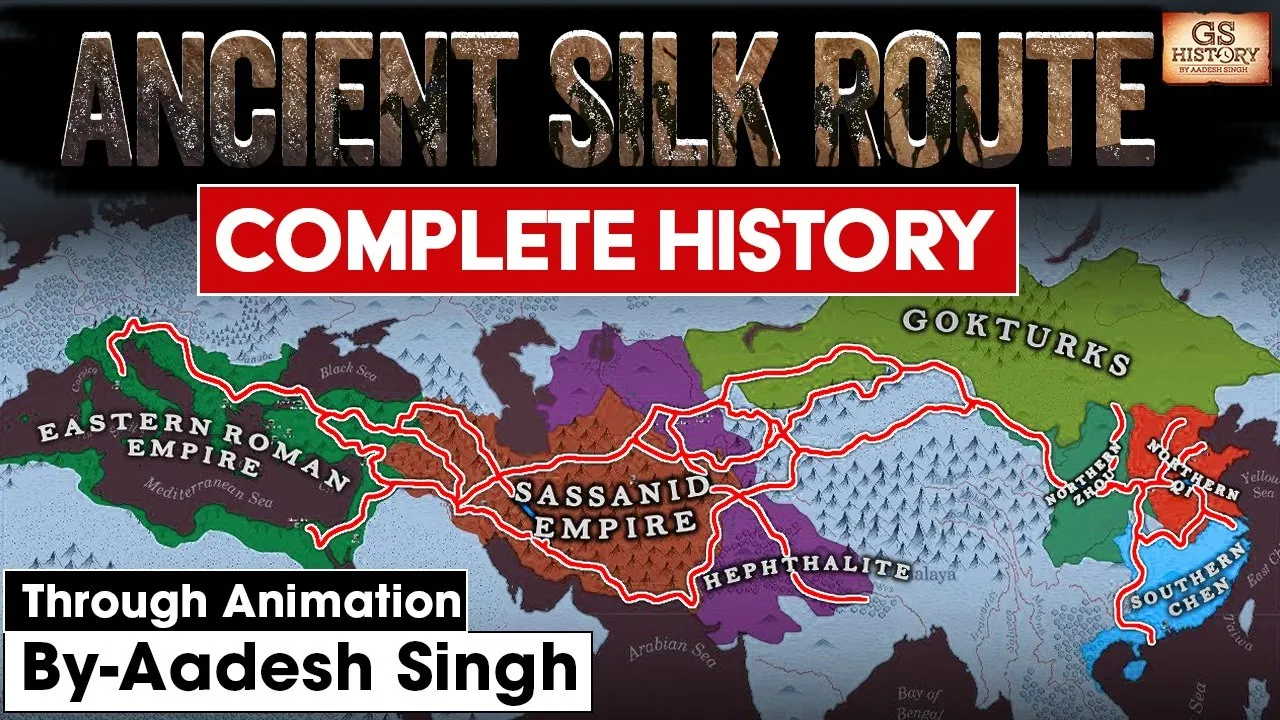
The empire that made distance profitable picture a merchant standing in Beijing in the year 1271 loading a caravan with silk and porcelain and telling his family he'll see them again after he sells his goods on the shores of the Black Sea. That single trip crossed what today would be more than a dozen countries. And yet at that moment it was legally one country, one set of rules, one set of protections, one authority that could punish anyone who robbed him along the way. Nothing like that had existed before anywhere on that scale.
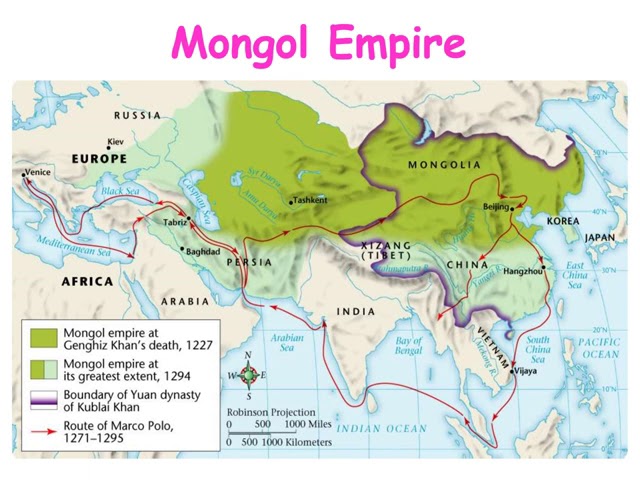
At its largest, the Mongol Empire roughly 24 million square kilometers.
That's an area larger than the entire continent of Africa. But here's the thing almost nobody tells you. Conquest was never the achievement people remember it as. The real achievement, the one that actually made the empire rich, was something far less dramatic.
It was tax collection. It was logistics.
It was in the most literal sense turning organized violence into a functioning economic machine. And this immediately breaks the assumption most people walk in with. The story usually goes the Mongols rode in, burned everything, stole everything, and rode out richer.
That's true for exactly one phase of this empire's life. Loot pays once. A city can only be robbed one time. After that, it's just ash and ash doesn't generate revenue. The people who actually ran this empire for decades figured that out fast. And what they built instead was something closer to a tax and trade system spanning half the known world. Here's the central question this entire story is built around. How does an empire that is remembered for annihilating cities end up being one of history's most profitable trading systems? And why, given how well that system worked, did it eventually collapse? Some of the wealth that later fueled European trade and banking has roots that trace directly back to networks the Mongols built, mostly by accident, while trying to keep their own empire solvent. That's the destination.
But to understand how a society with no cities of its own pulled this off, you have to go back to what these people had before any of the conquering started.
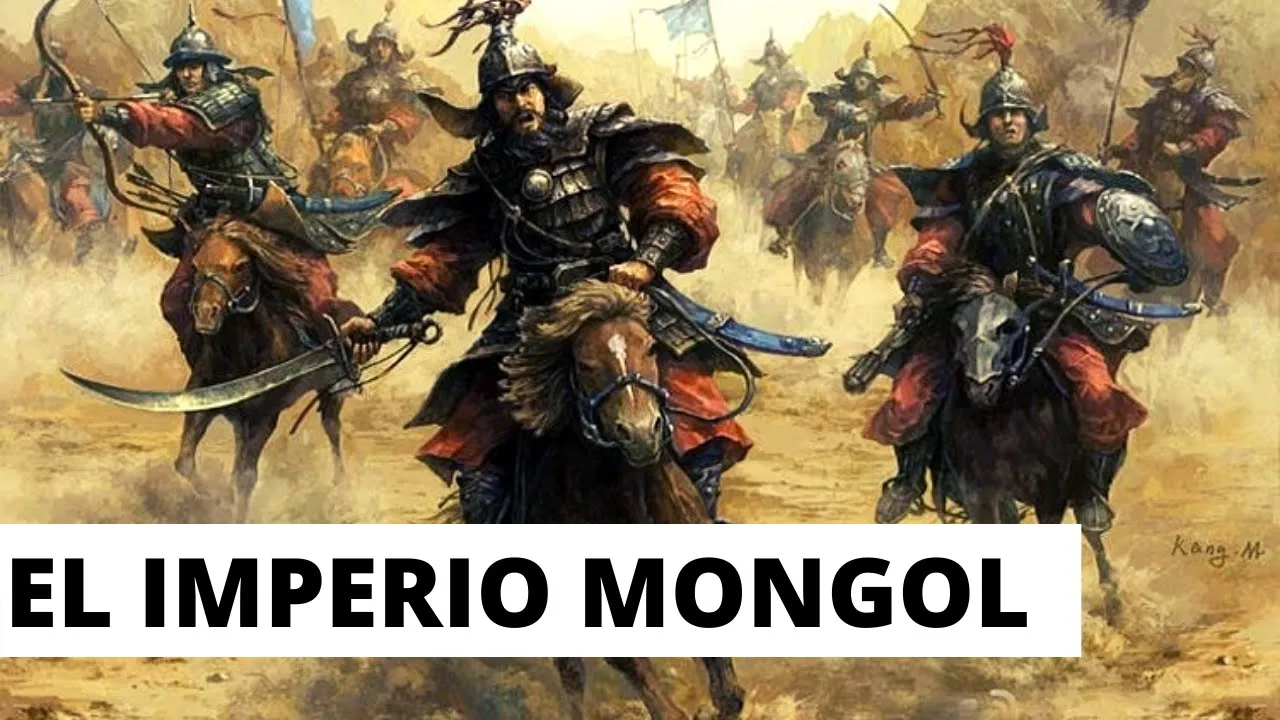
The nomads who didn't need cities before the year 1206, when a chieftain named Temüjin unified the tribe of the steppe and became known as Genghis Khan, the Mongols had no permanent cities, no mints, no formal government offices, nothing that a settled society would recognize as an economy. Wealth for these people was walking around on four legs. Sheep, goats, cattle, camels, and horses. Herders sometimes called this the five snouts, and it wasn't a metaphor. It was literally how prosperity was measured. If a family had more animals, that family was richer.
There was no separate concept of currency because the currency was alive and had to be fed. Now, here's where it gets interesting. This lifestyle, built entirely around herding animals across huge distances, accidentally produced the most efficient light cavalry in world history. Every adult male already knew how to ride, already owned a horse, and already knew how to survive for weeks with almost no outside supply. A settled kingdom had to train soldiers and build supply wagons. The Mongols already had both built into daily life.
Their armies could move roughly two to three times faster than most agricultural empires of the era without needing anywhere near the same logistics tail. But here's the problem this created once Genghis Khan actually unified the tribes into one political structure. A herding economy cannot fund a government. You can't tax a family's goats without destroying the very wealth you're trying to tax, and you can't build permanent institutions on an economic base that migrates twice a year. Political loyalty on the steppe had always worked through gift giving.
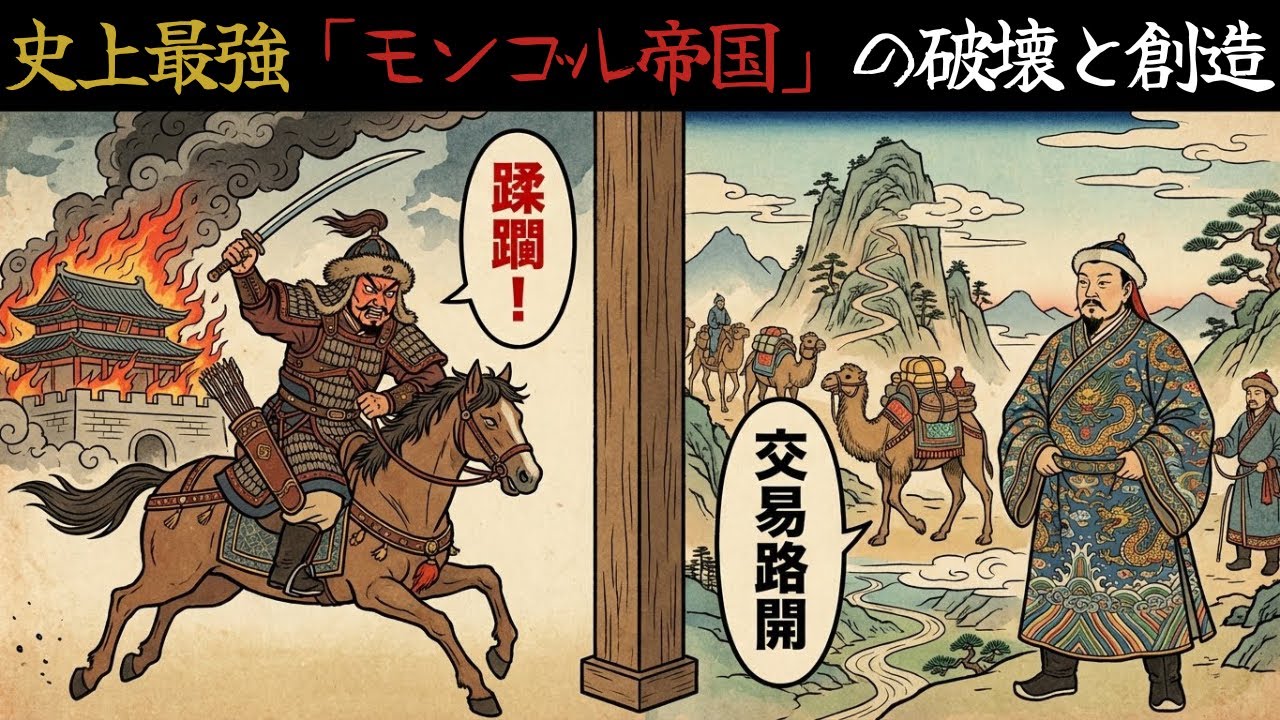
Leaders kept followers loyal by handing out captured animals and goods. Once Genghis Khan built a unified state, that same old system needed more input than internal Mongol society could ever produce. So, expansion wasn't a personality trait. It wasn't ambition for its own sake. It was closer to a mathematical requirement. The state needed external wealth flowing in constantly or the entire political structure holding these tribes together would fall apart. Which raises the next problem immediately. Conquering a wealthy settled civilization is one thing. Not destroying the very tax base you need to keep this system running is an entirely different problem. So, how did they solve that? Why destroying cities was actually good business in April of 1221. Mongol forces under a commander named Tului reached the city of Nishapur in what is now northeastern Iran. What happened there was catastrophic. Historical accounts describe the near total destruction of the city and the killing of a large share of its population. Similar devastation followed at Merv, Samarkand, and Herat. From the outside, this looks like pure savagery with no economic logic behind it at all. But, look at what happened immediately after in city after city across the region. Word of Nishapur spread faster than any army could travel. And once that story spread, something changed. Cities that surrendered the moment Mongol forces appeared were treated completely differently. They paid tribute. They accepted an appointed governor. Their buildings stayed standing. Their farms kept producing. Their tax base stayed intact. This is deterrents economics, and it's brutally efficient. One horrifying well-publicized destruction can convince dozens of future targets to surrender without a fight. Every city that surrenders instead of resisting saves the Mongols an expensive siege, saves their own soldiers' lives, and most importantly, keeps a productive taxable economy alive instead of turning it into rubble. And here's the detail that gets missed constantly. Even in the worst sackings, the destruction wasn't actually total or indiscriminate. Mongol officers went through conquered populations and pulled out specific people before the killing happened.
Engineers, metalworkers, textile weavers, anyone who could read and do accounting. These people were declared imperial property and shipped east, sometimes thousands of kilometers, to work in workshops that produced weapons, luxury goods, and administrative documents for the empire. There's a man who explains this shift better than anyone else in this story. His name was Yelu Chucai, a Khitan scholar who had served the previous Chinese dynasty and ended up advising Genghis Khan and later his son Ogedei. When some of the more traditional Mongol commanders proposed simply exterminating the farming population of northern China and turning the farmland into pasture for horses, Yelu Chucai did something clever. He didn't argue morality. He argued numbers. He showed the court that a properly taxed, alive population of northern China could generate roughly 500,000 oz of silver, 80,000 bolts of silk, and 400,000 bags of grain every single year. Every year, not once.
Plunder is a single transaction. A taxpayer is a recurring one. That distinction, obvious once you say it out loud, is the entire pivot point of this empire's economic history. Once conquest slowed down and cities stopped falling every year, the empire needed something else to keep the money flowing.
So, where did that money actually come from? Where the money actually flowed?
Here's something that surprises people.
The Mongol elite themselves mostly couldn't read the languages of the people they ruled and had no experience running a tax office. So, instead of trying to build their own bureaucracy from nothing, they recruited one.
Persian scribes, Chinese administrators, Uyghur accountants, and Central Asian Muslim officials were slotted into a layered tax system that covered agricultural land, urban commerce, and state monopolies on goods like salt and iron all at once. There was actually a strategic reason behind the mix of nationalities running these tax offices.
If you put local elites in charge of taxing their own neighbors, they tend to quietly underreport what's owed and split the difference with people they know. So, the Mongol court deliberately posted foreign administrators, people with no local social ties, into these roles. A Persian bureaucrat had no reason to protect Chinese taxpayers from the full assessment, and a Chinese administrator running finances in a Persian territory had the exact same lack of local loyalty. It's an old trick, and it still shows up in modern anti-corruption design. And this is the part that genuinely surprises people who assume conquest was the main revenue source. Merchants and market activity frequently generated more net cash for the Imperial Treasury than newly seized land did. Farmland takes years to fully integrate into a tax system. A busy trade route starts generating customs revenue almost immediately. To make any of this work at scale, the empire needed to know exactly how many people it was ruling and what they owned. That meant censuses conducted repeatedly across regions as different as Russia, Persia, and China. Feeding into a tax structure that was strangely standardized considering how culturally different all these regions were from one another.
All of this tax revenue depended on one thing that sounds almost too simple to matter. Merchants had to actually be willing to travel through territory that a decade earlier had been an active war zone.
So, what convinced them it was suddenly safe to do that? The passport that changed Eurasia. Here's a problem that doesn't get talked about enough. You can conquer land, but you can't just declare a road safe. If a merchant gets robbed 40 km outside a city on a road with no soldiers, no shelter, and no accountability, that merchant stops traveling. And without merchants moving, all that carefully designed taxation on trade collects nothing. So, the Mongols built two systems to solve this, and both were genuinely ahead of their time.
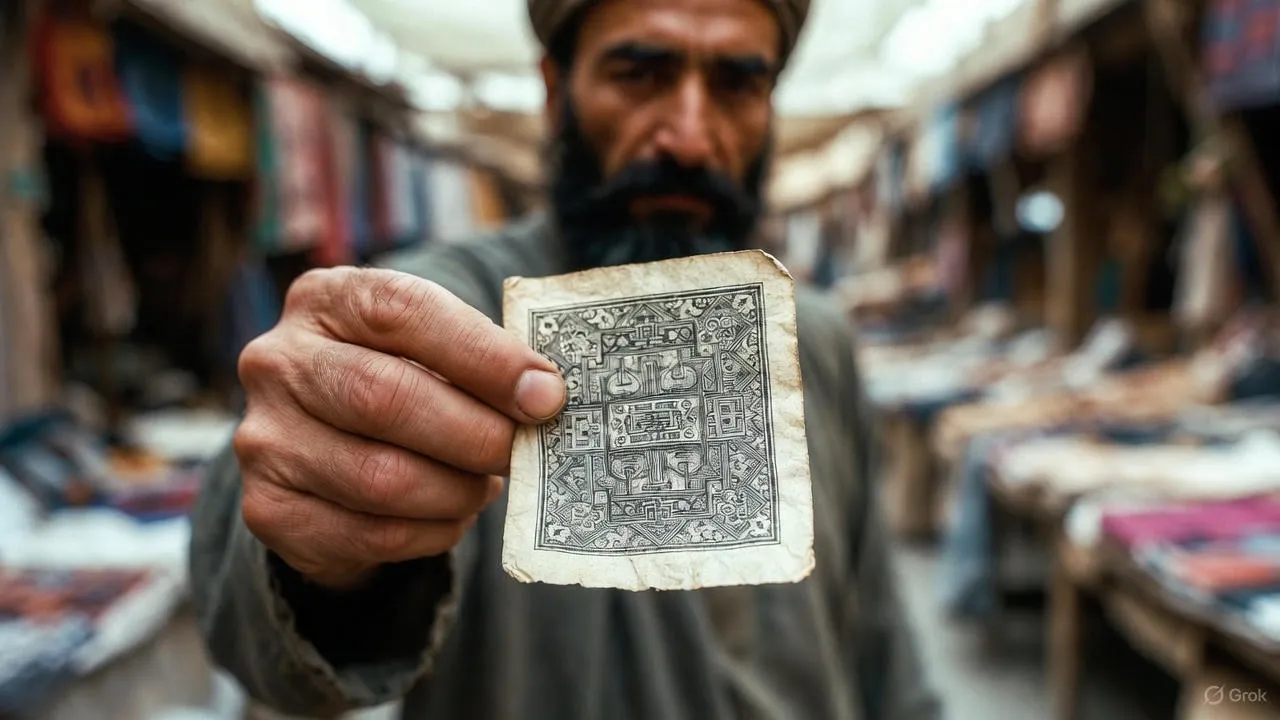
The first was a physical object called a paiza. Sometimes made of wood, sometimes bronze, and for the most important travelers, gold. Think of it as something between a diplomatic passport and an all-access badge. Whoever carried one could demand food, fresh horses, and shelter from official stations along the route, and local authorities were required to comply. Foreign merchants, especially valuable ones, were sometimes given paizas that came with tax exemptions specifically to lure them into using these routes. The second system was the yam, a relay network of way stations spaced roughly 40 to 60 km apart along the empire's major roads.
Each station kept fresh horses, food, and lodging ready at all times. A courier could ride to one station, swap onto a rested horse, and keep going, covering distances of 200 to 300 km in a single day. A speed that most of the world wouldn't see matched again until the arrival of railway centuries later.
By the time Kublai Khan ruled China, the country alone had more than 1,400 of these postal stations, supported by tens of thousands of horses, oxen, and carts.
What this actually did, in plain terms, slashed the cost and risk of moving goods across enormous distances. A Venetian trader, a Persian merchant, and a Chinese silk dealer could now use the same protected road network, something that would have been unthinkable one generation earlier. Secure roads, it turns out, were worth more to this empire long-term than any single pile of looted gold. Once merchants could actually move safely, one very practical question follows immediately.
Move safely with what?
What were people actually buying and selling across this network that made all this infrastructure worth building?
The trade routes that minted empires along these protected highways, an enormous range of goods moved in both directions. Silk and gold-threaded textiles from China, porcelain fired in kilns near Jingdezhen, some of it decorated using cobalt imported from Persia, silver bullion moving from Central Europe toward Chinese markets, horses bred on the Mongolian steppe, sold into agricultural regions that desperately needed them, paper and printing techniques, which eventually made their way toward the Islamic world, and later Europe. Here's a detail that seems counterintuitive at first. The Mongols taxed this trade repeatedly at multiple points along its journey, and yet somehow didn't strangle it. The reason is that even with several rounds of taxation, secure travel had cut costs and risks so dramatically that merchants still came out ahead compared to the dangerous, unprotected routes of the previous century. And the empire's political capital, a city called Karakorum, sitting out in the Mongolian steppe, was never actually the center of this economy. It mattered politically.
Economically, the real value sat in the connective tissue between dozens of commercial hubs like Tabriz, Samarkand, and the ports along the Black Sea. The roads mattered more than the capital.
There's also a category of trade that rarely makes it into the popular story.
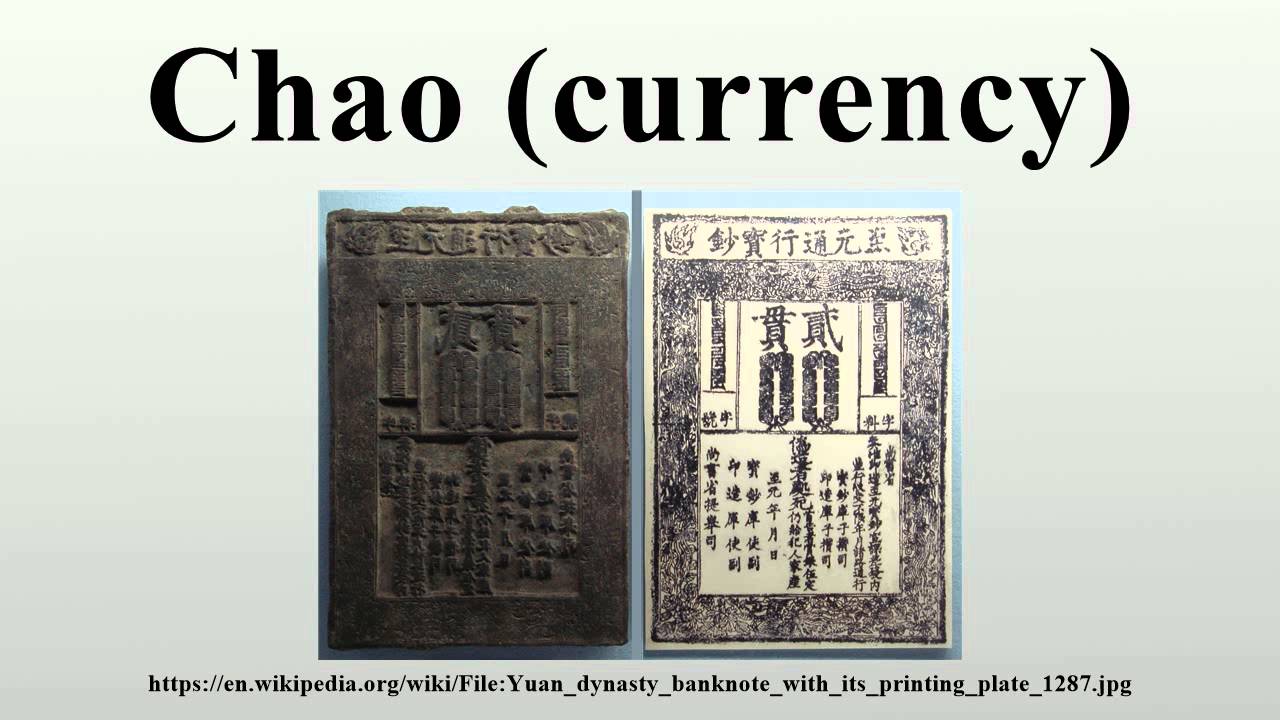
Along with silk and spices, this network moved siege engineers, military technology, administrative scripts, and financial techniques from one end of Eurasia to the other. Ideas and skills were quietly becoming just as tradable as physical goods. But, there was one enormous practical problem still unsolved. If you're a merchant carrying a fortune in silver across a continent, you're also carrying a fortune that can be stolen, and it's heavy. So, how did people move truly large sums of money without physically hauling metal for thousands of kilometers? The financial trick nobody associates with the Mongols under Kublai Khan, starting around the year 1260, the Yuan government introduced a paper currency called the chao. This wasn't the first paper money in Chinese history, but earlier versions issued by prior dynasties had been local or came with expiration dates. Kublai's version was different. It was meant to circulate permanently across the entire empire backed by state reserves of silver and silk, and printed using standardized bronze plates on paper made from mulberry bark. To make people actually trust a piece of paper as if it were gold, the government did something extreme. Refusing to accept the chao as payment was made punishable by death, and counterfeiting carried the same penalty. That sounds harsh, and it was, but it worked. A Venetian traveler named Marco Polo, who spent years at Kublai's court, wrote home describing this paper money with genuine astonishment, because nothing like it existed back in Europe.
At the same time, another financial innovation was quietly solving a separate problem. Financing a single long-distance caravan required paying for guards, animals, and supplies for months at a time, and one bad encounter with bandits could wipe out an individual merchant completely.
The solution was something called the ortoq, essentially an early investment partnership. Mongol nobles, princes, and military commanders would put up capital, usually in silver or silk, and hand it to merchant partners, often Muslim or Uyghur traders, who actually ran the caravans and split the profits according to an agreed ratio. If the venture failed, the investor absorbed most of the loss rather than the merchant who did the traveling. This structure is strikingly similar to partnership models that were developing independently in the Islamic world and in Italian city-states around the same era.
Here's the trap, though, and it's the same trap every fiat currency system eventually runs into. Paper money only works because people trust it, and trust depends on the government not printing endless amounts of it. In 1294, a ruler named Geketu Khan, governing the Persian branch of the empire, tried to force a copy of this Chinese paper system onto his own subjects almost overnight, with none of the decades of institutional trust building that backed it in China.
Merchants in Tabriz simply refused to accept it. Markets shut down. Riots followed, and Geketu was killed shortly after. The lesson here is blunt. You cannot force financial trust into existence through decree alone. It has to be built. That failure raises the next uncomfortable question. If forcing paper money too fast could break an entire regional economy, what happened when the empire that had gotten this system right elsewhere eventually pushed it too far as well?
The assumption that nearly broke the empire for decades, this system of paper currency and standardized taxation generated genuine wealth, but it had one structural flaw baked in from the beginning. Whoever controls the printing press is always tempted to solve budget problems by simply printing more money, rather than raising taxes or cutting spending. By the late 1200s, that temptation became irresistible.
The Yuan court launched a series of expensive military campaigns into Japan in 1274 and 1281, into Vietnam through the 1280s, and into Java in 1293. Every one of these campaigns consumed enormous amounts of silver, manpower, and ships, and every single one failed to produce new taxable territory or meaningful economic return. Money went out, almost nothing came back. At the same time, in order to secure political loyalty after several contested successions, Yuan emperors handed out enormous cash gifts to Mongol princes and regional nobles.
The treasury was being drained from two directions simultaneously by failed wars abroad and by political bribery at home.
The government's response was to print more chao without the silver reserves to back it. Prices for basic goods like grain and cloth began rising sharply.
People who had trusted the currency for decades started losing that trust exactly the way the earlier Persian episode had predicted. Running a vast settled bureaucracy across an empire this size was turning out to be far more expensive than conquering it had ever been. Underneath all of this, an older tension resurfaced. The whole apparatus of registered taxes, standing bureaucracies, and permanent institutions sat awkwardly against the traditional Mongol political culture, which had always been built around mobile tribal loyalty and redistributed wealth rather than fixed administration.
Financial stress didn't just weaken the treasury. It exposed old cracks between the different regional branches of the empire that had been quietly competing with each other for years. So, here's the real question this creates. If money alone couldn't hold this whole structure together anymore, what actually had been keeping such a vast and culturally different empire functioning for as long as it did? The human network hidden beneath the empire the answer isn't military force, and it isn't currency.
It's people, specifically a deliberately multinational civil service that ran almost entirely on merit rather than ethnicity or religion. Uyghur scribes adapted their own alphabet to help create a written Mongolian script and staffed much of the imperial chancellery. Persian and Central Asian Muslim officials managed revenue departments and oversaw those order of trade partnerships.
Chinese scholars ran civil administration and organized grain logistics along river systems. Nestorian Christian and Armenian agents worked as diplomatic couriers connecting distant courts. What's remarkable here is that these administrators frequently served rulers who didn't share their language, their religion, or their background at all. What held the system together wasn't cultural loyalty. It was shared professional value. Skilled people were useful regardless of where they came from, and the empire promoted based on that usefulness almost ruthlessly. This produced something genuinely unusual for the era. Persian physicians built hospitals and wrote medical texts in China. Chinese physicians introduced their own diagnostic methods into parts of the Islamic world. Muslim astronomers built observatories in the Mongol capital of Khanbaliq, near modern Beijing. Chinese engineers managed irrigation projects along rivers in the Middle East. Technical knowledge, in other words, was moving across the continent faster than armies ever had.
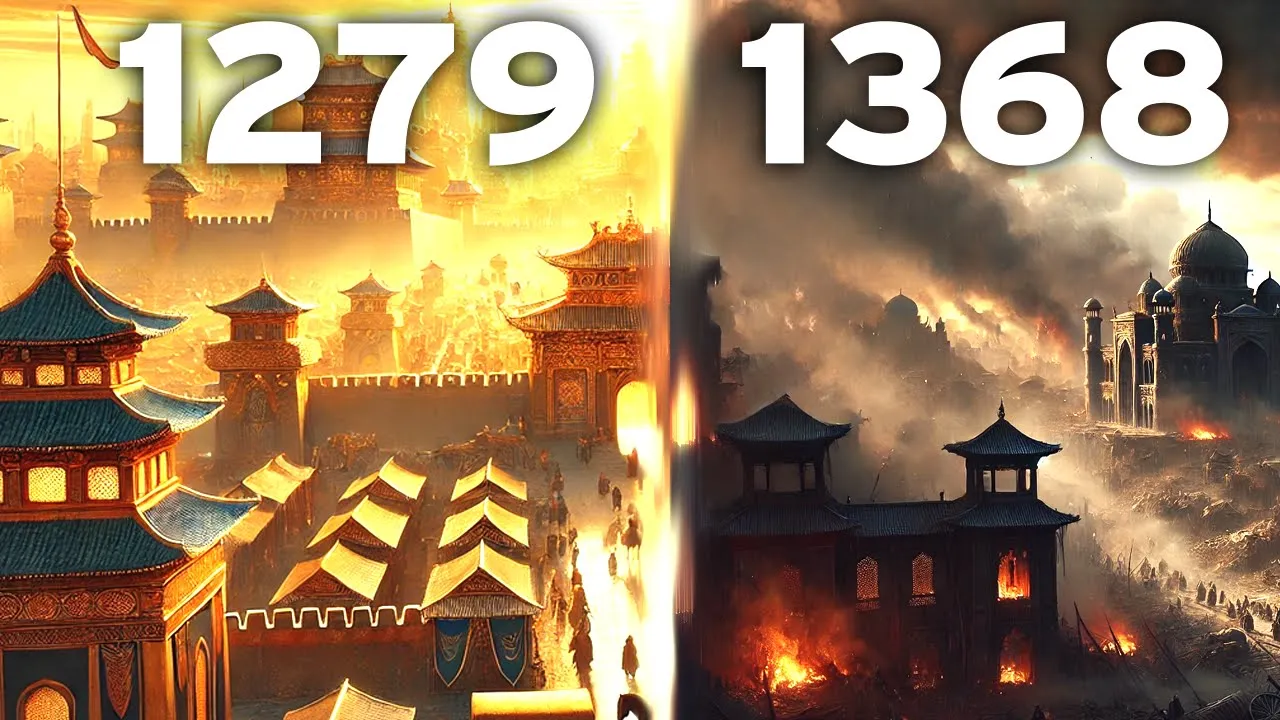
But this same network, the one moving silk, silver, and scientific knowledge with unprecedented speed, had a hidden flaw nobody could have anticipated. The very roads and relay stations built to move goods and information quickly were about to become the fastest transmission system for something far more dangerous than trade. The trade network that carried the Black Death in the early 1340s, a bacterium called Yersinia pestis, which had likely lived quietly among wild rodent populations on the Central Asian Steppe for a long time, entered the same trade network that had taken decades to build. The problem is that the exact infrastructure designed to move goods quickly, those yam relay stations and merchant caravans, also moved infected fleas hiding in furs, hides, and grain shipments. What would have taken years to spread across a continent under normal conditions moved in a matter of months. One especially important moment in this outbreak happened the siege of Caffa, a trading port on the Crimean coast in 1346.
The Mongol forces besieging the city under a leader named Janibeg suffered a devastating outbreak inside their own camp. According to one Italian writer from that era, the besieging army catapulted infected corpses over the city walls to spread the disease inside Caffa deliberately. Modern researchers think the disease more likely entered through local rats and grain regardless of that account, but the outcome was the same either way. Genoese ships fleeing the city carried the plague directly to Constantinople, Sicily, and eventually Venice and Genoa by the end of 1347. The same connectivity that had made this empire rich now made it catastrophically vulnerable. Estimates suggest the resulting pandemic killed somewhere between 30 and 60% of the population across large parts of Europe, the Middle East and China. Fields went unfarmed.
Workshops emptied out. And because tax revenue depended on a living, working population, government income collapsed right along with the death toll. This creates one final uncomfortable question. Once the worst of the disease had passed, why didn't the empire simply rebuild and go back to business as usual? When profit could no longer hold the empire. To gather the truth is the empire was already fracturing before the plague made things worse. After the death of Möngke Khan in 1259, during a campaign against Southern China, the empire split into four separate regional khanates. The Yuan Dynasty ruled China, the Ilkhanate ruled Persia, the Golden Horde controlled parts of Eastern Europe, the Chagatai Khanate held Central Asia. For a while these four pieces cooperated reasonably well, but cooperation slowly turned into competition, and competition eventually turned into open conflict. The Ilkhanate and the Golden Horde fought over valuable trade corridors through the Caucasus. The Chagatai Khanate clashed with the Yuan court over control of oasis routes in Central Asia. Every one of these regional conflicts chipped away at the very thing that had made this whole system profitable in the first place, which was unified, predictable, low-friction trade. Instead of one coordinated customs policy, merchants now faced a patchwork of competing regional tariffs and illegal tolls thrown up by rulers desperate for their own local revenue. Maintenance on those famous Yam relay stations declined as regional cons redirected funds toward their own conflicts instead. Security along the roads deteriorated and banditry, the exact problem the Paiza and Yam systems had been built to eliminate, came back. Local rulers, faced with their own short-term survival, consistently chose to protect their own regional income rather than sacrifice for the wider imperial system.
Economic fragmentation came first.
Political collapse followed right behind it because once the roads stopped being safe and profitable, there was no longer a strong enough reason for these four khanates to stay connected at all. Which leaves one last thing worth asking.
If the empire itself eventually disappeared, did everything it had built disappear along with it? The economy that outlived the Mongols.
Here's the part of this story that actually answers the original question.
The physical empire fell apart in the middle of the 1300s, but the institutions it built didn't vanish with it. In China, the Ming dynasty that replaced the Yuan kept the postal relay network, the census system, and much of the provincial administrative structure largely intact, just under new management. In the west, the Ottoman Empire adapted that same relay concept into their own courier system called the Ulak, using it to project central authority across Anatolia and the Balkans. In the east, the rising state of Moscow adapted census methods and postal networks originally built by the Golden Horde into something called the Yamskaya Gonba, which helped Moscow govern the enormous distances of Russia and Siberia for centuries afterward.
European merchants and travelers, most famously Marco Polo, carried first-hand knowledge of Asian markets, geography, and trade practices back to a Europe that had never had reliable access to that information before. When the overland routes eventually fragmented following the empire's collapse, European powers, hungry for the wealth those routes had once promised, began searching for ocean routes to Asia instead. That search is a direct contributor to what later became known as the Age of Discovery. So, here's the actual twist buried underneath all of this. This empire is remembered almost entirely for its violence, for the burned cities and the staggering death tolls of its early conquests. But, its longest-lasting achievement was never the land it took. It was the fact that for roughly a century, it connected nearly the entire Eurasian landmass into one economic system with shared infrastructure, shared financial practices, and the level of trade security that hadn't existed before. And in some ways, wouldn't exist again for centuries. An empire built on destruction ended up leaving behind one of history's first truly continental economy.
Up Next
20:55
Why Were the Mongols So Effective? Military Strategy & Logistics
@MilitaryHistoryVisualized
243.7K views•2018-09-25

33:02
The Great Schism of 1054: Causes and Consequences
@SacredCathedrals
113.5K views•2026-02-19

91:57
The Geopolitics of the Ukraine War and the Rise of Global Autocracy
@JordanHarbingerShow
468K views•2025-04-19

17:05
Understanding the Cold War: Superpower Conflicts and the Road to Détente
@OverSimplified
46.1M views•2019-01-24
Related Study Plans & Knowledge Roadmaps
Structured learning paths in History
history
Byzantine Iconoclasm: Theology, Art & Politics
01Foundations of Byzantium and Early Christian Images
02The First Iconoclasm: Leo III and the Crisis of Images
03Empress Irene, Nicaea II, and the Second Iconoclasm
+ 2 more learning modules
9h5 modules
Explore Roadmap
history
Iranian Revolution (Causes, Events & Legacy)
01The Pahlavi Dynasty and the Roots of Discontent
02The Spark of Rebellion and the Rise of Khomeini
031979: The Fall of the Shah and the Climax of the Revolution
+ 2 more learning modules
8h5 modules
Explore Roadmap
history
Mali Empire: Mansa Musa, Trade & Timbuktu
01Foundations of the Mali Empire
02The Trans-Saharan Gold and Salt Trade
03The Reign and Pilgrimage of Mansa Musa
+ 1 more learning modules
6h4 modules
Explore Roadmap
history
1947 Partition: Politics, Borders & Legacies
01Foundations of British India and the Divide
02The Political Negotiations and the Mountbatten Plan
03Drawing the Boundary: The Radcliffe Line
+ 2 more learning modules
8h5 modules
Explore Roadmap