

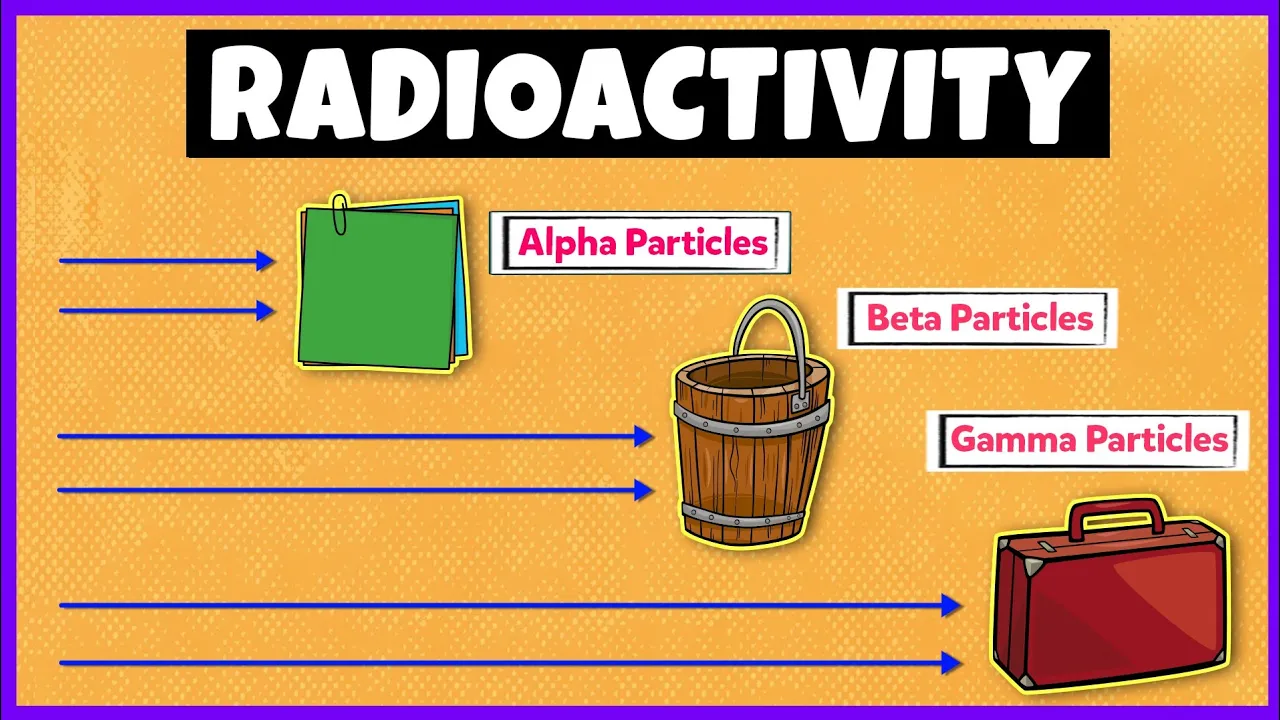

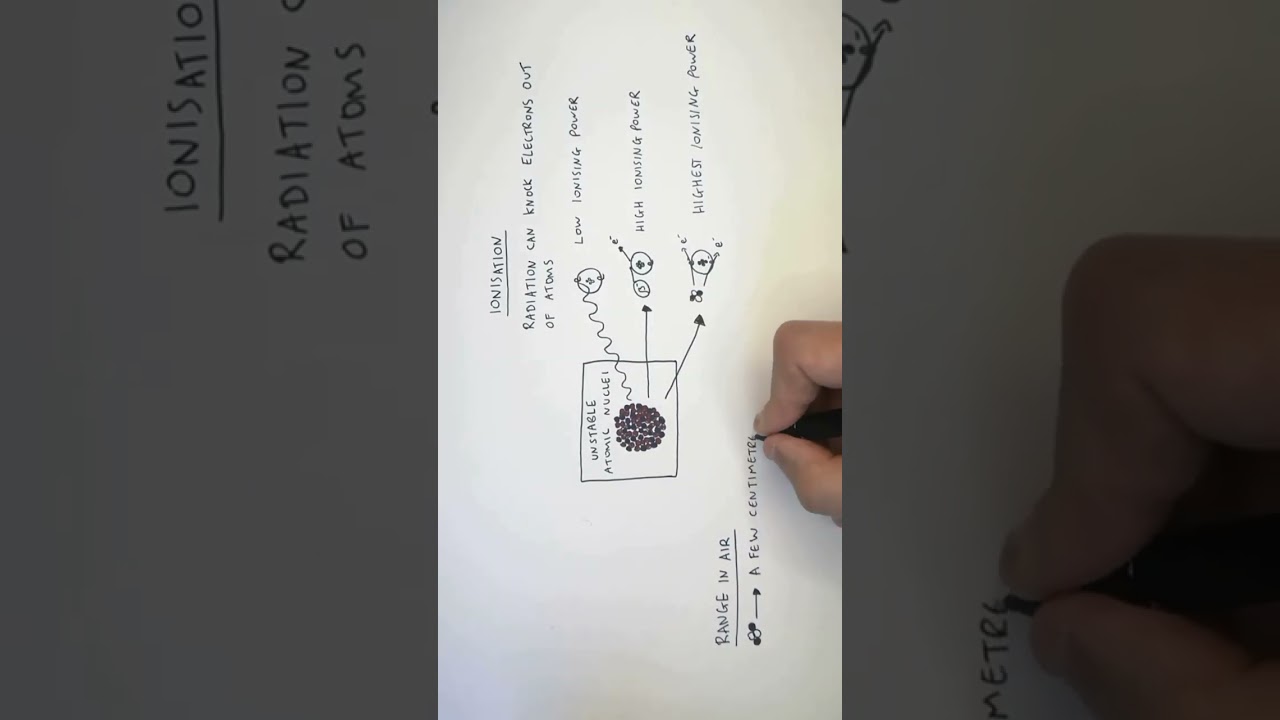
















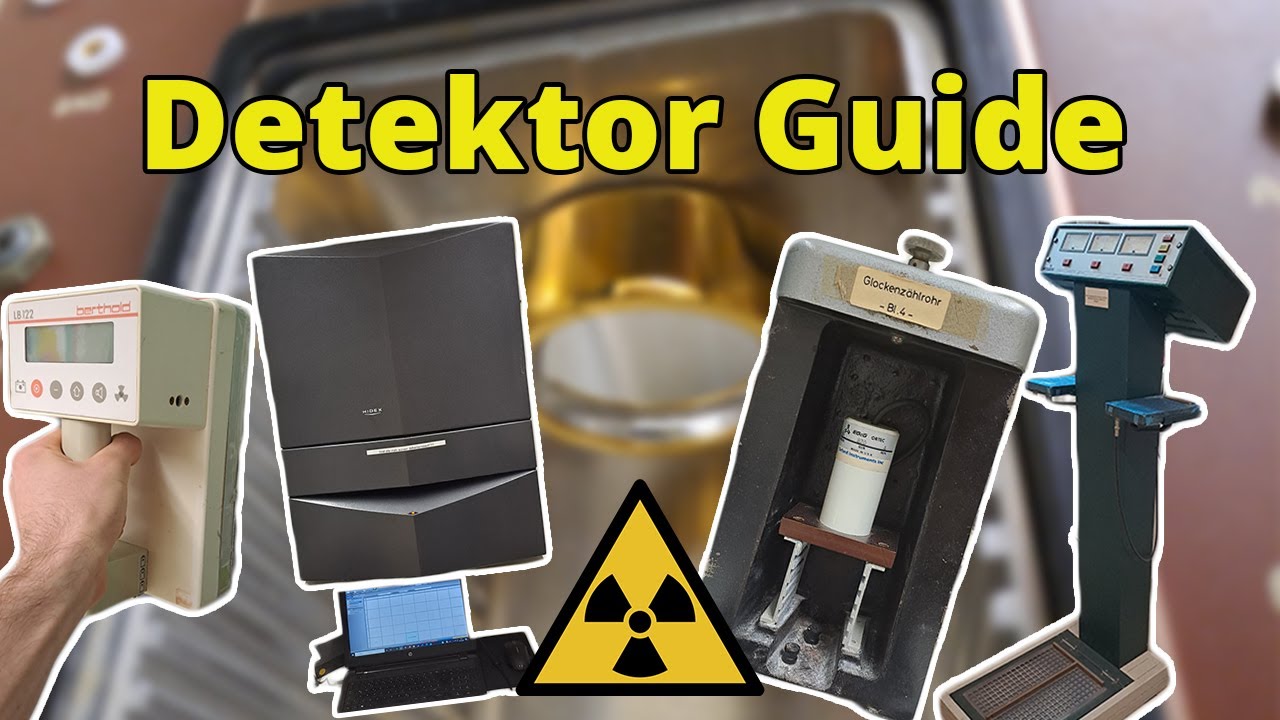




A Geiger counter detects nuclear radiation using a Geiger-Müller tube, which contains a noble gas (such as argon or neon) at high voltage (260-400V); when ionizing radiation like beta or gamma particles passes through the tube, it knocks electrons free from gas atoms, creating an electrical current that produces audible clicks and measurable readings, while alpha particles are too large to penetrate the tube wall.
How a Geiger Counter Works: Physics of Radiation Detection
Added:Understanding the basics of ionizing radiation, specifically the differences between alpha particles, beta particles, and gamma rays.
Fundamental concepts of atomic structure, particularly how neutral gas atoms can be ionized by stripping away electrons.
Basic electrostatics and circuit theory, including how voltage, electric fields, anodes, and cathodes interact to move charged particles.
The physics of the Townsend Avalanche and Geiger discharge, which explain the gas multiplication process within the detector.
The concept of 'dead time' and 'recovery time' in gas-filled detectors, and how it limits measurement at high radiation levels.
Comparative analysis of alternative radiation detection technologies, such as scintillation counters and solid-state semiconductor detectors.
Practical radiation dosimetry and safety, including how raw pulse counts are calibrated into biological dose rates (e.g., Sieverts or Grays).
2K views163likes10:43Original Release: 2023-09-19
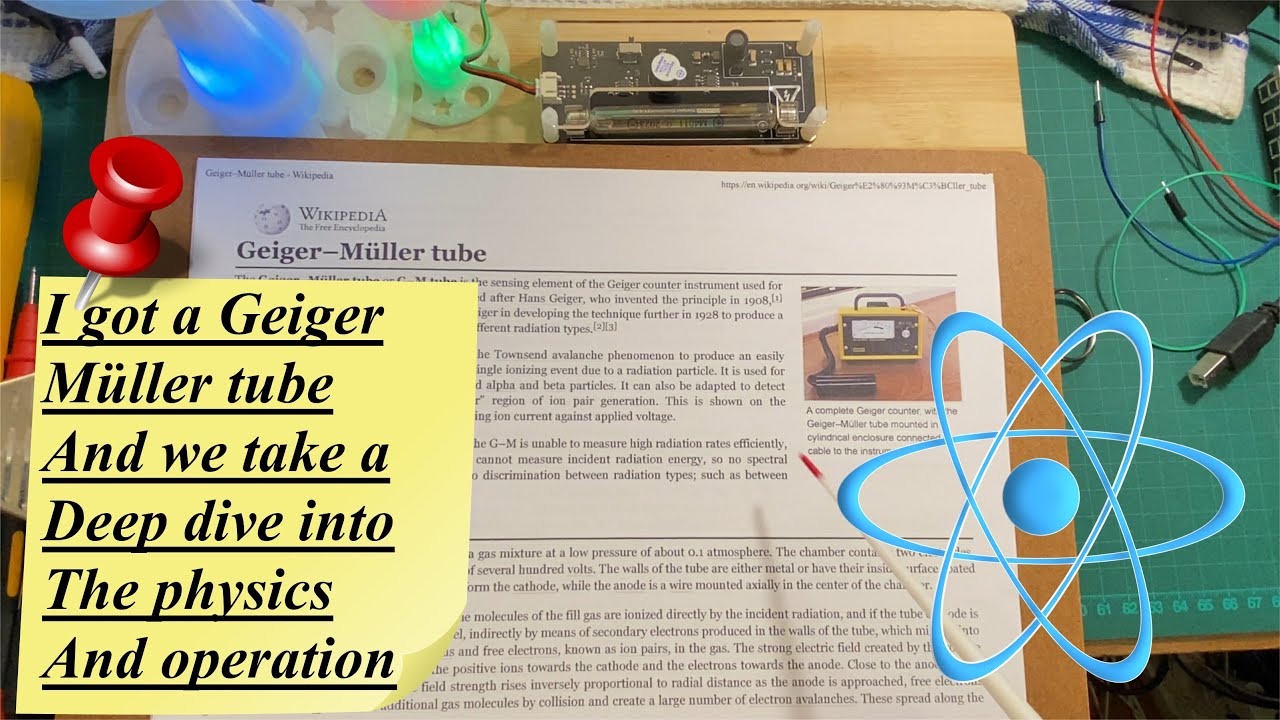
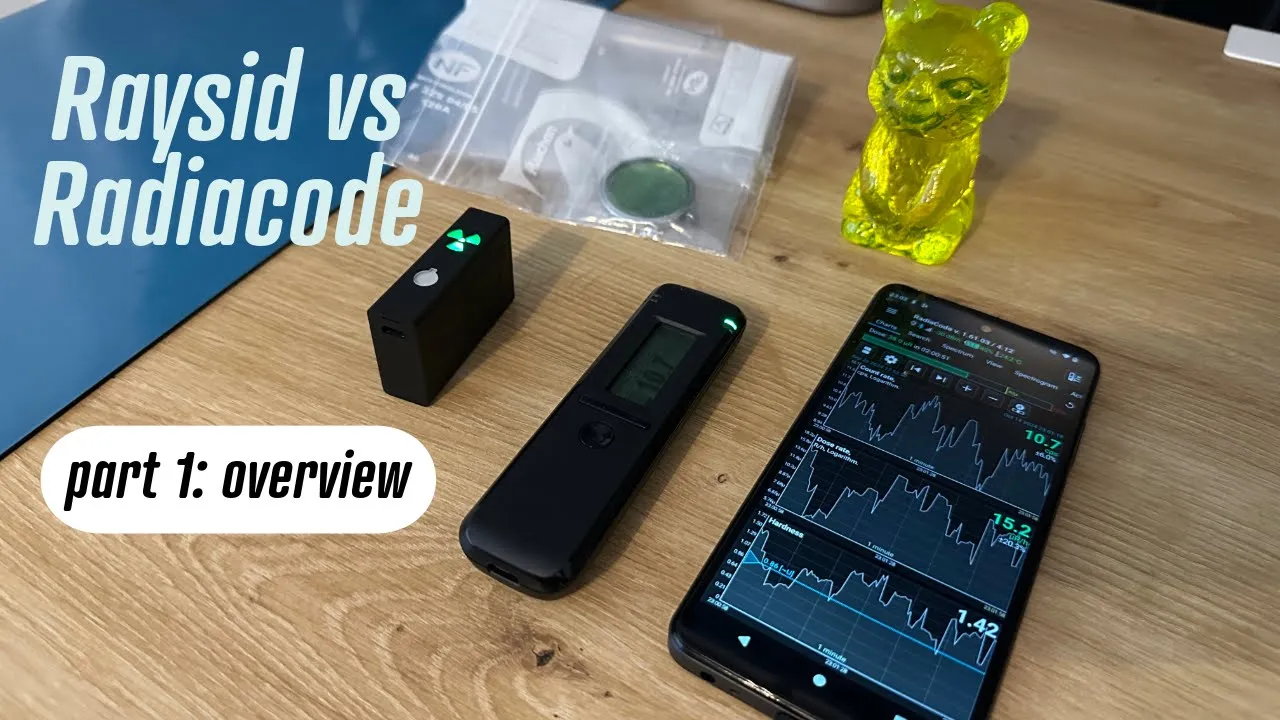
this video has been sponsored by solder stick more on that at the end hey what's happening guys today I'm taking a look at this really low cost little geiger counter I got it off of uh Amazon for 25 I think thank you patrons and uh the reason I bought it is somebody had asked me a question as to how does a geiger counter work so I thought we would uh talk about that because I think it's pretty neat and it's pretty interesting and the best part is it's super simple so the heart of this and where it gets its name is the tube also known as a geiger motor tube named after the you know two people that invented it and there is our GM tube right there now you see these holes in the case here that is to allow the ionized particles in here and for some reason they have stuck the tube in a piece of um shrink wrap and I don't know why they did that that is really weird let's see if I can uh cut this off because I want you guys to see oops wearable I want you to see what the tube looks like air so there is our Geiger Mueller tube now we get any closer so you guys can see maybe maybe what we need is some more light here there we go so what you can see there is a glass tube it's got a cap at each end and a wire running through the center of it this is the heart to the geiger counter this is where all the magic happens everything else here is just to do calculations and drive the display the actual hard work is done in that little tube so let me move this stuff out of the way here and bring in a high-tech educational device known as a piece of paper all right so let's draw so this will be our tube such as that and at each end we have that cap and we have an electrode now one electrode goes all the way through the center of the GM tube and that is the anode this on the other hand connects to in this case the glass there are also a metallic Geiger Mueller tubes now inside the tube is or are particles of an inert gas a noble gas neon argon Xenon Krypton so that's these little green dots and now we apply a very high charge say a couple hundred volts I'm not exactly sure what the voltage is let me let me look just to be sure so I was close from 260 to 400 volts is placed in there so we have our thank you high voltage charge there and then we have our ground here so what we've done or what we're doing is we are holding this tube at a very high potential there is let's say we go the high end so we have 400 volts of potential between the anode here and the cat food and we have noble gases inside they're called Noble because they do not want to interact with anything however when a charged particle comes flying at the tube it can easily well depending on the type of particle alpha particles will not pass through the tube alpha particles or just two fat helium nucleuses stuck together they're too big to get through anything but beta and gamma particles will definitely come through here so there what's going to happen is these particles are going to pass right through there a close to the speed of light but in doing so what's going to happen is they are going to ionize these particles here and by ionizing what I mean is they are going to rip off the electrons and when they do that we now have free-flowing electrons I'm out of colors wow that stinks okay we'll go back to another blue so now we have fleaf free I can't even talk free flowing electrons that's these little blue dots in here that have been liberated by that highly charged particle so now these free-flowing electrons are able to make contact between the outside the cathode and the inside right here are anode and when they do that we can take a reading off here and send it to our microprocessor and that right there is the entire key to how one of these things work all right let's put this thing back together so basically everything beyond that tube is window dashing in these things you could literally buy a GM tube off of eBay hook it up to an Arduino and it'll do everything this does here I mean they're really cool Hans Geiger was the uh the German physicist who invented Along with whoever Mr Mueller was the uh the guy you're too back in 1920 eight I think I think I'm not sure but anyway the original um GM tubes were used to prove what is known as the Compton effect and I invite you dear viewer to check out the Compton effect on your own anyway got your counter you can get them super cheap I'll put a link to this one like I said like less than 25 dollars and uh they're fun to play with you know turn it on uh this one's reading in micro receivers but you you can change it to read and uh whoops again sending unit okay yeah micro receivers uh micro RADS and micro guy I don't know what that is I'm not a nuclear physicist micro sieverts is usually what most people look at you can see our background radiation here is 0.08 micro secrets and yeah basically nothing all right guys that's all I have for you today I hope you enjoyed this if you did give me a thumbs up feel free to comment share and don't forget to subscribe big thanks to all the patrons big thanks a solder stick for sponsoring this video and a big thanks to you for watching that's it I'm out peace today's video is brought to you by solder stick solder stick makes quick waterproof wire connections that last a long time and protect whatever it is you're working on they sell different types of connectors everything from t-tap connectors which allow you to put a splice into the middle of a wire without having to cut the wire or remove any insulation waterproof melt butt connector kits Spade connector kits which if you work on cars or boats you know how useful they will be and the same goes for ring connectors when you need to connect the wire to something with a nut and a bolt this is simply the way to do it solder stick remember them for all of your wire connection needs there's a link down below for a discount
Up Next

3:03
The SOFAR Channel: How Sound Travels Thousands of Miles in the Ocean
@lauraschwartz9047
3.1K views•2018-12-11

12:53
21cm Hyperfine Transition in Neutral Hydrogen: Radio Astronomy Basics
@AaronRobertParsons
12.4K views•2011-10-13

32:32
NMR Spin Physics I: Zeeman Effect, Resonance Condition & Larmor Frequency
@nptel-indianinstituteofsci8064
2.3K views•2024-01-17

27:14
Entropy and the Second Law of Thermodynamics Explained
@veritasium
27.5M views•2023-07-01
Related Study Plans & Knowledge Roadmaps
Structured learning paths in Physics
physics
Nuclear Physics (Decay, Fission & Reactors)
01Atomic Structure and the Binding Force
02Radioactive Decay and Half-Life
03Nuclear Fission Mechanics and Chain Reactions
+ 2 more learning modules
12h5 modules
Explore Roadmap
physics
Soft Matter (Polymers, Colloids & Rheology)
01Foundations of Soft Matter & Thermal Forces
02Polymer Physics and Macromolecules
03Colloids, Surfactants, and Self-Assembly
+ 2 more learning modules
38h5 modules
Explore Roadmap
physics
Analytical Mechanics: Lagrangian & Hamiltonian
01Mathematical Foundations: Calculus of Variations
02From Newtonian Mechanics to Constraint Dynamics
03The Principle of Least Action & Lagrangian Mechanics
+ 3 more learning modules
28h6 modules
Explore Roadmap
physics
General Relativity (Spacetime & Cosmology)
01Foundations of Relativity: Special Relativity
02The Geometry of Spacetime: Equivalence Principle & Curvature
03Einstein's Field Equations: The Mathematics of Gravity
+ 2 more learning modules
55h5 modules
Explore Roadmap