





























Social and cultural structures profoundly shape human character and perception, as demonstrated by research showing that Western, Educated, Industrialized, Rich, and Democratic (WEIRD) individuals exhibit atypical responses in perception, categorization, memory, attention, self-concepts, fairness judgments, cooperation tendencies, and moral judgments compared to individuals from non-Western or non-industrialized societies, challenging philosophical assumptions about universal human nature.
Social Structures & Moral Luck | Philosophy of Human Nature
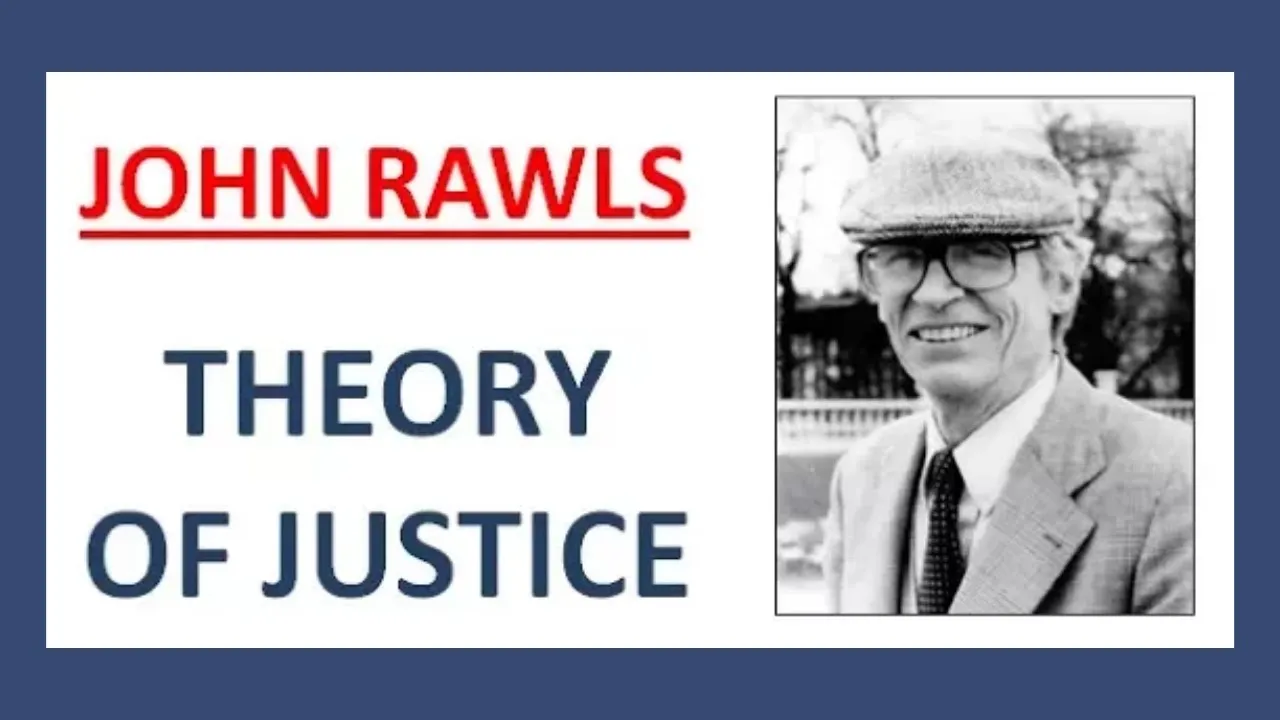
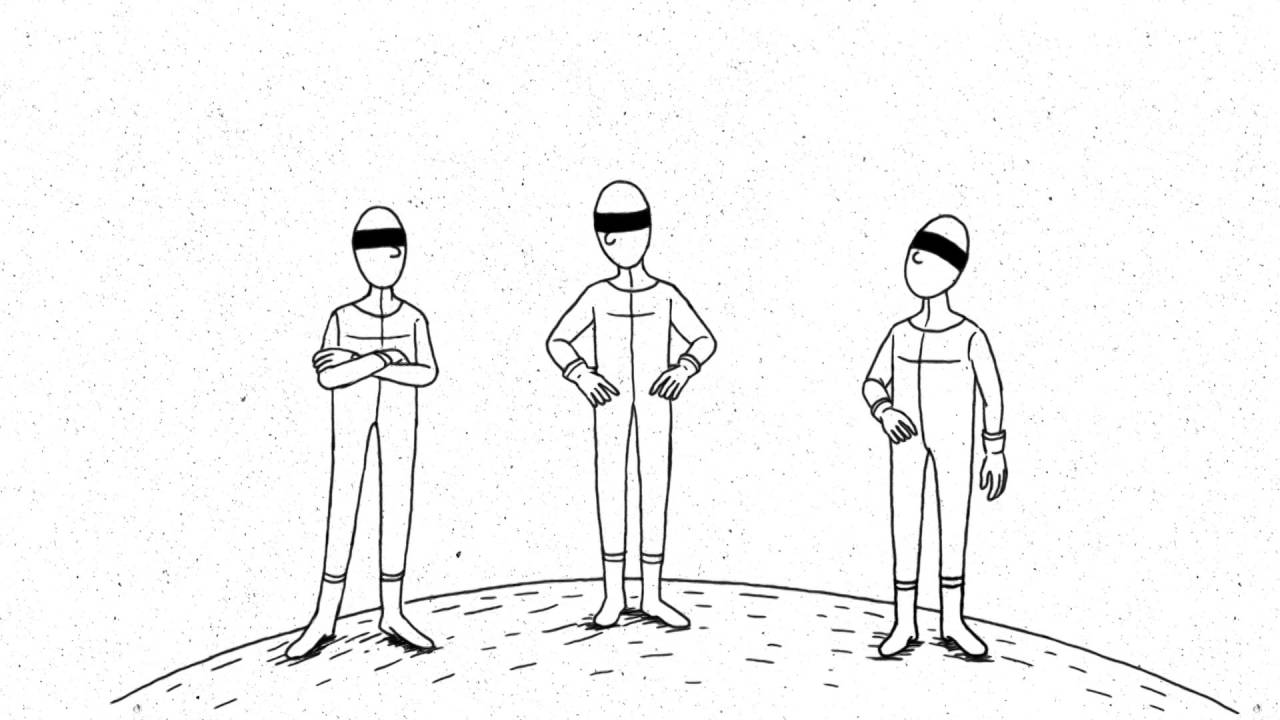
Added:Fundamental concepts of John Rawls's theory of distributive justice, specifically the 'veil of ignorance' and the Difference Principle.
Robert Nozick's libertarian philosophy and his 'entitlement theory' of justice, which contrasts with pattern-based distribution.
The philosophical concept of 'moral luck' (developed by Bernard Williams and Thomas Nagel), which examines how external factors influence moral praise and blame.
An introductory understanding of WEIRD (Western, Educated, Industrialized, Rich, Democratic) psychology and how culture shapes cognitive and moral frameworks.
The debate between situationism and virtue ethics, analyzing whether human character traits are stable or highly dependent on environmental contexts.
The application of Rawlsian and Nozickian frameworks to contemporary policy debates, such as universal basic income, systemic inequality, and taxation.
Epistemic Injustice (as theorized by Miranda Fricker), investigating how social structures and biases affect whose testimony and knowledge are deemed credible.
Comparative and cross-cultural ethics, exploring non-Western philosophical traditions (e.g., Confucianism or Ubuntu) to challenge the WEIRD psychological bias.
27.4K views0likes49:17Original Release: 2012-04-05
PROFESSOR: OK.
So what I want to do in the first part of this lecture is just finish our discussion of liberty from last time, beginning by saying a couple of additional clarificatory things about the particular pages from Nozick that we read, and then moving on to explaining what I think is an important way that Nozick and Rawls are confronting one of the problems that each of the thinkers that we have addressed has confronted, namely, the problem of luck in determining human experience.
And when we finish that we'll move on to the two empirical readings that we did for today.
So you'll recall that in the pages of Nozick that we read, Nozick is concerned, first of all, to present a general framework for thinking about political philosophy in a context which prioritizes liberty and rights.
And, in particular, in the pages that we read from chapter seven, concerned with articulating a view about the legitimacy of the ownership of property that takes as its principal justification only three parts.
The first, you recall, is Nozick's discussion of the notion of justice in acquisition.
And we talked last time about the conditions under which Nozick thinks it's legitimate for somebody to come to own property.
And the basic idea there is that it is legitimate to take something from common stock that is unowned so long as in so doing one doesn't violate what Nozick calls the Lockean Proviso.
That is, so long as one leaves "as much and as good for others."
And we considered two objections to that view.
One, the idea that there's a kind of unzipping that occurs that makes even the first acquisition illegitimate if the property ultimately runs out.
And the second based on the problem of the commons, that regardless there's going to be a time at which somebody appears to be disadvantaged by another taking ownership, and talked about Nozick's responses to them.
And it's my hope that in sections this week you'll have a chance to think through whether those responses are legitimate.
We looked next at Nozick's views on justice in transfer, which are basically that any transfer that two people are willing to engage in is a legitimate sort of transfer.
It is an illegitimate restriction on people's freedom, on Nozick's view, to restrict what it is that you are permitted to do with your property.
But Nozick recognizes-- and we didn't get to this in our lecture on Tuesday-- that in addition there's a need for a third sort of notion.
And this is the idea that sometimes property is illegitimately acquired, either initially or as a result of an illegitimate transfer.
And that with regard to that, one is required, on his view, to engage in some sort of rectification.
And this idea gives rise to a rather striking passage at the very end of the chapter, which we read for last week.
Nozick writes there that as a matter of fact there have been previously in the acquisition of property incidences of injustice.
This nation, for example, was founded on black slavery.
And Nozick notes that those from the least well off group in society right now have the highest probabilities of being the descendants of victims of the most serious injustice.
As a consequence, he says, perhaps the following rule of thumb is a reasonable one for us to make use of.
Perhaps we ought to do what Rawls suggests and organize society to benefit the least well off.
Past injustices, says Nozick, may be so great as to make necessary in the short run a more extensive state than the one that Nozick has been advocating in order to rectify them.
Page 231, Anarchy, State, and Utopia, telling us that perhaps a good rule of thumb is to organize society to benefit the least well off.
So do Nozick and Rawls agree after all?
Well notice what Nozick argued earlier.
Even if we engage in this temporary act of reorganization, liberty upsets patterns.
So give everybody the same sized piggy bank, give them the freedom to do what they want with their quarters, and it will inevitably become the case that some are better off than others.
Moreover, as we noted at the end of our lecture last time, these distributions of wealth may end up having consequences, where deciding whether they violate at least the spirit of the Lockean Proviso becomes a rather difficult question to answer.
We noted at the end of our lecture last time that there might be a society in which there's an equal distribution of wealth across individuals and a social interaction among them with regard to the institutions that prepare people to become democratic citizens.
But if, as our last slide demonstrated, it is inevitable that such a structure will ultimately result in an unequal distribution of wealth, and if an unequal distribution of wealth brings with it the freedom of opting out of certain public institutions, creating private ones from which one may draw away resources that once belonged to the public institutions, then particularly in the case of things like education and health, which one might think are preconditions for participation in democracy, it becomes complicated to think through whether those sorts of distributions are justified.
So the Nozick picture presents us with an idea of what sorts of actions are permitted.
It seems for a moment as if Nozick agrees with Rawls that a certain kind of redistribution is permitted.
But ultimately there isn't the leverage within the framework, in at least an obvious sense, to avoid situations like this one.
Now it's an open question whether one takes it as a priority to avoid situations like this one.
But it is a striking fact of both A Theory of Justice and Anarchy, State, and Utopia, that a look at their indexes produces no references to education, no references to childhood and only limited awareness of the topic, which will be central to our discussion today.
Namely the ways in which the social structures that surround us end up affecting what sorts of preferences we have in addition to what sorts of choices we make.
Now you'll remember that the fundamental question, which underlies the debate about what makes a particular structure in society legitimate is the one articulated by Rawls in the beginning of Theory of Justice, which I placed for you as the second essay topic for the final set of essays.
Rawls points out that a society is "a cooperative venture for mutual advantage typically marked by conflict as well as identity of interests," and notes, following Hobbes in the social contract tradition, that there's an identity of interests in special cooperation that makes possible a better life than anybody could have without cooperation.
But a conflict of interests, since people are not indifferent to how those goods are distributed.
Now at some level we can conceive of one aspect of the debate between Rawls and Nozick, where Rawls says, if things come out patterned in a way that behind the veil of ignorance you wouldn't want them to, intervene and redistribute.
Whereas Nozick says, if things come out as the result of free actions between free individuals, then regardless of what that pattern looks like, accept it.
One can view that difference in outlook between them as a difference in outlook about how we are morally required to deal with the fact that in so far as things that affect us occur, determining what is and is not in our control, in so far as it matters for our own internal reactions to events, as Epictetus pointed out.
In so far as it matters to our tendency to respond in keeping with our commitments, as Aristotle and Doris in Doris's debate with Aristotle questioned.
And in so far as it covers our attribution of praise and blame in cases of unintended wrongdoing or right-doing, which the discussions of moral luck and punishment and Kant versus Mill on whether there's moral merit to saving a child.
In all of these cases, the fundamental question that's being asked is this: what sort of stance is the appropriate stance for human beings to take, given that as Epictetus says, "some things are up to us and other things are not up to us?"
So if we look at Rawls's Theory of Justice, we read the following striking passages.
Rawls says, "The two principles mentioned," that is the first principle which says rights are untrumpable, roughly speaking, every individual is entitled to certain basic freedoms, which no amount of utility can override.
And the second principle, which says, inequalities are to be distributed as the result of offices which are equally open to all and in such a way that inequalities are to the benefit of the least well off.
Rawls says, "The two principles mentioned seem to be a fair agreement on the basis of which those better endowed or more fortunate in their social position neither of which we can be said to deserve, could expect the willing cooperation of others when some workable scheme is a necessary condition of the welfare of all."
Or again, "once we decide to look for a conception of justice that nullifies the accidents of natural endowment and the contingencies of social circumstance as counters in quest for political and economic advantage, we are lead to these principles."
Or again, "these principles express the result of leaving aside those aspects of more social world that seem arbitrary from a moral point of view -- things we cannot be said to deserve."
Accidents of natural endowment.
Contingencies of social circumstance.
Aspects of social world that seem arbitrary from a moral point of view.
Rawls is engaged in the ancient project of thinking about how to deal with moral luck.
And because the distribution of goods and advantages-- both within the self and between selves-- is not in many ways up to us, Rawls concludes that the principles that he articulates in Theory of Justice are what justice mandates.
Nozick, by contrast, is also concerned with luck.
Let's look at the passages at the end of chapter seven.
Here, says Nozick, talking about Rawls's writing, we have Rawls' reason for rejecting a system of natural liberty.
It permits distributive shares to be improperly influenced by factors that are so arbitrary from a moral point of view.
Nozick says, Rawls is trying to deal with the problem of moral luck.
These factors, he says, quoting Rawls, are "prior distribution of natural talents and abilities as these have been developed over time by social circumstances and such chance contingencies as accident and good fortune."
Notice, says Nozick, that Rawls is concerned with things that are not up to us.
But there is, says Nozick, no mention at all of how persons have chosen to develop their own natural assets.
And it's in recognition of the counterpart oh some things being not up to us-- namely the fact that some things are up to us-- that we can see Nozick's notion of legitimate dessert in light of this eternal debate.
This line of argument, says Nozick in criticism of Rawls, can succeed in blocking the introduction of a person's autonomous choices and actions and their results only by attributing everything noteworthy about the person to certain kinds of external factors.
But, says Nozick, if we start thinking about people as defined by their circumstances in the way that a logical extension of this view would suggest, but says Nozick, "Denigrating a person's autonomy and prime responsibility for his actions is a risky in line for a theory that otherwise wishes to buttress the dignity and self-respect of autonomous beings."
We're back to our fundamental question.
Given that we are beings influenced by the world around us in ways which it is extraordinarily difficult to understand, to what extent do we deserve credit for that which we perceive ourselves to have done voluntarily?
And to what extent are our characters and circumstances so inextricably linked with things beyond our control that thinking from the perspective of us as willers of structure in the world is a mistake all together?
So I want to point out to you that what started out as looking like a debate about the legitimacy of taxation ends up looking like one of our central philosophical debates.
Again and again we're confronted with our status as beings in the world that we both affect and are affected by.
So that theme in two particular empirical articles is what I want to address in the remaining thirty minutes of lecture in the context of our social structures discussion.
So remember that in this political philosophy unit we began with a reading of Hobbes's Leviathan and encountered his argument that because of certain facts about human nature-- basically our desire to control goods around us and the limitation in the number of goods that there are-- we will in a state of nature be in a war of all against all.
And then we looked at a mathematical representation of that in the form of Prisoners' Dilemma and then considered two particular responses in the 20th century Western Anglo-American philosophical tradition-- namely Rawls and Nozick-- to think through what a legitimate society looks like in the context of facts about human nature.
What I want to do in the part of the lecture devoted to social structures is to bring out you the way in which the structures that surround us end up determining our attitudes at least as much as our attitudes end up determining the social structures around us.
This is a theme that's present already in Aristotle.
So in the closing pages of the Nicomachean Ethics, which we read about a month ago, Aristotle, in a chapter entitled, Transition from Morality to Political Philosophy, noted, you'll recall, that "if arguments alone were sufficient by themselves to make people decent the rewards that they would command would justifiably have been many and large." But that "it's not easy to alter by argument" what has long been absorbed as a result of one's habits.
How then, asks Aristotle, might we go about changing people if argument alone is not sufficient to make people decent?
Well, he points out, it's difficult for somebody to be trained correctly from his youth if he's not brought up under correct laws.
For the young do not find it pleasant to live in a temperate way." That is why one of the things on this ancient picture of governance, one of the things the law must prescribe is their upbringing and practices.
For if they are used to behaving in certain ways they will not find them painful.
So Aristotle is talking about a function of law that will occupy us both today and Thursday -- the function of law in shaping the character of the citizens who are governed thereby.
But it's not just in Aristotle that we find this theme.
John Stuart Mill, author of the famous work On Liberty and also author of Utilitarianism, which we read for this class, makes much the same point as Aristotle.
He writes, in talking about how to structure society appropriately, so as to maximize the amount of utility that it produces, he says "utility enjoins that first that laws and social arrangements should place the happiness-- or as speaking practically it may be called the interest-- of every individual as nearly as possible in harmony with the interests of the whole."
A well-structured society on Mill's view manages the relation between the individual and the community.
And utility enjoins in keeping with that, says Mill, that "education and opinion, which have so vast a power over human character, should so use that power as to establish in the mind of every individual and indissoluble association between his own happiness and the good of the whole."
"Education and opinion, which have so vast a power over human character." That's the theme of today's lecture.
And in about four slides will have clickers because it's late in the semester and I want you guys to wake up.
So if you get your clickers out I'll tell you some facts and then you can tell me some responses.
All right.
So the first piece that we read for today is a long survey article from the journal Behavioral and Brain Sciences, in which the authors survey a century's worth of anthropological and psychological research in an attempt to bring empirical force to the claim that Mill makes here -- that education and opinion, cultural structures, have a vast power over human character.
The authors argue in this paper that subjects, whom they call WEIRD, that is Western, educated, industrialized, rich, democratic, citizens -- people who have been brought into consciousness in a society which has these five features.
They argue that these subjects are atypical, that is, differ in fundamental ways in their attitude towards the world if you contrast them with subjects who come from small scale non-industrialized societies, if you contrast them with individuals who come from non-Western industrial societies, if you contrast them with individuals who come from other Western industrialized societies, and even if you contrast them with other citizens of their own nation who are not university educated.
In particular, claim the authors, the domains in which we can see the weirdness-- in small letters-- of the WEIRD-- in large-- that is the atypicality of Western, educated, industrialized, rich, democratic, citizens include, they contend, perception, categorization, memory, attention, spatial cognition, self concepts, judgments of fairness, tendencies towards cooperation, tendencies towards conformity, moral judgments and so on.
In a vast number of domains, you-- including those of you who are not from Western cultures-- differ from the vast majority of the 6 or 7 billion other people on Earth.
And certainly from the vast majority of those who have lived on Earth throughout time.
As a result of the cultural experiences you have had, your perception and apprehension and patterns of attention have been affected.
So the authors wrote their article with a particular goal in mind.
They wrote it in an effort to argue that psychological research of the sort which fills journals, including the one in which they published this piece, should be based on broader population samples.
And they make this argument because they're concerned both with the possibility of revealing differences among human beings, ways in which people raised in one sort of circumstance differ from people raised in another.
And because they are profoundly concerned with also identifying the ways in which there are commonalities.
And you'll notice as you read through the article that each of the four main sections begins with a series of contrasts between WEIRD folks and whatever the contrast group is, but closes with a set of identified commonalities between the two groups, suggesting at least prima facie that there are deep-seeded similarities, presumably the result of evolutionary pressures.
But this is not a course in evolutionary psychology.
This isn't even specifically a course in the methodology of psychology.
So why did we read this article?
Four reasons that we read it.
The first is that this is a course, as you know, called Philosophy and the Science of Human Nature.
And this article, perhaps more densely than any article I can think of, contains a vast number of extraordinarily cool facts about ways people might be.
So the first reason we read the article is just to learn some facts about human diversity and similarity.
In addition, as you know, this is an "and" course.
This is a course, as you will recall from the very first lecture, that's tries to bring together different perspectives on questions.
And one of the things that I think this article does beautifully, in particular in conjunction with the second article that we read for today, is to give you a range of tools for thinking about central questions.
One of the things that the article challenges you to do when you observe a behavior and make a generalization on its basis is to ask yourself how generalizable really is that behavior?
But this is also a course, and this is the third reason we read the article, that introduces you, as you know, to a dead guy on Tuesday and CogSci on Thursday, today being an honorary Thursday.
So the third thing that the article does is to make you aware of a live critique, one posed just last year -- the article was published less than 12 months ago -- to make you aware of a critique that attaches itself to part of the course's research base.
One of the things that we have been doing throughout the semester, one of the things that all of you did in directed exercise five, was to take a look at some of the articles, whose limited samplings are being challenged in this piece.
Finally, we're reading this piece in the context of our political philosophy section in a lecture called social structures because it seems to me crucial, if one wants to engage in serious political philosophy, to bring out the complex range of considerations that need to go into thinking about how societies ought to be structured.
So what I want to do in the next part of the lecture is to run through three examples of the sorts of cases with which the WEIRD article is concerned.
Three cases where a claim is made that experience has affected how it is that you perceive the world.
And I start with their most dramatic.
Perhaps not the most well established.
We'll talk about it.
But the most dramatic of their claims. So I'd like you to take out your clickers and look at these things here.
And tell me, to you whether the two segments appear to be such that the top is shorter than the bottom or it could be such that they are of the same length.
We're talking about just the line segments here.
Or it could be such that the bottom is shorter than the top.
And we'll take 10, 9, 8, 7, 6, 4, 3, 2, 1 second to see how these numbers come out.
So 41% of you think it appears that the top is shorter than the bottom.
46% of you, it appears that they are the same length.
Whereas 14% are such that the bottom appears shorter than the top.
14% percent of you, come on down, you are correct.
The bottom is shorter then the top.
You want to see that again?
All right.
So what going on here?
I've got the same animation on the next slide because I wasn't sure you could animate on a slide that had graphs.
But it turns out you can.
OK, so again look at these.
These are identical.
These are duplicates.
I made them, I measured them because I have a measurement program in PowerPoint.
So this one is actually 3.1 and this is actually 3 inches long in the creation.
So the bottom is shorter than the top.
Now it has been argued that your tendency to perceive this line, when embedded within this figure, as longer than this segment when embedded in this figure, is the result of your having grown up in an environment with carpentered corners.
And the claim is made on the basis of research done in the 1960s in a vast number of small-scale non-urbanized communities, that the discrepancy between line lengths, segment lengths, required in order to see this one as being the same length as this one is extremely different in small-scale societies where there is roughly, according to this research, no tendency to be taken in by these extensions.
To Western society-- this is Evanston, Illinois, and South Africa-- a tendency to find this illusion massively compelling.
Now whether or not these data ultimately hold up, it's complicated to determine because the research was done almost 50 years ago when the tools for asking these questions held themselves to different standards than people hold themselves today, it's nonetheless not implausible to think that this might be true.
Experience determines all sorts of things.
And it's not unimaginable that among the things that it would determine is what sorts of perceptual features you pick up on when encountering a situation.
It is, at the very least, undeniable that there are fundamental and interesting differences between the tendency of those raised in Eastern cultures and the tendency of those raised in Western cultures to avail themselves of the two kinds of fundamental reasoning processes which are available to all of us.
So you know, both from your readings for today and from our readings on the dual processing tradition earlier in the semester, that human beings are capable both of what is called holistic processing.
That is orienting towards an object as embedded in a context, paying attention to relationships between the focal object and the field that surrounds it and having a tendency as a result to make predictions and offer explanations on the basis of these relational properties.
So that's one kind of thinking.
And all of us have it available.
But there is, in addition, a second kind of thinking, which every adult human being has available to him and her: analytic processing, through which, one orients towards an object as considered in isolation, pays attention primarily to the object attributes, not to features of its surround and exhibits a tendency to predict and explain events on the basis of such attributes.
So you'll remember when we were reading the Doris critique of Aristotle and the suggestion was made that it's not features of the individual himself, not attributes of the object, that determine how it is that somebody will act in a potentially morally demanding situation.
But rather features of his relationship to his context.
Whether he's found a dime in the phone booth, whether he's in a rush.
The claim that Doris makes in offering that critique of Aristotle, a version of what's called the fundamental attribution error, is that there are cases where analytic processing leads us awry and holistic processing does a better job of explaining.
There are, likewise, cases where focusing our attention profoundly on the object itself and not attending to irrelevant features of the environment will leave us better off.
It is striking, given that that there appear to be reliable and statistically significant differences over time in members of Western and non-Western cultures with regard to which of these attitudes they take on as a default.
So in a series of articles that have been written over roughly the last decade, Richard Nisbett and a number of collaborators have presented subjects with cues like the following.
They're shown a series of fish against a particular background.
And then shown a series of novel fish, either with the same or different backgrounds.
Or a series of polar bears or elk against a particular background and then either novel or previously seen objects against either a similar or different background.
So what advantage do subjects demonstrate when they see an object that they've seen before against a familiar background?
For the Japanese individuals, whom Nisbett and his collaborators tested, an object seen against its original background yields a high accuracy rate.
If you show it without a background at all, there's less accuracy.
And if you show it against a novel background, there's a striking decrement in performance.
And again with the wolves.
If you show it against the original background, high accuracy.
Show it against the novel background, a significant decrement.
These are clean patterns.
What happens with Western subjects?
Different pattern altogether.
Original background doesn't help re-identification.
No background helps a lot.
The distraction of additional information has been removed.
And a novel background doesn't leave them much worse off than the original.
Ditto with the wolves.
Original background produces some, but not much, advantage.
I'm going to skip the next example, which suggests, and you'll be able to watch this yourselves on the slides that I post, that again there are contexts in which Westerners appear to be better at absolute tasks, non-Westerners at relative tasks.
Now what sort of business do we have making these generalizations about cultures?
Isn't this an outrageous sort of thing to be doing?
The claim is not that culture determines everything about an individual.
The claim is merely the unsurprising one that growing up in circumstances where your attention is, as a matter of course, directed in particular ways, will lead you exactly in the ways that Aristotle suggested, to find those ways of responding to be natural and habitual.
So what I want to do in the closing five minutes of the lecture is to give you a final example from the WEIRD paper.
To run you through some of the cases on which the claim that Americans stand out relative to other westerners on phenomena that are associated with independent self-concept and individualism is based.
So these are all clicker questions.
And they are a series of survey questions that, at least 15 years ago, typically produced very different responses in North American educated subjects than they did in citizens of other Western and non-Western industrialized nations.
In particular, different responses among Americans than they produced among Germans or Australians or Japanese.
So I'm just going to give you a series of questions.
We're going to see how your numbers come out.
And we'll compare them to how those data looked in the original studies.
So here's your first question.
"While you are talking and sharing a bottle of beer"-- I know none of you would ever do this, this is something to imagine for when you grow up-- "when you are talking and sharing a bottle of beer with a friend who is officially on duty as a safety controller in the company where you both work, an accident occurs injuring a shift worker.
An investigation is launched by the national safety commission and you are asked for your evidence.
There are no other witnesses.
What right has your friend to expect you to protect him?
A, a definite right.
B, some right.
D, no right." So investigating commission, do you protect your friend?
Let's see how the numbers come out.
8% of you think there is a definite right.
48% of you think there is some right.
And 44% of you think there is no right.
OK let's see whether we can get these numbers up again.
Gosh, OK, I was going to show you how your numbers compare to the traditional numbers that were ascertained.
What I'm going to do is leave these slides up for you as always and you can go and check the comparison.
The idea is that in the original studies, Americans showed, 94% of them in this column, you show 92% of you in the two of these.
Whereas if you looked across other countries, people gave different answers.
The claim is not that one or the other of these outlooks is a legitimate one.
The claim is just to alert you to the fact that there are radical differences in how people think about the world.
Let's try the next one.
So I don't know why we've got the reveal here.
So don't pay no attention to the numbers that appear here.
Do you think "that only real goal of a company is to make a profit?
Or do you think B, that a company, besides making a profit has the goal of attaining the well-being of various stakeholders such as employees, stockholders and others?" Your numbers suggest a tendency to think that it has other goals as well.
But 33% of you think the only goal of a company is profit.
Among Japanese citizens surveyed in 1993, only 8% sat where 33% of you sit.
"If you apply for a job in a company," is your thought, "one, that you will almost certainly work there for the rest of your life?" Or is your thought that "you are almost sure that the relationship will have a limited duration?"
Let's see how these look.
8% of you think you will work there for the rest of your life.
92% percent, limited duration.
By contrast, if you look at the numbers here, you are with the Americans.
60% of Japanese asked that similar question gave the answer that you did.
Over and over and over again-- and I'll leave you three more examples on the slide to look at-- you see that whatever it is that you are like -- if you are like the Japanese with 41% you were different from the Americans, if you were like the Americans with 99%, you were different than the Japanese -- the cultural environment in which you find yourself plays a role in determining your outlook.
And we'll begin next lecture with an acceleration of a particular version of this in the context of Cass Sunstein's discussion of social norms.
Let me remind you that Thursday is Bulldog day.
And if possible, if as many of you as can will sit over on this side of the room to leave seats for our visiting students, that would be much appreciated.
Up Next
7:31
Understanding Structural & Cultural Violence: A Sociological Analysis
@emoryuniversity
15.2K views•2015-05-01
54:57
Contemporary Sociological Theory: Micro, Macro, Integrative
@NaSESYNC
45.7K views•2016-02-17

19:23
How to Analyze Conversations Scientifically | Elizabeth Stokoe | TEDx
@TEDx
1M views•2014-12-04
9:41
What is Sociology? The Sociological Perspective Explained
@crashcourse
4.6M views•2017-03-13
Related Study Plans & Knowledge Roadmaps
Structured learning paths in Sociology
sociology
Celebrity Culture: From Hollywood to TikTok
01Foundations of Celebrity Sociology
02The Rise of Micro-Celebrity & Digital Platforms
03Parasocial Relationships & Algorithmic Intimacy
+ 2 more learning modules
12h5 modules
Explore Roadmap
sociology
Hostile Architecture: Space, Power & Control
01Introduction to the Sociology of Space
02Social Control and Surveillance in the City
03Hostile Architecture and Defensive Design
+ 2 more learning modules
12h5 modules
Explore Roadmap
sociology
Loneliness Epidemic: Third Places & Isolation
01Foundations of Social Capital and Community Cohesion
02The Death of Third Places and Urban Space Erosion
03The Privatization of Leisure and Atomization
+ 2 more learning modules
12h5 modules
Explore Roadmap
sociology
Sociology of Tourism: Gaze, Power & Heritage
01Foundations of the Sociology of Travel and Leisure
02John Urry and the 'Tourist Gaze'
03Staged Authenticity and Cultural Commodification
+ 2 more learning modules
14h5 modules
Explore Roadmap