













![Pro Philosopher 2: Govts & Grievances [FT] Part 5: The Old College Try](https://i.ytimg.com/vi/djMuk3kC4Jg/maxresdefault.jpg)


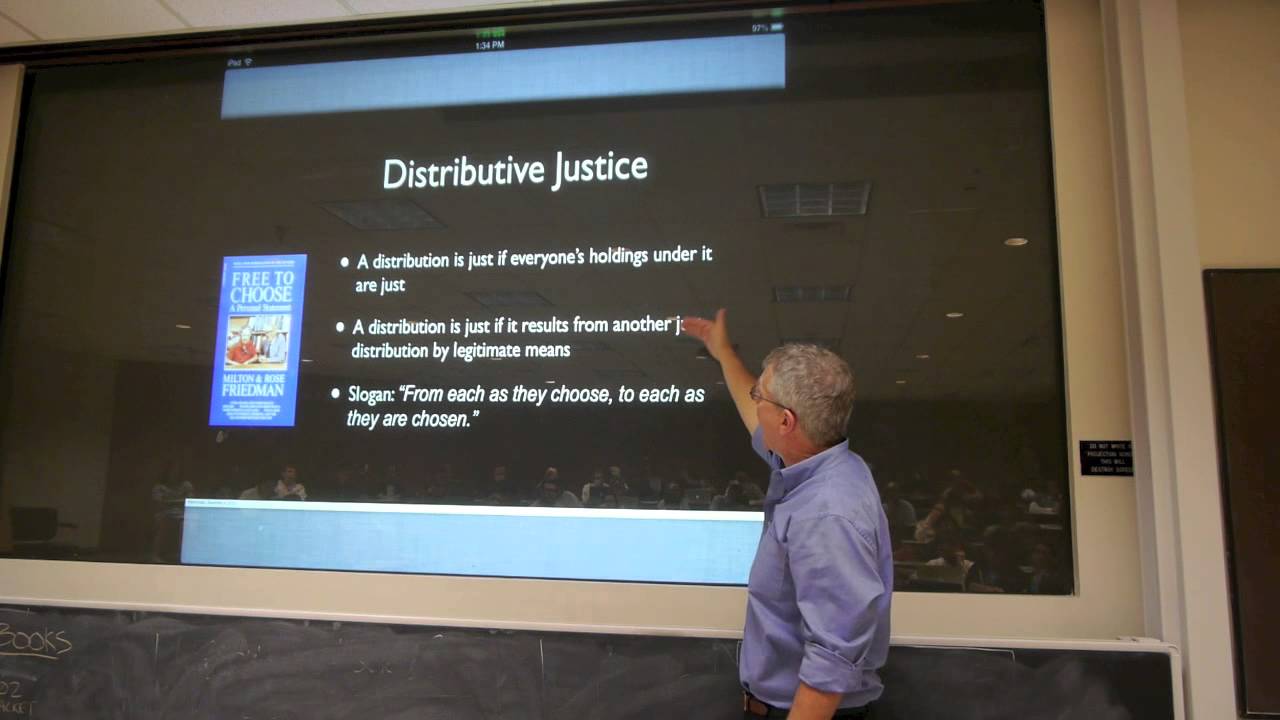
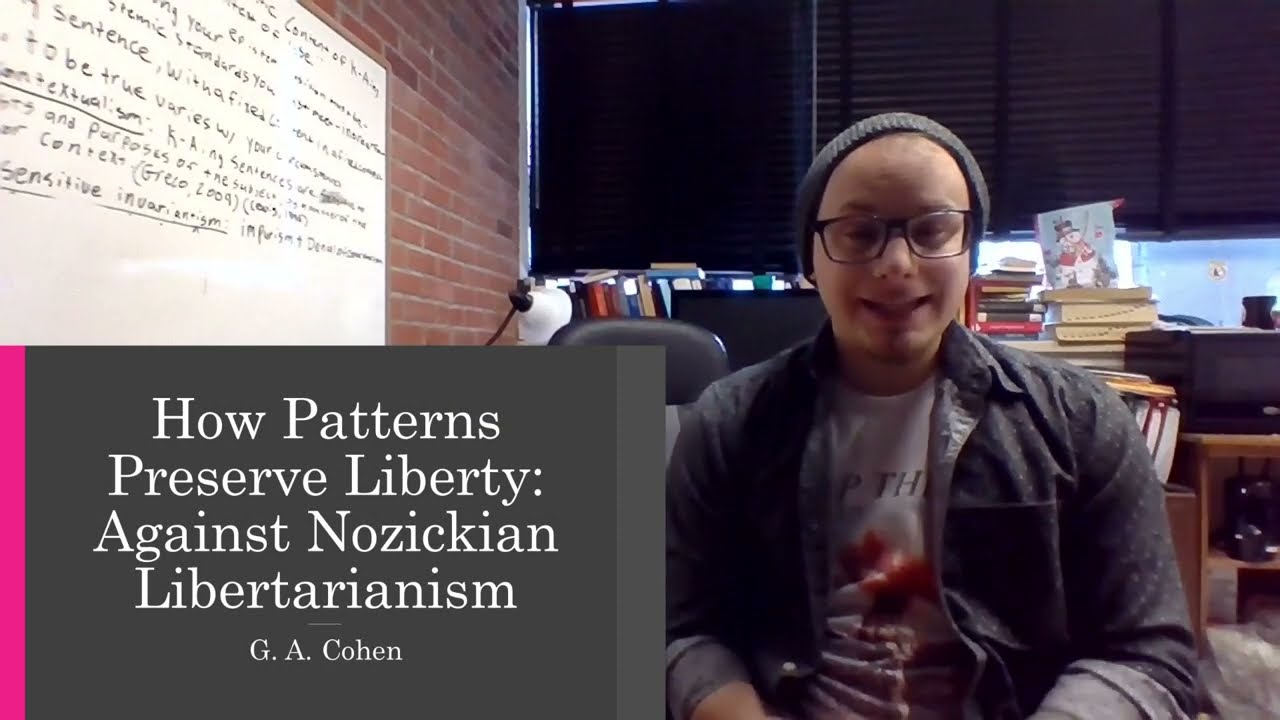


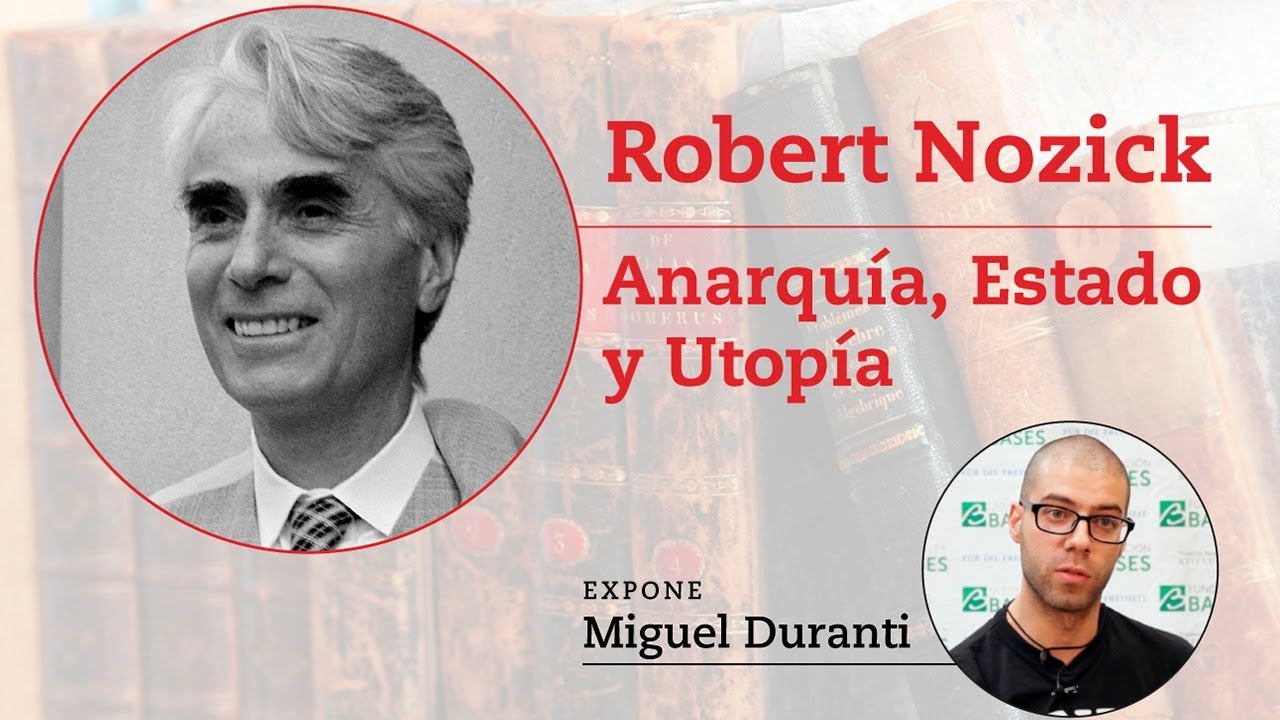






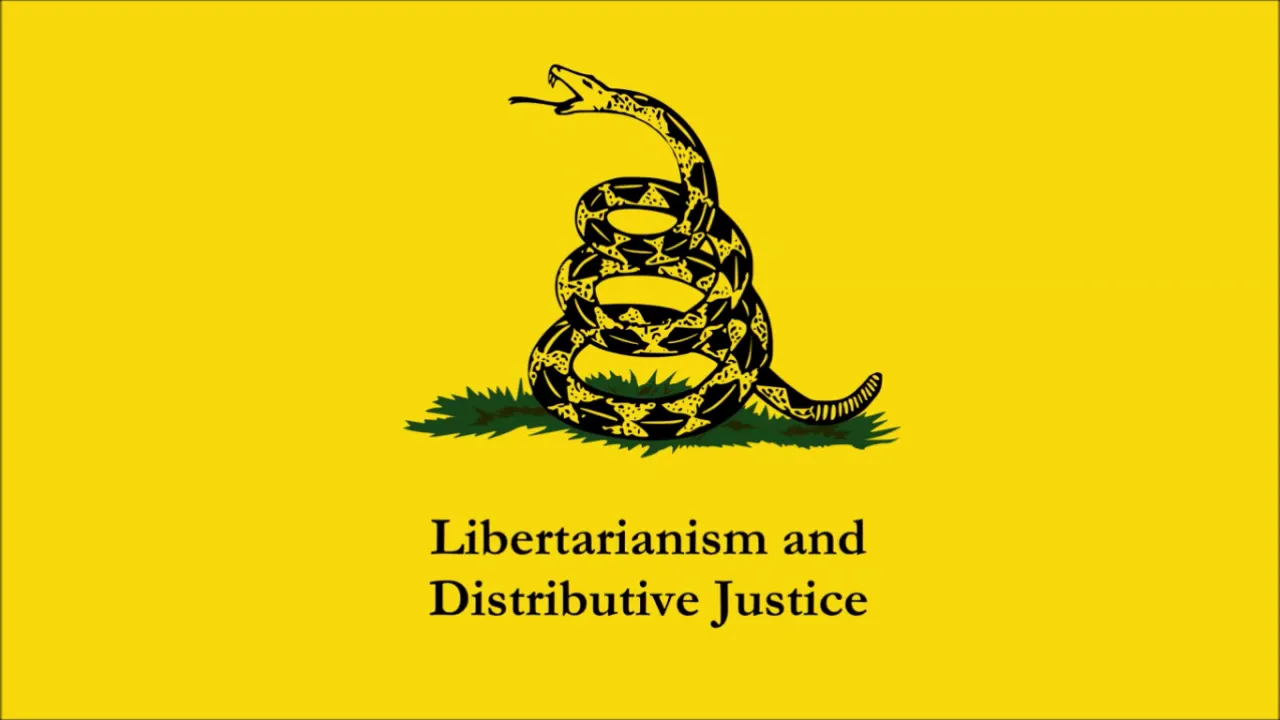
Robert Nozick argues that pattern-based theories of distributive justice (such as egalitarianism, meritocracy, or utilitarianism) are fundamentally flawed because even small amounts of liberty will inevitably upset any preconceived pattern over time; instead, he proposes an entitlement theory that focuses on how people justly acquire and transfer property, rather than what patterns of distribution should exist, with justice depending on the origin of holdings rather than their final distribution.
Distributive Justice | Nozick's Entitlement Theory | Philosophy
Added:An understanding of John Rawls's 'Theory of Justice' and the Difference Principle, as Nozick's work is largely a critique of Rawlsian distributive justice.
The basic concept of distributive justice, specifically how societies decide to allocate resources, wealth, and opportunities among citizens.
John Locke's labor theory of property, particularly the concept of how individuals acquire original ownership of unowned resources through labor.
The foundational tenets of libertarian political philosophy, including the concepts of self-ownership and the minimal state.
In-depth analysis of the 'Wilt Chamberlain' thought experiment and its implications for the compatibility of liberty and patterned distribution.
Critiques of Nozick's theory, such as G.A. Cohen's socialist critique of self-ownership or luck egalitarian arguments regarding historical contingencies.
The concept of the 'rectification of injustice' and how Nozick's third principle applies to real-world historical wrongs like colonialism and systemic inequality.
The political philosophy of Minarchism (the minimal 'night-watchman' state) and how it contrasts with both anarcho-capitalism and welfare statism.
19.7K views221likes10:18Original Release: 2016-02-16
[Music] A lot of people when they're discussing questions of distributive justice will come in like say a professor will come in on the first day of class and draw up a bunch of distributions on the board.
One might be more equal, one might be less equal and they'll say which of these distributions is just and people students will often look at that and go ah the most equal one that's obviously just. One problem with that might be that maybe the information you need to evaluate whether it's a just or unjust society isn't actually at the board.
Maybe to know whether society's just or unjust, you can't just look at a snapshot of what people have at any given moment and use that to determine whether it's just or not. You might need to know how people came to acquire what they have. So, for example, FA Hayek would say that, you know, it's sort of absurd to ask whether it's unfair that a meteor killed the dinosaurs. It happened. Maybe it's regrettable because I like dinosaurs, but it's not fair or unfair. It just doesn't make sense to talk about the fairness of that. It's just a thing that happened. And he thinks the pro results of market distributions are kind of like that.
Like the results of the market is kind of like that. It's like it's not fair nor unfair that people have what they have in a market. It's just something that kind of happens. He would say that the the distribution of wealth in a free market is not the result of human intention. No one sort of decided that people would have more than others. So people often talk about, you know, the social product being like a pie and some people get really big slices and some people get very small slices and that makes it sound like it's unfair because you're sort of imagining, you know, mom at the birthday party giving like one kid a really big slice of cake and another kid a really small slice of cake for no reason and you're like that just seems mean but it's not what happens.
Just people make decisions with the stuff that they have and some people end up having more, some people end up having less. So similarly the uh philosopher Robert Nosik says that the very term distributive justice is misleading because it suggests as though the stuff that we have is like mana that fell from heaven and it's here in front of us. Now we just have to figure out how to distribute it. Well, who gets what and why? But again, that's not what happened. Um people made some of that stuff. They gave it to others. They exchanged it and that at any given time results in a distribution of things, but no one actually distributed it. So Nosik says that there's no more a distribution of wealth than there is a distribution of mates and friendship. And he says when some people have freedom of association, some will have more and some will have less. Some will not have enough to lead good lives. So some people if we're like just free to associate with whomever we want, some people will have lots of friends and some people will have no friends. You know, some people will have, you know, fulfilling romantic lives and some people will be alone their entire lives.
And it's sad, but it's neither fair and nor unfair. Nosik would say it doesn't make sense to talk about the fairness of the distribution of friends or of mates.
It's just a thing that happens when people have freedom over their own lives. And he he turns to the left and says, you know, you wouldn't think that it's the right thing to do would be to redistribute, say, romantic relationships or redistribute friendship in order to make sure that everybody has enough, right? So why do you think it's okay to do that with wealth? There has to be some sort of difference. They have to be different in some way. So Nosik says, "It looks like left liberals and leftists are already kind of presuming that the rights to our stuff, our our objects, the things that we own are weaker than our rights to our bodies and our rights to associate with one another because if they didn't think that, then the arguments that they use on behalf of redistribution, they would find unappealing."
So Nosek is ends up being quite skeptical about um distributive justice in general. The idea that like we should try to equalize things and he has a kind of famous argument to point out a flaw with this way of thinking. The idea is that liberty, giving people freedom upsets patterns. So what he means by that is when you ask most people what does justice in holdings or justice and distributive justice require, what they'll say is they'll come up with some sort of pattern that they think society ought to match. So if you're what's called a meritocrat, you think that we ought to distribute wealth according to merit. The most meritorious person should have the most and the least meritorious person should have the least. If you're an egalitarian, you have a different pattern. You think everyone ought to have the same amount of stuff. Uh, if you're RS, you think you have a different pattern. You think we should allow for inequality provided we maximize the welfare of the least advantage. If you're what's called the sufficientarian, you think it's okay to have as much inequality as you want as long as everyone gets enough to lead a decent life, etc., etc. These are all different patterns that people think society ought to ought to reach. Uh, Nosik is worried about these because he thinks giving people even a small amount of liberty will upset any given pattern over time. So, let's illustrate that with one example. Suppose that finally at long last justice has been done.
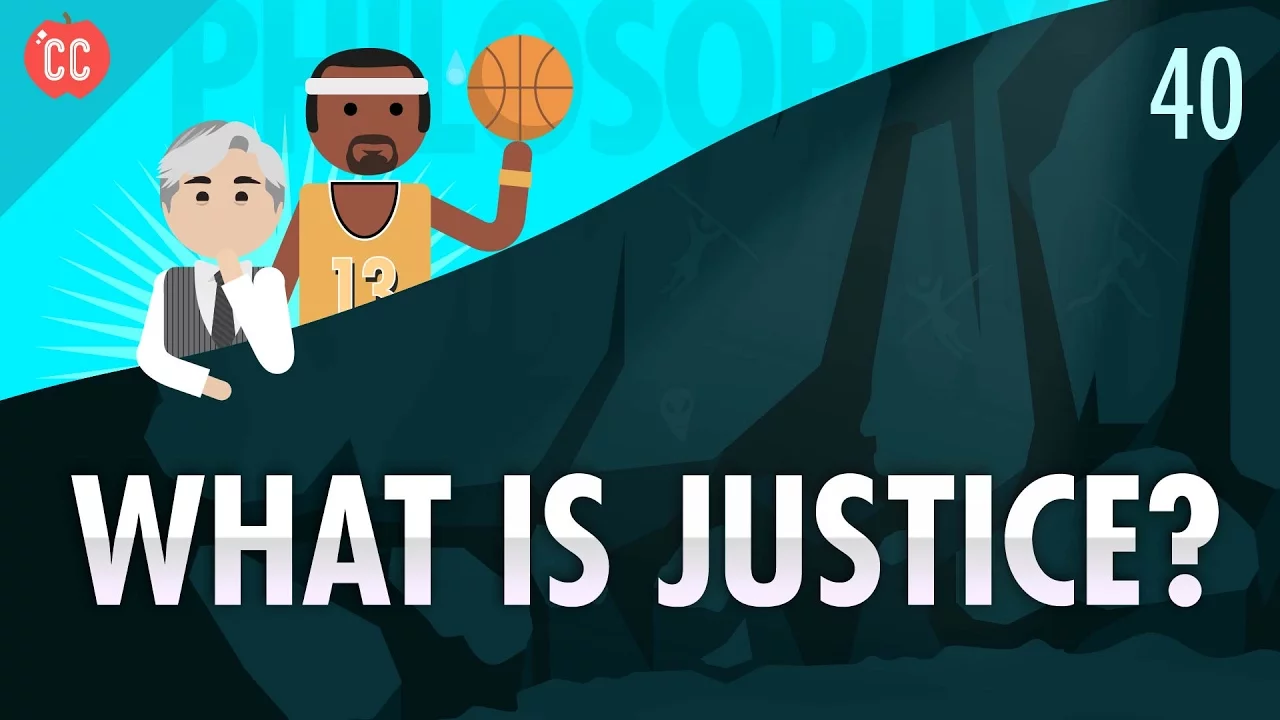
We've finally reached a perfectly just society in which everyone has exactly the amount of stuff that they ought to have. For the sake of argument to make it easier to remember, let's imagine it's egalitarianism. Everyone has equal amounts of stuff. Everyone has equal amounts of wealth and you have things and you're supposed to have some freedom to do stuff with your stuff, to act with your things. So now suppose LeBron James, you know, the greatest basketball player in the world, says, "You know, I'm willing after I'm done working like in the socialist factory. I'll go to the socialist um uh uh park and I'll start playing basketball and I'll let you guys watch me play basketball, but provided you give me a quarter." And everyone is happy to do this. He's just asking just give me a quarter when you come in and watch me play. So at the end of the year, everyone, what happens is he's now a million dollars richer than everybody else and everyone's happy. Well, it looks like just giving people a small amount of freedom, the freedom to distribute a quarter as they see fit, destroyed that initial pattern. We started with egalitarianism and we ended with LeBron James being a million dollars richer than everybody else. By hypothesis, if you're an egalitarian, this second situation is really evil and bad. Giving people the freedom to distribute a quarter as they see fit introduces injustice into the world. But you can see the problem there that as no saying, liberty will upset patterns.
even a small amount of freedom over time will destroy any pattern preconceived pattern you think we ought to reach. So he's not saying libertarian freedom will destroy a pattern, just even small amounts of freedom, the freedom to distribute a quarter as you see fit. And that's a problem because he says to the egalitarian, well look, you thought this quarter was mine, right? So you think it's mine. I can't even give it to LeBron James if I want to. I don't have even the freedom to do that because that will upset your pattern. So Nosik worries that if you have a patterned theory of distributive justice to maintain that pattern, you're going to have to have pretty continuous interference with people's liberty and kind of control their lives. And the more strictly patterned your view is, the more strictly you'll have to interfere with their lives. So Nosik thinks what's wrong with all these theories isn't just that, but they're all missing something, which is that when we think about what makes holdings just or unjust, we care not just about who has what compared to whom, but where it came from. So, you know, imagine you're walking down the street and you find a wallet and it has say 500 bucks in it. You don't look at that and go, "Well, where's the representative member of the least advantage class? I better give him $500." You don't think to whom can I give this that'll maximize utility. So, if you're if you're a decent person, what you do is you look and find the the license in there and you find that person and give him back him or her back the $500 because it belongs to that person, right? So, that's what you do. You think it belongs to somebody. So Nosik thinks that's what really what's missing with all these other theories is that when we're talking about distributive justice we have to ask where did it come from right so he offers an alternative way of looking at distributive justice he says we need is a theory he calls it the entitlement theory uh that explains how people can come to acquire stuff that wasn't owned how they can justly come to transfer it among themselves and then what to do if people violate those rules so the entitlement theory is going to have three parts the first part will be sort of a principle of original appropriation some principle that explains when stuff isn't owned, no one has a claim to it. How can you come to make it yours? He thinks this is going to be some very complicated truth. I'm not going to go over it right now. Like it's a complicated theory, but there's going to be some principle that explains how you can come to acquire stuff that wasn't didn't belong to anybody. Then after people have acquired things, you're going to need some sort of theory about how we can transfer it back and forth. Like why if I sell you something consensually, that's okay, but taking it from you is not. Right? And then he says in a perfectly just world, justice and holdings would just be about that. as long as you have stuff either through just original appropriation or just transfer. Whatever you have is fine regardless of whether you have more or less than others. And if you think about it, that's effectively what we do when we think about the distribution of friends or the distribution of romantic relationships. That's how we think. Um, however, we live in not in a perfectly just world. So, we're going to have to have some third rule, a principle of rectification that'll explain what to do when people break the other two rules.
So, for example, um if I bought this watch, but it turned out that this watch was stolen from somebody else, then I might have to give it back to that first person without any compensation. That would be a way of rectifying problems.
Or if you hit somebody with your car and damage their property um and it's your fault, you have to compensate them for their loss. So, so Nosik says a just distribution is just going to be whatever follows from the entitlement theory. So he says a way of thinking about that is if you start with a just initial situation and follow just steps then whatever distribution of income and wealth there ends up being is itself just however Nosik it's worth noting is not actually apologizing for the inequality that we see in the real world and the reason for that is that we haven't followed his theory it's not as though we've been following the kind of nozzikian entitlement theory throughout history instead when you think about the history of owned objects like any owned object in the world you've got slavery y and theft and brutality and war and thieving and so on. So in fact Nosik isn't saying that the actual inequality that we see is justified. He's saying that in principle it could be justified if it came about the right way.
Interestingly Nosik ends up saying something like given historical injustice it might turn out that the thing we have to do to rectify historical injustice is to have some degree of redistribution right now in order to sort of set things right and then we can go from there. Right? Right.
So, no, people often see Nosik as making as being a kind of apologist for the status quo when he's manifestly not [Music]
Up Next

15:08
Taxing Wealth: Redistribution as Democratic Power | TEDx Talk
@TEDx
15.8K views•2023-01-10

24:30
BRICS Pay and de-dollarization: A New Financial Order Emerges? | 55 chars
@DannyHaiphongYT
164.6K views•2024-10-22

7:33
Government Surveillance Methods: 10 Ways You May Be Watched
@BeAmazed
1.6M views•2017-04-09
10:19
Explaining the Saudi-Iranian Proxy Conflict in the Middle East
@Vox
18.2M views•2017-07-17
Related Study Plans & Knowledge Roadmaps
Structured learning paths in Political Science
political-science
Economic Statecraft: Sanctions & Chokepoints
01Foundations of Geoeconomics and Economic Statecraft
02The Mechanics of Weaponized Interdependence
03International Sanctions: Types, Implementation, and Efficacy
+ 2 more learning modules
12h5 modules
Explore Roadmap
political-science
Central Bank Independence: Politics & Policy
01Foundations of Central Banking and Monetary Policy
02The Time Inconsistency Problem & Inflation Bias
03The Delegation Model and Designing Independence
+ 2 more learning modules
12h5 modules
Explore Roadmap
political-science
Consociationalism: Power-Sharing & Stability
01Democratic Dilemmas in Divided Societies
02Introduction to Consociational Democracy
03The Four Pillars of Consociational Design
+ 2 more learning modules
12h5 modules
Explore Roadmap
political-science
Rebel Governance: Legitimacy, Economy & State
01Foundations of Rebel Governance and Statehood
02Establishing Political Legitimacy and the Rebel Social Contract
03Wartime Economies and Rebel Resource Management
+ 2 more learning modules
14h5 modules
Explore Roadmap