






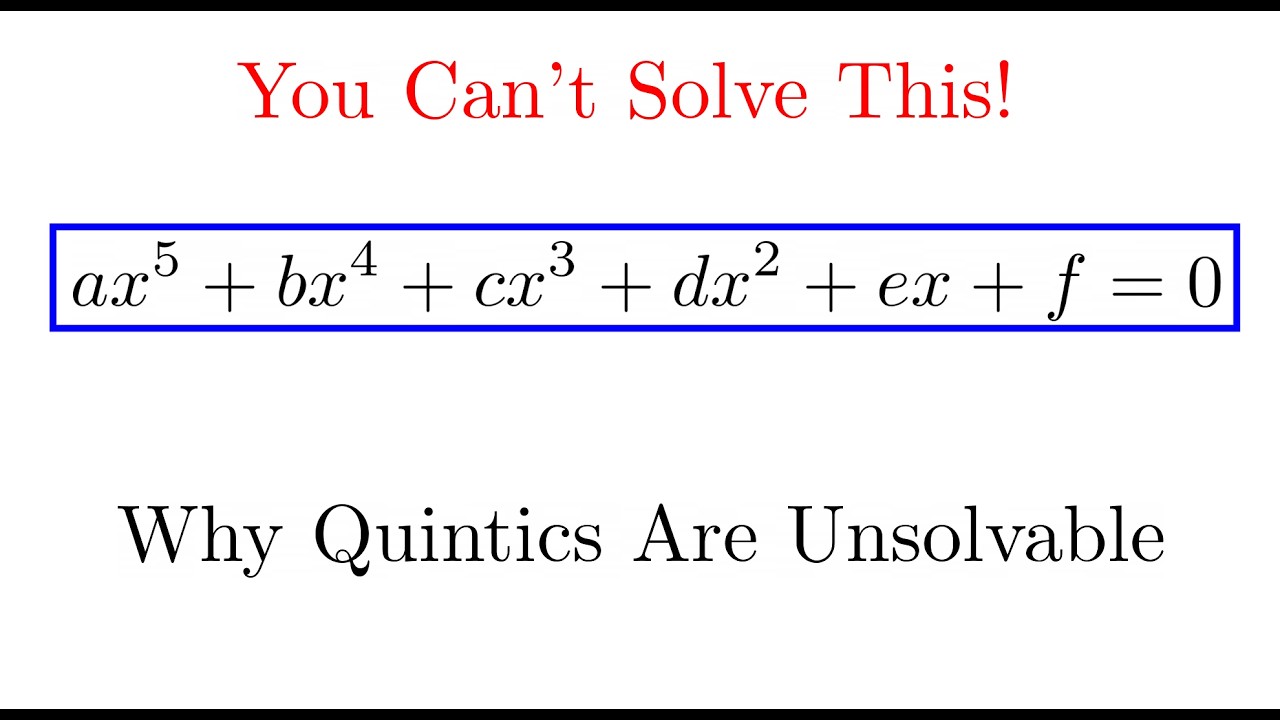
![[버츄얼 라이브강의] 현대대수 OT : 거듭제곱근으로 풀 수 있는 방정식이란?](https://i.ytimg.com/vi/r7nmJcO7LJI/maxresdefault.jpg)
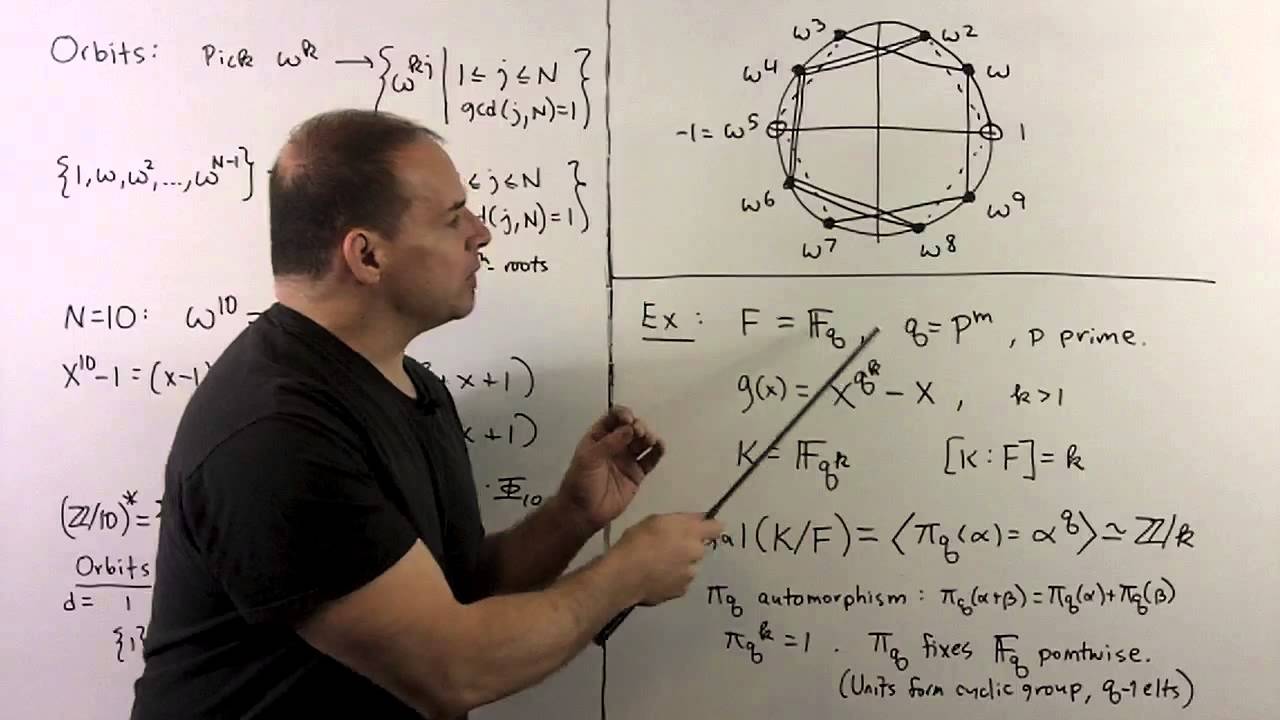



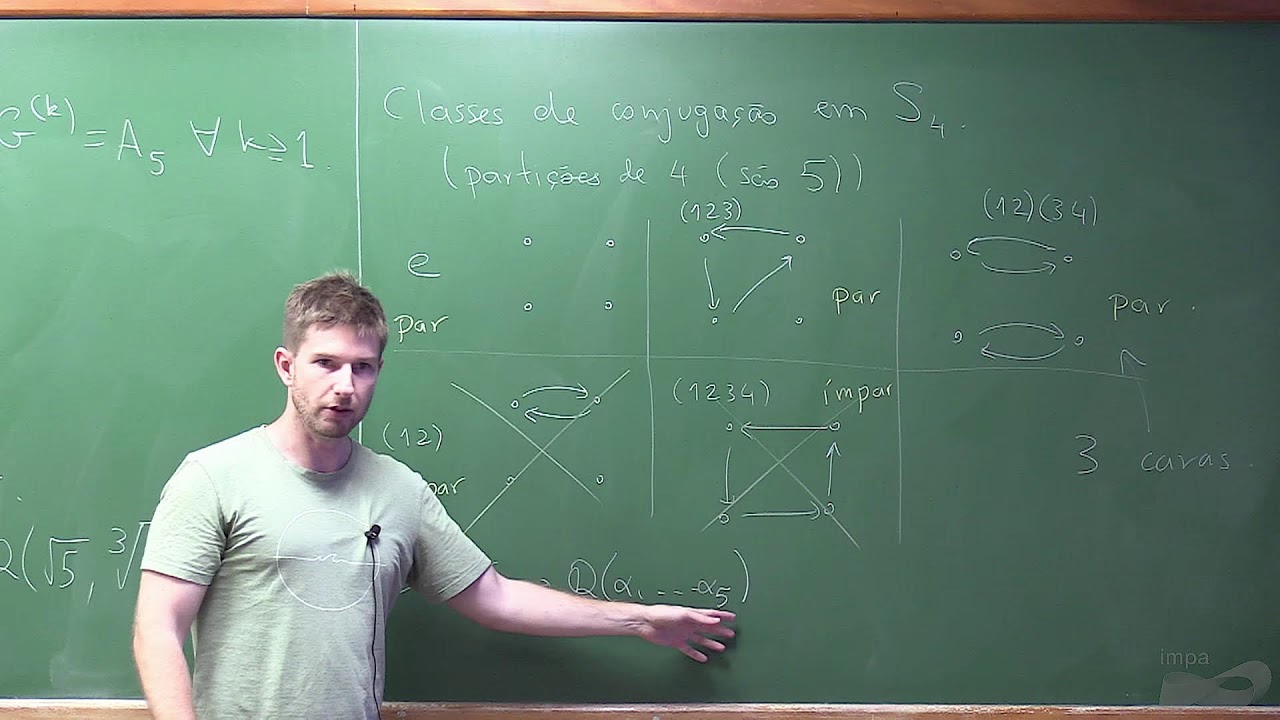


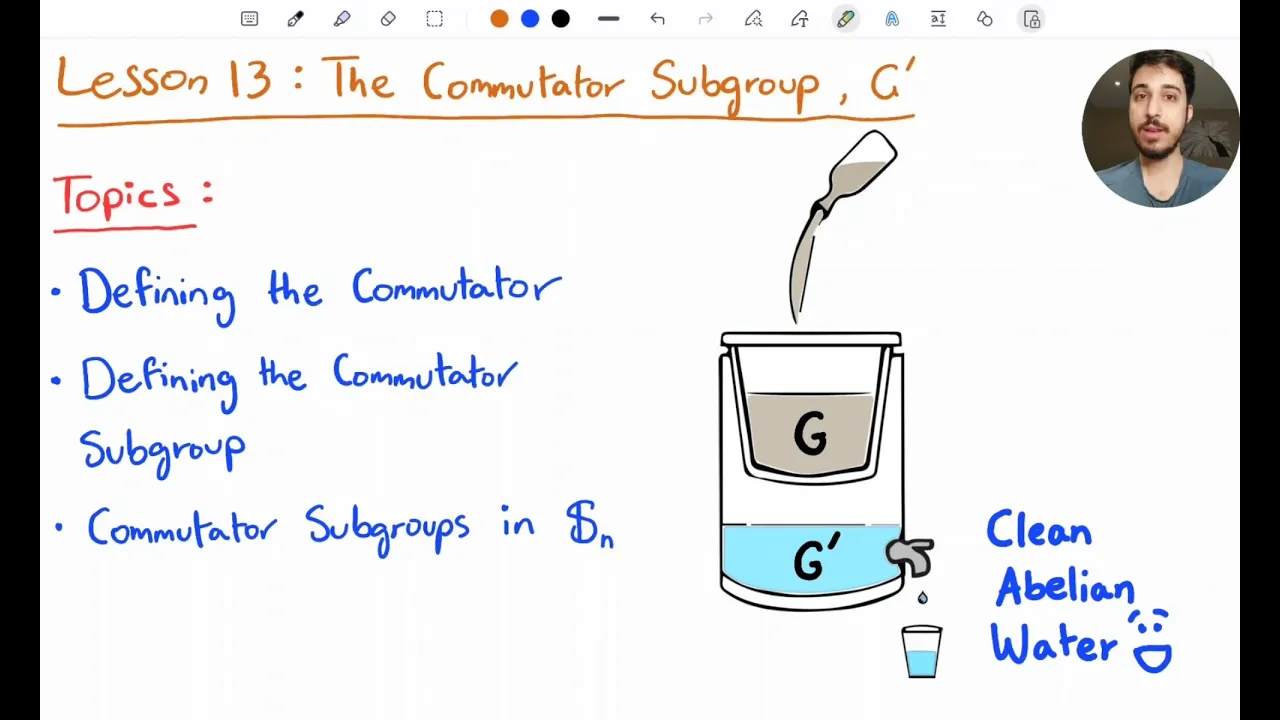

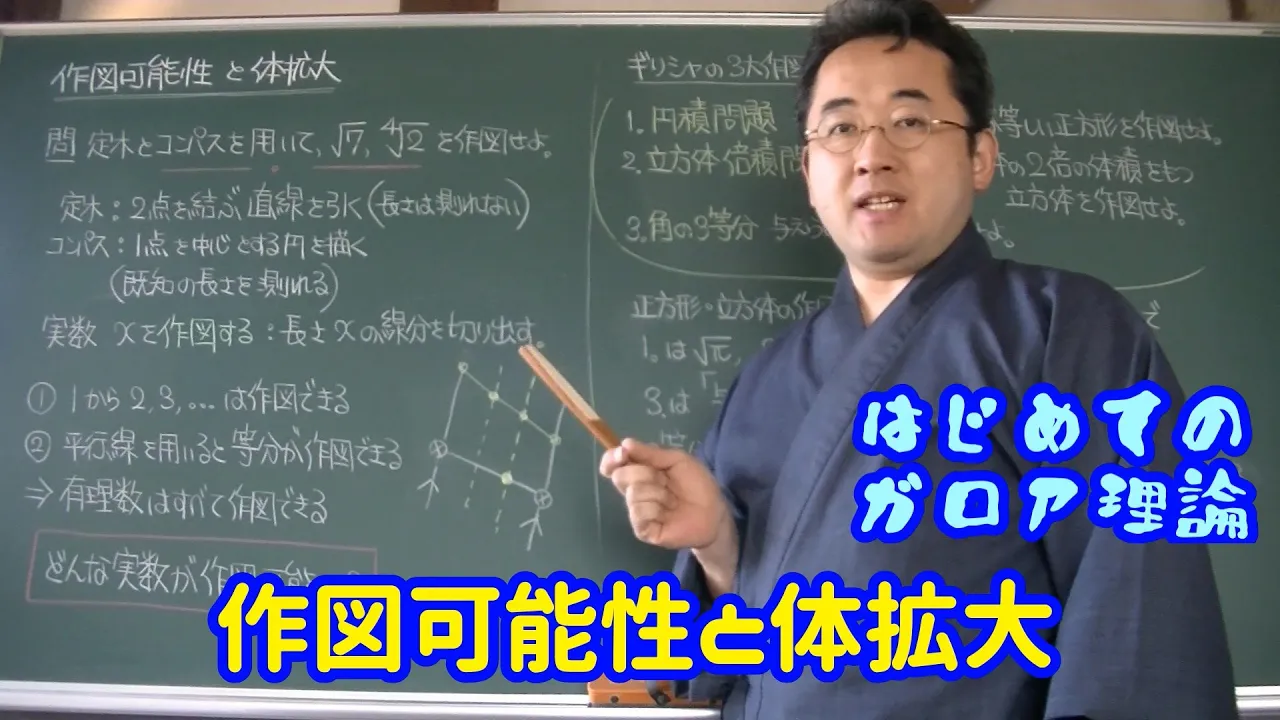
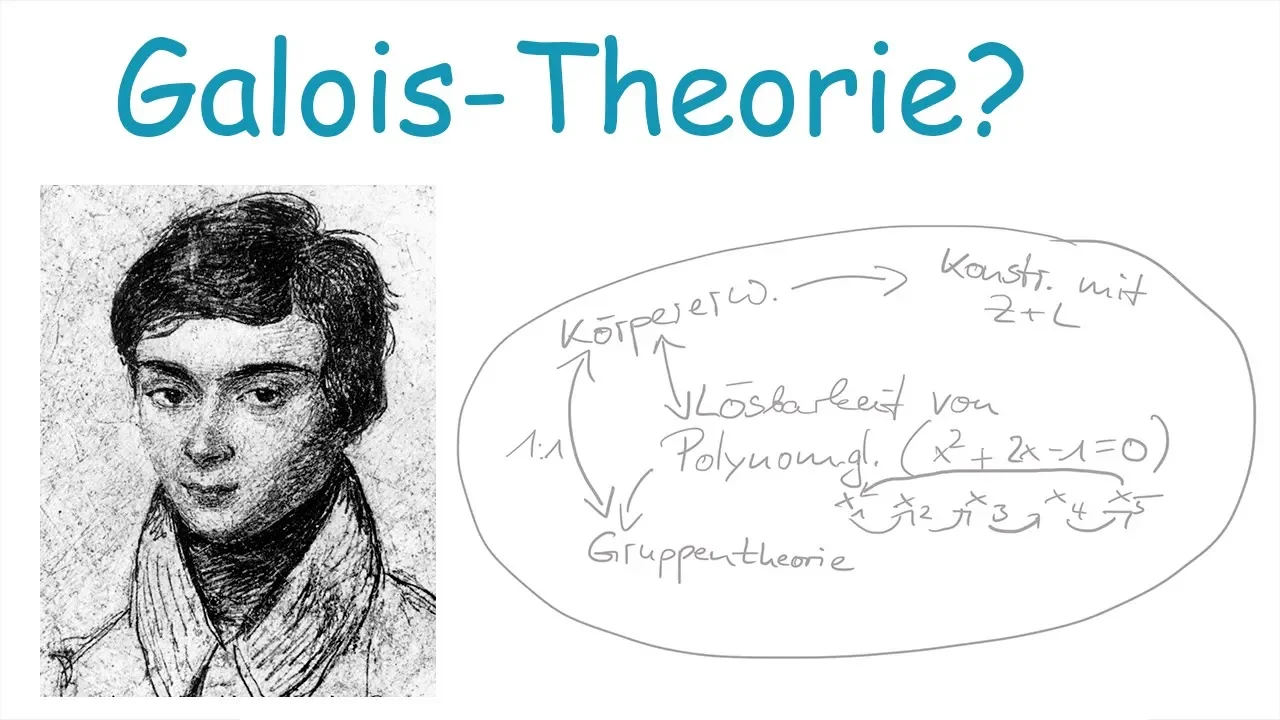

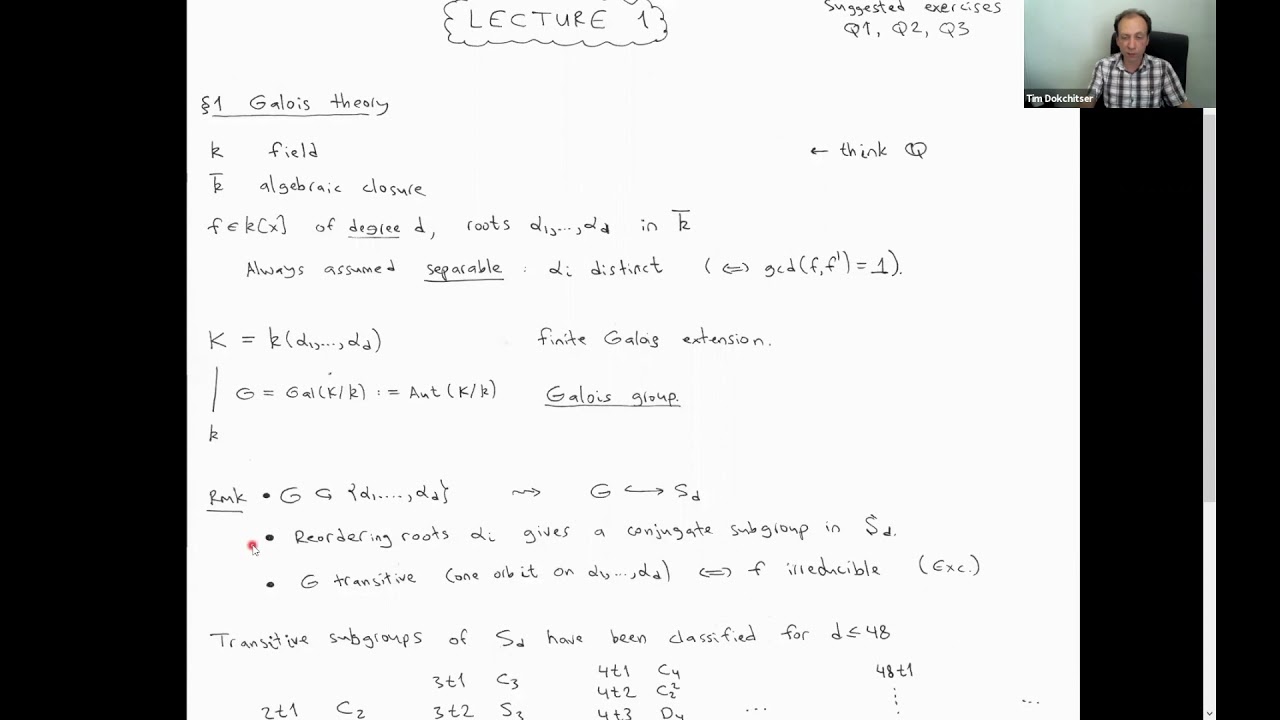




The quintic (polynomials of degree 5 or higher) has no general solution formula in radicals because the symmetric group Sₙ is not solvable for n ≥ 5, whereas S₂, S₃, and S₄ are solvable groups; this result emerges from Galois Theory, which connects the solvability of polynomials to the structure of their Galois groups through field extensions and the concept of solvable groups.
Why Quintic Equations Have No General Formula | Galois Theory
Added:Basic Group Theory, including the concepts of subgroups, normal subgroups, symmetric groups, and group homomorphisms.
Field Theory fundamentals, such as field extensions, splitting fields of polynomials, and field automorphisms.
The definition of 'solvability by radicals' and familiarity with the formulas for quadratic, cubic, and quartic equations.
The fundamental definition of a Galois Group, representing the algebraic symmetry of the roots of a polynomial.
The formal algebraic definition of Solvable Groups and their correspondence to radical field extensions.
Practical methods for computing the Galois group of specific high-degree polynomials to test for solvability.
Applying Galois Theory to prove the impossibility of classical geometric constructions, such as trisecting an angle or squaring the circle.
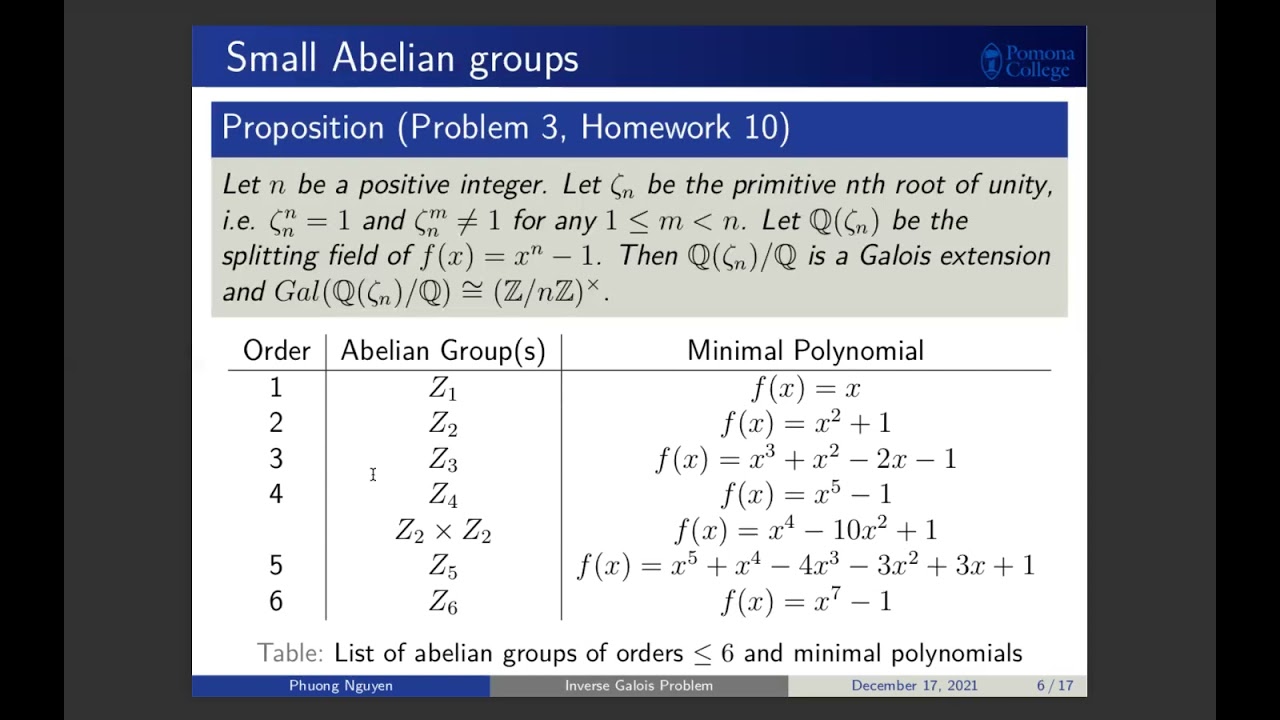
Exploring the Inverse Galois Problem, which investigates whether every finite group can be realized as a Galois group over the rational numbers.
Advanced topics in Algebraic Number Theory and Algebraic Geometry, such as Class Field Theory and Galois representations.
205.6K views8.4Klikes10:19Original Release: 2021-02-20
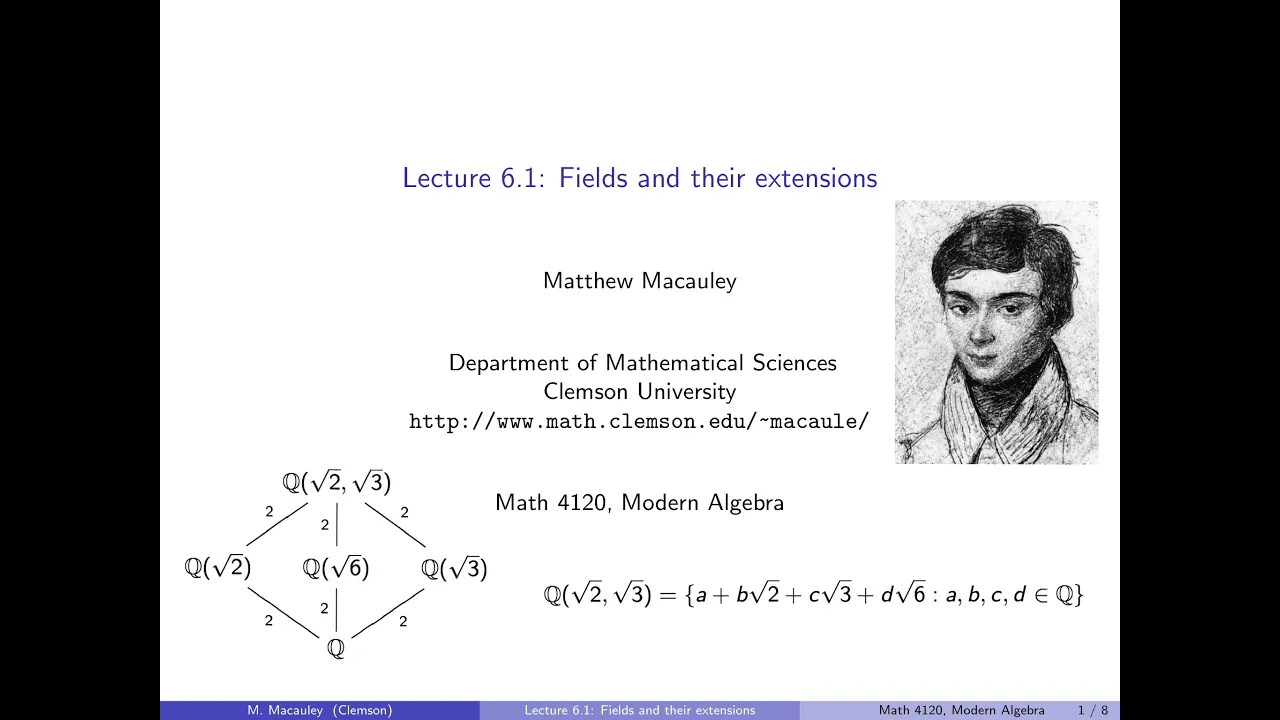
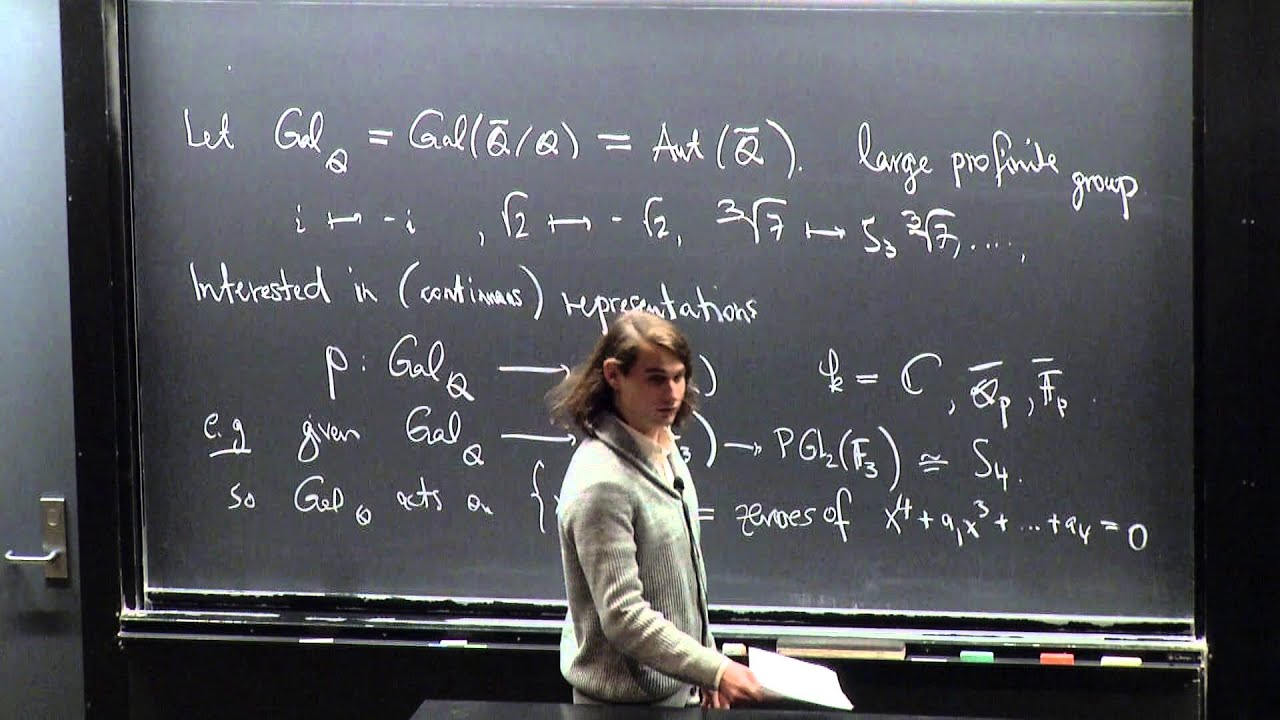
[Music] this video is a beginning and an end it's a beginning because the theorem we'll be proving marked the birth of group theory one of the main pillars of modern math it's an end because it's normally introduced at the end of a course on abstract algebra once all the groundwork has been laid the theorem we'll be building up to is the following there is no general formula to solve a polynomial of degree 5 or higher the reason why it's true boils down to a simple fact in group theory but to see it we have to connect polynomials fields and groups so we'll first talk about field extensions then the galwa group and then we'll see how they come together to prove our theorem let's get cracking our first step is to define precisely what we mean when we say a polynomial has no general solution that definition is made using fields a field roughly speaking is any set where you can add subtract multiply and divide elements the rational numbers for example form a field importantly you can't take square roots two is a rational number but the square root of two isn't if you want to talk about the square root of two you have to extend the rationals to a larger field that contains the square root of two we'll define a field called q a join square root of two as the smallest field containing q and the square root of two that means that it's closed under the four operations so one plus square root of two is in the field so is four plus two thirds the square root of two and so on what if you wanted to take nested roots like the square root of two plus one cube root it well the easiest way to do it would be take q and then a join that number in but in this video we're not going to take that root instead we'll first to join the square root of two then we'll adjoin the cube root of the square root of two plus one the key point is that at each step we only adjoin the root of something that lives in the previous field we first adjoined this number because it's the square root of something in the field before it we then adjoined this number because it's the cube root of something living in the field before it that leads us to the key definition a polynomial f is solvable by radicals if starting with the rationals you can extend the field one step at a time at each step adjoining a root of something that lives in the previous field and eventually arrive at a field containing all the roots of the polynomial an example should clarify for instance this polynomial is solvable in radicals this is because it has roots 1 plus or minus the square root of 2.
if we had joined the square root of 2 q adjoined root 2 contains both the roots of the polynomial that means that it's solvable by radicals in general the roots of a polynomial may be a very complicated mix of nested radicals but the point is if it's solvable by radicals you can build up the field where the roots live by successively adjoining nth roots to the rational numbers our next step is to determine looking at a polynomial how do you determine if it's solvable by radicals if you don't know the roots beforehand to do that we need some powerful new methods the main insight of galwa theory is to convert problems about fields into problems about symmetry we all know what symmetry means intuitively this square is symmetric about this axis because when you flip it it looks the same the key leap is to go from geometric symmetry to algebraic symmetry let's say you have a polynomial with four roots root two negative root 2 i negative i these roots happen to satisfy these two equations our question is can we swap these roots in any way so that these equations still hold for example if we swap root 2 and negative root 2 the equations still hold if we swap i with negative i the equations also hold but if we swap root 2 and i they don't hold anymore the first two cases were a symmetry of the equations the third case was not a symmetry because the equations didn't hold anymore it turns out that every single polynomial relation involving these numbers that has rational coefficients like these ones here still hold when you swap the roots in these ways namely you can swap root 2 and negative root 2 i and negative i root 2 and negative root 2 and i with negative i or you can do nothing at all the set of all these permutations is called the galwa group of f denoted gal f and the reason we care about it is because you can determine whether a polynomial is solvable by radicals by looking at the structure of its galwa group to see what structure the galwa group needs to have we'll look at this example of a polynomial that is solvable by radicals and we'll study what its galwa group looks like to find the galwa group we first need to list out all the roots of the polynomial and find all the ways to swap those roots that preserve equations involving those roots there turn out to be eight such permutations this is the galwa group of the polynomial f to get more insight into its structure we use the fact that f is solvable by radicals that is we'll build up the field where the roots live by adjoining nth roots to the rationals one at a time and then we'll climb the tower of fields starting with this one now there's a relation with coefficients in the extended field that the roots satisfy four of our permutations don't preserve this new equation the new galwa group has shrunk to this this is called the galwa group of f over the field q a join root 2. a nice way to see this is in a group table this was our original group this highlighted portion is the group after we extended the field now let's adjoin another number the square root of three plus root two then we have another equation that the roots must satisfy two of our permutations don't preserve this new equation so the galwa group has shrunk to this this is called the galwa group of f over the field q a join root two and root three plus root two in the group table this is the group we started with this is the group we had in step two this is what we have now now we'll extend the field one last time by adding in this element then we get this new equation now there's only one permutation of the roots that leaves all the equations unchanged and it's the do-nothing permutation this is called the galwa group of f over the field q or join root 2 root 3 plus root 2 root 3 minus root 2. in the group table we started here then got to here then here and then just one element this group has a few very specific patterns that occur only when a polynomial is solvable by radicals the most obvious one is that you can tile the group into sections of equal size actually you can do better than that notice that this square and this square have the same elements just in a different order likewise this square and this square have the same four elements again in a different order so if we only care about what elements are in each square there are only two different squares this is true at each level in general if a polynomial is solvable by radicals the number of tiles is a prime number here's an example of such a group groups with this property are called solvable groups now we're ready to see why the quintic has no general formula it's a fact that the galwa group of a general polynomial of degree n is sn the set of all permutations of n things let's see whether this group is solvable for n equals 2 here's a chain of subgroups the number in blue is the number of tiles that it makes it's prime so this group is solvable and that's why there's a quadratic formula for n equals 3 here's the chain of subgroups these numbers are all prime so the group is solvable that's why there's a cubic formula for n equals 4 the numbers are all prime so the group is solvable that's why there's a quartet formula but for n equals 5 the situation changes dramatically you start off fine 2 is a prime number but then you have 60 different tiles so the group isn't a solvable group that's why there isn't a general quintic formula for n equals 6 the situation continues you start off with 2 but then you go to 360. so the group isn't a solvable group so there's no general formula there either same for n equals seven you start off with two but then you get stuck at 2520 which isn't prime no general formula in fact you can prove that for n equals five and up the situation always happens you always get two at the start but the number you have after is never prime so that's why for degree five and up there's no general formula sn is not solvable for n greater than or equal to five [Music] you
Up Next
18:39
Galois Theory: Main Theorem and Fundamental Correspondence | Graduate Course
@richarde.borcherds7998
13.6K views•2021-01-04

4:43
Elliptic Curve Cryptography Explained: ECC, ECDSA, ECDH
@PracticalNetworking
28.5K views•2024-10-21
25:10
Understanding Galois Theory: Fields, Symmetry, and the Fundamental Theorem
@Aleph0
303.8K views•2021-11-25

6:00
The Mathematical Impossibility of Accurate World Maps
@Vox
23.3M views•2016-12-02
Related Study Plans & Knowledge Roadmaps
Structured learning paths in Mathematics
mathematics
Tensor Calculus: Vectors to Riemann Curvature
01Mathematical Foundations: Linear Algebra & Calculus
02Covectors, Dual Spaces, and Tensor Basics
03The Metric Tensor and Index Gymnastics
+ 2 more learning modules
40h5 modules
Explore Roadmap
mathematics
Gödel's Incompleteness: Logic, Proofs & Limits
01Introduction to Formal Systems & Hilbert's Dream
02Set Theory, Cardinality, and Cantor's Diagonal Argument
03Arithmetization and Gödel Numbering
+ 2 more learning modules
14h5 modules
Explore Roadmap
mathematics
Galois Theory: Fields, Groups & Solvability
01Foundations of Abstract Algebra: Groups & Fields
02Polynomials & Field Extensions
03Splitting Fields & Symmetries
+ 2 more learning modules
24h5 modules
Explore Roadmap
mathematics
Non-Euclidean Geometry: Models & Geodesics
01Euclid's Fifth Postulate and the Birth of New Geometries
02Hyperbolic Space and the Poincaré Disk Model
03Geodesics: Defining Straight Lines in Curved Spaces
+ 2 more learning modules
15h5 modules
Explore Roadmap