


















![[London Learning Lean] The Krull topology, by Sebastian Monnet](https://i.ytimg.com/vi/AkmaHRyYJ4I/maxresdefault.jpg)

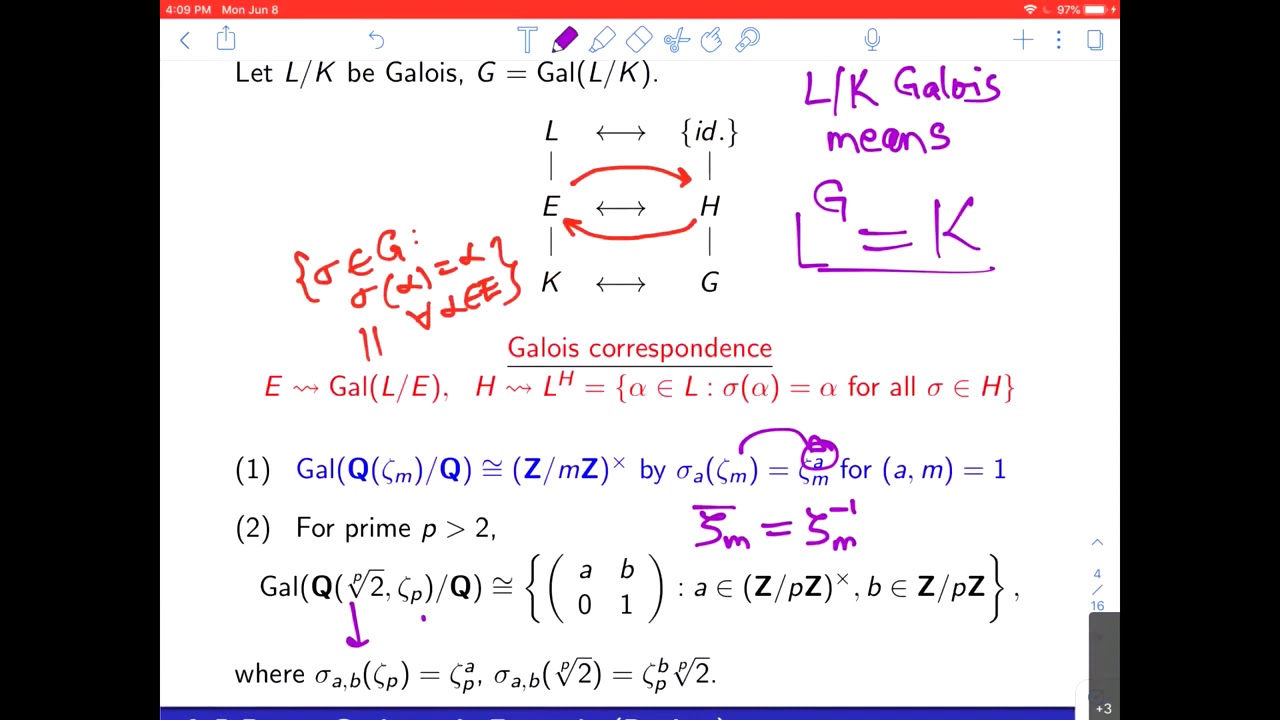
The Fundamental Theorem of Galois Theory establishes a profound correspondence between the structure of a field and the structure of its symmetry group (the Galois group), showing that there is a one-to-one correspondence between subfields of a field extension and subgroups of its Galois group; this allows mathematicians to understand the complex internal structure of algebraic number fields by studying their finite automorphism groups, which act as mirror images of the fields themselves.
Understanding Galois Theory: Fields, Symmetry, and the Fundamental Theorem
Added:Basic Group Theory, including the concepts of groups, subgroups, normal subgroups, and quotient groups.
Fundamental Field Theory, specifically field extensions, their degrees, and how to construct them.
Polynomial Rings and Splitting Fields, understanding irreducible polynomials and how roots behave in extension fields.
Linear Algebra concepts, particularly viewing field extensions as vector spaces over a base field.
The insolvability of the quintic polynomial and the Abel-Ruffini Theorem.
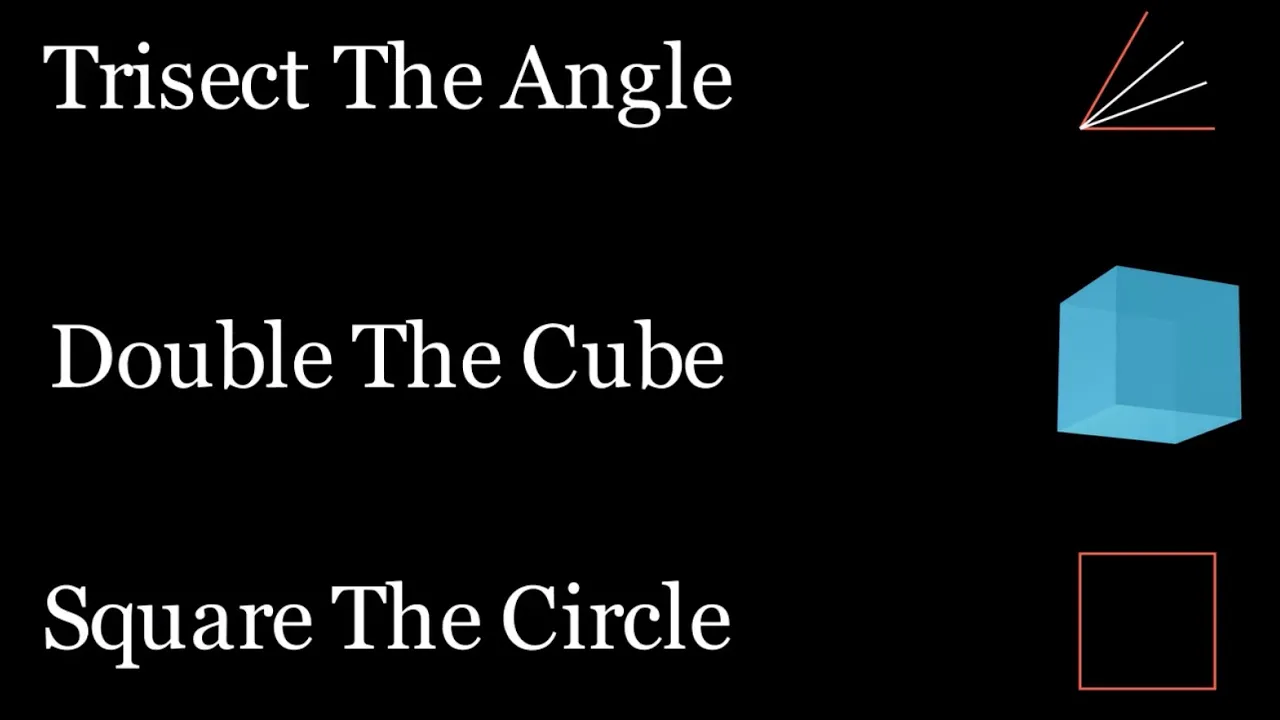
Classical geometric construction problems, proving the impossibility of doubling the cube or trisecting an angle.
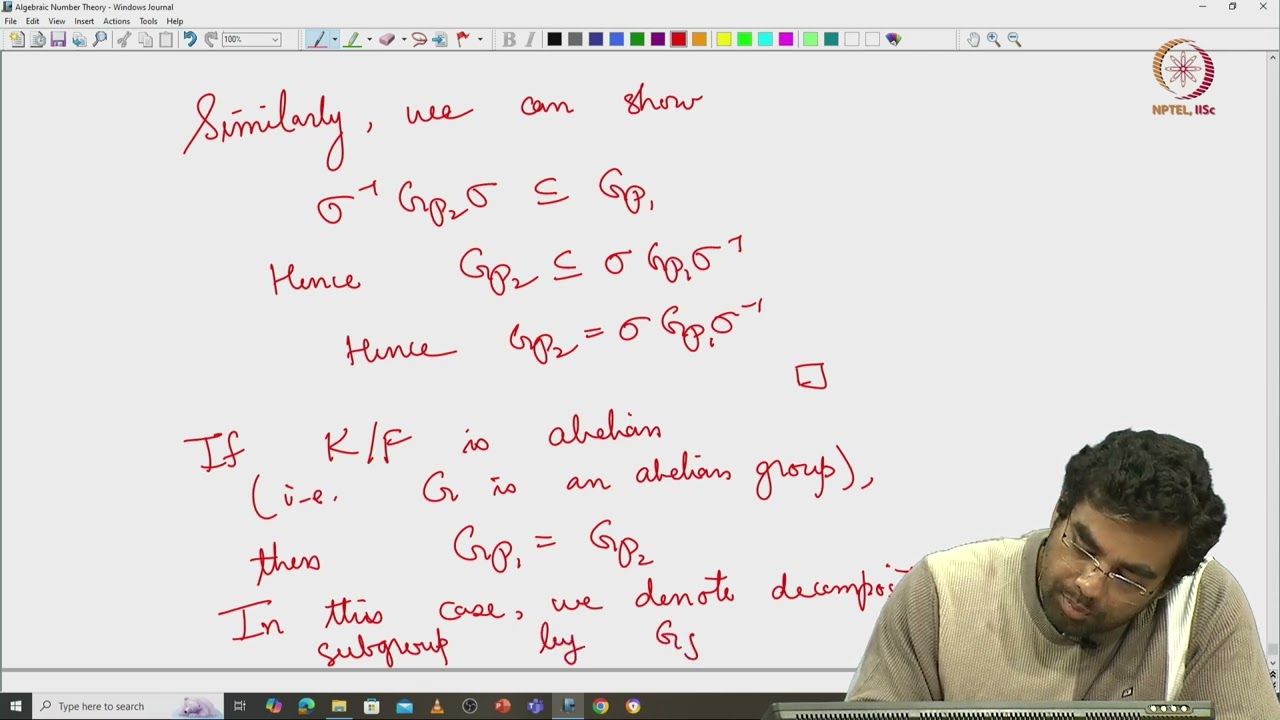
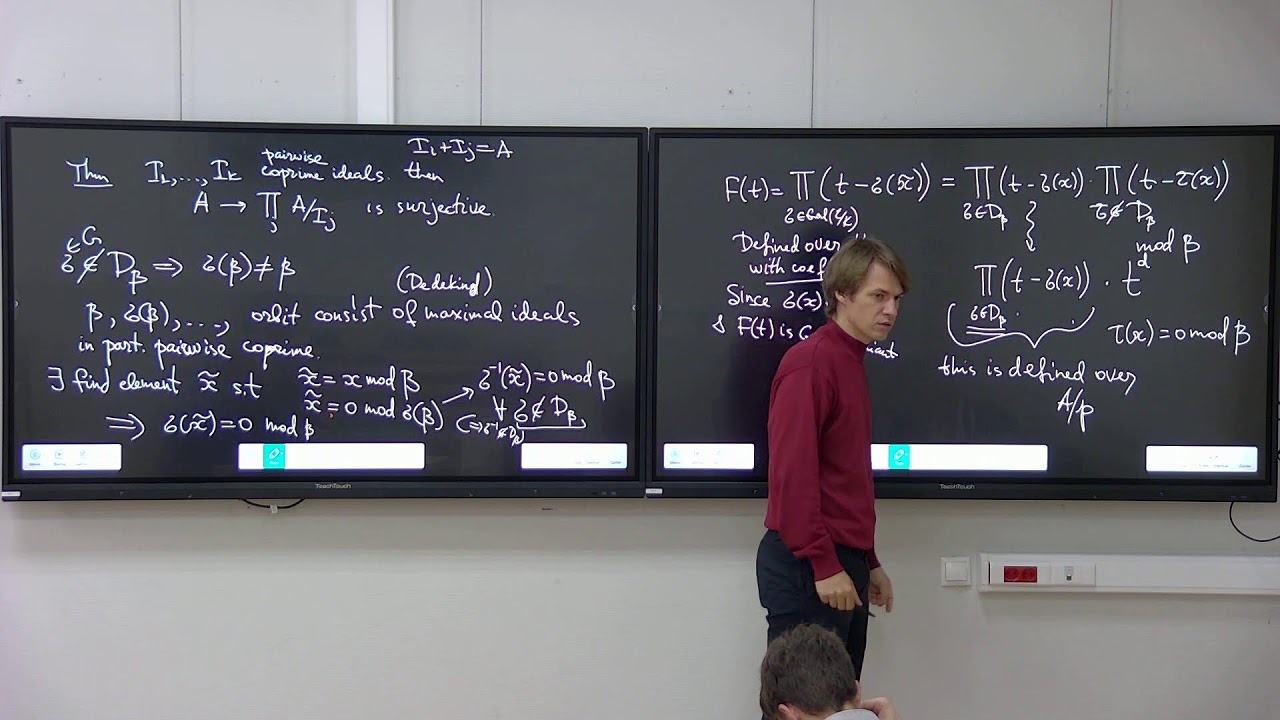
Algebraic Number Theory, utilizing Galois groups to study prime decomposition in number fields.
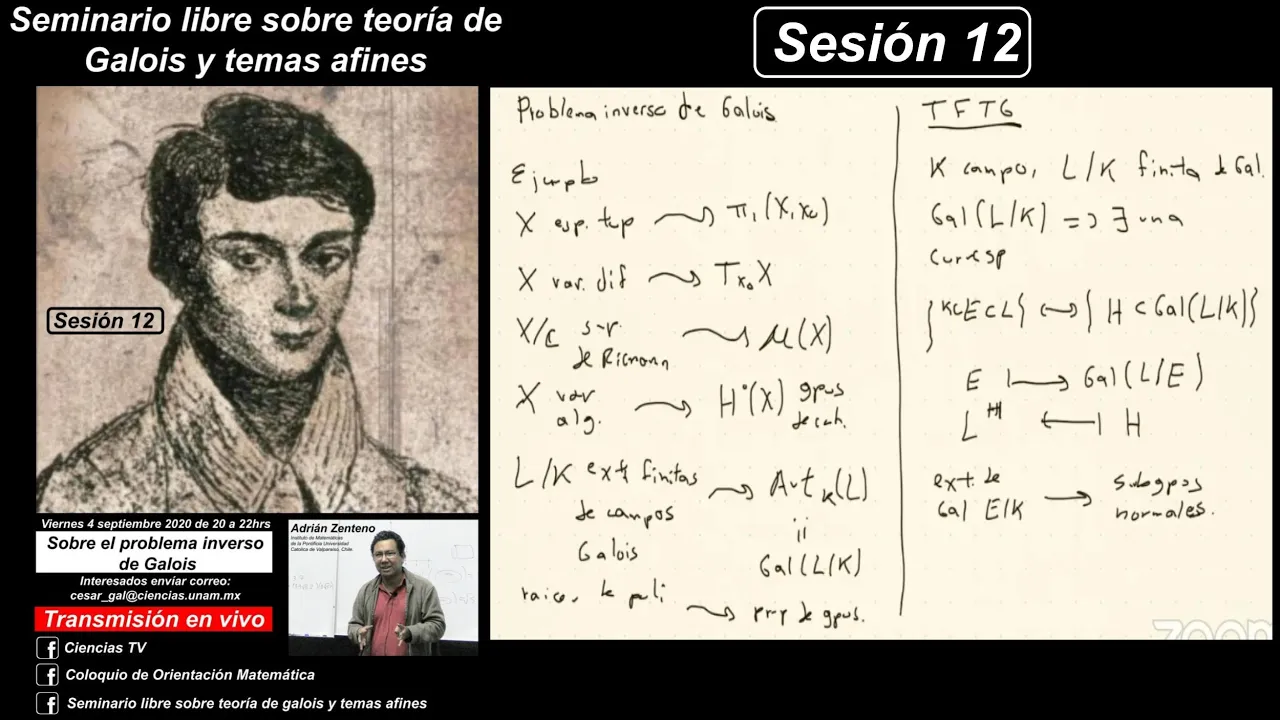
The Inverse Galois Problem, exploring if every finite group can be realized as a Galois group over the rational numbers.
Infinite Galois Theory, introducing the Krull topology and profinite groups.
303.8K views12.1Klikes25:10Original Release: 2021-11-25
[Music] this is what we're leading up to in this video an illustrated guide to one of the most beautiful theorems in modern math the fundamental theorem of galwa theory at its heart it's about creatures like this algebraic equations and what happens when you permute their inputs [Music] this is a problem that's simple enough to state but ends up using the full power of modern abstract algebra to deal with most people have heard of it because it leads to a proof that the quintic has no general formula and radicals but this kind of math goes far beyond that one theorem i honestly think it has the potential to change the way you look at numbers here's the plan for this video first we'll look at what this field studies by treating an example in non-rigorous language then we'll make things precise introducing the basic tools of the subject so-called fields and automorphisms then we'll look at the basics of group theory and see how it reveals to us the underlying nature of these objects finally we'll see how all these pieces come together in the fundamental theorem of galwa theory this theorem is without a doubt one of the crown jewels of modern math but it all starts with a deceptively simple question what is the square root of two you and i know that there are two answers to this question the so-called positive and negative square roots of two the basic point of the video is this there is no algebraic difference between root two and minus root two anything quote unquote algebraic you could say about root 2 will apply without change to minus root 2.
for example the fundamental property of root 2 is that root 2 squared equals 2 but that's also true for minus root 2 minus root 2 squared equals 2.
[Music] say you have a more complicated equation like this that root 2 satisfies if you cube it you get 2 times itself but again it turns out minus root 2 satisfies this exact same equation in general given any algebraic equation with rational coefficients if you replace root 2 with minus root 2 it'll still hold true you can fluidly pass between these two numbers and the equation will never notice the difference [Music] so to answer our original question what is the square root of two well there are two such numbers but they're not like any two other numbers you've seen before in some sense these numbers are like two copies of the same thing this is a premonition of galwa theory some terminology that'll be useful we say that root two and minus root two are conjugate over q that means whenever you have an equation with rational coefficients replacing root two with minus root two will leave the equation holding true [Music] the basic question of galwa theory is the following given a bunch of numbers that are conjugate over q how many ways are there to swap them that preserve algebraic relations what i mean by that is this suppose you're given an equation like this involving root two and minus root two does permuting root 2 and minus root 2 leave the equation holding true in this case the answer happens to be yes and this is not obvious but it's actually true in general given any equation with rational coefficients swapping root 2 and minus root 2 leaves the equation holding true now what we've seen so far are examples of two numbers being indistinguishable but you can also have three numbers being indistinguishable this is where things start getting interesting consider the complex number which i'll write zeta it lies one-fifth of the way around the unit circle in the complex plane it's a fifth root of unity this number has four conjugates over q zeta squared zeta cubed and zeta to the fourth equally spaced points on the unit circle like this the fact that they're conjugate means that given an algebraic equation with rational coefficients if i replace every instance of zeta with one of its conjugates it'll still hold true [Music] now suppose i'm given an equation like this involving not only zeta but the conjugates of zeta as well is it true that no matter which way i permute zeta with its conjugates the equation will still hold true no the permutation i just showed you for example isn't actually allowed this equation just isn't true likewise this permutation doesn't preserve this equation either it turns out that out of the 4 factorial or 24 ways to permute these four numbers there are exactly four that preserve algebraic relations and not just any four these four over here this means that whenever you have an algebraic equation with rational coefficients applying these permutations will leave the equation still holding true [Music] [Music] now it's not clear at this point why this is a question worth asking i mean wondering whether swapping root to n minus root 2 preserves algebraic relations is admittedly kind of a random question the reason we're doing it is that if you look at the ways to permute a bunch of numbers that preserves algebraic relations you can better understand how those numbers are algebraically related to one another that's the basic content of the fundamental theorem and that's what we'll see at the end of the video our example so far has been non-rigorous to convey the basic idea of what's going on now our task is to make things precise our first job is to move away from talking about numbers and instead work with more flexible objects called fields a field roughly speaking is any set where you can add subtract multiply and divide elements the rational numbers for example form a field importantly you can't take square roots if you want to talk about say the square root of two you have to enlarge your fields to contain q and the square root of two define q a join root two as the smallest field containing q and the square root of two it is closed under the four operations so one plus the square root of two is in the field so is four plus two thirds square root of two and so on our next job is to move away from talking about permutations of numbers and instead talk about their abstract analogs so-called automorphisms of fields here's the precise definition if f is a field an automorphism of f is a bijection sigma from f to itself satisfying the following properties [Music] first sigma of x plus y equals sigma of x plus sigma of y for all x and y in the field and sigma of x times y equals sigma of x times sigma of y for all x and y in the field the intuition is that an automorphism is a function that shuffles around elements of the field while respecting the field operations [Music] some notation the set of all automorphisms of f is denoted ought f unfortunately for us the set is a little too big so we're going to restrict our attention to a subset of automorphisms that satisfy an extra property namely we say that sigma is an automorphism fixing hue if sigma fixes q that is sigma of x equals x for all x and q again some notation ought f over q denotes the set of all automorphisms of f fixing q the intuition is that an automorphism fixing q is just a function that shuffles around elements of the field while preserving algebraic relations over q coming back to our framework we first talked about the numbers root 2 and minus root 2.
now we're talking about the field q a join root 2.
before we talked about permutations of root 2 and minus root 2 the preserved algebraic relations with coefficients in q now we're talking about automorphisms of q a joined root 2 and not just any automorphisms but specifically the automorphism's fixing q we will now look at three examples to get a feel for these definitions consider the field q adjoin root two which is the set of all elements a plus b root two where a and b are rational numbers what are the automorphisms of this field fixing q we can calculate them as follows take an arbitrary element of this field let sigma be an arbitrary automorphism and apply it to this element since sigma is additive and multiplicative we can simplify the expression to get this here we also use the fact that sigma fixes q so sigma is determined by where it sends root 2.
now we'll use a key fact that i haven't stated thus far an automorphism sends each number to one of its conjugates so it's either equal to root two or minus root two [Music] in the first case this map sends a plus b root 2 to a plus b root 2. i.e it's the identity in the second case it sends a plus b root 2 to a minus b root 2.
so these are the two automorphisms of q a join root 2 fixing q it's hard to visualize how sigma acts on the entire field at once so we just draw how it acts on root 2 because that determines how it acts on the whole field the first automorphism leaves every point where it is the second automorphism swaps root two and minus root two these are the two ways to shuffle around elements of the field that preserves algebraic relations in particular this shows that whenever you have an equation involving root 2 and minus root 2 with rational coefficients if you swap them the equation still holds true just like we claimed at the beginning now it's not clear at this point why knowing the automorphisms is useful we'll see that the automorphisms of this field are in some sense a mirror image of the field that they act on so in that way studying the automorphisms of a field allows us to better understand the field itself that's the basic content of the fundamental theorem and that's what we'll see at the end of the video before that let's see another example of automorphisms consider the field q adjoins zeta defined as the smallest field containing q and zeta where zeta is a fifth root of unity the complex number that sits on the unit circle one-fifth of the way around this number has four conjugates over q zeta squared zeta cubed and zeta to the fourth equally spaced points on the unit circle like this as a set it's the set of all elements of the following form what are the automorphisms of this field fixing q take an arbitrary element of this field let sigma be an arbitrary automorphism and apply it to this element [Music] since sigma is additive and multiplicative we can simplify the expression to get this here we also use the fact that sigma fixes q so we see that sigma is determined by sigma of zeta an automorphism sends every number to one of its conjugates over q [Music] so there are four possibilities for what sigma of zeta can be there's one where zeta is mapped to itself one where zeta goes to zeta one squared it's mapped to zeta cubed and one where it's mapped to zeta to the fourth now you'll notice that i haven't drawn in the remaining arrows and that's because they don't do what you expect take this one for example where does zeta squared go well doing the calculation [Music] we see that it's sent to zeta to the fourth now doing a similar calculation for zeta to the fourth we see that it's sent to zeta cubed so in summary we get this strange zigzag if we follow the same procedure for the others we get the following what does this mean in particular this means that whenever you have an algebraic equation with rational coefficients applying these permutations will leave the equation still holding true [Music] it's sometimes helpful to see a non-example so if you swap these two numbers for example you can check that this equation actually isn't true anymore likewise with this one [Music] again it's not clear at this point why knowing the automorphisms of this field is useful we'll see soon that using the automorphisms we can uncover the internal structure of the field itself that's the fundamental theorem and it's what we're leading up to before that let's see our final example we'll again look at q a joined zeta where now zeta is a 16th root of unity zeta has eight conjugates in the complex plane all odd powers of zeta [Music] it is the set of all elements of the following form [Music] what are all the automorphisms of this field fixing q sigma is determined by where it sends zeta an automorphism sends every number to one of its conjugates over q so there are eight possibilities for where it can send zeta there is one automorphism where zeta is sent to itself one where zeta is sent to zeta cubed zeta to the fifth data to the seventh and so on before i fill in the rest of the arrows i want to emphasize there will not be a visually obvious pattern with that let's see what it looks like [Music] okay i don't know about you but my brain just cannot make sense of what it's seeing right now the patterns seem almost random but of course it's not this has a very concrete meaning in particular this means that whenever you have an algebraic equation with rational coefficients applying these permutations will leave the equation still holding true [Music] it's sometimes helpful to see a non-example so if you were to say swap these two numbers the resulting equation isn't true anymore but even if this picture doesn't impress you what we'll see soon is that the automorphisms of this field give us genuine information about the field itself that's in some sense the punchline of this video so to sum up we've seen a bunch of cases so far we've seen some fields with two automorphisms fields with four automorphisms and eight automorphisms the basic idea of galwa theory is to study a field via its automorphisms at the start of the video i mentioned that we would see some group theory this is where it comes in because the true complexity of these automorphisms lies not in the automorphisms themselves but in how they combine with one another we will now see that they form a structure called a group and that structure lies at the heart of the fundamental theorem this is clearest if we just look at an example if you apply this element and then apply this one the overall effect is the same if you just applied this we can see this by following the arrows for example on this side zeta goes to zeta squared and on this side zeta goes to zeta cubed and then zeta cubed goes to zeta squared on both sides the overall effect is the same likewise on this side zeta cubed goes to zeta and on this side zeta cubed goes to zeta to the fourth then zeta to the fourth goes to zeta again the overall effect is the same [Music] what i'm saying is that the set of automorphisms of a field is more than just a set it is a group where the group operation is composition of functions you can combine these permutations with each other in any possible way we'll arrange the results in a four by four multiplication table as follows [Music] okay so we've seen that different fields have automorphisms fixing q and that these automorphisms form a group but is any of this useful this could give us no information for all we know the point is that the automorphisms of a field form an exact mirror image of the field that they describe that connection is spelled out in the fundamental theorem of galwa theory we are now nearly ready to see this connection to see that consider the following situation suppose you have a field f containing q and you have a field k in between them we started off looking at the automorphisms of f we then restricted our attention to automorphisms of f fixing q now we'll restrict our attention further to automorphisms of f fixing k each time we add extra conditions the automorphisms have to satisfy which makes the set of automorphisms we're considering smaller and smaller as a concrete case of this consider the field q a joined zeta where zeta is a fifth root of unity this contains q sandwiched between them is the field q a joined the square root of five [Music] we started off by looking at automorphisms of cuba joined zeta then we restricted our attention to automorphisms of huwa joint zeta fixing q now we'll restrict our attention once again to automorphisms of cue a joint zeta fixing q a join root five phrasing the cinema down to earth language we first looked at permutations that preserved algebraic relations over q now we'll look at permutations that preserve algebraic relations over q a join root 5.
the example on the screen is an example of an algebraic relation with coefficients in q a join root 5.
notice that this automorphism preserves this equation [Music] while the other two automorphisms don't [Music] so the automorphisms fixing q are these four while the automorphisms fixing cuba joined root five are just these two and with that we can see our first glimpse of the fundamental theorem of galway theory on the right i'll arrange the three fields we have in a tower at the top go skewer join zeta then q then q adjoin root five beside q i'll place the automorphisms fixing q beside q a joined zeta i'll place the automorphisms fixing huey joined zeta which by definition is just the identity beside cue join root five i'll place the automorphisms fixing q a join root five in words these are all the ways to shuffle around elements preserving relations over q these are all the ways to shuffle around elements preserving relations over q a joined root five and these are the ways to shuffle around elements preserving relations over q a joined zeta you might feel your heart rate picking up now every subfield on the right gets a sub group on the left but the surprising fact is that every sub-group is obtained in this way there is a perfect one-to-one correspondence between sub-fields of this field and sub-groups of its galwa group these two worlds are exact mirror images of one another with all that said we can now state the fundamental theorem of galway theory once and for all in its most abstract form to do that we'll need some notation ott f over q denotes the automorphisms of f fixing q here's the theorem let k be a field obtained by taking q and adjoining finitely many algebraic numbers alpha 1 to alpha n and suppose k satisfies this technical condition if alpha is in k then all the q conjugates of alpha are in k as well then there is a one to one correspondence between the subgroups of ought k over q and the subfields of k containing q that correspondence is given as follows to any field l in between k and q assigned to it the group of automorphisms of k fixing l you might get the feeling that this is profound but if you're anything like me it's just so abstract that you can't see the message there are many things going on here for one this side represents the structure of a field it says what all the subfields are this side represents the symmetries of the field it gives all the ways you can shuffle around elements that leave certain equations unchanged if i had to summarize this theorem in a sentence it would be the structure of a field equals the structure of its symmetries but it's not just that these two sides look the same one side is considerably simpler than the other a field is an unfathomably complicated object it has infinitely many elements each with complicated interconnections with other elements whereas this group i mean it's a finite set it just has four things in it it is something you can hold in your hand and play with the fundamental theorem of galway theory allows us to distill the enormous complexity of this field into this tiny object which to be clear is still complex but it's a finite amount of complexity [Music] now we can look at our original question with a new perspective what is the square root of two at the start of the video our answer was that there are two square roots of two but they are indistinguishable over the rationals but now you'll see something different the answer to that question depends on the field you're living in depending on the field we're living in permuting these two numbers may or may not preserve algebraic relations over that field those permutations form the galwa group which by the fundamental theorem is a mirror image of the field describes so in that sense the various answers to this question lead us to the fundamental theorem of galwa theory that's all for now with that thanks for watching and i'll see you next video [Music] you
Up Next
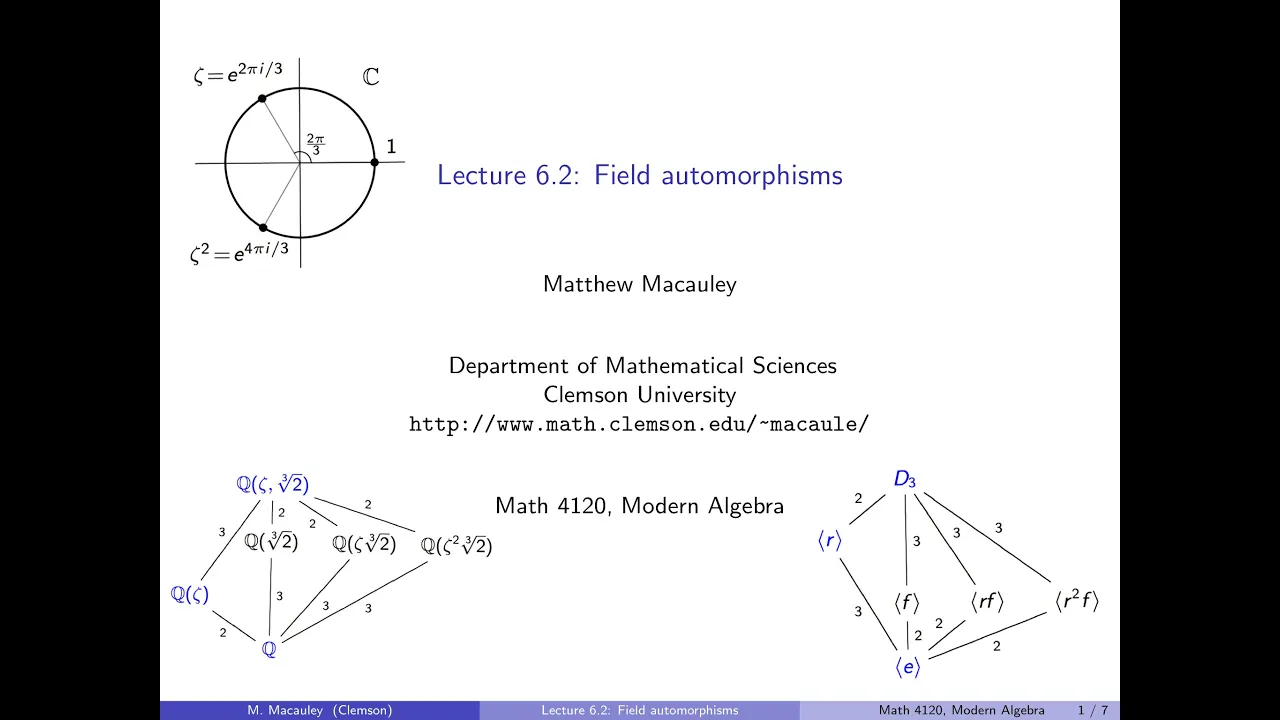
35:40
Field Automorphisms and Galois Groups Explained
@ProfessorMacauley
53.6K views•2016-04-08
4:43
Elliptic Curve Cryptography Explained: ECC, ECDSA, ECDH
@PracticalNetworking
28.5K views•2024-10-21

10:19
Why Quintic Equations Have No General Formula | Galois Theory
@Aleph0
205.6K views•2021-02-20

6:00
The Mathematical Impossibility of Accurate World Maps
@Vox
23.3M views•2016-12-02
Related Study Plans & Knowledge Roadmaps
Structured learning paths in Mathematics
mathematics
Tensor Calculus: Vectors to Riemann Curvature
01Mathematical Foundations: Linear Algebra & Calculus
02Covectors, Dual Spaces, and Tensor Basics
03The Metric Tensor and Index Gymnastics
+ 2 more learning modules
40h5 modules
Explore Roadmap
mathematics
Gödel's Incompleteness: Logic, Proofs & Limits
01Introduction to Formal Systems & Hilbert's Dream
02Set Theory, Cardinality, and Cantor's Diagonal Argument
03Arithmetization and Gödel Numbering
+ 2 more learning modules
14h5 modules
Explore Roadmap
mathematics
Galois Theory: Fields, Groups & Solvability
01Foundations of Abstract Algebra: Groups & Fields
02Polynomials & Field Extensions
03Splitting Fields & Symmetries
+ 2 more learning modules
24h5 modules
Explore Roadmap
mathematics
Non-Euclidean Geometry: Models & Geodesics
01Euclid's Fifth Postulate and the Birth of New Geometries
02Hyperbolic Space and the Poincaré Disk Model
03Geodesics: Defining Straight Lines in Curved Spaces
+ 2 more learning modules
15h5 modules
Explore Roadmap