








![[주님은 나의 최고봉] 12월26일 : 빛 가운데 거하면](https://i.ytimg.com/vi/9UZEvWPAHYw/maxresdefault.jpg)







In William Holman Hunt's 1853 painting 'The Awakening Conscience,' Victorian artists used meticulously detailed objects and symbolic arrangements to convey moral and spiritual narratives, where new, unused furnishings represent artificiality and moral corruption, while nature and light symbolize spiritual awakening; the painting contrasts the upright, awakening woman with her reclining lover, illustrating how the same person who causes moral fall can also provide unexpected inspiration for redemption.
Hunt's The Awakening Conscience: Pre-Raphaelite Symbolism
Added:Understanding of the Pre-Raphaelite Brotherhood's foundational goals, particularly their rejection of academic conventions and commitment to meticulous realism.
Awareness of Victorian social codes, specifically the strict moral expectations surrounding gender, class, and the cultural discourse around the 'fallen woman' in 19th-century England.
Basic principles of iconographical analysis—how artists use seemingly mundane objects within a domestic setting to convey deeper narrative or moral messages.
Familiarity with William Holman Hunt's artistic style, characterized by vivid color palettes, sharp focus, and heavy moralizing themes.
In-depth analysis of Hunt's companion piece, 'The Light of the World', to understand the theological and spiritual dimensions meant to contrast with 'The Awakening Conscience'.
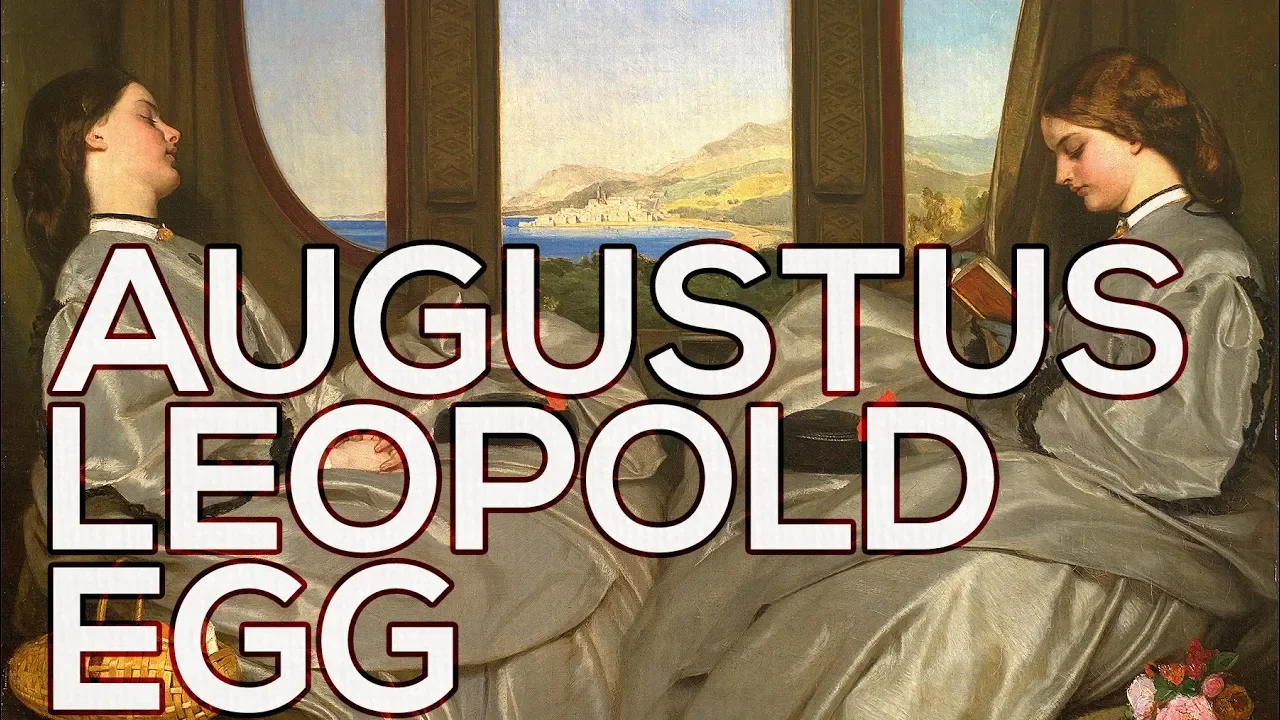
Comparative study of other Victorian social realism paintings dealing with moral themes, such as Dante Gabriel Rossetti's 'Found' or Augustus Egg's narrative triptych 'Past and Present'.
Investigation of Victorian material culture, exploring how the mass-produced furniture, sheet music, and decor depicted in the painting signify newly acquired wealth and moral superficiality.
Exploration of the transition of Pre-Raphaelitism into the later Aesthetic and Arts and Crafts movements, which shifted focus from moral didacticism to 'art for art's sake'.
47.6K views455likes4:49Original Release: 2012-04-02
(piano music playing) Steven: We now live in a culture where the new is sought after or the new is something that we want, but in Victorian culture, the new was something that was not always trusted.
Beth: Ruskin referred to all the new furnishings in the painting that we're looking at, William Holman Hunt's Awakening Conscience is, having a fatal newness.
Steven: The newness of the piano, the newness of the table, the newness of the rug, all of this was meant to suggest a kind of falseness, actually, and it's a perfect example of the concerns of Victorian culture in this fabulous pre-Raphaelite image.
Beth: So we're looking at a kept woman and we see her with her lover. We're in a space that is her apartment filled with brand new furniture and new wallpaper and prints on the wall.
Steven: That he's bought for her, in order to create a [unintelligible] place that he can escape to.
Beth: She's probably of lowly origin. I mean, this is all standard narrative that Victorians knew and that had been repeated over and over again of a girl who came from the countryside and became a fallen woman or a kept woman in the city.
Steven: Who is compromised by a class above her.
Beth: She's been sitting on the lap of her lover, who's been playing the piano, but unbeknownst to him, he plays a song that reminds her of her childhood and at that moment, she remembers her past innocence and experiences of spiritual awakening, an awakening of her conscience. So she is a subject that we see often in Victorian paintings. She's a fallen woman, but at a moment of redemption.
Steven: Look at the way that Hunt, the artist, has organized the painting. We're looking at her and we're looking at her ensconced in all of this luxury of the home that he's created for her, but this artificial place that's not real.
Beth: Where nothing is worn, nothing is used, where nothing has been transformed by the life of a real family.
Steven: But she's facing almost towards us and we can see her reflection in the mirror in back of her and we can see that she's looking towards the outside and so, here, nature and light take on the role of the spiritual take on the role of the moral that she needs to now move towards.
Beth: That's right and that's really what interested Holman Hunt, who was a very religious man and is using this modern life subject to speak to a bigger issue of spiritual transformation and how God can come to us at unexpected moments.
Steven: And look how Hunt plays one figure against the next. She's standing up, her posture is straightening as she is awakening her moral conscience.
But she's contrasted against the man who is the source of corruption, who is the source of her moral fall and he is reclining. All of this is an entrapment. In fact, he holds her back. She's going to have to, literally, break past that.
Beth: I think one of the points that Hunt is trying to make is that the same person that can be the source of your sinfulness can be the same person who unwittingly provides the inspiration for your redemption, for your awakening and so we have this inscription on the frame "As he that taketh away a garment in cold weather," "so is he that singeth songs to an heavy heart."
Steven: So here are weighty moral issues that are really spiritual and, yet, what the artist is doing is placing these in his contemporary world and in a sense not showing Biblical stories, but showing stories that resonate a social problems in his immediate world.
Beth: And making it all very material and real in that typical pre-Raphaelite way, painting the furnishings of the room with incredible exactitude and making everything in the room have symbolic value.
Steven: Well, we know that the artist were actually looking back, not to the Baroque, not to the Rennaisance, but to artists immediately before that and specifically, this is an artist who is probably looking at something like Jan van Eyck, perhaps the Arnolfini Wedding Portrait, which is in the national gallery in London and was understanding that objects within a room can have a secondary symbolic meaning.
Beth: This painting would really need to be read by its viewers. Hunt is asking us to look closely at all the elements in the room and to think about what they mean, in terms of the narrative that he's telling of this woman's spiritual awakening.
Steven: And so, for instance, if we look under the table on the left, you can see a cat and if you look very closely, you can see that that cat has caught a bird and this is clearly an analogy to the man and the woman.
He has kept her. He has caught her.
Beth: The pre-Raphaelites were concerned with, as you said, these very serious, moral subjects and modern life's problems and taking those on.
Steven: So an artist who is using Art History in order to really explicate contemporary subjects, contemporary moral dilemmas, some of the driving issues of the day.
(piano music playing)
Up Next
6:52
Holman Hunt's The Awakening Conscience: Art Explained
@Expury1970
396 views•2020-04-15

114:18
Christian Iconography: History, Theology, and Meaning | Fr. Panayiotis Papageorgiou
@Trisagionfilms
58.8K views•2020-02-21

10:26
Redgrave's The Sempstress: Victorian Social Realism, 1846
@smarthistory-art-history
3.2K views•2011-10-22

16:34
Earliest Depictions of Jesus in Art: 10 Ancient Images Explained
@UsefulCharts
5.9M views•2022-06-03
Related Study Plans & Knowledge Roadmaps
Structured learning paths in Art History
art-history
Gothic Cathedrals: Engineering, Light & Society
01The Birth of the Gothic: Romanesque to Suger's Vision
02The Structural Triad: Pointed Arches, Ribbed Vaults, and Flying Buttresses
03Theology of Light: Lux Nova and Sacred Geometry
+ 2 more learning modules
14h5 modules
Explore Roadmap
art-history
Pre-Raphaelites: Realism, Symbolism & Critique
01The Victorian Art Establishment and Academic Formula
02The Founding of the PRB and Radical Realism
03Medieval Revivalism and Literary Symbolism
+ 1 more learning modules
8h4 modules
Explore Roadmap
art-history
Street Art: From Subways to Art Market
01Subcultural Origins in Philadelphia and New York (1970s)
02The Subway Era and Style Wars (Late 1970s - 1980s)
03The East Village Scene and Early Gallery Crossover
+ 2 more learning modules
10h5 modules
Explore Roadmap
art-history
Classic Maya Art: Iconography, Glyphs & Ritual
01Foundations of Classic Maya Visual Culture
02Deciphering Maya Hieroglyphs & Text-Image Integration
03Sacred Geography and Cosmological Architecture
+ 2 more learning modules
14h5 modules
Explore Roadmap