







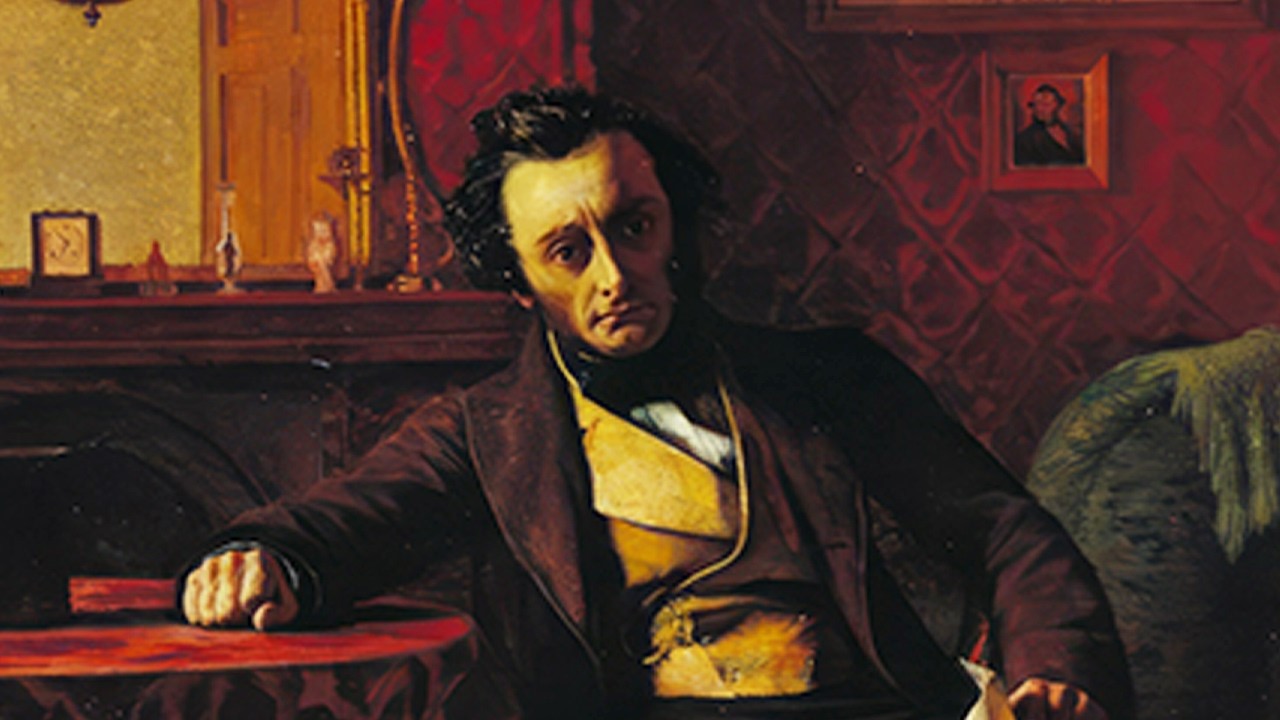










This video explores William Holman Hunt's painting 'The Awakening Conscience' (Tate Britain), explaining how the Pre-Raphaelite artist used symbolic imagery—including a woman's clasped hands, a broken-winged bird, and light streaming into a room—to convey a moral narrative about spiritual awakening and redemption. The painting depicts a mistress having a moment of clarity while her companion remains unaware, reflecting Hunt's religious convictions and his desire to use art as a vehicle for moral instruction. The video also examines the complex relationship between Hunt and his model Annie Miller, a barmaid he helped educate and elevate from poverty, illustrating how Victorian artists sometimes sought to rescue women from societal marginalization through artistic patronage.
Holman Hunt's The Awakening Conscience: Art Explained
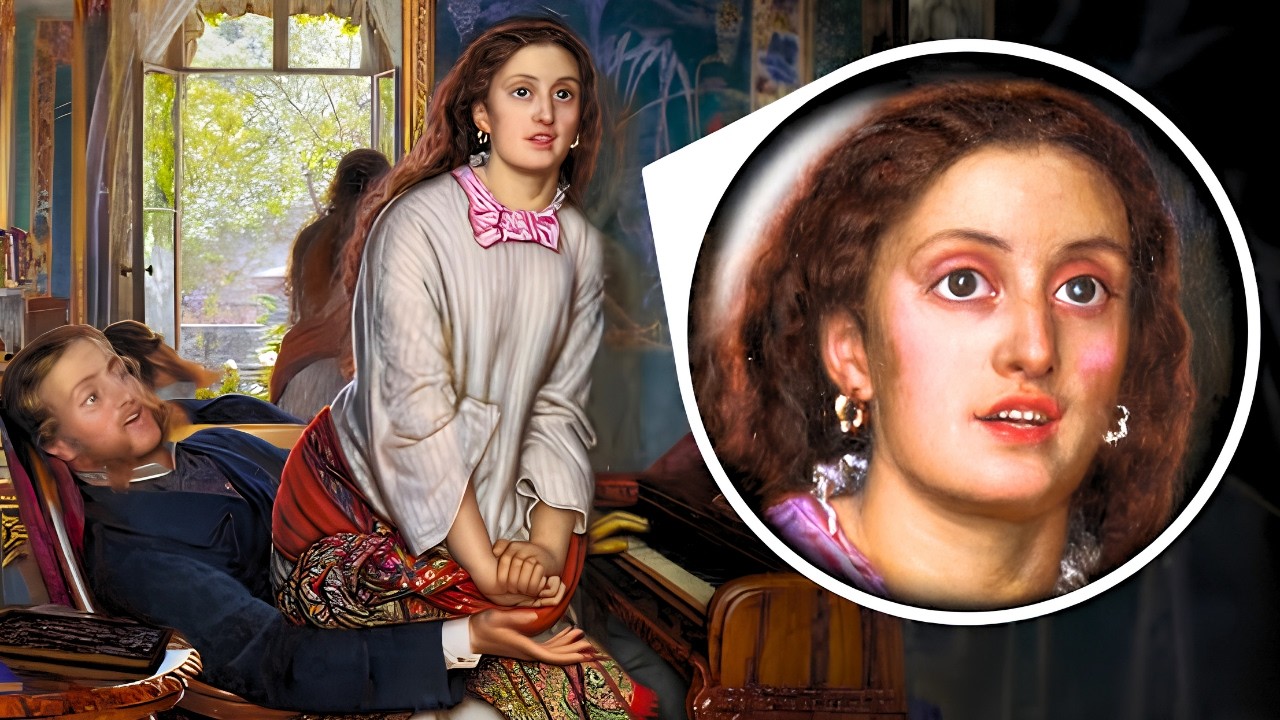
Added:hey my name is Lila and this is episode three of museum without walls we had lots of fun filming this and I hope you enjoy we're all spending a lot of time at home just like lots of artists who have also spent time indoors looking at the rooms and using them as inspiration for their paintings this painting is called The Awakening conscience and it's by a British artist called William Holman hunt is a painting with a strong story and the image we see is based on a real room Hunt was a founding member of a group of artists who called themselves the pre-raphaelites they wanted to return art to the period before the Italian Renaissance artist Raphael they wanted their art to emphasize nature abundant details vibrant colors and complex subjects other members of the original group included the painter Dante Gabriel Rossetti and John Everett Millais hunt was a deeply religious and moral listing man and this is reflected in many of his paintings including this one as a child he spent many hours reading the Bible and as an adult he continued to have a deep connection with his faith he wanted his paintings to emphasize spirituality and offer guidance for the lives of those who saw them this was a common approach for many artists in Europe in the 19th century it may be difficult for some of us in the 21st century to accept HUDs message and we may feel that his paintings don't fit with our worldview however his intentions were sincere the awakening conscience was inspired by a verse from the Bible from the book of Proverbs that he that taketh away a garment in cold weather so was he that singeth songs to a heavy heart it is a painting with a narrative and a strong moralizing message which viewers were intended to understand straight away this painting is based on a room that hunt specifically rented first paintings in st. John's Wood in London it was the kind of room that men Victorian London rented for their mistresses so that they could meet in secret the painting shows a young man and a young woman they've been playing the piano together we see them as she is rising from the man's lap and looks out into the sunlit garden which is reflected in the mirror behind her she clasps her hands together her lips slightly parted and her eyes wide as she is suddenly struck by a spiritual revelation today we might say that she's had a moment of clarity the man however neither know this is her emotion nor follows her revelation he is unchanged and unmoved the painting is full of signs and symbols that tell the viewer about these two people and the circumstances that they are in Victorian viewers would have immediately understood the scene in a way that we perhaps do not today so what is going on the focal point of the painting is the woman's hands which she is firmly holding together we can see that she is wearing lots of rings except for a wedding ring she is not married and therefore this painting is not a man and wife there are other signs that tell us what's going on under the table a cat is toying with a broken-winged bird symbolizing the predatory way the man is treating the woman the man has dropped his glove and cane on the floor showing that he is careless dissolute and symbolizing the likely fate of a cast-off mistress which was prostitution on the floor at the firth of piano is unraveling wool another symbol for what's going wrong in the woman's life light streams into the room and onto her face again symbolizing the nature of her revelation while the mirror image of the gardener represents innocence that although lost might be regained the woman is reminded of her country roots by the music man plays which causes the awakening of her conscience the sheet music is Thomas More's oft in the stilly nights the male figure may be based on Thomas said or Augustus ed both painter Friends of hunt the female model is Annie Miller a barmaid who hunt met when she was 15 she was modeled for him as well as other pre-raphaelite artists many people in Victorian London lived in squalor and poverty there was no help from the government and very few charities Annie Miller's childhood was horribly poor and as a child she was described as dirty and covered with vermin and her hair was particularly wild and filthy as possible that hunt had seen her growing up in the streets after taking her in he organised lessons for Annie to improve her speech and literacy did he see himself was rescuing her from poverty and giving her a new life like one of the knights in shining armor that the pre-raphaelites loved to paint it's not possible to truly know what his feelings were and it's not clear if their relationship was platonic or not this was his first with her as a model although most of the first viewers of the painting could not be expected to know who the model was is it significant that she is the model for a kept woman who is having an affair hadn't had planned to marry Annie but first he decided to visit Palestine so that he could more accurately paint scenes from the Bible his plan was that Annie would be faithful and dutiful and when he returned they would get married although they were never formally engaged hun and Annie argue a lot often about money and he described her as willful it seems as though Hunt was trying to mold her into the perfect wife but she had a mind of her own during hunts absence she also sat for George Price boys and Rossetti for Rosetti she appeared in works such as Dante's dream and Helen of Troy her connection with Rosetti caused a rift between Rosetti and hunt and on one occasion caused Rosetti's wife Elizabeth Siddal to throw his drawings of Annie out the window later she married the cousin of an earl Captain Thomas Thompson and settled down with him and had two children she died at the age of 90 after a remarkable life that saw her pulled out of grinding poverty and become a muse for some of the most advanced artists in Britain and then marrying a nobleman there were rumours at a time that she was a mistress for hunt and Rossetti in others but there is no evidence to support this we will have to make our own minds off about this the look on the woman's face in the modern painting is not a look of pain and horror that the viewers saw when the painting was first exhibited the painting was commissioned by Thomas fabin a manchester industrialist and patron of the pre-raphaelites forever and found himself unable to bear looking at the woman's expression day to day so persuaded hunt to soften it the theme of the fallen woman was popular in Victorian are echoing the prevalence of prostitution in Victorian society however Hunt's redemptive message is unusual when compared to other examples of this theme because it offers the viewer the hope that the young woman in the painting can truly repent and can ultimately reclaim her life the emphasis of the painting is on the change and redemption of the woman it is her life that is about to be changed as she is metaphorically and figuratively seeing the life however the man is not changed or indeed seems to be aware that he could or should change given the complex relationship between the artist and the model is tempting to ask if had considered the that could be improvements in his life just as he determined that there could be improvement in Annie's life you
Up Next
Street Art vs Graffiti: Defining the Artistic Divide
@Theartistblock
4.5K views•2024-01-06

Christian Iconography: History, Theology, and Meaning | Fr. Panayiotis Papageorgiou
@Trisagionfilms
58.8K views•2020-02-21
Ukiyo-e Art: History, Woodblock Printing & Influence
@japanathand
6.3K views•2023-06-08

Earliest Depictions of Jesus in Art: 10 Ancient Images Explained
@UsefulCharts
5.9M views•2022-06-03
Related Study Plans & Knowledge Roadmaps
Structured learning paths in Art History