



















![상상속 아름다움과는 거리가 먼 현실가족!! 상상가족 vs 현실가족 ㅋㅋㅋ 가족시트콤[토트콤]ㅣ토깽이네](https://i.ytimg.com/vi_webp/5gxkqp5muTI/maxresdefault.webp)


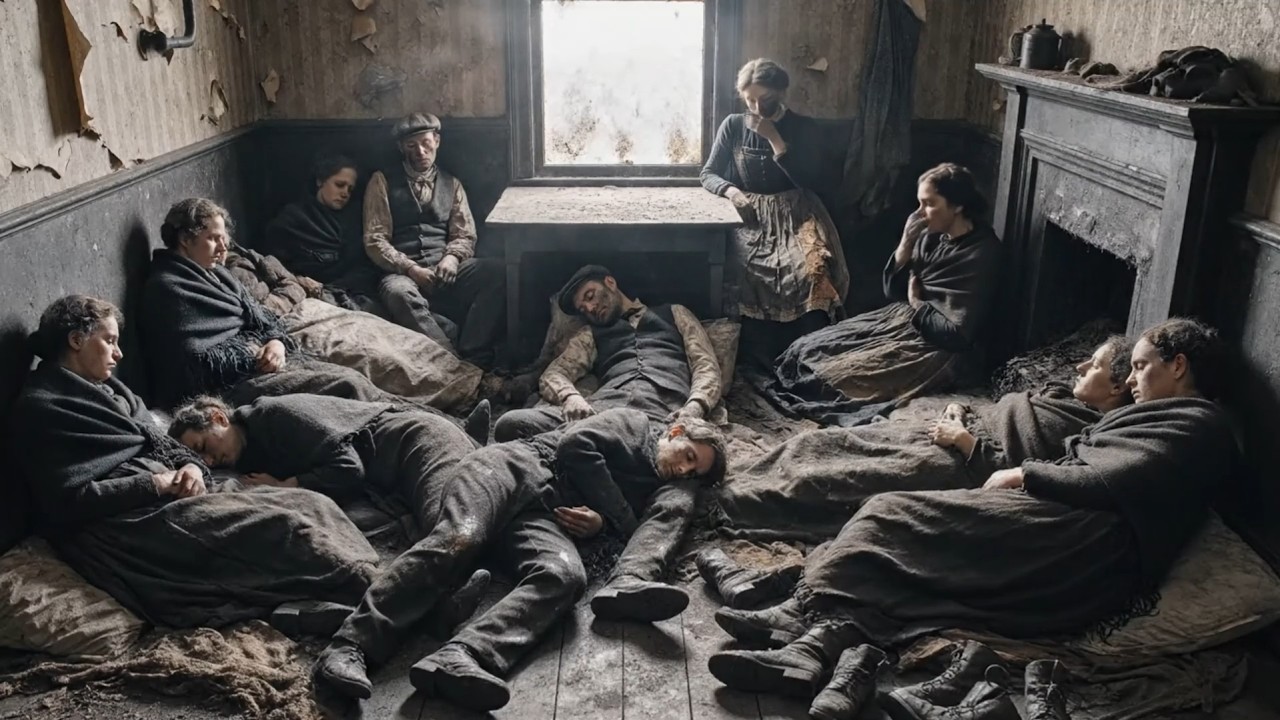
Victorian artists created paintings that both idealized the home as a sanctuary of family virtue and exposed the hidden dangers of poverty, disease, and moral corruption that threatened the Victorian dream of 'home sweet home,' revealing that the era's domestic ideals often masked harsh realities including high infant mortality rates, hidden affairs, and the exploitation of vulnerable women and children.
Victorian Homes: The Hidden Realities of Domestic Life
Added:The Victorian 'Cult of Domesticity' and the 'Angel in the House' ideal, which positioned the home as a sacred, moral sanctuary run by women.
The rigid social hierarchy and class inequalities of 19th-century Britain, particularly the divide between the wealthy middle class and the working class/domestic servants.
The basics of Victorian narrative art and social realism, where paintings were embedded with moral messages, symbols, and coded social commentary.
The strict moral codes, legal limitations (such as coverture), and gender double standards that governed Victorian marriage and family life.
Analyzing how these domestic anxieties influenced Victorian Gothic and Sensation literature, such as the works of the Brontë sisters or Wilkie Collins.
Investigating the late-19th-century legal and social reforms that addressed domestic inequality, such as the Married Women's Property Acts and early feminist movements.
Exploring how Victorian domestic architecture and spatial design (such as hidden servant passages) physically enforced social and class divisions within the home.
Conducting a comparative study of how modern media and visual art critique contemporary versions of the 'perfect home' or idealized family life.
252.3K views3.6Klikes58:17Original Release: 2025-12-06
[Music] The Victorians saw the world change before their very eyes.
And Victorian artists captured that change in paintings that were the cinema of their day.
[Music] They were pictures that revealed their greatest dreams [Music] and their worst nightmares.
[Music] One dream in particular fueled the Victorian imagination.
A dream of escape.
escape from the monster that was the sprawling dirty Victorian city with its lure of vice, drink, and crime.
[Music] Escape to a haven that offered refuge from all that.
the family home.
>> Once inside, you could close the door on all that noise and nasty reality out there and be secure in your own home sweet home.
[Music] A respectable household showed you'd worked hard and provided for your family.
Victorian artists loved cozy domestic scenes, a sort of comfort food for the soul.
Their paintings showed life in the Victorian home as it should be.
Father pays for it.
Children play in it.
But the one who holds it all together is the wife and mother.
She became known as the angel in the house.
But artists also liked to dispense moral medicine in paintings which warned what could happen when things went wrong.
The fear of poverty and disease.
The evils of drink.
the shame of illicit sex.
All waiting in the shadows to destroy the Victorian dream of home sweet home.
[Music] On the aisle of white, well away from the noise and filth of the city, lay a royal Model for the perfect family household.
[Music] Queen Victoria's holiday home, Osborne House, was created as a haven of peace and family life.
[Music] For Victoria, it was a retreat from the business of being queen. Here she escaped from London, from politics, from the court to live out a dream of a very different kind of life.
Here at Osborne, Victoria and Albert could indulge themselves in their favorite fantasy, which was that they were just like any other British middle-class family. So the dining room here is full of pictures of the family, not so much royal pictures as family pictures. And the one which dominates the room here is this one, Victoria's favorite, by France Vintterhalter.
[Music] It was painted here at Osborne in 1846 and shows Victoria and Albert with five of their children just after they'd moved in.
Okay, who wears a crown at home? But this is the queen and consort as mother and father.
The princlings are children first, royals second.
Even the older girls gaze dotingly on the latest arrival as though in preparation for motherhood themselves.
[Music] Victoria and Albert's was a genuinely loving marriage.
And though we like to think of Victoria as a bit of a prude, she and Albert enjoyed married life to the full.
[Music] And this room, their bedroom, is full of clues as to how much they loved each other as well as loving the place. The door, for example, one keyhole on the outside and two keyholes on the inside so the servants wouldn't disturb them when they didn't want to be disturbed.
The bed, a little plaque on it commemorating the occasion on which they first slept in it together. and the last occasion and even the fabric on the seat at the bottom of the bed.
A little profile of Victoria and another one of Albert looking at each other for all time.
[Music] Over a period of 17 years, Victoria was almost constantly pregnant.
[Music] Osborne is a shrine to motherhood.
Images of Madonna's jostle with portraits of Victoria as a doting new mother and a beautiful wife.
But the royals lived an enchanted life.
Victorian artists knew that for ordinary people, the course of true love didn't always run smooth.
They showed courtship as a risky business with temptations of the flesh everywhere.
Forbidden pleasures only a whisker away.
[Music] betrayal lying just behind the garden fence [Music] and broken vows spelling disaster.
Pictures like this carried a clear moral message. The sooner young lovers got married, set up home, and had a family, the better.
[Music] The newly fashionable London suburb of Kensington was where one middle-class couple chose to settle down.
18 Stafford Terrace was home to the newlywed Linley and Marian Samborn.
From the outside at least, it looked like the perfect respectable household.
Lynley was a cartoonist for Punch magazine.
Marian was a full-time housewife and soon a mother, too.
Together, this exemplary, hard-working pair put their hearts and souls into their cherished family home.
[Music] What is amazing about this house is that it is virtually unchanged since the time when the Samborns moved in in the 1870s.
Like many Victorians, they love to show off their possessions. This single terrace house has 144 chairs and there are 900 pictures on the walls.
Minimalist. It ain't.
[Music] As in any middle-class home, it was Marian the matriarch who ordered the household.
And this, the morning room, is where Marian ran her empire. Now, this wasn't a particularly large Victorian household, only two children, but it still had a staff of four. cook, parliament, housemaid and groom. She would sit at the desk here writing letters, doing the accounts, and telling the staff what they ought to do during the day. But as well as an army of servants, you also needed this, Mrs. Beaton's book of household management, the Bible for running a household.
With this, you could become the perfect domestic goddess, and a rather formidable one at that, by the sound of it.
The functions of the mistress of a house resemble those of the general of an army or the manager of a great business concern.
[Music] Mrs. Beatens was just one voice advising a young wife how to run the perfect household.
There were plenty more.
The pictures that hung in every home carried clear messages, too.
[Music] The man was the head of the family, the moral guardian of the home.
The woman was a provider of love and comfort, [Music] a figure of purity and goodness.
Marian Samborn seems to have embraced her role.
In the words of a popular poem of the day, she set out to be the perfect angel in the house.
Her husband, on the other hand, was definitely lower than the angels.
[Music] Finley had a little secret. It had all started innocently enough. He was a good enough draftsman, but he felt he had a problem drawing people. Photography seemed to be the answer.
[Music] Lindley started off using himself as a model.
Then he persuaded his wife, children, and even servants to pose for him.
[Music] But soon Linley would require another sort of model altogether.
His private bathroom doubled as a dark room.
Using the rather predictable excuse that an artist needed to be intimate with the naked body in order to be able to depict the human form, he began to hire in models. He used them to take photographs like this.
Quite why Miss Cornwallis had to be naked in order for him to draw a cartoon of a vicar's daughter riding a bicycle is a question it would have been rather interesting to hear him try to answer.
[Music] As his passion for nude photography grew, so Lindley grew bolder.
Always carefully choosing times when Marian was safely out of the house, Lley started to smuggle models into the family home and in Marian's morning room of all places. One particular session involved Marian's delicate tea table as a prop.
another time. Look what he did to her favorite comfy armchair.
[Music] Poor Marian Samborn. She really hadn't much idea what was going on.
Fortunately, nor did the neighbors.
Keeping up appearances was what it was all about.
This was a very good time to be a portrait painter.
Rich families commissioned pictures to tell the world they were upright, content, and respectable, which is why they all look rather smug.
Most people, of course, couldn't afford an oil painting of their family, but the local photographer could provide something that looked just like one.
[Music] This photographic studio in the Sussex town of Lewis has been run by the same family since the 1850s.
Right. So this is the room where all the images are kept.
>> Wow. Oh, it's like a treasure trove, isn't it?
>> Yes.
>> What have you How much have you got down here?
>> I think my father worked out there about 5 tons. Uh about 200,000 plates or thereabouts.
>> Wow.
>> It's all the images back to the beginning of the business in 1850 odd.
So, >> could we have a look at one or two?
>> Absolutely. Um um let's take a box out now. Yeah, there we go. There are two two shots of three children.
>> Oh, wow. Wow. And of course they look fairly somber, but it was probably all taken terribly seriously at the time.
>> Well, also tells you something about the pride that the parents had, didn't it?
In their family.
>> Yeah. And of course, it does it follows on from previous art. So, you know, the great masters, they're not grinning out of the canvases at you. They've got dignity and gravitas and and so did early portraiture. It's only >> it's only more recently you expect to have a cheesy grin.
>> A group of some sort. That's actually in a studio, is it?
>> It's Well, yes, it is. I mean, that's a painted backdrop, >> but there are lots of different backgrounds you could have.
>> Yeah, that's right. And I suppose it was a matter of fashion as well. People had different backgrounds according to what was in fashion at the time.
>> Let's have a look at some others.
>> Yeah, surely. Um, >> and you could also presumably pass yourself off as something you weren't quite >> because people only knew you from the image. So, if you dressed up and had a fancy backdrop, then you were more important. Yes. Yes. Why not? Was it an enormous performance having one of these done?
>> It probably was in the old days. Um, do you want to have a go?
>> I'll give it a go. Yeah, why not?
>> Right. Well, this is the studio where we where we still do all the photography where great granddad started off. Um, what I thought was, um, this is a fairly standard Victorian setup. Uh, gentleman sitting at the desk in the chair uh, with the painted backdrop. So, >> we could build a set. This is the This is the desk, is it?
>> This is the desk. Yep.
>> To pull the chair in.
>> Am I going to regret this?
>> Almost certainly.
>> We've only got one survivor of reasonable antiquity. Oh, >> and it's in a bit of a state.
>> My modest home.
>> Absolutely. Absolutely. Made to order.
>> This is a Victorian neck clamp.
>> Neck clamp.
>> Just to just to allow you to sit still for the requisite time, we just put the neck clamp in the back of your neck.
There we go.
So, >> splendid.
Excellent.
>> You can see why they have that sort of rigger mortise look about these photos.
>> It looks perfectly natural.
>> Doesn't feel the slightest bit natural.
>> It's a meth flash powder.
[Music] And one, two, three.
>> Good.
>> Yeah.
[Music] Yeah, I think there's a rook nesting in it. I tell you.
Oh my goodness. Burn itself out.
Right.
[Music] And here's the end product. The very picture of Victorian respectability.
almost as respectable in fact as this gentleman.
[Music] This is the artist William Powell Frith.
Frith painted one of the most popular pictures of the day, casting himself as the perfect father and his own family as a true picture of Victorian virtue and happiness.
[Music] This is his little daughter, Alice. It's her sixth birthday.
This is Isabelle Frith, young mother to a fine brood.
A happiest scene of family life you could hardly imagine.
When it went on show at the Royal Academy in 1856, the public loved it.
Pictures like this proclaimed life was wonderful in the Victorian home.
[Music] The critics applauded its moral and improving tone.
Copies of Fritz's painting hung in homes up and down the land, reminding everyone of what to aspire to.
The trouble is, at the heart of this picture was a lie.
[Music] [Music] This, the nice, respectable middle-class enclave of Bazewater, was where Frith lived with his nice, respectable middle-class wife Isabel and their 12 children, his official family.
And here in the rather more shabby district of Paddington, is where he set up home with his mistress and his family of illegitimate children.
For many years, he managed to run both households without his wife suspecting a thing.
Then one day, so the story goes, his wife saw him posting a letter in West London. Nothing unusual in that, of course, except that on that day he was supposed to be away. When she received the letter later that day, it told her what a lovely time he was having in Brighton.
Keeping a mistress wasn't unusual.
They were hidden away in rented rooms all over the place.
[Music] Everyone knew what was happening, but no one talked about it.
Then one artist dared to show what was really going on.
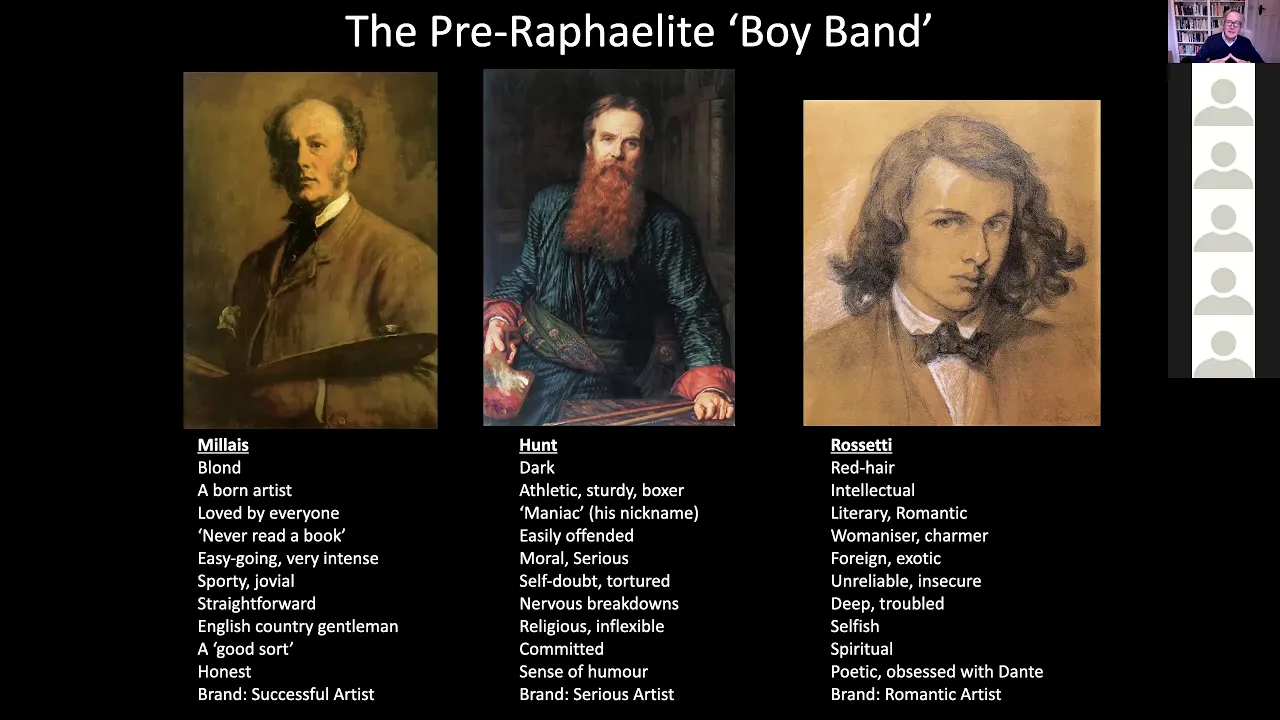
[Music] In William Holman Hunt's scandalous picture, The Awakening Conscience, a married man canodles with his mistress in their love nest.
The look in her eye shows a glimmer of guilt. She's resolved to end their affair, but the man is flushed with desire. Look at that face. No pangs of conscience for him.
All this suits him just fine.
But the public were appalled, and so too were critics.
Mr. A hunt's picture fumed one is drawn from a very dark and repulsive side of domestic life.
[Music] This was a subject far too close to home.
[Music] But adulterous liaison were common.
So too was prostitution.
In London in 1857, it's estimated there was one prostitute for every 25 men, and many of their clients were married.
[Music] Sexually transmitted diseases were rife.
[Music] Thousands of unsuspecting Victorian wives and mothers were infected.
Even Mrs. Beaton, who had defined the perfect Victorian home, fell victim to syphilis, probably infected by her husband on their honeymoon.
[Music] In many Victorian cities, anatomical museums provided the public with graphic and sensational warnings of the dangers of illicit sex.
[Music] [Music] These places have long vanished.
But hidden in the back room of a modern waxwork museum, one Victorian collection survives.
too unpleasant to be on public display nowadays.
>> Wow. What is this?
>> This is what remains of the Liverpool Museum of Anatomy, a rare survival of a public Victorian anatomy museum. These are wax anatomical models of common Victorian diseases that people could have walked in, paid six pence and seen at any time of the day.
They are revolting.
Let's go for a nice afternoon out and look at the symptoms of syphilis. Dear, >> this was something that was great concern to people at the time.
>> Syphilis was >> Yes, small pox was small because syphilis was the great pox and the fear of syphilis in Victorian England was very prevalent. No one would want to visit a prostitute whose skin looked like that.
So there's a kind of well there's obviously a moral warning here, isn't there?
>> Yes. When people came in to the museum, they'd be given a catalog such as this one, the descriptive catalog urging man, know thyself.
>> Face of a man showing the evil effects of secondary symptoms of syphilis.
That's this face here more or less, isn't it? These are secondary symptoms of syphilis.
>> That's probably referring to this actual specimen >> model of the head of a child. In this model, the visitor sees the awful effects of men leading a depraved life.
And that's this child here, is it? In >> Yes. You can see the inflammation around its eyes and its nose. Many men must have been extremely concerned if they'd had a wayward youth. The worst possible thing for them to do was to infect their loved ones with this dreadful disease, which was not only something that would affect them, but would be passed on to their children.
>> So, this is all a really dire warning, isn't it? It's don't.
>> Yes. For example, this one here, the face of an old bachelor, a confirmed owninist.
>> An ownist is a a masturbator, isn't it?
>> That's right. That's what they meant by an ownist. He became idiotic and he rapidly sank into a second childhood.
What a fearful account he will have to give of himself on the judgment day.
>> I mean, to put it crudely, simple masturbation is going is going to add a break. That was the worst thing for you because the sexual organs like the other organs of the body were regarded as being there placed there to perform a function >> purely procreation. It wasn't pleasure or anything else. It was purely >> Exactly. But there were devices that could come to your aid. And this is a spermatia ring.
>> Oh my god, father. It's designed to fit around the base of the penis to prevent inadvertent nocturnal emissions.
>> Yeah. Okay. So, the penis goes through the middle.
>> Yes.
>> You get an erection.
Oh my god. Then you come up against all these spikes. That would wake you up really, wouldn't it?
>> Exactly. It would put an end to proceedings.
>> It was sold as the early awakener. It's not not really an awakening one one would want.
[Music] The message was clear.
Illicit sex was a huge threat to the Victorian home.
[Music] You just couldn't take too many precautions to keep loose behavior at bay, even in the way you built your house.
[Music] This is Lan Hydro in Cornwall.
It was the home of Thomas Charles Aar Robots.
[Music] He was a stern-minded Anglican who lived here with his wife Mary and their children.
[Music] And when he redesigned their home in the 19th century, he turned it into a bastion of morality and rectitude.
When they rebuilt the house, they did it according to the guidelines laid out by the architect Robert Kerr in his book of 1864, The Gentleman's House. Now this is a highly prescriptive guide to how to run and build a successful and indeed morally upstanding household. He says for example, every servant, every operation, every utensil, every fixture should have a right place and no right place but one. The family constitute one community, the staff another. This is the way to plan a gentleman's house of the better sort. What this really is then is a guide to morality set in stone.
Now, as well as rules about the separation of the classes with the servants in the practical areas and the family in the polite areas, Robert Kerr also laid down very strict rules about the segregation of the sexes right across the household.
Now, no ladies allowed in here. The billiard room was for men only.
Instead, women retired to Lady Robart's budoir to drink tea.
[Music] Now, above stairs, the family were of course expected to act impeccably, but below stairs, nobody wanted to take any chances. So the male and female living quarters were quite separate and to avoid any temptation they were accessed separately.
So while the women used this wooden staircase to reach their bedrooms in the attic, the men used this sturdy stone staircase. And if all went well, never the twain should meet.
[Music] They needn't have worried so much.
Victorian servants were probably too busy working to have a lot of time for hanky panky.
[Music] Most Victorian paintings of them show a rather cheery view of life below stairs.
[Music] This finely dressed ski looks the picture of contentment, happy to serve her master and look fetching at the same time.
[Music] You can understand what rich employer would want a picture of some sourfaced drudge on his walls.
[Music] [Music] Everyone had their place in the Victorian home. Yet there would be some whose place would never be comfortable.
[Music] The person who occupied this room belonged neither above stairs nor below stairs. The nanny or the governness lived in some in between world. She lived basically with the children. And because she was responsible for the children's education, she was better paid than the servants. Indeed, when a new nanny moved into a house, she was often advised, if she had one, to put down a silverbacked hairbrush so the servants could see they weren't one of them. But equally, of course, they weren't part of the family. They were in some sort of social no man's land. It was a very, very uncomfortable place to be.
[Music] This painting by Richard Regrave spells it out.
The governness, the young woman in morning dress, holds a blackedge letter telling her of a death in the family.
The music sheet on the piano from the popular song Home Sweet Home ratchets up her unhappiness by recalling the family she's been forced to leave in search of work.
She sheds a single tear.
[Music] Next to her lie the remnants of her lonely supper, a dry husk of bread.
Although evening's drawing in, her work isn't over. The table is piled with exercise books to be corrected.
[Music] Behind her, her pupils play happily, oblivious to her sorrow.
For the artist, this was an especially painful painting. His much loved younger sister, Jane, was working as a governness when she died.
She was 19.
Richard Regrave put her death down to her unhappy working life, and he never forgot the plight of gentile young women who'd fallen on hard times. It would have to be said, though, that for the rich children who were the charges of governnesses, life was about to become better than it had ever been.
[Applause] For middle and upper class children like the family who lived here, the 19th century was a golden age.
[Applause] Never had privileged children been so indulged and doted upon.
[Music] Victorian artists created a picture of childhood as a time of innocence and purity, a time to be cherished.
[Music] if only it could last forever.
In reality, children had never been more vulnerable.
This was the great age of epidemic.
Tuberculosis, scarlet fever, and typhoid killed thousands of children every year.
No amount of money or prayer could keep death from the door.
[Music] No one was safe from epidemic. The Reverend AC Tate and his wife Katherine had seven children. And then in the spring of 1856, scarlet fever struck the parish. They could only watch as one after another their children succumbed.
[Music] >> The first to die was Charlotte on the 6th of March.
Susan Elizabeth died on the 11th of March. Francis Alice on the 20th of March. Katherine Anna on the 25th of March.
and Mary Susan on April the 8th.
That is five daughters dead in five weeks.
[Music] Infant death became a compelling subject for painters.
[Music] On the walls of countless Victorian homes hung pictures of parents grieving for their dead or dying children.
[Music] In Frank Hall's painting Hush, a woman begs her daughter not to wake the sick baby in the cradle.
In its companion piece, Hushed, the mother is inconsolable with grief.
The cradle is still.
The headboard now resembles nothing so much as a gravestone.
[Music] In the poorest homes, almost one child in five died before their fth birthday.
[Music] The terrible living conditions of the poor led desperate mothers to pay to have their babies adopted, sometimes with horrifying consequences.
[Music] On March the 30th, 1896, a bargeman here on the river at Reading looked into the water and saw a package. He fished it out. He opened it and found that it contained the body of a baby girl. She'd been strangled. There was a white tape tied tight around her neck and knotted just below her left ear.
The discovery led to one of the most gruesome murder cases in British history.
All the police had to go on was some writing on the paper the body was wrapped in.
The address they deciphered led them here to number 45 Kensington Road. It was the home of Amelia Dyier. She was what the Victorians called a baby farmer.
[Music] For a price, baby farmers adopted children from desperate parents with the promise of a better life.
But in the case of Amelia Dyier, it was a promise never kept.
Over the space of 30 years, she took in more than 50 babies and she killed them all.
[Music] The records of her case are kept here in the Tempame's Valley Police Museum.
>> How would a baby farmer like Amelia Dier have got access to children?
>> Well, what she did was um she put these adverts into the paper.
>> Highly respectable married couple wish to adopt child. premium required very small.
>> And this is Amelia Dier herself, isn't it?
>> That's Amelia Dyier shortly after she was arrested. And I would imagine that that was taken at Reading Police Station.
>> Mhm.
>> Um these two these are dead children, aren't they?
>> These are dead babies which were recovered from the river near Cavasham.
>> She strangled them all.
>> Yeah.
>> Terrible, isn't it?
>> What she was doing was actually disposing of them. sometimes in brown paper packages and sometimes in carpet bags. And here we've got the carpet bag.
>> Together with the bricks which had been used to weigh the carpet bag down.
>> So there would have been a dead child inside this.
>> Yeah.
[Music] >> Which is absolutely awful for the mothers, isn't it? I mean, you have a child presumably out of wedlock or something.
>> You make the heart-wrenching decision to give it up.
>> Mhm. You pay for the privilege. You do >> and then you discover you've given up your own child to be murdered.
>> Absolutely.
[Music] More often, both illegitimate baby and unmarried mother ended up in the river.
It was a fate they richly deserved in the eyes of many.
[Music] But then a painting appeared that confronted that prejudice head on.
Found drowned by GF Watts is an almost religious vision of the fallen woman.
[Music] In despair, she's thrown herself in the river.
She lies washed up on the shores of the tempames, stretched out like a martyr to Victorian morality.
She drowned clutching a locket. Does it hold a picture of her child? Her body is bathed in a warm light set against a cold, uncaring world.
A single star shines down on her.
[Music] This picture couldn't fail to strike a chord in Victorian Britain.
Its title was taken from a regular column in the Times newspaper which listed the number of women who'd thrown themselves into the tempames.
In just 2 days in August 1847, the bodies of five women were recovered.
[Music] In the artist's eyes, the fallen woman has become a fallen angel. No longer a moral degenerate, but someone to be pied, a victim of an unjust system which sees a man go unpunished while she is cast out from society.
[Music] Other artists took inspiration from Watts, insisting the public take notice of women in desperate straits.
[Music] banished from the home, [Music] pining for the children they'd had to give up.
[Music] Forced to live on the streets.
[Music] Sympathy for unfortunate workingclass women was one thing, but if a so-called respectable woman became involved in sexual scandal, it spelt disaster not just for her, but for the whole of polite society.
One artist dared to tackle this taboo head on.
[Music] In past and present, Augustus Liupold Egg shows a wife prostrated before her husband, begging for forgiveness.
[Music] His face is stiff with despair and disbelief.
In his hand, he holds a letter he's intercepted from his wife's lover.
[Music] An apple on the floor at her side suggests Eve's fall from paradise.
Their daughter looks on anxiously.
The family home, like a house of cards, is about to collapse.
[Music] Two more paintings accompany the main picture.
[Music] In this one, the daughters have grown up to be penniles spinsters unable to marry because of their mother's disgrace.
The sins of the mother have been visited on the next generation.
[Music] In the final painting, the destitute mother lies huddled alone under an arch, cradling the illegitimate child that is the product of her affair.
There's no mistaking whose side the artist is on. Why, he asks, are women punished so savagely, [Music] but the critics were horrified.
Paintings of the Victorian family were supposed to evoke feelings of comfort, harmony, and security, not to expose terrible dark truths.
Too late. The truth was out. Home sweet home could be hell on earth.
Artists began to abandon their cozy mythmaking and started to show the Victorian home as a very different place for a man and a woman.
For a man, it might be his castle.
For a woman, it was all too often a prison.
Painters showed the Victorian wife bound by law, by convention, by religious teaching, even by the clothes she wore.
[Music] Hello. Welcome to Rosebury.
>> Hi.
>> Hello. Hi.
We've >> come to see you about your collection of Victorian clothes.
>> Wonderful.
This is what I call the fragrant woman.
And the whole thing is delicate and feminine. This is the perfect Victorian woman.
>> She's very thin.
>> Well, she does. Underneath she has some excruciating corsets.
>> And this business I see. Do you mind if I touch?
>> You can touch her.
>> I get to go.
>> Yes.
>> Um, how does it work? Is it what? Lots and lots of layers.
>> There's lot there's lots of layers. A the skirt is to give that idea of a sort of a balance and then there are several pedicates >> and the idea presumably is to get a shape that goes out in and out again. Is that it?
>> Yes. The most alluring and probably still is, let's face it, shape for a female is to have the bosom, a small waist and generous hips. And this was of a prized look of the Victorian time.
>> But was there a was there a moral purpose to it too?
>> It gave a sense of propriety you know if you everything was right as rain if the woman was upright and corseted.
>> Of course you couldn't almost literally you couldn't be a loose woman could you?
>> No. No. Indeed. You were a tight laced woman.
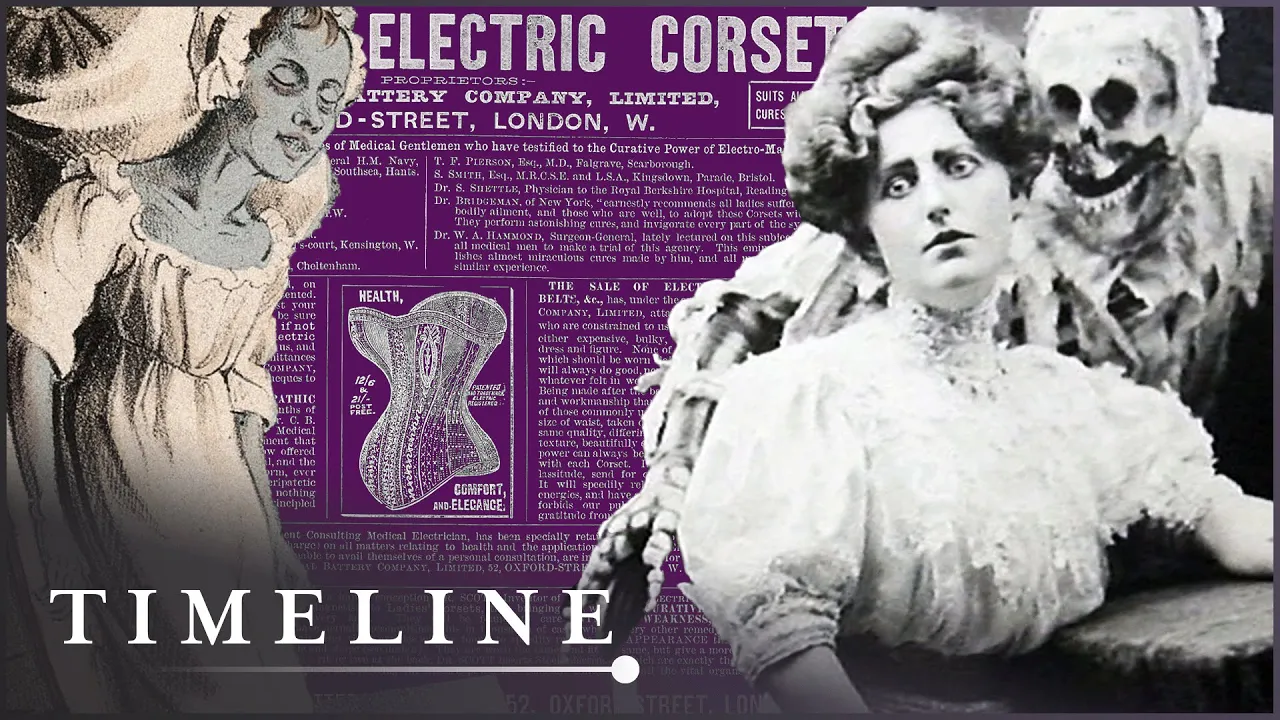
>> Yeah. And if you've got um if you've got a corset pulling your insides in and your rib cage in, it must it must do something to your insides, mustn't it?
>> It certainly did. I mean, there were articles in the Lancet and medical journals of the time which warned of the dangers of misplacing the you know, the ribs were crushed as particularly for women of childbearing age. um the organs were displaced or indeed um and would malfunction after that. They suffered from dreadful dyspsia. They could hardly eat.
>> So I mean when a woman was wearing corsets >> Mhm.
>> Um could she get into them by herself? I mean how do they put them on?
>> Give me a couple of seconds and I'll show you.
>> Well, you're not going to take all your clothes off, are you?
>> See you in a bit.
>> Jeremy, please could you just help me out here? The laces need tightening and then tying. Perhaps you could give your manly strength to this.
>> Which way is it? Like doing a shoelace up.
>> Oh. Oh. Tighter, Mr. Paxman. Tighter.
>> Stop hamming it up.
>> You're a vicer's wife. For heaven's sake.
>> Enough. Enough.
>> There we are.
>> Good.
>> That's it.
>> I thought you had I thought you had to put your knee into the small of the back of the person.
>> Well, I'm not asking you to do that. I'm not asking you to do that.
>> No, cuz you're so slim. Actually, you just fits perfectly.
>> Yes. And then I would have slipped into my my gown of choice and >> it's incredibly uncomfortable.
>> Well, because I'm not used to wearing something like this, it does feel a bit a little little odd. It's so engineered, so structured. I mean, it could be done by Mr. Isizmbard Kingdom Brunell himself.
But women wouldn't be trust up forever.
[Music] Something had to give.
[Music] Victorian women started to fight back.
It began with the dress reform movement of the 1880s, a national campaign against the kind of clothing that scarcely allowed women to breathe.
They fought too against divorce laws that saw them lose their house, children, and money.
They fought conventions that kept them locked in the house.
[Music] and they fought the prejudice that education was only for men.
Universities began to open their doors to women.
They studied maths and science.
They took up sport.
And they found there was a life beyond the family home.
[Music] The fact that a few middle-class women could now get a university education did not of course mean the end of the old order for Victorian women. But it did mean that the door which had hitherto been firmly locking them in the house was at least a jar. It would never be closed again.
[Music] The Victorian dream of home sweet home, a dream fed for so long by so many Victorian painters, was now well and truly over.
But it had never been much more than a dream.
[Music] Even the young Queen Victoria had written in her private diary, "All marriage is such a lottery. The poor woman is bodily and morally a husband's slave. That always sticks in my throat."
Now, such thoughts were out in the open.
[Music] Children were not always the apple of their parents eye.
nor the husband the faithful provider [Music] nor the wife the contented homemaker.
We would never look at the home in the same way again.
[Music] Heat. Heat.
[Music] Yeah.
Heat.
[Music] Heat.
Up Next

107:54
Define and Rule: Mahmood Mamdani on Colonial Governance and Native Identity
@cpcp_gc
6K views•2014-12-13

33:02
The Great Schism of 1054: Causes and Consequences
@SacredCathedrals
113.5K views•2026-02-19

91:57
The Geopolitics of the Ukraine War and the Rise of Global Autocracy
@JordanHarbingerShow
468K views•2025-04-19

17:05
Understanding the Cold War: Superpower Conflicts and the Road to Détente
@OverSimplified
46.1M views•2019-01-24
Related Study Plans & Knowledge Roadmaps
Structured learning paths in History
history
Byzantine Iconoclasm: Theology, Art & Politics
01Foundations of Byzantium and Early Christian Images
02The First Iconoclasm: Leo III and the Crisis of Images
03Empress Irene, Nicaea II, and the Second Iconoclasm
+ 2 more learning modules
9h5 modules
Explore Roadmap
history
Iranian Revolution (Causes, Events & Legacy)
01The Pahlavi Dynasty and the Roots of Discontent
02The Spark of Rebellion and the Rise of Khomeini
031979: The Fall of the Shah and the Climax of the Revolution
+ 2 more learning modules
8h5 modules
Explore Roadmap
history
Mali Empire: Mansa Musa, Trade & Timbuktu
01Foundations of the Mali Empire
02The Trans-Saharan Gold and Salt Trade
03The Reign and Pilgrimage of Mansa Musa
+ 1 more learning modules
6h4 modules
Explore Roadmap
history
1947 Partition: Politics, Borders & Legacies
01Foundations of British India and the Divide
02The Political Negotiations and the Mountbatten Plan
03Drawing the Boundary: The Radcliffe Line
+ 2 more learning modules
8h5 modules
Explore Roadmap