








![[ ENG ] 재즈화성학의 끝판왕, "MODE" 이제 포기하지 마세요! MODE, Don't give up !](https://i.ytimg.com/vi/UXgGFZyyo-k/hqdefault.jpg)






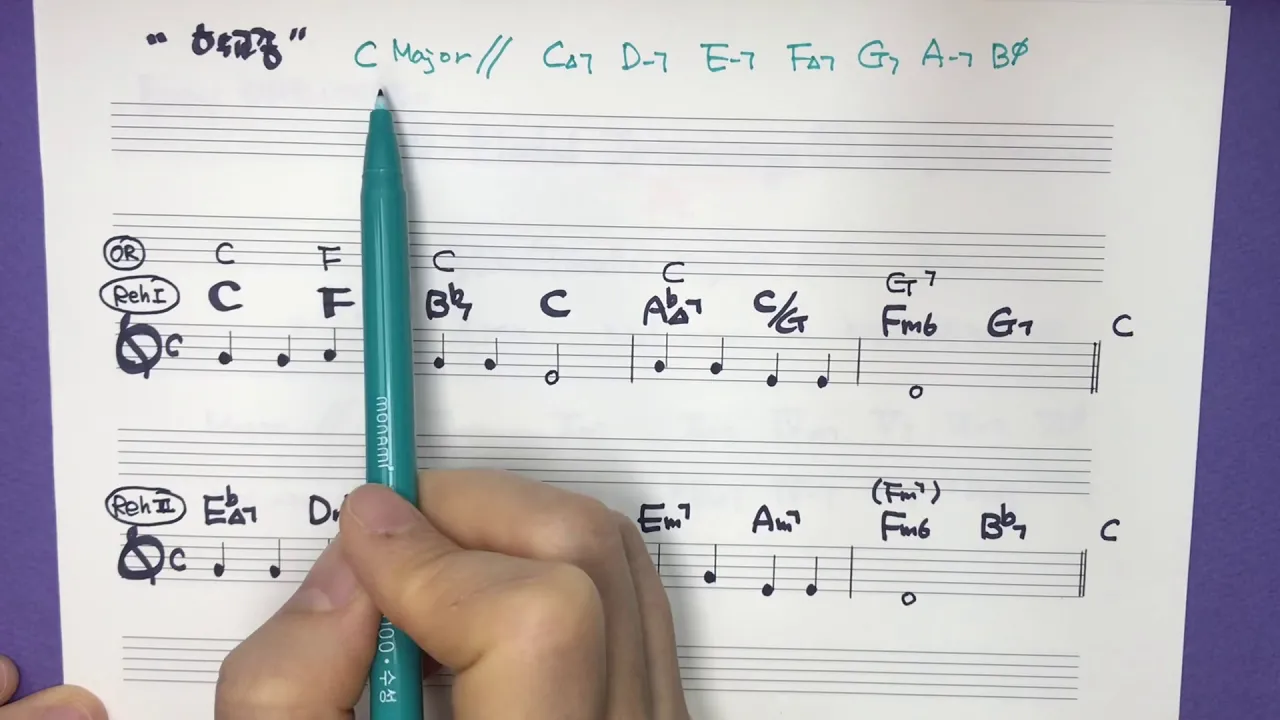







The Dorian mode, formed by flattening the third and seventh notes of the major scale, creates a smooth, mellow sound that sits between major and minor; its seven tertian chords (built by stacking every other note) include three minor chords (i, ii, v), three major chords (III, IV, VII), and one diminished chord (vi°), enabling compelling chord progressions like the classic i-IV movement used in Pink Floyd's 'The Wall' and Santana's 'Oye Como Va'.
Dorian Mode Chords Explained: Music Theory Guide
Added:Understanding of the Major Scale construction and interval patterns (whole steps and half steps).
Basic knowledge of triad and seventh chord construction (roots, thirds, fifths, and sevenths).
Familiarity with diatonic chords within a major key (Roman numeral analysis).
The conceptual understanding of what a 'mode' is in relation to a parent major scale.
Analyzing and comparing Dorian with other minor modes, specifically Aeolian (natural minor) and Phrygian.
Applying modal interchange, such as borrowing Dorian chords to use in standard major or minor key progressions.
Improvising melodies and solos over Dorian chord progressions using the Dorian scale.
Studying real-world modal jazz, funk, and rock repertoire that heavily relies on Dorian progressions (such as works by Miles Davis or Santana).
37.9K views1.6Klikes14:00Original Release: 2020-11-13
hey guys in this video we're going to look at the chords of the dorian mode how these chords are formed what they sound like and how you can use them to create some cool chord progressions now the dorian mode is not as popular as the ionian mode or the major scale but it does the dorian mode does sound especially nice because it has a more mellow or smooth vibe which you can use to give your music an interesting sound okay so using the key of c as an example here's what the common c ionian mode sounds like first it's known as the major scale and it includes intervals one two three four five six seven eight and the dorian mode just flattens the three and the seven notes so that you get a pattern like this compared to the ionian mode the dorian sounds a little dark right or at least it's more mellow and minor because of again that flat 3 and the flat 7.
it doesn't sound as melancholy as the minor scale itself or the aeolian mode which is almost identical but with a flat six as well that's the aeolian mode or the minor scale so dorian is somewhere between the happy major and the sad minor not quite as bright as the major ionian and not as dark as the minor aeolian but like i say somewhere in between and you can use the resulting sound to create some good stuff especially when you build the seven chords that stem from this pattern which you do by starting on each note of the mode and then combining every other note as you go so for example in the key of c in the c dorian mode you start on c then skip a note to play e flat and skip another note to play g so together c e flat and g makes c minor a c minor chord then starting on d skip f skip a so together d f a makes a d minor chord and moving through the other intervals in this mode you get e flat major f major g minor a diminished b flat major and then back to a c minor chord by starting on each separate note of the dorian mode and then combining every other note these seven chords are formed and they're called tertian harmonies because the intervals between the notes in each chord are major and minor thirds and the word tertian is latin for thirds when we look at these chords in a table format like this it's easy to see how they're constructed where some intervals are major thirds and others are minor thirds resulting in a range of harmonies c minor d minor and g minor are all minor chords e flat major f major and b flat major are all major chords and the a diminished chord built from two minor third intervals feels especially tense or dissonant to label these chords we use roman numerals to tell us which scale degree of the mode is the foundation of that chord the minor 1 chord is built on scale degree 1 of the c dorian mode or the c note c minor the 2 chord is built on scale degree 2 of the mode or d d minor flat 3 is built on scale degree 3 or e flat e flat major 4 is built on f f major 5 is on g g minor diminished six is on a a diminished and flat seven is on b flat b flat major where the lowercase numerals one two and five are all minor chords the uppercase normals flat 3 4 and flat 7 are major chords [Music] and the little o on 6 means that it's diminished now using these chords we can play different chord progressions that sound good and that really accentuate the smooth mellow feel of the dorian mode and one of the most popular patterns that you'll hear is made just by moving back and forth between the minor 1 and the major 4. so in the key of c for example that's c minor and f major moving between these harmonies just sounds so nice which is why it's used in some classic tunes like pink floyd's the wall part two which is actually in d dorian so it moves between d minor one and g major four so the minor one and the major four it just sounds so nice actually you'll see that also includes the flat major three f the flat major 7 c and then back to a droning minor 1 or d minor we don't need in the crossroads alone [Music] oh [Music] and then it goes on like that like i say droning on the minor one for much of the time and moving between the minor one and the major four as kind of a signature progression that pink floyd also used in the song any color you like among others this progression alone helped define pink floyd's sound it's also the basis of santana's signature song oye como va which is basically a minor 1 major 4 progression repeated over and over again it's in the key of a so it goes between a minor and d major like this [Music] tip [Music] and it goes on so you get the idea right chords minor 1 and major 4 are so classic that they sound really good when you just go back and forth between these chords they can't let you down but as you saw in the dorian mode there are other chords that you can incorporate like we saw in pink floyd's the wall which had the flat major 3 and the flat major 7. so let's in the next example throw in the flat major 7 again so you can hear some more variety in a song like chris isaac's wicked game with its hauntingly cool vibe in b dorian so that's built from chords minor 1 b minor flat major 7 a and 4e [Music] i never dreamed [Music] and then the pattern repeats again and again through this same chord progression so using chords in the dorian mode you can create some really cool stuff no matter what key you're in and it'll sound pretty mellow because of the intervals that form this pattern but what's really cool is there's actually a special connection between the different chords in the dorian mode based on the tertian intervals that form them that you can use to really clarify how you can move between chords in this mode to craft some really compelling chord progressions looking again at the pattern of tertian intervals used to build each chord in this mode it actually forms a continuous chain that ties everything together into a string of major thirds and minor thirds that binds every note of the dorian mode like this and the sequence of alternating intervals highlights the natural connections between chords that really can cycle on forever when we wrap this pattern into a closed loop like this as a more compact view of how these chords of the dorian mode relate to each other these are all the same chords as before in a given key in this example c dorian but laid out in a natural formation the one chord c minor is made of notes c e flat and g the two chord d minor includes notes d f and a the flat three chord e flat major is built from notes e flat g and b flat etc and what's nice is that in this layout you can see how these chords are connected from one to the next which we can depict more simply by the respective root note and roman numeral of each so we have c minor minor 1 e flat major flat major 3 g minor minor 5 b flat major flat major 7 d minor minor 2 f major major 4 a diminished diminished six and then c minor once again minor one and by exploring this harmonic space you can start to see even more clearly how songwriters navigate the dorian mode to compose different progressions like the band tears for fears did in their song mad world later performed by gary jules in the key of f which flows through chords f minor a flat major e flat major and b flat major or the minor 1 flat major 3 flat major 7 and the iv chord [Music] the tears are filling up their classes no expression no [Music] expressions [Music] i find it hard to tell you i find it hard to take when people run in circles it's a very very and so on the song flows through these chords of the dorian mode in such a nice way and as another example one last example scarborough fair by simon and garfunkel is in e dorian and moves through chords minor 1 flat major 7 minor 1 flat major 3 minor one flat major three again four and then back to minor one [Music] and of course this chord progression goes on as well and it sounds so smooth so mellow because of the intervals and the chords that make up this mode and you can play all sorts of other chord progressions in any key it doesn't matter what key you're in within the dorian mode which also happens to be a popular mode in jazz music because of this smooth and mellow vibe this upbeat the kind of pensive sound that the dorian mode has but this is at least a nice intro to the dorian mode and the harmonies within this mode so thank you for watching let me know what you think in the comments and if there are any other good examples of the dorian mode any songs that you'd like to pick apart and play let me know and i will see you in the next video you
Up Next

17:21
Hollow Knight Piano Score: Harmonic Analysis in C minor and E Dorian
@CharlesCornellStudios
392.1K views•2022-09-22

10:20
Mozart's Musical Dice Game Explained: History, Rules, & Fun
@webpianoacademy
5K views•2023-03-13

47:36
Understanding Diatonic 7th Chords in Major Keys | Music Theory Tutorial
@GracieTerzian
54.7K views•2022-03-02
10:49
Understanding John Coltrane's Giant Steps: A Music Theory Analysis
@Vox
10.4M views•2018-11-12
Related Study Plans & Knowledge Roadmaps
Structured learning paths in Music Theory
music-theory
Composing Galant Music: Partimento & Schemata
01Foundations of Figured Bass and Keyboard Harmony
02The Rule of the Octave (Regola dell'Ottava)
03Galant Schemata: The Building Blocks of Form
+ 2 more learning modules
30h5 modules
Explore Roadmap
music-theory
Decoding Overtone Series: Tuning & Drone Music
01Acoustic Foundations: The Physics of the Overtone Series
02Tuning Systems: Equal Temperament vs. Just Intonation
03Microtonality and Spectralism: Beyond Standard Pitches
+ 2 more learning modules
24h5 modules
Explore Roadmap
music-theory
Impressionist Harmony: Scales, Planing & RPGs
01Foundational Music Theory: Keys, Intervals, and Seventh Chords
02Impressionist Color: Chord Planing and Parallel Harmony
03Whimsical Textures: Pentatonic Cascades and Whole-Tone Scales
+ 1 more learning modules
14h4 modules
Explore Roadmap
music-theory
Negative Harmony: Axis Reflection in Indie Pop
01Music Theory Foundations: Scales, Intervals, and Triads
02Functional Harmony and the Circle of Fifths
03Demystifying the Negative Harmony Axis Reflection
+ 2 more learning modules
16h5 modules
Explore Roadmap