






![[Sách Nói] Những Nhà Tư Tưởng Lớn - Plato Trong 60 Phút - Chương 1 | Walther Ziegler](https://i.ytimg.com/vi/iuDhp-0v7iA/sddefault.jpg)
![[철학아카데미] 김주연의 세상 친절한 철학사 06-1강: 영원한 진리를 찾아서 [플라톤]](https://i.ytimg.com/vi/fT4XjDVAXvA/maxresdefault.jpg)









Epistemology is the philosophical investigation of knowledge, derived from Greek terms 'episteme' (knowledge/wisdom) and 'logos' (rational account). It addresses three fundamental questions: (1) What is knowledge?—requiring true justified belief; (2) Can we have knowledge?—with positions ranging from dogmatism (knowledge is possible) to skepticism (knowledge is impossible); and (3) How do we get knowledge?—with rationalists believing in innate a priori ideas and empiricists holding that all ideas are acquired through experience (a posteriori).
Epistemology in Philosophy Explained: Key Questions and Debates
Added:A basic understanding of philosophy as an academic discipline and its major branches, such as metaphysics, ethics, and logic.
The fundamental conceptual distinction between subjective belief, objective truth, and personal opinion.
Familiarity with basic logical reasoning, including the differences between deductive and inductive arguments.
An introductory awareness of historical philosophical figures, particularly Plato and his early inquiries into definition and truth.
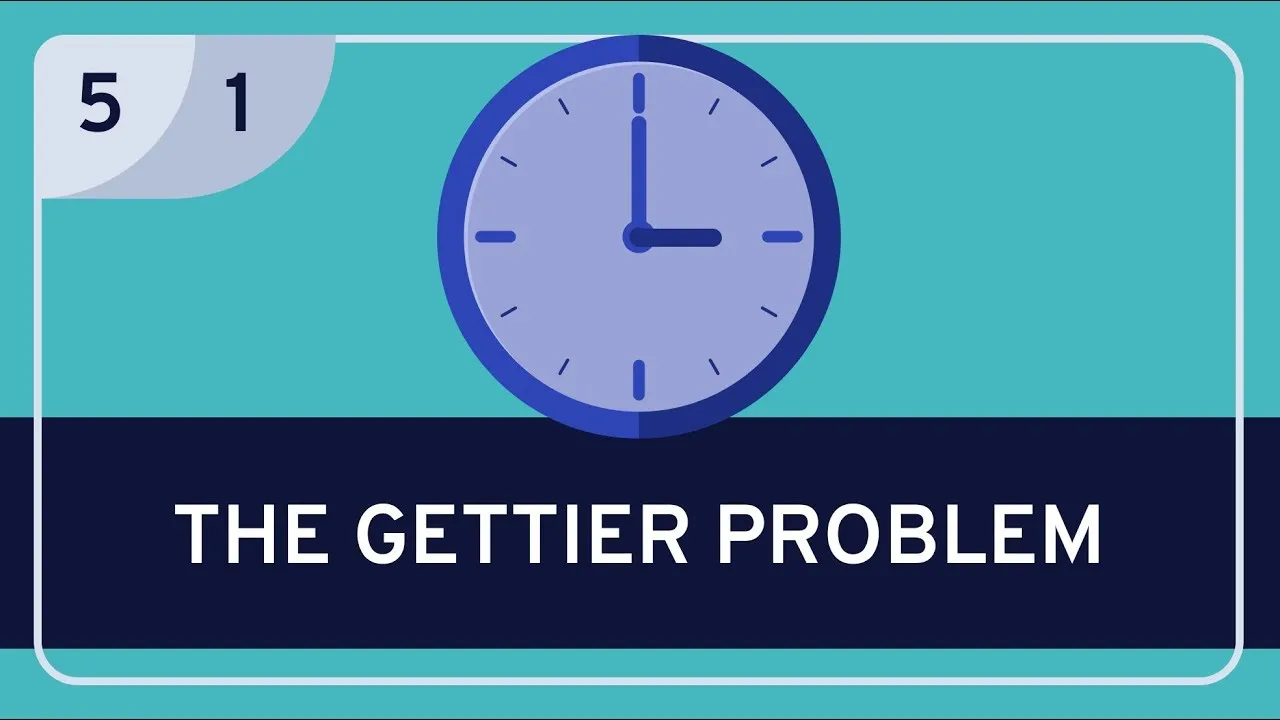
The Gettier Problem and modern challenges to the traditional definition of knowledge as 'Justified True Belief' (JTB).
The debate between Foundationalism and Coherentism regarding the structure of epistemic justification.
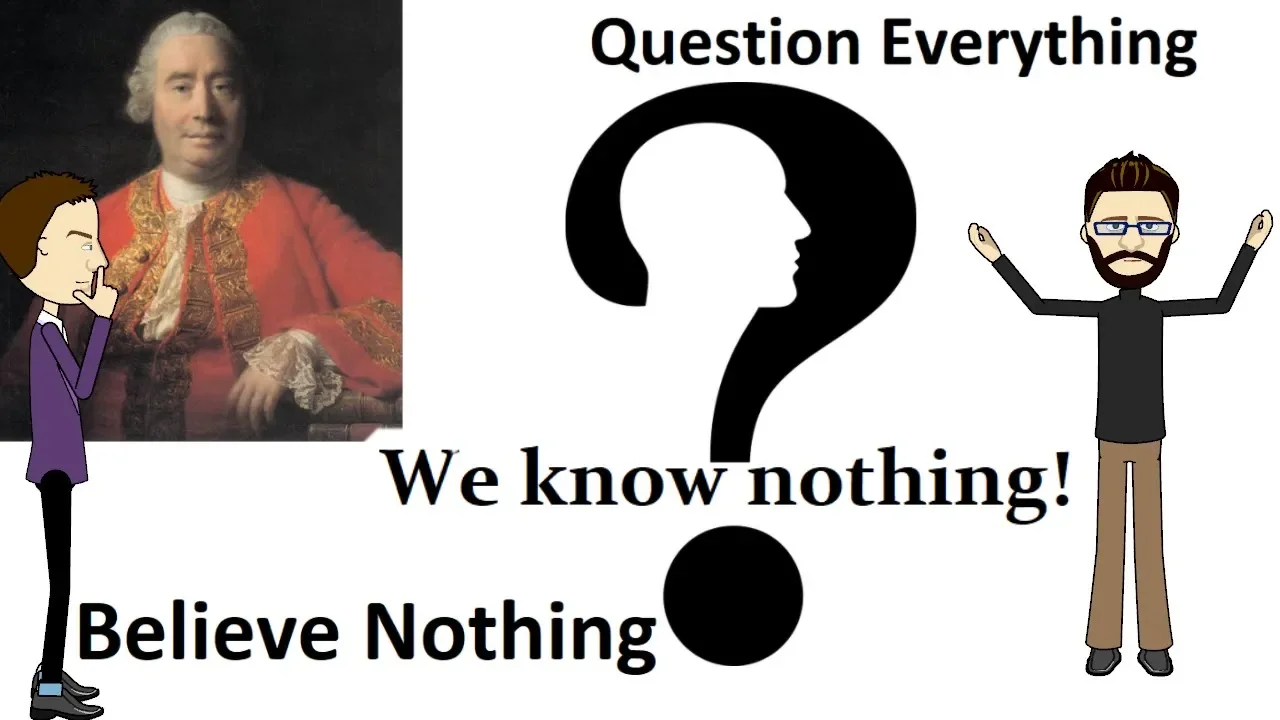
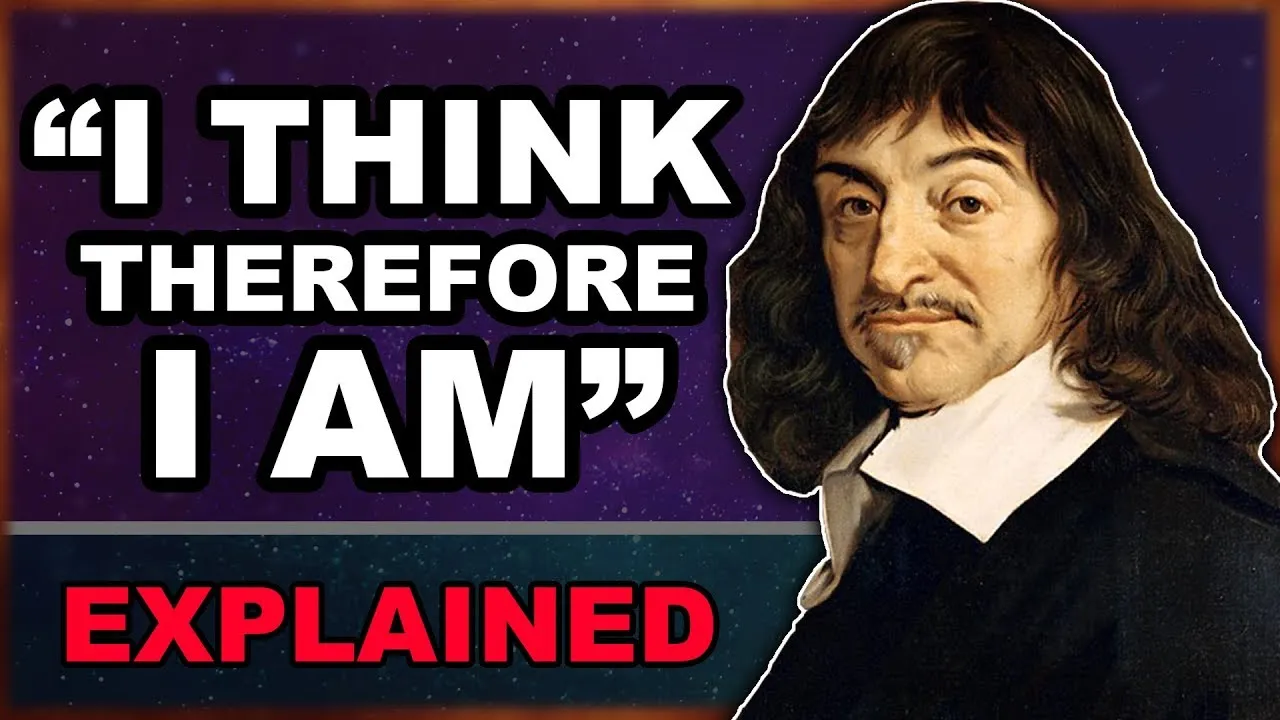
Philosophical Skepticism, exploring Descartes' radical doubt and David Hume's critique of inductive reasoning.
Contemporary subfields of epistemology, such as Social Epistemology, Virtue Epistemology, and Feminist Epistemology.
Applied epistemology in modern contexts, including cognitive science, artificial intelligence, and combating digital misinformation.
34.9K views742likes18:17Original Release: 2021-03-12
welcome back to a little bit of philosophy this is philosophy 101 unit 2 lecture 1 part 1 a very brief introduction to epistemology we've already learned that academic philosophy is composed of five main subdivisions metaphysics axiology logic epistemology and the history of philosophy in this short video we'll be focusing on epistemology the philosophical investigation of knowledge now the term epistemology is composed of two ancient greek words we've already introduced episteme and lagos you'll recall from our investigation of plato's apology of socrates that episteme is the term that socrates uses synonymously with sophia to refer to a kind of knowledge that would allow us to live as excellent human beings the knowledge of virtue so we can think of episteme as knowledge writ large broad knowledge theoretical types of knowledge now we've also learned that the term lagos is the ancient greek term for argument or giving a rational account of something giving an explanation of something providing a theoretical framework for understanding something so we can literally think of epistemology as the branch of knowledge that attempts to provide a rational account of knowledge in this subdivision of academic philosophy there are three preliminary questions that we are going to attempt to answer what is knowledge can we have knowledge and if we can how do we get knowledge the first question is essential to address first because if we don't know what we're trying to analyze how will we know if we're making any progress here we're really trying to clearly distinguish between what it means to have knowledge versus what it means to have an opinion after all everybody has opinions but clearly not everybody has knowledge now once we know what knowledge is or at least get a working definition of knowledge we can proceed to the second question which investigates the obstacles that may lie in our way given the fact that human beings are limited in their lifespan sensory capacity memory and cognitive ability is it even possible for us to achieve a state of knowledge now if we determine that knowledge is indeed possible for finite creatures like us we can then go on to address the third and final question what is the process that will lead us to knowledge now although these questions may seem rather simple it turns out that the more we struggle with them the more complex the answers will become let's begin our analysis by offering some preliminary answers to these three core questions starting with the question what is knowledge remember we're trying to distinguish between knowing something and having an opinion suppose you have a friend who says i know that two plus two equals four but i don't believe it as you think about their statement you would be profoundly puzzled how can they know something and yet fail to believe it this realization tells us something essential about what knowledge is belief is an essential component of knowledge we can't know something without also believing it however simply believing something doesn't mean that you know it after all people believe lots of things that they don't actually know to clarify this further let's take the case of stick figure person let's suppose that stick figure person has a belief in their mind they believe that there is a bee the belief that there is a bee is a mental event it's a thing inside their mind but this is just a belief it can't be knowledge unless there actually is a bee in other words the belief must be true so beyond holding a belief that belief must also be true if we're going to have knowledge but when we think a little bit more carefully about this we can see that simply holding a belief that's true doesn't quite get up to knowledge either i might for example believe that it's raining in dublin right now and if it is indeed raining in dublin right now my belief would be true but we wouldn't say that i know it's raining in dublin for that we need something else for that we need something extra we need to add evidence to support the belief what i would need is a logos a reason a justification justification is what ties the beliefs in our mind to the world justification is the argument or support or warrant that we give to our belief that demonstrates that shows that it's true now if i can provide evidence for my belief that's adequate then i would have true justified belief then and and only then it seems can i say that i have knowledge now even that formula true justified belief may have some weaknesses but for our present purposes it will do and also as an historical note it was plato who first put this formula of knowledge as true justified belief forward as at least a working definition of knowledge although even plato too had some concerns about whether it completely captured what was necessary in order to have knowledge now with a working definition of knowledge as true justified belief we can proceed to our second question in epistemology can we have knowledge can we possess knowledge can we achieve true justified belief as you might expect there's obviously going to be at least two possible answers at this point yes and no it will turn out to be a little bit more complicated than that but for right now let's start off with these first two possibilities dogmatism is the position in epistemology that answers our question affirmatively dogmatists are philosophers who believe that it is possible to provide adequate justification to move a belief from the realm of opinion into the realm of knowledge on the other hand there are philosophers who disagree there are some philosophers who are going to claim that our cognitive or sensory limitations make adequate justification impossible this position is generally known as skepticism now on closer analysis it's going to turn out that these positions are not binary but for now we can think of those who are more optimistic about our chances of achieving knowledge as being on the dogmatic side and those who are more pessimistic on the skeptical side and if one is skeptical about knowledge then there's really no more work to be done we can't have knowledge so why worry about it but for those on the dogmatic side for those who think it may be possible to achieve knowledge our third question becomes critically important if knowledge is possible then how do we get it here again we'll find that philosophers disagree on the correct answer one position amongst dogmatists is that knowledge can only be achieved by applying reason to the ideas in our mind that is rationally ordering those ideas we can call this rational reflection on our ideas but given that the skeptics have raised doubts about the reliability of the ideas we get from our senses how can such dubious ideas ever rise to the level of complete justification the answer from the rationalists the first approach we'll examine is that we can't there must be some ideas which are beyond the doubt that can be raised concerning our acquired beliefs there must be some ideas that are not acquired these are called innate ideas ideas that we're born with ideas that are a necessary part of the mind itself rationalists believe that when we're born we already have a basic set of ideas in our mind like a pre-formatted hard drive now the origin of these innate ideas is itself a matter of debate amongst the rationalists but wherever they come from they're considered to be free from the need of ordinary justification and that's the critical part on the other hand the beliefs we acquire through experience through our senses for example will need to be justified in relation to those innate ideas in order to reach a level of knowledge now there's another group of dogmatists who completely reject the existence of innate ideas empiricism is the dogmatic view that we're born as a blank slate and all of the ideas that we have in our mind are acquired through some form of experience or abstraction from our experience after we begin having experiences with the world our minds are more like an unformatted hard drive when we're born according to the empiricists now if this sounds to you like the nature nurture debate in psychology you'd be right that debate comes from this dispute in epistemology it's important to note before moving on that when we're talking about ideas or beliefs that is fully formed cognitions in our minds we're not talking about instincts empiricists would not deny that we may be born with instincts and when rationalists talk about innate ideas they're certainly not referring to instincts and whatever those instinct things are they're certainly not ideas or beliefs you breathe and digest and regulate your blood pressure without thinking about it epistemology is interested in the thinky things not the non-thinky things or processes that may be happening in the brain we'll come back to this notion between the different kinds of mental events a little bit later now given that there's a debate between empiricists and rationalists and that debate turns on the difference between acquired and innate ideas a little bit more vocabulary will be helpful in distinguishing between different kinds of ideas and the knowledge that can be derived from them philosophers have adopted the latin phrase ah priori to refer to any idea that is not dependent on sensory experience for its cognizability the phrase literally means from before and refers to any belief or piece of knowledge that can be acquired in the absence of immediate sensory experience perhaps one of the simplest examples of this would be from geometry take for example a point a singular infinitely small region in space now take a second point an infinitely small distinct region in space between points a and points b we can have a line and if we add a third point that is not on that line we get a triangle so what does triangle smell like how does triangle taste what does triangle sound like of course the idea triangle has no sensory qualities at all it's just an idea and this is the kind of thing philosophers are talking about when they use the phrase ah priori to modify an idea or knowledge it's an idea or it is knowledge that can be grasped without direct sensory experience without sensory data content now most of the ideas that we discover in our minds are not a priori in nature most are a posteriori i want you to think about an apple the idea certainly contains a shape like triangle which is only shape but there's much more data in your idea of an apple there's the redness of the skin the green of the leaf the brown of the stem and all of that is merely visual data you can also imagine the fragrance as you bring the apple close to your mouth the smoothness of the texture of the skin the sound the crunch as you bite into it as well as the sweet but slightly tart taste in your mouth your idea of an apple contains all of this information all of which is dependent on your five senses this is an a posteriori idea an idea that can only be cognized after the sensory experience you've had with an apple that's the difference between a priori and a posteriori ideas the latter are dependent on sense data the former are not now when a rationalist claims that we have some innate ideas in our mind they're not talking about a posteriori ideas they're talking about a priori ideas however it's really important to keep in mind that rationalists don't need all a priori ideas to be innate in order to acquire a knowledge just some of them so while innate ideas will always be a priori in nature it is not the case that every a priori idea will be innate in other words the word innate and a priori are not synonymous terms okay let's review what we've covered so far we've discovered that there are three basic questions in epistemology which is the philosophical investigation of knowledge the first question attempts to elicit a clear demarcation between knowledge and opinion and we discovered that a good working definition is true justified belief now once we have this working definition in place we can proceed to the second question here we discovered two possible positions dogmatism and skepticism the dogmatist believes that knowledge is possible while the skeptic is less optimistic the third basic question of epistemology applies to those who think that knowledge is possible the dogmatists in other words here we noted two distinct approaches to getting knowledge based on how we acquire the ideas that we are to turn into knowledge the rationalists believe beyond the ideas we acquire through our senses that we also have a set of innate ideas which will be a priori in nature that will provide a framework for addressing the skeptic's concern about our limited sensory abilities on the other hand there are the empiricists who don't believe in the existence of innate ideas at all so if we're going to have knowledge according to the empiricists we'll just have to make do with the ideas we acquire through experience in the next video we're going to look more deeply at the preliminary answers we've given to the three fundamental questions of epistemology we'll discover that these initial answers require further clarification and as always the more carefully we look into philosophical questions like these the more complicated things can become so be sure to watch part two of this lecture on epistemology as we continue to learn a little bit of philosophy
Up Next

60:06
Collin Hansen on Tim Keller: Crisis of Truth & Discipleship
@beneaththeheadlinespodcast
533 views•2023-09-14

164:01
John of Damascus on Holy Images: A Theological Defense
@BannedBooks
139 views•2026-04-25

68:32
Should We Destroy the Machines? Big Tech Surveillance Critique
@TheStoriesWeTell303
167.9K views•2025-11-30
4:57
The Myth of Sisyphus: A Greek Legend of Eternal Punishment
@TEDEd
8.6M views•2018-11-13
Related Study Plans & Knowledge Roadmaps
Structured learning paths in Philosophy
philosophy
Frankfurt School: Critical Theory & Culture
01Foundations of the Frankfurt School and Critical Theory
02Horkheimer & Adorno: The Critique of Instrumental Reason
03The Culture Industry and Mass Deception
+ 2 more learning modules
12h5 modules
Explore Roadmap
philosophy
Philosophy of Language: From Frege to Austin
01The Linguistic Turn: An Introduction to Language in Philosophy
02Gottlob Frege: Sense and Reference
03Early Wittgenstein: The Picture Theory of Meaning
+ 3 more learning modules
15h6 modules
Explore Roadmap
philosophy
Feminist Epistemology: Standpoint & Injustice
01Introduction to Epistemology and Feminist Critiques
02Sandra Harding and Standpoint Theory
03Donna Haraway and Situated Knowledges
+ 2 more learning modules
12h5 modules
Explore Roadmap
philosophy
Environmental Philosophy: Ethics & Deep Ecology
01Foundations of Environmental Ethics & Anthropocentrism
02Biocentric Individualism and Animal Liberation
03Ecocentric Holism and Deep Ecology
+ 1 more learning modules
10h4 modules
Explore Roadmap