















Cities must implement comprehensive urban forest strategies that prioritize biodiversity through species diversification (limiting any single species to 5%, genus to 10%, and family to 20%) and aim to increase canopy cover from current levels (approximately 22% in public realm) to 40%, as aging tree populations and climate change threaten urban ecosystems; this approach creates resilient 'cities within forests' that provide essential environmental benefits including temperature reduction (2-3°C), air quality improvement, and habitat support for wildlife.
Melbourne's Urban Forest Strategy: Building Climate-Resilient City Trees
Added:The Urban Heat Island (UHI) effect and how built environments absorb and retain heat compared to natural landscapes.
The concept of ecosystem services, specifically how urban vegetation provides air filtration, temperature regulation, and mental health benefits.
The fundamentals of climate change impacts on cities, including increased frequency of extreme heatwaves and prolonged droughts.
Basic principles of green infrastructure, understanding how natural systems can be integrated with engineered urban elements.
Quantitative assessment tools for urban canopy mapping and ecological valuation, such as GIS and the i-Tree software suite.
Water Sensitive Urban Design (WSUD) and its integration with urban forestry to optimize stormwater harvesting and irrigation.
Species selection strategies and assisted migration concepts to choose resilient flora for projected 50-to-100-year climate scenarios.
Environmental justice in urban forestry, exploring the equitable distribution of canopy cover and its socio-economic impacts on urban populations.
39.6K views372likes4:03Original Release: 2011-11-16
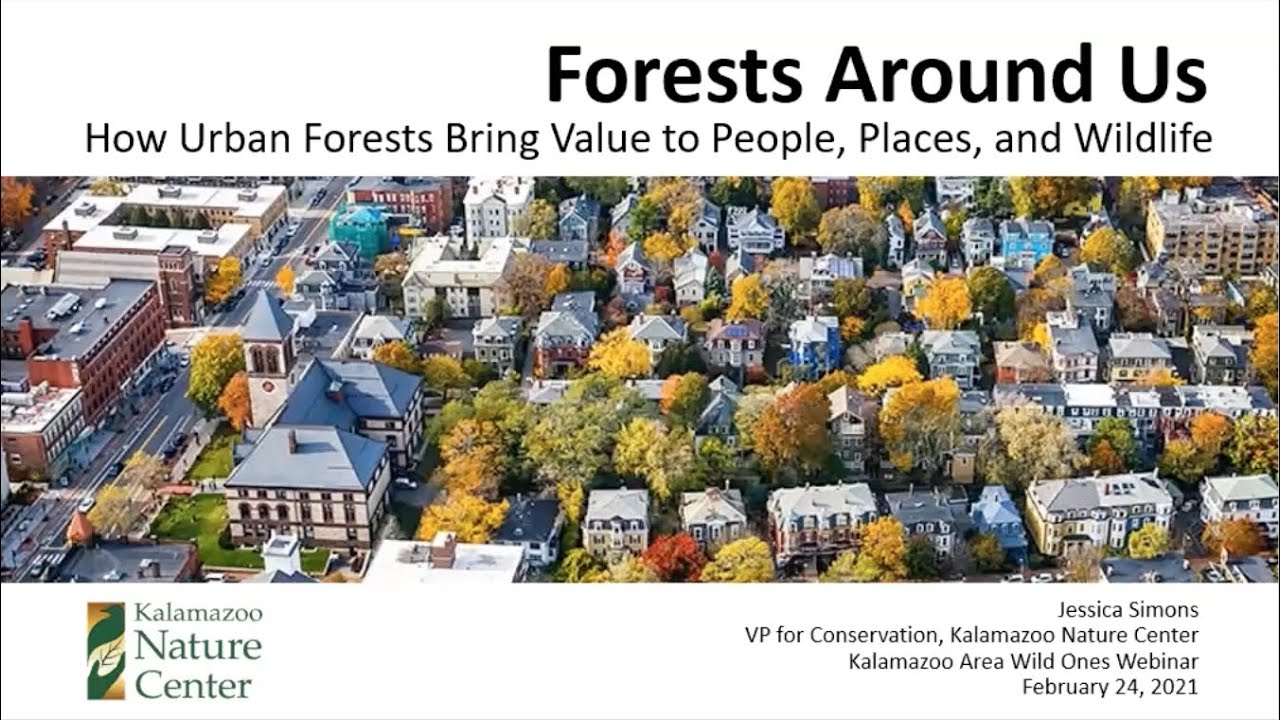
[Music] over the next two decades we're going to lose nearly 30,000 trees within our municipality that's going to see a rapid decline in the immunity of our parks and Gardens our street Landscapes and all of those things that we value we need to act now we need to be planting more trees the best time to plant a tree is 20 years ago the second best time is right now within the city of Melbourne we have approximately 60,000 trees in the public realm that in addition to 20,000 trees in the private realm make up our Urban Forest the benefits of numerous almost too many to count but the most obvious in a hot place like Australia is shade then we've got the capture of stor morar runoff we've got the Improvement of air quality the humidification of the air which does wonders for people with asthma and respiratory diseases we've got the benefits of recreation and of course all the benefits of human health we've got two things happening at the moment in our Urban forests one is that uh our tree stock is aging uh has been around for over 100 years and the second thing is we've had over 10 10 years of low water environments and high temperatures and that's going to increase and so an urban Forest strategy was developed so that we could ensure that the parks and Gardens that Melbourne has known and loved for continue into the future it's about creating a city within a forest rather than a forest within a city diversity is one of the most important elements of our Urban Forest strategy currently there's three species which make up nearly 40% of our trees that's Elms Plains and River red gums all of species are vulnerable for a range of reasons whether it's Pest and disease or extremes of heat climate change is happening faster than many of us believed uh even possible just a few years ago so as a consequence having a strategy that allows you to diversify your Forest is absolutely crucial our Target for the diversity is to have no more than 5% of one species 10% of any genus and 20% one family another part of our strategy is increasing biodiversity and making sure that the birds and and other creatures that rely on trees and canopy cover for shelter and food that we're able to continue to support them in a busy City and a growing city in the future currently we have just over 22% canopy cover in the public realm we're aiming to increase that up to 40% you can drop the temperature by 2 or 3° by having large canopies that's not only the shade but the water they take in and give off into the environment that helps lower the temperature this strategy is not about changing the character of our Landscapes we just need to be conscious of the fact that those trees need to survive into a much harer future than they've been in the past the urban Forest strategy is really a legacy document for the city we've inherited an urban Forest over the last 150 years that is a Hallmark of the city the vision of the the city of melbour 100 years ago is what we're living now and we need to do that for the the the generation in another 100 years the community will have the opportunity through Precinct plans to look at the types of trees that will be most appropriate for their areas and engage with us in the landscape that they wish to have for the future this is a one sof opportunity to look seriously into the future not be frightened by it but actually challenge yourself to think about what will make this a good future for our grandchildren [Music]
Up Next

125:12
Urban Forest Strategy for Climate-Resilient Housing
@tricitiestv
153 views•2023-12-18

15:54
Life in Biosphere 2: Sustainable Ecosystems & Human Survival
@TED
334.9K views•2009-06-16
14:30
Microplastics Everywhere: How Plastic Impacts Our Lives
@TEDx
100.9K views•2018-05-08
10:28
Ice Stupa Artificial Glaciers: Solving Ladakh's Water Crisis
@SonamWangchuk66
3.2M views•2015-05-03
Related Study Plans & Knowledge Roadmaps
Structured learning paths in Environmental Science
environmental-science
Ocean Noise: Cetacean Impacts & Mitigation
01Fundamentals of Underwater Acoustics
02Marine Mammal Bioacoustics
03Anthropogenic Noise: Shipping & Seismic Surveying
+ 2 more learning modules
16h5 modules
Explore Roadmap
environmental-science
Road Ecology: Corridors, Overpasses & Fencing
01Foundations of Habitat Fragmentation and Carnivore Ecology
02The Road Barrier: Ecological Impacts of Transport Infrastructure
03Principles of Ecological Corridors and Connectivity Mapping
+ 3 more learning modules
14h6 modules
Explore Roadmap
environmental-science
Ocean Acidification: Kelp Buffering & Shellfish
01Fundamentals of Ocean Chemistry & pH
02Chemical Pathways of Coastal Acidification
03Bivalve Physiology & Calcification Under Stress
+ 2 more learning modules
18h5 modules
Explore Roadmap
environmental-science
Ice Stupas: Glacial Retreat & Water Security
01Foundations of Glaciology & Mountain Hydrology
02Climate Change and Glacial Retreat Dynamics
03The Science of Ice Stupas & Artificial Glaciers
+ 2 more learning modules
14h5 modules
Explore Roadmap