







![Sexta clase de Filosofía (Unidad 2, apartados 8 a 10) [Curso de Ingreso UNLaM]](https://i.ytimg.com/vi/25FKOq13tJE/maxresdefault.jpg)













Thomas Kuhn's Structure of Scientific Revolutions proposes that scientific development follows a cyclical pattern through three phases: the pre-paradigm phase (where competing schools vie for dominance without consensus), the paradigm phase (normal science where researchers solve puzzles within an established framework), and the revolutionary/extraordinary phase (where anomalies trigger crises that lead to paradigm shifts and new research programs); paradigm shifts occur primarily among young or new scientists who can see alternative perspectives, and new paradigms eventually replace old ones as the scientific community gradually adopts them.
Thomas Kuhn's Scientific Revolutions: Paradigm Shifts Explained
Added:The traditional cumulative view of scientific progress, which posits that scientific knowledge grows linearly through the steady accumulation of facts.
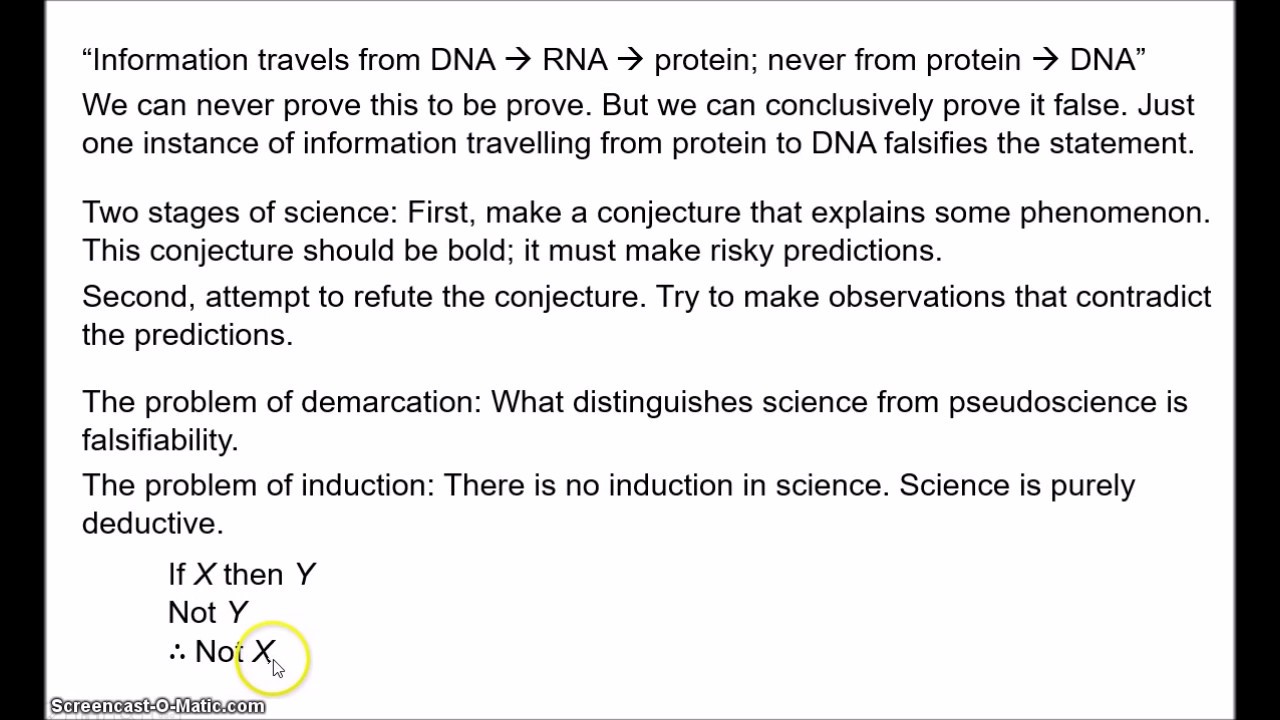
Basic concepts in the philosophy of science, particularly Karl Popper's theory of falsificationism as a contrasting model of scientific validation.
The concept of a scientific theory and how scientific communities historically establish consensus.
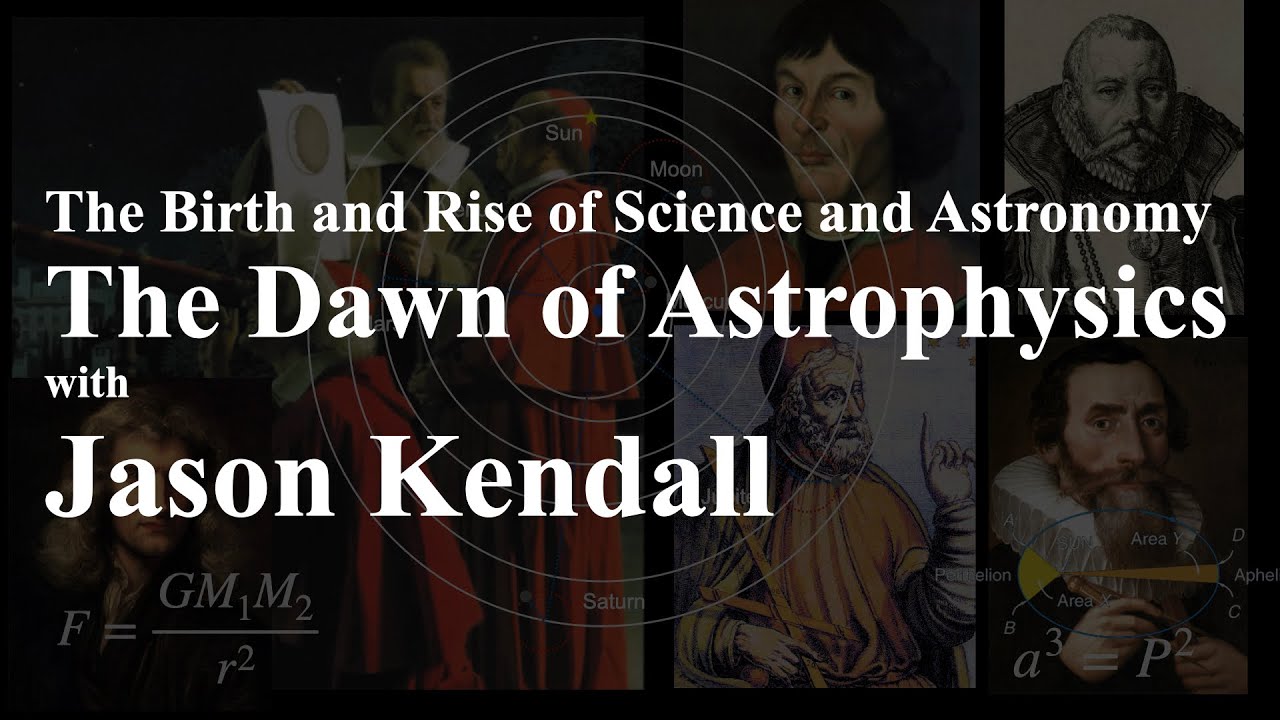
Familiarity with major historical transitions in science, such as the shift from Geocentric (Ptolemaic) to Heliocentric (Copernican) astronomy.
Kuhn's concept of 'incommensurability,' which argues that competing scientific paradigms cannot be fully translated or objectively compared to one another.
The ideas of Imre Lakatos (Research Programmes) and Paul Feyerabend (Epistemological Anarchism) as alternative frameworks to both Kuhn and Popper.
The Sociology of Scientific Knowledge (SSK), which explores how social, cultural, and political factors influence scientific consensus and change.
The ongoing philosophical debate between Scientific Realism (science describes objective reality) and Anti-Realism, which was heavily influenced by Kuhn's work.
The application and critique of the 'paradigm shift' concept in non-scientific fields such as economics, sociology, and business management.
20.5K views795likes11:36Original Release: 2021-11-21
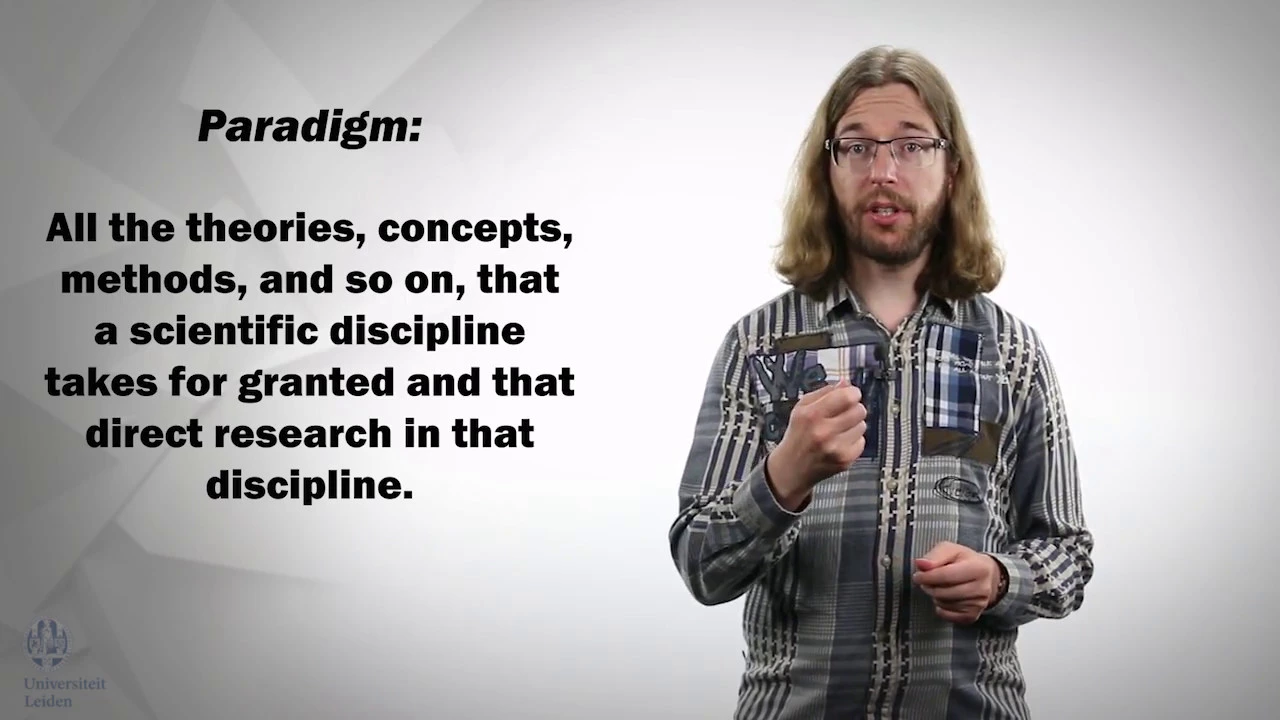
thomas coon's book the structure of scientific revolutions is one of the most influential and controversial works of the 20th century in the first episode of this series on kuhn's seminal work we talked about the word paradigm which has penetrated every layer of the culture thanks to this work of kuhn in this episode we're going to look at the role of paradigms in the development of science and we're going to talk about the eponymous structure of scientific revolutions in the kunian model of scientific history there are three modes that a scientific field can be in there's the pre-paradigm phase the paradigm phase also known as normal science and finally the revolutionary or extraordinary phase kuhn calls the first stage of a science the pre-paradigm phase during this phase there is no paradigm that has gained consensus in the field there may be a number of competing paradigms that vie for support but as of yet no single paradigm has united the field under one banner and one research project because of this there is little progress made every scientist must start again at the fundamentals they must argue why they have chosen the paradigm they have chosen illustrates this by taking the development of the scientific field that studies light called physical optics he explains that before newton's seminal work optics there were a number of competing paradigms the aristotelian the platonic and the epicurean each of which could explain some phenomena but none of which had greater explanatory power than any of the others he writes that being able to take no common body of belief for granted each writer on physical optics felt forced to build his field anew from its foundations in doing so his choice of supporting observation and experiment was relatively free for there was no standard set of methods or a phenomena that every optical writer felt forced to employ and explain under these circumstances the dialogue of the resulting books was often directed as much to the members of other schools as it was to nature that pattern is not unfamiliar in a number of creative fields today nor is it incompatible with significant discovery and invention it is not however the pattern of development that physical optics acquired after newton and that other natural sciences make familiar today in this pre-paradigm phase science has not yet become an esoteric silo in which the members of the field communicate exclusively to each other in the increasingly specialized numb and culture of their specialization as such the field doesn't progress and must wait for some discovery or some bright mind to give rise to a theory with explanatory power that goes beyond any of the other schools and which unifies the field under one paradigm when this does happen the science enters its second phase as the field of physical optics did with the work of newton this second phase is the paradigmatic phase of normal science with the emergence of a theory with incomparable explanatory power the field enters its second phase which is its first stage as a science proper as kuhn says of the pre-paradigm phase when remarking on the field of optics anyone examining a survey of physical optics before newton may well conclude that though the fields practitioners were scientists the net result of their activity was something less than science with the emergence of the consensus establishing paradigm the field becomes a science proper with this the field enters the stage of what kuhn called normal science at this stage scientists no longer have debates over first principles they don't argue about the nature of the field of study or about the correct methods or objects of study with the consensus that is gathered around the paradigmatic theory scientists can begin to take a certain amount of knowledge as foundation this is the beginning of what kuhn calls the esotericization of science scientists begin to speak with each other in specialized journals and develop their own distinctive terminology there's no longer the need to speak in a way that is popularly understandable since the status of the paradigm is now established thus begins the work of normal science the nature of normal science is as we've covered in the previous episode puzzle solving the scientists take the paradigmatic theory for granted and begin to work on the puzzles suggested by the theory for example there may be universal constants of quantitative laws invoked by the paradigmatic theory whose precise measurements haven't been established the paradigmatic theory may employ approximations that can be improved or suggest other puzzles of the same kind these are some of the types of further study that a paradigmatic theory orients scientists towards the science that takes place within a paradigm is called normal science and it is the interesting trait according to kuhn that does not seek novelty normal science is not seeking out unknowns it is seeking to test and extend the realm of the paradigm what scientists are looking for in the puzzle solving of normal science is confirmation of the paradigmatic theory novelty is undesirable because it does not fit in the model and so scientists don't quite know what to do with it but inevitably scientists run into these novelties kuhn calls these unexpected novelties anomalies and they are the entry way to the third stage of a science revolutionary or extraordinary science as normal science goes about the business of articulating and expanding its paradigmatic theory it encounters data that according to the paradigm it shouldn't at first this data is dismissed as being the result of a bad experiment or is held lightly as needing further explanation but as this anomaly in the data continues to recur it draws more and more attention in the field most of the time these anomalies succumb to the concentrated efforts of the scientists in the field one of coon's examples of this comes from the century after newton when scientists struggle to reconcile their observations of the moon's motion with the predictions derived from newton's laws of motion and gravitation try as they might they couldn't reconcile the observations with the theory and many scientists suggested adjustments to newton's laws which as kuhn observed would have changed the paradigm and defined a new puzzle but after much persistence scientists preserved the rules and in 1750 a scientist called clero was able to show that it was only the maths that was wrong and newton's theory could stand as before this example captures the first stages of the revolutionary process an anomaly is observed and can't be easily explained away as the anomaly persists and still doesn't succumb to the increased effort of the community to solve it some suggest changing the paradigm in this newtonian case the puzzle was finally solved without the need for a change but that doesn't always happen and when it fails to be resolved the anomaly precipitates what kuhn calls a crisis the anomaly proves insoluble within the confines of the paradigm and the field finds itself in a state of crisis as the crisis becomes more acute we find the field becoming more and more akin to the pre-paradigm state the rules and fundamentals that have been implicit and taken for granted so long as the paradigm reigned now become articulated but we find that this articulation is far from homogeneous and a number of different versions of the theory emerge during this period of crisis we see the emergence of a new type of science that kuhn called revolutionary science or extraordinary science at this time certain scientists begin a different type of experimentation in which they attempt to amplify and identify the structure of the anomaly kuhn tells us that the thought experiment begins to play a role at this time once again ultimately the crisis is brought to a resolution and such an individual invents the solution and so births a new paradigm which reorients the field this is the so-called paradigm shift the whole field is re-gathered around this revolutionary new paradigm that reorients the field and sets it in motion once again after having been churned up by the crisis-inducing anomaly these paradigm-shifting individuals kuhn tells us fall into two categories either they are young or else they are new to the field the reason for this is transparent enough the individual needs to be green enough that they haven't been fully indoctrinated into the old paradigm while they have a deep understanding of the field they also crucially have a fresh enough perspective that they can form alternative understandings the old guard are either too deeply immersed in the paradigm or too invested in it even when the new paradigm has emerged many of the old guard will not adopt it they will stick with the paradigm they know and attack the new one one notable example of this is of the famous english astronomer fred hoyle who coined the term big bang in 1949 as a disparaging dismissal of the theory even up to his death in 2001 he still refused to believe in the big bang having written that the reason why scientists like the big bang is because they are overshadowed by the book of genesis it is deep within the psyche of most scientists to believe in the first page of genesis and so the new paradigm is not necessarily adapted by all in the field but wins out over time as the great originator of quantum theory max planck put it a new scientific truth does not triumph by convincing its opponents and making them see the light but rather because its opponents eventually die and the new generation grows up that it's familiar with it or as the more popular version of this saying goes science progresses one funeral at a time with the maturation of a new generation the dust has settled the revolution is complete and the vast majority of scientists are now working within the new paradigm and with that the cycle is complete the revolutionary science has birthed a new paradigm which enables the field to move back into normal science [Music] this then is kuhn's structure of scientific revolutions every science starts out in a pre-paradigmatic state before the birth of its first paradigm with the emergence of the first paradigmatic theory the field achieves a consensus that starts the esotericization of the field whereby the scientists can take the fundamentals for granted and so begins the work of normal science this normal science works at articulating an elaboration to paradigmatic theory and in the process of doing so it encounters counter instances unexpected novelties in the data these novelties become anomalies which in turn become crises if no solution is forthcoming from the old theory and this crisis spurs on revolutionary or extraordinary science which ultimately gives rise to a new paradigm and with this new paradigm the cycle begins again the field returns to the work of normal science and inevitably this turns up new anomalies which lead to new crises and new paradigms and so the cycle goes on ad infinitum that in brief is coon's theory of the structure of scientific revolutions and that is everything that we have time for on this episode of the living philosophy on the next episode we're going to explore the criticisms and the legacy of kuhn's work in the meantime if you've enjoyed the video be sure to give us a like down below and if you really liked the video be sure to head over to patreon where you can support the channel and get your name into credits like these wonderful people who've become supporters of the channel as ever if you have any thoughts insights or feedback i'd love to hear from you down in the comments otherwise i shall see you next time thank you for watching
Up Next

17:47
Kuhn's Scientific Revolutions: Paradigm Shifts Explained
@SisyphusRedeemed
30.8K views•2013-10-09

164:01
John of Damascus on Holy Images: A Theological Defense
@BannedBooks
139 views•2026-04-25

68:32
Should We Destroy the Machines? Big Tech Surveillance Critique
@TheStoriesWeTell303
167.9K views•2025-11-30
4:57
The Myth of Sisyphus: A Greek Legend of Eternal Punishment
@TEDEd
8.6M views•2018-11-13
Related Study Plans & Knowledge Roadmaps
Structured learning paths in Philosophy
philosophy
Frankfurt School: Critical Theory & Culture
01Foundations of the Frankfurt School and Critical Theory
02Horkheimer & Adorno: The Critique of Instrumental Reason
03The Culture Industry and Mass Deception
+ 2 more learning modules
12h5 modules
Explore Roadmap
philosophy
Philosophy of Language: From Frege to Austin
01The Linguistic Turn: An Introduction to Language in Philosophy
02Gottlob Frege: Sense and Reference
03Early Wittgenstein: The Picture Theory of Meaning
+ 3 more learning modules
15h6 modules
Explore Roadmap
philosophy
Feminist Epistemology: Standpoint & Injustice
01Introduction to Epistemology and Feminist Critiques
02Sandra Harding and Standpoint Theory
03Donna Haraway and Situated Knowledges
+ 2 more learning modules
12h5 modules
Explore Roadmap
philosophy
Environmental Philosophy: Ethics & Deep Ecology
01Foundations of Environmental Ethics & Anthropocentrism
02Biocentric Individualism and Animal Liberation
03Ecocentric Holism and Deep Ecology
+ 1 more learning modules
10h4 modules
Explore Roadmap