













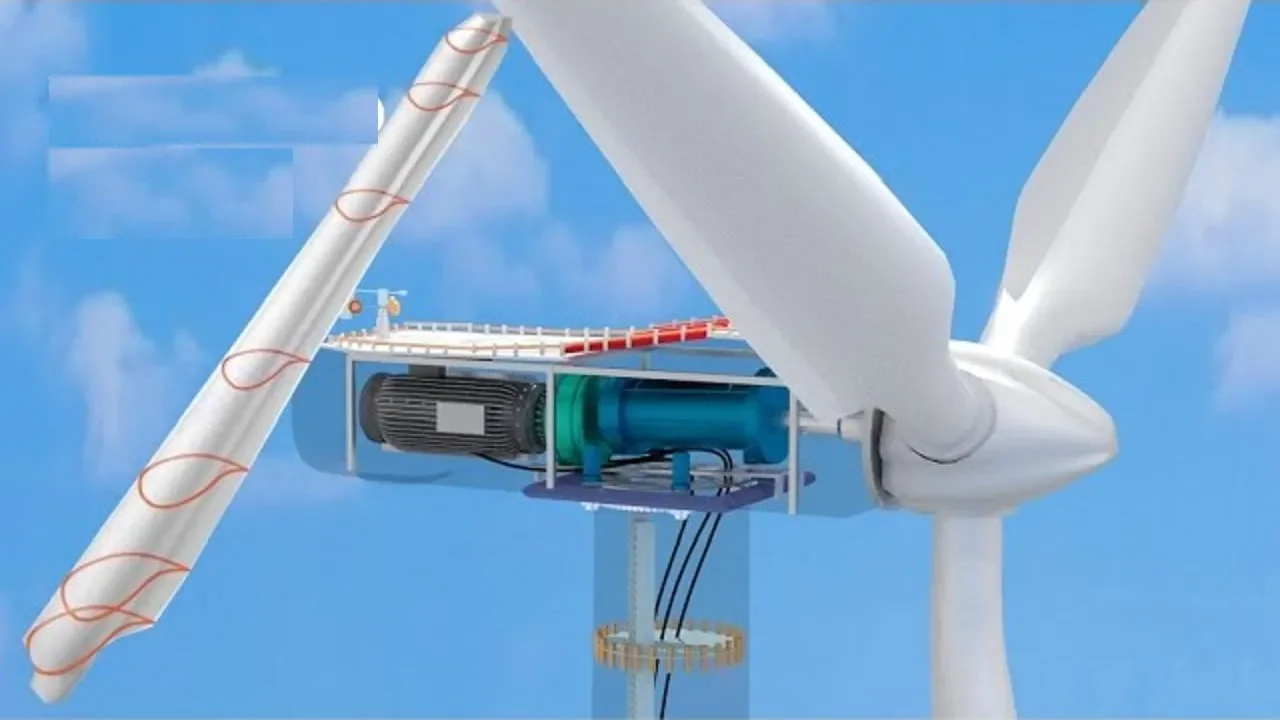



Wind turbine blades are designed using Blade Element Momentum (BEM) theory to achieve optimal aerodynamic efficiency by varying chord length and twist angle along the blade span to maintain constant lift distribution, with designers balancing aerodynamic performance against practical considerations like manufacturability, noise constraints, and structural requirements, where tip speed ratio (lambda) and blade solidity are key parameters that determine how effectively the rotor extracts energy from the wind.
Wind Turbine Blade Design: Aerodynamic Optimization Guide
Added:Fundamental aerodynamics, including the concepts of lift, drag, angle of attack, and airfoil polar curves.
Basic principles of wind energy conversion, specifically Betz's Law and the concept of tip-speed ratio (TSR).
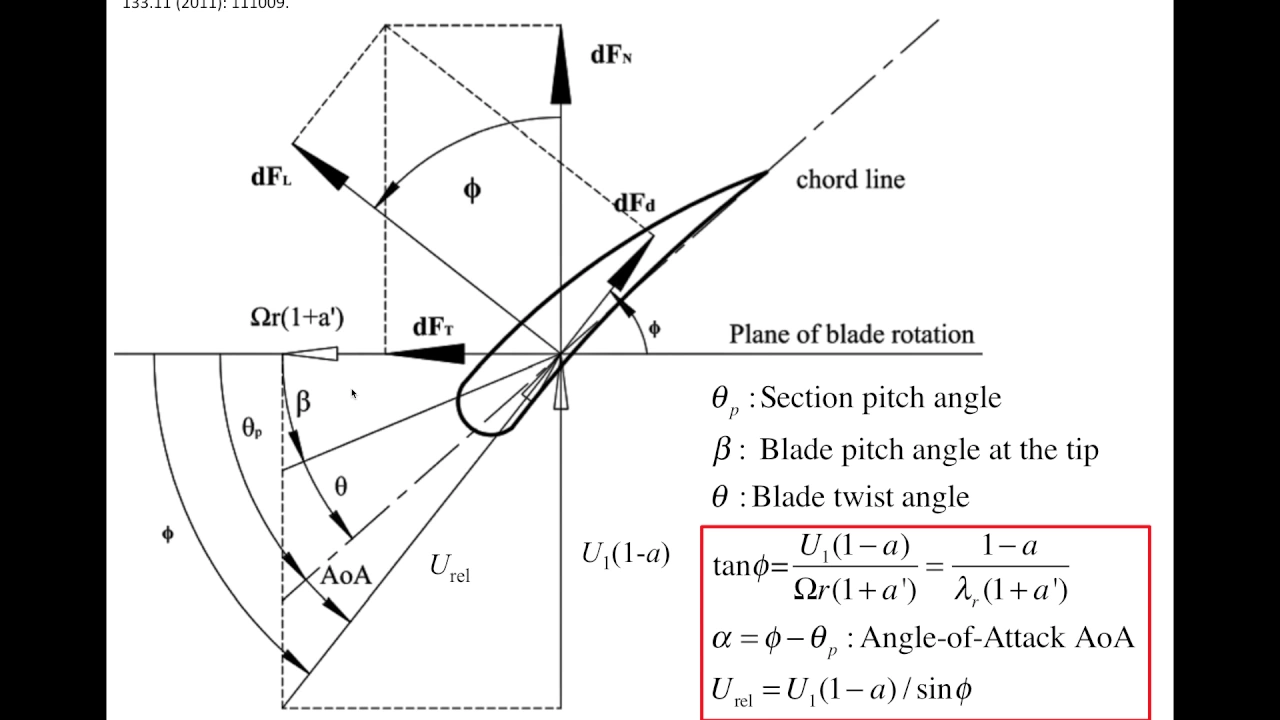
Vector mechanics and relative velocity, to understand how oncoming wind and blade rotation combine to create the relative wind vector.
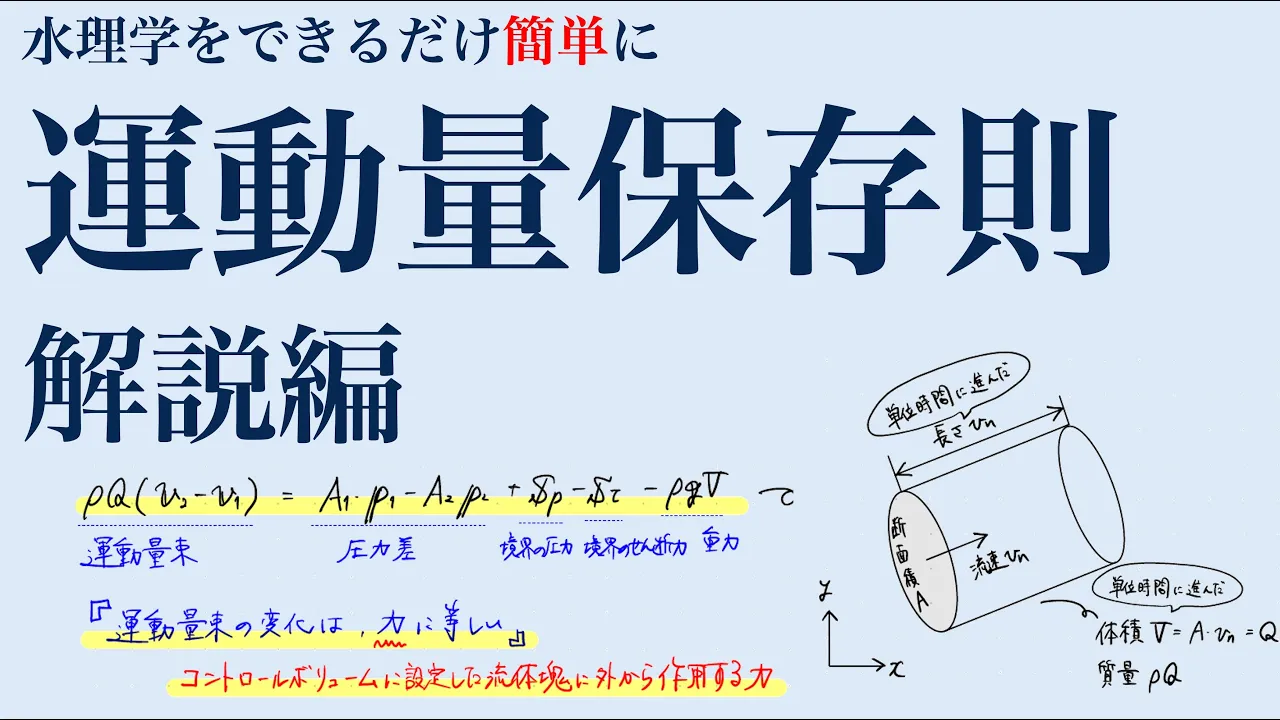
The basic principles of fluid mechanics, including momentum conservation and the concept of an actuator disk.
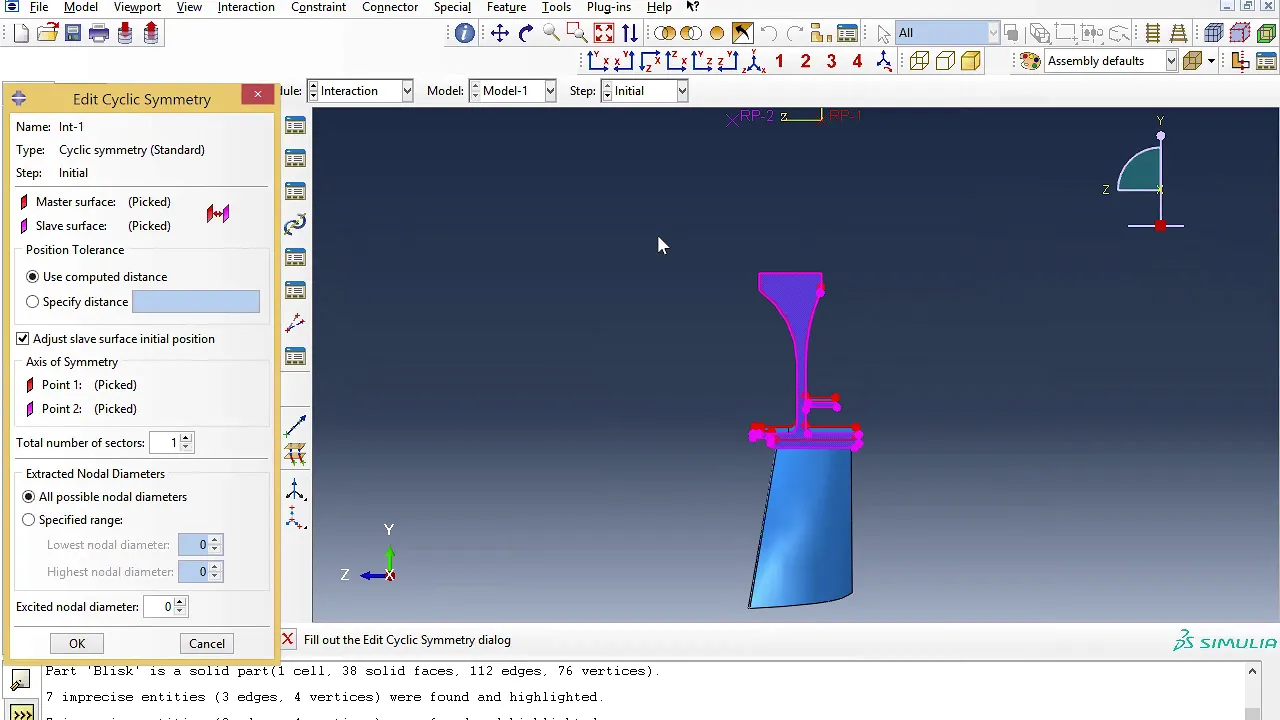
Aeroelasticity and structural design of wind turbine blades, utilizing Finite Element Analysis (FEA) to handle aerodynamic and centrifugal loads.
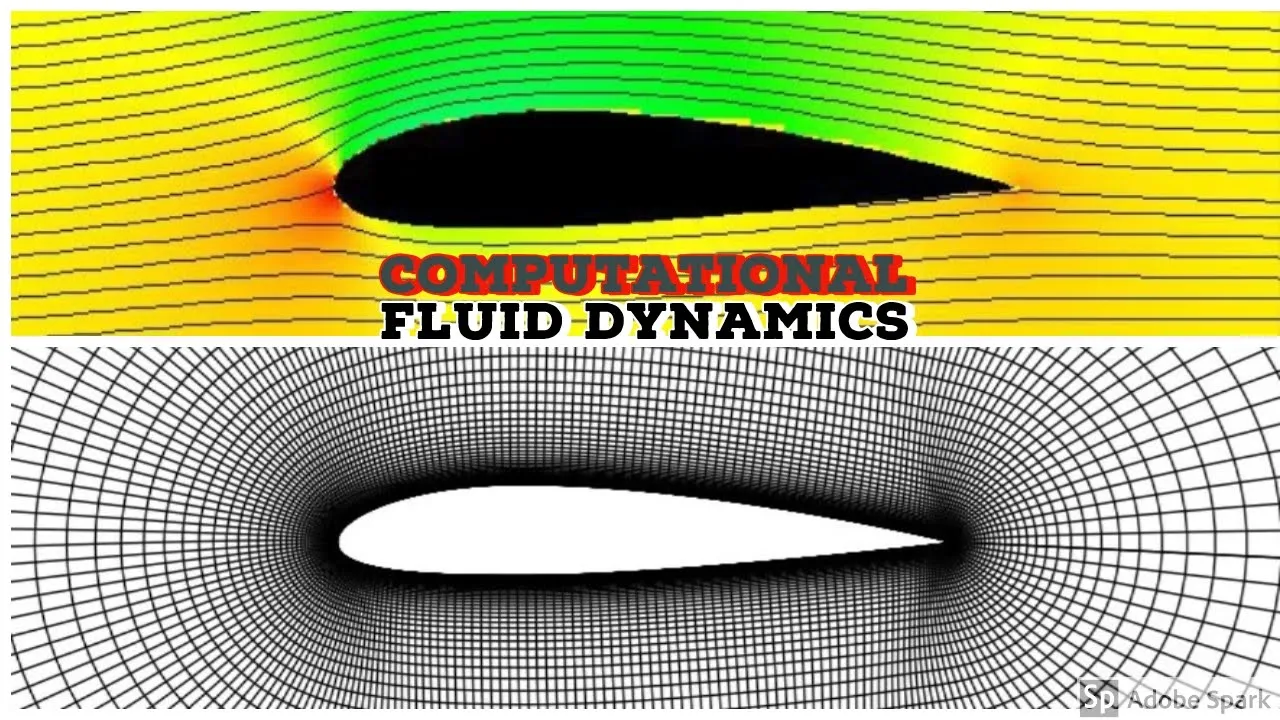
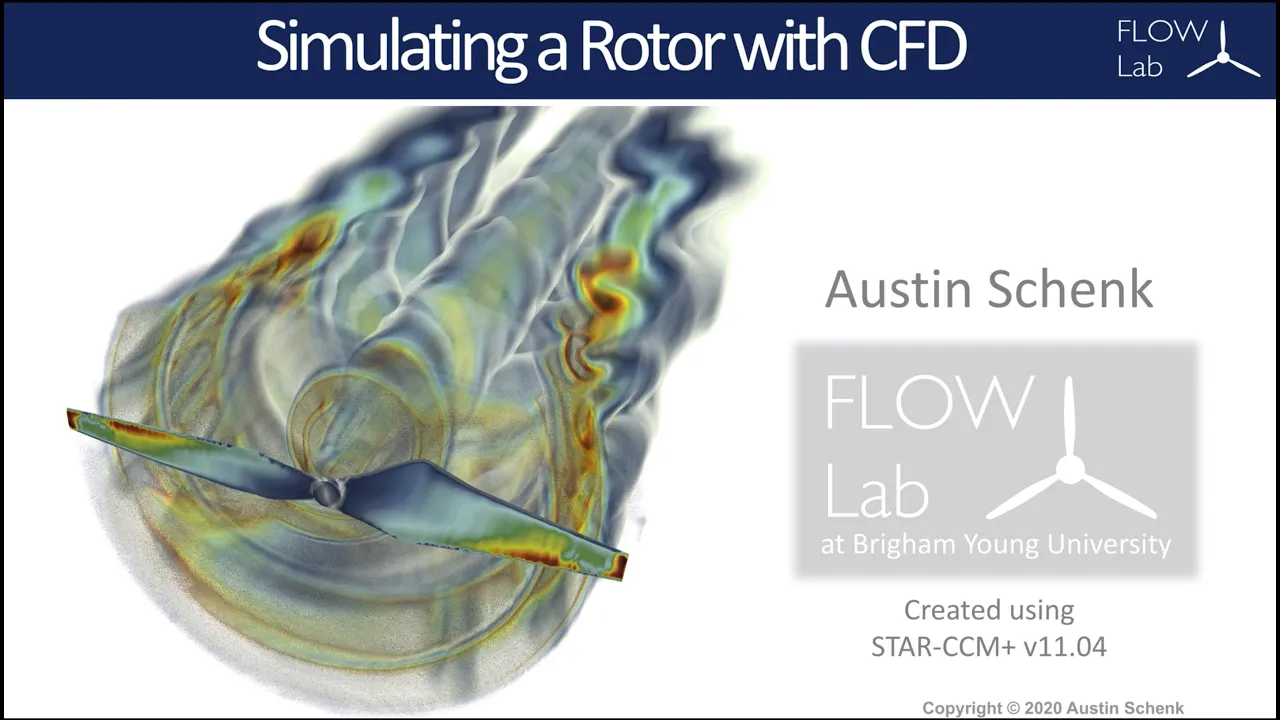
Computational Fluid Dynamics (CFD) simulation of wind turbine rotors to capture complex 3D aerodynamic phenomena like tip-loss effects and dynamic stall.
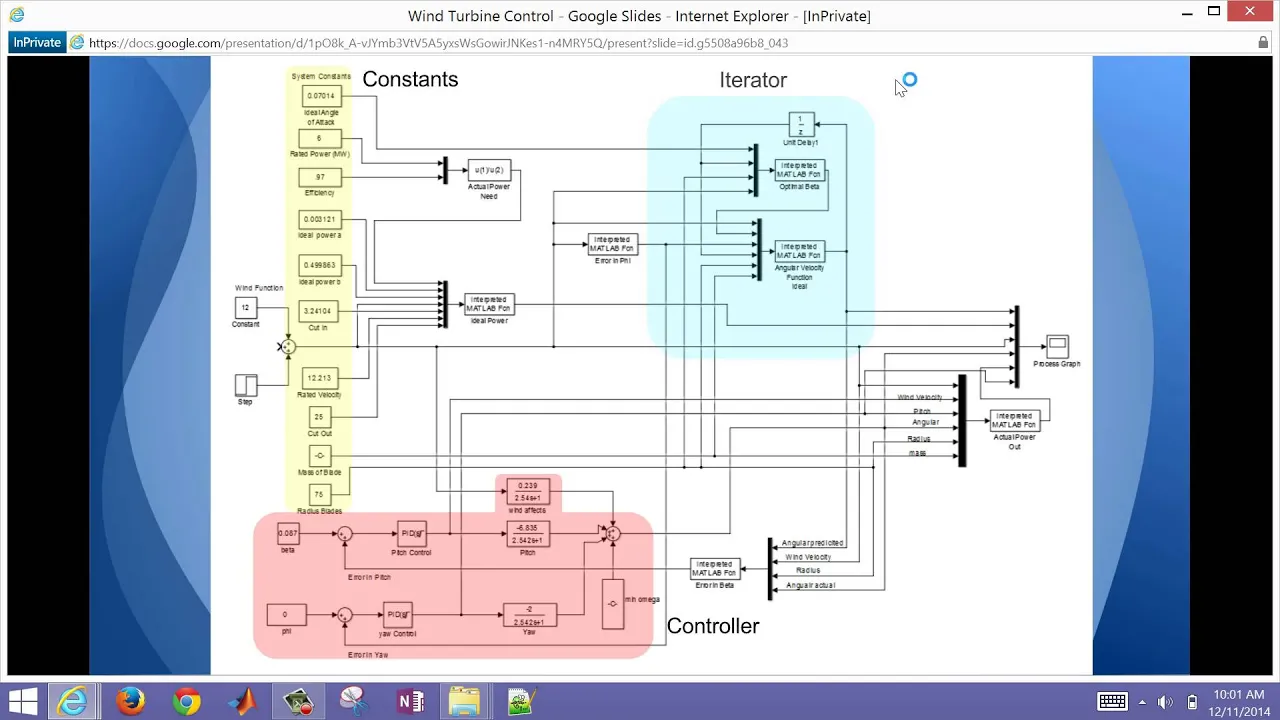
Wind turbine control system design, including active pitch and yaw control algorithms to optimize power output and mitigate structural fatigue.
Advanced composite materials and manufacturing processes (e.g., vacuum infusion) used to construct lightweight, durable turbine blades.
96.7K views2.3Klikes10:03Original Release: 2020-11-10
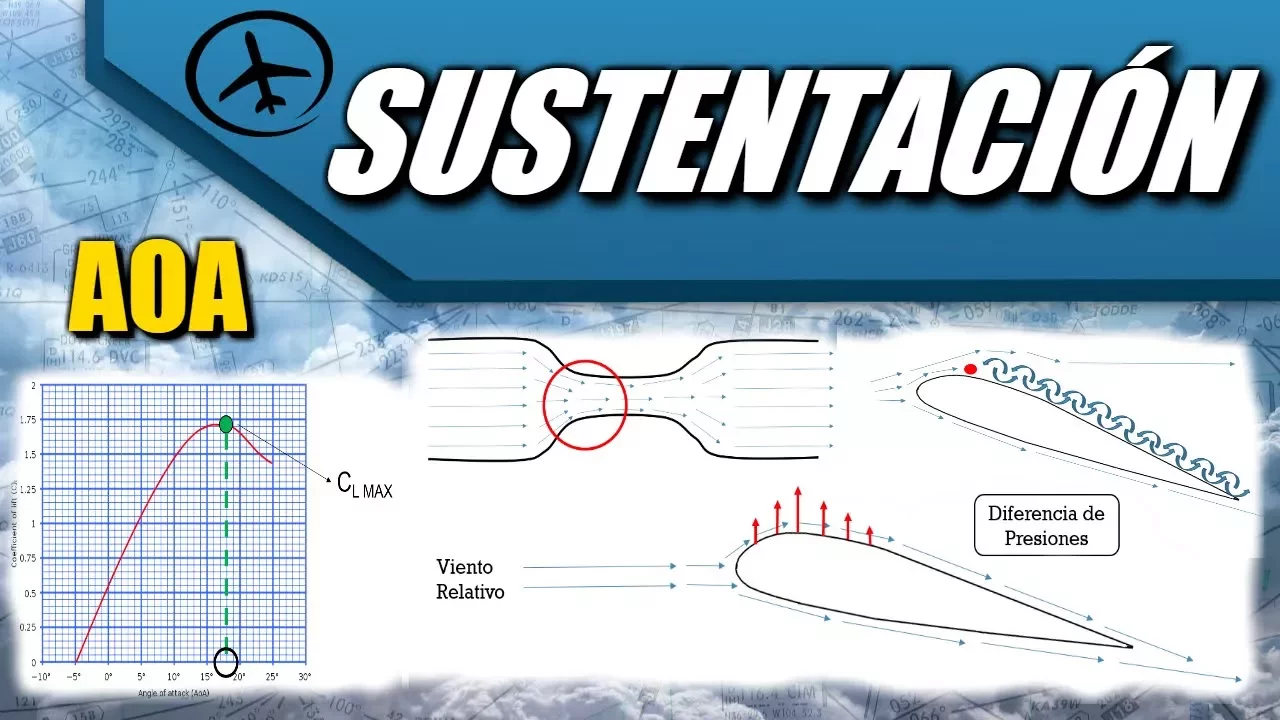
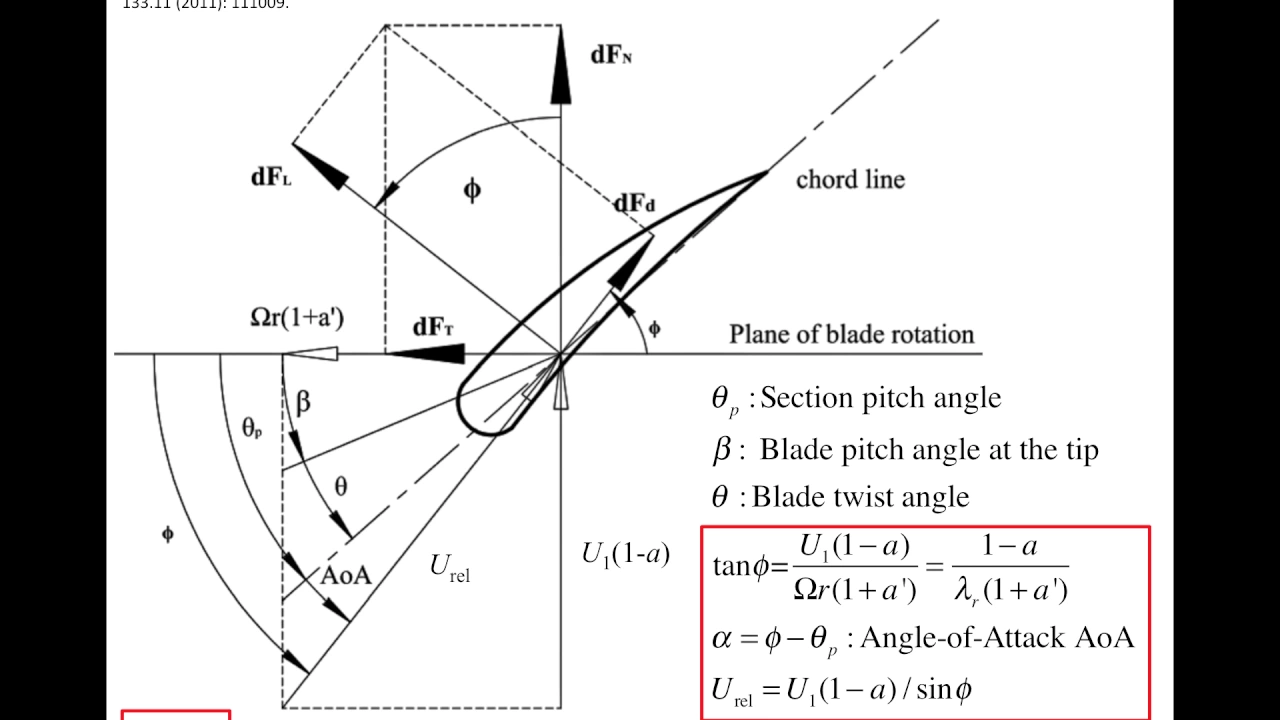
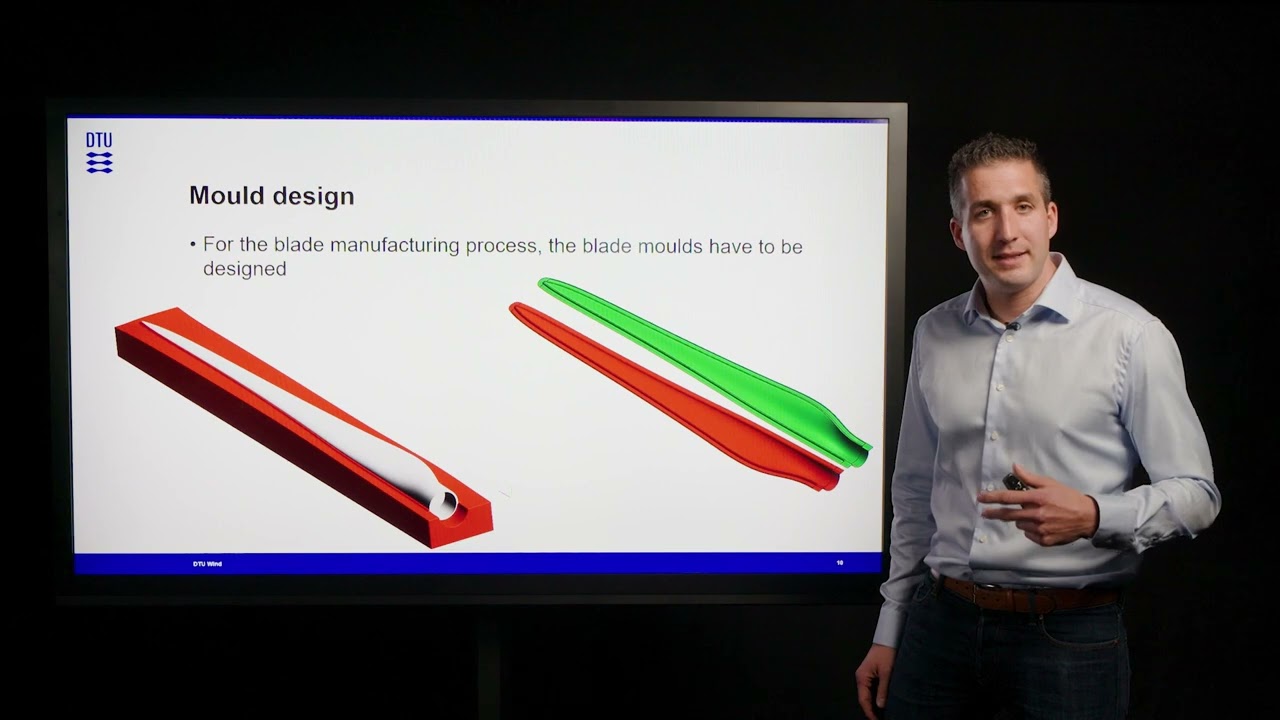
Welcome to engineering with Rosie and part three of my series: "How does a wind turbine work?" In the first two videos we talked about wind turbine aerodynamics, how much energy is available to the turbine and how the wind turbine blades use that energy to turn. We also talked about how to analyze a wind turbine to calculate the amount of power it generates. In today's video, I'm going to talk about how to use the aerodynamic theory we discussed last time to design an efficient wind turbine rotor. We saw in the last video the equation for lift, the lift force depends on the air density the local airflow speed, chord and lift coefficient, which itself depends on the shape of the airfoil and the local angle of attack. The most efficient lift distribution occurs when there's constant circulation along the span. If you want to see the maths behind this, then I'll put a link in the description to where you can find that. But basically, what you need to know is that the lift divided by the relative flow velocity should be constant along the span. Because the local wind speed and angle vary along the length of the blade, a straight rectangular blade will not give constant lift along its length. So the geometry of a wind turbine blade needs to be changed to achieve a more constant lift distribution. If you assume a single aerofoil for the whole blade, then to get an optimized blade, then you need to change the cord and twist angle along the blade span so that the lift force will be constant. The chord needs to decrease as the local wind speed increases along the span and the twist angle needs to change so that you keep the profiles operating at the most efficient angle, which is the angle of maximum lift to drag ratio. This image shows that theoretical optimal chord distribution in green. It has a very large chord at the route due to the low rotational velocity there. But you can imagine that if you manufactured a blade like that, it would be very heavy because of that huge chord at the blade route. Real wind turbine blades generally don't look like that.
Wind turbine blade designers usually choose to make a simpler design like this red outline which has a linear taper. This design takes a small hit to the aerodynamic efficiency in order to make it easier to manufacture and to make it lighter. The aerodynamic performance of the inner blade section is not as important as the outer section since locations close to the hub have low torque and therefore they make a smaller contribution to the power output. So the loss in aerodynamic efficiency is not large compared to the gains in manufacturability. And weight and also cost savings from reducing material. If you design a blade with a chord and twist distribution changing like this, then you will end up with a constant lift force on the blade length. But only at the specific wind speed that the blade was designed for. If you change the wind speed but leave the rotational speed the same, then the chord and angle of the profiles along the span are no longer optimal. If the wind speed is lower than the design speed, then the local angle of attack will be lower than optimal so you'll get worse performance. In the other direction, if the wind speed is higher than the design wind speed, then local angle of attacks are larger than optimal. If the local angle of attack increases beyond a certain point called the stall angle, then the flow over the profile will separate and it will stall. This causes a sudden drop in lift force and a sudden increase in drag. Operating a wind turbine in wind speeds other than the speed it was designed for leads to less efficient operation, if the rotational speed stays the same. In the examples I just went through, we kept rotational speed constant as we changed the wind speed, and we saw the local speed and angle of the airflow change away from our design conditions resulting in a less efficient operation. But if you can change the rotational speeds as the wind speed changes, then you can keep your optimal design over a range of wind speeds. You can see from the equation that it's actually the ratio between the rotational speed and the wind speed that matters. Wind turbine designers use this ratio as an important design parameter. They call it the tip speed ratio. That is the ratio between the speed of the blade tip due to rotation and the wind speed. Modern wind turbines are mostly able to rotate at variable speeds so they can keep the tip speed ratio constant to allow optimal performance over a large range of wind speeds.
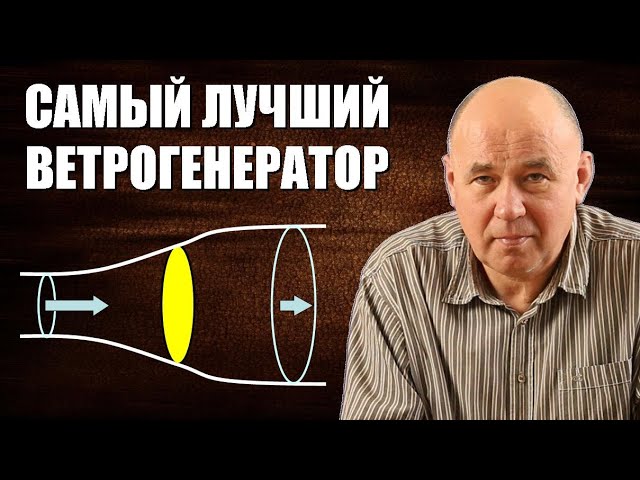
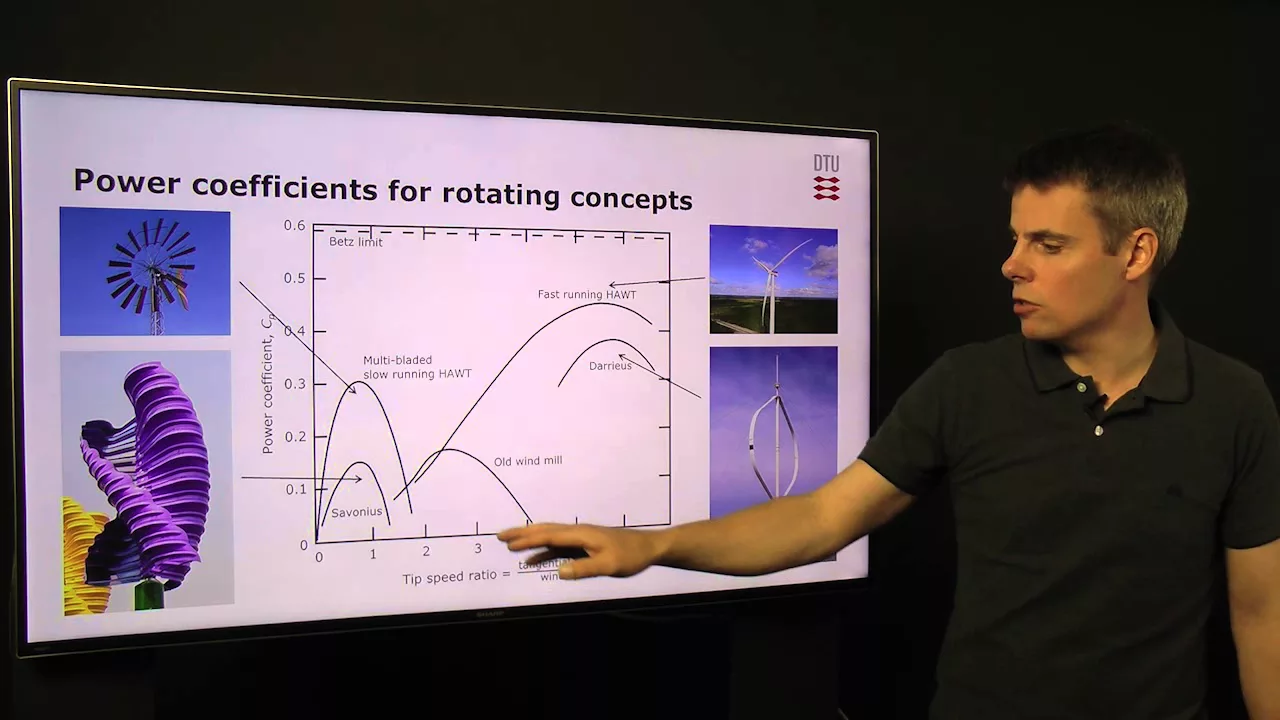
Okay, so now we've talked about how the blade geometry changes along the span to keep lift constant and how rotational speed and wind speed need to be kept in proportion. We've seen how all these parameters need to be adjusted if one of them has changed in order to keep performance the same. There is one last important parameter that we need to discuss, and that is blade solidity. That is the proportion of the swept disc that is covered by blade. So either one fat blade or several slimmer ones will give you the same solidity. In the previous video, we talked about the Betz Limit, which is the maximum amount of energy that can be extracted by a wind turbine.
Following the same conditions that get you to the Betz limit, you can find the optimal design of a wind turbine taking all of the parameters we've just discussed into account. Again, I won't go into the derivation because the maths is complicated, but I'll put a link in the description where you can find it if you are interested to find out. And I need to note that this equation is a slight simplification, with the same limitations as the BEM theory that I mentioned in the previous video. But again, it's accurate enough to design these important blade geometry parameters. So we can see from this equation that we can alter any of these parameters and still maintain optimal aerodynamic performance if you alter the other parameters accordingly. But this doesn't give us a very neat design process. Because if everything is flexible, then you don't really know where to start, you need to be able to lock something in in order to be able to start the design of the other parameters. So where do wind energy engineers start? So far, in this video series, we've been talking about optimal aerodynamic design. But now we have reached the end of what we can achieve by considering only the aerodynamics. To find a starting off point, we need to step outside to a big, complicated and pretty messy list of competing design requirements. I'll talk about some of the major ones here. But remember that these will change from application to application and any change can be accommodated to make a turbine with good aerodynamic performance if you adjust the other parameters. So first of all, you've probably noticed that most wind turbines have three blades, most wind turbine manufacturers are not considering changing the number of blades for each new turbine design they create. So that is typically one starting point: three blades. Another aspect that is really important to overall turbine design is blade solidity. One big design trend is to move towards more slender blades. This is appealing to designers because a slimmer blade rotating at a higher speed can produce the same power with lower aerodynamic loads and lower extreme loads when there are high wind speeds during a storm. So that means that there's less force that has to be carried by other turbine components and less force that tries to push the turbine over.
If you want to reduce the chord and maintain performance, then you need to increase the tip speed ratio and therefore the rotational speed. This is typically limited by noise considerations. The amount of noise that a blade makes depends on how fast the blade tip is moving through the air. So especially for onshore turbines, the rotational speeds tend to be limited due to noise. designers of onshore turbines will use the maximum rotational speed that allows the turbine to stay below a regulated or agreed noise limit. And then one last remaining parameter that we haven't discussed is the lift coefficient, which is a function of the shape of the airfoil. The aerofoils of a wind turbine blade commonly differ along the span. For aerodynamic and structural reasons the outboard blades section experiences higher relative wind speed, and contributes more torque than the inboard section. This makes aerodynamic performance critical at the tip and thin, high-lif aerofoils are typically used i that region. On the other hand the inboard blade sections - hose close to the root - ha e less effect on aero ynamic performance but a large effect on the structural beha ior of the blade. So in thi area, you'll use bigger aero oils that have better struc ural characteris That is the basics of wind turbine blade aerodynamic design, and there is a lot more to the topic than I've mentioned here. But I'm going to leave that for future videos. I'll also be making a video on blade structural design so stay tuned for that in the future. And as always, if you didn't understand something or want more detail on a topic, then please let me know in the comment and I also love to get ideas for new videos that way. If you want to see more videos like this, then please like, subscribe and share with your friends. I'll see you next time.
Up Next

24:05
The Propeller Explained: Aerodynamics and Aircraft Propulsion
@TheWrightStufff
931.3K views•2013-10-27
30:32
Ultrasonic Transducers: Resonant Frequency Measurement and Horn Design
@imajeenyus42
229.9K views•2017-02-22

54:16
Polymer Environmental Degradation: Mechanisms & Stabilization
@iit
1.8K views•2012-07-10
33:39
How a Student's Question Saved a NYC Skyscraper from Collapse
@veritasium
22.8M views•2025-04-26
Related Study Plans & Knowledge Roadmaps
Structured learning paths in Engineering
engineering
Building Acoustic Levitators: Physics & Arduino
01The Physics of Sound and Standing Waves
02Piezoelectric Transducers and H-Bridge Drivers
03Arduino Programming: Generating 40 kHz Signals
+ 2 more learning modules
14h5 modules
Explore Roadmap
engineering
Building Peltier Cloud Chambers: Particle Tracks
01Cosmic Rays & Cloud Chamber Physics
02Thermoelectric Cooling (TEC) Fundamentals
03Custom Liquid-Cooling Loop Design
+ 2 more learning modules
18h5 modules
Explore Roadmap
engineering
Yagi-Uda Antennas: Modeling, Build & VNA Test
01Introduction to RF and Antenna Fundamentals
02Yagi-Uda Antenna Design Principles
03Antenna Modeling and Simulation in 4NEC2
+ 2 more learning modules
18h5 modules
Explore Roadmap
engineering
ECG Monitor Design: Op-Amps, Filters & Noise
01Electronics & Breadboard Basics
02Op-Amps and Instrumentation Amplifiers
03Bioelectricity and ECG Fundamentals
+ 2 more learning modules
18h5 modules
Explore Roadmap